
Dodine Fungicide Uses: Crops, Diseases, Timing and Practical Limits
Dodine is mainly used for protective disease control in fruit, nut, and selected specialty crops. Its best-known uses include apple scab, pear scab, peach leaf curl, brown rot blossom blight, cherry leaf spot, and walnut blight, depending on local registration and approved label claims.
For growers, distributors, and crop protection buyers, the key question is not only “What is Dodine?” The more important question is where Dodine fits in a disease control program. Dodine works best when it is applied before disease pressure becomes severe or at the very early stage of infection. It should not be treated as a rescue-only fungicide after disease has already spread widely across the crop.
What Is Dodine Fungicide Used For?
Dodine fungicide is used to help control specific fungal diseases on selected crops, especially in orchards where early-season disease pressure can reduce leaf health, fruit quality, and final marketable yield.
Its practical role is usually protective. That means Dodine should be present on plant surfaces before infection pressure becomes too strong. In some situations, it may provide limited early curative activity, but its best value comes from early, preventive disease management.
Dodine is commonly associated with disease programs in:
- Apples
- Pears
- Peaches
- Nectarines
- Cherries
- Walnuts
- Pecans
- Selected specialty crops where registered
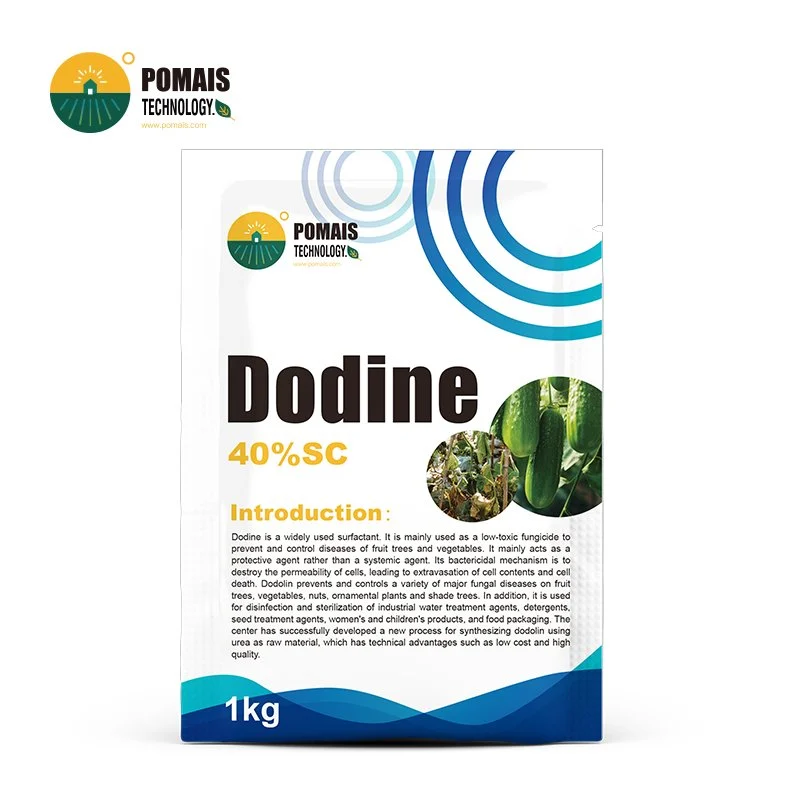
The exact crop list, disease claims, application timing, and restrictions must always follow the approved local label.
Main Crops and Diseases Controlled by Dodine
The practical use of Dodine is concentrated in several fruit and nut crop disease programs. The table below gives a clear view of where Dodine is commonly positioned.
| Crop / Use Area | Main Disease Targets | Where Dodine Fits Best |
|---|---|---|
| Apples | Apple scab / black spot | Early-season protective disease control |
| Pears | Pear scab / black spot | Preventive sprays during infection-risk periods |
| Peaches | Peach leaf curl, scab, blossom blight | Dormant to early growth-stage disease protection |
| Nectarines | Leaf curl and blossom-stage diseases | Early protection before visible disease development |
| Cherries | Cherry leaf spot, blossom blight | Foliar and blossom-stage disease management |
| Walnuts / Black walnuts | Walnut blight and selected foliar diseases | Protective foliar disease programs |
| Pecans | Scab and related disease programs where registered | Rotation-based protection in nut crops |
| Bananas / Peanuts / Specialty crops | Label-specific diseases only | Use only where registration allows |
Dodine is not a universal fungicide for every crop or every disease. Its use should be built around registered crops, listed diseases, correct timing, and resistance management.
Dodine Uses in Apple Disease Control
Dodine is strongly associated with apple scab control, also known in some markets as apple black spot. Apple scab is a high-pressure orchard disease because it affects leaves, shoots, and fruit appearance. Once symptoms become established, control becomes more difficult and fruit quality can decline quickly.
Dodine fits apple disease control mainly as an early-season protectant fungicide. It is especially relevant when young leaf tissue is developing and weather conditions favor infection. In practical orchard programs, Dodine is used to reduce early infection pressure before the disease becomes widely visible.
The important point is timing. Dodine should be considered when disease risk is present but symptoms are still limited or before new infections become severe. It is not the best choice when apple scab has already spread heavily across the orchard.
Dodine for Apple Scab
For apple scab, Dodine is used to protect new plant tissue during early disease-risk periods. This is important because apple scab often develops under wet, cool, and humid conditions, especially when young leaves and shoots are exposed.
Dodine works best when applied as part of a planned scab control program. It helps reduce infection pressure on leaves and fruit when coverage is good and timing matches the infection window. For commercial orchards, this means Dodine is more useful as a program fungicide than as a last-minute corrective treatment.
When Dodine Should Be Used Carefully in Apples
Dodine should be used carefully around sensitive crop stages. Some labels and regional guidance place restrictions on use during flowering or young fruit development because of possible crop safety concerns. The safest approach is to follow the approved label for the specific formulation, crop variety, local climate, and growth stage.
For apple programs, Dodine should also be rotated with fungicides from other groups to reduce resistance risk. Repeated use of one mode of action can reduce long-term field performance.
Dodine Uses in Pear Disease Control
Dodine is also used for pear scab control where registered. Pear scab can damage leaves, shoots, and fruit surface quality, which makes early protection important for commercial production.
In pear programs, Dodine is positioned in a similar way to apple scab control. It is most useful when applied preventively during disease-risk periods, especially when wet weather supports spore release and infection. Good spray coverage is important because Dodine’s practical value depends on protecting the plant surface before disease pressure becomes too strong.
Dodine should not be overused in pear orchards. It should be part of a broader disease management schedule that may include monitoring, sanitation, canopy management, and rotation with other fungicide groups where allowed.
Dodine Uses in Peach and Nectarine Disease Control
Dodine is commonly linked with peach leaf curl and certain blossom-stage diseases in peaches and nectarines. These diseases can affect early growth, leaf development, flowering, fruit set, and final crop quality.
For peaches and nectarines, Dodine is usually considered an early protection tool. Its value is strongest before disease symptoms are obvious. Once leaf curl symptoms are already visible, the damaged tissue cannot simply be restored by a fungicide. That is why timing is critical.
Dodine for Peach Leaf Curl
Peach leaf curl is one of the most important disease targets associated with Dodine. The disease affects young leaves, causing curling, distortion, thickening, discoloration, and early leaf drop. When infection pressure is high, tree vigor and fruit development may also be affected.
Dodine is used where registered to help prevent peach leaf curl before infection becomes established. This makes Dodine more suitable for early-season protection than for correcting visible damage later.
In practical use, Dodine should be selected based on local label directions, crop stage, weather risk, and disease history in the orchard.
Dodine for Brown Rot Blossom Blight
Dodine may also be used in some peach and nectarine programs for blossom-stage disease protection where label approval allows. Blossom blight can reduce flower health and affect fruit set, especially when wet weather occurs during bloom.
The role of Dodine in this situation is to reduce infection pressure during a sensitive crop stage. However, because bloom-stage applications can be crop-sensitive, users must follow the approved label carefully and avoid off-label timing.
Dodine Uses in Cherry Disease Control
Dodine is used in cherry disease programs mainly for cherry leaf spot and other label-listed foliar diseases. Cherry leaf spot can weaken trees by damaging leaves and causing premature defoliation. When defoliation is severe, the impact may extend beyond the current season because tree vigor and bud development can be affected.
Dodine fits cherry disease control as a foliar protectant. It is most useful when applied before disease spread becomes heavy and when spray coverage can protect leaf surfaces effectively.
For cherry growers, Dodine should not be seen as a stand-alone solution. Disease pressure, rainfall, orchard density, variety sensitivity, and resistance management all influence field results. A planned program is usually more reliable than single-product dependence.
Dodine Uses in Walnut and Nut Crop Disease Programs
Dodine may be used in selected nut crop programs, including walnut or pecan disease control where approved. In these crops, Dodine is usually positioned against specific listed diseases such as walnut blight, pecan scab, or related foliar disease issues, depending on the local label.
Nut crops often require strong preventive disease management because canopies are large and uniform spray coverage can be challenging. Dodine should therefore be used with attention to coverage, timing, and rotation.
For procurement and registration planning, the key point is simple: Dodine use in nut crops must match the approved crop and disease claim. It should not be promoted as a general nut crop fungicide without checking the local registration status.
Preventive and Early Curative Uses of Dodine
Dodine is best understood as a fungicide for preventive and early-stage disease management. It can help protect healthy plant tissue when disease pressure is expected, and in some cases it may provide limited early curative support. However, it is not the right tool for heavy late-stage disease rescue.
| Use Type | Suitability of Dodine | Practical Meaning |
|---|---|---|
| Preventive use | Highly suitable | Best used before disease becomes visible or severe |
| Early infection period | Sometimes suitable | May help when infection is still at an early stage |
| Severe established disease | Not ideal | Should not be relied on as a rescue-only fungicide |
| Repeated single-mode use | Not recommended | Rotate with other fungicide groups to manage resistance |
| Off-label crop use | Not acceptable | Use only on approved crops and listed diseases |
This distinction is important for buyers and technical teams. If Dodine is explained only as a “curative fungicide,” users may apply it too late and get inconsistent results. A more accurate explanation is that Dodine performs best when used before or near the beginning of infection pressure.
How Dodine Works in Practical Disease Control
Dodine belongs to the guanidine fungicide category. Its practical disease control activity is linked to disruption of fungal cell membranes, which affects fungal development and helps prevent infection from progressing when application timing is correct.
This mode of action explains why Dodine is better suited to protective use. It helps stop disease establishment on treated plant surfaces, especially when applied before infection pressure becomes severe.
For orchard disease programs, this means Dodine should be planned around:
- Disease history in the field
- Weather conditions that favor infection
- Sensitive crop growth stages
- New leaf or blossom tissue requiring protection
- Rotation with other fungicide groups
- Label-approved timing and use restrictions
The goal is not simply to spray after symptoms appear. The goal is to place Dodine where it can protect the crop at the right disease-risk window.
Best Timing for Dodine Fungicide Uses
Dodine timing depends on the crop, disease target, formulation, local label, and weather conditions. Still, its practical use follows a clear principle: apply before disease pressure becomes severe.
For apple and pear scab, Dodine is usually considered during early infection-risk periods when young plant tissue needs protection. For peach leaf curl, it is normally associated with early protective timing before symptoms are visible. For cherry leaf spot and walnut disease programs, Dodine is used as part of a foliar protection strategy where registered.
The exact timing should never be guessed. Users should follow the approved local label and local agronomic recommendations because growth stages, disease pressure, climate, and resistance risks vary by region.
When Dodine Should Not Be Overused
Dodine should not be positioned as a universal disease-control answer. Overuse can create technical and commercial problems.
Dodine should be used carefully when:
- The crop or disease is not listed on the approved label
- Disease symptoms are already severe
- The orchard has a history of resistance concerns
- The crop stage is sensitive to phytotoxicity or fruit finish issues
- Weather conditions increase drift or runoff risk
- Tank mixtures have not been checked for compatibility
- Local regulations restrict timing, crop claims, or application methods
For long-term performance, Dodine should be used within a resistance management program. Repeated use of the same fungicide group can increase the risk of reduced sensitivity in target pathogens.
Dodine Formulations and Use Considerations
Dodine is commonly supplied in formulations such as SC / FL suspension concentrate and WP wettable powder, depending on market registration and supplier availability. The formulation choice matters because orchard disease control depends on stable suspension, good spray coverage, practical handling, and reliable field performance.
For technical teams and buyers, the important formulation questions include:
- Is the formulation registered for the target crop and disease?
- Does the formulation support uniform spray coverage?
- Is the active ingredient content suitable for the local market?
- Are label claims, safety statements, and documents complete?
- Is packaging suitable for commercial orchard use?
- Are storage stability and suspension properties properly checked?
Dodine formulation selection should be based on technical fit, registration status, crop program needs, and local buyer requirements.
Safety and Environmental Limits of Dodine Uses
Dodine must be handled as a regulated crop protection active ingredient. It should be used only according to the approved label, with proper personal protection, drift control, storage, and disposal practices.
Because Dodine is used mainly in orchard and foliar spray programs, users should pay attention to spray drift, worker protection, aquatic risk, and runoff management. Avoid use near water bodies unless the approved label allows it and required buffer measures are followed.
The safest message for any Dodine program is clear: follow the approved local label, local regulations, and professional crop protection guidance.
FAQ About Dodine Fungicide Uses
What is Dodine fungicide mainly used for?
Dodine fungicide is mainly used for disease control in fruit, nut, and selected specialty crops. Its common uses include apple scab, pear scab, peach leaf curl, cherry leaf spot, blossom blight, and walnut blight where registered.
Is Dodine used for apple scab?
Yes. Apple scab is one of the most recognized uses of Dodine. It is usually positioned as an early-season protective fungicide when disease risk is present and before infection becomes severe.
Can Dodine control peach leaf curl?
Dodine can be used for peach leaf curl where it is registered for that use. It works best as a preventive treatment before leaf curl symptoms are visible, not as a late corrective treatment after damage has already developed.
Is Dodine preventive or curative?
Dodine is mainly preventive, with limited early curative activity in some situations. Its best use is before disease pressure becomes severe or during the early infection window.
Can Dodine be used on all crops?
No. Dodine should only be used on crops and diseases listed on the approved local label. Registered crops and disease claims vary by country and formulation.
Practical Summary
Dodine fungicide is most valuable when it is used as a targeted protective fungicide for specific fruit and nut crop diseases. Its strongest practical uses are in apple scab, pear scab, peach leaf curl, cherry leaf spot, blossom blight, walnut blight, and selected label-approved foliar disease programs.
For best results, Dodine should be used early, applied according to the approved label, and rotated properly to support long-term disease control performance.
Hot Products
Hot news
Recommended news