
Bifenthrin vs Fipronil: Key Differences and When to Choose Each
Bifenthrin and Fipronil are both broad-spectrum insecticides, but they are not closely related chemistries.
Bifenthrin is an IRAC Group 3A pyrethroid, while Fipronil is an IRAC Group 2B phenylpyrazole. They affect different targets in the insect nervous system and can therefore fill different roles in pest-control programs.
Bifenthrin is strongly positioned for rapid contact activity, agricultural foliar pests, turf, mosquito barriers, perimeter treatments, and structural pest control. Fipronil is particularly important in non-repellent termite and ant-control programs, where slower exposure and movement through treated areas can be useful.
The better choice depends on the pest, use site, formulation, resistance history, required speed, and local registration.
Bifenthrin vs Fipronil: Quick Comparison
| Comparison | Bifenthrin | Fipronil |
|---|---|---|
| Chemical class | Pyrethroid | Phenylpyrazole |
| IRAC group | 3A | 2B |
| Main nerve target | Voltage-gated sodium channels | GABA-gated chloride channels |
| Contact activity | Strong | Yes |
| Ingestion activity | Yes | Yes |
| Typical visible effect | Rapid knockdown | Often more delayed |
| Repellent positioning | Can be repellent in termite barrier use | Strong non-repellent positioning |
| Agricultural foliar use | Broad | More market- and registration-specific |
| Turf / perimeter use | Strong | Product-specific |
| Mosquito barrier use | Strong | Less central |
| Termite market | Established barrier chemistry | Strong non-repellent position |
| Ant colony-oriented programs | Mainly direct/perimeter control | Stronger transfer-oriented positioning |
| Different IRAC mode of action? | Yes | Yes |
The biggest practical difference is not simply which insecticide is “stronger.”
It is how each chemistry interacts with the target pest and treatment strategy.
How Do Bifenthrin and Fipronil Work Differently?
Bifenthrin and Fipronil both disrupt insect nervous-system function, but they act at different target sites.
Bifenthrin belongs to IRAC Group 3A. It modifies voltage-gated sodium channels, disrupting normal nerve signaling and producing rapid excitation, knockdown, paralysis, and death in susceptible insects.
Fipronil belongs to IRAC Group 2B. It interferes with GABA-gated chloride channels, disrupting inhibitory nerve signaling and causing uncontrolled nervous activity.
This difference matters because the two active ingredients do not create the same resistance-selection pressure.
For a deeper explanation of pyrethroid sodium-channel activity, see how Bifenthrin kills insects.
Why Does Repellent vs Non-Repellent Behavior Matter?
This distinction is especially important in termite and ant control.
Bifenthrin is commonly used as a repellent or barrier-oriented pyrethroid in professional structural pest-control programs.
The objective is often to create a treated zone that kills or discourages pests attempting to cross it.
Fipronil is strongly associated with non-repellent termite and ant treatments.
In a non-repellent treatment, exposed insects may cross or contact the treated zone without immediately avoiding it. This can increase the chance that termites or ants encounter the active ingredient before behavioral avoidance occurs.
That difference changes the product strategy.
A barrier treatment asks:
Can we stop pests from crossing this treated area?
A non-repellent program asks:
Can pests move through the treated area, become exposed, and contribute to wider colony-level suppression?
Neither approach is automatically correct for every situation.
The right choice depends on pest biology, construction type, infestation pattern, soil conditions, formulation, and local label.
Which Is Better for Termites?
For professional subterranean termite programs where non-repellent exposure is important, Fipronil usually has the clearer commercial position.
This is one of the strongest differences between the two active ingredients.
Fipronil is widely associated with soil and structural termite treatments designed to allow termites to contact treated zones without strong immediate repellency.
That does not mean every exposed termite will necessarily transfer a lethal dose throughout an entire colony. Colony effects depend on exposure level, termite behavior, formulation, treatment quality, and other biological factors.
Bifenthrin remains an established termite-control chemistry as well.
Its role is more often associated with:
- Soil barriers
- Exterior perimeter treatment
- Structural protection
- Direct exposure
- Rapid contact activity
The practical difference is therefore:
Fipronil = strong non-repellent termite positioning
Bifenthrin = strong pyrethroid barrier positioning
For commercial Fipronil formulations and product directions, see Fipronil insecticide and termiticide.
Which Is Better for Ant Control?
Both can be used in professional ant-control programs, but the strategy differs.
Bifenthrin is well suited to:
- Exterior perimeter treatment
- Direct ant exposure
- Crawling-pest barriers
- Fast reduction of exposed ants
Fipronil can be more attractive where non-repellent exposure and horizontal transfer are part of the treatment strategy.
In some ant species and treatment systems, exposed workers can carry Fipronil residues back into contact with untreated nestmates before dying.
This creates a different control logic from a fast-contact perimeter spray.
The choice should therefore consider whether the program is designed primarily for:
rapid surface control
or
colony-oriented non-repellent exposure.
Species also matters. Argentine ants, carpenter ants, fire ants, and other ant groups do not respond identically to every treatment system.
Which Works Faster: Bifenthrin or Fipronil?
Bifenthrin is generally more strongly associated with rapid visible knockdown.
As a pyrethroid, it can produce fast nervous-system effects in susceptible insects after sufficient exposure.
Fipronil can act more gradually depending on formulation and use.
In ant and termite control, that slower action may actually be useful.
An insect that dies immediately after contacting a treatment cannot continue moving through a colony or contacting other individuals.
This leads to an important principle:
Faster is not always better.
For flies, mosquitoes, exposed crawling pests, or perimeter knockdown, rapid activity can be commercially valuable.
For social insects such as termites and ants, a slower non-repellent chemistry may fit the control objective better.
Which Is Better for Agricultural Pest Control?
For broad foliar agricultural use, Bifenthrin generally has the clearer portfolio position.
It is widely used against registered chewing and sucking pests in crops such as:
- Cotton
- Corn
- Vegetables
- Fruit
- Other field crops
Its non-systemic contact and ingestion activity fits exposed foliar insects well.
Fipronil also has agricultural uses, including selected soil, seed, early-season, and crop-pest applications, but these registrations vary considerably between countries.
In some markets, Fipronil agricultural uses are tightly restricted or no longer available for certain crops.
For that reason, Fipronil should not be positioned as a universal agricultural alternative to Bifenthrin.
The correct comparison is:
| Agricultural Requirement | Starting Direction |
|---|---|
| Broad exposed foliar pests | Bifenthrin |
| Fast pyrethroid crop protection | Bifenthrin |
| Specific soil or early-season pest use | Fipronil where registered |
| Need for a different MoA from Group 3A | Fipronil may be relevant |
| Market with restricted Fipronil crop uses | Bifenthrin or another registered option |
For crop-specific pest positioning, see POMAIS Pest Control Solutions.
Which Is Better for Mosquitoes and Perimeter Pests?
Bifenthrin generally has the stronger commercial position.
It is widely used in professional programs involving:
- Mosquito barrier treatment
- Exterior vegetation
- Building perimeters
- Turf
- Crawling insects
- Structural nuisance pests
Its combination of rapid contact activity and residual surface positioning makes it well suited to these markets.
Fipronil is not usually selected as the primary active ingredient for broad mosquito knockdown or vegetation barrier treatment.
Its stronger commercial differentiation lies in:
- Termites
- Ants
- Certain soil pests
- Baits
- Selected agricultural uses
For structural, perimeter, and public-health product directions, buyers can review POMAIS professional public health pest-control products.
Does Fipronil Last Longer Than Bifenthrin?
There is no universal answer.
Fipronil is known for long residual performance in some professional termite soil treatments, while Bifenthrin can also provide extended residual activity in structural, perimeter, turf, and soil applications.
Actual persistence depends on:
- Formulation
- Concentration
- Soil type
- Surface type
- Sunlight
- Rainfall
- Temperature
- Microbial activity
- Application quality
- Treatment depth
- Use site
It is therefore misleading to say:
Fipronil always lasts longer.
or:
Bifenthrin always breaks down faster.
A long-duration termite soil treatment cannot be used to predict how the same active ingredient will behave on vegetation, concrete, foliage, or another surface.
Compare the finished registered product and intended use, not only the active ingredient name.
Can Fipronil Replace Bifenthrin?
Not automatically.
The two active ingredients differ in:
- IRAC group
- Chemical class
- Speed of action
- Repellent behavior
- Target-pest positioning
- Agricultural registrations
- Structural uses
- Formulations
- Residue requirements
- Environmental restrictions
For example:
A professional mosquito barrier product based on Bifenthrin cannot automatically be replaced with Fipronil simply because both are broad-spectrum insecticides.
Likewise, a non-repellent Fipronil termite treatment cannot automatically be replaced with Bifenthrin without changing the treatment strategy.
The replacement decision should begin with:
What biological and commercial role must the product perform?
Do Bifenthrin and Fipronil Provide Different IRAC Modes of Action?
Yes.
This is one of the clearest technical differences between them.
Bifenthrin = IRAC Group 3A
Fipronil = IRAC Group 2B
Because they act at different nervous-system target sites, they can occupy different mode-of-action positions in a resistance-management program where both products are registered and effective against the target pest.
However, this does not mean simply alternating Bifenthrin and Fipronil automatically solves resistance.
A sound program should still consider:
- Pest species
- Known resistance mechanisms
- Local susceptibility
- Number of pest generations
- Previous insecticide exposure
- Other effective IRAC groups
- Label restrictions
The important principle is that these two products provide genuine MoA diversification, unlike switching between two Group 3A pyrethroids.
Do Environmental Restrictions Differ?
Yes, but neither product should be treated as environmentally unrestricted.
Both Bifenthrin and Fipronil can create significant non-target risks depending on the use site and exposure route.
Professional users should pay particular attention to:
- Aquatic environments
- Runoff
- Pollinators
- Treated soil
- Drift
- Application near water
- Label-specific environmental restrictions
The finished product label should determine where and how the insecticide can be used.
Simple statements such as “Bifenthrin is safer for water” or “Fipronil is only a bee concern” are not accurate enough for professional product selection.
Which One Should Buyers Choose?
The best starting direction depends on the control objective.
| Requirement | Better Starting Direction |
|---|---|
| Broad foliar agricultural pest control | Bifenthrin |
| Fast contact knockdown | Bifenthrin |
| Mosquito barrier treatment | Bifenthrin |
| Turf pest-control market | Bifenthrin |
| Exterior perimeter treatment | Bifenthrin |
| Structural crawling pests | Bifenthrin |
| Non-repellent subterranean termite program | Fipronil |
| Ant colony-oriented treatment | Fipronil |
| Non-repellent structural chemistry | Fipronil |
| Certain soil pest programs | Fipronil where registered |
| Need different MoA from Group 3A | Fipronil |
| Need different MoA from Group 2B | Bifenthrin |
Neither active ingredient is universally better.
The correct decision should combine:
pest biology + treatment strategy + use site + formulation + registration + resistance history
rather than relying only on broad-spectrum claims.
Frequently Asked Questions
Is Fipronil Better Than Bifenthrin?
Not universally.
Fipronil has a stronger non-repellent position in many termite and ant programs, while Bifenthrin has a broader position in foliar agriculture, turf, mosquito barriers, and perimeter pest control.
Which Is Better for Termites?
Fipronil generally has the clearer position for non-repellent subterranean termite treatment.
Bifenthrin remains an established pyrethroid barrier option where registered.
Is Bifenthrin Repellent to Termites?
Bifenthrin can have repellent or barrier effects at termite-control concentrations.
This is one reason its termite positioning differs from non-repellent Fipronil treatments.
Is Fipronil Non-Repellent?
Fipronil is widely used as a non-repellent active ingredient in professional termite and ant-control systems.
The actual behavior still depends on concentration, formulation, pest species, and use pattern.
Which Is Better for Ants?
It depends on the objective.
Bifenthrin is strong for rapid perimeter and exposed-ant control. Fipronil may offer an advantage in non-repellent colony-oriented programs where transfer between workers contributes to treatment performance.
Which Works Faster?
Bifenthrin is generally more strongly associated with rapid visible knockdown.
Fipronil can act more slowly, which may be beneficial in certain social-insect control programs.
Which Lasts Longer?
There is no universal winner.
Residual life depends heavily on formulation, surface, soil, weather, application quality, and use site.
Are Bifenthrin and Fipronil in the Same IRAC Group?
No.
Bifenthrin belongs to IRAC Group 3A, while Fipronil belongs to IRAC Group 2B.
Can Fipronil Replace Bifenthrin?
Not automatically.
They differ in mode of action, speed, behavioral effects, registrations, formulations, and strongest pest-control markets.
Which Is Better for Agricultural Pests?
Bifenthrin generally has the stronger position for broad foliar agricultural pest control.
Fipronil agricultural use is more market- and registration-dependent.
Comparing Bifenthrin and Fipronil Products for Your Market?
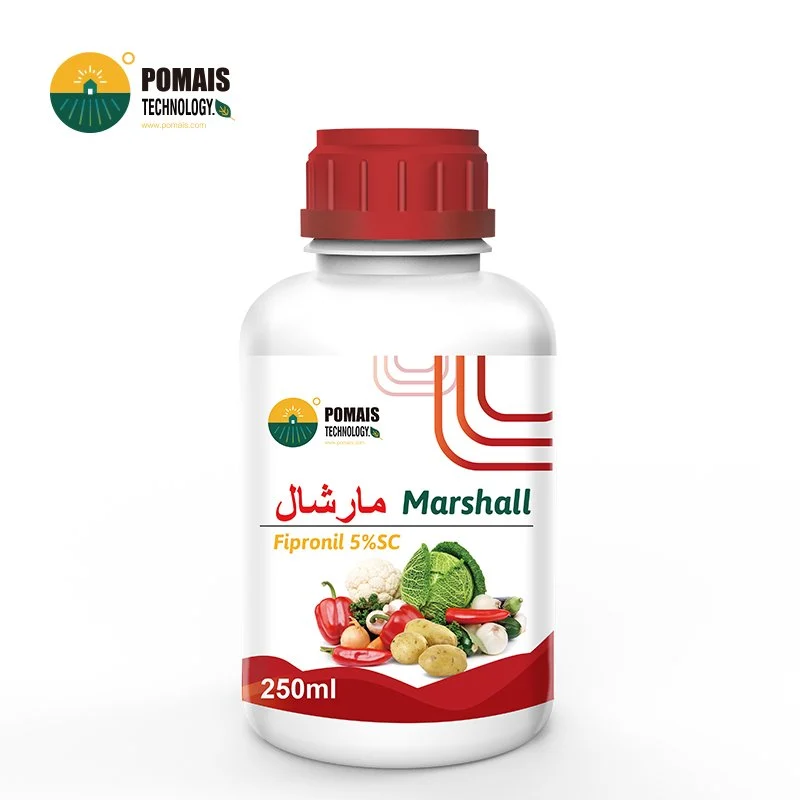
POMAIS supplies both Bifenthrin insecticide and Fipronil product directions for professional pest-control and agricultural markets.
When comparing them, buyers should first confirm:
- Destination country
- Target pest
- Agricultural or structural use
- Required concentration
- Formulation
- Resistance-management role
- Registration status
- Packaging requirements
The correct product should match the pest-control strategy rather than simply replacing one broad-spectrum insecticide with another.

Hot Products
Hot news
Recommended news