Fipronil 500 g/L SC Insecticidal
POMAIS Fipronil 500 g/L SC is a high-concentration insecticidal seed-treatment formulation developed for approved early-season pest-management programs in crops such as canola, rice, sorghum and sunflower.
Fipronil belongs to IRAC Group 2B and the phenylpyrazole, or fiprole, insecticide class. It acts on GABA-gated chloride channels in susceptible insects, disrupting normal inhibitory nerve signaling and leading to uncontrolled nervous-system activity, paralysis and death.
POMAIS supplies Fipronil 500 g/L SC for agricultural importers, distributors, registration companies and crop-protection brands requiring a concentrated seed-treatment insecticide with formulation quality control, commercial packaging and technical-document support.
- Designed for Professional Buyers & Bulk Orders
- We support custom packaging, labeling, and formulation to meet your market needs.
- Export wholesale inquiries only.
- Please include destination country, business type (importer/distributor/registrant), and expected volume.
- Retail requests will not be processed.

About Fipronil 500 g/L SC Insecticidal
| Product Attribute | Specification |
|---|---|
| Product Name | Fipronil 500 g/L SC |
| Active Ingredient | Fipronil |
| Content | 500 g/L |
| Formulation | SC — Suspension Concentrate |
| Product Type | Insecticidal seed treatment |
| Chemical Class | Phenylpyrazole / Fiprole |
| IRAC Group | Group 2B |
| Target Site | GABA-gated chloride channels |
| Main Application | Seed treatment |
| Crop Direction | Canola, rice, sorghum, sunflower and other approved crops |
| Pest Direction | Early-season soil, seed and seedling insect pests where registered |
| Application Timing | Before sowing |
| Standard MOQ | Normally 1,000 L |
| Supply Direction | Import, distribution and registration cooperation |
| Document Support | COA, SDS, TDS, product specification and available registration information |
The final crop list, target pests, treatment rate, seed-treatment process, sowing restrictions and treated-seed requirements must follow the approved destination-market label.
What Is Fipronil 500 g/L SC?
Fipronil 500 g/L SC is a concentrated liquid insecticide intended primarily for professional seed-treatment programs.
The product is applied to seed before sowing so that the active ingredient is placed close to the seed and emerging crop during the early establishment period.
Its main commercial value is therefore different from low-concentration Fipronil products used in structural pest control, bait systems or other non-crop applications.
- Agricultural seed treatment
- High active ingredient concentration
- Early-season insect protection
- Crop establishment
- Seed-treatment formulation quality
- Market-specific registration
Fipronil should not be treated as one universal product across every use pattern.
Different concentrations, formulations and registrations may be required for seed treatment, structural pest control, public-health uses or other applications.
How Does Fipronil Work?
IRAC Group 2B Insecticide
Fipronil belongs to IRAC Group 2B.
It is part of the phenylpyrazole insecticide class, also referred to as fiproles.
This classification is important because it identifies the product’s primary mode of action and supports proper resistance-management planning.
GABA-Gated Chloride Channel Blockade
Fipronil blocks GABA-gated chloride channels in susceptible insects.
GABA normally helps regulate inhibitory nerve signaling.
When Fipronil disrupts this process, normal nervous-system control is lost.
Affected insects may develop:
- Uncontrolled neuronal excitation
- Tremors
- Convulsions
- Loss of normal movement
- Paralysis
- Death
The product should not be described simply as a contact poison.
Its biological activity is defined primarily by its action on insect nervous-system chloride channels.
Why Use Fipronil as a Seed Treatment?
Seed treatment places the insecticide on the seed before planting.
This allows the crop-protection program to target pests during a particularly vulnerable stage of crop development.
Protection During Crop Establishment
Young seedlings can be highly sensitive to insect feeding.
Damage during emergence may result in:
- Poor stand establishment
- Missing plants
- Uneven crop density
- Reduced early growth
- Need for corrective field treatment
A registered Fipronil seed-treatment program can help protect the seed or establishing crop from specified early-season insect pests.
Targeted Placement
Applying the active ingredient directly to treated seed places the insecticide near the point where crop establishment begins.
This differs from a broad foliar treatment made later in the season.
The treatment should be selected according to:
- Crop
- Target pest
- Pest pressure
- Local sowing system
- Registration
- Seed-treatment equipment
One Commercial Seed-Treatment Step
A properly formulated product can be integrated into professional seed-treatment operations before sowing.
This can support:
- Centralized seed processing
- Consistent active ingredient delivery
- Commercial seed preparation
- Distributor or seed-company treatment programs
The final treatment procedure must follow the approved label and seed-treatment equipment instructions.
Fipronil Seed Treatment for Canola
Canola is one of the established crop directions for high-concentration Fipronil seed-treatment products in registered markets.
The objective is to protect crop establishment from approved early-season insect pests.
Before use, confirm:
- Canola registration
- Target pest species
- Seed-treatment rate
- Seed lot size
- Treatment equipment
- Sowing restrictions
- Treated-seed labeling requirements
Seedling Protection
Canola seedlings can be vulnerable during emergence and early vegetative growth.
The value of seed treatment is highest when the target pest is present during this establishment period and remains susceptible to Fipronil.
The product should not be promoted as providing complete season-long insect control.
Fipronil Seed Treatment for Rice
Fipronil 500 g/L may also be used in registered rice seed-treatment programs.
Rice applications can differ significantly between markets and production systems.
Relevant factors may include:
- Direct-seeded rice
- Seed treatment before sowing
- Target early-season pests
- Water-management system
- Seed handling after treatment
- Local registration conditions
The same rate or use instruction should not be transferred automatically from canola or another crop to rice.
Fipronil Seed Treatment for Sorghum and Sunflower
Sorghum and sunflower are additional crop directions in markets where high-concentration Fipronil seed-treatment products are registered.
Sorghum
Application planning should consider:
- Seed quality
- Target insect pressure
- Treatment uniformity
- Seed drying
- Sowing equipment
- Crop safety
Sunflower
Sunflower seed-treatment programs should likewise follow the crop-specific local label.
The product should only be used where Fipronil is legally approved for the intended seed-treatment purpose.
What Pests Can Fipronil Seed Treatment Target?
The exact pest spectrum depends on the registered crop and country.
Potential early-season pest directions may include:
- Soil-inhabiting insects
- Seed-feeding pests
- Seedling-feeding insects
- Selected mites or other arthropod pests where specifically registered
- Other approved early-season pests
POMAIS does not recommend publishing one universal pest list for every crop.
The correct relationship should always be:
crop + pest + treatment rate + seed-treatment method + local registration
rather than assuming that Fipronil controls every insect in every production system.
Seed Treatment and Crop Establishment
The performance of a seed-treatment product depends not only on the active ingredient but also on the quality of the treatment process.
Uniform Seed Coverage
The product should be distributed consistently across the seed lot.
Poor treatment uniformity can create:
- Under-treated seed
- Over-treated seed
- Uneven active ingredient loading
- Variable crop response
- Inconsistent pest protection
Seed Flowability
Treated seed should remain suitable for:
- Bagging
- Transport
- Storage
- Metering
- Sowing
Excessive surface residue or poor drying can interfere with commercial handling.
Crop Safety
Treatment must not compromise:
- Germination
- Emergence
- Seedling vigor
- Normal crop establishment
Crop safety depends on the registered rate, formulation, seed condition and treatment process.
Application Planning
Fipronil 500 g/L SC should not be assigned one universal treatment rate.
1. Confirm Registration
Verify:
- Crop
- Target pest
- Product concentration
- Seed-treatment use
- Application rate
- Treated-seed restrictions
2. Check Seed Quality
Use sound seed suitable for commercial treatment.
Seed that is:
- Physically damaged
- Excessively moist
- Poor in germination
- Already heavily treated
may require additional technical evaluation.
3. Calibrate the Treatment Equipment
Confirm:
- Seed throughput
- Product delivery rate
- Mixing accuracy
- Batch size
- Treatment uniformity
4. Maintain Formulation Homogeneity
Before and during treatment, follow the approved mixing or agitation procedure.
5. Apply Uniformly
The objective is consistent active ingredient loading across the full seed lot.
6. Allow Proper Handling After Treatment
Where required, treated seed should be allowed to stabilize or dry before:
- Bagging
- Storage
- Transport
- Sowing
7. Follow the Local Label
Do not transfer one country’s mL/100 kg seed rate directly to another crop or market.
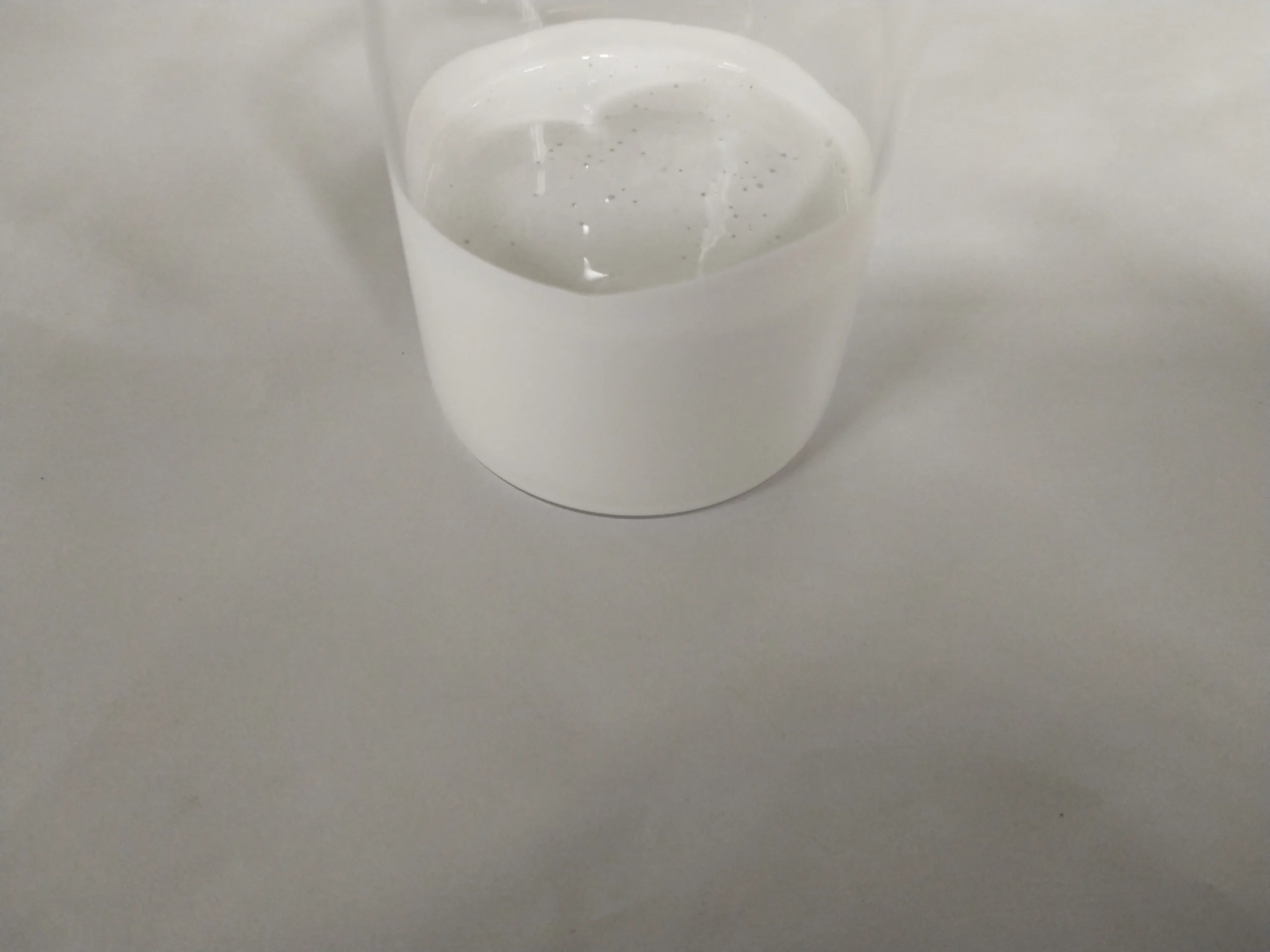
Fipronil 500 g/L SC Formulation
SC means Suspension Concentrate.
In an SC formulation, finely divided active ingredient particles are suspended in a liquid continuous phase.
The product is not defined by complete dissolution of Fipronil in water.
After dilution or use in the seed-treatment system, the formulation must remain sufficiently uniform for accurate application.
Main SC Characteristics
A properly developed Fipronil 500 g/L SC formulation should provide:
- High active ingredient loading
- Controlled particle size
- Good suspension stability
- Practical liquid dosing
- Reliable redispersion
- Stable commercial storage
- Compatibility with treatment equipment
Because this product contains 500 g/L Fipronil, formulation stability is particularly important.
Quality Control for Fipronil 500 g/L SC
Professional buyers should evaluate more than the declared active ingredient concentration.
| Quality Parameter | Buyer Relevance |
|---|---|
| Fipronil Assay | Confirms the declared 500 g/L content |
| Physical Appearance | Identifies abnormal separation or sediment |
| Density | Supports dosing and filling consistency |
| Particle Size | Influences suspension and seed-treatment behavior |
| Suspensibility | Supports uniform active ingredient distribution |
| Wet Sieve Residue | Helps reduce equipment blockage |
| Viscosity | Influences pumping, dosing and coating behavior |
| Pourability | Supports practical commercial handling |
| Redispersibility | Confirms recovery after storage |
| pH | Supports formulation-quality assessment |
| Persistent Foam | Influences preparation and equipment operation |
| Low-Temperature Stability | Supports cold-region logistics |
| Heat Stability | Supports warm-market storage |
| Treatment Uniformity | Supports consistent active loading on seed |
| Packaging Compatibility | Confirms bottle, drum and seal suitability |
| Fill-Volume Accuracy | Supports commercial batch consistency |
For this product, assay, particle size, redispersibility, viscosity and treatment uniformity are especially important during supplier qualification.
Specific QC limits should follow the actual POMAIS product specification.
Treated Seed Handling
Treated seed must be managed as a crop-protection input rather than normal untreated seed.
Identification
Commercial treated seed should be clearly identified according to local regulations.
Food and Feed Restrictions
Treated seed should not be used for:
- Human consumption
- Animal feed
- Food processing
unless explicitly permitted by local regulation, which is generally not the intended use of insecticide-treated seed.
Worker Protection
Seed-treatment operators should follow the final product label and SDS.
Required protective measures may include controls for:
- Mixing
- Transfer
- Equipment cleaning
- Bagging
- Handling of treated seed
Disposal
Unused treatment mixture, contaminated packaging and treated seed must be handled according to local pesticide and seed-treatment regulations.
Environmental Stewardship
Fipronil is an active ingredient that requires careful environmental management.
The product should not be marketed as environmentally harmless.
Treated-Seed Dust
Seed-treatment quality should minimize avoidable loss of pesticide from treated seed during:
- Handling
- Transport
- Loading
- Sowing
Where dust-off requirements apply, treatment processes should be designed accordingly.
Protect Non-Target Organisms
Follow local restrictions intended to protect:
- Pollinators
- Aquatic organisms
- Wildlife
- Beneficial arthropods
- Non-target habitats
Prevent Contamination
Avoid contamination of:
- Surface water
- Irrigation systems
- Feed
- Food
- Untreated seed
Environmental precautions must follow the final local label.
Resistance Management
Fipronil belongs to IRAC Group 2B.
Repeated reliance on the same insecticide mode of action can increase selection pressure for resistant pest populations.
Resistance-Management Principles
Where practical and registered:
- Use Fipronil only against susceptible target pests.
- Follow the full registered seed-treatment rate.
- Avoid repeated reliance on IRAC Group 2B alone.
- Rotate later-season insecticides to effective products from different IRAC groups.
- Integrate agronomic and non-chemical pest-management methods.
- Monitor unexpected treatment failures.
- Investigate repeated field survival before assuming a formulation problem.
Seed treatment should be considered one component of the season-long pest-management program.
It should not automatically determine the mode of action used in every subsequent foliar treatment.
Regulatory and Market Suitability
Fipronil regulatory status varies significantly between countries.
A product approved for seed treatment in one market may not be permitted for the same crop or use in another.
Before starting a commercial project, confirm:
- Active ingredient approval
- Fipronil seed-treatment registration
- Approved crops
- Approved target pests
- Treatment rate
- Sowing restrictions
- Treated-seed labeling
- Worker-protection requirements
- Environmental restrictions
- Residue or MRL requirements
- Import conditions
POMAIS reviews the destination market before confirming a Fipronil 500 g/L seed-treatment project.
This review should take place before:
- Final label preparation
- Packaging production
- Commercial formulation
- Registration work
- Shipment planning
Fipronil 500 g/L Seed Treatment vs Other Fipronil Products
Fipronil is used in several pest-management sectors, but these products should not be treated as interchangeable.
| Product Direction | Main Positioning |
|---|---|
| Fipronil 500 g/L SC | Agricultural seed treatment |
| Lower-Concentration Agricultural Products | Crop- and pest-specific foliar or soil uses where registered |
| Structural Pest Products | Termite or building pest control with separate registrations |
| Bait Formulations | Ant or cockroach management |
| Other Specialized Products | Market- and sector-specific |
The concentration, formulation, dose and regulatory requirements differ significantly.
This 500 g/L product page is therefore focused on agricultural seed treatment, not structural, bait or veterinary applications.
Packaging, Documents and Commercial Supply
POMAIS supplies Fipronil 500 g/L SC for agricultural importers, distributors, seed-treatment companies and registration partners in markets where the product is legally permitted.
Packaging Options
Potential commercial packaging may include:
- 1 L
- 5 L
- 10 L
- 20 L
- 200 L
- Other commercial containers where suitable
Available project options may include:
- Multilingual labels
- Tamper-evident closures
- Export cartons
- Drums
- Batch coding
- Shipping marks
- Market-specific package configurations
Final packaging depends on:
- Registration
- Order quantity
- Local treatment rate
- Transport conditions
- Formulation compatibility
Available Documents
Project support may include:
- COA — Certificate of Analysis
- SDS — Safety Data Sheet
- TDS — Technical Data Sheet
- Product Specification
- Packaging Specification
- Available Stability Information
- Available Seed-Treatment Information
- Available Crop-Safety Information
- Available Efficacy Information
- Available Registration-Supporting Information
- Batch-Related Quality Documents
- Commercial and Export Documents
Frequently Asked Questions
What is Fipronil 500 g/L used for?
This product is primarily positioned as a concentrated insecticidal seed treatment for approved agricultural crops.
Is Fipronil 500 g/L used as a seed treatment?
Yes, high-concentration Fipronil formulations are used in registered seed-treatment programs in several agricultural markets.
What IRAC group is Fipronil?
Fipronil belongs to IRAC Group 2B.
What type of insecticide is Fipronil?
Fipronil is a phenylpyrazole, or fiprole, insecticide.
How does Fipronil work?
It blocks GABA-gated chloride channels in susceptible insects, disrupting normal inhibitory nerve signaling and causing nervous-system overexcitation, paralysis and death.
What does SC mean?
SC means Suspension Concentrate.
Fine active ingredient particles are suspended in a liquid formulation rather than completely dissolved.
Which crops can use Fipronil seed treatment?
Registered crop directions can include canola, rice, sorghum, sunflower and other crops depending on the destination market.
What pests can Fipronil seed treatment control?
It is used against approved early-season seed, soil and seedling pests.
The exact pest list depends on crop and local registration.
Does Fipronil protect crops for the whole growing season?
The main positioning is protection during the early crop-establishment period.
Do not assume that one seed treatment provides complete season-long control of every target pest.
Can Fipronil 500 g/L be used for termite control?
Fipronil is also used in registered structural termite products, but those products may use different concentrations, formulations and application rates.
This 500 g/L product page is positioned for agricultural seed treatment.
Can this Fipronil product be used for fleas on dogs or cats?
This agricultural seed-treatment product should not be used as a veterinary product.
Veterinary Fipronil formulations have separate concentrations, registrations and use instructions.
Can Fipronil be mixed with seed-treatment fungicides?
Only approved and technically compatible mixtures should be used.
Compatibility should consider formulation behavior, seed safety, treatment equipment and local registration.
Does seed treatment affect seed germination?
A correctly formulated and correctly applied registered seed treatment should remain within approved crop-safety parameters.
Excessive rates, poor treatment uniformity or unsuitable seed condition can increase risk.
Why is seed-treatment uniformity important?
Uneven coating can create both under-treated and over-treated seed, resulting in inconsistent active ingredient delivery and variable crop response.
Does treated seed require special handling?
Yes.
Treated seed must follow local labeling, handling, food/feed restriction and disposal requirements.
Can Fipronil resistance develop?
Yes.
Repeated reliance on IRAC Group 2B can select resistant populations, so Fipronil should be integrated into a broader resistance-management program.
Is Fipronil approved in every country?
No.
Regulatory status and approved seed-treatment uses vary significantly between markets.
What documents can POMAIS provide?
Depending on the project, POMAIS can provide COA, SDS, TDS, product specifications, packaging information and available registration-supporting documents.
Request Fipronil 500 g/L SC Specifications
For a Fipronil 500 g/L SC seed-treatment purchasing, registration or distribution project, please provide:
- Destination country
- Company type
- Required quantity
- Target crop
- Target pests
- Seed-treatment system
- Preferred package size
- Current registration status
- Required label language
- Required technical documents
- Expected purchasing schedule
POMAIS will review the destination-market registration, Fipronil specification, SC formulation requirements, seed-treatment application, packaging plan and available documentation before confirming commercial supply.
Fipronil 500 g/L SC is supplied for professional agricultural seed-treatment programs, commercial import, distribution and registration projects in approved markets.
Contact us!
We will reply to you within 24 hours on business days!