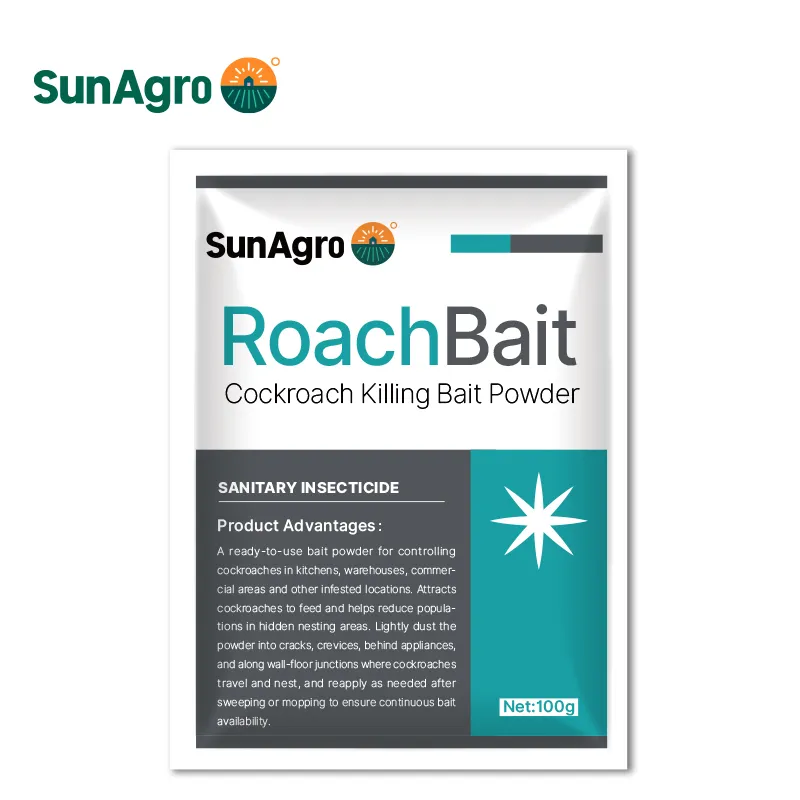


Cockroach Killing Bait Powder
POMAIS Cockroach Killing Bait Powder is a ready-to-use insecticidal food bait designed for targeted cockroach control. Packed in compact 5 g sachets, the powder can be divided into small placements near cockroach hiding, feeding and travel areas.
Unlike a conventional insecticidal dust, this product is formulated as a feeding bait. The bait matrix encourages cockroaches to approach and ingest the active ingredient. This makes correct placement, sanitation and bait protection important to the overall control result.
We supply cockroach bait powder for importers, distributors, public health product channels, registration companies and pest control brands. Active ingredient, concentration, sachet design, retail box, label language and supporting documents can be confirmed according to the target market.
- Designed for Professional Buyers & Bulk Orders
- We support custom packaging, labeling, and formulation to meet your market needs.
- Export wholesale inquiries only.
- Please include destination country, business type (importer/distributor/registrant), and expected volume.
- Retail requests will not be processed.

About Cockroach Killing Bait Powder
| Product Attribute | Specification |
|---|---|
| Product Name | Cockroach Killing Bait Powder |
| Product Type | Ready-to-use insecticidal food bait powder |
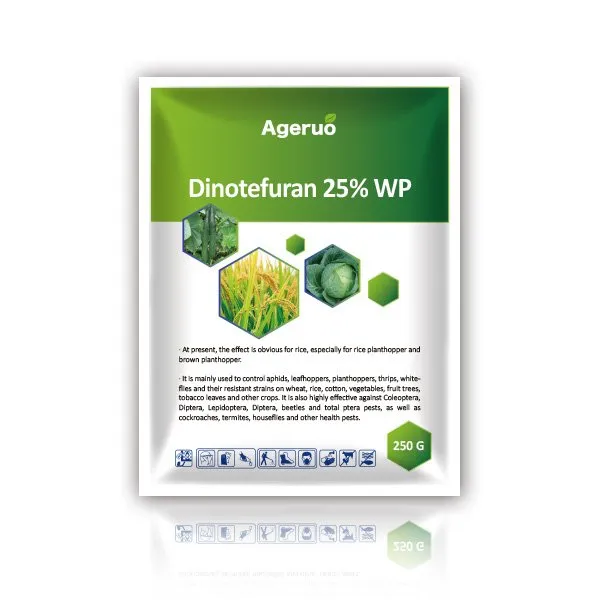
| Active Ingredient Options | Fipronil, imidacloprid or dinotefuran as separate formulations |
| Active Ingredient Content | Confirmed according to the selected formulation |
| Product Format | Dry powder bait |
| Standard Sachet Size | 5 g |
| Standard Packing | 50 sachets per box |
| Master Carton | 20 boxes per carton |
| Main Target Pest | Cockroaches |
| Optional Target Pest | Ants, only where included on the approved label |
| Application Method | Small, concealed bait placements |
| Production Time | Normally 30–35 working days |
| MOQ | Normally 1,000 kg |
| Available Documents | COA, SDS, TDS and product specification |
| Packaging Support | Sachet, retail box, label and carton customization |
| Supply Positioning | Bulk B2B supply for import and distribution |
Fipronil, imidacloprid and dinotefuran represent separate formulation options. They should not be presented as three active ingredients in one product unless a specific registered combination has been developed.
The final specification must clearly identify the selected active ingredient, exact concentration, permitted target pests, application areas and destination-market registration requirements.
What Is Cockroach Killing Bait Powder?
Cockroach killing bait powder combines an insecticidal active ingredient with a bait carrier designed to encourage feeding. Once cockroaches consume the bait, the active ingredient begins acting according to its specific mode of action.
The product is normally applied as several small portions rather than one large pile. These portions are placed close to cockroach harborages, feeding points and movement routes.
This product should not be confused with every powder sold for cockroach control. The term “cockroach powder” may refer to:
- Food-based cockroach bait powder
- Contact insecticidal dust
- Boric acid powder
- Desiccant dust
- Repellent powder
- Other dry insecticide formulations
Buyers should therefore confirm the formulation type, active ingredient, concentration and exposure route before placing an order.
For distributors developing a wider pest management range, this powder bait can be positioned alongside other cockroach control insecticide products, including gels, residual sprays, dusts and bait stations.
How Does Cockroach Bait Powder Work?
Bait Attraction and Feeding
Cockroaches usually remain close to food, water, warmth and protected hiding spaces. A bait powder is designed to take advantage of this feeding behavior.
The bait carrier encourages foraging cockroaches to approach and consume the product. After ingestion, the active ingredient acts on the susceptible insect.
This is different from a contact spray that must reach the cockroach directly. It is also different from an insecticidal dust that relies mainly on contact with a treated surface.
Why Placement Matters
A high-quality formulation cannot compensate for poor placement.
Bait positioned far away from cockroach activity may remain untouched. In contrast, several small placements close to harborages and travel routes give foraging cockroaches more opportunities to find the bait.
Performance can be influenced by:
- Cockroach species
- Infestation pressure
- Bait palatability
- Placement location
- Moisture exposure
- Competing food sources
- Grease and surface contamination
- Cleaning frequency
- Use of repellent sprays nearby
- Resistance status of the local population
The product should be used as part of an integrated cockroach management program that also includes sanitation, monitoring and removal of alternative food and water sources.
Available Active Ingredient Options
POMAIS can discuss different active ingredient options according to the destination market, registration pathway and required product positioning.
| Active Ingredient | IRAC Group | Mode-of-Action Positioning | Procurement Consideration |
|---|---|---|---|
| Fipronil | 2B | Acts on GABA-gated chloride channels in susceptible insects | Suitable for markets requiring a fiprole-based bait formulation |
| Imidacloprid | 4A | Acts on insect nicotinic acetylcholine receptors | Established neonicotinoid option for registered cockroach bait products |
| Dinotefuran | 4A | Acts on insect nicotinic acetylcholine receptors | Alternative neonicotinoid option where registration supports use |
Each option requires its own:
- Active ingredient specification
- Confirmed concentration
- Product label
- Safety information
- Quality documents
- Registration assessment
- Packaging declaration
Importers requiring a clearly defined neonicotinoid bait specification can also review our imidacloprid 2% bait insecticide.
Target Cockroaches and Application Environments
The exact species and application environments must follow the approved product label. Typical structural cockroach targets may include German, American and Oriental cockroaches.
German Cockroach
German cockroaches are commonly found in warm, humid and food-adjacent areas.
Typical activity locations include:
- Kitchen cabinets
- Drawer runners
- Appliance motors
- Sink units
- Wall gaps
- Pipe openings
- Food storage areas
- Restaurant equipment
Because German cockroaches often occupy narrow hidden spaces, multiple small bait placements are generally more practical than a few large portions.
American Cockroach
American cockroaches are larger and are frequently associated with:
- Basements
- Utility rooms
- Drainage areas
- Waste handling spaces
- Loading zones
- Storage facilities
- Building entry points
- Service corridors
Applications for larger cockroach species should be based on the approved label and actual infestation environment.
Oriental Cockroach
Oriental cockroaches are often associated with cool, dark and damp locations.
Common activity areas include:
- Ground-level rooms
- Basements
- Pipe routes
- Utility spaces
- Waste storage areas
- Wall-floor junctions
- Damp structural voids
Moisture management is particularly important because wet bait may lose its physical quality and become less attractive.
How to Use Cockroach Killing Bait Powder
Correct use begins with inspection. The objective is not to scatter powder throughout a room. It is to position controlled bait portions where cockroaches are likely to feed.
Application quantity, replacement frequency and permitted use sites must always follow the approved local product label.
1. Inspect the Treatment Area
Look for signs of cockroach activity, including:
- Live cockroaches
- Droppings
- Egg cases
- Shed skins
- Grease marks
- Harborages
- Feeding areas
- Water sources
- Common travel routes
Inspection helps determine where bait placements are most likely to be found.
2. Reduce Competing Food and Water
Remove accessible food waste, grease, standing water and unnecessary clutter before applying the bait.
Poor sanitation gives cockroaches alternative food sources. This can reduce feeding on the bait even when the formulation is attractive.
3. Open the Sachet When Ready to Apply
Keep the product sealed until application.
Opening the sachet too early may expose the bait to moisture, odors, dust or other contaminants that could affect its condition.
4. Divide the Bait into Small Placements
Use several small portions rather than one large pile.
Small placements can be distributed closer to multiple cockroach harborages and movement routes. They also reduce the risk of loose powder spreading across visible or frequently cleaned surfaces.
5. Place the Bait Close to Cockroach Activity
Suitable placement areas may include:
| Placement Area | Why Cockroaches May Be Active There |
|---|---|
| Behind refrigerators | Warm motor area and concealed spaces |
| Under sinks | Moisture, plumbing access and structural gaps |
| Cabinet corners | Close to food sources and hiding points |
| Behind stoves | Warmth, grease residues and protected spaces |
| Pipe openings | Common movement routes between rooms |
| Wall-floor junctions | Protected travel routes |
| Behind equipment | Low disturbance and limited light |
| Approved bait containers | Helps keep powder contained and concealed |
Do not place the bait on exposed walking surfaces or in areas where it can easily be removed during routine cleaning.
6. Avoid Food-Contact Surfaces
Do not apply loose bait directly to:
- Food preparation surfaces
- Kitchen utensils
- Uncovered food
- Food packaging
- Dining surfaces
- Shelves holding unpackaged food
- Areas where contamination may occur
Applications in food-handling environments must follow local regulations and the approved label.
7. Keep the Bait Dry
Moisture can change the physical condition of the powder and reduce bait acceptance.
Replace bait that becomes:
- Wet
- Greasy
- Dirty
- Moldy
- Covered by dust
- Contaminated with cleaning products
8. Avoid Repellent Contamination
Do not spray strong repellent insecticides, fragranced cleaners or other chemicals directly on or immediately around bait placements.
Repellent contamination may discourage cockroaches from approaching and feeding on the bait.
9. Monitor and Replace as Required
Check cockroach activity and bait condition at the interval stated on the label.
Further treatment may be required where:
- Bait has been consumed
- Infestation pressure remains high
- New cockroach activity is detected
- Moisture has damaged the bait
- Sanitation conditions have changed
Cockroach Bait Powder vs Insecticidal Dust
Cockroach bait powder and insecticidal dust may look similar, but they are formulated and applied for different purposes.
| Comparison Factor | Cockroach Bait Powder | Insecticidal Dust |
|---|---|---|
| Primary Function | Encourage feeding on insecticidal bait | Treat cracks, voids or travel surfaces |
| Main Exposure Route | Primarily ingestion | Contact, adherence, grooming or physical action |
| Food Attractant | Normally included | Normally not included |
| Application Pattern | Several small bait portions | Thin and controlled dust layer |
| Typical Placement | Near harborages and feeding areas | Cracks, wall voids and concealed structural spaces |
| Application Equipment | Sachet, small applicator or bait container | Bulb duster or professional dust equipment |
| Main Limitation | Moisture and competing food | Excessive application and visible residue |
| Buyer Selection | Suitable when feeding activity is required | Suitable when surface or void treatment is required |
A bait powder should not be broadcast across a room like a conventional insecticidal dust.
Buyers should confirm whether the required product is a feeding bait or a contact dust, because the formulation, label, packaging and application instructions are different.
Cockroach Bait Powder vs Cockroach Gel Bait
Powder and gel baits both rely mainly on cockroach feeding. However, they differ in packaging, placement precision, moisture behavior and market positioning.
| Comparison Factor | Cockroach Bait Powder | Cockroach Gel Bait |
|---|---|---|
| Typical Packaging | Individual sachets | Syringe, tube or cartridge |
| Application Format | Small powder portions | Small gel dots |
| Placement Precision | Moderate | High |
| Best Placement Condition | Dry and protected areas | Controlled indoor micro-sites |
| Application Equipment | No syringe required | Syringe or bait applicator |
| Retail Presentation | Compact sachet packs | Precision bait package |
| Handling | Simple portioning | Accurate dosing in cracks and crevices |
| Buyer Consideration | Simple retail format and low packaging volume | Professional appearance and precise placement |
Powder bait can be suitable for markets where consumers are familiar with small sachet insecticide products.
Gel bait is often selected where precise crack-and-crevice placement is a priority. Distributors evaluating this format can review the POMAIS cockroach gel bait range.
Why Choose Powder Bait for Your Product Line?
Cockroach killing bait powder provides a distinct product format for household insecticide and public health pest control channels.
Compact Retail Packaging
Small sachets require limited shelf space and can be packed into lightweight retail boxes. This can simplify storage, display and distribution.
Simple Application Format
The product does not require a syringe, spray bottle or pressurized container. Users can open the sachet and place the permitted amount according to the label.
Clear Product Differentiation
Powder bait offers a different application format from:
- Aerosol sprays
- Residual liquid insecticides
- Cockroach gels
- Bait stations
- Contact dusts
- Repellent products
This allows distributors to build a more complete cockroach control portfolio without relying on one formulation type.
Flexible Market Presentation
Sachet size, retail box quantity, language and artwork can be adjusted according to commercial feasibility and regulatory requirements.
Suitable for Bulk Distribution
The compact packaging format can support wholesale distribution through:
- Public health product distributors
- Household insecticide channels
- Pest control wholesalers
- Agricultural input distributors with public health product ranges
- Supermarket supply channels
- Private pest management brands
Contact
Packaging Options for Importers and Distributors
The standard product is packed in 5 g sachets, with 50 sachets per retail box and 20 boxes per master carton.
Alternative packaging can be reviewed according to formulation stability, order quantity and target-market requirements.
Sachet Options
Available packaging discussions may include:
- Custom brand design
- Product name and active ingredient declaration
- Different label languages
- Batch number printing
- Production and expiry coding
- Approved precautionary statements
- Barcode placement
- Distributor information
- Moisture-resistant packaging material
- Sachet tear position
Retail Box Options
Retail box customization may include:
- Brand artwork
- Product positioning
- Sachet quantity
- Application illustrations
- Label instructions
- Required registration information
- Barcode and market information
- Multilingual text
- Carton-ready dimensions
Master Carton Options
Commercial carton planning may include:
- Boxes per carton
- Gross and net weight
- Carton dimensions
- Shipping marks
- Batch identification
- Pallet configuration
- Container loading calculation
Packaging information must remain consistent across the sachet, retail box, master carton, COA, SDS, technical specification and import documents.
The active ingredient, concentration, target pests, safety instructions and registration number cannot be changed only for marketing purposes.
Quality Control and Product Documentation
Powder bait quality depends on more than the active ingredient content.
The bait carrier, powder condition, ingredient distribution, moisture level, fill weight and packaging seal can all influence storage stability and user experience.
Before confirming a production order, we review:
- Active ingredient specification
- Confirmed concentration
- Raw material requirements
- Bait carrier condition
- Powder appearance
- Product uniformity
- Sachet fill weight
- Seal integrity
- Printed information
- Batch coding
- Retail box quantity
- Master carton configuration
Available Quality and Commercial Documents
Document support may include:
- COA — Certificate of Analysis
- SDS — Safety Data Sheet
- TDS — Technical Data Sheet
- Product Specification
- Packaging Specification
- Batch-related quality documents
- Available registration-supporting information
- Commercial and shipping documents
Document availability depends on the selected active ingredient, formulation, destination country and cooperation stage.
Importers building a wider urban pest management portfolio can also review our public health pest control products.
Safety, Storage and Regulatory Requirements
Cockroach bait powder is an insecticide product and must be handled according to the approved label.
Safety Requirements
- Keep out of reach of children.
- Prevent access by pets and non-target animals.
- Avoid inhalation and unnecessary skin contact.
- Do not eat, drink or smoke while handling the product.
- Wash hands after application.
- Do not place on exposed food-contact surfaces.
- Do not contaminate food, utensils or drinking water.
- Do not apply in unapproved environments.
- Use suitable protective measures where required by the label.
- Dispose of unused bait and empty packaging according to local regulations.
Storage Requirements
Store the product:
- In its original sealed packaging
- In a cool and dry area
- Away from direct sunlight
- Away from heat and moisture
- Away from food and animal feed
- In a secure storage location
- Under conditions stated on the product label
Damaged, wet or unsealed sachets should not be distributed as normal retail products.
Market Registration
Permitted active ingredients, concentrations, target pests, packaging sizes and label claims vary between countries.
Before commercial supply is confirmed, buyers should provide:
- Destination country
- Intended sales channel
- Registration status
- Required active ingredient
- Required concentration
- Packaging specification
- Label language
- Expected order quantity
POMAIS does not present an unregistered formulation as approved for sale in a destination market.
Frequently Asked Questions
Request Cockroach Bait Powder Specifications
For an accurate formulation review and quotation, please provide:
- Destination country
- Company type
- Required active ingredient
- Required concentration
- Estimated order quantity
- Preferred sachet size
- Sachets per retail box
- Required label language
- Current registration status
- Expected purchasing schedule
We will review formulation availability, packaging feasibility, documentation requirements, production planning and destination-market conditions before confirming the commercial specification.
This product is intended for professional B2B procurement and wholesale distribution. It is not supplied as an individual retail order.
Contact us!
We will reply to you within 24 hours on business days!