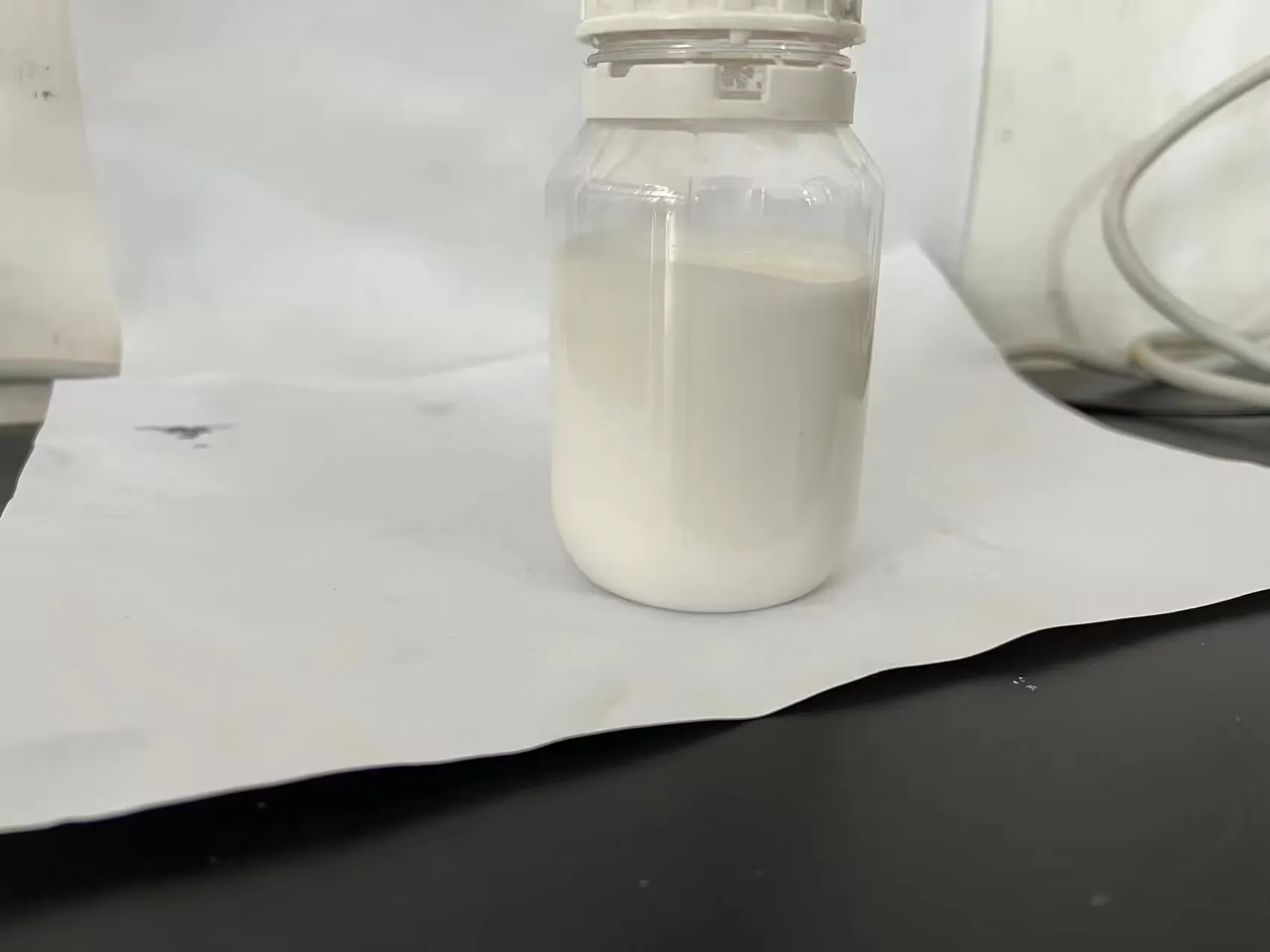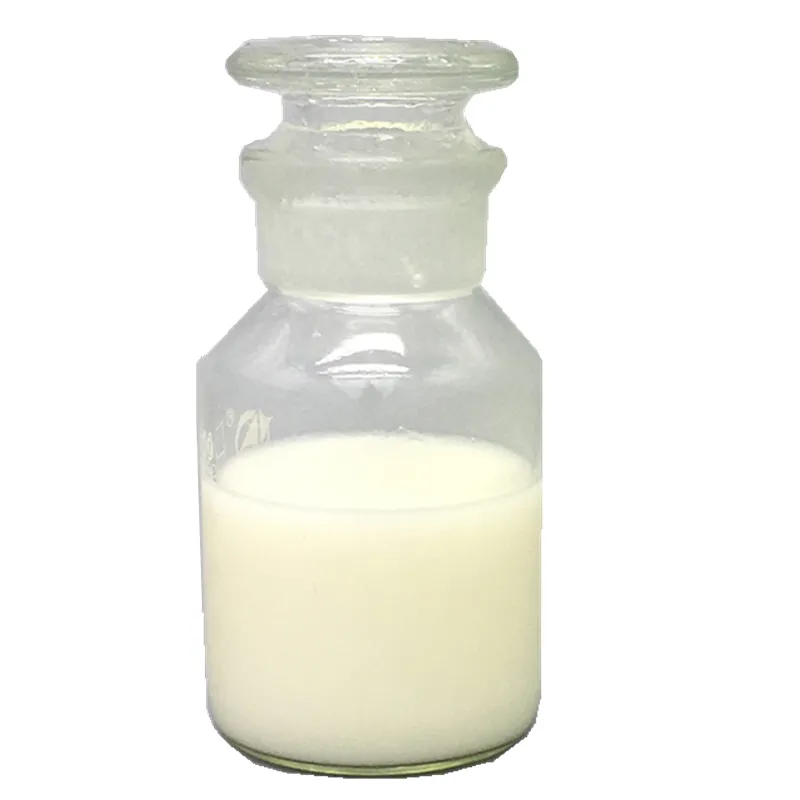

Dodine 40% SC Fungicide
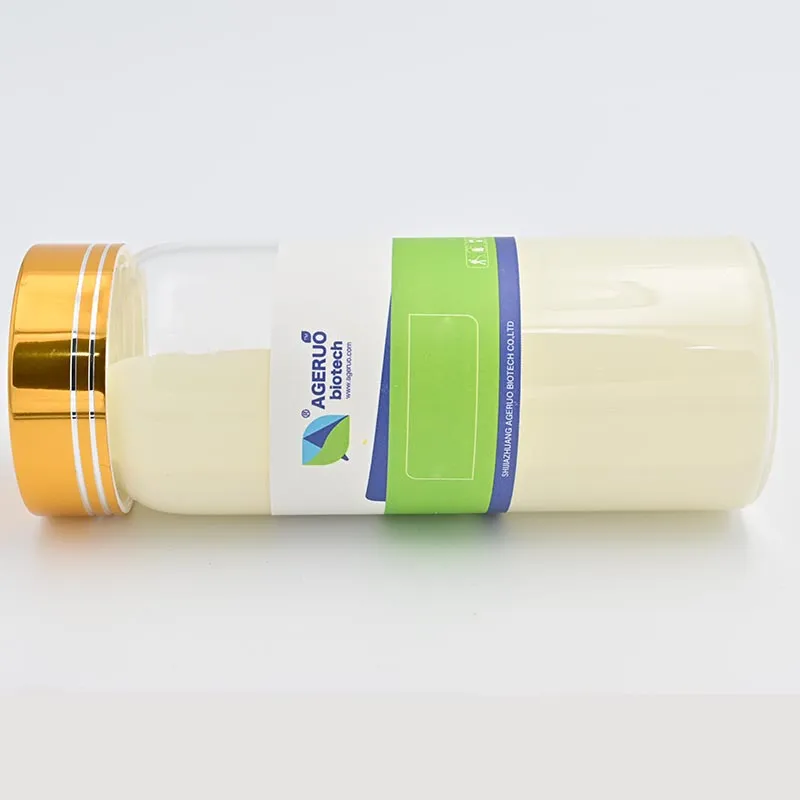
We supply Dodine 40% Soluble Concentrate (SC) — a guanidine, contact fungicide with protective and early curative activity for pome and stone fruit programs. By disrupting fungal cell membranes and blocking spore germination, it delivers reliable control of label-listed foliar diseases such as apple/pear scab, cherry leaf spot, and brown rot, with utility from cool early spring through autumn windows. Built for importers and private labels, this 40% SC ships OEM-ready (multilingual artwork, QR/anti-counterfeit) with COA/MSDS, ISO-managed batch consistency, and export-grade packing (500 mL / 1 L / 5 L retail; 200 L drums / 1000 L IBC bulk). Usage and intervals follow destination-country labels; farm-level rates are not published on this page.
- Designed for Professional Buyers & Bulk Orders
- We support custom packaging, labeling, and formulation to meet your market needs.
- Export wholesale inquiries only.
- Please include destination country, business type (importer/distributor/registrant), and expected volume.
- Retail requests will not be processed.

About Dodine 40% SC Fungicide
| Product Name | Dodine (fungicide) |
| Active Ingredient | Dodine |
| CAS Number | 2439-10-3 |
| Molecular Formula | C15H24N2O2 |
| Target Pests/Diseases | Fungal diseases such as scab, leaf spot, rust, and brown rot |
| Applicable Crops | Apples, pears, cherries, peaches, almonds |
| Dosage | 0.5-1.0 kg per hectare |
| Mode of Action | Protective and curative fungicide; inhibits fungal spore germination and growth |
| Tank Mix Compatibility | Can be mixed with other fungicides or insecticides depending on crop and pest |
| Common Formulations | Soluble Concentrate (SC) |
| Common Concentrations | 40%SC |
| Packaging Types | 1kg/bag, 5kg/bag, 25kg/drum |
| Pre-Harvest Interval | 7-10 days |
| Company Strengths | POMAIS offers high-efficiency fungicides, supports global OEM/ODM customization, and provides tailored packaging solutions for various markets |
We offer high-quality Dodine Fungicide products with customized packaging and labeling options to meet specific client needs. Our products are manufactured under ISO 9001 certification, ensuring superior quality and consistency.
Dodine 40% SC Fungicide
We supply Dodine 40% Soluble Concentrate (SC)—a guanidine, contact fungicide purpose-built for pome and stone fruit programs and select ornamentals. It delivers protective plus early-curative activity by disrupting fungal cell membranes and suppressing spore germination, helping prevent infections such as scab, leaf spot, rust, and brown rot on label-listed crops. The SC system is engineered for rapid wetting, uniform coverage, and low foaming, with practical tank-mix compatibility where labels allow, and reliable performance from cool early spring through autumn. As a manufacturer, we provide OEM/private label (multilingual artwork, QR/anti-counterfeit), ISO-managed batch consistency, and full COA/MSDS with optional registration support. Packaging is export-ready—500 mL / 1 L / 5 L retail and 200 L drums / 1000 L IBC bulk—shipped by sea/air/LCL with dependable lead times. Use is strictly per destination-country labels (coverage, intervals, PHI/REI); this page focuses on the 40% SC specification to avoid overlap with other strengths or formulations on your site.For more information or to inquire about Dodine Fungicide for sale, feel free to contact us!
Performance
- Canopy cleanliness that holds: Prevents spore germination and early lesion establishment on label-listed foliar diseases (e.g., scab, leaf spots, rust, brown rot), helping keep leaves and fruit surfaces clean through the labeled spray interval.
- Protective with early-curative reach: Best positioned preventively; retains useful activity at the very beginning of infection when applied promptly, limiting spread on treated tissue.
- Built for cool-start programs: Reliable performance from cool early spring through autumn; well-suited to the front half of pome/stone fruit programs when disease risk first rises.
- Coverage-driven consistency: The SC system delivers rapid dilution, uniform wetting, and low foaming for even deposits—critical for contact fungicides where surface coverage determines outcome.
- Program stability, fewer rescue sprays: When embedded in a rotation, helps reduce breakthrough events and emergency interventions, supporting marketable finish and predictable pack-outs.
- Tank-mix friendly by label: Compatible with many fungicides/insecticides where permitted, enabling spectrum-broadening mixes and seasonal rotations without complicating handling.
- Operational fit: Air-blast/high-volume sprayers achieve thorough coverage on complex canopies; agitation-stable suspensions support long spray days with minimal re-mixing.
- Compliance first: Actual intervals, PHI/REI, and any buffer requirements follow destination-country labels; integrate with non-cross–resistant partners as directed.
Where It Fits: Crops & Diseases Covered
Label scope varies by country; examples below illustrate common use domains. Always follow destination-country registrations.
Crop–Disease Matrix (readers’ quick view)
| Crop group (examples) | Primary diseases (examples) | Typical window (phenology) | Field note |
|---|---|---|---|
| Pome fruits (apple, pear) | Scab (Venturia inaequalis/pyrina), leaf spots, rust | Green tip → petal fall, then cover sprays per risk | Preventive anchor at cool, wet periods; rotate with non-cross partners to maintain sensitivity |
| Stone fruits (cherry, peach, nectarine, apricot) | Cherry leaf spot (Blumeriella jaapii), brown rot (Monilinia spp.), rust | Pre-bloom → shuck split; pre-harvest protection as labeled | Emphasize fruit/leaf surface coverage; support blossom/early fruit finish |
| Nuts (almond; market-dependent) | Leaf spot/scab complexes (label-listed) | Bud break → early cover | Fit as preventive surface shield on young canopy; confirm local eligibility |
| Ornamentals (nursery & landscape) | Leaf spot, rust, powdery mildew (as labeled) | Early symptom risk → rotational slots | Conduct small-area tests on sensitive varieties; coverage dictates outcome |
Program snapshots (practical context)
- Apples/Pears: Start at green tip into tight cluster/petal fall when scab risk rises; alternate with non-cross fungicides in wet cycles. Air-blast sprayers help reach complex canopies; prioritize uniform surface films on leaves and fruitlets.
- Cherries/Stone fruit: Use pre-bloom to shuck split to protect young tissues against leaf spot and prepare for brown rot phases; maintain even deposits on fruiting wood and spur leaves.
- Almonds/Nuts: Where registered, position at bud break/early cover for surface protection during cool, wet spells; confirm target spectrum and PHI per local labels.
- Ornamentals: Deploy as a protective rotation partner during favorable disease weather; verify varietal tolerance on a small block before wide use.
Operational guardrails
- Dodine is contact, non-systemic with slight local movement; coverage (including leaf undersides) is decisive.
- Final crop lists, pathogens, timing, intervals, PHI/REI, and any varietal cautions are governed by the destination-country label.
How to Use It for Best Results (Label-Driven)
Field SOP (for distributors & agronomists)
- Program placement — Position preventively or at the very first signs in pome/stone fruit and approved ornamentals. Prioritize cool, wet risk windows in early spring; revisit in autumn as labels allow.
- Water quality — Use clean water in the neutral to mildly acidic range. Avoid strongly alkaline conditions. If unsure, run a quick pH check.
- Mixing order (tank prep) — Start with water (agitation ON) → add dispersible solids (WG/WP) if any → add Dodine 40% SC → then emulsifiable/liquid partners (EC/SL/ME) → adjuvants last. Keep steady agitation throughout.
- Jar test — Before first market use or new partners, perform a jar test with local water and adjuvants to confirm emulsion/suspension stability and absence of flocculation.
- Coverage essentials — This is contact, non-systemic: calibrate sprayer, target leaf undersides and spur/cluster zones, set droplet spectrum for uniform surface film; maintain travel speed/pressure that preserves deposition.
- Intervals & rotation — Set spray intervals within the label range; tighten under high risk, extend when pressure drops. Rotate with non–cross-resistant partners per FRAC/IPM guidance; avoid long runs of a single MoA.
- Tank-mix boundaries — Only mix where labels allow. Avoid strongly alkaline partners/systems. If copper or oil-based products are common in your market, validate compatibility locally before broad use.
- Rain & re-coverage — If significant rainfall occurs shortly after spraying, follow the label for any re-coverage guidance; do not improvise off-label rules.
- PHI/REI & buffers — Respect pre-harvest intervals, re-entry intervals, and any buffer zones mandated by the destination label.
- IPM alignment — Combine with sanitation, canopy airflow, forecasting models (e.g., scab risk) to reduce emergency sprays and support resistance stewardship.
- Record-keeping — Log date, lot number, partners, water pH, weather, block, and operator. This supports traceability and continuous improvement.
Program placement (illustrative; labels prevail)
| Crop group | Anchor window | Purpose |
|---|---|---|
| Pome fruits (apple/pear) | Green tip → petal fall, then per risk | Establish a preventive surface film against scab/leaf spots |
| Stone fruits (cherry/peach/nectarine) | Pre-bloom → shuck split | Protect young tissues; prepare for brown-rot phases |
| Ornamentals (selected) | At-risk weather → rotation slots | Maintain clean foliage; test varietal tolerance on a small area |
Do / Don’t
- Do: keep agitation on; target leaf undersides; rotate MoA; follow local label for intervals/PHI/REI.
- Don’t: rely on coverage from a single side; stack multiple high-pH partners; reuse one MoA across consecutive sprays; invent off-label re-spray rules.
Why Teams Choose This 40% SC — Dodine 40% SC
Value Stack (what buyers get, in practice)
- Protective + early curative certainty — Disrupts membranes and blocks spore germination on treated tissue, anchoring early-season programs when scab/leaf-spot risk first climbs.
- Coverage-driven consistency — SC engineered for rapid dilution, uniform wetting, low foam, and agitation stability—built for long spray days with air-blast/high-volume rigs.
- Cool-season reliability — Performs from early spring through autumn across typical label conditions, reducing emergency re-sprays during wet/cool spells.
- Rotation-friendly — A guanidine MoA that fits cleanly into rotations with triazoles, strobilurins, multisites, etc.; helps maintain sensitivity when used per local resistance guidance.
- Operational efficiency — Simple mixing order, broad tank-mix latitude where labels allow, and predictable handling lower downtime and training overhead.
- OEM at scale — Manufacturer-direct with multilingual artwork, QR/anti-counterfeit, and batch-to-batch QC; documentation (COA/MSDS) and registration support streamline entry.
Proof Points (buyer-facing signals)
- Batch traceability and per-lot COA/MSDS underpin audits and distributor QA.
- Sprayability: low foam + stable suspensions → fewer stoppages for tank maintenance.
- Program fit: slots naturally at green tip → petal fall (pome) and pre-bloom → shuck split (stone fruit) per label—easy to template across orchards.
- Commercial readiness: export-grade packing and dependable lead times enable synchronized launches with other SKUs.
Quick cues for your agronomy team
- Use preventively/very early; make coverage the KPI.
- Rotate MoA within season; avoid long runs of any single class.
- Keep agitation on, verify jar tests with local water/partners, and follow destination-country labels for intervals, PHI/REI, and buffers.
OEM & Packaging Built for Your Market
Retail & Bulk Options (SC only)
| Pack size | Container | Closure/Seal | Typical carton | Notes |
|---|---|---|---|---|
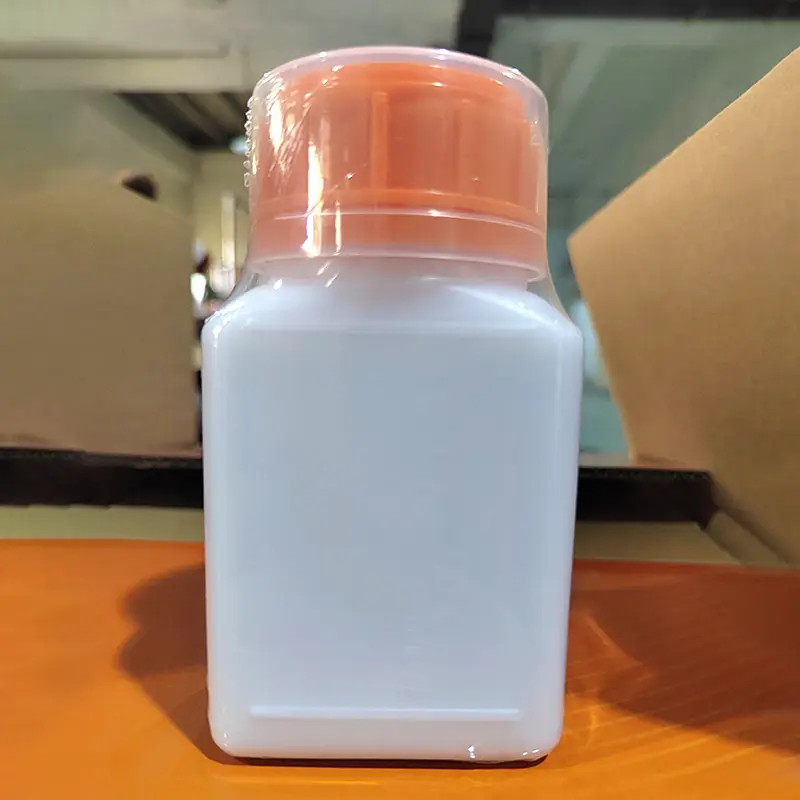
| 500 mL | HDPE bottle | TE cap + foil seal | 20–24 units | Shelf-ready; low-foam pour profile |
| 1 L | HDPE bottle | TE cap + foil seal | 12–15 units | Most requested retail size |
| 5 L | HDPE jerrycan | Screw cap + tamper band | 4 units | Contractor/estate blocks |
| 200 L | HDPE drum | Bung cap | — | Bulk dispatch; palletized |
| 1000 L | IBC tote | Ball valve | — | Consolidated shipments |
Labeling & Brand Enablement
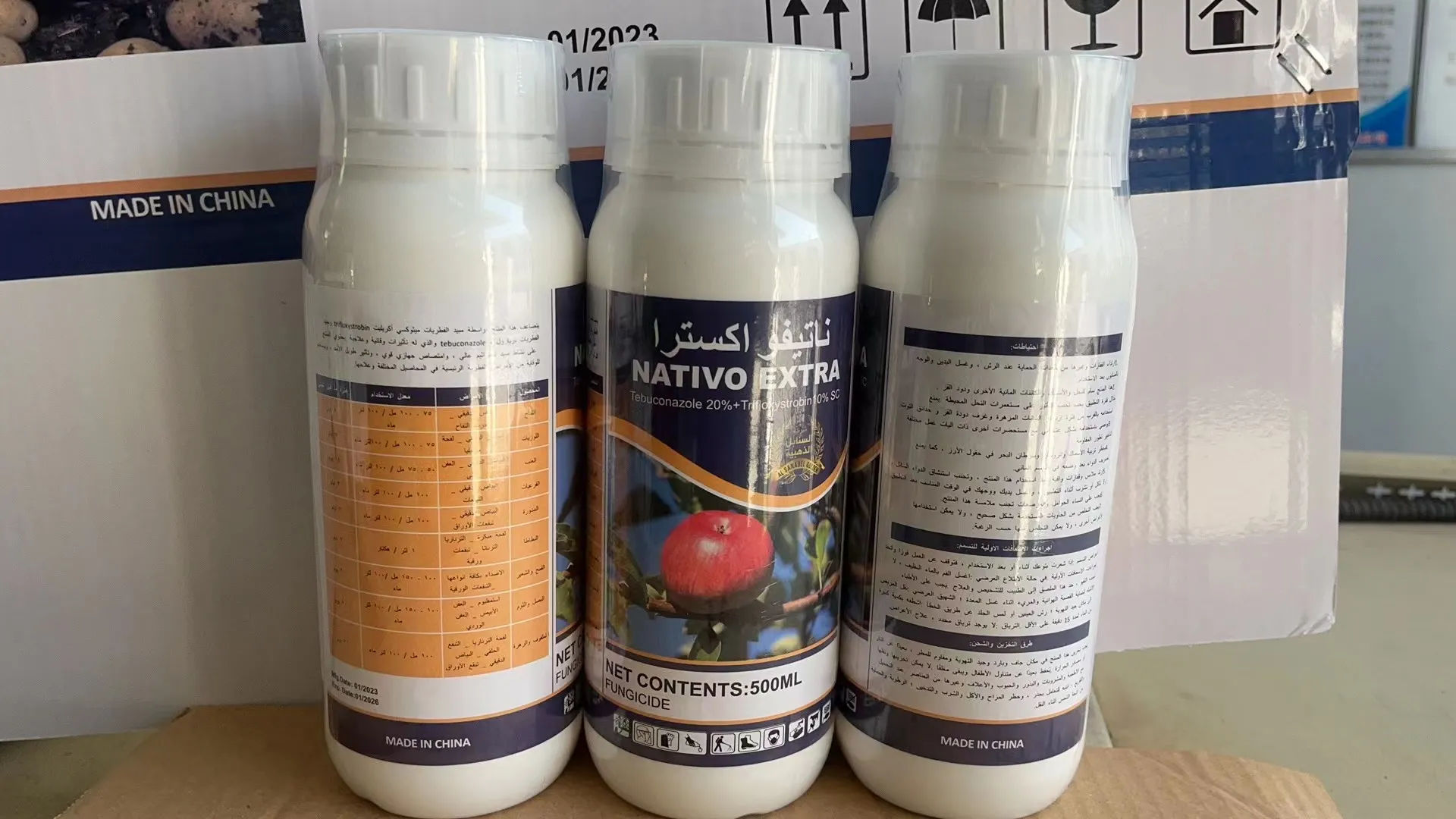
- Multilingual artwork (EN/AR/FR/ES/RU/others), GS1 barcode, QR/anti-counterfeit, batch/DOM/expiry printing.
- Outer cartons with moisture barrier; export marks per destination rules.
- Artwork localization for GHS pictograms/hazard text; claims strictly follow destination-country labels.
Logistics & Lead Times
- Made-to-order with dependable lead times (typically 2–3 weeks after artwork/PO alignment, subject to allocation).
- Sea/Air/LCL supported; SKU consolidation available; pallet schemes optimized for footprint and weight limits.
- Each lot ships with COA + MSDS, packing list, commercial invoice; Certificate of Origin/legalization on request.
What We Need to Configure Fast
- Destination country/authority, target channels (retail vs. bulk).
- Required pack sizes, label languages, anti-counterfeit preference.
- Any special pallet, liner, or climate requirements (hot/cold chain, tropical humidity).
- Whether registration dossier support is needed alongside OEM.
Quality, Documents & Registration Support
Audit-Ready Essentials (how we run quality)
- ISO-managed QA/QC with instrument calibration and documented SOPs; retains kept per lot for traceability.
- Formal change control (raw materials/methods/packaging) with prior customer notice on approved specs.
- Batch/label traceability from production order → COA → pallet/carton/unit level.
Release COA — Per Lot (indicative indices)
- Active content (% w/w); identity by validated method.
- pH (1% dilution); viscosity (Brookfield class, method-stated).
- Wetting time & suspensibility (CIPAC-aligned, method referenced).
- Wet-sieve residue (e.g., 75 µm standard, spec on COA).
- Foaming tendency; specific gravity (20 °C).
- Moisture / loss on drying; appearance/color; odor noted.
- Packaging integrity (seal/liner/cap) and label conformity.
- Stability gating on representative lots: accelerated heat, ambient shelf checks, and freeze–thaw where applicable (pass/fail criteria method-stated).
Compliance & Label Alignment
- GHS: destination-specific hazard statements, pictograms, precautionary phrases reflected on artwork and MSDS.
- Use governance: intervals, PHI/REI, tank-mix allowances and buffers follow destination-country labels; page content remains formulation-level (no farm rates).
- Claims discipline: only label-listed crops/targets appear on final artwork; no off-label messaging.
Registration Support (on request, under NDA)
- Spec mapping to authority format; 5-batch analytical summary; validated method briefs (identity/assay/critical performance tests).
- Manufacturing & QA overview (high level); storage/transport statements consistent with MSDS Sections 7/14.
- Artwork localization pack (multilingual), change-control policy, and traceability documentation to support audits.
What ships with every lot
- COA + MSDS, packing list, commercial invoice; Certificate of Origin/legalization available upon request.
Fast Answers to Common Questions
- Is it systemic?
No—contact, non-systemic with slight local movement; efficacy depends on coverage. - Primary mode of action?
Membrane disruption + spore-germination block (guanidine class). - Where does it fit in the season?
Preventive to very early infection, especially from cool early spring through autumn, per label. - Which diseases does it cover?
Label-listed foliar diseases such as scab, leaf spots, rust, brown rot on approved crops. - Can I tank-mix it?
Label-dependent; avoid strongly alkaline systems and run a jar test with local water/adjuvants. - Intervals, PHI/REI?
Follow destination-country labels; integrate into rotations to maintain sensitivity. - Any special spray tips?
Target leaf undersides and clusters, keep agitation on, and choose droplets for uniform surface films. - Packaging & docs?
500 mL / 1 L / 5 L retail; 200 L / 1000 L bulk; each lot ships with COA + MSDS. - OEM options?
Multilingual artwork, QR/anti-counterfeit, GS1 barcodes; artwork localized to GHS and label claims.
Tell Us Your Market—We’ll Configure Your 40% SC
Send us the following and we’ll return a configured Dodine 40% SC plan, COA/MSDS pack, and a firm delivery schedule:
- Destination country/authority & registration status (if any)
- Crops & target diseases you’ll list on the label
- Pack sizes (500 mL / 1 L / 5 L retail; 200 L / 1000 L bulk)
- Label languages + anti-counterfeit preference (QR, codes)
- Tank-mix posture (common partners/adjuvants) & any pH/hardness constraints
- Launch window & INCOTERMS (sea/air/LCL; consolidation needs)
- Whether you require registration dossier support (5-batch analytics, method briefs, QA overview)
We’ll map specs to your market, confirm artwork/GHS, and lock in production slots to meet your launch.
Contact us!
We will reply to you within 24 hours on business days!