
Bromadiolone vs Brodifacoum: Which Rodenticide Should You Choose?
Bromadiolone and Brodifacoum are both second-generation anticoagulant rodenticides (SGARs) used in professional rat and mouse control. They share the same basic vitamin K antagonist mode of action, but they are not identical in potency, resistance profile, tissue persistence, or non-target risk.
Brodifacoum is generally more potent and may remain effective against some rodent populations showing practical resistance to Bromadiolone. However, higher potency does not mean faster death, and it does not mean Brodifacoum should automatically be selected for every severe infestation.
A professional comparison should consider:
rodent susceptibility + resistance status + bait acceptance + registered use + non-target exposure + stewardship requirements
rather than simply asking which active ingredient is “stronger.”
Bromadiolone vs Brodifacoum: Quick Comparison
| Comparison | Bromadiolone | Brodifacoum |
|---|---|---|
| Rodenticide class | Second-generation anticoagulant | Second-generation anticoagulant |
| Main mechanism | Vitamin K antagonist | Vitamin K antagonist |
| VKOR pathway | Inhibited | Inhibited |
| Delayed anticoagulant action | Yes | Yes |
| Lethal effect after sufficient short-term intake | Possible | Possible |
| Relative potency | High | Generally higher |
| Practical resistance | Reported in some rat and mouse populations | Often remains effective against important Bromadiolone-resistant strains |
| Tissue persistence | High | Very high |
| Secondary wildlife risk | Significant | Generally higher |
| Best selection basis | Susceptibility, registration, risk profile | Resistance need, potency requirement, stewardship |
| Different mode of action from each other? | No | No |
The central difference is therefore not speed.
It is the balance between potency, resistance-breaking value, and stewardship risk.
Do Bromadiolone and Brodifacoum Work the Same Way?
Yes.
Both are anticoagulant rodenticides that interfere with the vitamin K recycling pathway.
Vitamin K is required for the normal production of several blood-clotting factors. When this recycling process is disrupted, existing clotting factors gradually become depleted.
The result is:
impaired blood clotting → internal or external bleeding → delayed mortality after sufficient exposure
This delayed mechanism is important.
Neither Bromadiolone nor Brodifacoum should be understood as a fast knockdown poison.
Their effects develop over time as normal clotting capacity declines.
This shared mechanism also means the two active ingredients should not be treated as completely different resistance-management tools simply because their names are different.
Is Brodifacoum Stronger Than Bromadiolone?
Generally, yes.
Brodifacoum is considered a higher-potency second-generation anticoagulant.
This means susceptible rodents can reach a lethal internal dose with a lower amount of active ingredient exposure compared with Bromadiolone under comparable toxicological conditions.
However, potency and field efficacy are not the same thing.
A highly potent rodenticide may still perform poorly if:
- Rodents do not accept the bait
- Alternative food is abundant
- Bait placement does not match rodent activity
- Product access is poor
- Reinvasion continues
- The registered use pattern does not fit the site
- The population has an unusual susceptibility profile
The correct conclusion is therefore:
Brodifacoum is generally more potent, but higher potency alone does not guarantee better field control.
Does Brodifacoum Kill Rodents Faster Than Bromadiolone?
Not necessarily.
This is an important distinction.
Brodifacoum’s higher potency should not be confused with rapid visible mortality.
Both Bromadiolone and Brodifacoum are delayed-action anticoagulants.
After sufficient intake, rodents may continue behaving relatively normally for a period while vitamin K-dependent clotting factors decline.
Visible mortality generally occurs later.
This delayed action is also one reason the phrase “single-feed rodenticide” can be misunderstood.
It does not mean:
one bite causes immediate death.
It means that sufficient intake over a relatively short feeding period can potentially produce a lethal effect without requiring repeated exposure over many separate days.
The actual amount consumed still matters.
Which Is Better When Anticoagulant Resistance Is Present?
This is one of the most important reasons to distinguish between Bromadiolone and Brodifacoum.
Some Norway rat and house mouse populations have developed practical resistance to Bromadiolone.
Resistance can be associated with changes in the vitamin K epoxide reductase pathway, including certain VKORC1 variants, as well as other biological mechanisms.
Where Bromadiolone resistance is confirmed, repeatedly using Bromadiolone is unlikely to solve the problem.
Brodifacoum may remain effective against important rodent strains that show reduced susceptibility to Bromadiolone.
This gives Brodifacoum an important professional role where:
- Bromadiolone resistance is known
- Previous Bromadiolone treatments have failed for resistance-related reasons
- Local guidance supports a higher-potency SGAR
- The product is registered for the intended use
However, treatment failure should not automatically be diagnosed as resistance.
Before escalating potency, professional programs should also consider:
- Bait acceptance
- Competing food
- Access to bait
- Reinvasion
- Population size
- Sanitation
- Structural entry points
A larger infestation alone does not prove that a more potent anticoagulant is required.
Can Bromadiolone and Brodifacoum Be Rotated for Resistance Management?
Not in the same way that pesticides from different modes of action are rotated.
Both Bromadiolone and Brodifacoum are anticoagulant vitamin K antagonists.
They share the same fundamental biological target pathway.
Therefore, simply changing:
Bromadiolone → Brodifacoum → Bromadiolone
should not be treated as a true different-mode-of-action rotation.
Brodifacoum may still be useful against some Bromadiolone-resistant populations because of its higher potency and resistance profile, but that is different from changing to an entirely different toxicological mechanism.
Where genuine mode-of-action diversification is required, the program may need to evaluate an appropriately registered non-anticoagulant rodenticide strategy rather than relying only on another anticoagulant.
This decision must follow local registration and professional stewardship requirements.
Which Has Greater Tissue Persistence?
Both Bromadiolone and Brodifacoum can persist in rodent tissues after exposure.
This is a defining stewardship issue with second-generation anticoagulants.
Brodifacoum is generally associated with particularly high tissue persistence.
This matters because poisoned rodents may remain a source of anticoagulant residues to predators and scavengers.
The practical consequence is:
higher persistence can support efficacy, but it can also increase secondary exposure concerns.
This is why Brodifacoum should not be selected only because it is the more potent option.
Its use should be justified by the control requirement and balanced against non-target risk.
Which Has Greater Secondary Poisoning Risk?
Both active ingredients create significant secondary-poisoning concerns.
Predators and scavengers can be exposed when they consume rodents containing anticoagulant residues.
Potentially exposed wildlife may include:
- Owls
- Hawks
- Other birds of prey
- Foxes
- Mustelids
- Other mammalian predators and scavengers
Brodifacoum generally presents the higher secondary-exposure concern, particularly for avian predators, because of its high potency and strong tissue persistence.
However, this should not be interpreted as meaning Bromadiolone is a low-risk alternative.
Bromadiolone is also an SGAR and can create important primary and secondary risks.
The more accurate comparison is:
Brodifacoum generally carries the stronger secondary-risk profile, but both require strict non-target risk management.
Where wildlife exposure is a major concern, active ingredient selection should not be based on efficacy alone.
Does Rodent Species Change the Choice?
Yes, but not in a simple:
rats = Brodifacoum
mice = Bromadiolone
pattern.
Norway rats, roof rats, and house mice can differ in:
- Feeding behavior
- Neophobia
- Bait acceptance
- Susceptibility
- Local resistance genetics
- Movement patterns
Even populations of the same species can respond differently in different regions.
For example, a susceptible Norway rat population may still respond well to a Bromadiolone program, while a resistant population of the same species may require a different strategy.
The correct question is therefore:
What is the susceptibility and resistance status of this rodent population?
not:
Which chemical is used for large rodents?
Body size alone is not a sufficient active-ingredient selection rule.
Why Does Bait Quality Still Matter?
A stronger active ingredient does not compensate for poor bait acceptance.
This is especially important in professional rodent control.
Rodents must actually consume enough bait for the active ingredient to work.
Practical efficacy can therefore depend on:
- Bait palatability
- Food competition
- Moisture resistance
- Bait freshness
- Rodent feeding behavior
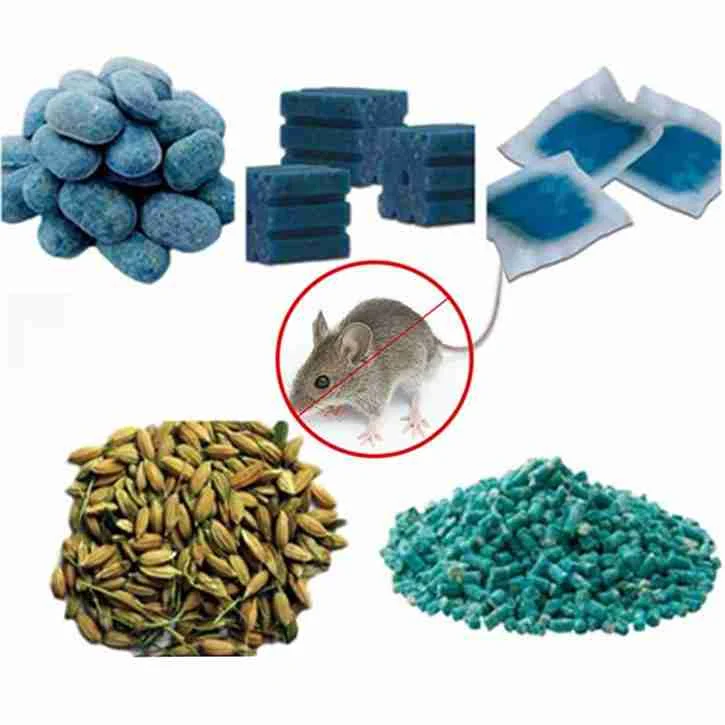
- Bait format
- Environmental conditions
A Brodifacoum product that rodents avoid may perform worse than a well-formulated Bromadiolone bait that is readily accepted.
This is why active ingredient selection and bait formulation should be treated as separate decisions.
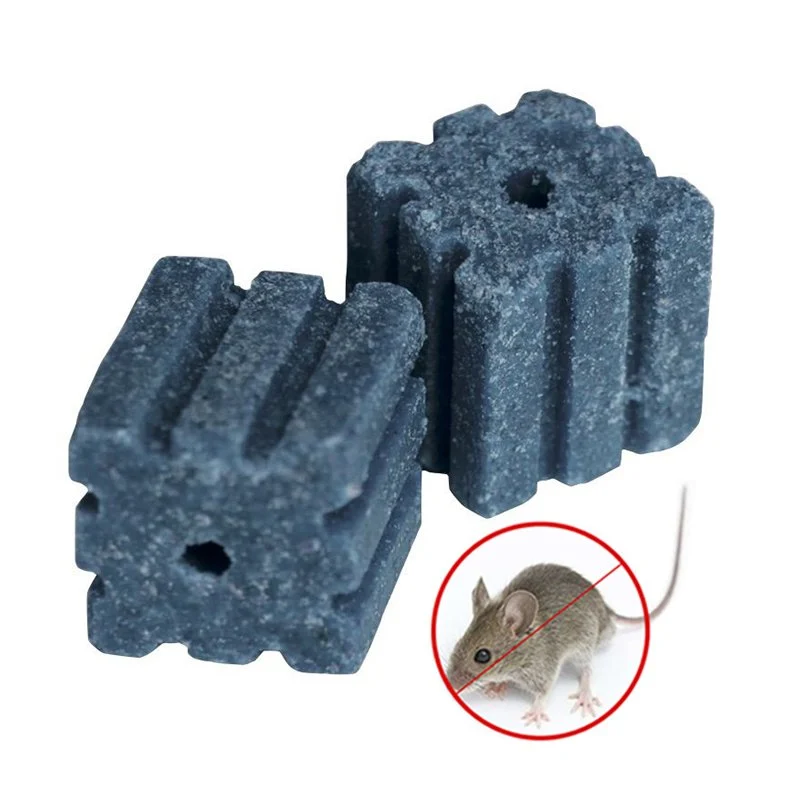
POMAIS supplies professional rodent control products in different bait and formulation directions for commercial pest-control markets.
Do Bromadiolone and Brodifacoum Have the Same Use Restrictions?
Not necessarily.
Rodenticide regulations can differ significantly by:
- Country
- Active ingredient
- User category
- Indoor or outdoor use
- Target species
- Bait format
- Packaging
- Permanent baiting rules
- Non-target exposure risk
Second-generation anticoagulants are subject to particularly strict stewardship requirements in many markets.
A product permitted for professional structural use in one country may have different restrictions in another.
Buyers should therefore confirm:
- Local registration
- Approved use sites
- Professional-use requirements
- Bait-station requirements
- Packaging restrictions
- Environmental risk measures
before comparing products commercially.
For available Brodifacoum product directions, see Brodifacoum rodenticide.
Which One Should Professional Buyers Choose?
The choice should begin with the actual control problem.
| Control Situation | Starting Direction |
|---|---|
| Susceptible rodent population with registered use | Bromadiolone can be evaluated |
| No evidence of anticoagulant resistance | Do not escalate potency automatically |
| Confirmed practical Bromadiolone resistance | Brodifacoum may be worth evaluating |
| Need for a higher-potency SGAR | Brodifacoum |
| High wildlife exposure concern | Review risk mitigation and alternative strategies before selecting |
| Need for a different toxicological mode of action | Neither provides that difference |
| Poor bait acceptance | Improve bait/formulation/program before increasing potency |
| Treatment failure with unclear cause | Diagnose resistance, bait acceptance and reinvasion first |
Brodifacoum should therefore not be treated as the automatic “upgrade” from Bromadiolone.
A better professional decision process is:
confirm susceptibility → identify resistance risk → assess non-target exposure → evaluate bait acceptance → check registration → select the lowest-risk effective program
Frequently Asked Questions
Is Brodifacoum Stronger Than Bromadiolone?
Yes, Brodifacoum is generally considered the more potent second-generation anticoagulant.
However, greater potency does not automatically mean better field efficacy in every rodent-control situation.
Does Brodifacoum Kill Rats Faster Than Bromadiolone?
Not necessarily.
Both are delayed-action anticoagulants. Brodifacoum’s higher potency should not be confused with faster visible mortality.
Are Bromadiolone and Brodifacoum Both Second-Generation Anticoagulants?
Yes.
Both are SGARs and interfere with the vitamin K recycling pathway required for normal blood clotting.
Do Bromadiolone and Brodifacoum Have the Same Mode of Action?
Yes.
Both act as vitamin K antagonists and interfere with normal production of functional clotting factors.
Which Is Better for Resistant Rats?
Where practical Bromadiolone resistance is confirmed, Brodifacoum may remain effective against important resistant strains.
The exact choice should follow local resistance information and product registration.
Can Bromadiolone and Brodifacoum Be Rotated for Resistance Management?
They should not be considered different-mode-of-action rotation partners.
Both are anticoagulant vitamin K antagonists.
Which Has the Greater Secondary Poisoning Risk?
Both create significant secondary exposure risk.
Brodifacoum generally presents the higher concern because of its potency and tissue persistence, especially for some predatory birds.
Which Is Better for Rats and Which Is Better for Mice?
There is no simple species rule.
Selection should consider population susceptibility, resistance status, bait acceptance, and registration rather than choosing solely by rat versus mouse.
Does “Single-Feed” Mean One Bite Will Kill a Rodent?
No.
It means sufficient intake over a relatively short feeding period can potentially provide a lethal dose.
It does not mean one small bite guarantees death.
Can Bromadiolone and Brodifacoum Be Used Outdoors?
That depends on the country and the registered finished product.
Outdoor use, permanent baiting, bait stations, user category, and other restrictions vary by market.
Professional Rodenticide Product Options
POMAIS supplies rodenticide products for professional pest-control distributors, importers, registration companies, and private-label brands.
Buyers comparing Bromadiolone and Brodifacoum should first define:
- Destination country
- Target rodent
- Known resistance status
- Use site
- Required bait format
- Registration requirements
- Non-target exposure considerations
- Packaging
You can review our professional rodent control products and Brodifacoum rodenticide for available product directions.




Hot Products
Hot news
Recommended news