
Professional Spider Mite Management for Greenhouses and Crops
Professional spider mite management starts with early scouting, correct life-stage assessment, protection of beneficial mites, and selection of a registered miticide that matches the population being treated.
The main mistake is to treat every spider mite outbreak the same way.
A population dominated by eggs requires a different product direction from a population dominated by active nymphs and adults. Heavy webbing also creates a different management situation from an early infestation detected through leaf stippling.
For commercial greenhouses, nurseries, orchards, vegetables, and field crops, an effective program can be summarized as:
Scout → Identify → Check Life Stages → Select → Cover → Rotate → Recheck
Miticides should support this process rather than replace it.
Why Are Spider Mites Difficult to Control?
Spider mites can become difficult to manage because several biological and operational factors occur at the same time.
A single plant may contain:
- Eggs
- Larvae
- Nymphs
- Adult mites
- New colonies
- Predatory mites
Warm, dry conditions can accelerate population growth, while overlapping generations mean the mites visible today may represent only part of the population.
Spider mites also commonly feed on the undersides of leaves. This protected position reduces exposure when spray coverage is poor.
Once populations become severe, webbing can further complicate treatment and indicate that intervention started relatively late.
Another major challenge is resistance.
Repeated use of the same active ingredient or IRAC mode-of-action group can increase selection pressure, making future treatments less reliable.
This is why professional spider mite management requires more than choosing a product described simply as a “miticide.”
How Do You Detect Spider Mites Before an Outbreak?
Heavy webbing should not be the first sign that triggers action.
Professional scouting should begin earlier.
Important early indicators include:
- Fine yellow or white stippling
- Small colonies on leaf undersides
- Mite eggs
- Cast skins
- Early bronzing
- Reduced leaf quality
- Hot spots within the crop
- Increasing mite-to-predator ratios
Leaf undersides deserve particular attention because this is where many economically important spider mites feed and reproduce.
A hand lens or other magnification can help distinguish:
- Eggs
- Immature mites
- Adult mites
- Predatory mites
That distinction matters because treatment decisions should be based on the population structure, not just the number of damaged leaves.
For broader pest identification and crop-protection planning, see POMAIS Pest Control Solutions.
Which Spider Mite Life Stage Are You Trying to Control?
Before selecting a miticide, determine which life stages dominate the infestation.
| Population Situation | Main Management Question | Product Direction |
|---|---|---|
| Mainly eggs | How can the next generation be suppressed? | Ovicidal / mite-growth activity |
| Eggs + larvae / nymphs | Can population development be interrupted early? | Immature-stage miticide |
| Many active nymphs and adults | Is rapid population reduction needed? | Motile-stage miticide |
| Adults + heavy webbing | Has intervention started too late? | Rescue treatment + strong coverage + follow-up |
| Mixed generations | Does one treatment cover the whole population? | Lifecycle planning and staged rotation |
| Strong predator population | Can selective intervention preserve biological control? | Lower-disruption registered options |
This is one of the most important principles in professional mite management:
Do not select a product only by pest name. Select it by pest, life stage, crop, resistance history, and registered use.
A product strong against mite eggs may provide limited immediate adult knockdown.
A product strong against mobile adults may leave enough eggs to rebuild the population later.
Understanding that difference helps explain many apparent “product failures.”
How Do You Control Spider Mite Eggs and Immature Stages?
When eggs, larvae, and nymphs dominate the population, the objective is often to interrupt the next generation before adult pressure becomes severe.
This type of program is especially relevant when scouting detects mites early.
One product direction is Hexythiazox, an IRAC Group 10A mite growth inhibitor. POMAIS positions Hexythiazox 5% EC for mite eggs and immature stages primarily against eggs, larvae, and nymphs rather than as a rapid adult knockdown miticide.
This illustrates an important selection principle:
early-stage management and adult rescue treatment are not the same task.
If a buyer is evaluating a product for preventive or early mite population management, stage-specific activity may be more important than dramatic visible knockdown.
If adult mites already dominate the infestation, however, a different product direction may be required.
What If Motile Spider Mites Are Already Increasing?
When active nymphs and adults are becoming numerous, the immediate objective may shift toward reducing the mobile population.
Typical signs include:
- Increasing moving mites on leaf undersides
- Rapid expansion of stippling
- Bronzing
- Visible colonies
- Early webbing
- Continued plant damage despite earlier treatment
For this situation, a specialist motile-stage miticide may be more appropriate than a product focused mainly on eggs.
POMAIS Fenpyroximate 5% SC miticide is positioned as an IRAC Group 21A mitochondrial complex I electron transport inhibitor with mainly contact activity against exposed motile mite stages.
Because contact performance depends heavily on exposure, spray coverage remains important.
A technically suitable active ingredient can still perform poorly if mites on protected leaf surfaces receive insufficient treatment.
What If Several Spider Mite Life Stages Are Present?
Established infestations rarely contain only one stage.
A crop may simultaneously contain:
- Fresh eggs
- Older eggs
- Larvae
- Nymphs
- Adult females
- Adult males
This means the management question changes from:
Which product kills spider mites?
to:
How will this program reduce the current population while preventing rapid rebuilding?
In some crop systems, lifecycle-oriented miticides can occupy an important role.
POMAIS Spirodiclofen 24% SC miticide is positioned as an IRAC Group 23 acetyl-CoA carboxylase inhibitor for structured mite management, including eggs, immature stages, and adult female effects where locally registered.
This does not mean one active ingredient automatically controls every mite stage equally.
Mixed populations still require:
- correct timing
- good coverage
- follow-up scouting
- resistance planning
- local label compliance
The objective is lifecycle management, not simply adding more active ingredients.
How Do Cultural and Biological Controls Reduce Spider Mite Pressure?
Miticides are only one part of professional spider mite management.
Crop conditions can strongly influence outbreak development.
Common factors associated with higher mite pressure include:
- Hot conditions
- Dry conditions
- Water-stressed plants
- Dust
- Disruption of beneficial arthropods
- Dense crop canopies
- Repeated broad-spectrum insecticide use
Good crop management can therefore reduce the conditions that favor rapid mite population growth.
Reduce Plant Stress
Plants under severe water stress can be more vulnerable to spider mite damage.
Irrigation management should support crop health without creating other agronomic problems.
The objective is not simply to “increase humidity” but to reduce avoidable stress that favors rapid mite development.
Manage Dust
Dust can interfere with natural enemies and favor mite outbreaks in some production systems.
This may be particularly relevant around:
- Field roads
- Dry orchard systems
- Greenhouse margins
- Dust-producing operations
Protect Predatory Mites
Predatory mites can be valuable biological-control partners.
One well-known example in protected crops is Phytoseiulus persimilis, which is widely used against two-spotted spider mites.
Biological control works best when predators are introduced or conserved before the spider mite population becomes overwhelming.
This also means pesticide choice matters.
A treatment that kills both pest mites and beneficial predators can sometimes create a short-term reduction followed by another outbreak.
Professional programs should therefore consider compatibility with natural enemies rather than judging products only by immediate knockdown.
Why Does Leaf Coverage Matter So Much?
Spider mites commonly occupy the undersides of leaves, veins, protected canopy areas, and other surfaces that are easy to miss.
This creates a simple problem:
A miticide cannot perform well against mites that receive insufficient exposure.
Coverage becomes especially challenging in:
- Dense greenhouse vegetables
- Ornamentals
- Tree crops
- Thick canopies
- Curled leaves
- Heavy webbing
Application quality should therefore be evaluated together with active ingredient choice.
Some active ingredients also have useful leaf-penetrating or translaminar positioning.
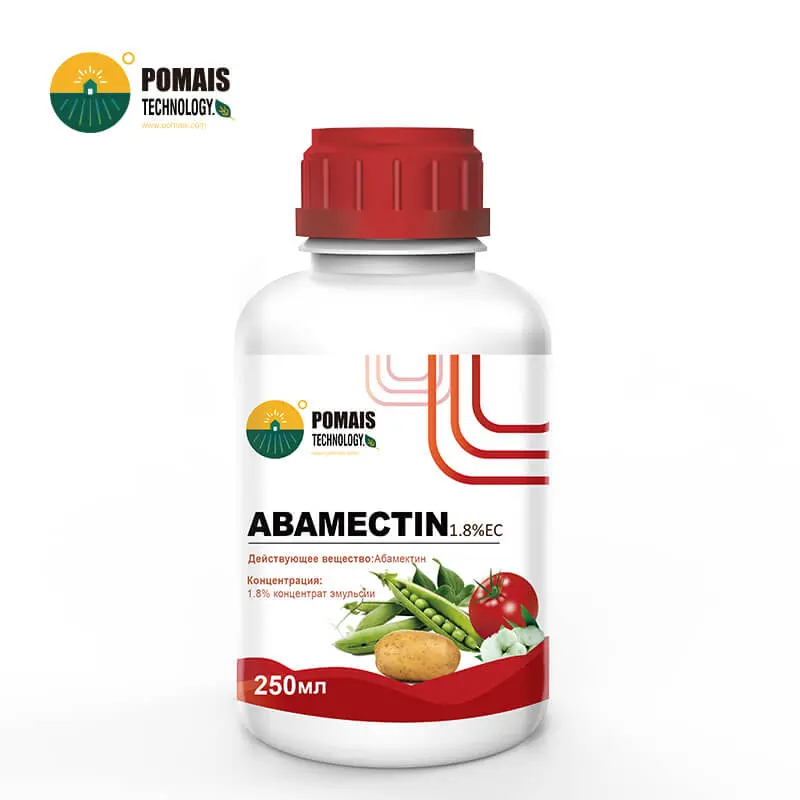
For example, POMAIS Abamectin acaricide with translaminar activity is classified in IRAC Group 6 and is best understood as leaf-penetrating rather than conventionally systemic.
That distinction matters.
Translaminar activity can help improve exposure to pests feeding on protected leaf surfaces, but it does not eliminate the need for proper application and coverage.
How Should Miticides Be Rotated for Resistance Management?
Spider mites can develop resistance rapidly when one mode of action is repeatedly selected.
Professional programs should therefore think in terms of IRAC groups, not only brands or product names.
Current IRAC classification places commonly used mite-control active ingredients in several different mode-of-action groups.
| Active Ingredient | IRAC Group | Typical Program Position |
|---|---|---|
| Abamectin | 6 | Motile mites / translaminar direction |
| Hexythiazox | 10A | Eggs and immature stages |
| Etoxazole | 10B | Eggs and immature stages |
| Propargite | 12C | Contact motile-stage direction |
| Bifenazate | 20D | Motile mite management |
| Fenpyroximate | 21A | Active motile population reduction |
| Spirodiclofen | 23 | Lifecycle / immature / adult female positioning |
| Cyflumetofen | 25A | Motile mite direction |
A strong resistance program does not mean:
Change from Brand A to Brand B.
If both products contain active ingredients from the same IRAC group, the biological selection pressure may still be similar.
The better principle is:
Rotate effective modes of action rather than repeatedly relying on the same IRAC group.
For buyers building a technically diversified portfolio, Propargite 57% EC miticide provides an IRAC Group 12C contact miticide direction based on mitochondrial ATP synthase inhibition.
Final rotations should still follow local labels, resistance guidance, crop registrations, and actual pest susceptibility.
Why Does Spider Mite Treatment Fail?
Professional mite-control failures are often caused by more than poor active ingredient performance.
Treatment Starts Too Late
Once heavy webbing and widespread bronzing appear, the population may already contain several overlapping generations.
Early detection gives more control options.
Leaf Undersides Are Missed
Poor coverage leaves large portions of the population untreated.
This is especially important for contact-dominant miticides.
The Wrong Product Is Chosen for the Dominant Life Stage
An immature-stage product may disappoint when adult pressure is already severe.
An adult-focused product may reduce mobile mites while eggs continue developing.
The Same IRAC Group Is Repeated
Changing brands does not necessarily change mode of action.
Repeated selection can reduce future product reliability.
Broad-Spectrum Treatments Remove Predators
Eliminating natural enemies can allow remaining mite populations to rebuild quickly.
This is one reason spider mite outbreaks sometimes appear after unrelated broad-spectrum insecticide programs.
Follow-Up Scouting Stops Too Early
A successful first treatment does not mean the population has disappeared.
New mites may emerge from eggs or untreated crop areas.
Rechecking the crop is part of treatment—not an optional extra step.
How Do Greenhouses and Crop Programs Build a Spider Mite Management Sequence?
There is no universal spray schedule for every crop.
A more reliable professional framework is:
1. Scout
Inspect representative crop areas regularly.
Look at leaf undersides, not only visible upper-leaf damage.
2. Identify
Confirm whether the problem is:
- Two-spotted spider mite
- Another spider mite
- Broad mite
- Rust mite
- Another mite species
Correct identification matters because product fit can differ.
3. Assess Life Stages
Determine whether the population is dominated by:
- Eggs
- Immatures
- Mobile adults
- Mixed generations
4. Check Biological Control
Look for predatory mites and other natural enemies.
Do not assume every mite on the leaf is a pest mite.
5. Select the Intervention
Choose a registered cultural, biological, or chemical intervention that matches the actual problem.
6. Ensure Coverage
Application quality is part of efficacy.
Protected leaf surfaces must receive adequate treatment where required.
7. Rotate Modes of Action
Avoid repeated reliance on one IRAC group.
8. Recheck
Return after treatment to determine:
- whether mobile populations declined
- whether eggs are hatching
- whether predators remain
- whether untreated hot spots persist
- whether another intervention is necessary
This sequence is more reliable than automatically spraying the same miticide whenever stippling appears.
Where Can Buyers Compare Professional Miticide Options?
Professional distributors usually need more than one mite-control product.
A useful portfolio may include different directions for:
- Egg control
- Immature-stage management
- Motile mites
- Contact activity
- Translaminar activity
- Lifecycle management
- Different IRAC groups
- Different crop registrations
POMAIS maintains a dedicated miticide and acaricide product portfolio covering multiple active ingredients and formulation directions for crop-protection markets. The current category specifically emphasizes stage-based product positioning and mode-of-action rotation rather than repeated reliance on one miticide.
Buyers should compare products based on:
- Target mite
- Life stage
- Crop
- IRAC group
- Formulation
- Existing resistance history
- Local registration
- Product specification
The goal is not to collect the largest number of miticide SKUs.
It is to build a portfolio in which each product has a clear technical role.
Frequently Asked Questions
What Is the First Sign of a Spider Mite Infestation?
Fine yellow or white stippling on leaves is often one of the earliest visible signs.
Professional scouting should then check leaf undersides for eggs, immature mites, adults, and predators before deciding on treatment.
Which Miticides Target Spider Mite Eggs?
Some specialist miticides are designed primarily for eggs and immature stages.
Hexythiazox and Etoxazole are examples of stage-focused active ingredients in different IRAC subgroups.
Always confirm the registered crop, target mite, and life-stage claims.
Which Miticides Target Adult Spider Mites?
Several active ingredients are positioned mainly against mobile mite stages, including products based on Fenpyroximate, Bifenazate, Cyflumetofen, Propargite, and other locally registered miticides.
The best choice depends on mite species, crop, resistance history, and label.
Why Do Spider Mites Come Back After Treatment?
Common reasons include surviving eggs, poor spray coverage, untreated hot spots, reinfestation, predator disruption, or resistance.
A visible reduction in adults does not necessarily mean the entire lifecycle has been controlled.
Does Heavy Webbing Make Spider Mites Harder to Control?
Heavy webbing usually indicates a well-established population.
It can also make coverage more difficult and signals that treatment began relatively late.
Early scouting is therefore preferable to waiting for obvious webbing.
Should Miticides Be Rotated by Active Ingredient or IRAC Group?
IRAC group is the more important resistance-management reference.
Two different active ingredients can still belong to the same mode-of-action group.
Changing product names without changing effective MoA may not provide meaningful resistance diversification.
Can Broad-Spectrum Insecticides Make Spider Mite Problems Worse?
They can contribute to outbreaks in some situations if they significantly reduce predatory mites or other natural enemies while spider mites survive or recolonize.
Product choice should therefore consider the biological-control program.
Are Predatory Mites Compatible with Chemical Control?
They can be, depending on the crop, biological-control species, pesticide, timing, and local program.
Professional greenhouse systems often select interventions with natural-enemy compatibility in mind.
Is There One Best Miticide for Every Spider Mite Outbreak?
No.
The best product direction changes according to:
- Mite species
- Life stage
- Population density
- Crop
- Resistance history
- Biological-control program
- Registration
A product that is ideal early in population development may not be ideal during a heavy adult outbreak.
Building a Professional Miticide Portfolio?
POMAIS works with agrochemical importers, distributors, registration companies, crop-protection brands, greenhouse channels, and agricultural wholesalers sourcing professional miticide products.
For a mite-control project, send us your:
- Destination country
- Target crop
- Target mite species
- Required life-stage positioning
- Preferred active ingredient
- IRAC group requirements
- Formulation
- Registration status
- Packaging
- Estimated order volume
We can help you compare available miticide directions and align product specifications, formulation, technical documentation, and packaging with your market requirements.
Discuss your professional miticide product requirements with POMAIS.

Hot Products
Hot news
Recommended news