
Wheat Rust Control: How to Select Fungicides and Manage FRAC Resistance?
Wheat rust is a major fungal disease affecting wheat production worldwide, primarily comprising stripe rust, leaf rust, and stem rust. The pathogens, environmental conditions for disease onset, and primary sites of infection differ among these three types of rust, so the selection of fungicides cannot follow a completely uniform approach.
Effective control of wheat rust requires first identifying the specific disease, then determining whether chemical control is necessary based on the wheat variety’s resistance, the severity of field infection, the growth stage, and weather conditions. If pesticide application is necessary, priority should be given to active ingredients with proven efficacy against the target rust disease, and single-component treatments, mixtures, and subsequent rotation should be appropriately scheduled based on the FRAC mode of action.
In actual production, DMI-class fungicides such as Tebuconazole, Flutriafol, and Propiconazole, as well as products with other modes of action—including Azoxystrobin, Pyraclostrobin, and Fluxapyroxad—can all serve as candidate ingredients in relevant wheat rust management programs. However, they do not offer identical levels of efficacy and cannot be directly substituted for one another at all growth stages.
For pesticide importers, distributors, and registrants, the value of a fungicide depends not only on its active ingredient content but also on its suitability for the target disease, FRAC Group, formulation stability, registration requirements in target countries, and the degree to which it complements existing product portfolios.
When planning a comprehensive wheat crop protection product line, you can leverage POMAIS’s Wheat Crop Protection Solutions to simultaneously evaluate the different needs for seed treatment, weed management, foliar diseases, insect pests, and head-stage protection.
What is wheat rust? What are the differences among the three types of rust?
Wheat rust is caused by fungi of the genus Puccinia. These pathogens spread by producing large quantities of spores and can complete multiple infection cycles under favorable conditions.
The pathogens primarily infect the green tissues of wheat. As the infection progresses, yellow, orange, or reddish-brown spore masses form on the surfaces of leaves, leaf sheaths, or stems.
These spore masses are not only key identifying features of the disease but also serve as sources of infection for further spread.
However, stripe rust, leaf rust, and stem rust have different pathogenic types and disease characteristics and must be distinguished from one another.
Stripe Rust / Yellow Rust
Wheat stripe rust is caused by Puccinia striiformis f. sp. tritici.
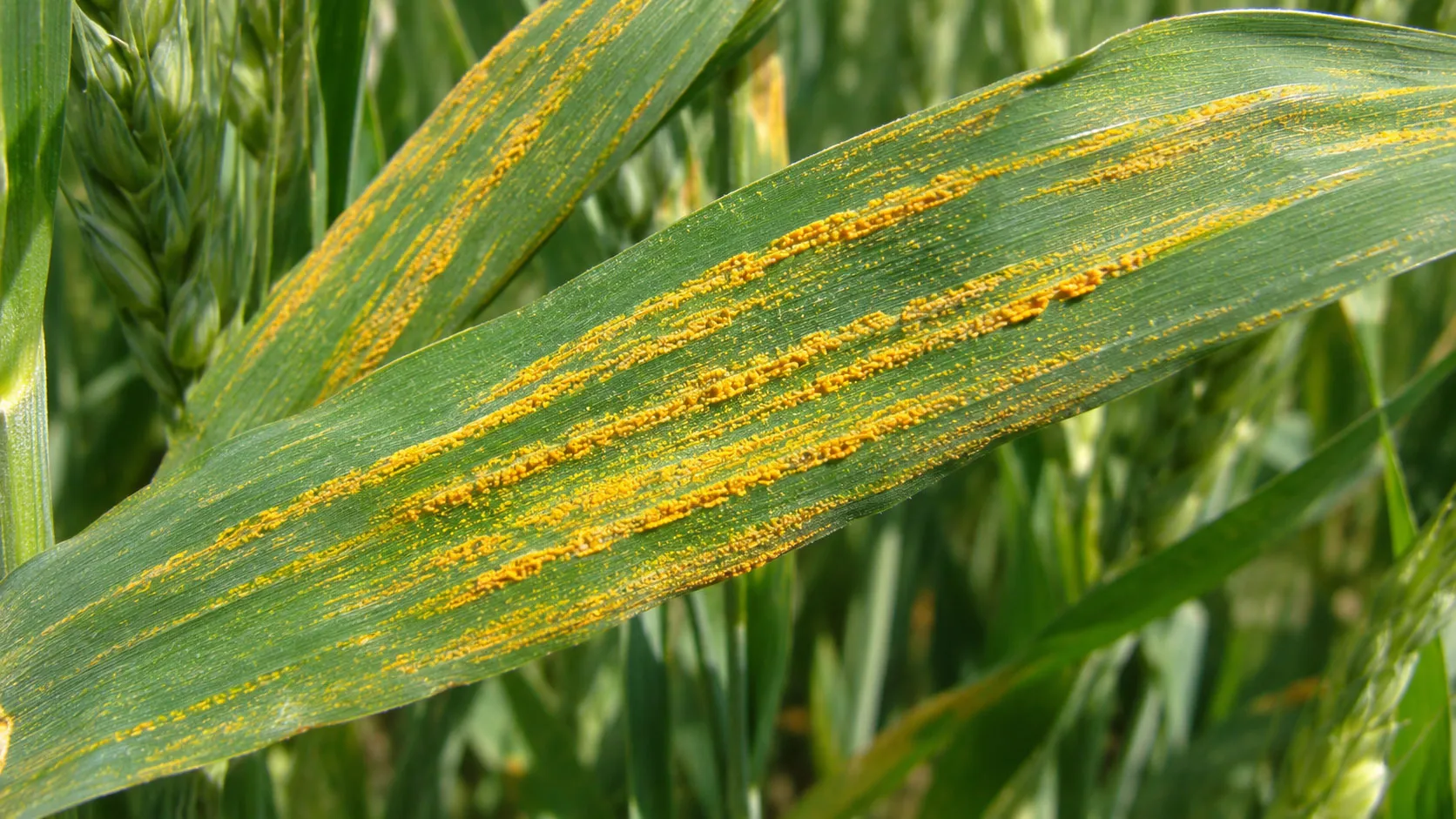
Its typical symptoms are yellow to orange-yellow spore masses on the leaf surface; these spore masses are usually arranged along the leaf veins, forming distinct stripe-like structures.
Under favorable conditions, the disease can spread rapidly from individual leaves to other plants.
Stripe rust generally thrives in relatively cool, humid environments. In some winter wheat-growing regions, the disease may develop rapidly when spring temperatures rise and rainfall or dew occurs.
Situations requiring attention include: a high number of susceptible varieties, the presence of active spore clusters in the field, the occurrence of rust in surrounding areas, and weather conditions conducive to continuous infection.
If stripe rust appears during the early growth stages of wheat, it may continue to affect the upper functional leaves as they develop; therefore, timely surveys are necessary rather than waiting until the flag leaf shows obvious damage before considering management measures.
Leaf Rust: Leaf Rust / Brown Rust
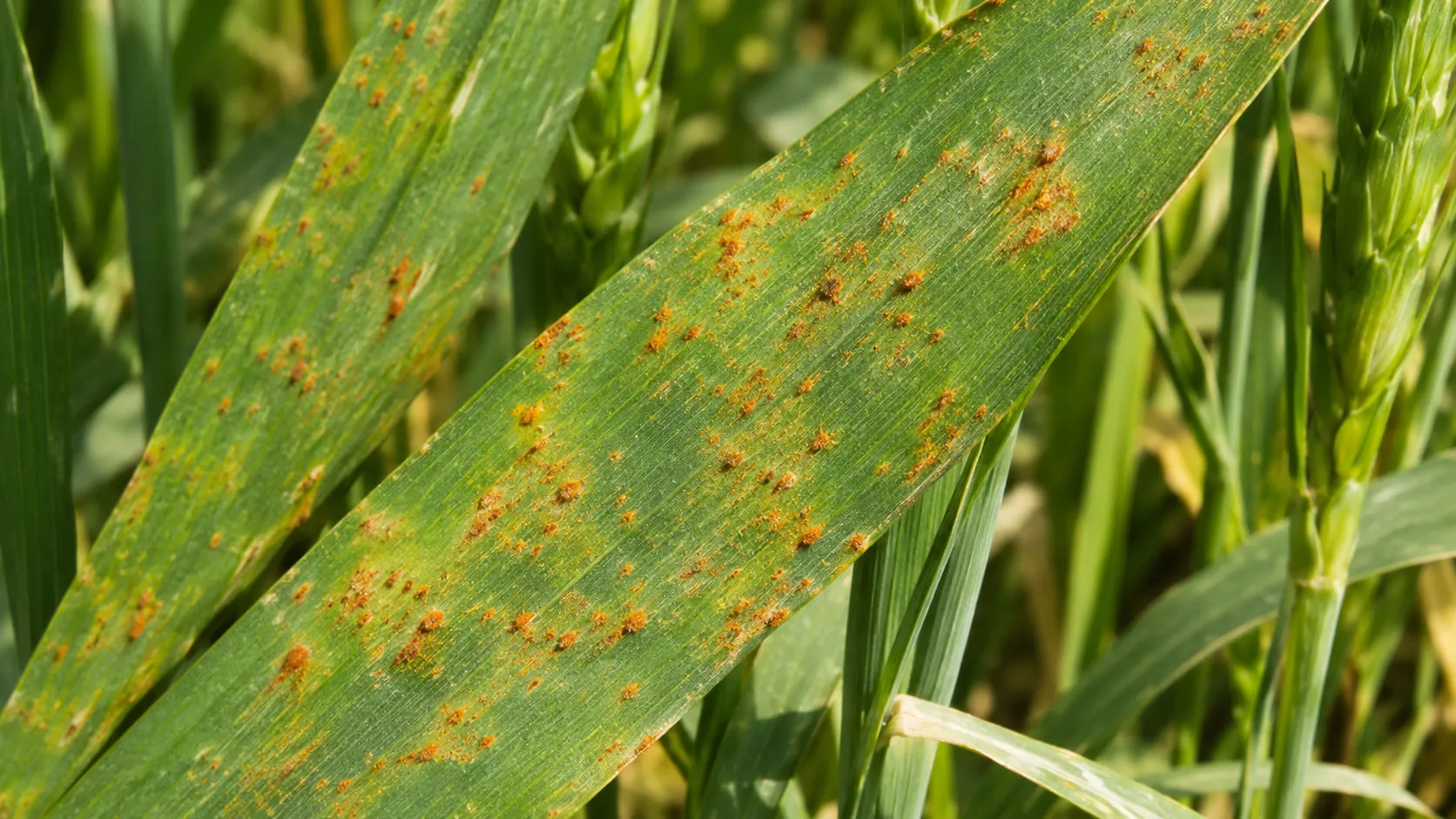
Wheat leaf rust is caused by Puccinia triticina.
It typically forms orange-brown, round, or oval spore masses on the leaf surface. These spore masses are mostly scattered, unlike those of stripe rust, which form distinct, elongated rows.
Leaf rust generally thrives in relatively warm environments and can continue to develop when humidity and host conditions are favorable.
Severe infections destroy green leaf tissue, reduce photosynthetic capacity, accelerate leaf senescence, and impair grain filling.
In high-yield wheat cultivation programs, leaf rust management requires particular attention to the flag leaf and the second-from-the-top leaf.
If the disease has already appeared on the middle and upper leaves before the flag leaf unfolds, and weather conditions are favorable for continued spread, the risk of subsequent infection and the benefits of control measures must be evaluated.
Stem Rust: Stem Rust / Black Rust
Wheat stem rust is caused by Puccinia graminis f. sp. tritici.
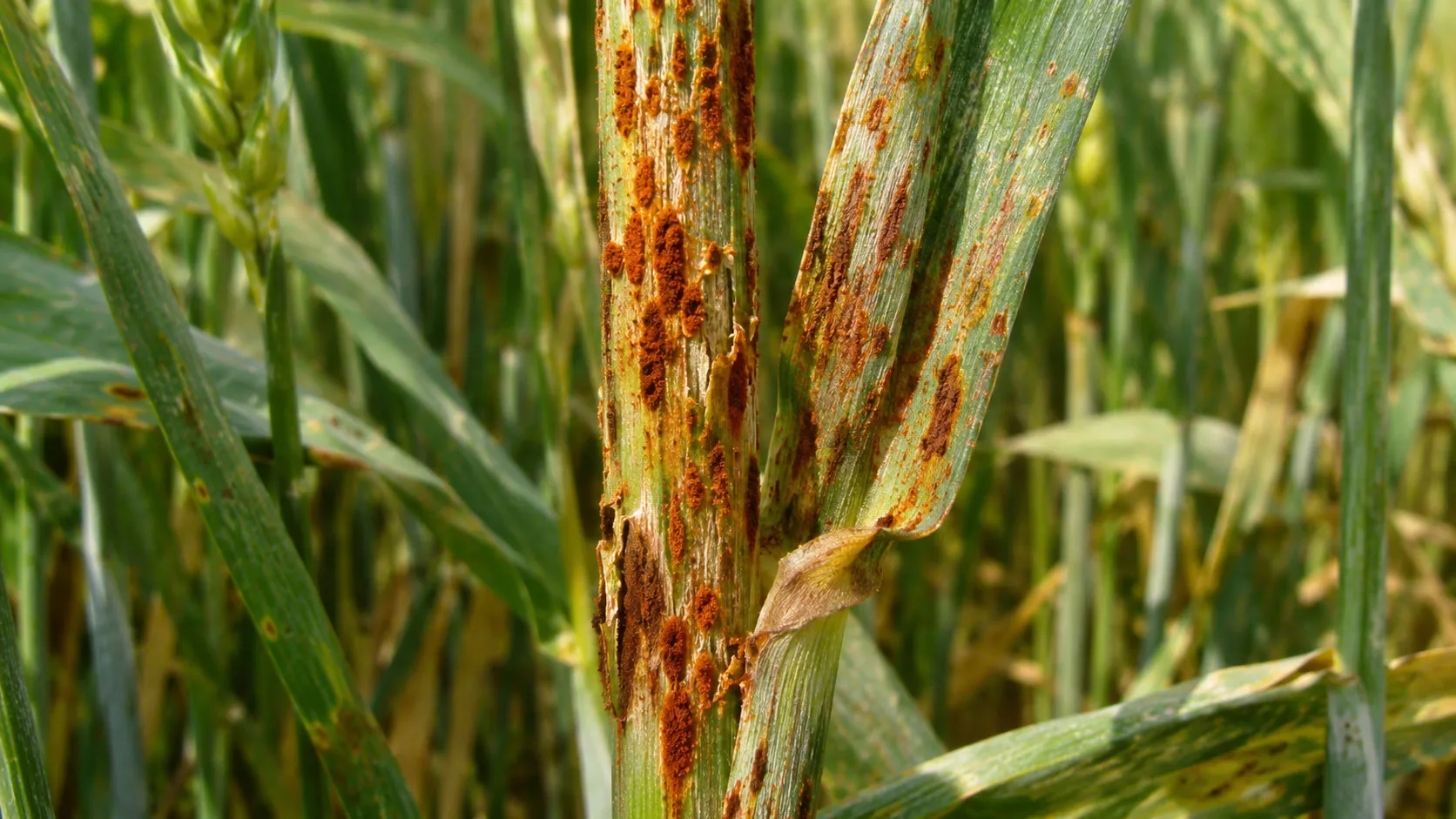
Unlike stripe rust and leaf rust, which primarily affect the leaves, stem rust can severely infect the stems and leaf sheaths and may also occur on leaf and spike tissues.
Its typical symptoms are large, reddish-brown spore masses, often elongated and oval in shape, which can cause the epidermis to rupture.
In severe infections, stem tissue function is impaired, potentially leading to premature plant senescence, an increased risk of lodging, and insufficient grain filling.
Management of stem rust also requires attention to changes in pathogen races.
Certain wheat varieties have historically exhibited good resistance to the disease, but this resistance may be compromised as pathogen races evolve.
Therefore, growers need to assess the risk by considering both local disease early-warning information and data on variety resistance.
Key Differences Among the Three Types of Wheat Rust
| Comparison Criteria | Stripe Rust | Leaf Rust | Stem Rust |
|---|---|---|---|
| English Name | Stripe Rust | Leaf Rust | Stem Rust |
| Pathogen | P. striiformis f. sp. tritici | P. triticina | P. graminis f. sp. tritici |
| Typical Symptoms | Yellow, striped spore masses | Scattered orange-brown spore masses | Large, elongated reddish-brown spore masses |
| Main affected parts | Leaves | Leaves | Stems, leaf sheaths, and leaves |
| Common favorable environmental conditions | Cooler and humid | Relatively warm and humid | Warm with suitable humidity |
| Control considerations | Early onset and protection of upper leaves | Flag leaf function and grain filling | Stem infection and risk of severe outbreaks |
This table can help quickly distinguish between the three types of diseases but is not a substitute for field diagnosis.
During field surveys, if symptoms are atypical or multiple foliar diseases are occurring simultaneously, the target for control should be determined based on the diagnostic results from local agricultural extension agencies.
When should fungicides be used to control wheat rust?
Wheat rust control does not involve spraying immediately upon detecting a small number of spore clusters.
The decision to apply fungicides should be based on a comprehensive assessment of the specific disease, variety resistance, disease progression rate, weather forecast, wheat growth stage, and remaining yield potential.
If disease-resistant varieties are used, and the disease occurs late in the season with low field infection levels, the benefits of chemical control may be limited.
Conversely, if a susceptible variety shows active stripe rust during the jointing stage and future weather conditions favor further disease spread, a more proactive assessment of control measures may be necessary.
Why does variety resistance influence pesticide selection decisions?
There are significant differences in the susceptibility of different wheat varieties to rust diseases.
One variety may have good resistance to stripe rust but be relatively susceptible to leaf rust. Another variety may possess a different combination of resistances.
Therefore, a uniform application plan cannot be determined based solely on the term “wheat rust.”
Field assessments should simultaneously consider the variety’s known resistance, the predominant local pathogen subspecies, and whether there are already signs of resistance breakdown.
For distributors requiring a long-term supply of wheat fungicides, understanding the disease characteristics of the wide locally grown varieties also helps determine which products better meet actual market demand.
How do weather conditions affect rust development?
Rust pathogens typically spread through airborne spores.
Temperature, humidity, dew, and rainfall influence spore germination, infection, and subsequent spread.
Different types of rust have varying temperature tolerance ranges; therefore, a single set of temperature thresholds cannot be used to assess all types of rust.
| Risk Factors | Potential Impacts | Management Decisions |
|---|---|---|
| Cool, humid spring | May favor the development of stripe rust | Increase early surveys |
| Warm with moderate humidity | May favor the development of leaf rust | Monitor upper and middle leaves |
| Relatively warm climatic conditions | May favor the outbreak of stem rust under certain conditions | Monitor stems and leaf sheaths |
| Persistent dew | Extends leaf wetness duration | Assess infection risk in conjunction with temperature |
| Rust disease present in surrounding areas | Spores may be carried in by air currents | Monitor regional disease alerts |
| Concentrated planting of susceptible varieties | may increase the risk of widespread outbreaks | Develop monitoring and control plans in advance |
In cross-regional wheat cultivation markets, relying on fixed months cannot replace actual disease monitoring.
Climatic conditions and wheat planting schedules vary across Central Asia, Russia, South America, Africa, and the Middle East, and disease occurrence patterns may also differ significantly.
Why is flag leaf protection an important control objective?
The flag leaf is a critical functional leaf at the top of the wheat plant and plays a vital role in grain formation and grain filling.
The second leaf from the top, located below the flag leaf, also contributes to photosynthetic production.
If these two leaves are severely infected with rust during critical periods, the area of green foliage may rapidly decrease, thereby affecting grain weight and final yield.
Therefore, many wheat foliar disease management strategies focus specifically on the period before and after flag leaf emergence.
However, it is important to note that the importance of flag leaf protection does not mean that every wheat field must be treated during the flag leaf stage.
If the variety planted has good disease resistance, there is no significant disease pressure in the field, and weather conditions are unfavorable for infection, additional applications may not yield a reasonable economic return.
What truly requires protection is not a specific date, but rather the functional leaves that continue to make a significant contribution to yield and are facing an actual risk of infection.
Which fungicide active ingredients are effective for managing wheat rust?
The selection of fungicides for wheat rust control depends first and foremost on the actual activity of the active ingredient against the target rust species.
Active ingredients within the same FRAC Group may exhibit different control efficacy, residual activity, and crop registration scope; therefore, one cannot assume that products perform identically based solely on their mode of action code.
Among commercial product portfolios, DMI (Group 3), QoI (Group 11), and SDHI (Group 7) are three classes of modes of action that warrant special attention.
Comparison of Common Active Ingredients in Wheat Rust Fungicides
| Active Ingredient | FRAC Group | Key Technical Characteristics | Key Considerations for Product Selection |
|---|---|---|---|
| Tebuconazole | 3 | DMI; inhibits sterol biosynthesis | Sensitivity of local target rusts and application window |
| Flutriafol | 3 | DMI; systemic | Registration and efficacy data for specific rust diseases |
| Propiconazole | 3 | DMI, protective and limited post-infection activity | Product registration and crop stages |
| Prothioconazole | 3 | DMI, management of foliar diseases in cereals | Variations in actual efficacy against different rusts |
| Azoxystrobin | 11 | QoI, inhibits mitochondrial respiration | Primarily used for protective applications; note restrictions on late-season use |
| Pyraclostrobin | 11 | QoI, acts on mitochondrial complex III | Activity against target diseases and local resistance status |
| Trifloxystrobin | 11 | QoI, characterized by foliar redistribution | Intra-group cross-resistance and label restrictions |
| Fluxapyroxad | 7 | SDHI, inhibits mitochondrial complex II | Effective mixing partners must be considered |
| Benzovindiflupyr | 7 | SDHI; useful in some cereal rust management strategies | Varying rust activity and regional differences |
| Bixafen | 7 | SDHI; management of cereal foliar diseases | Mixing, mode of action, and application frequency |
These active ingredients can serve as a basis for technical evaluation; however, this does not imply that all specific formulations are registered in every country for the control of wheat stripe rust, leaf rust, or stem rust.
Tebuconazole: A Common DMI Fungicide
Tebuconazole belongs to FRAC Group 3 and is a triazole fungicide.
It inhibits the normal biosynthesis of fungal sterols, thereby affecting cell membrane formation and pathogen growth.
Under applicable registration conditions, tebuconazole can be used in control programs for relevant wheat rust diseases.
Its main technical characteristics include: It is systemic, provides protective activity against susceptible pathogens and exhibits some inhibitory effect against early-stage infections, and can be combined with other products having different modes of action to form mixed-product formulations.
However, tebuconazole should not be expected to completely eliminate all existing lesions.
Even if the product can inhibit further infection, necrotic leaf tissue will not recover.
When using this product, special attention should be paid to the sensitivity of local rust populations, specific formulation registrations, application timing, and the maximum number of applications.
Flutriafol: A Group 3 Product for Wheat Rust Control
Flutriafol also belongs to FRAC Group 3.
It is systemic and can be used under appropriate conditions for the management of wheat stripe rust, leaf rust, and other related foliar diseases.
When selecting Flutriafol, the focus should not be on simply comparing its active ingredient concentration with that of Tebuconazole, but rather on understanding the actual uses of the corresponding formulations in the target market.
For example, POMAIS provides Flutriafol 250 g/L SC product information, enabling importers to evaluate the suspension concentrate specifications, relevant technical documentation, and suitability for target markets.
For buyers, the key evaluation criteria for Flutriafol 250 g/L SC include active ingredient concentration, suspension stability, particle size, redispersibility after storage, and the target country’s registration requirements for wheat rust.
It is important to note that Flutriafol, Tebuconazole, and Prothioconazole all belong to Group 3 and cannot be rotated as if they belonged to different FRAC groups.
Prothioconazole: Efficacy Cannot Be Determined Solely Based on Group Affiliation
Prothioconazole also belongs to the DMI class of fungicides.
Like Tebuconazole and Flutriafol, it affects susceptible fungal pathogens by inhibiting sterol biosynthesis.
However, differences in molecular structure, pathogen activity, and actual field performance may exist among different DMIs.
Therefore, even if two products belong to the same Group 3, this does not mean they have exactly the same control efficacy against Stripe Rust, Leaf Rust, and Stem Rust.
When making purchasing decisions, refer to local trial results and authoritative technical ratings from the target market, rather than treating all triazole products as identical tools for rust control.
Azoxystrobin: Protective Positioning in Group 11
Azoxystrobin belongs to FRAC Group 11, also known as QoI fungicides.
It primarily disrupts normal energy production in pathogens by inhibiting electron transport in mitochondrial complex III.
These active ingredients are typically positioned for protective applications and offer value within appropriate crop and disease management strategies.
However, the selection of QoI products requires attention to the following technical limitations.
First, azoxystrobin cannot replace all DMI-class fungicides. The two classes of products differ in their modes of action and activity against early-stage infections.
Second, azoxystrobin, pyraclostrobin, and trifloxystrobin all belong to Group 11 and cannot be considered rotation products with different modes of action.
Furthermore, during the wheat heading and flowering stages, the risks of Fusarium head blight and DON toxins must be considered simultaneously.
A Group 11 product should not be directly recommended as a flowering-stage fungicide for all wheat markets simply because it controls rust.
Fluxapyroxad: Group 7 SDHI Fungicide
Fluxapyroxad belongs to FRAC Group 7, namely SDHI (Succinate Dehydrogenase Inhibitors).
It disrupts the pathogen’s normal energy metabolism by inhibiting succinate dehydrogenase in the fungal mitochondrial complex II.
Under approved registration conditions, Fluxapyroxad can be used for the preventive and early management of certain foliar diseases in cereals.
It is important to note that the actual efficacy of different SDHI fungicides against wheat stripe rust and leaf rust varies.
One cannot assume that Fluxapyroxad is necessarily more effective than all products in Group 3 or Group 11 simply because it belongs to Group 7.
SDHI products also have specific resistance management requirements and must be used in combination with effective partners that have different modes of action.
How to Choose Between Single-Ingredient and Mixed Fungicides?
When establishing a wheat fungicide product portfolio, importers often face a dilemma: should they choose a product with a single active ingredient or a mixed formulation containing two or more active ingredients?
This decision cannot be made solely based on the number of active ingredients.
Both single-active-ingredient and mixed-ingredient products have their own commercial positioning; the key lies in the target diseases, actual efficacy, registration scope, and product application plans.
Key Benefits of Single-Active-Ingredient Products
The active ingredients and modes of action in single-ingredient products are relatively well-defined, making it easier for importers to source them based on their existing product portfolios.
For example, single-ingredient formulations of Flutriafol, Tebuconazole, and Fluxapyroxad can each serve as a component of specific technical solutions.
However, for single-site fungicides with a high risk of resistance, the FRAC requirements regarding compatible mixing partners and application frequency must not be overlooked.
Although some products are supplied as single-ingredient formulations, actual field application may require combination with other products in accordance with local registration labels.
Do mixed-ingredient products necessarily provide better control efficacy?
Not necessarily.
The value of a mixed-ingredient product depends on whether each active ingredient provides effective control against the target diseases and whether the two ingredients have a reasonable combination of modes of action.
For example, POMAIS offers Azoxystrobin 200 g/L + Tebuconazole 300 g/L SC formulation.
This combination contains:
- Azoxystrobin: FRAC Group 11.
- Tebuconazole: FRAC Group 3.
Since the two ingredients have different modes of action, they can be evaluated as a grain fungicide formulation that meets registration requirements.
However, this does not imply that it provides the same level of control against all wheat diseases, nor should it lead to neglecting the risks of Fusarium head blight and DON during the flowering stage.
How to determine if there is overlap in modes of action for a formulated product?
| Active Ingredient Combinations | FRAC Combinations | Mode of Action Assessment |
|---|---|---|
| Tebuconazole + Prothioconazole | 3 + 3 | Both active ingredients belong to the same group |
| Tebuconazole + Trifloxystrobin | 3 + 11 | Two different modes of action |
| Azoxystrobin + Tebuconazole | 11 + 3 | Two different modes of action |
| Fluxapyroxad + Pyraclostrobin | 7 + 11 | Two different modes of action |
| Fluxapyroxad + Benzovindiflupyr | 7 + 7 | Two active ingredients in the same group |
It is worth noting that although Tebuconazole + Trifloxystrobin and Azoxystrobin + Tebuconazole are different formulation combinations, both belong to the Group 3 + 11 combination of modes of action.
Therefore, if a distributor already carries one of these combination products, they should conduct a further assessment of the actual control efficacy, formulation, price, registered uses, and market demand when procuring the other—rather than simply viewing it as adding a new resistance management mechanism.
For products such as those in Group 7 that have specific mixing requirements, the partner active ingredient itself must demonstrate satisfactory control efficacy against the target disease under actual field conditions.
How should rust management be planned at different growth stages of wheat?
The growth stage of wheat influences the economic risk of disease, the plant tissues requiring protection, and the actual benefits of using fungicides.
In some grain markets, T0, T1, T2, and T3 are common windows for managing foliar diseases, but this does not mean that applications must be made at every stage.
Actual management should be tailored to the wheat variety, growth stage, disease pressure, and local technical requirements.
Seedling and Tillering Stages
In some winter wheat-growing regions, stripe rust may appear early.
If the variety planted is susceptible to stripe rust and active lesions have already appeared in the field, surveillance efforts should be intensified.
At this stage, the primary focus should be on determining whether the disease is continuing to spread, whether weather conditions are favorable for infection, and whether it will affect the formation of functional leaves later on.
For disease-resistant varieties, if the disease incidence is low, monitoring may still be the primary measure.
It is not recommended to schedule fixed, preventive rust control spraying in all wheat fields during the tillering stage.
Joining and Stem Elongation Stages
As wheat enters the joining stage, plants grow rapidly, and new leaves continue to unfold.
At this time, rust may spread from lower leaves to higher parts of the plant.
The management focus is on observing whether the pathogen is spreading to functional leaves that have not yet been infected.
If obvious stripe rust has already appeared and future weather conditions remain favorable for disease development, a decision on whether to intervene promptly should be made based on local economic control recommendations.
Second-from-top Leaf and Flag Leaf Expansion Stage
This is a critical stage for yield protection in wheat rust management.
Upper functional leaves gradually form, providing a large amount of photosynthetic products for grain filling.
If leaf rust or stripe rust continues to develop before the flag leaf expands, there is a high risk of yield loss.
Key considerations for selecting fungicides at this stage include:
- The actual species of rust being targeted.
- Whether the flag leaf and second-from-the-top leaf have already been infected.
- Weather conditions over the coming period.
- The efficacy of the selected fungicide against the target rust.
- FRAC Groups already used.
- Whether the product is suitable for the current crop stage.
For fields with high disease pressure, DMIs or suitable fungicide mixtures may be viable options; specific selections should still be based on local registrations and efficacy data.
Ear Formation and Head Emergence Stages
Once the crop enters the pre-heading and heading stages, attention must be paid not only to rust but also to other foliar and ear diseases.
At this point, the entire fungicide application plan can no longer be determined based solely on rust.
For example, if Septoria, powdery mildew, or other foliar diseases are present locally, it may be necessary to comprehensively compare the actual disease spectrum covered by different products.
However, this does not mean that all fungicide mixtures are suitable for all diseases.
It is particularly important to note that the use of Group 11 fungicides after heading must be evaluated in light of local risks of Fusarium head blight (FHB) and DON.
Why Can’t We Consider Only Rust During Flowering?
Once wheat enters the flowering stage, Fusarium head blight (FHB) and associated DON toxin contamination may become significant risks.
If control of Fusarium head blight is required at this stage, products with proven efficacy against FHB and the appropriate registration should be selected.
The University of Maryland’s 2026 Agricultural Technology Guidelines explicitly state that, in the context of local Fusarium head blight and DON management, fungicides containing Group 11 should not be applied after heading, as such treatments may increase the risk of DON.
Therefore, azoxystrobin or formulated products containing azoxystrobin—even if they exhibit some activity against rust—should not be directly recommended for use during the flowering stage in all wheat markets.
When evaluating grain fungicide products, buyers should distinguish between rust control and Fusarium head blight management.
Grain Filling and Maturity
During the late grain-filling stage, the economic return on fungicide applications is typically limited by the remaining growing period.
If the grain is nearing maturity, the presence of some rust infection on the leaves does not necessarily mean that an application will yield a reasonable yield benefit.
When considering late-season applications, the following should be specifically verified:
- Remaining grain-filling time.
- Area of green, uninfected foliage.
- Whether the disease is still progressing.
- The product’s PHI (pre-harvest interval).
- Target market MRL (Maximum Residue Limit).
- Whether the product is approved for use at the current growth stage.
Yield losses that have already occurred cannot be fully recovered through late-season applications.
Therefore, wheat rust management should be carried out within the economically viable protection window whenever possible, rather than waiting until severe disease outbreaks occur in the field before seeking remedial measures.
Comparison of Wheat Growth Stages and Rust Management
| Growth Stage | Main Risks | Control Priorities |
|---|---|---|
| Seedling to Tillering | Early Stripe Rust | Monitor disease and variety resistance |
| Joining stage | Rust spreads upward | Assess disease progression trends |
| Second-to-last leaf unfolds | Infection of upper functional leaves | Protect uninfected green leaves |
| Flag leaf emergence | Stripe rust, leaf rust | Focus on evaluating the value of flag leaf protection |
| Ear formation and heading | Rust and Other Foliar Diseases | Comprehensive Comparison of Disease Profiles |
| Flowering Stage | Potential Co-occurrence of Rust and FHB Risks | Simultaneously Assess DON and Application Restrictions |
| Grain Filling Stage | Late-season rust development | Assess residual yield benefits |
| Maturity and harvest | Late-season diseases and residue restrictions | Focus on harvest management and compliance |
How Can FRAC Groups Help Reduce the Risk of Wheat Rust Resistance?
FRAC groups different active ingredients based on their modes of action.
This classification helps growers and pesticide buyers understand the relationships between the modes of action of different products.
For wheat rust, the currently common Groups 3, 7, and 11 have different targets of action and resistance management requirements.
Group 3: Different DMI Active Ingredients Do Not Equate to Cross-Group Rotation
Tebuconazole, Propiconazole, Flutriafol, Prothioconazole, Metconazole, and others all belong to FRAC Group 3.
They primarily act by inhibiting fungal sterol biosynthesis.
While the activity of these active ingredients may vary depending on the specific disease, they still belong to the same mode-of-action group.
Therefore, the following sequence cannot be directly considered a rotation across modes of action:
Tebuconazole → Flutriafol → Prothioconazole
Although this sequence changes the active ingredient, it does not change the FRAC Group.
When developing long-term control plans, it is necessary to consider the overall use of Group 3 and combine it with other effective modes of action for resistance management.
Group 11: Cross-Resistance Among QoI Fungicides
Group 11 includes:
Azoxystrobin, Pyraclostrobin, Trifloxystrobin, and others.
These active ingredients act on the mitochondrial respiratory process of fungi and share a common mode of action.
Therefore, switching from Azoxystrobin to Pyraclostrobin does not constitute a rotation across FRAC Groups.
Furthermore, the development of resistance to Group 11 varies among different pathogens.
The fact that a single active ingredient performs well in a particular region does not prove that the entire Group 11 maintains the same level of efficacy across all grain markets.
Group 7: What Do the 2026 Monitoring Results for SDHIs Reveal?
Group 7 includes Fluxapyroxad, Benzovindiflupyr, Bixafen, Fluopyram, Boscalid, and others.
These active ingredients all belong to the SDHI class of fungicides.
The 2025 monitoring data published in 2026 by the FRAC SDHI Working Group provided differing sensitivity information for wheat leaf rust and stripe rust.
Leaf Rust Monitoring Status
In some Puccinia triticina samples from France, Germany, and the United Kingdom, the C-I87F mutation—associated with changes in SDHI sensitivity—was detected.
The B-N217H variant was also detected for the first time at a monitoring site in Germany; the specific impact of this variant is currently under investigation.
However, FRAC also noted that no field efficacy failures have been observed when SDHIs are used appropriately in accordance with its recommendations.
This indicates that:
The detection of a particular molecular variant does not necessarily mean that significant fungicide failure has already occurred in actual production.
Stripe Rust Monitoring Status
In 2025, SDHI sensitivity tests on samples from Bulgaria, Croatia, Denmark, France, the Netherlands, Poland, Sweden, Spain, and the United Kingdom showed the fungicides to be sensitive.
However, these data represent only the respective regions and the samples tested on that occasion.
It cannot be concluded from this that there is no risk of resistance in all stripe rust populations worldwide.
How should Group 7 be managed?
FRAC has issued clear resistance management recommendations for the foliar application of SDHI on cereals.
| Management Program | FRAC Recommendations |
|---|---|
| Application Method | Always mix with effective fungicides having different modes of action |
| Mixing Partners | Should also provide satisfactory control of the target disease when used alone |
| Per cereal crop cycle | No more than two foliar applications containing SDHI |
| Application timing | Preventively or at the earliest possible stage of disease onset |
| Post-infection activity | Do not rely solely on its limited curative activity |
| Dose Management | Do not apply by significantly reducing the dose multiple times |
| Mode of Action Rotation | Do not rotate solely among different SDHI active ingredients |
These recommendations apply to the foliar application of SDHI active ingredients on relevant cereal crops; actual application must still comply with the stricter regulations specified on the specific product label.
For example, POMAIS’s Fluxapyroxad 300 g/L SC can serve as a reference for evaluating Group 7 products.
However, the specific application for wheat rust and how it should be combined with other active ingredients must be determined based on the target country’s registration status and confirmation of local pathogen susceptibility.
How to Develop a Reasoned FRAC Rotation Plan?
A reasoned rotation plan should not be based solely on product names.
First, the target rust disease and its current susceptibility must be identified; then, candidate products that remain effective should be selected based on the FRAC Group previously used and the remaining growth stages.
If Group 3 was used in the previous application, the decision to select Group 7 or Group 11 for the next application must take into account the target disease, local resistance, product registration, and the current growth stage.
Different FRAC Groups should not be mixed arbitrarily.
Co-formulants must provide independent control value against the actual target disease, rather than being included solely to increase the number of active ingredients in the formulation.
If the pathogen has developed significant resistance to a particular mode of action, simply increasing the dose or shortening the application interval is generally not a reasonable long-term solution.
Why Do Wheat Rust Fungicides Sometimes Fail to Provide Adequate Control?
The efficacy of fungicides is influenced by a variety of factors.
When control efficacy declines in the field, one should not immediately assume that there is a problem with the product’s quality, nor should one directly conclude that the pathogen has developed resistance.
Is the disease identification correct?
If rust is confused with other foliar diseases, a fungicide unsuitable for the target pathogen may be selected.
There are also differences among various types of rust.
For example, just because a product is effective against leaf rust does not mean it will provide the same level of control against stripe rust or stem rust.
Therefore, the specific type of disease should be confirmed before determining the product’s suitability.
Is it too late to apply the fungicide?
Once rust infection has progressed, leaves may develop large spore masses that continue to destroy green tissue.
Some fungicides exhibit some activity against early-stage infections, but they cannot restore leaves that have already died.
If treatment is applied only after the flag leaf has been severely damaged, even if further disease progression is suppressed, it may not be possible to compensate for the yield loss that has already occurred.
Is spray coverage sufficient?
When the wheat canopy is dense, it may be difficult to achieve uniform coverage on some leaves.
When applying the product, factors such as spray equipment, spray volume, nozzle type, wind speed, and current canopy structure should be taken into account.
One should not assume that insufficient spray coverage will not affect control efficacy simply because the product is systemic.
Is there resistance or reduced susceptibility?
If a product with a specific mode of action continues to show reduced efficacy despite correct disease diagnosis, appropriate application conditions, and label-compliant dosages, resistance should be considered.
However, this should be further confirmed through local pathogen susceptibility monitoring, field trials, or laboratory testing.
| Efficacy Issues | Possible Causes | Recommended Assessment Methods |
|---|---|---|
| New lesions appear after application | New infection, insufficient coverage, or insufficient residual efficacy | Check weather conditions, coverage, and new leaf growth |
| Lesions do not disappear | Existing tissue necrosis | Distinguish between recovery of existing lesions and control of new infections |
| Decreased efficacy after consecutive use of the same class of pesticides | Resistance selection pressure may be present | Check FRAC groups and local surveillance data |
| Significantly poorer control efficacy in certain areas | Uneven spraying, uneven disease distribution | Compare field locations and equipment records |
| Yield losses persist despite late-season applications | The control window has passed | Re-evaluate the economically viable control period |
How Should Importers in the Grain Market Select Fungicide Product Portfolios?
For pesticide importers, distributors, and registration companies, the procurement of wheat fungicides should not be based solely on the popularity of active ingredients or unit prices.
A truly valuable product portfolio must align with local major diseases, grain crop patterns, and actual application conditions.
Different grains cannot directly use the same disease registration
Although wheat, barley, and oats are all cereal crops, their disease systems are not entirely the same.
For example, wheat stripe rust and barley stripe rust are typically caused by different pathogen specializations; oat crown rust is yet another distinct disease system.
Therefore, the fact that a fungicide is registered for wheat leaf rust does not mean it is automatically registered for barley rust or oat crown rust.
Distributors targeting multiple grain markets should verify the target crops and diseases separately, rather than simply listing all grain names on the label.
How to Determine if Your Existing Product Portfolio Has Overlaps?
You can first classify existing fungicides by FRAC Group, then determine the technical positioning of specific active ingredients.
For example:
| Product Direction | FRAC Group | Combination Evaluation |
|---|---|---|
| Tebuconazole Single-Ingredient | 3 | Basic DMI product direction |
| Flutriafol (single active ingredient) | 3 | Different active ingredients within the same group; actual differences must be evaluated |
| Prothioconazole (single active ingredient) | 3 | Products in the same group; depends on disease spectrum and market positioning |
| Azoxystrobin + Tebuconazole | 11 + 3 | Two different modes of action |
| Tebuconazole + Trifloxystrobin | 3 + 11 | Shares the same FRAC structure as the previous product |
| Fluxapyroxad single-active ingredient | 7 | SDHI formulation; foliar application must comply with mixing requirements |
If a market already has multiple Group 3 products, it may not be necessary to continue adding more DMI formulations.
In this case, it may be more important to evaluate the differences in formulation types among existing products, their efficacy against specific diseases, and the needs of purchasing customers.
Similarly, two Group 3 + 11 combination products should not simply be viewed as two completely different resistance management strategies.
Why Does Formulation Selection Affect Procurement Value?
The same active ingredient may be supplied in different formulations, such as SC, EC, EW, WDG, or WP.
Different formulations affect product storage, transportation, preparation, and commercial packaging requirements.
| Formulation | Key Quality Control Focus Areas | Points to Verify During Procurement |
|---|---|---|
| SC | Suspension rate, particle size, redispersibility, storage stability | Prone to sedimentation during long-term storage |
| EC | Emulsion stability, low-temperature stability, packaging compatibility | Solvent system and packaging materials |
| EW | Emulsion particle size, emulsion stability, temperature stability | Storage stratification and redispersibility |
| WDG | Wettability, disintegration, dispersibility, and dust levels | Dispersion performance upon contact with water |
| WP | Wettability, suspension rate, fineness, and dust | Application equipment and packaging requirements |
A product with a higher active ingredient concentration does not necessarily mean better actual pest control efficacy.
Buyers also need to verify whether a specific formulation can remain stable under normal storage and usage conditions, and whether the final product meets the quality and registration requirements of the target market.
What technical documents should be confirmed before purchasing?
For long-term cooperation projects, it is recommended to confirm the following information during the product specification and registration evaluation stages:
| Documents or Items | Primary Uses |
|---|---|
| Product Specification | Confirm active ingredients, content, and formulation specifications |
| COA | Verify the quality of actual production batches |
| SDS | Understand product safety, storage, and transportation requirements |
| TDS | Understand the product’s technical characteristics and application areas |
| Stability Data | Evaluate stability under high and low temperatures and formulation stability |
| Registration Support Documents | Verify the scope of documentation available for local registration |
| Label Information | Confirm requirements regarding crops, diseases, dosage, PHI, etc. |
| Packaging Specification | Confirm packaging specifications and suitability for transportation |
Please note that the supplier’s ability to provide technical documentation does not imply that the relevant product has been registered in every country.
Prior to commercial procurement, you should also verify the actual registration status, packaging language, local residue requirements, and the legal conditions for the product’s market entry.
For grain-producing export markets, the MRL requirements of the final grain sales destination must also be incorporated into the product evaluation.
Frequently Asked Questions on Wheat Rust Control
Which fungicide is best suited for controlling wheat rust?
No single fungicide provides the same level of control across all regions and all types of wheat rust.
Group 3 products such as Tebuconazole, Flutriafol, and Propiconazole, as well as Group 7 and Group 11 products with appropriate registrations, can all be evaluated based on the target disease.
The specific choice should be based on the type of rust, the growth stage of the wheat, local pathogen sensitivity, and product labels.
What is the difference between wheat stripe rust and leaf rust?
Stripe rust typically forms yellow spore masses arranged along the leaf veins and is caused by Puccinia striiformis f. sp. tritici.
Leaf rust typically forms scattered orange-brown spore masses and is caused by Puccinia triticina.
The optimal environmental conditions, disease progression rates, and specific fungicide efficacy may differ between the two.
When should fungicides be applied for wheat rust?
This decision should be based on disease incidence, variety resistance, and growth stage.
For early stripe rust, prompt intervention may be necessary if susceptible varieties are already showing active infection and weather conditions favor disease spread.
For fields where the flag leaf and the second leaf from the top are at risk of infection, the economic value of protecting the upper functional leaves should be a key consideration.
A uniform, fixed application date cannot be set for all wheat fields.
Can tebuconazole control wheat rust?
Tebuconazole belongs to FRAC Group 3 and is one of the common candidate active ingredients used for managing relevant wheat rust diseases.
However, its specific efficacy depends on the type of rust, local susceptibility, formulation specifications, and application conditions.
It provides protective activity and some early post-infection activity, but it cannot restore leaf tissue that has already died.
Can azoxystrobin be mixed with tebuconazole?
The two belong to FRAC Group 11 and Group 3, respectively, and have different modes of action.
Mixed formulations that have obtained the appropriate registration can be considered as a potential approach for managing applicable cereal diseases.
However, a mixture does not mean it is suitable for all stages of wheat growth. Especially after entering the heading and flowering stages, decisions should be made based on an assessment of Fusarium head blight and DON risks; products containing Group 11 should not simply be used as a one-size-fits-all solution for all diseases during the heading stage.
Can Fluxapyroxad and Benzovindiflupyr be rotated?
These two products cannot be rotated as if they belong to different FRAC modes of action.
They both belong to Group 7 SDHI.
Although the actual activity of different SDHI compounds against specific pathogens may vary, resistance management should still be carried out within the common Group 7 framework.
If rust spore clusters are still present after applying a fungicide, does this indicate that resistance has developed?
Not necessarily.
Some already infected tissue and old spore clusters may remain visible after application.
Control efficacy should be assessed by considering the emergence of new lesions, the rate of disease spread, application coverage, and weather conditions.
If consistently poor control efficacy persists under proper application conditions, the pathogen’s susceptibility should be further investigated rather than immediately concluding that resistance has developed.
How to Establish a Long-Term, Reliable Wheat Rust Control Program?
The core of wheat rust management is not to find a single fungicide that can be repeatedly applied throughout the growing season, but to rationally select active ingredients with different modes of action based on the type of disease, crop growth stage, and actual infection risk.
For farming enterprises, the first step is to confirm the specific occurrence of stripe rust, leaf rust, or stem rust, understand variety resistance and weather risks, and then determine whether chemical control is necessary.
When planning fungicide applications, special attention should be paid to the protective value of treating the flag leaf and the second-to-last leaf, while avoiding unnecessary applications during growth stages where economic returns have already been lost.
In terms of resistance management, products in Groups 3, 7, and 11 require separate evaluation. Different active ingredients do not necessarily represent different modes of action, and formulated products do not automatically offer higher efficacy.
For pesticide importers, distributors, and registration companies, product selection should also take into account the target market, specific disease registrations, formulation types, quality stability, technical documentation, and long-term supply requirements.
POMAIS can provide fungicide specification evaluations, formulation supply, technical documentation, and export support tailored to the crop composition, major rust diseases, product registration requirements, and procurement needs of different grain markets.
If you are developing a wheat fungicide product portfolio, we recommend first identifying the target countries, major rust diseases, required FRAC Group, active ingredients, and formulation types, and then further confirming product specifications, registration documentation, and supply terms.
A sound fungicide portfolio should be based on accurate disease identification, the selection of effective modes of action, and reliable product quality—rather than simply increasing the number of products.
 Control of Grape Downy Mildew: Fungicide Selection and FRAC Mechanisms of Action
Hot Products
Hot news
Recommended news