
Zinc Phosphide vs Aluminum Phosphide: Uses and Differences
Zinc phosphide and aluminum phosphide are both phosphide pesticides associated with phosphine toxicity, but they are designed for fundamentally different pest-control systems.
Zinc phosphide is primarily an ingestion-based rodenticide, while aluminum phosphide is primarily a phosphine-generating professional fumigant.
That difference determines almost everything else:
- Target pest
- Product form
- Exposure route
- Application environment
- Safety requirements
- Professional training
- Registration category
- Packaging
- Distribution channel
They should not be treated as interchangeable products simply because both can ultimately generate phosphine under the appropriate chemical conditions.
For buyers developing professional pest-control portfolios, our Pest Control Solutions provide a broader framework for selecting products by target pest, use site, formulation, and destination-market registration.
Zinc Phosphide vs Aluminum Phosphide at a Glance
| Comparison Factor | Zinc Phosphide | Aluminum Phosphide |
|---|---|---|
| Primary product role | Rodenticide | Fumigant |
| Main delivery strategy | Bait ingestion | Phosphine gas generation |
| Typical target | Rodents | Stored-product insects and other registered fumigation pests |
| How phosphine is generated | Primarily after ingestion under acidic/moist digestive conditions | Reaction with environmental moisture |
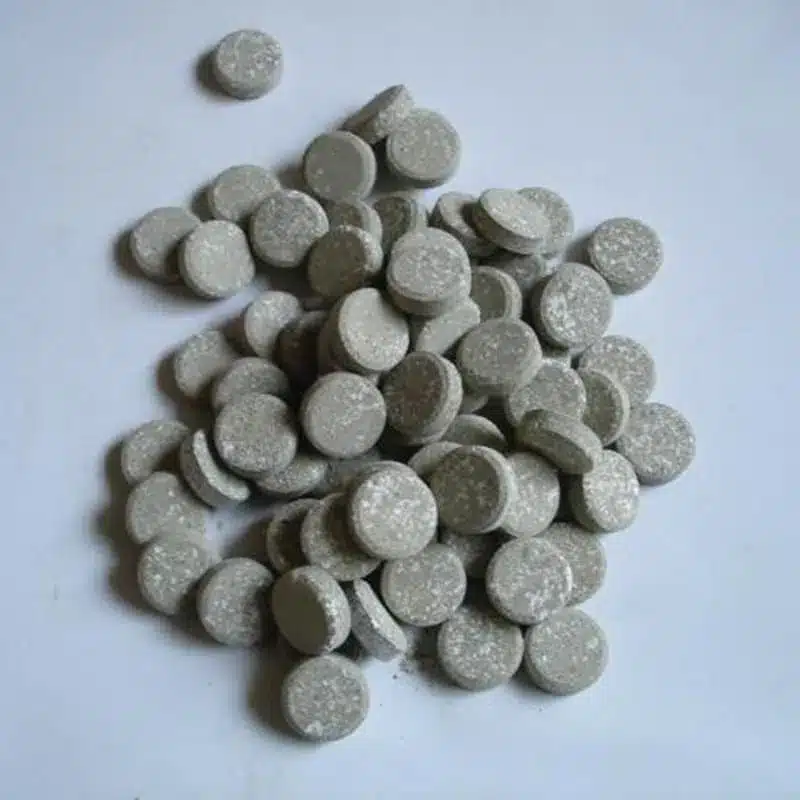
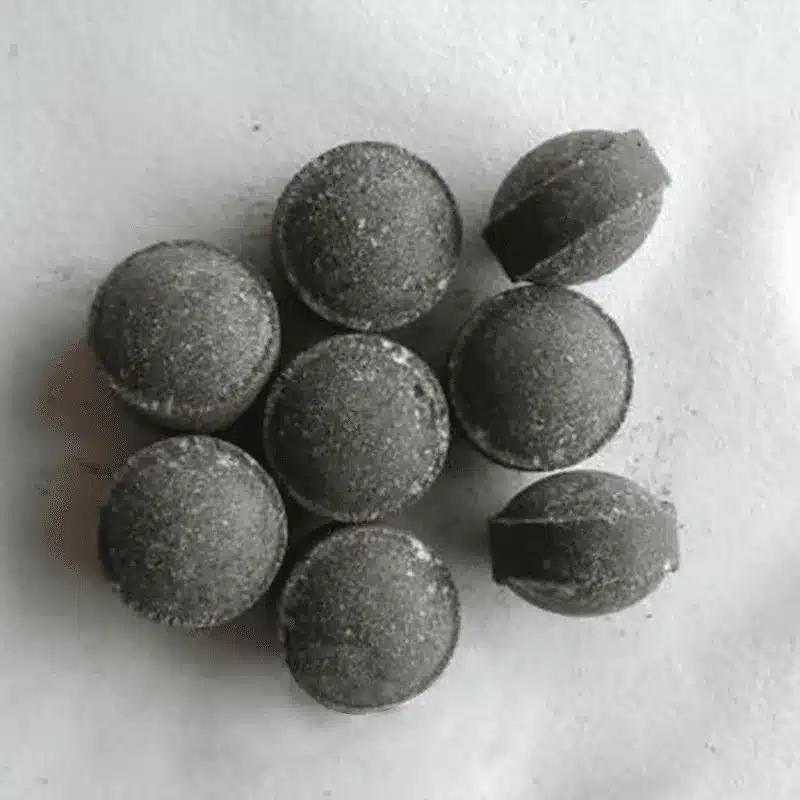
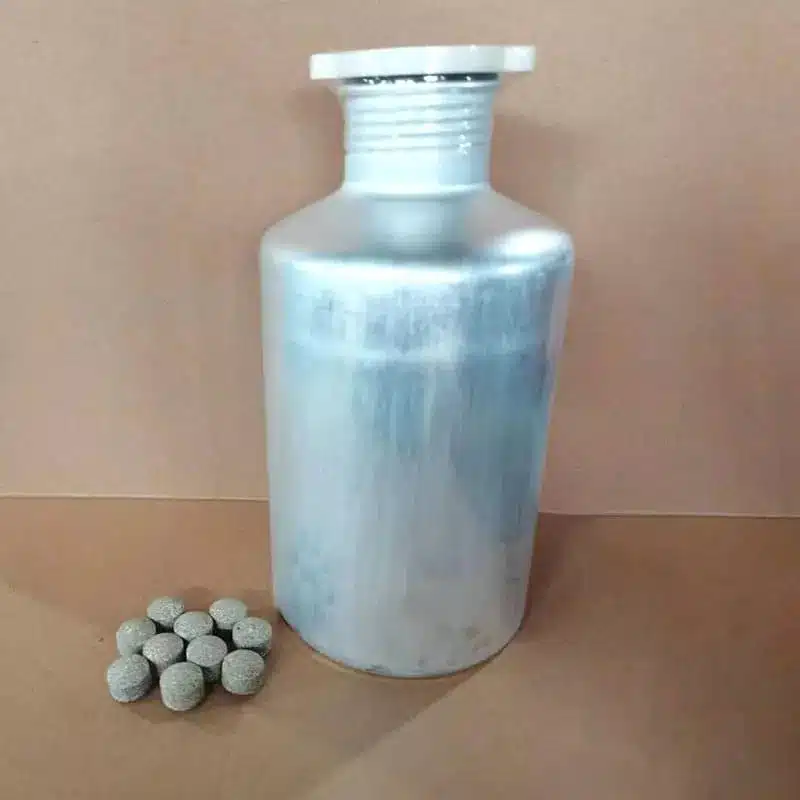
| Typical commercial form | Rodenticide bait or bait formulation | Professional fumigant tablets, pellets, or other registered forms |
| Stored-grain role | Rodent control around approved environments, not commodity fumigation | Major professional stored-commodity fumigation role |
| Structural role | Rodent-control products where registered | Specialized professional fumigation only |
| Main exposure concern | Accidental bait ingestion and non-target exposure | Phosphine inhalation and fumigation exposure |
| Professional-use intensity | Market- and product-specific | Generally much more restrictive |
| Interchangeable? | No | No |
The most important distinction is therefore not chemical strength.
It is the delivery system.
What Is Zinc Phosphide?
Zinc phosphide is principally used as a rodenticide.
Commercial products are formulated so that target rodents consume the bait. Once ingested, zinc phosphide can react under acidic and moist conditions in the digestive system and generate phosphine.
The pest-control sequence can be summarized as:
rodent consumes registered bait → zinc phosphide reacts in the digestive system → toxic phosphine exposure develops → systemic poisoning occurs
This means bait acceptance is central to performance.
Where Is Zinc Phosphide Used?
Depending on local registration, zinc phosphide rodenticide products may be positioned for selected:
- Agricultural fields
- Orchards
- Non-crop areas
- Professional rodent-control programs
- Specific outdoor or agricultural premises
- Other labeled rodent habitats
Target species may include selected:
- Rats
- Mice
- Voles
- Ground squirrels
- Gophers
- Other registered rodent species
The exact species and use site must come from the product label.
Zinc phosphide should not be presented as a general-purpose pesticide for insects or as a commodity fumigant.
What Is Aluminum Phosphide?
Aluminum phosphide belongs to a very different product category.
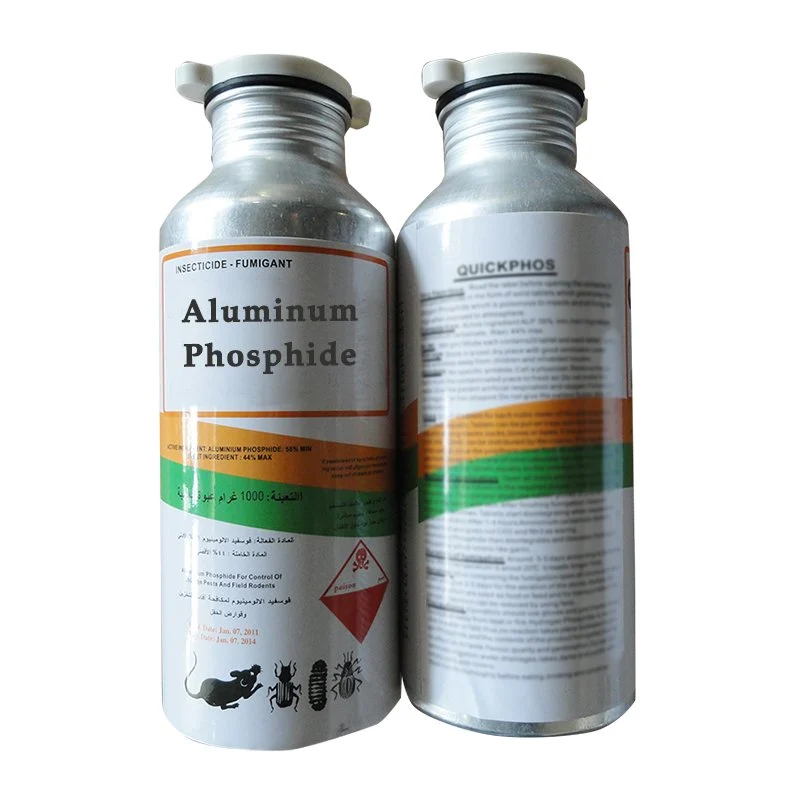
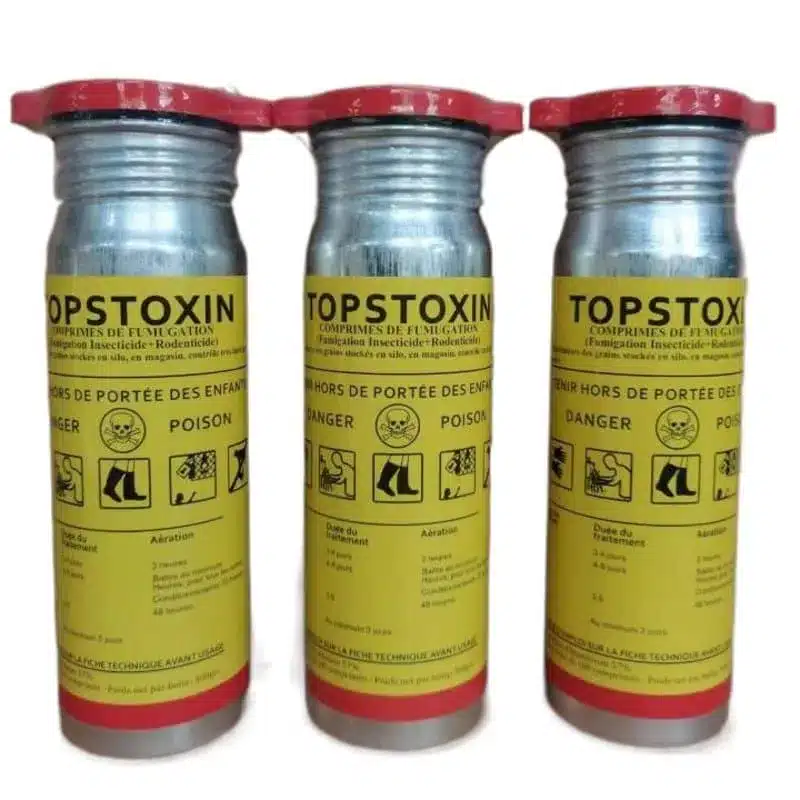
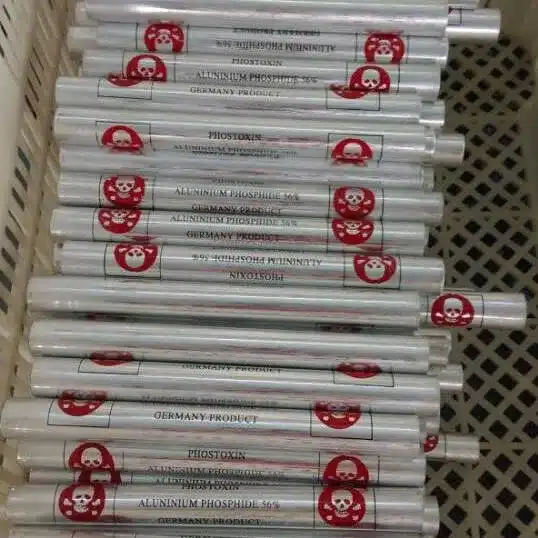
It is a professional fumigant that releases phosphine gas after reacting with moisture.
This property allows phosphine to move through an enclosed or otherwise specifically registered fumigation environment and reach pests that cannot be efficiently controlled with conventional surface sprays.
How Is Phosphine Generated?
The simplified chemistry is:
aluminum phosphide + moisture → phosphine gas
This does not mean that “more moisture is always better.”
Professional fumigation performance depends on the complete registered system, including factors such as:
- Product formulation
- Commodity or structure
- Temperature
- Gas containment
- Exposure conditions
- Aeration requirements
- Monitoring
- Local regulation
These variables should be managed according to the exact fumigant label and professional fumigation plan.
Why Is Aluminum Phosphide a Professional Fumigant?
Phosphine is a highly toxic inhalation hazard.
For that reason, aluminum phosphide products are subject to particularly strict controls in many markets.
Professional programs can require:
- Certified or licensed applicators
- Controlled access
- Gas monitoring
- Warning procedures
- Fumigation planning
- Aeration
- Specialized storage
- Hazardous-goods transport controls
Aluminum phosphide should therefore not be presented as an ordinary household pest-control product.
What Is the Main Difference?
The easiest way to understand the two products is:
Zinc Phosphide Requires Bait Ingestion
The rodent needs to find and consume the bait.
Commercial performance therefore depends on:
- Target species
- Bait acceptance
- Competing food
- Placement allowed by the label
- Non-target protection
- Weather
- Local rodent behavior
Aluminum Phosphide Generates a Fumigant Gas
The pest does not need to consume a bait.
Instead, phosphine gas must be generated and managed within an approved fumigation system.
Performance therefore depends on:
- Fumigation environment
- Gas containment
- Target pest
- Commodity
- Temperature
- Exposure conditions
- Professional management
This is why comparing them as:
Which poison is stronger?
misses the main commercial distinction.
Which One Is Used for Rodent Control?
Zinc phosphide has the more direct rodenticide positioning.
It is designed specifically for bait-based control of registered rodent species.
This makes it potentially suitable for professional markets where buyers need products for:
- Agricultural rodent pressure
- Field rodents
- Orchard rodents
- Selected non-crop rodent programs
Aluminum phosphide may also have specific registered uses against certain burrowing rodents in some markets.
However, this is a fumigation use, not a bait use.
The two approaches should remain clearly separated:
| Rodent Strategy | Product Logic |
|---|---|
| Rodent eats toxic bait | Zinc phosphide |
| Registered burrow is professionally fumigated | Certain aluminum phosphide products where specifically permitted |
Do not describe aluminum phosphide as an ordinary rat or mouse bait.
Which One Is Used for Stored Grain?
This is one of the most important distinctions on the page.
Zinc Phosphide in Grain-Storage Environments
Zinc phosphide may be relevant to rodent management around certain agricultural or storage environments where that use is registered.
Its role remains:
rodent control
It should not be interpreted as an insect fumigant added to stored grain.
Aluminum Phosphide for Stored Commodities
Aluminum phosphide has a major professional role in stored-commodity fumigation.
Depending on local registration, phosphine fumigation may be used against selected stored-product pests such as:
- Grain weevils
- Beetles
- Moths
- Other storage insects
in approved commodities or fumigation systems.
The objective is to expose the target pest population to phosphine within a controlled professional fumigation environment.
Therefore:
Zinc phosphide rodent control and aluminum phosphide grain fumigation solve different pest problems even when both are associated with grain-storage operations.
Can Zinc Phosphide Replace Aluminum Phosphide?
No.
Zinc phosphide should not be treated as a substitute for aluminum phosphide fumigation.
Its commercial logic is based mainly on ingestion by target rodents.
It is not designed to create the controlled commodity-wide phosphine atmosphere required for professional fumigation.
If the problem is:
insects developing inside stored grain
the buyer needs a registered stored-commodity pest-control program.
If the problem is:
rodents around an agricultural storage environment
a registered rodenticide program may be relevant.
These are different purchasing decisions.
Can Aluminum Phosphide Be Used as Rodent Bait?
No.
Aluminum phosphide fumigant products should not be converted into bait or handled as substitutes for zinc phosphide rodenticide products.
Where aluminum phosphide has a registered rodent use, that use follows its specific fumigation label.
The product category remains fundamentally different.
Which One Is Better for Rats and Mice?
For bait-based rat or mouse control, zinc phosphide is the more relevant product category where registered.
The buyer should confirm:
- Target rodent species
- Approved use environment
- Bait formulation
- Non-target restrictions
- Packaging
- Local rodenticide registration
Do not choose solely on technical active-ingredient concentration.
A rodenticide product also needs good commercial bait design and an appropriate registration.
Which One Is Better for Stored-Product Insects?
Aluminum phosphide is the more relevant product category where professional phosphine fumigation is registered.
Potential markets can include:
- Grain storage
- Commodity warehouses
- Silos
- Bulk storage systems
- Other specifically approved commodity fumigation environments
However, professional fumigation is not simply another pesticide spray application.
Importers should verify whether the destination market has:
- Licensed fumigation operators
- Approved fumigation facilities
- Registered commodities
- Required monitoring equipment
- Suitable storage and transport controls
- Appropriate emergency procedures
before developing the product commercially.
Why Are Both Phosphides High-Risk Products?
Both products require strict control, but their main exposure risks differ.
Zinc Phosphide Risk
The major concern is inappropriate ingestion.
Potential non-target exposure can involve:
- People
- Livestock
- Pets
- Wildlife
- Non-target birds or mammals
depending on product placement and use conditions.
Bait security and label compliance are therefore essential.
Aluminum Phosphide Risk
The principal professional hazard is phosphine gas exposure.
Phosphine can create severe inhalation risk when fumigant products are improperly stored, exposed to moisture, handled incorrectly, or used outside a controlled fumigation program.
For this reason, aluminum phosphide should never be positioned as:
- A casual household treatment
- A consumer DIY fumigant
- A simple warehouse insecticide
- An ordinary tablet pesticide
Accidental exposure to either product requires immediate professional medical or poison-response evaluation according to local emergency procedures.
This page does not provide poisoning-treatment instructions.
Does Aluminum Phosphide Leave Residue?
It is more accurate to distinguish between phosphine gas and fumigant residues.
Phosphine is a gas that can dissipate during proper aeration.
However, fumigation may also leave spent or partially reacted formulation material that must be managed according to the exact product label.
Therefore, avoid statements such as:
aluminum phosphide leaves no residue.
A more technically correct principle is:
fumigation is not complete until the required aeration, monitoring, residue management, and re-entry conditions have been satisfied.
Does Zinc Phosphide Cause Secondary Poisoning?
The main concern is normally primary bait ingestion.
Secondary exposure can still occur under some conditions, particularly if predators, scavengers, pets, or other animals consume poisoned rodents or gastrointestinal contents containing unreacted bait.
The risk should therefore not be described simply as:
high
or:
impossible.
Professional rodent-control programs should reduce both direct non-target access to bait and access to poisoned carcasses where required by the label.
Is One Safer Than the Other?
There is no useful universal “safer” winner.
The main risk pathway is different.
| Safety Question | Zinc Phosphide | Aluminum Phosphide |
|---|---|---|
| Primary exposure concern | Ingestion | Phosphine inhalation |
| Non-target animal concern | Important | Use-specific |
| Worker inhalation concern | Product-specific | Critical |
| Moisture-sensitive storage | Important | Critical |
| Professional controls | Required | Particularly intensive |
| Safe for casual household use | No | No |
The correct comparison is:
Can this product be managed safely and legally in the intended professional market?
Regulatory and Professional-Use Differences
Registration should be one of the first purchasing filters.
Zinc phosphide normally enters the market as a rodenticide.
Aluminum phosphide enters as a fumigant.
These classifications can result in very different requirements for:
- Product registration
- Applicator qualification
- Label language
- Transport
- Storage
- Retail distribution
- Training
- Emergency planning
- End-user documentation
Aluminum phosphide is especially important in this regard because many jurisdictions restrict phosphine-generating fumigants to qualified professional users.
Importers should not develop a market simply because local buyers request aluminum phosphide.
They should first confirm that the destination market has the legal and operational infrastructure to handle professional fumigation.
Environmental and Non-Target Risk
Environmental evaluation should follow the product category.
Zinc Phosphide
Key questions include:
- Can non-target animals access bait?
- Are protected species present?
- Can bait move from the intended treatment site?
- Are poisoned rodent carcasses managed appropriately?
Aluminum Phosphide
Important questions include:
- Can phosphine escape from the intended fumigation environment?
- Are workers and nearby people protected?
- Is the product stored away from moisture?
- Are spent materials managed correctly?
- Are transport and storage controls adequate?
Neither product should be described simply as environmentally friendly because the active ingredient eventually reacts or degrades.
Exposure control remains the central safety principle.
How Should Importers Choose Between Zinc and Aluminum Phosphide?
The first question should be:
What pest-control business are we actually supplying?
| Procurement Factor | Zinc Phosphide | Aluminum Phosphide |
|---|---|---|
| Product category | Rodenticide | Fumigant |
| Primary customer | Rodent-control distributor, agricultural channel | Grain-storage operator, fumigation company, professional distributor |
| Main pest demand | Rodents | Stored-product insects and other registered fumigation pests |
| Delivery system | Bait | Phosphine fumigation |
| Product form | Finished bait or registered rodenticide formulation | Professional fumigant formulation |
| Key commercial variable | Bait acceptance and target species | Fumigation infrastructure and professional capability |
| Registration | Rodenticide registration | Fumigant registration |
| Operator qualification | Market-specific | Often stringent |
| Packaging priority | Bait integrity and non-target security | Moisture-resistant specialized packaging |
| Storage priority | Toxic pesticide security | Moisture exclusion and hazardous-product controls |
| Core documents | COA, SDS, TDS, registration documents | COA, SDS, TDS, fumigant label/manual, registration documents |
Choose Zinc Phosphide When the Market Needs Rodent Control
A zinc phosphide portfolio may make sense where the distributor serves:
- Farms
- Orchards
- Agricultural estates
- Professional rodent-control companies
- Other approved rodent-management channels
The commercial decision should include target species, bait type, registration, packaging, and non-target risk.
Choose Aluminum Phosphide When the Market Has a Professional Fumigation Sector
An aluminum phosphide portfolio may be relevant where customers include:
- Grain-storage businesses
- Silo operators
- Commodity warehouses
- Professional fumigation contractors
- Other registered fumigation sectors
The market must also support the required technical, safety, and regulatory infrastructure.
Frequently Asked Questions
Choose by Pest, Delivery System, and Registration
Zinc phosphide and aluminum phosphide are not substitutes for one another.
The simplest distinction is:
Zinc phosphide = rodenticide bait strategy
Aluminum phosphide = professional phosphine fumigation strategy
A buyer dealing with rodent pressure should evaluate rodenticide registration, bait formulation, target species, and non-target protection.
A buyer dealing with stored-product insects should evaluate professional fumigation registration, commodity approval, operator qualification, storage, monitoring, and safety infrastructure.
POMAIS supports professional pesticide buyers with product selection, formulation, packaging, technical documentation, and registration-oriented supply for destination-market requirements.
The correct procurement question is not:
Which phosphide is stronger?
It is:
Which product category matches the target pest, delivery system, professional-use capability, regulatory environment, and distribution channel in the destination market?
Hot Products
Hot news
Recommended news