
S-Metolachlor vs Metolachlor
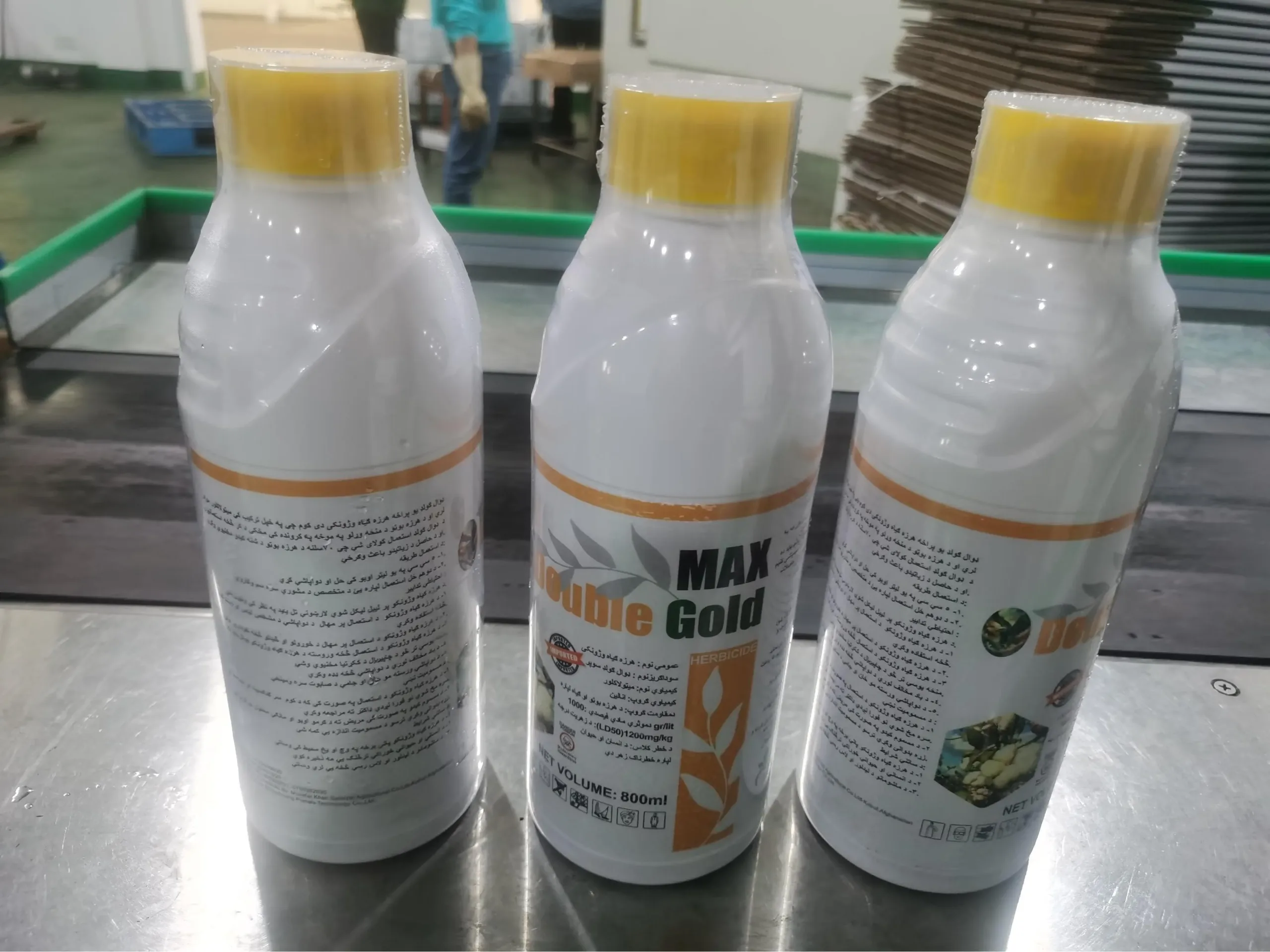
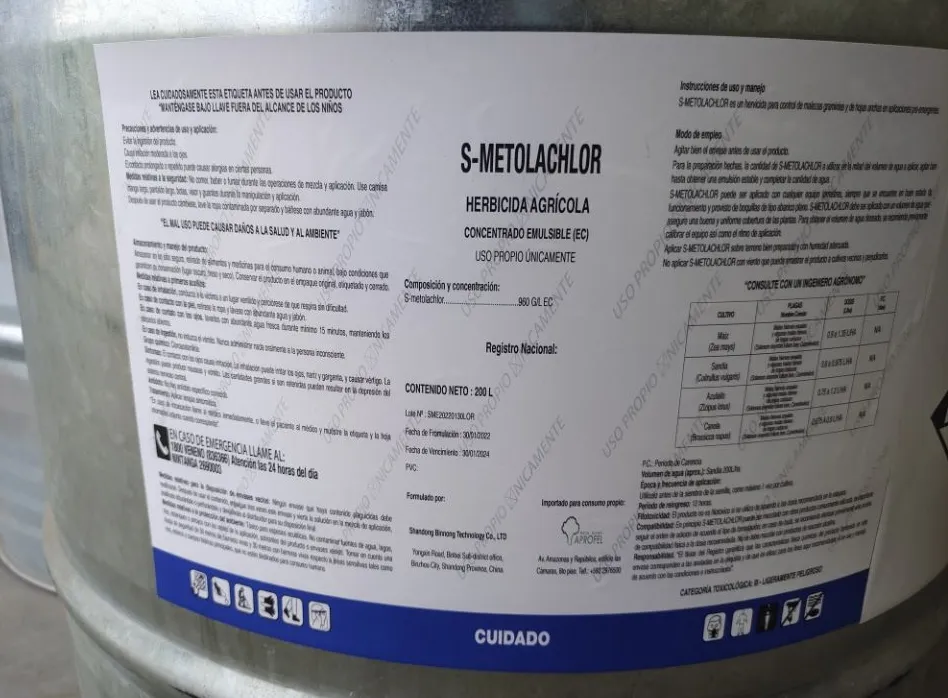
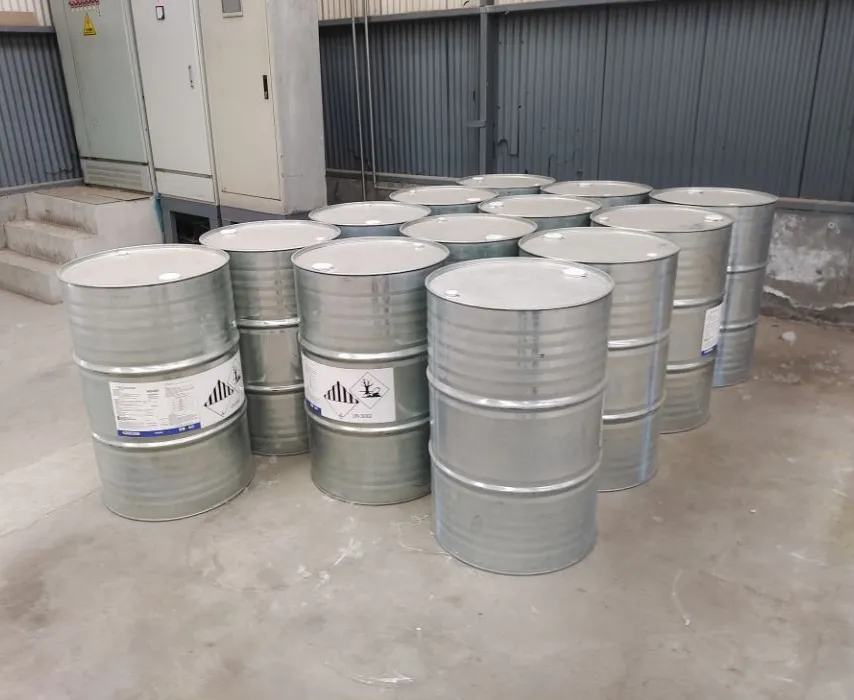
S-metolachlor and metolachlor are closely related chloroacetamide herbicides used mainly for pre-emergence weed control. Their core difference is isomer composition. S-metolachlor contains a higher proportion of the herbicidally active S-isomer, while metolachlor contains a racemic mixture of isomers. This difference affects activity per unit of active ingredient, use-rate efficiency, formulation positioning, and regulatory evaluation.
For practical selection, the decision should not be based only on which one is newer or more familiar. The better direction depends on target weeds, crop system, soil condition, application timing, formulation type, local registration status, residue requirements, and approved label directions.
S-Metolachlor vs Metolachlor at a Glance
| Comparison Point | S-Metolachlor | Metolachlor |
|---|---|---|
| Herbicide Class | Chloroacetamide herbicide | Chloroacetamide herbicide |
| Isomer Profile | Enriched S-isomer composition | Racemic isomer mixture |
| Active Isomer Share | Higher proportion of herbicidally active S-isomer | Lower proportion of active S-isomer |
| Activity Efficiency | Higher activity per unit of active ingredient | Effective, but generally requires higher total active ingredient load |
| Main Weed Target | Annual grasses and selected small-seeded broadleaf weeds | Annual grasses and selected small-seeded broadleaf weeds |
| Main Use Timing | Pre-plant, pre-plant incorporated, or pre-emergence where approved | Pre-plant, pre-plant incorporated, or pre-emergence where approved |
| Practical Advantage | More efficient active ingredient use under approved labels | Established use history in many markets |
| Main Checkpoint | Isomer specification, registration, compliance, and formulation quality | Registration, cost-performance balance, and local market acceptance |
The simplest way to understand the difference is this: S-metolachlor is the more active isomer-enriched form, while metolachlor is the racemic form used for a similar pre-emergence weed control direction.
Isomer Composition: The Main Technical Difference
The most important difference between S-metolachlor and metolachlor is not the crop target or the general weed control direction. It is the isomer profile.
S-metolachlor contains a higher proportion of the S-isomer, which contributes most of the herbicidal activity. Metolachlor contains a broader racemic mixture, including isomer forms with lower herbicidal activity. Because of this, S-metolachlor can often deliver comparable weed control with a lower total active ingredient load, depending on the registered use pattern.
| Technical Factor | S-Metolachlor | Metolachlor |
|---|---|---|
| Isomer Type | Enriched active S-isomer | Racemic isomer mixture |
| Biological Efficiency | Higher per unit active ingredient | Lower per unit active ingredient |
| Formulation Positioning | Often selected for efficiency and specification-driven markets | Often selected where registration, cost, and market familiarity support use |
| Selection Logic | Better when active ingredient efficiency and approved local registration align | Relevant when cost structure and local acceptance are suitable |
This does not mean S-metolachlor is automatically the better answer in every market. It means S-metolachlor has a stronger efficiency profile, while metolachlor may still remain commercially relevant where local registration, pricing, supply availability, and accepted use patterns support it.
Weed Control Spectrum Comparison
S-metolachlor and metolachlor are used mainly for annual grass weeds and selected small-seeded broadleaf weeds. They are not positioned as total vegetation control herbicides, and they are not designed as rescue treatments for large emerged weeds.
Their strongest value is in early-season weed prevention, especially when weed emergence is expected and the field program requires residual soil activity.
| Weed Group | S-Metolachlor | Metolachlor |
|---|---|---|
| Annual grasses | Strong fit where registered | Strong fit where registered |
| Small-seeded broadleaf weeds | Useful for selected species depending on label | Useful for selected species depending on label |
| Yellow nutsedge | May fit certain approved programs | May fit certain approved programs |
| Large emerged weeds | Not the main fit | Not the main fit |
| Established perennial weeds | Limited fit | Limited fit |
| Mixed heavy weed pressure | Usually needs a broader herbicide program | Usually needs a broader herbicide program |
| Total vegetation control | Not suitable | Not suitable |
The main selection question is not whether one controls a completely different group of weeds. The more accurate question is whether the market needs higher active-isomer efficiency, lower active ingredient load, and updated formulation specifications, or whether the existing metolachlor direction still fits local demand and registration conditions.
Application Timing Comparison
Both S-metolachlor and metolachlor are mainly associated with pre-plant, pre-plant incorporated, and pre-emergence weed control where locally approved. Their role is to help reduce weed emergence before early-season weed competition becomes severe.
They work best when used as part of a planned weed management program, not as a late correction after weeds are already large.
| Application Factor | S-Metolachlor | Metolachlor |
|---|---|---|
| Pre-Plant Use | Common where label allows | Common where label allows |
| Pre-Plant Incorporated Use | Possible in approved programs | Possible in approved programs |
| Pre-Emergence Use | Common direction | Common direction |
| Post-Emergence Rescue Use | Not the main fit | Not the main fit |
| Soil Moisture Requirement | Important for activation | Important for activation |
| Rainfall Sensitivity | Excessive rainfall may affect movement and crop safety | Excessive rainfall may affect movement and crop safety |
| Dry Soil Conditions | May reduce activation | May reduce activation |
Soil moisture is a critical factor. If the soil is too dry, activation may be limited. If rainfall is excessive, movement in the soil profile may increase crop safety or environmental concerns, depending on soil texture and label restrictions.
Crop Fit Comparison
S-metolachlor and metolachlor may be used in several crop systems where locally registered. Crop fit should never be assumed, because registration, crop tolerance, formulation concentration, and use timing may vary by country.
| Crop System | S-Metolachlor | Metolachlor |
|---|---|---|
| Corn | Commonly considered for approved pre-emergence programs | Commonly considered for approved pre-emergence programs |
| Soybean | May fit early-season residual weed control | May fit early-season residual weed control |
| Peanut | Relevant where locally registered | Relevant where locally registered |
| Cotton | May be considered where crop safety allows | May be considered where crop safety allows |
| Sunflower | Requires careful label confirmation | Requires careful label confirmation |
| Sorghum | Safener and label conditions may be important | Safener and label conditions may be important |
| Specialty crops | Must be checked against local registration | Must be checked against local registration |
S-metolachlor may be preferred where buyers need a more efficient isomer profile and the formulation is accepted by local registration. Metolachlor may still be considered where the market has established acceptance and the cost-performance balance remains suitable.
Performance Comparison: Efficiency vs Field Fit
S-metolachlor has a clear technical advantage in active-isomer efficiency. Because it contains more of the herbicidally active S-isomer, it can often provide comparable weed control with a lower total active ingredient load than metolachlor.
However, field performance is not decided by isomer composition alone. It also depends on soil condition, rainfall, weed emergence timing, formulation quality, crop tolerance, and label-approved use.
| Performance Factor | S-Metolachlor | Metolachlor |
|---|---|---|
| Active Ingredient Efficiency | Higher | Lower |
| Weed Control Direction | Similar to metolachlor | Similar to S-metolachlor |
| Field Consistency | Depends on formulation and field conditions | Depends on formulation and field conditions |
| Soil Activation | Required | Required |
| Crop Safety | Depends on label, crop, and conditions | Depends on label, crop, and conditions |
| Cost Evaluation | Should be judged by registered use pattern and performance | Should be judged by price, dose, and market acceptance |
A practical comparison should avoid one-sided claims. S-metolachlor may offer better efficiency, while metolachlor may still fit markets where registration, cost, and local familiarity support its continued use.
Environmental and Regulatory Comparison
Because both herbicides are soil-applied, environmental evaluation should include leaching potential, groundwater protection, soil mobility, residue requirements, and local registration status.
A lower active ingredient load may support certain residue-management or environmental objectives, but it does not remove the need for local regulatory review. S-metolachlor and metolachlor must both be checked according to destination-market requirements.
| Compliance Factor | S-Metolachlor | Metolachlor |
|---|---|---|
| Active Ingredient Load | Often lower under approved use patterns | Often higher for comparable activity |
| Groundwater Review | Must be checked locally | Must be checked locally |
| MRL Requirements | Must match destination-market rules | Must match destination-market rules |
| Local Registration | Varies by country | Varies by country |
| Crop Label Approval | Required | Required |
| Use Restrictions | May vary by market | May vary by market |
| Documentation | COA, SDS/MSDS, TDS, label support | COA, SDS/MSDS, TDS, label support |
Regulatory status can change by region. Buyers should verify current local approval, registered crops, label restrictions, groundwater rules, and MRL requirements before confirming procurement or registration plans.
Formulation Comparison
Formulation selection affects storage stability, handling, dilution behavior, field consistency, packaging design, and registration preparation. For S-metolachlor and metolachlor, formulation choice should match the target market, crop use pattern, and registration requirements.
| Formulation Direction | S-Metolachlor | Metolachlor |
|---|---|---|
| EC | Common liquid formulation direction | Common liquid formulation direction |
| CS | May support controlled-release positioning where registered | May be considered where locally accepted |
| SE | Possible in certain combination or formulation programs | Possible in certain combination or formulation programs |
| Mixture Formulations | Depends on crop, weeds, compatibility, and registration | Depends on crop, weeds, compatibility, and registration |
| Private Label Packaging | Available based on market demand | Available based on market demand |
| Technical Specification | Isomer profile is especially important | Active ingredient quality and formulation stability are important |
For procurement, the formulation should not be chosen only because it is popular in another country. It should be selected according to local registration, crop pattern, weed pressure, buyer channel, packaging preference, and document requirements.
Selection Matrix: When to Choose Each Direction
| Decision Situation | Better Direction |
|---|---|
| Need higher activity per unit active ingredient | S-metolachlor |
| Need lower active ingredient load under an approved label | S-metolachlor |
| Need a familiar active ingredient with established local acceptance | Metolachlor may still fit |
| Target annual grasses before emergence | Both may fit where registered |
| Target selected small-seeded broadleaf weeds | Both may fit depending on label |
| Market has strict specification requirements | S-metolachlor may be more suitable |
| Price is the main purchasing factor | Compare both by registered use pattern and cost-performance |
| Local registration favors one active ingredient | Follow local registration status |
| Building private label supply | Check isomer profile, formulation stability, label support, and documents |
The decision should be made by combining technical and market factors. S-metolachlor is usually stronger in efficiency. Metolachlor may remain relevant where registration, cost, and market acceptance support it.
Procurement Checklist for S-Metolachlor and Metolachlor
Before placing an order, buyers should confirm the technical specification, formulation type, registration direction, label requirements, and export documentation.
| Procurement Check | What to Confirm |
|---|---|
| Active Ingredient | S-metolachlor or metolachlor |
| Isomer Profile | Especially important for S-metolachlor |
| Formulation Type | EC, CS, SE, or other suitable formulation |
| Concentration | Match target-market registration and buyer demand |
| Crop List | Confirm locally approved crops |
| Target Weeds | Annual grasses, selected broadleaf weeds, or local weed spectrum |
| Label Direction | Pre-plant, PPI, or pre-emergence use where approved |
| Documents | COA, SDS/MSDS, TDS, label draft, registration support |
| Packaging | Small retail pack, farm pack, drum, or customized packaging |
| Destination Market | Check registration, MRL, groundwater, and import requirements |
This checklist helps avoid a common purchasing mistake: comparing only price per liter without checking isomer efficiency, registered use pattern, and documentation readiness.
Frequently Asked Questions
Is S-metolachlor the same as metolachlor?
No. They are closely related, but not exactly the same. S-metolachlor contains a higher proportion of the herbicidally active S-isomer, while metolachlor is a racemic isomer mixture.
Why is S-metolachlor often used at a lower active ingredient load?
S-metolachlor contains more of the active S-isomer. Because of this, it can often deliver comparable weed control with less total active ingredient under approved local label directions.
Do S-metolachlor and metolachlor control the same weeds?
They are used for similar weed control directions, mainly annual grasses and selected small-seeded broadleaf weeds before emergence. Exact weed control depends on crop, label, formulation, soil condition, and application timing.
Is S-metolachlor always better than metolachlor?
Not always. S-metolachlor has higher isomer efficiency, but the better choice depends on local registration, crop approval, price, formulation type, regulatory status, and market acceptance.
What should buyers check before ordering?
Buyers should confirm active ingredient, isomer profile, formulation type, concentration, crop list, target weeds, registration status, COA, SDS/MSDS, TDS, label support, packaging requirements, and destination-market restrictions.
Work with POMAIS for Herbicide Formulation Supply
S-metolachlor and metolachlor should be selected by comparing isomer profile, active ingredient efficiency, weed spectrum, crop fit, soil-applied performance, formulation stability, and local registration requirements.
POMAIS supports herbicide formulation supply for different crop systems and market needs. We provide formulation selection, private label packaging, label design support, COA, SDS/MSDS, TDS, and export-ready documentation according to your destination market requirements.
If you are comparing S-metolachlor and metolachlor for your local market, share your target crop, weed spectrum, preferred formulation, package size, label language, and destination country. POMAIS can help you confirm a practical supply direction based on formulation suitability, documentation needs, and export delivery requirements.
Hot Products
Hot news
Recommended news