
Bifenthrin vs Permethrin
When shoppers select insecticides for their homes, lawns, livestock, or public health projects, comparing deltamethrin and cypermethrin is one of the most common questions. Both belong to the synthetic pyrethroid class, are effective against a wide range of pests, and are widely used in professional pest control and agriculture. However, they are not interchangeable.
In fact, depending on local approvals and label instructions, bifenthrin is typically used for long-lasting residual control outdoors, while cypermethrin is preferred for its versatile, fast-acting knockdown effect in indoor, fabric, livestock, and vector control applications.
Quick Answer—What is the main difference between deltamethrin and cypermethrin?
Deltamethrin typically provides stronger and longer-lasting residual control outdoors, particularly on surfaces such as soil, masonry, and building exteriors. It bonds tightly to surfaces and is highly stable in sunlight, making it ideal for perimeter, lawn, and building structure pest control.
Cypermethrin is generally more versatile for both indoor and outdoor applications. In regions where it is approved for use, it is widely used for indoor spraying, fabric treatment, livestock ectoparasite control, and public health applications because of its rapid knockdown and extensive label options in many markets. However, its outdoor residual effectiveness is generally shorter than that of deltamethrin, and it degrades more easily in sunlight.
For most long-term outdoor barrier treatments and lawn treatments, bifenthrin is generally the preferred choice. For indoor environments, fabrics, animals, or vector control programs, cypermethrin is typically preferred, depending on local regulations and product labels.
What Is Bifenthrin?
Bifenthrin is a synthetic pyrethroid insecticide widely used in agriculture and pest control. It is known for its broad-spectrum insecticidal efficacy against pests such as aphids, whiteflies, fleas, and mites. Bifenthrin disrupts insects’ nervous systems, causing overexcitation that ultimately leads to paralysis and death. Because of its high degree of fluorination, bifenthrin is highly stable in the environment and has longer-lasting residual activity.
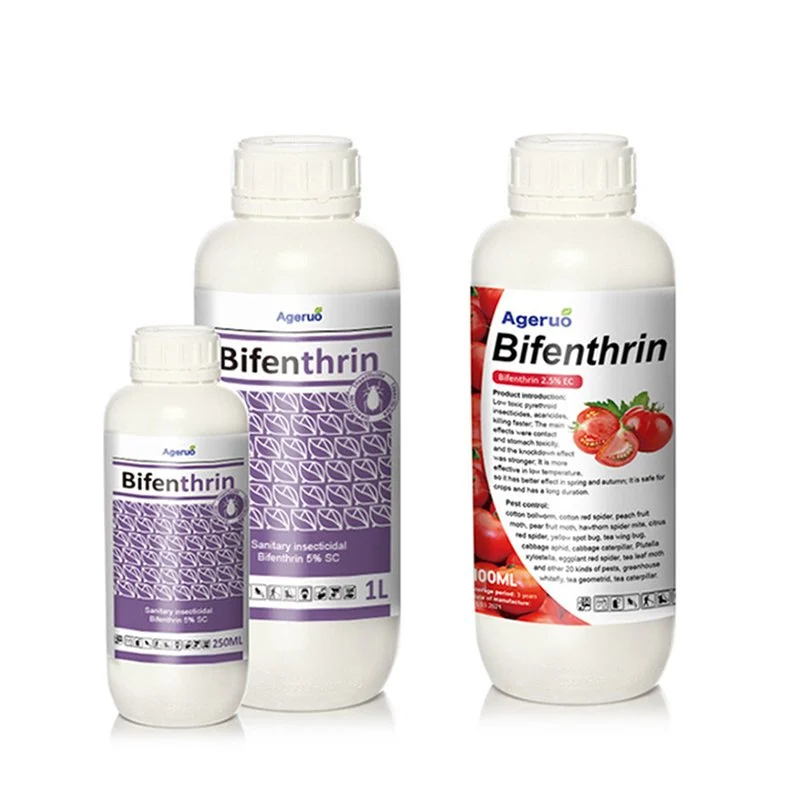


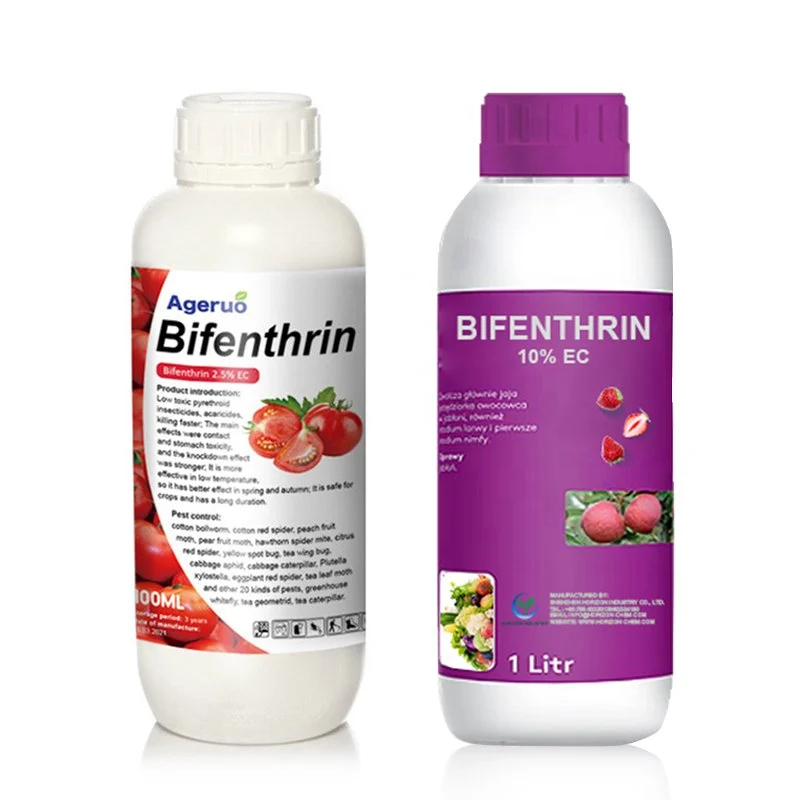

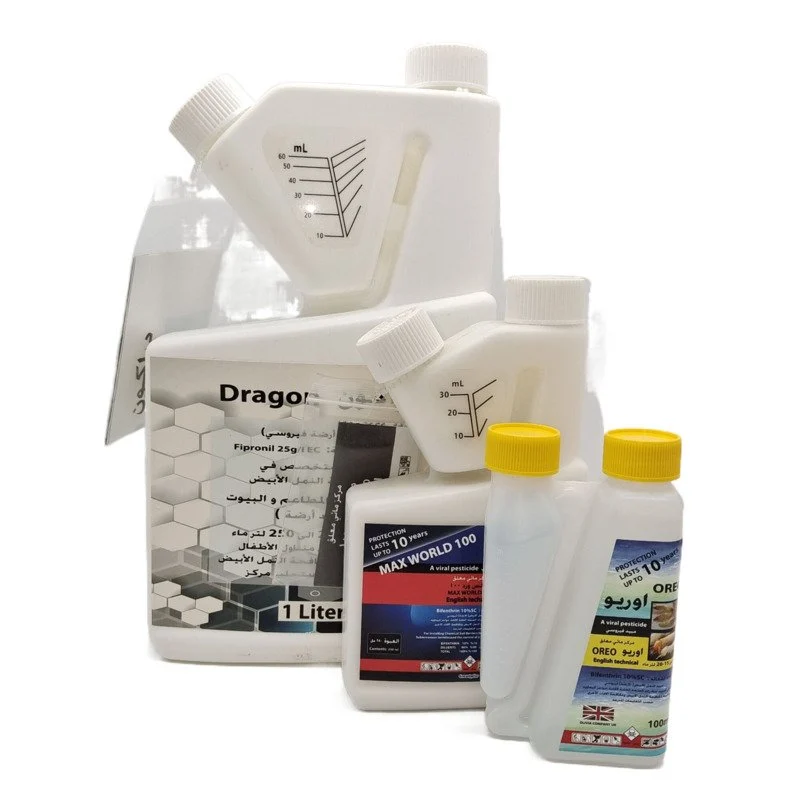

Key Features of Bifenthrin:
- Mechanism of Action: Bifenthrin disrupts the normal flow of sodium ions in the insect nervous system, causing hyperexcitation and death.
- Applications: Primarily used in agriculture (crop protection), public health (vector control), and household pest control.
- Residual Activity: Long-lasting (up to several weeks or months).
- Environmental Impact: Can be toxic to aquatic organisms and beneficial insects such as bees. Use it carefully to minimize environmental risks.
What is Permethrin?
Permethrin is another widely used pyrethroid insecticide with a similar mechanism of action to Bifenthrin. It is primarily used for household pest control, public health purposes (such as mosquito control), and certain agricultural applications. Permethrin has a lower fluorine content than Bifenthrin, resulting in shorter residual activity but still providing highly effective pest control.
Key Features of Permethrin:
- Mechanism of Action: Like bifenthrin, Permethrin disrupts sodium ion channels in the insect’s nervous system, causing paralysis and death.
- Applications: Used extensively for domestic pest control (e.g., mosquitoes, cockroaches, fleas), personal protection (e.g., insect-repellent clothing), and some agricultural pest management.
- Residual Activity: Shorter residual activity (typically several days to weeks).
- Environmental Impact: Generally less harmful to the environment than Bifenthrin, but still requires careful use to avoid non-target effects.
Bifenthrin vs Permethrin: A Quick Comparison
| Feature | Bifenthrin | Permethrin |
|---|---|---|
| Chemical Class | Pyrethroid | Pyrethroid |
| Mechanism of Action | Disrupts sodium ion flow in insect nerves | Disrupts sodium ion flow in insect nerves |
| Primary Applications | Agriculture, Public Health, Household | Household, Public Health, Personal Protection, Agriculture |
| Residual Activity | Long-lasting (weeks to months) | Short-term (days to weeks) |
| Environmental Impact | Toxic to aquatic organisms and bees | Lower environmental toxicity, but still requires caution |
| Effectiveness | Long-term pest control, broad-spectrum | Rapid control, effective for short-term use |
Understanding Bifenthrin and Permethrin
Chemical family and mode of action
Bifenthrin and permethrin are both synthetic pyrethroids. They act on the insect nervous system by interfering with sodium channel function, leading to hyperexcitation, paralysis, and death.
- Bifenthrin
- Non-systemic, contact and stomach insecticide.
- Highly lipophilic; binds strongly to organic matter and surfaces.
- Very low volatility and strong stability on treated surfaces.
- Permethrin
- Non-systemic, contact and stomach insecticide.
- Also lipophilic, but generally less persistent outdoors than bifenthrin.
- Provides rapid knockdown on many flying and crawling insects.
Because both share a similar mode of action, rotation with other insecticide classes is important for resistance management in professional programs.
Knockdown vs residual profile
- Permethrin is well known for quick knockdown, particularly on flying insects, nuisance pests, and ectoparasites.
- Bifenthrin also provides good knockdown, but its core strength is a long-lasting residual, especially outdoors and on treated surfaces.
For distributors and professional applicators, the choice often comes down to how long protection is required and what environment is being treated.
Bifenthrin vs Permethrin: Side-by-Side Comparison
The table below summarizes key practical differences that matter for buyers and professional users. Always remember that individual products, formulations, and labels differ by country, so this comparison is general, not product-specific.
| Comparison Dimension | Bifenthrin | Permethrin |
|---|---|---|
| Chemical group | Synthetic pyrethroid | Synthetic pyrethroid |
| Typical use focus | Outdoor perimeter, lawns, structural pests | Indoor & outdoor, fabrics, livestock, vector control* |
| Knockdown speed | Good | Often very fast |
| Residual effect (outdoors) | Strong, long-lasting | Short to moderate, more UV-sensitive |
| Photostability in sunlight | High | Lower than bifenthrin |
| Soil binding | Very strong; low mobility | Moderate; less strongly bound than bifenthrin |
| Indoor use | Often more restricted, label-dependent | Widely used where approved, label-dependent |
| Use on fabrics/clothing | Normally not used | Common in some markets (e.g. treated fabrics)* |
| Livestock/ectoparasite use | Limited, label-dependent | Widely used in many markets for animal ectoparasites* |
| Lawn/turf insects | Strong fit (surface feeders, ants, grubs – label) | Used in some turf programs, shorter residual |
| Structural pests (ants, roaches) | Very strong for perimeter barriers | Used indoors and outdoors, depending on formulation |
| Public health/mosquito control | Used in some surface treatments | Widely used in vector-control programs* |
*Actual permitted uses vary by country and by product. Always check the specific label and local regulations.
Indoor vs Outdoor Use: Where Each Fits Better
Outdoor environments – bifenthrin’s strongest area
Bifenthrin is widely chosen for outdoor, surface-oriented pest management, particularly where long residual is valuable:
- Home perimeter and building exteriors
Its strong adherence to walls, foundations, and soil makes bifenthrin suitable for perimeter treatments against ants, cockroaches, and other crawling insects, when used according to label directions. - Lawns, ornamental beds and landscapes
In many formulations, bifenthrin is used in turf and ornamental programs for surface-feeding insects such as ants and certain lawn pests. Its low volatility and long persistence provide extended protection between treatments. - Structural and industrial sites
In commercial and industrial environments, long-lasting control on exterior surfaces can reduce service frequency and improve predictability for pest management contracts.
Because of its strong binding to soil and surfaces, bifenthrin generally stays where it is applied. However, always follow the label’s appropriate use patterns and environmental precautions.
Indoor environments and sensitive surfaces – permethrin is often preferred
Permethrin has been widely used, in many markets, in indoor, fabric and animal applications where labels allow:
- Indoor crack-and-crevice and surface treatments
In many regions, permethrin formulations are approved for indoor pest control against cockroaches, ants, spiders and other household pests, subject to strict label directions. - Fabrics and textiles
Certain permethrin products are designed, where permitted, to treat fabrics used in tents, uniforms, and outdoor clothing to help protect against biting insects. - Livestock and companion animals
In some markets, permethrin is part of ectoparasite control programs for cattle, sheep, poultry and pets, depending on local regulations, formulation type and species. - Public health and vector control
Permethrin has a long history in mosquito and vector-control programs, both for ground-based applications and treated materials, subject to public health guidelines.
Because indoor and public-health uses are highly regulated, buyers must always work within national registrations and label limitations. The key point is that, in many markets, permethrin’s label landscape is broader for sensitive surfaces and hosts, while bifenthrin is more focused on outdoor surfaces and structural applications.
Target Pests and Typical Use Scenarios
Structural and perimeter pests
- Bifenthrin
Often selected for perimeter ant and cockroach control, structural pests around buildings, and long-term barriers where insects travel over treated surfaces. - Permethrin
Common in indoor crack-and-crevice treatments and domestic environments where the label approves indoor use. It can also be used outdoors, but usually with a shorter residual than bifenthrin.
Lawn, garden and ornamental pests
- Bifenthrin
Used in many turf and ornamental programs for surface-feeding insects, such as ants, certain lawn caterpillars, and other pests, depending on formulation and label scope. - Permethrin
Also used in some lawn and garden products, typically where fast knockdown matters more than long residual.
Mosquitoes and public-health pests
- Permethrin
In many regions, permethrin is a component of vector-control strategies for mosquitoes and other flying insects, both in space sprays and treated materials, according to public-health guidelines. - Bifenthrin
May be used on certain outdoor surfaces and vegetation as part of an integrated mosquito management program, depending on local registrations.
Livestock and ectoparasites
- Permethrin
Frequently used in products for livestock, poultry, and companion animals for ectoparasite control (ticks, lice, flies), where labels allow. - Bifenthrin
Less common in this segment; it’s stronger in structural and turf environments than in direct animal treatment.
For distributors and professional buyers, this means bifenthrin and permethrin can be positioned as complementary, not competing, actives within your insecticide portfolio.
Environmental Behavior and Residual Control
Persistence and photostability
- Bifenthrin is known for its strong stability on surfaces and in sunlight. This is a major reason it is used for long-term outdoor residual control.
- Permethrin generally has shorter outdoor persistence, especially under direct sunlight and weathering. It still provides useful residual control, but usually not at the level of bifenthrin under similar conditions.
Soil binding and mobility
- Bifenthrin is strongly adsorbed to soil particles and has very low mobility under normal use patterns, which contributes to its long persistence in the treated zone.
- Permethrin also binds to soil but typically less strongly than bifenthrin.
These properties influence how long each active ingredient remains effective on treated surfaces, and how they should be positioned in your product line for different environmental settings.
Safety and Regulatory Considerations
Both bifenthrin and permethrin are regulated pesticides. Safety depends on:
- The formulation (EC, SC, EW, granules, etc.)
- The concentration of active ingredient
- Application method and site
- Local regulatory classifications and restrictions
For this reason:
- Always follow the specific product label and local regulations in your market.
- Do not assume that an approval for one formulation or brand automatically applies to another, even with the same active ingredient.
- Pay attention to restrictions on indoor use, animal treatment, food-handling areas, water bodies, and sensitive habitats.
Common Mistakes When Choosing Between Bifenthrin and Permethrin
Even experienced users can make sub-optimal decisions if they focus only on the active ingredient name and ignore context. Typical mistakes include:
- Using permethrin expecting long outdoor residual
In high-sun, high-rainfall environments, permethrin’s outdoor persistence is usually shorter than bifenthrin. Expecting a long-term barrier with limited reapplication can lead to disappointing control. - Using bifenthrin where indoor or host-directed uses are restricted
Some markets restrict bifenthrin from certain indoor or host-directed uses. Selecting it without checking the label can create compliance issues. - Assuming all pyrethroids behave the same
Buyers may assume “a pyrethroid is a pyrethroid.” In reality, knockdown speed, residual length, photostability, and label scope differ significantly between bifenthrin and permethrin. - Ignoring the target pest’s biology and habitat
For example, choosing a short-residual solution for pavement ants or outdoor cockroaches that constantly move through treated zones, or using a primarily surface-oriented active for pests spending most of their life cycle on animals or fabrics. - Not aligning formulation with application equipment
Choosing a formulation that is not ideal for the customer’s sprayers, foggers, or other equipment can reduce coverage, stability, and reliability.
How Distributors and Professional Buyers Can Decide
When you decide between bifenthrin vs permethrin for your portfolio or project, it helps to ask a few strategic questions:
- Where will treatments mainly occur?
- Outdoor perimeter, lawns, building exteriors → bifenthrin often leads.
- Indoor spaces, fabrics, livestock, vector control → permethrin is usually more relevant (label-dependent).
- What matters more: fast knockdown or long residual?
- Fast knockdown and broad versatility → permethrin formulations.
- Long-lasting barriers and fewer treatments → bifenthrin formulations.
- Which pests are the priority?
- Structural pests like ants, cockroaches, termites → bifenthrin is often a strong backbone active.
- Flying insects, mosquitoes, lice, ticks, ectoparasites → permethrin plays a major role, where permitted.
- What are the regulatory and market expectations?
- Public health projects and livestock applications must strictly follow local regulations and program guidelines.
- Structural pest management and lawn care can often tolerate different residual profiles, as long as re-treat intervals and contracts are aligned.
FAQ – Bifenthrin vs Permethrin
Work With a Supplier Who Understands Both Actives
For importers, distributors, and professional pest-control brands, the real question is not simply “bifenthrin vs permethrin – which is better?” but “which is better for this specific market, pest pressure, and application environment?”
A reliable technical partner can help you:
- Select appropriate bifenthrin and permethrin formulations for structural, turf, livestock, or public-health uses in your market.
- Customize packaging, labels, and languages for your distribution channels.
- Provide COA, MSDS, and registration support to match local compliance requirements.
- Build a balanced portfolio that covers different pest groups and use scenarios without unnecessary overlap.
If you are planning to expand or upgrade your insecticide line with bifenthrin, permethrin or both, you are welcome to share your target pests, application segments and packaging preferences so we can recommend suitable options for your market.
Hot Products
Hot news
Recommended news