
Cotton Whitefly Control: How to Select Insecticides Based on Different Life Stages
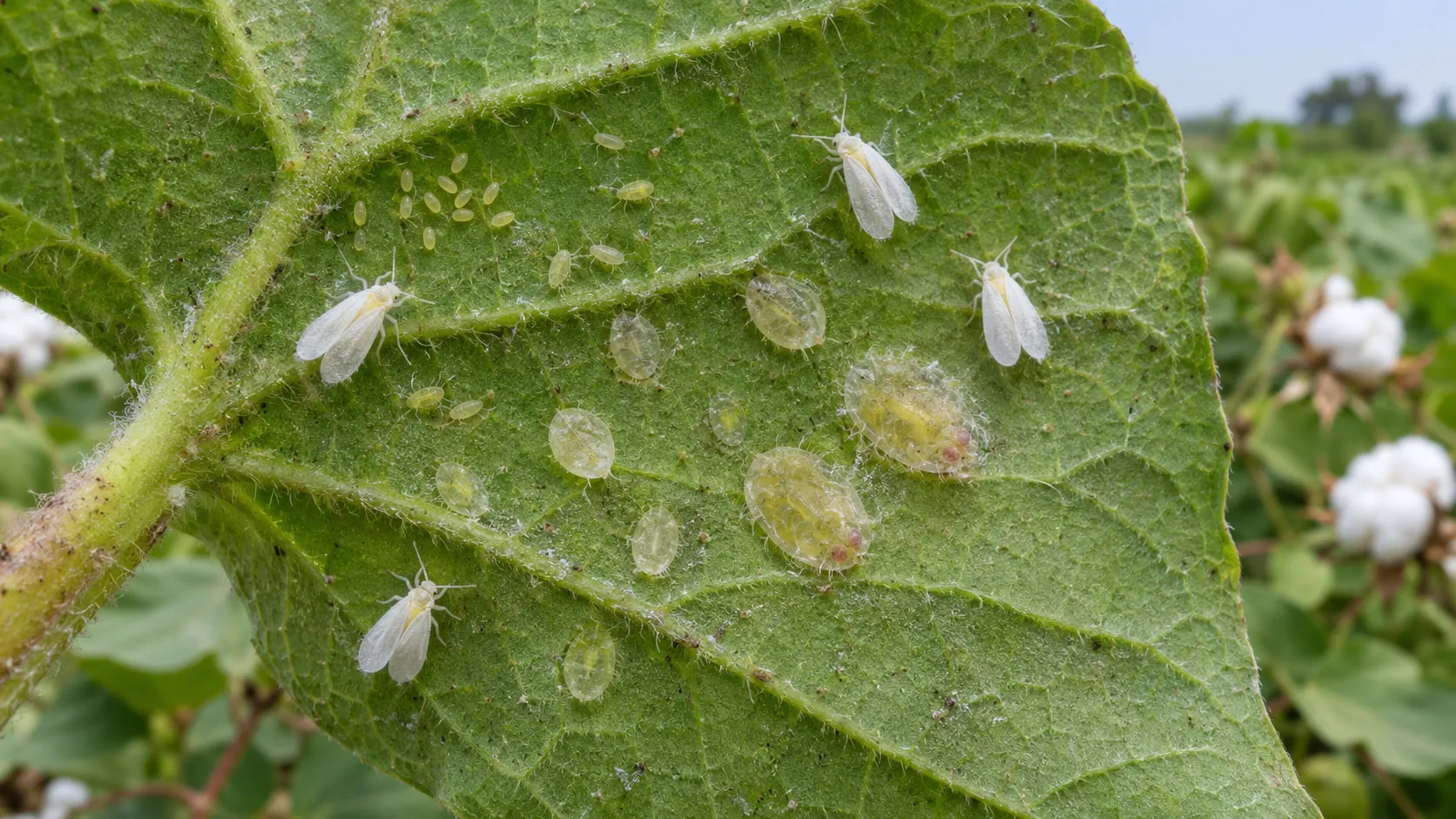
The cotton whitefly (Cotton Whitefly) is one of the sucking pests that requires priority management in cotton production. Under warm climatic conditions, whiteflies can reproduce rapidly and form continuously growing populations on the undersides of leaves.
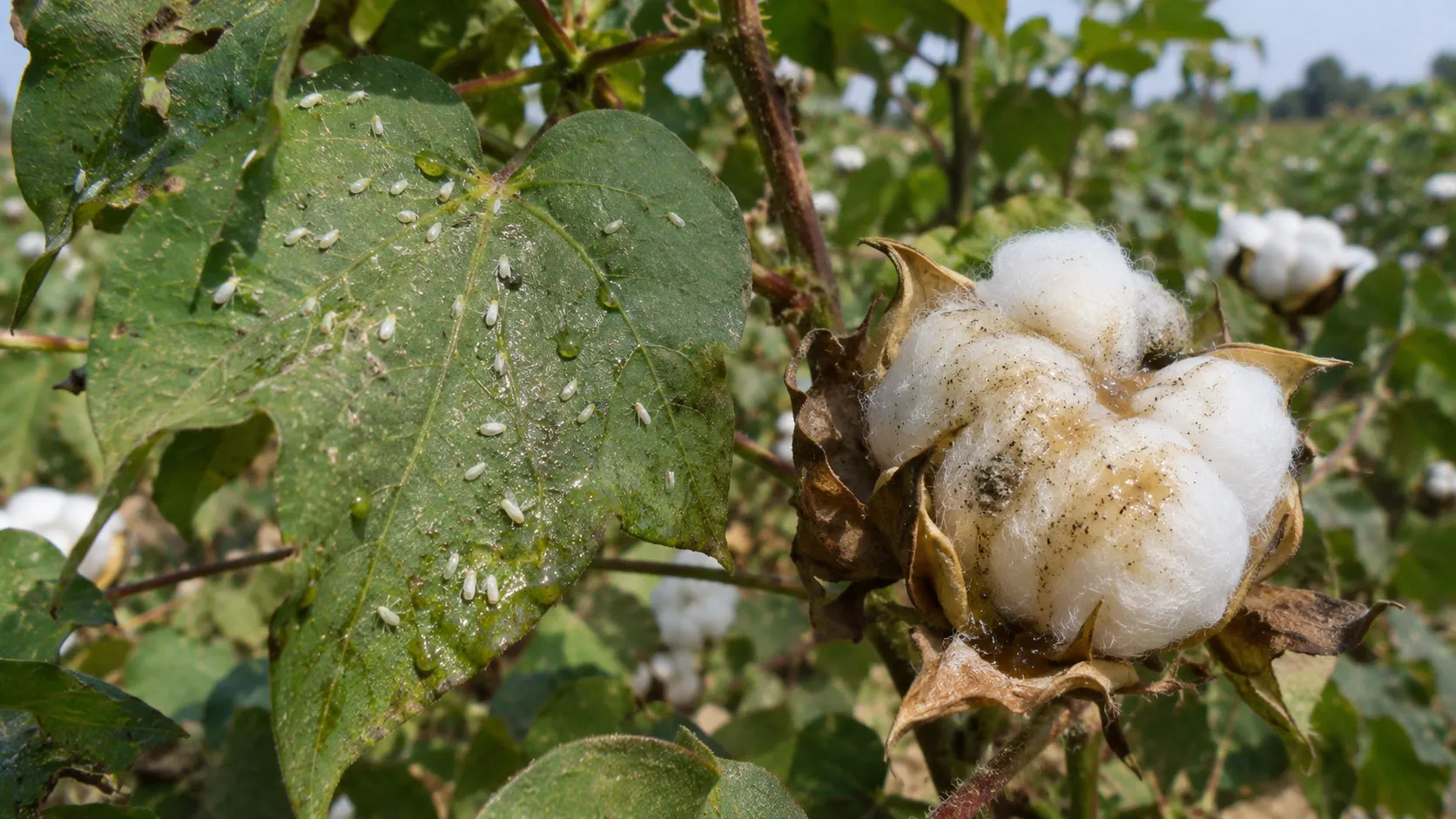
Not only do they affect cotton plant growth by sucking plant sap, but they also secrete large amounts of honeydew. When honeydew adheres to open cotton bolls and cotton fibers, it can cause “sticky cotton,” which affects harvesting, ginning, and subsequent spinning processes.
One often-overlooked issue in cotton whitefly control is that eggs, nymphs, and adults have different biological characteristics, and not all insecticides can control these life stages in the same way.
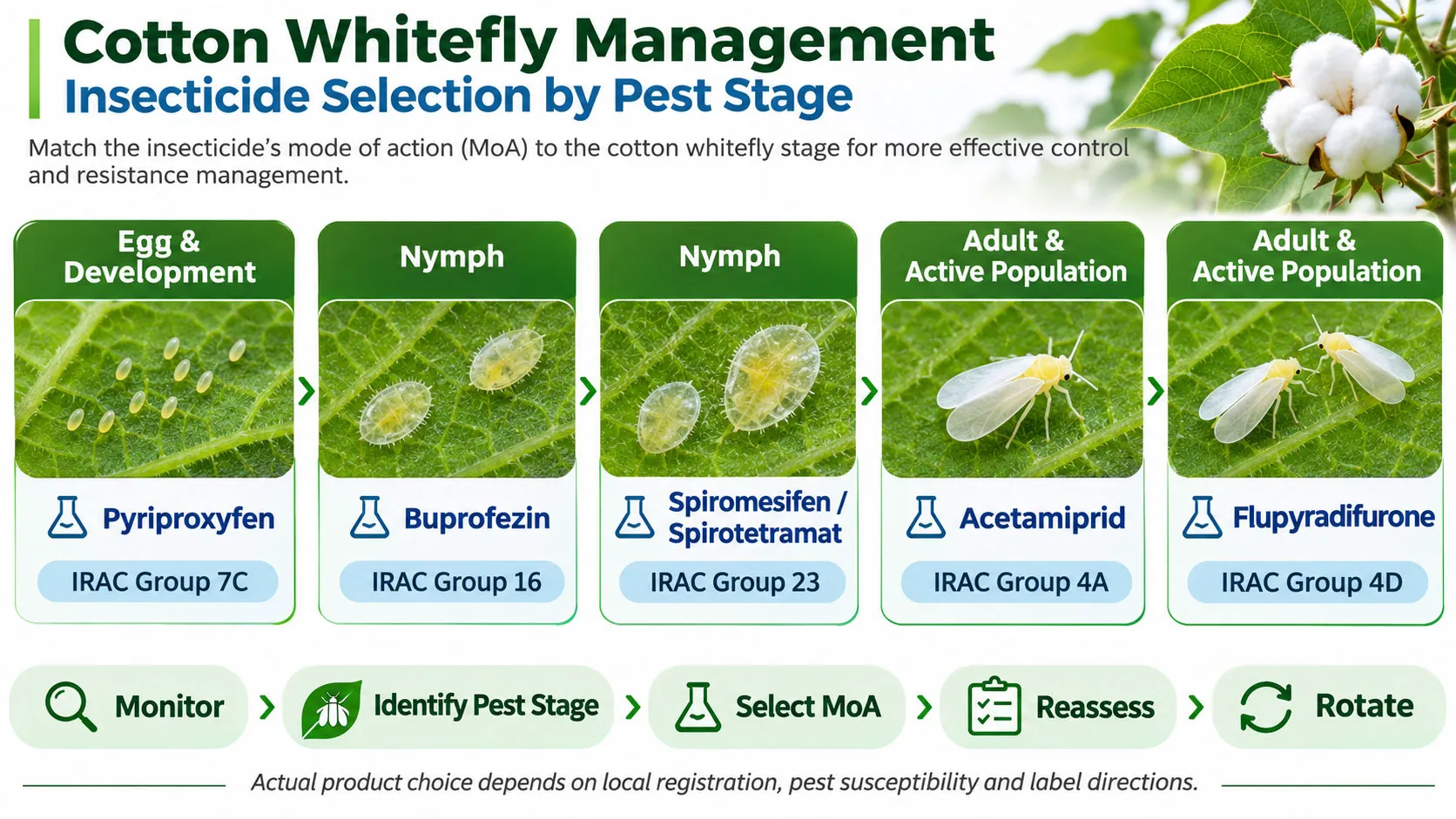
For example, buprofezin primarily targets the molting process of nymphs, while pyriproxyfen mainly disrupts normal insect development and the formation of adults. Acetamiprid, on the other hand, is an insecticide with a nervous system mode of action and can be used to manage active populations covered by the label.
If product selection is based solely on the insecticide name or market price without considering the pest life stage, adult populations may temporarily decline, but nymphs on the undersides of leaves will continue to develop.
Therefore, effective cotton whitefly management requires integrating the pest life cycle, cotton growth stages, field monitoring, and the IRAC mechanism of action.
For pesticide importers, distributors, and registration companies, understanding the technical positioning of different active ingredients also helps in establishing a more rational portfolio of cotton insecticide products. For comprehensive cotton pest, disease, and weed management, please refer to POMAIS’s Cotton Crop Protection Solutions.
What is the cotton whitefly? Why does it require focused management?
One of the major economically significant whiteflies on cotton is the tobacco whitefly (Bemisia tabaci). It belongs to the family Aleyrodidae within the order Hemiptera and constitutes a complex population comprising multiple cryptic species, distributed across tropical, subtropical, and some temperate agricultural regions.
It is important to note that not all small, white flying insects in cotton fields are the same species of whitefly. Different whitefly species may vary in appearance, host range, and economic impact; therefore, the target pest should be identified before developing a control strategy.
What are the major populations of Bemisia tabaci?
From an agricultural control perspective, MEAM1 and MED are the two lineages of the tobacco whitefly complex that receive the most attention.
| Taxonomy | English Name | Historically Used Names | Management Considerations |
|---|---|---|---|
| MEAM1 | Middle East-Asia Minor 1 | Biotype B | Widespread distribution with strong host adaptability |
| MED | Mediterranean | Biotype Q | Some populations pose a high risk of insecticide resistance |
In the past, agricultural literature often used “Biotype B” and “Biotype Q” to describe these two population types. It is now recommended to use taxonomic names such as MEAM1 and MED.
Population composition and resistance patterns vary by region. Particularly in cotton-producing areas where insecticides have been used for a long time, one cannot determine a pest’s sensitivity to a specific active ingredient based solely on its appearance.
What damage do whiteflies cause to cotton?
Both adult and nymph whiteflies obtain nutrients by piercing and sucking sap from the phloem of plants. When population densities are high, sustained feeding can impair the normal growth of cotton plants.
Major damages include:
| Type of Damage | Specific Symptoms | Impact on Cotton Production |
|---|---|---|
| Direct feeding | Leaf chlorosis, yellowing, and curling | Impairs normal photosynthesis |
| Stunted plant growth | Decreased vigor; leaf drop in severe cases | May affect boll formation and yield |
| Honeydew secretion | Sticky substance appears on the surface of leaves and cotton bolls | Increases the risk of cotton fiber contamination |
| Sooty mold | Black sooty mold fungi grow on the surface of honeydew | Reduces the visual quality of leaves and fibers |
| Virus Transmission | Some whitefly populations transmit the Cotton leaf curl virus | May cause additional losses in regions where the virus is present |
| Post-Harvest Processing Issues | Honeydew adheres to open cotton bolls and fibers | Affects picking, ginning, and spinning processes |
Among these, “Sticky Cotton” is a particular concern in commercial cotton production.
Once the cotton bolls open, the honeydew comes into direct contact with the cotton fibers, which can make the fibers sticky, increase the difficulty of cleaning ginning equipment, and affect the quality of yarn processing.
Therefore, thrips management affects not only field yield but also the commercial value of the final cotton product.
How Does the Life Cycle of the Cotton Whitefly Affect Pesticide Selection?
Before selecting a pesticide, it is essential to understand the life cycle of the whitefly.
The cotton whitefly is an insect with incomplete metamorphosis, primarily undergoing egg, nymph, and adult stages. Nymphs have multiple instars; the first-instar nymphs possess limited mobility, while subsequent instars gradually become sessile, feeding on the surface of leaves.
Egg Stage
Whiteflies typically lay their eggs on the underside of leaves. The eggs are oval or slightly elongated, and in some species, they have short stalks.
Whiteflies do not feed directly on plants during this stage, but once the eggs hatch, they form a new population of nymphs.
When selecting a pesticide, consider the following:
- Whether adults are still laying eggs.
- Whether there are large numbers of fresh eggs in the field.
- Whether the candidate active ingredient affects egg development or subsequent hatching.
- Whether the product has the appropriate label use.
For example, pyriproxyfen can affect whitefly populations by disrupting insect development and reproductive processes, but it should not be simply viewed as a contact insecticide capable of rapidly killing all eggs.
Crawler Stage—First-instar Nymphs
After whitefly eggs hatch, first-instar nymphs, also known as crawlers, emerge.
This is the mobile stage within the immature life cycle. The nymphs briefly search for a suitable feeding site before settling on the underside of a leaf.
This stage warrants close monitoring because it represents the establishment of a new generation of whiteflies.
Key observations include:
- The number of newly hatched nymphs.
- The distribution of nymphs on the underside of leaves.
- Whether large numbers of adults are continuously migrating in and laying eggs.
- The activity of natural enemies and parasitic wasps.
Once first-instar nymphs have established a population, they will subsequently enter the stationary feeding stage; therefore, timely detection of new populations helps determine future control windows.
Nymph Stage—Mid-to-Late Nymphal Stages
Whitefly nymphs undergo multiple developmental stages. After the first instar, nymphs gradually lose their ability to move and remain stationary on the underside of leaves to continue feeding.
Second- through fourth-instar nymphs are key targets for field surveys.
Among these, fourth-instar nymphs typically exhibit distinct red eye spots and are often referred to as the “Red-Eye Stage” or “Puparium.”
It is important to note that whiteflies are insects with incomplete metamorphosis; this stage does not constitute a true pupal stage as defined for insects with complete metamorphosis.
Key management considerations for this stage include:
- The number of nymphs on the underside of leaves.
- The proportion of older-instar nymphs.
- Whether nymphs are still alive.
- Natural mortality due to parasitism and predation.
- Whether it is necessary to use active ingredients effective against immature life stages.
Active ingredients such as buprofezin, pyriproxyfen, and spiromesifen can be considered as options in different nymph management strategies, but their modes of action differ.
Adult Stage
Adults have two pairs of wings covered with a white powdery substance and are primarily active on the undersides of leaves and near the plant canopy.
When plants are disturbed, adults may quickly fly away from the leaves.
The adult stage is critical for population reproduction and dispersal, as adults continue to lay eggs and establish new populations.
Therefore, adult management should focus on the following considerations:
- Whether the number of adults in the field is continuing to increase.
- Whether whiteflies have migrated from nearby host crops.
- Whether adults have already begun laying eggs in large numbers.
- Whether adult control measures appropriate for the current pest situation need to be implemented.
Insecticides such as acetamiprid, which are effective against whiteflies, can be considered for managing adults and active populations; specific use should be based on local registrations and product labels.
Keep in mind: A reduction in adult numbers does not mean the nymph population has disappeared. If only adult numbers are observed without checking for immature stages on the undersides of leaves, the risk of subsequent population growth may be underestimated.
Which insecticides are suitable for different life stages of whiteflies?
Since different active ingredients have different modes of action, selection should first identify the predominant life stage in the field, followed by consideration of the pesticide’s actual control efficacy.
The following active ingredients warrant priority evaluation in cotton whitefly management.
Comparison of Life Stages and Active Ingredients in Insecticides
| Major Life Stages of Whiteflies | Candidate Active Ingredients | IRAC Group | Key Mode of Action |
|---|---|---|---|
| Eggs and immature stages | Pyriproxyfen | 7C | Interferes with insect development and reproductive processes, affecting adult formation |
| Nymphs | Buprofezin | 16 | Interferes with chitin biosynthesis and normal molting |
| Nymphs | Spiromesifen | 23 | Inhibits lipid biosynthesis; primarily targets immature life stages |
| Immature life stages | Spirotetramat | 23 | Inhibits lipid biosynthesis; exhibits systemic activity |
| Adults and active populations | Acetamiprid | 4A | Acts on insect nicotinic acetylcholine receptors |
| Adults and active populations | Flupyradifurone | 4D | Butenolide class; acts on nicotinic acetylcholine receptors |
| Rapid control of adults | Bifenthrin | 3A | Pyrethroid class, with a neurotoxic mode of action |
This table is intended to explain the technical classification of candidate active ingredients; it does not imply that all products have the same control efficacy, nor does it imply that these ingredients are registered for use against cotton whiteflies in all countries.
Pyriproxyfen—primarily targets immature developmental stages
Pyriproxyfen belongs to IRAC Group 7C and is classified as a juvenile hormone analog.
It interferes with the insect’s normal growth, development, and reproductive processes, thereby disrupting the normal transition of whiteflies from immature stages to adulthood.
In whitefly management, its technical applications primarily include:
- Inhibiting normal egg development and hatching.
- Interfering with the development of mature nymphs into adults.
- Affecting adult reproductive capacity.
- Reducing the ability to establish subsequent populations.
The mode of action of pyriproxyfen means it is not suitable for use as a product designed to rapidly knock down adults.
After application, even if adult populations do not decline immediately, the product’s effectiveness should not be judged based solely on short-term observations. Monitoring of newly hatched nymphs, mature nymphs, and adult emergence must continue.
Additionally, resistance of the cotton whitefly to pyriproxyfen has been detected in some regions; therefore, local resistance data must be consulted to determine whether its use is still appropriate.
Buprofezin—Focus on the Nymphal Molting Process
Buprofezin belongs to IRAC Group 16 and primarily acts by interfering with the biosynthesis of insect chitin and the normal molting process.
It is an active ingredient worthy of special attention in the management of cotton whitefly nymphs.
Its main characteristics include:
- Primarily targets the nymphal developmental stage.
- It disrupts normal molting and subsequent development.
- It is not an insecticide that provides rapid knockdown of adults.
- It is best evaluated in conjunction with nymph surveys and population trends.
When using buprofezin, attention must be paid to the age and survival status of the nymphs; effectiveness should not be judged solely by whether adults die immediately.
If the primary field issue is a continuous influx of large numbers of adults, and no significant nymph population has yet formed on the undersides of leaves, then using a product that targets nymphs alone may not fully resolve the current problem.
Spiromesifen—Lipid Biosynthesis Inhibitor
Spiromesifen belongs to IRAC Group 23 and affects normal development by inhibiting processes related to insect lipid biosynthesis.
In whitefly management, it is primarily used to control immature life stages.
Factors to consider when selecting a product:
- Whether a significant number of nymphs are present in the field.
- Whether the nymphs are at a developmental stage suitable for control.
- Whether the undersides of leaves can be adequately covered.
- Whether Group 23 resistance exists in the local population.
Spiromesifen and Buprofezin have different modes of action; therefore, their technical positioning is not the same.
However, one should not overlook their respective registration scopes and actual control efficacy simply because they belong to different IRAC groups.
Spirotetramat—A Group 23 Product with Systemic Translocation Properties
Spirotetramat also belongs to IRAC Group 23.
It affects the development and reproduction of sucking pests, such as whiteflies, by inhibiting lipid biosynthesis.
One of its key technical characteristics is its ability to translocate bidirectionally within the plant, which helps distribute the active ingredient to different parts of the plant.
However, although Spirotetramat and Spiromesifen are different active ingredients, they belong to the same IRAC group.
Therefore:
- The two should not be considered rotation products with different modes of action.
- Attention should be paid to local resistance situations within Group 23.
- The scope of application must be determined based on the specific product’s application method and label.
- The systemic translocation capability should not be interpreted as providing unconditional control of all whiteflies on the undersides of leaves.
Acetamiprid—Management of Adults and Active Populations
Acetamiprid belongs to IRAC Group 4A and is a neonicotinoid insecticide.
It acts on the insect nicotinic acetylcholine receptor (nAChR), disrupting normal neural transmission and causing neurological dysfunction in susceptible pests.
In the management of cotton whiteflies, acetamiprid can serve as a candidate active ingredient for managing adults and active populations.
Key considerations when selecting this product include:
- Whether the current adult population is increasing.
- Whether the target population remains susceptible to Group 4A.
- Whether the product has the appropriate registration for cotton and whiteflies.
- Whether other Group 4A products have already been used.
- Whether there is currently a risk of exposure to bees and other non-target organisms.
POMAIS offers a variety of acetamiprid product formulations, including 20% SP, 15% SP, 20% WP, 25% WP, and other project-specific formulation options.
You can view Acetamiprid insecticide product specifications for details on the active ingredient, CAS number, IRAC group, formulation, and technical documentation.
Please note that product specifications and proposed uses do not imply that the product has already obtained the corresponding registration in the target country. Specific scope of use must be determined by the locally approved label.
Flupyradifurone—Another Mode-of-Action Option
Flupyradifurone belongs to IRAC Group 4D and is classified as a butenolide.
It also acts on the nicotinic acetylcholine receptors of insects but belongs to a different subgroup than the neonicotinoids in Group 4A.
In some whitefly management systems, it can serve as a candidate for controlling active populations.
However, although Group 4A and Group 4D belong to different subgroups, this does not mean that cross-resistance does not exist in all regions. When rotating products, decisions should still be based on local resistance mechanisms and IRAC recommendations.
Bifenthrin—A Broad-Spectrum Insecticide Requiring Careful Evaluation
Bifenthrin belongs to IRAC Group 3A and is classified as a pyrethroid insecticide.
In some cotton production systems, it can be used to control adult whiteflies at specific life stages.
However, it is not recommended as the routine first-line treatment for all cotton growth stages.
The main reasons include:
- Whitefly populations in some regions have already developed resistance to pyrethroids.
- Broad-spectrum insecticides may affect parasitic wasps and predatory natural enemies.
- Inappropriate early use may increase the risk of outbreaks of secondary pests such as leaf mites and aphids.
- Control of nymphs cannot simply be equated with rapid control of adults.
Therefore, the decision to use bifenthrin requires a careful consideration of the pest life stage, local resistance, the cotton growth stage, and risks to non-target organisms.
How should whitefly management be planned for different cotton growth stages?
In addition to the whitefly’s own life cycle, the cotton growth stage also influences control strategies.
The same whitefly population may pose different economic risks during the vegetative growth stage compared to the boll-opening stage.
Seedling Stage and Early Vegetative Growth Stage
During the cotton seedling stage, special attention should be paid to whitefly migration from surrounding host crops.
Nearby cucurbits, vegetables, weeds, and other host plants may provide a breeding and survival environment for whiteflies.
When these crops are harvested, or the plants die back, adult whiteflies may migrate into nearby cotton fields.
Management Focus:
- Check the edges of cotton fields for adult whiteflies.
- Inspect the undersides of leaves for eggs and early-instar nymphs.
- Monitor the harvest and removal of nearby host crops.
- Avoid preventive, broad-spectrum applications without evidence of an infestation.
- Protect parasitic wasps and predatory natural enemies.
If only a small number of migrating adults are found, but a stable nymph population has not yet formed, first determine whether intervention is necessary based on local monitoring standards.
Vegetative Growth and Budding Stages
As the number of leaves on cotton plants increases, whiteflies can establish populations on the undersides of more leaves.
During this stage, special attention should be paid to nymph numbers and their developmental status.
Management Priorities:
- Inspect the undersides of middle and upper leaves.
- Record the numbers of eggs, first-instar nymphs, and mid-to-late-instar nymphs.
- Determine whether there is a sustained increase in mature nymphs.
- Decide whether to use an IGR based on local control thresholds.
- Prioritize evaluating selective pesticides that are relatively friendly to natural enemies.
If a nymph population is establishing, active ingredients such as buprofezin, pyriproxyfen, or spiromesifen can be considered as treatment options, but selection should be based on the target life stage and local product registrations.
Flowering and Boll Formation Stages
As the crop enters the flowering and boll formation stages, the cotton canopy gradually expands, and whitefly populations may continue to grow.
At this time, field surveys should be intensified, particularly when large-scale harvests of surrounding host crops are underway, and climatic conditions favor whitefly reproduction.
Key points to monitor:
- Whether adult populations are continuing to increase.
- Whether nymph populations have established in large numbers during the mid-to-late stages.
- Whether significant honeydew is present in the field.
- Whether natural enemies have been affected by earlier pesticide applications.
- Whether cotton boll formation is proceeding normally.
If both adults and nymphs are present, first determine whether the primary issue stems from the continued influx of adults or from a stable breeding population that has already established itself in the field.
Do not simply assume that a single pesticide can control all life stages.
From Boll Opening to Harvest
This is a critical quality control phase in cotton aphid management.
As the bolls open, the cotton fibers are gradually exposed to the external environment. If the aphid population is high, honeydew may adhere directly to the cotton fibers.
This situation can lead to “Sticky Cotton,” which further affects ginning, spinning, and ultimate fiber quality.
At this stage, inspections should focus on:
- Nymphs on the undersides of lower and middle leaves.
- The presence of honeydew around open cotton bolls.
- Whether large numbers of migrating adults are appearing at the edges of the cotton field.
- Whether there are nymphs that have been parasitized or preyed upon.
- Whether current control measures can economically reduce the risk of fiber contamination.
At the same time, it is necessary to strictly verify the PHI (pre-harvest interval), the maximum number of applications, and the harvest schedule.
If harvest is approaching, one should not only consider the speed of insect control but also evaluate actual economic benefits, residue risks, and product label restrictions.
Post-harvest and Field Cleanup
The end of harvest does not mean that whitefly management is completely over.
If there are large amounts of crop residues, regrowth, and other host plants in the field, they may still provide conditions for whiteflies to continue reproducing.
In accordance with local agricultural management requirements:
- Promptly dispose of cotton crop residues.
- Control volunteer cotton and regrowth.
- Clear weeds that continue to serve as hosts.
- Monitor whitefly populations on surrounding host crops.
- Prevent whiteflies from continuously migrating between different crops.
These measures help reduce early pest pressure on the next cotton season.
| Cotton Growth Stages | Major Whitefly Risks | Management Priorities | Candidate Pesticides |
|---|---|---|---|
| Emergence and Seedling Stage | Adult Migration | Monitor Peripheral Infestations | Evaluate products effective against adult whiteflies based on local conditions |
| Vegetative Growth Stage | Eggs and early-instar nymphs establish populations | Inspect the undersides of leaves promptly | Select products based on pest population assessment |
| Budding stage | Increase in nymph numbers | Focus on surveying nymph proportion | Buprofezin, Pyriproxyfen, etc. |
| Flowering stage | Simultaneous occurrence of adults and nymphs | Assess population development and natural enemies | Select active ingredients based on the predominant life stage |
| Cotton boll formation stage | Increased risk of honeydew and sooty mold | Intensify monitoring of pest populations and honeydew | Evaluate appropriate control strategies for nymphs and adults |
| Cotton boll opening stage | Sticky Cotton Risk | Monitor fiber contamination and harvest scheduling | Make decisions based on local registrations and PHI |
| Post-harvest | Residual plants and other hosts continue to serve as insect sources | Remove residual hosts from the field | Focus on agricultural management |
How to Monitor Cotton Whiteflies and Determine the Optimal Timing for Application?
One of the most important tasks in whitefly management is to regularly survey the undersides of leaves for eggs, nymphs, and adults.
If you only observe the white adults flying above the plants, it is easy to overlook an established nymph population.
How to Conduct a Cotton Aphid Survey in Cotton Fields?
It is recommended to use a fixed survey route and a standardized leaf inspection method to ensure comparability across different survey dates.
The following procedure can be followed:
- Divide the cotton field into several representative areas.
- Inspect both the interior and edge areas of the field.
- Select representative cotton plants.
- Inspect the undersides of leaves at different positions on the main stem.
- Use a magnifying glass to observe eggs, early-instar nymphs, and mid-to-late-instar nymphs.
- Record the number of adults and the proportion of late-instar nymphs.
- Also observe parasitic wasps, predatory insects, and dead nymphs.
- Compare survey results periodically to determine trends in the whitefly population.
Throughout the cotton growing season, maintain relatively consistent leaf positions and sampling methods; otherwise, data from different dates may lack comparability.
How should the economic action threshold for whiteflies be interpreted?
The economic action threshold is used to determine whether control measures are necessary.
However, there is no single, globally standardized threshold for whiteflies.
Cotton varieties, climate, production costs, survey methods, and harvesting practices may vary across different countries and regions.
For example, the cotton survey guidelines from UC IPM in California use the following regional assessment method:
| Survey Criteria | Reference Standards in the California Protocol |
|---|---|
| Adults | Leaves with at least 3 adults are counted as damaged leaves |
| Late-instar nymphs | Check the undersides of leaves for third- to fourth-instar nymphs |
| Adult Reference Threshold | 40% of surveyed leaves meet the adult damage standard |
| Nymph Reference Threshold | 40% of surveyed leaves show late-instar nymphs |
| IGR Application Criteria | The presence of nymphs in the field must also be confirmed |
These data are intended solely to illustrate survey and assessment methods for specific regions and should not be used directly as uniform application standards for cotton fields in Africa, the Middle East, Central Asia, or South America.
In actual production, survey methods and thresholds published by the agricultural extension agencies or local cotton management systems of the target country should be adopted.
Why do field edges also require separate surveys?
Whiteflies are capable of long-distance flight, and adult aggregations may appear earlier at field edges.
If nearby cucurbits, vegetables, or other host crops are being harvested, adults may migrate to cotton fields.
Therefore, field surveys should not be limited to the interior of the field.
When pest densities at the field edges are significantly higher than in the interior, the feasibility of localized treatment can be assessed in conjunction with locally registered pesticides and control recommendations.
This approach helps reduce the cost of unnecessary whole-field applications and minimizes the impact on natural enemies in the field.
How can IRAC-based rotation reduce whitefly resistance?
Whiteflies have a strong capacity to develop resistance to pesticides.IRAC data document cases of tobacco whitefly resistance to various insecticide active ingredients, including neonicotinoids, pyrethroids, and certain insect growth regulators.
Therefore, long-term reliance on a single mode of action is not a reliable management strategy.
Why does changing a brand name not equate to changing the mode of action?
Different brand names may use the same active ingredient, or they may use different active ingredients that belong to the same IRAC group.For example:
| Active Ingredient | IRAC Group | Do they belong to different modes of action? |
|---|---|---|
| Acetamiprid | 4A | — |
| Imidacloprid | 4A | No |
| Thiamethoxam | 4A | No |
| Dinotefuran | 4A | No |
| Flupyradifurone | 4D | Different subgroups, but cross-resistance still needs to be evaluated |
| Pyriproxyfen | 7C | Different from Group 4 |
| Buprofezin | 16 | Different from Groups 4 and 7C |
| Spiromesifen | 23 | Different from Group 16 |
| Spirotetramat | 23 | Same group as Spiromesifen |
| Bifenthrin | 3A | Different from other groups |
There are two particularly noteworthy details here:
First, Acetamiprid, Imidacloprid, Thiamethoxam, and Dinotefuran all belong to Group 4A. Replacing one of these products does not constitute a complete rotation of modes of action.
Second, although Spiromesifen and Spirotetramat are different active ingredients, they both belong to Group 23 and cannot be rotated as two distinct modes of action.
How to Develop a Reasoned Pesticide Rotation Plan?
A reasoned rotation plan should be based on whitefly generations and cotton growth stages, rather than simply requiring a different pesticide for every application.It is recommended to follow these principles:
- Record the active ingredient and IRAC Group for each application.
- Avoid exposing consecutive whitefly generations to the same mode of action repeatedly.
- Select different yet still effective modes of action based on local resistance monitoring results.
- Consider insecticides used against other pests during the current growing season, as these applications may also exert selective pressure on whiteflies.
- Do not mistake combination products containing active ingredients from the same group for combinations of different modes of action.
- Adhere to the maximum number of applications and application intervals specified on the product label.
For example, Groups 16, 7C, 23, and 4A represent different modes of action and can serve as technical references when establishing a candidate rotation system.
However, this does not mean that all products must be used in a fixed sequence of Group 16 → 7C → 23 → 4A.
Specific rotation strategies should be determined based on the sensitivity of local whitefly populations, product registration scope, and IRAC’s resistance management recommendations.
Do combination insecticides always help with resistance management?
Not necessarily.
Combination products can only aid in resistance management if each active ingredient provides practical control value against the target pest and the combination of modes of action is reasonable.
The following points require special verification:
- Whether each active ingredient is effective against the target whitefly population.
- Whether the two ingredients have different modes of action.
- Whether cross-resistance exists.
- Whether the periods of action for the two ingredients align.
- Whether the product is suitable for cotton and the target whitefly species.
- Whether it complies with local maximum application frequency and usage requirements.
If one of the active ingredients has lost its efficacy, a combination product may not necessarily reduce the risk of resistance.
How can biological control and agronomic practices be combined to manage cotton whiteflies?
Whitefly management should not rely solely on chemical insecticides.
If broad-spectrum insecticides are used in the field over the long term, the population of natural enemies may decline, making it easier for whiteflies to re-establish their populations.
Therefore, sound IPM (Integrated Pest Management) should combine biological control, agronomic practices, and necessary chemical control.
Protecting Natural Enemies of Cotton Whiteflies
There are various natural enemies in cotton fields that can help control cotton whitefly populations.
| Natural Enemies | English Name | Main Role |
|---|---|---|
| Parasitic Wasps | Encarsia spp. | Parasitizes whitefly nymphs |
| Parasitic wasps | Eretmocerus spp. | Parasitize immature whiteflies |
| Lacewing larvae | Lacewing Larvae | Prey on whiteflies and other small pests |
| Minute Pirate Bugs | Minute Pirate Bugs | Prey on some whitefly nymphs and other small pests |
| Lady Beetles | Lady Beetles | Prey on whiteflies and other sucking pests |
When developing an insecticide strategy, the impact of the chemicals on these non-target organisms must be considered.
Especially when whitefly populations have not yet reached local control thresholds, unnecessary broad-spectrum applications may disrupt natural control mechanisms.
Reducing Whitefly Infestation Pressure Through Agricultural Measures
Since whiteflies are polyphagous, other crops and weeds surrounding cotton fields must also be managed.
Consider the following:
- Promptly remove crop residues from harvested host plants.
- Control weeds that can serve as a continuous source of hosts for whiteflies.
- Monitor whitefly populations in nearby vegetable, melon, and other cash crops.
- Schedule planting and harvest times appropriately based on local production conditions.
- Avoid excessive cotton growth and excessive nitrogen fertilizer application.
- Promptly dispose of cotton stubble after harvest to reduce the pest source provided by regrowth.
However, before removing weeds, check for the presence of parasitic wasps and predatory natural enemies to avoid destroying the habitats of beneficial organisms while clearing host plants.
Why Should We Not Rely on Broad-Spectrum Insecticides Too Early?
While some broad-spectrum insecticides can reduce pest populations in the short term, they may also have a significant impact on whitefly natural enemies.
For example, premature or inappropriate use of pyrethroids may destroy natural enemies and increase the risk of outbreaks of secondary pests such as leaf mites and aphids.
Therefore, early management of cotton whiteflies should prioritize monitoring, selective products, and the protection of natural enemies.
Only when field pest populations reach local control thresholds should the need for chemical intervention be further evaluated.
What are the most common mistakes in cotton whitefly control?
| Common Mistakes | Potential Problems | More Appropriate Management Practices |
|---|---|---|
| Observing only adults without checking for nymphs | Ignoring established breeding populations | Regularly inspecting the undersides of leaves |
| Assuming all insecticides are effective against all life stages | Adults and nymphs may not be controlled simultaneously | Selecting products based on the dominant life stage |
| Using IGRs as quick knock-down agents | Concluding too early that a product has failed | Evaluate based on the developmental process and subsequent population changes |
| Continuous use of the same IRAC Group | Increases selective pressure for resistance | Rotate products appropriately based on local resistance status |
| Switching brands but not active ingredients | The actual mode of action remains unchanged | Verify the active ingredient and IRAC group |
| Ignoring natural enemies | May lead to a resurgence of whiteflies and other pests | Assess product selectivity and non-target effects |
| Ignoring the risk of honeydew during the boll-opening stage | May cause “Sticky Cotton” | Strengthen monitoring during the open boll stage |
| Failure to consider the Pre-Harvest Interval (PHI) | Increases risks related to harvest timing and residue compliance | Verify product labels in conjunction with harvest timing |
Frequently Asked Questions on Cotton Whitefly Control
Which insecticide is best for controlling cotton whiteflies?
No single insecticide maintains the same level of control across all regions, all cotton growth stages, and all life stages of whiteflies.
Active ingredients such as pyriproxyfen, buprofezin, and spiromesifen are primarily used to manage immature life stages; products such as acetamiprid can be used to manage active populations within the scope of the label.
When selecting a product, consider local whitefly populations, the proportion of life stages, IRAC groups, and product registrations.
Can buprofezin kill adult whiteflies?
Buprofezin belongs to Group 16 and primarily controls nymphs by interfering with chitin biosynthesis and the normal molting process.
It is not an insecticide characterized by rapid knockdown of adults.If the primary field issue is a massive influx of adults while nymph populations are low, it is necessary to reassess whether the product is suitable for the current pest situation.
What is the difference between pyriproxyfen and buprofezin?
Both can be used to manage immature whiteflies, but they have different modes of action.
Pyriproxyfen belongs to Group 7C and affects adult development by interfering with insect development and reproductive processes; buprofezin belongs to Group 16 and primarily affects the normal molting of nymphs.
Therefore, the two are not direct substitutes for one another.
Can Spiromesifen and Spirotetramat be rotated?
It is not recommended to rotate these two as they share the same IRAC mechanism of action.
Although they are different active ingredients, they both belong to Group 23, and their mechanisms of action involve the inhibition of lipid biosynthesis.
Consecutive use of these two products may still maintain selection pressure for resistance based on the same mechanism of action.
Why do cotton whiteflies reappear after treatment?
There may be several reasons:
- Adult whiteflies continue to migrate from other host plants in the vicinity.
- Nymphs on the undersides of leaves were not adequately controlled.
- Insufficient coverage during field spraying.
- Previous use of broad-spectrum insecticides has destroyed natural enemies.
- The whitefly population has already developed resistance.
- A large number of eggs and newly hatched nymphs remain after application.
Therefore, it is necessary to reassess the pest situation after application, rather than simply increasing the number of applications.
What is “Sticky Cotton”? Why do whiteflies cause this problem?
“Sticky Cotton” refers to the phenomenon where cotton fibers become sticky after being contaminated by honeydew.
Whiteflies secrete honeydew while feeding on the sap of cotton plants. When honeydew adheres to open cotton bolls and cotton fibers, it can interfere with harvesting, ginning, and spinning processes.
Therefore, during the cotton boll opening stage, special attention must be paid to whitefly populations and honeydew contamination.
How can we develop a more reliable cotton whitefly control program?
The key to managing cotton mealybugs is not to find a single insecticide that controls all life stages, but to develop a reasonable control strategy based on the mealybug life cycle, cotton growth stages, and local resistance patterns.
First, regularly survey the undersides of leaves for eggs, nymphs, and adults to understand the field population structure.
Second, select appropriate active ingredients based on the predominant life stages. Buprofezin, pyriproxyfen, and spiromesifen can be considered for managing immature life stages, while products such as acetamiprid should be evaluated based on local registrations and target life stages.
At the same time, rotation should be planned based on IRAC mode of action to avoid the misconception that products with different trade names but belonging to the same group have different modes of action.
Once the cotton boll opening stage begins, honeydew contamination, “Sticky Cotton,” and the pre-harvest interval (PHI) should also be incorporated into management decisions.
For pesticide importers, distributors, and registration companies, when selecting cotton whitefly control products, they should simultaneously evaluate the active ingredients, concentrations, formulations, technical documentation, and target market demand.
If you are developing a portfolio of cotton whitefly control products, we recommend identifying candidate products based on the target country, whitefly populations, primary life stages, and required IRAC modes of action, rather than simply increasing the number of products. POMAIS provides pesticide importers, distributors, registrants, and brand clients with a variety of cotton insecticide product specifications and supporting export documentation.
To evaluate whitefly control products suitable for your target market, please contact our team to further verify the active ingredients, formulation types, product specifications, and supply terms.
Hot Products
Hot news
Recommended news