
Fall Armyworm Control in Maize: How to Select the Right Insecticide
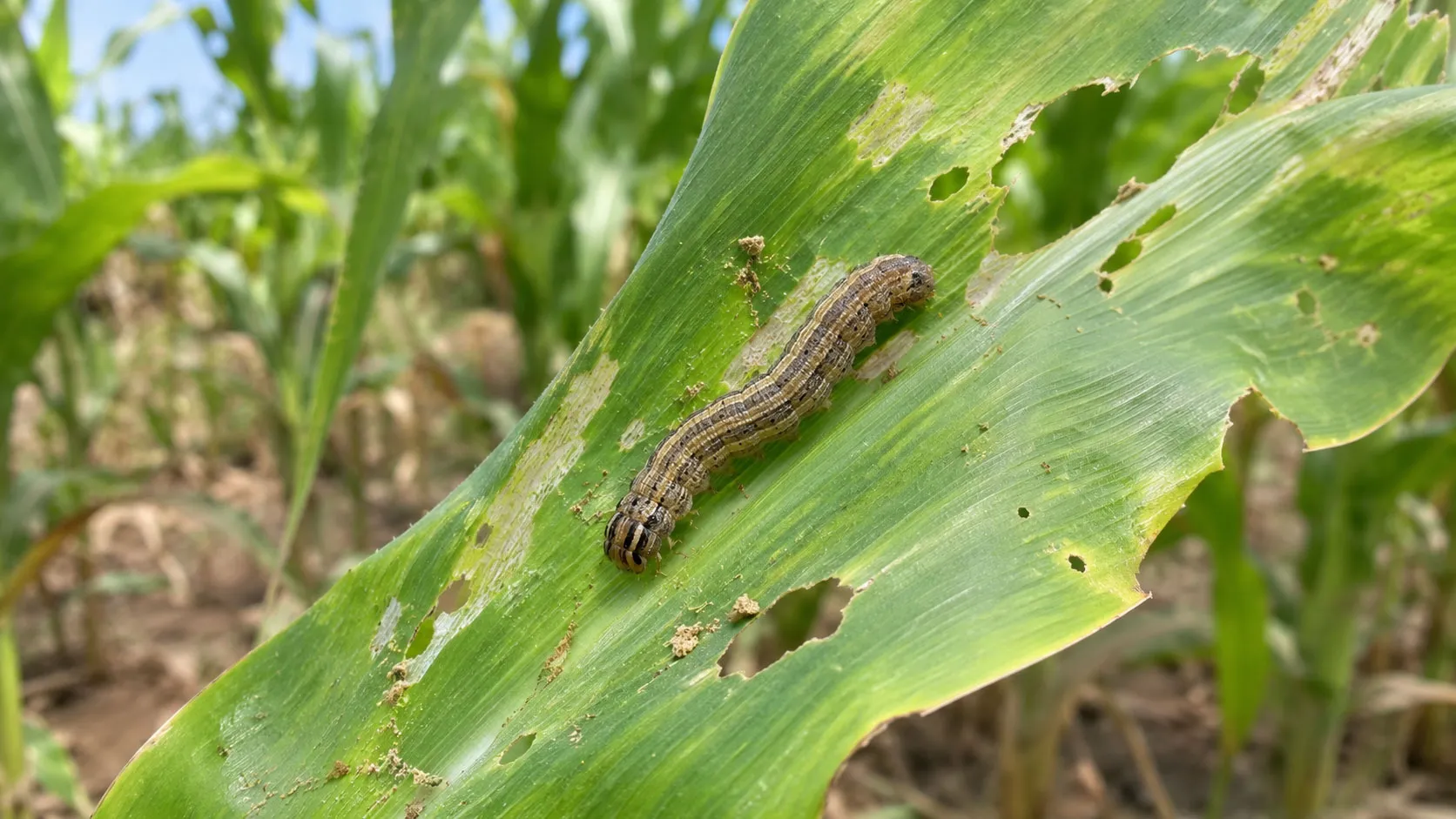
The fall armyworm (FAW) is a leaf-feeding pest that requires special attention in maize production. It reproduces rapidly, has strong migratory capabilities, and its larvae can continuously feed on maize leaves and inside the plant’s heart. When pest densities are high, significant leaf damage may occur; severe infestations can also impair normal maize growth and yield potential.
For maize growers and agricultural technicians, controlling the Fall Armyworm is not simply a matter of selecting a single insecticide. The larval instar, the proportion of infested plants, the maize growth stage, and whether the pesticide can effectively reach larvae hidden within the tiller all influence the actual control efficacy.
Furthermore, the long-term repeated use of insecticides with the same mode of action may increase selective pressure for resistance. Even if a different trade name is used, effective rotation may not be achieved if the active ingredient belongs to the same IRAC group.
Therefore, a more reasonable approach to control is to first conduct field monitoring to confirm the presence of live larvae that are actively feeding, and then select an insecticide based on larval age, the location of damage, the maize growth stage, and local resistance conditions.
For pesticide importers, distributors, and registration companies, understanding these technical differences also helps in assessing the market positioning, formulation requirements, and product portfolios. The Corn Crop Protection Solutions provided by POMAIS cover pest, disease, and weed management throughout the entire corn growth cycle, while this article focuses specifically on control decisions for the fall armyworm.
What is the fall armyworm? How does it damage corn?
The scientific name for the fall armyworm is Spodoptera frugiperda, and it belongs to the family Spodopteridae within the order Lepidoptera. Native to the Americas, it possesses a strong ability to migrate and spread and currently poses a threat to agricultural production in Africa, Asia, and many other regions.
The fall armyworm’s larvae are the primary life stage that directly causes damage to corn. They primarily feed on corn leaves but may also penetrate the heart, tassels, and ears to continue causing damage.
How to Identify Fall Armyworm Larvae?
The color and body shape of fall armyworms may vary across different instars, so the species cannot be identified based solely on larval color.
When identifying them in the field, focus on the following characteristics:
- The head typically features a distinct, pale, inverted Y-shaped pattern.
- The dorsal surface of the eighth abdominal segment usually has four dark spots arranged in a nearly square pattern.
- The larval body color may gradually change from light green or brown to darker shades.
- When disturbed, larvae may curl up or change their location.
- Mature larvae are typically larger in size and exhibit a significantly increased feeding rate.
Among these, the inverted Y-shaped pattern on the head and the arrangement of four spots near the tip of the abdomen are key features to note during field identification; however, differentiation should still be based on the complete morphology and comparison with other noctuid pests.
The fall armyworm typically undergoes four life stages: egg, larva, pupa, and adult. Larvae have multiple instars, and their feeding activity throughout the larval stage is the primary focus of corn pest control efforts.
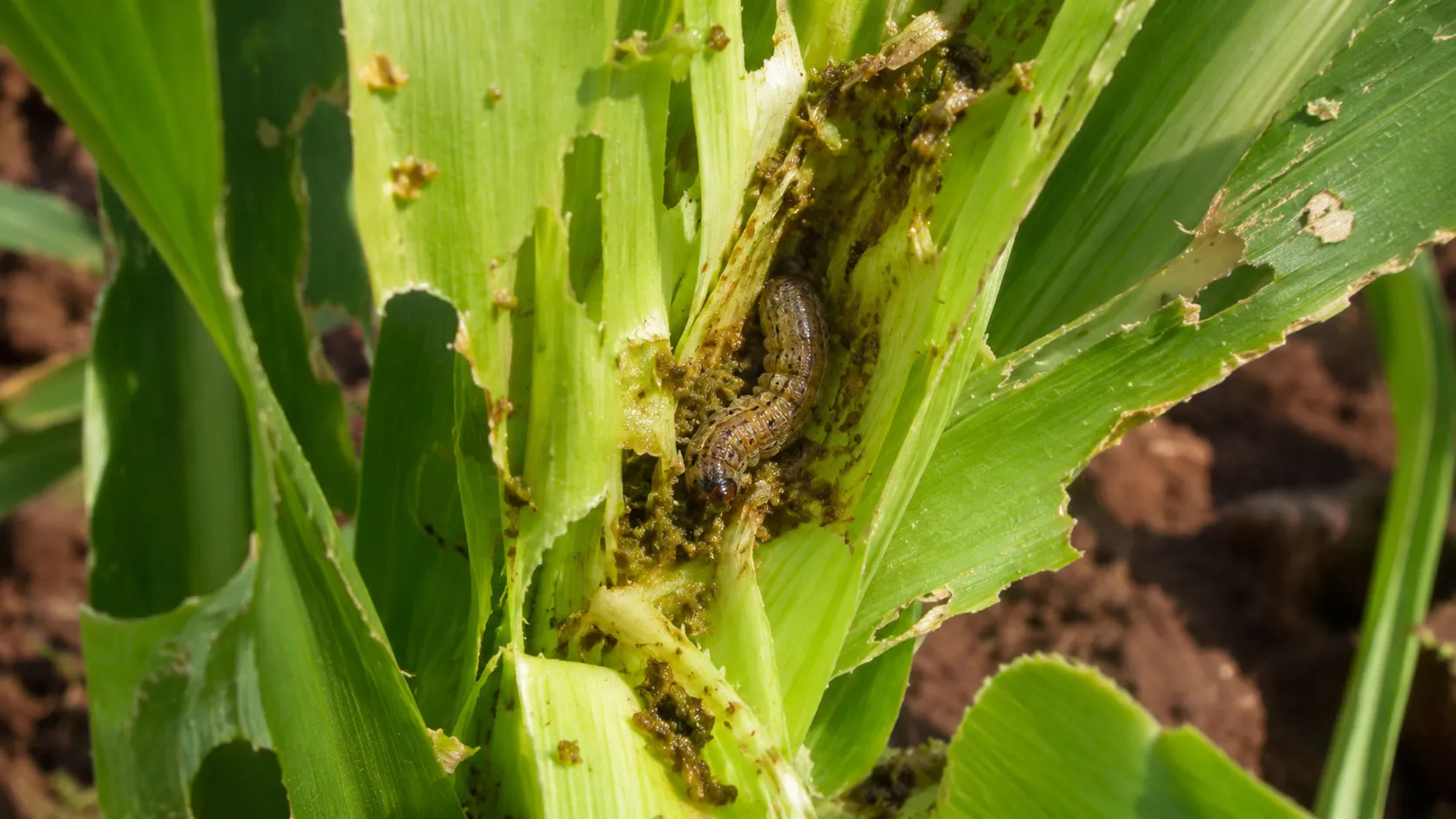
What damage does the fall armyworm cause to corn?
Feeding patterns vary by larval instar, and field symptoms also change depending on the growth stage of the corn.
| Affected Parts | Common Symptoms | Risks to Watch For |
|---|---|---|
| Tender Leaves | Pinhole-like or translucent window-like feeding marks appear on leaves | Early damage may be obscured by new leaf growth |
| Unfurled Leaves | Irregular holes and large notches appear | Gradual increase in leaf area loss |
| Corn heart | Feeding traces and accumulations of frass inside the leaves | Larvae are hidden, making it difficult for pesticide solutions to reach them directly |
| Tassels and tasseling sites | Larvae may continue feeding on unfolding tissues | Pest population and control window need to be reassessed |
| Near the ears and cobs | Some larvae may migrate and damage ear tissues | This may affect kernel integrity and market quality |
It is particularly important to note that old damage on leaves does not necessarily indicate that larvae are still alive. Field surveys should focus on identifying fresh feeding traces, live larvae, and fresh frass, rather than relying solely on the number of holes in the leaves to determine whether pesticide application is necessary.
When Should You Consider Using Insecticides?
Detecting the fall armyworm does not necessarily mean that immediate application is required.
Corn has a certain capacity for compensatory growth, and partial leaf damage does not necessarily result in significant economic losses. If there are only a small number of larvae in the field and no sustained increase in feeding activity, premature application may increase costs while also affecting natural enemies.
Therefore, decisions regarding pesticide application should be based on a combination of field pest density, larval instar, the maize growth stage, and local economic control thresholds.
How to Conduct Field Monitoring for the Fall Armyworm?
Field surveys should cover as many different locations as possible, rather than focusing solely on field edges or areas where severe damage is already evident.A multi-point survey method can be used:
- Enter the interior of the field to avoid observing only at the field edges.
- Select multiple representative survey points.
- Inspect the leaves, whorls, and relevant feeding sites on the corn plants.
- Record egg masses, larvae, frass, and fresh feeding traces.
- Calculate the percentage of damaged plants and note whether live larvae were found.
- Compare data from different survey times to determine whether the pest population is continuing to increase.
For example, you can refer to the survey methods outlined in the Integrated Pest Management Guidelines for the African Fall Armyworm, setting up 5 survey points in the field and inspecting 10–20 corn plants at each point.
Pay particular attention to the following during the survey:
- Whether fresh, transparent, window-like damage is present.
- Whether fresh frass is present inside the heart leaves.
- Whether young or middle-stage larvae are still active.
- Whether damaged plants are concentrated in specific areas.
- Whether natural enemies, parasitic wasps, or larvae infected with pathogens are present.
For monitoring adult migration, pheromone traps can be used as an auxiliary tool; however, the capture of adults does not necessarily indicate that a larval population requiring pesticide application has formed in the field. Final decisions should still be based on plant surveys.
How Should the Economic Action Threshold for the Fall Armyworm Be Interpreted?
The economic action threshold is a key criterion for determining whether control measures are necessary.
It is not a fixed number that applies to all countries and corn varieties. The corn growth stage, planting costs, yield expectations, pest population, and application method all influence the determination of the threshold.
The Integrated Pest Management Guidelines for the African Fall Armyworm provide reference data broken down by growth stage:
| Corn Growth Stages | Reference damage percentage in the guidelines | Key decision factors |
|---|---|---|
| Early heartleaf stage VE–V6 | Approx. 20%, reference range 10%–30% | Focus on live larvae and damage to fresh leaves |
| Late heartleaf stage V7–VT | Approx. 40%, reference range 30%–50% | Assess based on the presence of larvae within the heartleaf, damage severity, and local conditions |
| Tasseling and silking stage R1–R3 | Recommendations vary among different agricultural operators | Special consideration must be given to the benefits of control, safety, and the protection of natural enemies |
These data are based on expert recommendations from an African production context and do not represent globally standardized economic control thresholds. The guidelines also explicitly recommend adjustments based on local agricultural extension advice.
Commercial growers should establish practical intervention criteria based on local field surveys, corn varieties, production costs, and local technical standards; data from other countries should not be directly applied.
How Do Different Growth Stages of Corn Affect Fall Armyworm Control?
Corn growth stages directly influence larval feeding locations, the extent of plant damage, and the accessibility of insecticides.
The same insecticide may require different application conditions at different growth stages. Therefore, one cannot assume that a product is equally suitable during tasseling or ear development simply because it performed well during the seedling stage.
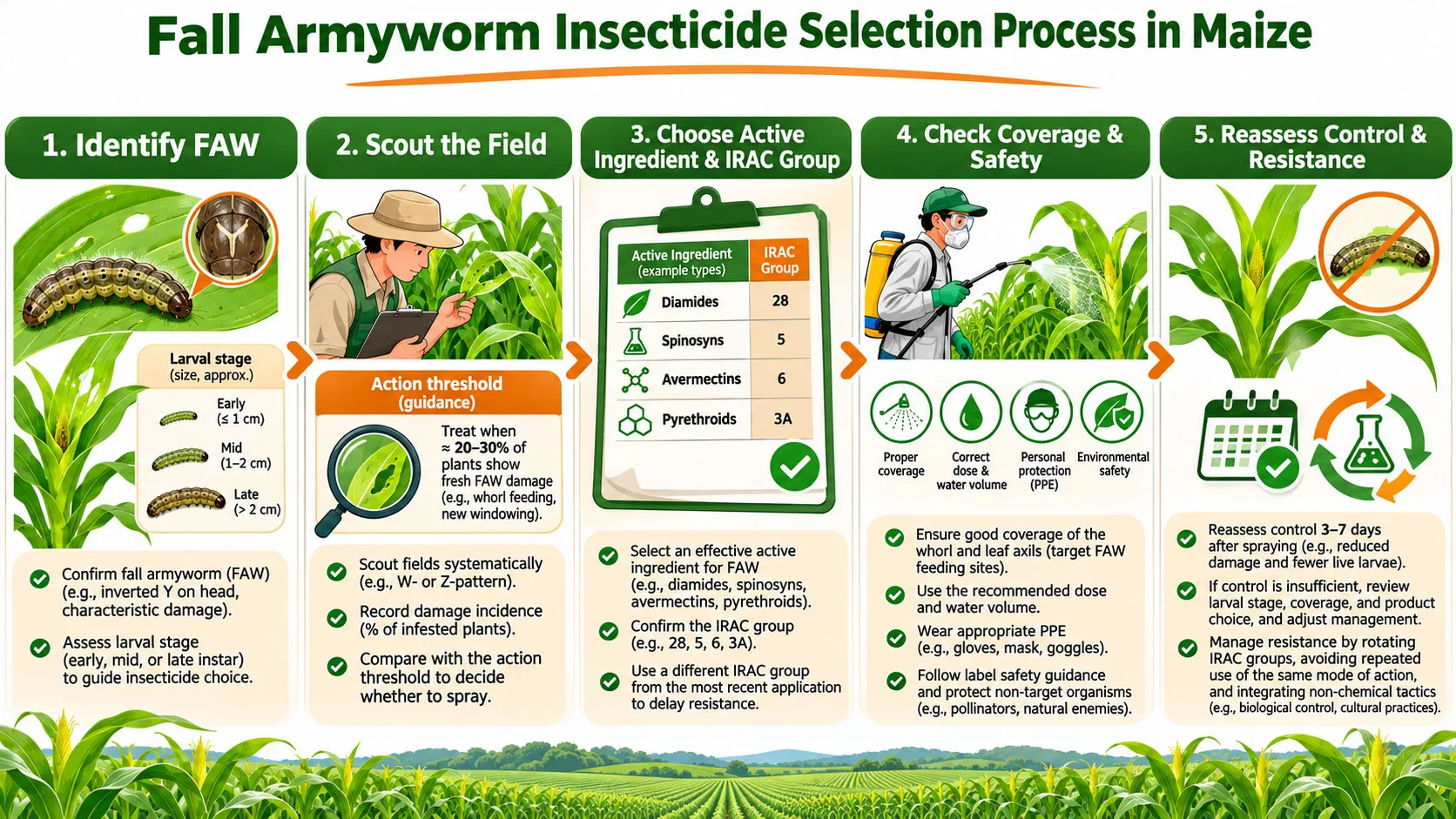
Seedling Stage and Early Vegetative Growth Stage
From seedling emergence through the early vegetative growth stage, the leaf tissue of young plants is relatively tender, and the fall armyworm may cause pinhole-like damage, translucent “window-like” damage, and early notching.
During this stage, special attention should be paid to:
- Whether there are signs of fresh feeding on the leaves.
- Whether egg masses and newly hatched larvae are present.
- Whether larvae are still exposed.
- Whether damaged plants are concentrated in specific areas.
The primary value of early monitoring is to detect infestations before larval populations have significantly increased and before feeding extends deep into the plant.If the locally recommended control thresholds have been met, further evaluation can be conducted to select an insecticide suitable for the current larval instar and maize growth stage.
Vegetative Growth and the Maize Heart Leaf Stage
As maize plants gradually grow taller, the leaves begin to form a distinct heart leaf structure. Fall armyworm larvae may enter the heart leaf to feed, leaving large amounts of frass inside.This stage requires particular attention when making control decisions.If larvae are hidden inside the heart leaves, standard foliar sprays may not adequately reach the target pests. Even when using active ingredients with appropriate control efficacy, insufficient coverage may reduce the actual effectiveness of the treatment.
Therefore, when selecting a pesticide, the following factors must be considered simultaneously:
- The control efficacy of the active ingredient against the target larvae.
- Whether the product is suitable for the current stage of maize growth.
- Whether the pesticide can reach the target site through appropriate application methods.
- Whether the larvae are still at a growth stage suitable for control.
- Whether the product label imposes restrictions on application methods, spray volume, and number of applications.
Silking, Silk Eruption, and Ear Formation Stages
Upon entering the silking and silk eruption stages, the structure of the corn plant undergoes significant changes, and the feeding locations of the larvae may also shift accordingly.
Some larger larvae may leave the heart leaves and move to the tassels, leaf axils, or near the ears. At this point, the application methods originally designed to target pests in the heart leaves may no longer be suitable.
Late-stage control should focus on the following considerations:
- Whether there are still live larvae actively feeding.
- Whether the larvae have already moved into tissue areas that are difficult to reach.
- Whether there is visible damage to the ears.
- Whether current control measures offer practical economic value.
- Whether the product is approved for use at the current growth stage.
- Whether the time remaining until harvest meets PHI (pre-harvest interval) requirements.
Once the reproductive growth stage begins, do not repeat applications solely because of the discovery of minor, older damage. It is also necessary to consider the risk of exposure to bees and other non-target organisms during the pollination period.
| Corn Growth Stages | Major Pest Risks | Key Considerations for Control Decisions |
|---|---|---|
| VE–V4 | Feeding on young leaves; early larval emergence | Monitor for larvae and fresh leaf damage |
| V5–V6 | Increased leaf damage; larvae gradually entering the heart leaves | Assess pest population density and the application window |
| V7–V10 | Feeding on heart leaves; accumulation of frass | Focus on evaluating pesticide coverage and target larval stages |
| V11–VT | Larger plants; changes in larval hiding places | Re-survey pest status and spray accessibility |
| R1–R3 | Pollen shedding, silk emergence, and damage near the ears | Comprehensive assessment of economic benefits, residues, and off-target risks |
| R4–R6 | Grain development through maturity | Prioritize actual yield losses, PHI, and harvest scheduling |
Which active ingredients in insecticides warrant priority evaluation?
When selecting insecticides for the fall armyworm, it is first necessary to understand the mode of action of the active ingredients, and then determine suitability based on the insect’s life stage, field conditions, and local resistance data.
Different active ingredients may exhibit distinct modes of action; control efficacy cannot be judged solely based on trade names or promotional information for a specific product.
Common Fall Armyworm Insecticides and IRAC Groupings
The following lists representative active ingredients to illustrate the technical considerations required when comparing options.
| Active Ingredient | IRAC Group | Mode of Action or Technical Characteristics | Key Considerations for Pesticide Selection |
|---|---|---|---|
| Chlorantraniliprole | Group 28 | Diamide class; acts on insect ryanodine receptors, affecting normal muscle function | Sensitivity of target larvae, application timing, and risk of resistance within the same group |
| Emamectin Benzoate | Group 6 | Avermectin class; modulates glutamate-gated chloride channels | Target life stage, contact, and ingestion conditions |
| Spinetoram | Group 5 | Polyoxin class, acts on nicotinic acetylcholine receptors | Local susceptibility, application history, and label coverage |
| Indoxacarb | Group 22A | Oxadiazine, blocks voltage-gated sodium channels | Target pest susceptibility and actual application conditions |
| Methoxyfenozide | Group 18 | Dihydrazines, mimic the action of ecdysone and interfere with the insect molting process | Applicable life stages, rate of action, and product label |
| Bacillus thuringiensis (Bt)-based formulations | Group 11A; specific classification depends on the product | Microbial insecticides that affect the insect midgut via specific toxins | Strain, toxin type, larval feeding behavior, and product registration |
| Lambda-cyhalothrin | Group 3A | Pyrethrinoids, act on insect sodium channels | Regional resistance, insect life stage, and actual control efficacy |
IRAC grouping is used to identify modes of action and does not represent a ranking of product efficacy. Fall armyworm populations in different regions may exhibit varying sensitivities; assessments must be made in conjunction with local monitoring data.
How to Compare the Application Value of Different Active Ingredients?
1. Chlorantraniliprole: A diamide-class insecticide
Chlorantraniliprole belongs to Group 28. It acts on insect nicotinic acetylcholine receptors, disrupting normal calcium ion regulation in muscles, causing pests to exhibit muscle dysfunction and cessation of feeding.
It is one of the active ingredients worth evaluating for the management of the fall armyworm and other Lepidoptera larvae.
Key considerations when selecting this active ingredient include:
- Whether the target pest remains susceptible to this active ingredient.
- Whether the current product is suitable for corn and the target pest.
- Whether the application timing complies with label requirements.
- Whether there are any Group 28-related resistance risks in the local area.
POMAIS offers product formulations such as Chlorantraniliprole 18.5% SC; further details can be found in the Chlorantraniliprole Product Technical Data Sheet.
Although this product information lists corn as a target crop, verification of the local registered label is still required to determine whether the specific formulation is suitable for fall armyworm control in the target country.
2. Emamectin Benzoate: Avermectin-class Insecticide
Emamectin Benzoate belongs to Group 6 and primarily acts by modulating glutamate-gated chloride channels in the insect nervous system.
It is one of the active ingredients worth evaluating for the control of Lepidoptera larvae.
When selecting this product, consider the following:
- Whether the target pests and larval stages fall within the product’s scope of application.
- Whether the spray solution can reach the larvae’s actual feeding sites.
- The leaf adhesion and penetration characteristics of different formulations.
- Whether there are local records of reduced susceptibility or resistance to this active ingredient.
Different concentrations and formulations should not be assumed to have the same application methods. Specific uses and dosages should be determined by the corresponding product label.3. Spinetoram: Polycyclic Insecticide
Spinetoram belongs to Group 5 and acts on the nicotinic acetylcholine receptors of insects.
It can serve as a candidate ingredient in management strategies for certain Lepidoptera pests; however, actual application requires verification of local registration coverage and population sensitivity to the fall armyworm.
In resistance management, spinetoram and spinosad should not be used as rotation products with different modes of action, as they belong to the same mode-of-action group.
4. Indoxacarb: Oxadiazine insecticide
Indoxacarb belongs to Group 22A and affects nervous system function by blocking voltage-gated sodium channels in insects.
When evaluating this active ingredient, attention must be paid to target pest susceptibility, application timing, actual exposure conditions, and local registration status.
Even if Indoxacarb has been used against other Lepidoptera pests in a particular market, it cannot be directly inferred that the same formulation has been approved for use against the fall armyworm in corn.
5. Methoxyfenozide: Insect Growth Regulator
Methoxyfenozide belongs to Group 18 and primarily interferes with the normal molting process of insects by mimicking the action of ecdysone.
Compared to some fast-acting neurotoxic insecticides, its mode of action and observable control responses differ.
Therefore, the effectiveness of such products cannot be judged solely based on whether a noticeable knockdown occurs shortly after application.
When using these products, attention should be paid to the target insect life stage, the appropriate application period, and local product labels.
6. Bacillus thuringiensis: Biological Insecticide Category
Bacillus thuringiensis (Bt) formulations exert their effects through specific insecticidal proteins and are an important component of biological control products.
These products require the target larvae to ingest the active ingredient; therefore, whether the larvae feed on treated plant tissue is a key factor affecting control efficacy.
When selecting a product, confirm the following:
- The specific strain or toxin type.
- Actual activity against the fall armyworm.
- Whether the product is suitable for use on corn.
- Whether sufficient effective exposure can be maintained after application.
- Whether there are relevant resistance issues in the local area.
It is also necessary to distinguish between Bt spray formulations and Bt corn varieties. The product forms, application methods, and resistance management strategies for the two are different and should not be conflated.
Why Do Insecticides Sometimes Fail to Effectively Control the Fall Armyworm?
It is a common problem in corn production to find surviving larvae even after applying insecticides with proven control efficacy.
This situation does not necessarily mean that the active ingredient has lost its effectiveness. It is necessary to investigate multiple factors, including the larval growth stage, hiding locations, application coverage, weather conditions, and resistance status.
Larvae Have Entered the Corn Tender Heart
This is one of the key reasons for poor control efficacy.
Once fall armyworm larvae enter the corn tender heart, they may be obscured by curled leaves and frass. If conventional spraying cannot effectively reach the interior of the tender heart, it may fail to achieve sufficient contact with the target larvae.
Relevant FAO technical guidelines also note that once larvae have entered the heart leaves, the pesticide must be able to reach those specific areas; otherwise, even when insecticides are applied, control efficacy may remain unsatisfactory.
Therefore, spray coverage is just as important as the selection of active ingredients.
Mismatch Between Application Timing and Larval Stage
Generally, the larger the larvae, the higher their feeding rate, and the more pronounced their hiding behavior may be.
If treatment is applied only after the larvae have reached a later stage and are feeding deeper within the plant, the actual control efficacy of some products may be reduced.
Therefore, one should not focus solely on the application date but should also record the size, number, and actual activity locations of the larvae.
Inadequate Spray Coverage and Unsuitable Weather Conditions
Treatment efficacy is also influenced by spray equipment and environmental conditions.
Key points to check:
- Whether the spray effectively covers the target feeding sites.
- Whether the nozzles and spray parameters meet the product requirements.
- Whether there is significant drift during application.
- Whether rainfall occurred after application that might have affected pesticide deposition.
- Whether high temperatures, strong winds, or other unfavorable weather conditions impacted actual treatment efficacy.
Particularly during the stage when corn tassels have already formed, attention should be paid to whether the pesticide solution can reach the locations where larvae are hiding.
Increasing the number of applications alone cannot compensate for inadequate spray coverage.
Local pest populations may have already developed resistance
The fall armyworm possesses a strong ability to adapt to resistance.
IRAC records on the fall armyworm document resistance in some regions to carbamates (Group 1A), organophosphates (Group 1B), pyrethroids (Group 3), and Bt-related products (Group 11A).
However, this does not mean that fall armyworms in all regions have developed the same level of resistance to these products.
When the efficacy of the same product continues to decline despite proper use, the situation should be assessed in conjunction with local resistance monitoring or professional testing results.
How Can Rotating IRACs Reduce the Risk of Resistance?
Resistance management is not simply a matter of switching insecticide brands; rather, it involves strategically rotating products with different yet still effective modes of action to reduce the risk of pest populations being subjected to the same selective pressure over the long term.
Why Does Switching Brands Not Equate to Switching Modes of Action?
Different trade names may contain the same active ingredient, or they may contain different active ingredients that belong to the same IRAC group.
For example:
| Active Ingredient | IRAC Group | Do they belong to different modes of action? |
|---|---|---|
| Chlorantraniliprole | Group 28 | — |
| Flubendiamide | Group 28 | No |
| Emamectin Benzoate | Group 6 | Different from Group 28 |
| Abamectin | Group 6 | Same group as Emamectin Benzoate |
| Spinetoram | Group 5 | Different from Groups 6 and 28 |
| Spinosad | Group 5 | Same group as Spinetoram |
For example, although Chlorantraniliprole and Flubendiamide are different active ingredients, they both belong to Group 28; alternating between the two cannot be considered a rotation across modes of action.
Similarly, Spinetoram and Spinosad both belong to Group 5.
How to Develop a Reasonable Pesticide Rotation Plan?
IRAC recommends establishing windows for the use of different modes of action based on crop growth stages and pest generations, rather than simply requiring a different pesticide for every application.
When developing a rotation plan, the following should be considered:
- The current major pests in the field and their larval instars.
- The active ingredients and IRAC groups used in the previous stage.
- Whether there are different modes of action that remain effective for the next stage.
- Whether related resistance or cross-resistance has already emerged locally.
- The registered uses, maximum number of applications, and label restrictions for different products.
For example, based on an assessment of the target pest’s susceptibility and product registrations, one might consider products with different modes of action, such as Group 28, Group 6, and Group 5.
However, these are merely examples of mode-of-action classifications and do not constitute a fixed application sequence. The specific rotation window should be determined based on local pest generations, product labels, and IRAC technical recommendations.
It is important to emphasize: Cross-resistance may still exist between different mode-of-action groups. Rotation is only practical if the alternative active ingredients can still effectively control the target population.
Can combination insecticides always solve resistance problems?
Not necessarily.
Combination products may contain two or more active ingredients, but this does not guarantee that resistance will be delayed.
When evaluating combination products, it is necessary to confirm:
- Whether each active ingredient provides practical control value against the target pest.
- Whether the ingredients belong to different mode-of-action groups.
- Whether the target population has already developed resistance to any of the ingredients.
- Whether the effective periods of the two ingredients align.
- Whether the product has obtained registration for the intended crop and pest uses.
If one ingredient in a combination product has become ineffective, the other ingredient may have to shoulder most of the control burden, which does not automatically resolve the resistance issue.
When making product development and procurement decisions, one should focus on the actual contribution of each active ingredient rather than simply the number of ingredients in the combination.
How to Integrate Chemical Control with Integrated Pest Management?
Fall armyworm management should not rely solely on chemical insecticides.
Combining field monitoring, agricultural practices, biological control, and proper application of pesticides can help reduce pest risks while minimizing unnecessary chemical use.
Protecting Natural Enemies and Natural Control Mechanisms
In different regions, the fall armyworm may be subject to natural control factors such as parasitic wasps, predatory insects, and pathogenic microorganisms.
For example, some parasitic wasps can parasitize fall armyworm eggs or larvae, and certain predatory insects can feed on their eggs and larvae.
Therefore, when selecting insecticides, the impact on non-target organisms should be considered to avoid unnecessary broad-spectrum applications.
If natural enemies are active in the field and the pest population has not yet reached local intervention thresholds, continuous monitoring can be used to determine whether chemical control is necessary.
Reducing Pest Pressure Through Agricultural Measures
In addition to chemical control, field management can be improved through the following measures:
- Promptly remove field weeds that may serve as a continuous source of hosts.
- Schedule planting times appropriately based on local production conditions.
- Avoid unnecessary consecutive intercropping of corn at different growth stages.
- Pay attention to corn crop residue management and field sanitation.
- Select corn varieties with certain insect-resistant or tolerant traits based on local conditions.
- Regularly survey changes in pest populations along field edges and within plots.
In some regions, agroecological management techniques such as intercropping, plant diversity, and the Push-Pull method can also be incorporated; however, these measures must be evaluated based on local production systems and cannot be directly considered suitable for all corn-growing areas.
How should Bt corn and biological insecticides be understood?
Bt corn and Bt spray formulations are two different product forms.
Bt corn provides a certain level of protection against target pests through the crop’s own expression of specific insecticidal proteins. Different Bt traits may express different proteins, and their control ranges and local resistance profiles may also vary.
Bt spray formulations, on the other hand, require application to ensure that target pests ingest the active toxin.
For Bt corn, one should follow the trait management, refuge, and resistance management requirements of the target market; for Bt spray formulations, application methods must be determined based on the product strain, toxin type, and label instructions.
One should not assume that all Bt spray products provide the same level of control simply because a particular Bt corn trait is effective against the fall armyworm.
What are the most common mistakes when selecting insecticides for the fall armyworm?
| Common Mistakes | Potential Problems | More Reasonable Approach |
|---|---|---|
| Focusing only on leaf damage without surveying live larvae | May result in unnecessary applications to plants that have already stopped feeding | Distinguish between old damage, fresh damage, and surviving larvae |
| Waiting to apply pesticides until late-instar larvae appear in large numbers | Larvae become more deeply concealed, making it harder for the pesticide to reach them | Strengthen early monitoring and promptly assess the control window |
| Comparing only the prices of active ingredients | Ignoring mode of action, resistance, and practical applicability | Comprehensively compare active ingredients, formulations, and target markets |
| Switching brands but not IRAC groups | May continue to exert the same resistance selection pressure | Record pesticide applications by active ingredient and mode of action |
| Assume that mixed-formulation products will definitely delay resistance | May overlook that a specific active ingredient has become ineffective | Evaluate the control value of each ingredient separately |
| Overlook pesticide coverage inside the heart leaves | Larvae may continue to hide and feed | Select a label-compliant application method based on the target site |
| Apply pesticide immediately upon detecting pest damage | Increases costs and the risk of non-target exposure | Make decisions based on local economic control thresholds |
| Failure to consider the pre-harvest interval (PHI) | May result in compliance risks related to pesticide residues | Verify the PHI, maximum number of applications, and local label requirements |
Frequently Asked Questions About Controlling the Fall Armyworm in Corn
Which Insecticide Is Best for Controlling Fall Armyworm in Corn?
No single insecticide is suitable for all regions and all fall armyworm populations.
When selecting a product, consider the active ingredient, larval stage, corn growth stage, local resistance status, product registration scope, and actual application conditions.
Active ingredients such as chlorantraniliprole, emamectin benzoate, spinetoram, and indoxacarb are all worth evaluating in the context of specific markets, but they cannot be ranked uniformly without local registration and evidence of control efficacy.
At what stage should fall armyworm control be implemented?
Typically, the focus should be on the egg hatching and early larval stages, as the larvae are smaller at these stages and their feeding sites are relatively easier to observe and access.
However, the decision to apply pesticides must still be based on field pest density, the maize growth stage, and local economic control thresholds—rather than spraying immediately upon detecting larvae.
Why does the fall armyworm tend to hide inside the corn whorl?
The corn whorl provides larvae with a relatively concealed feeding environment. Larvae can feed inside the curled leaves, leaving behind frass and leaf damage.
As the corn grows and the plant structure changes, the larvae’s hiding spots may also shift; therefore, monitoring and application strategies must be adjusted based on actual pest conditions.
Why does repeated use of the same insecticide reduce control effectiveness?
Repeated use of insecticides with the same mode of action may exert repeated selective pressure on the pest population, leading to a gradual increase in individuals with resistance traits.
Therefore, a reasonable rotation should be implemented based on IRAC mode-of-action groups, local resistance information, and pest generation schedules, rather than simply switching brand names.
Can fall armyworm control rely solely on Bt products?
One cannot simply rely on Bt products.
The efficacy characteristics of different Bt strains, insecticidal proteins, and corn varieties are not entirely the same, and resistance issues have already emerged in some regions.
A more reasonable approach is to establish an integrated management plan that combines pest monitoring, variety characteristics, agricultural management, biological control, and necessary chemical control.
Establishing a More Reliable Corn Fall Armyworm Control Plan
The key to controlling the fall armyworm is not to find a single insecticide that can be applied repeatedly throughout the growing season, but to establish a reasonable management plan based on the pest’s life cycle and the growth stages of corn.
Starting with early field surveys, promptly identify egg masses and young larvae, record fresh feeding damage, and determine whether pesticide application is necessary based on local economic control thresholds.
When selecting insecticides, evaluate the active ingredient, IRAC group, product formulation, application coverage, and local resistance status simultaneously. After application, re-inspect the number of live pests and fresh damage to assess whether the expected results have been achieved.
For pesticide importers, distributors, and registration companies, product selection must also take into account the target country’s registration scope, product specifications, technical documentation, and market demand.
If you are evaluating products for the control of the fall armyworm in corn, we recommend first identifying the target country, target pest, required active ingredients, and formulation type, and then verifying the specific registered uses and supply conditions of the formulation.
POMAIS provides pesticide importers, distributors, registrants, and brand clients with a variety of insecticide product specifications and related technical documentation. If you need to evaluate maize insecticide products suitable for your target market, please contact our team to further verify product specifications, documentation, and supply requirements.
Hot Products
Hot news
Recommended news