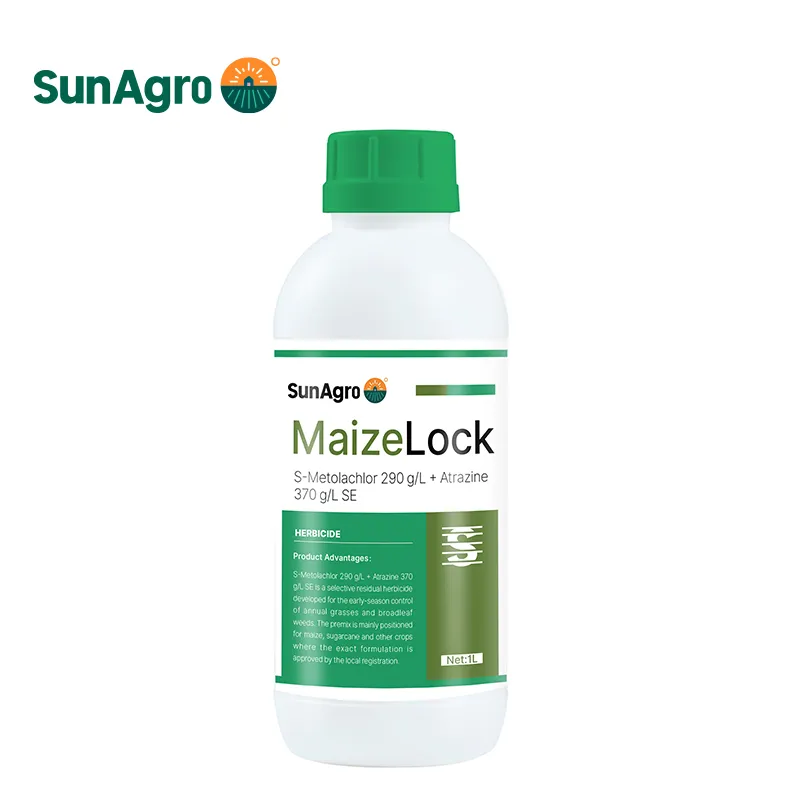
S-Metolachlor 290 g/L + Atrazine 370 g/L SE
POMAIS S-Metolachlor 290 g/L + Atrazine 370 g/L SE is a selective residual herbicide developed for the early-season control of annual grasses and broadleaf weeds. The premix is mainly positioned for maize, sugarcane and other crops where the exact formulation is approved by the local registration.
The two active ingredients provide complementary weed-control activity. S-Metolachlor, an HRAC Group 15 herbicide, provides the main foundation against germinating annual grasses. Atrazine, an HRAC Group 5 herbicide, extends control to many susceptible broadleaf weeds and selected grass species.
The SE formulation combines suspended solid particles and an emulsified liquid phase within one product. This gives importers and distributors a factory-prepared herbicide ratio for pre-emergence and locally approved early post-emergence weed-management programs.
We supply this formulation for agrochemical importers, distributors, registration companies, crop protection brands and commercial maize or sugarcane input channels. Packaging, label language, technical documentation and commercial specifications are reviewed according to the destination market.
- Designed for Professional Buyers & Bulk Orders
- We support custom packaging, labeling, and formulation to meet your market needs.
- Export wholesale inquiries only.
- Please include destination country, business type (importer/distributor/registrant), and expected volume.
- Retail requests will not be processed.

About S-Metolachlor 290 g/L + Atrazine 370 g/L SE
| Product Attribute | Specification |
|---|---|
| Product Name | S-Metolachlor 290 g/L + Atrazine 370 g/L SE |
| Active Ingredient 1 | S-Metolachlor |
| S-Metolachlor Content | 290 g/L |
| Active Ingredient 2 | Atrazine |
| Atrazine Content | 370 g/L |
| Total Active Ingredient Content | 660 g/L |
| Formulation | SE — Suspo-Emulsion |
| Product Type | Selective residual herbicide |
| S-Metolachlor Mode-of-Action Group | HRAC Group 15 |
| Atrazine Mode-of-Action Group | HRAC Group 5 |
| Primary Application Timing | Pre-emergence; early post-emergence only where locally approved |
| Main Weed Direction | Annual grasses and selected broadleaf weeds |
| Main Crop Direction | Maize, sugarcane, sweet corn and other approved crops |
| Application Method | Soil or foliar application according to the registered label |
| Standard MOQ | Normally 1,000 L |
| Available Documents | COA, SDS, TDS, product specification and available registration-supporting information |
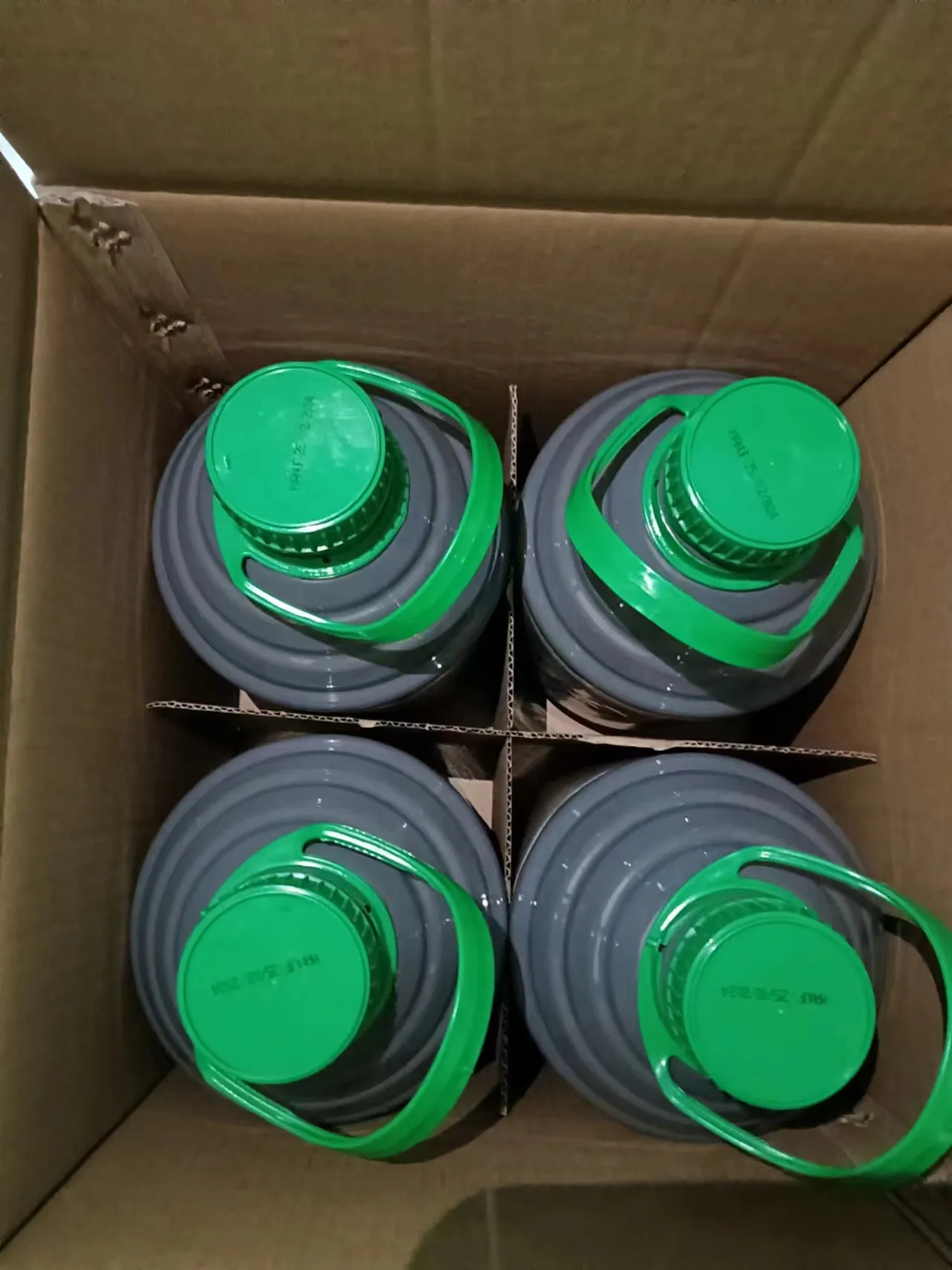
| Packaging Support | Bottles, larger containers, labels, cartons and export packing |
| Supply Type | Bulk B2B supply for import, registration and distribution |
Final crops, target weeds, application rates, timings, plant-back intervals and environmental restrictions must follow the approved product label in the destination country.
What Is S-Metolachlor + Atrazine Herbicide?
S-Metolachlor 290 g/L + Atrazine 370 g/L SE is a factory-formulated herbicide premix containing two active ingredients with different modes of action.
It is mainly designed for early-season weed management, when annual weeds are germinating or still at a young and susceptible growth stage.
The product is not a non-selective herbicide. It should only be applied to registered crops and at approved crop-development stages.
Its main commercial role is to provide:
- A residual foundation against annual grass weeds
- Additional broadleaf weed control
- Two herbicide modes of action in one product
- Reduced need to measure two separate herbicide products
- A consistent factory-controlled active ingredient ratio
- Early protection from weed competition
Importers requiring a high-concentration single-active option can also review our S-Metolachlor 960 g/L EC herbicide.
Why Combine S-Metolachlor and Atrazine?
The formulation combines two active ingredients because annual grass and broadleaf weed populations are rarely uniform in commercial fields.
Stronger Annual Grass Foundation
S-Metolachlor provides the main residual foundation against germinating annual grasses.
Depending on the approved label and local weed spectrum, target directions may include:
- Barnyardgrass
- Foxtails
- Crabgrass
- Goosegrass
- Fall panicum
- Signalgrass
- Other labeled annual grass weeds
The active ingredient is mainly taken up by developing shoots and roots as susceptible weeds germinate.
It is not positioned as a universal rescue treatment for large, established grass weeds.
Broader Broadleaf Weed Coverage
Atrazine broadens the weed spectrum by controlling or suppressing many susceptible broadleaf weeds and selected annual grasses.
Typical broadleaf directions may include:
- Pigweed species
- Lambsquarters
- Purslane
- Ragweed
- Morning glory
- Cocklebur
- Mustard species
- Other locally labeled weeds
The exact level of control depends on:
- Weed species
- Weed growth stage
- Soil moisture
- Soil texture
- Organic matter
- Application rate
- Atrazine resistance status
- Local environmental conditions
Two Modes of Action in One Premix
The formulation combines:
- HRAC Group 15: S-Metolachlor
- HRAC Group 5: Atrazine
Using two active ingredients can broaden the weed-control foundation where both remain effective against the target population.
However, the premix does not automatically prevent herbicide resistance.
If the field contains weeds resistant to Atrazine, S-Metolachlor or both modes of action, performance may be reduced. Local resistance history should therefore be reviewed before product selection.
How Does S-Metolachlor + Atrazine Work?
The two active ingredients act at different biological sites inside susceptible weeds.
S-Metolachlor Mode of Action
S-Metolachlor belongs to HRAC Group 15.
It inhibits the formation of very-long-chain fatty acids required for normal cell development in germinating weeds.
Susceptible weeds absorb the active ingredient mainly through:
- Emerging shoots
- Coleoptiles
- Developing roots
- Other young tissues during germination
After sufficient exposure, normal shoot and root development is disrupted. The weed may fail to emerge properly or die shortly after emergence.
Practical Field Role of S-Metolachlor
S-Metolachlor is most valuable before annual grasses become established.
Its role is to provide:
- Soil residual activity
- Early-season annual grass control
- Reduced weed emergence
- Protection during crop establishment
- A foundation for later weed-management decisions
Dry soil conditions may delay herbicide activation. Excessive rainfall, erosion or runoff may move the active ingredient away from the intended treatment zone.
Atrazine Mode of Action
Atrazine belongs to HRAC Group 5.
It inhibits photosystem II, a critical part of the photosynthetic process in susceptible weeds.
After absorption through roots or foliage, Atrazine disrupts the weed’s ability to convert light energy into normal plant growth.
Susceptible weeds may show:
- Yellowing
- Chlorosis
- Progressive tissue decline
- Reduced growth
- Necrosis
- Plant death
Atrazine provides important activity against many broadleaf weeds and some sensitive grass species.
Importers sourcing standalone Atrazine products can review available Atrazine herbicide formulations.
Combined Field Effect
The premix is designed to provide both soil residual activity and a broader early-season weed spectrum.
The combined field logic is:
S-Metolachlor limits annual grass establishment → Atrazine controls susceptible broadleaf weeds and selected grasses → the crop faces less early weed competition
This can help protect:
- Crop establishment
- Early root development
- Access to soil moisture
- Nutrient availability
- Light interception
- Field uniformity
The product should not be promoted as controlling every emerged weed or replacing all later-season weed-management measures.
Target Weeds
The product is mainly positioned for annual grasses and broadleaf weeds listed on the approved destination-market label.
| Weed Direction | Typical Weed Examples | Main Active Ingredient Contribution |
|---|---|---|
| Annual Grasses | Barnyardgrass, foxtails, crabgrass, goosegrass and selected panic grasses | Mainly S-Metolachlor |
| Small-Seeded Broadleaf Weeds | Pigweed, lambsquarters and purslane | Combined contribution |
| Atrazine-Sensitive Broadleaf Weeds | Ragweed, morning glory, cocklebur and selected mustard species | Mainly Atrazine |
| Selected Annual Grass Weeds | Label-specific grass species | Combined contribution |
| Selected Sedges | Suppression or control only where specifically stated on the label | Product-specific claim |
Factors Affecting Weed Control
Performance may be influenced by:
- Weed species
- Weed growth stage
- Seed depth
- Soil moisture
- Rainfall after application
- Soil organic matter
- Soil texture
- Crop residue
- Seedbed quality
- Application uniformity
- Herbicide resistance
- Product rate
Final weed claims must be based on the registered label and locally relevant efficacy data.
Suitable Crops and Use Directions
The premix is most commonly positioned for maize and sugarcane programs. Other crop uses must be confirmed separately.
Maize and Corn
Maize is the main commercial crop direction for this formulation.
The product may be used in approved programs for:
- Pre-plant weed management
- Pre-emergence application after planting
- Early post-emergence use where registered
- Annual grass control
- Broadleaf weed control
- Residual early-season protection
Early weed competition can reduce crop access to moisture, nutrients and light. A residual foundation helps protect the crop during its establishment period.
Application planning should consider:
- Planting depth
- Seedbed condition
- Soil moisture
- Crop variety
- Expected rainfall
- Local weed spectrum
- Previous herbicide use
- Atrazine restrictions
For broader crop-program planning, review our maize weed management solutions.
Sugarcane
S-Metolachlor + Atrazine premixes may be positioned for registered sugarcane weed-management programs.
Potential uses may include:
- Pre-emergence treatment
- Early-season row management
- Control of annual grasses
- Control of susceptible broadleaf weeds
- Residual protection during crop establishment
Sugarcane applications must consider:
- Soil type
- Cane growth stage
- Trash cover
- Rainfall
- Irrigation
- Field slope
- Runoff potential
- Local Atrazine restrictions
Heavy crop residue may reduce the amount of herbicide reaching the soil surface unless sufficient rainfall or irrigation moves the product into the weed-germination zone.
Sweet Corn
Sweet corn use should only be included where it appears on the approved label.
Crop tolerance, application timing, harvest restrictions and annual use limits may differ from field maize.
The product should not be promoted for sweet corn based only on a registration for field corn.
Sorghum with an Approved Seed Safener
Sorghum use requires particular care.
Where a registered label allows use on sorghum, the seed may need to be treated with an approved herbicide safener before planting.
The safener helps protect the crop from S-Metolachlor injury.
Do not describe the product as generally suitable for sorghum.
Correct commercial positioning is:
Sorghum use is permitted only where the exact registered label approves the crop and specifies the required safener-treated seed.
Application to unsafened or incorrectly treated sorghum seed may cause serious crop injury or crop loss.
Other Crops
Other crop directions should be added only when supported by:
- Destination-market registration
- Crop-safety data
- Weed-control data
- Approved label instructions
- Residue or MRL requirements
- Plant-back information
A registration on maize or sugarcane does not automatically authorize use on vegetables, rice, soybeans, wheat or other crops.
When Should the Herbicide Be Applied?
The application window depends on the crop, weed stage and local label.
Pre-Plant Application
Some labels may permit application before planting.
The product may be applied to prepared soil before crop establishment, with incorporation or surface management carried out only where the label requires it.
Factors to confirm include:
- Seedbed preparation
- Planting interval
- Incorporation depth
- Soil moisture
- Crop planting depth
- Application uniformity
Pre-Emergence Application
Pre-emergence is a central use window for this premix.
The herbicide is applied after planting but before weeds emerge, and often before the crop emerges, depending on the registered directions.
The objective is to establish a treated soil zone where susceptible weeds germinate.
Effective pre-emergence performance depends on:
- Uniform soil application
- Suitable soil moisture
- Adequate activation rainfall or irrigation
- Correct product rate
- Limited soil disturbance after treatment
- Control before weeds become established
Early Post-Emergence Application
Early post-emergence use may be permitted on selected crops and labels.
Where approved, application should be made while weeds are still small and susceptible.
The product should not be positioned as a general post-emergence rescue treatment for:
- Large grass weeds
- Mature broadleaf weeds
- Dense weed canopies
- Strongly established perennial weeds
- Atrazine-resistant populations
Final crop and weed growth-stage limits must come from the local label.
Soil, Rainfall and Field Conditions
Residual herbicide performance depends heavily on soil and weather conditions.
Soil Moisture
Suitable soil moisture helps move the active ingredients into the weed-germination zone.
If the surface remains very dry after application:
- Herbicide activation may be delayed
- Weeds may emerge before sufficient exposure
- Control may become less uniform
- Later rainfall may activate the product after weeds are already established
The product label should define whether rainfall or irrigation is required and how soon activation should occur.
Heavy Rainfall
Excessive rainfall shortly after treatment may:
- Move herbicide away from the target zone
- Increase runoff
- Increase crop exposure
- Reduce field uniformity
- Contaminate drainage areas
- Increase environmental risk
Do not apply immediately before rainfall expected to cause runoff or soil erosion.
Soil Texture and Organic Matter
Soil texture and organic matter can influence herbicide availability.
Heavier soils or soils with higher organic matter may bind more herbicide than light-textured soils.
Application rates must therefore follow the soil-specific instructions on the product label.
A rate suitable for heavy soil may cause crop injury on light or sandy soil.
Seedbed Condition
An even seedbed supports uniform application.
Large clods, uneven surfaces and heavy crop residue may create untreated zones and reduce weed-control consistency.
Waterlogged Soil
Do not apply to waterlogged, flooded or saturated soil unless the exact product label permits it.
Waterlogged conditions may increase:
- Runoff
- Crop injury
- Root stress
- Uneven herbicide distribution
- Environmental contamination
Application Guidance
The following information describes general professional principles and does not replace the registered label.
1. Confirm the Crop and Label
Before application, verify:
- Crop
- Crop growth stage
- Target weeds
- Weed growth stage
- Product rate
- Soil type
- Water volume
- Application timing
- Environmental restrictions
- Plant-back requirements
2. Inspect the Field
Identify:
- Dominant weed species
- Expected grass and broadleaf pressure
- Resistant weed history
- Soil condition
- Moisture level
- Crop residue
- Field slope
- Drainage channels
- Areas with runoff risk
3. Calibrate Application Equipment
Check:
- Nozzle condition
- Spray pressure
- Travel speed
- Boom height
- Flow rate
- Spray pattern
- Tank agitation
- Total output per hectare
Uniform application is important because both under-application and overlap can reduce crop safety or weed control.
4. Apply the Approved Rate
Do not reduce the label rate only to lower application cost.
Below-label rates may provide incomplete weed control and increase selection pressure on partially resistant weeds.
Do not exceed the approved rate.
Excessive rates may increase:
- Crop injury
- Soil residue
- Plant-back restrictions
- Runoff risk
- Groundwater concerns
5. Avoid Spray Overlap
Overlap can occur:
- At field edges
- Around obstacles
- During turning
- Between spray passes
- Near irregular boundaries
Double application may increase crop injury, especially under cold, wet or stressful growing conditions.
6. Prevent Drift and Runoff
Do not apply when:
- Wind may carry spray outside the target area
- Heavy rainfall is expected
- Soil is saturated
- Water is flowing across the field
- Drainage channels may receive contaminated runoff
- Buffer-zone requirements cannot be maintained
7. Record Seasonal Herbicide Use
Record all products containing:
- Atrazine
- S-Metolachlor
- Other Group 5 herbicides
- Other Group 15 herbicides
Seasonal active ingredient totals may be restricted by the local label.
SE Formulation Features
SE means Suspo-Emulsion.
A suspo-emulsion combines a suspension and an emulsion within the same liquid formulation.
In this product:
- Atrazine is generally present as fine suspended solid particles
- S-Metolachlor is incorporated into an emulsified liquid phase
- Both physical systems must remain stable in the same container
- The product must redistribute uniformly after storage and agitation
This is more technically complex than a simple solution formulation.
Why the SE Formulation Is Used
The SE system allows two active ingredients with different physical properties to be supplied in one product.
Practical commercial advantages may include:
- One factory-formulated premix
- A fixed active ingredient ratio
- Reduced field-measuring complexity
- One product label
- One packaging system
- Easier distributor inventory management
- Simplified field preparation compared with two separate products
SE Quality-Control Parameters
| Quality Parameter | Procurement Importance |
|---|---|
| S-Metolachlor Content | Confirms the declared 290 g/L concentration |
| Atrazine Content | Confirms the declared 370 g/L concentration |
| Suspension Stability | Helps prevent rapid settling of Atrazine particles |
| Emulsion Stability | Maintains the dispersed S-Metolachlor phase |
| Particle Size Distribution | Influences suspension, sprayability and nozzle performance |
| Wet Sieve Residue | Helps identify oversized particles that may block nozzles |
| Viscosity | Affects pouring, pumping and filling |
| pH | Supports formulation and storage stability |
| Persistent Foam | Influences mixing and spray-tank operation |
| Redispersibility | Confirms the product can return to a uniform state after storage |
| Low-Temperature Stability | Important for cold-market storage and transport |
| Heat Stability | Important for warm climates and container shipping |
| Packaging Compatibility | Reduces leakage, deformation and seal failure |
Agitation Requirements
Because the product contains suspended particles, some settling may occur during storage.
Before use:
- Shake or agitate the container according to the label
- Use mechanical or hydraulic tank agitation
- Maintain agitation during filling
- Maintain agitation during spraying
- Re-agitate after operational interruptions
Failure to maintain agitation may cause uneven active ingredient distribution.
Mixing and Spray-Tank Management
The following describes a general mixing sequence. The approved product label remains the final authority.
General Mixing Procedure
- Inspect and clean the spray tank.
- Fill the tank partly with clean water.
- Start agitation.
- Shake or circulate the product container where required.
- Add the measured S-Metolachlor + Atrazine SE.
- Add compatible tank-mix partners only where permitted.
- Complete filling with water.
- Maintain continuous agitation.
- Apply the mixture within the recommended period.
Water Quality
Water quality can affect the physical behavior of the spray mixture.
Consider:
- Water hardness
- pH
- Sediment
- Organic matter
- Water temperature
- Compatibility with tank-mix partners
Use clean water whenever possible.
Jar Testing
Conduct a small compatibility test before preparing an unfamiliar tank mixture.
Use:
- The same water source
- The intended product sequence
- Proportionally correct amounts
- The intended adjuvants
Observe for:
- Separation
- Sediment
- Agglomeration
- Gel formation
- Excessive foam
- Heat
- Irregular emulsion behavior
A physically stable mixture does not automatically confirm crop safety or biological compatibility.
Tank Cleaning
After application:
- Drain the spray tank completely
- Rinse the tank, lines and nozzles
- Follow the label cleaning procedure
- Dispose of rinsate responsibly
- Prevent contamination of water
- Avoid using contaminated equipment on sensitive crops
Atrazine and S-Metolachlor residues left in spray equipment may damage sensitive crops treated later.
Crop Safety and Plant-Back Restrictions
Crop selectivity depends on correct label use.
Factors That May Increase Crop Injury
Crop injury may be more likely under:
- Excessive application rates
- Spray overlap
- Shallow planting
- Light or sandy soils
- Low organic matter
- Cold and wet conditions
- Waterlogged soil
- Poor seed quality
- Crop stress
- Incorrect crop stage
- Unsafened sorghum
- Incompatible tank mixtures
Possible symptoms may include:
- Delayed emergence
- Stunting
- Leaf discoloration
- Reduced stand
- Root injury
- Crop thinning
Sorghum Safener Requirements
Where sorghum use is approved, the seed may require treatment with a specified safener.
The safener is not optional unless the label states otherwise.
Buyers must confirm:
- Safener active ingredient
- Approved seed-treatment rate
- Seed-treatment quality
- Compatible sorghum variety
- Planting instructions
- Local registration
Plant-Back Restrictions
Both Atrazine and S-Metolachlor may remain active in soil after application.
Sensitive rotational crops may be injured if planted too soon.
Plant-back restrictions depend on:
- Product rate
- Soil type
- Rainfall
- Organic matter
- Crop
- Application date
- Geographic region
- Destination-market label
Do not publish one universal plant-back interval.
Correct positioning is:
Rotational crop intervals must be taken from the exact registered label for the product, application rate and destination market.
Premix Product vs Separate Tank Mixing
A factory premix and two separately purchased herbicides offer different operational advantages.
| Comparison Factor | Factory Premix | Separate Tank Mixing |
|---|---|---|
| Active Ingredient Ratio | Fixed at 290:370 g/L | Can be adjusted within label limits |
| Number of Products | One | Two |
| Field Measurement | Simpler | More complex |
| Mixing Risk | Lower when used correctly | Depends on product compatibility and sequence |
| Registration | One premix label | Both individual labels must permit the combination |
| Flexibility | Lower | Higher |
| Batch Consistency | Factory-controlled | Depends on field measurement |
| Distributor Positioning | Market-ready combined SKU | Two separate inventory items |
| Resistance Planning | Fixed two-mode combination | Ratio and partner selection may be adjusted |
The premix is not automatically better for every field.
It is suitable when:
- The fixed ratio matches the target weed spectrum
- Both active ingredients remain effective
- The crop is registered
- The label rate is appropriate
- Distributor demand supports a combined product
Separate products may be more suitable where agronomists need greater flexibility in active ingredient rates or partner selection.
Resistance Management
This premix contains two herbicide modes of action:
- S-Metolachlor: HRAC Group 15
- Atrazine: HRAC Group 5
The combination can support resistance management when both active ingredients provide effective control of the target weeds.
It does not eliminate resistance risk.
Recommended Resistance-Management Principles
- Use the full registered rate.
- Apply at the correct weed stage.
- Do not rely on the same premix every season.
- Rotate with effective herbicides from other groups.
- Use crop rotation where practical.
- Include mechanical or cultural weed control.
- Prevent surviving weeds from producing seed.
- Scout fields after treatment.
- Investigate unexpected survival.
- Clean equipment between fields.
- Control weeds along field boundaries.
- Maintain field-treatment records.
Atrazine Resistance
Atrazine-resistant broadleaf and grass weeds occur in some production areas.
Where Atrazine resistance is established, the Group 5 component may provide limited control.
The S-Metolachlor component may still control susceptible annual grasses during germination, but it should not be expected to compensate for every Atrazine-resistant broadleaf weed.
Group 15 Resistance
Resistance to Group 15 herbicides is less common than resistance to some older herbicide groups, but it must still be considered.
Repeated use of S-Metolachlor or other Group 15 products can increase selection pressure.
Importers requiring a different maize herbicide profile can compare this premix with a three-mode maize herbicide option where locally registered.
Safety and Operator Protection
The product must be handled according to the final SDS and approved label.
General Safety Requirements
- Wear the required protective clothing.
- Use chemical-resistant gloves where specified.
- Avoid skin and eye contact.
- Do not inhale spray mist.
- Do not eat, drink or smoke during handling.
- Wash hands and exposed skin after use.
- Remove contaminated clothing.
- Keep unauthorized people away from mixing areas.
- Follow local re-entry requirements.
- Do not reuse empty pesticide containers.
The complete formulation determines the final hazard classification.
Safety requirements cannot be based only on the active ingredient names.
Environmental Precautions
Atrazine and S-Metolachlor require careful environmental management.
Protect Surface Water
Do not allow the product to enter:
- Rivers
- Lakes
- Streams
- Ponds
- Irrigation canals
- Drainage systems
- Wells
- Other water sources
Follow all required buffer zones and setback distances.
Prevent Runoff
Runoff risk may increase on:
- Sloping fields
- Saturated soil
- Compacted soil
- Frozen soil
- Erodible soil
- Fields before heavy rain
- Areas next to drainage channels
Do not apply when rainfall is expected to cause runoff.
Protect Groundwater
Atrazine and S-Metolachlor may require specific groundwater restrictions depending on soil, geology and local regulation.
Do not describe the product as harmless to groundwater.
Account for All Seasonal Sources
Seasonal active ingredient limits may include all products containing:
- Atrazine
- S-Metolachlor
- Metolachlor-related active ingredients where specified by the label
Before treatment, review all pre-plant, pre-emergence and post-emergence products already used in the field.
Container Disposal
- Follow local container-rinsing requirements.
- Do not reuse empty containers.
- Prevent rinsate from entering water.
- Use approved pesticide-container collection systems where available.
- Dispose of unused product according to local regulations.
Label and Registration Requirements
There is no single global label for S-Metolachlor 290 g/L + Atrazine 370 g/L SE.
Each commercial label must match the exact:
- Active ingredient contents
- SE formulation
- Registration holder
- Manufacturer
- Destination country
- Approved crops
- Target weeds
- Application timings
- Product rates
- Soil restrictions
- Plant-back intervals
- Safety classification
- Environmental requirements
- Packaging size
Information Required for Label Review
Importers and registration partners should provide:
- Destination country
- Target crops
- Target weeds
- Required package size
- Label language
- Current registration status
- Required application timing
- Expected annual volume
- Required technical documents
- Local Atrazine restrictions
The bottle, carton, COA, SDS, TDS and registration documents must use consistent product information.
An SC label should not be used for this SE formulation unless the formulation has been formally changed and registered as SC.
Storage and Transport
Store the product:
- In its original sealed packaging
- In a cool, dry and ventilated warehouse
- Away from direct sunlight
- Away from excessive heat
- Away from freezing conditions where relevant
- Away from food and animal feed
- Away from incompatible chemicals
- In a secure pesticide-storage area
- Under conditions stated in the SDS
Before Shipment
Inspect:
- Container condition
- Cap security
- Induction seal
- Leakage
- Label adhesion
- Batch coding
- Fill volume
- Carton strength
- Shipping marks
- Pallet condition
Transport classification must be confirmed according to:
- Final formulation
- Package size
- SDS
- Shipping route
- Carrier requirements
- Destination-country rules
Packaging, Quality Control and Documentation Support
POMAIS supplies S-Metolachlor 290 g/L + Atrazine 370 g/L SE for bulk import, registration and distribution projects.
Packaging Options
Commercial packaging discussions may include:
- Small agricultural bottles
- Standard retail bottles
- Larger commercial containers
- Drums
- Induction seals
- Tamper-evident closures
- Multilingual labels
- Retail cartons
- Master cartons
- Batch and expiry coding
- Shipping marks
- Pallet and container planning
Packaging materials must be compatible with the full SE formulation.
Product Quality Control
Quality-control checks may include:
- S-Metolachlor content
- Atrazine content
- Product identity
- Physical appearance
- Suspension stability
- Emulsion stability
- Particle size
- Wet sieve residue
- Viscosity
- pH
- Persistent foam
- Redispersibility
- Low-temperature stability
- Heat stability
- Packaging compatibility
- Fill-volume control
- Seal integrity
- Label verification
- Batch consistency
Available Documents
Commercial document support may include:
- COA — Certificate of Analysis
- SDS — Safety Data Sheet
- TDS — Technical Data Sheet
- Product Specification
- Packaging Specification
- Available registration-supporting technical information
- Batch-related quality documents
- Commercial and shipping documents
Document availability depends on the destination market, registration pathway, cooperation stage and final commercial specification.
Frequently Asked Questions
What is S-Metolachlor 290 g/L + Atrazine 370 g/L SE used for?
It is a selective residual herbicide used for controlling selected annual grasses and broadleaf weeds in approved crops.
Its main commercial crop directions include maize and sugarcane.
Is this product mainly pre-emergence or post-emergence?
It is primarily positioned as a pre-emergence residual herbicide.
Early post-emergence application may be allowed on selected crops and labels, but it should not be treated as a universal rescue herbicide for large weeds.
What weeds does S-Metolachlor + Atrazine control?
Depending on the registered label, the product may control or suppress:
- Barnyardgrass
- Foxtails
- Crabgrass
- Goosegrass
- Pigweed
- Lambsquarters
- Purslane
- Ragweed
- Morning glory
- Other labeled annual weeds
Final claims depend on local registration and resistance status.
What are the herbicide groups of S-Metolachlor and Atrazine?
S-Metolachlor belongs to HRAC Group 15.
Atrazine belongs to HRAC Group 5.
How do S-Metolachlor and Atrazine work together?
S-Metolachlor provides the main residual control of germinating annual grasses.
Atrazine expands control to many susceptible broadleaf weeds and selected grasses.
Together, they provide a broader early-season weed-management foundation.
Can the product be used on maize?
Yes, maize is a main commercial crop direction where the exact product is locally registered.
Application rate, timing, soil restrictions and crop stage must follow the label.
Can it be used on sugarcane?
It may be used in registered sugarcane programs for selected annual grasses and broadleaf weeds.
Use depends on the destination-market label, soil conditions and crop-management system.
Can it be used on sorghum?
Only where the exact label approves sorghum use and specifies an appropriate safener-treated seed.
It should not be promoted for unsafened sorghum.
Does rainfall improve performance?
Moderate rainfall or irrigation may help activate the residual herbicide in the soil.
However, excessive rainfall may cause runoff, uneven distribution, crop injury or environmental contamination.
Does dry soil reduce performance?
Dry soil may delay herbicide activation and allow weeds to emerge before sufficient exposure.
Performance may improve after suitable activation moisture, provided weeds are still at a susceptible stage.
Can this product control already emerged weeds?
Atrazine may control selected small emerged weeds where early post-emergence use is approved.
The product should not be expected to control large, mature or resistant weeds.
What does SE mean?
SE means Suspo-Emulsion.
The formulation combines suspended solid particles and an emulsified liquid phase in one product.
Is SE the same as SC?
No.
SC is a suspension concentrate based mainly on suspended solid particles.
SE contains both a suspension phase and an emulsion phase.
They are separate formulation identities and require different technical specifications and labels.
Does the premix prevent herbicide resistance?
No.
The two modes of action can support resistance management when both remain effective, but repeated dependence on the same premix can still select resistant weeds.
What plant-back interval applies?
The plant-back interval depends on the crop, product rate, soil, rainfall and destination-market label.
There is no universal interval for every market.
Can it be mixed with other herbicides?
Only where the label permits the mixture and crop safety has been confirmed.
Water quality, formulation compatibility, mixing order and resistance strategy should be reviewed before tank mixing.
Can POMAIS provide labels and registration documents?
POMAIS can provide available product specifications and technical documents for commercial review.
The final label must match the exact SE formulation, active ingredient contents and destination-country registration.
Does POMAIS supply small retail orders?
No.
POMAIS focuses on bulk B2B supply for qualified importers, distributors, registration companies and crop protection brands.
The standard minimum order quantity is normally 1,000 L.
Request S-Metolachlor + Atrazine SE Specifications
To evaluate an S-Metolachlor 290 g/L + Atrazine 370 g/L SE project, please provide:
- Destination country
- Company type
- Required quantity
- Preferred package size
- Target crops
- Target weeds
- Required application timing
- Current registration status
- Required label language
- Required technical documents
- Expected purchasing schedule
We will review formulation specifications, packaging compatibility, document availability, production planning and destination-market requirements before confirming the commercial proposal.
S-Metolachlor 290 g/L + Atrazine 370 g/L SE is supplied for professional B2B procurement, registration and wholesale distribution.
Contact us!
We will reply to you within 24 hours on business days!