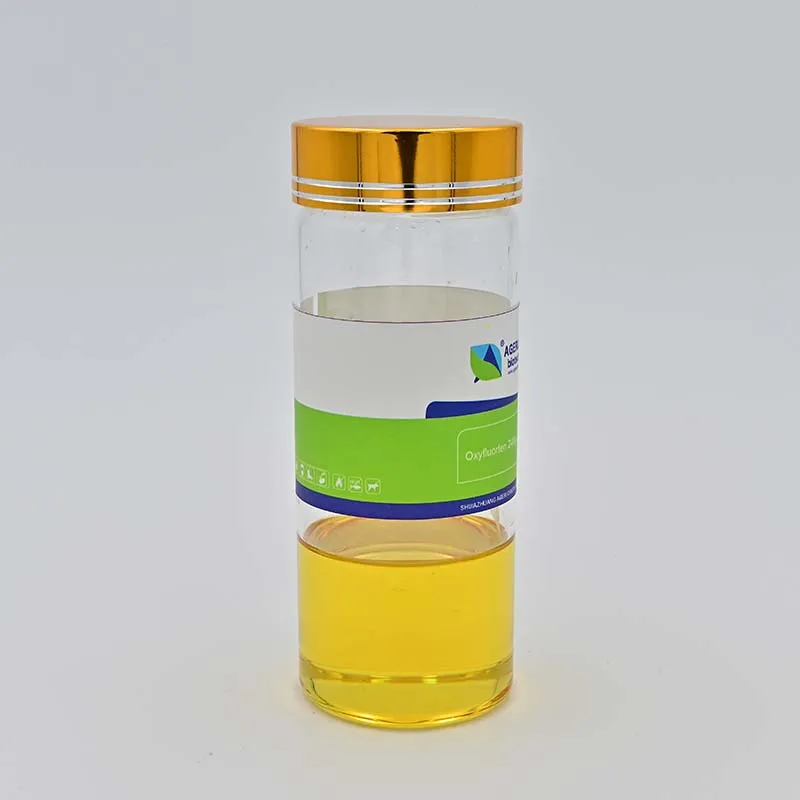
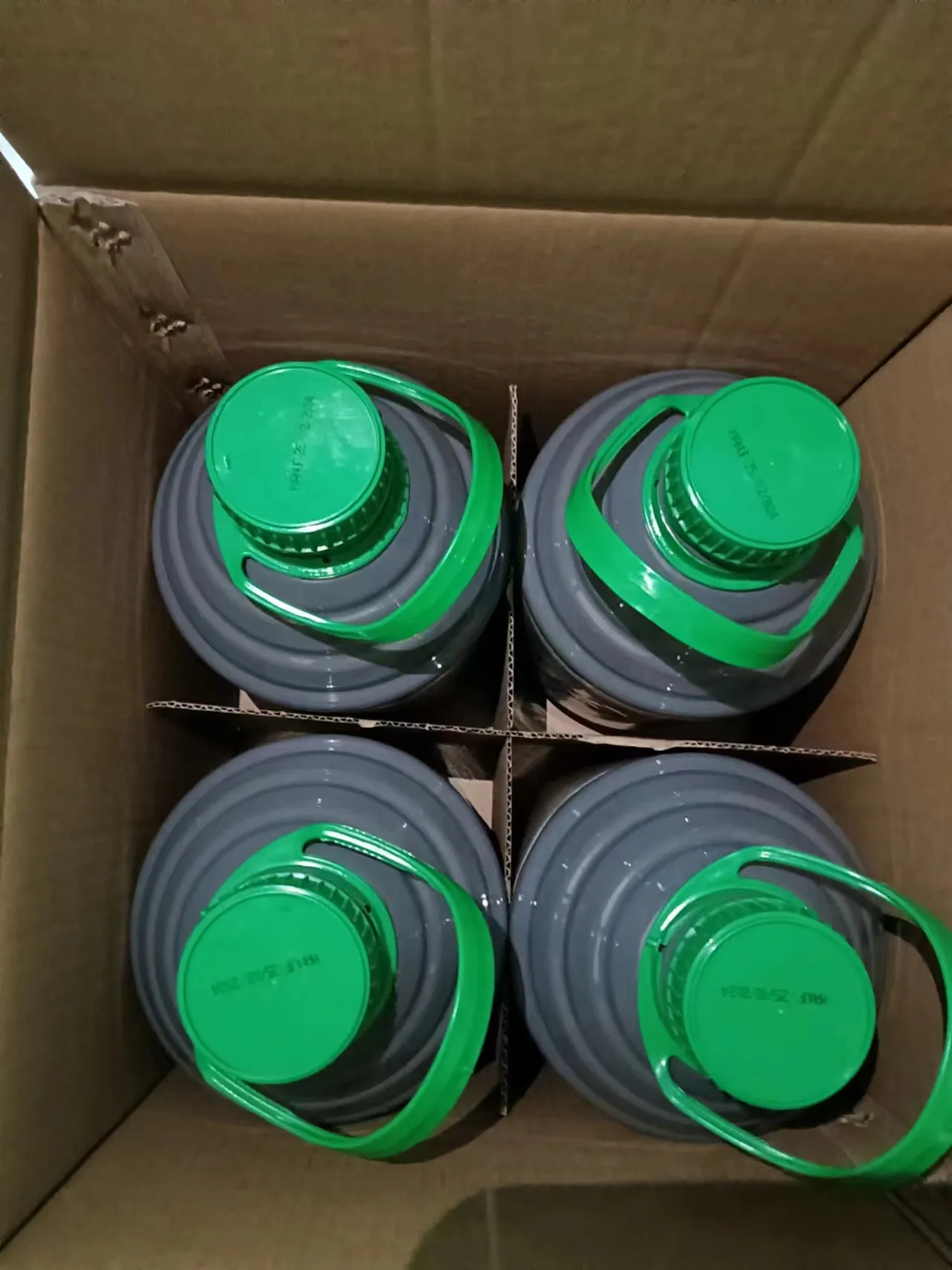
Bispyribac-Sodium 50 g/L + Cyhalofop-Butyl 150 g/L OD
POMAIS Bispyribac-Sodium 50 g/L + Cyhalofop-Butyl 150 g/L OD is a selective dual-active post-emergence rice herbicide developed for fields where annual grass weeds occur together with approved sedges and broadleaf weeds.
Cyhalofop-Butyl provides the main grass-control backbone, especially against barnyardgrass, Leptochloa and other susceptible annual grasses. Bispyribac-Sodium adds a different mode of action and broadens the spectrum toward additional grasses, sedges and selected broadleaf weeds.
This 200 g/L OD formulation is positioned for importers, distributors, registration companies and rice herbicide brands that need a two-active solution between a grass-only herbicide and more complex three-active mixtures.
- Designed for Professional Buyers & Bulk Orders
- We support custom packaging, labeling, and formulation to meet your market needs.
- Export wholesale inquiries only.
- Please include destination country, business type (importer/distributor/registrant), and expected volume.
- Retail requests will not be processed.

About Bispyribac-Sodium 50 g/L + Cyhalofop-Butyl 150 g/L OD
| Product Attribute | Specification |
|---|---|
| Product Name | Bispyribac-Sodium 50 g/L + Cyhalofop-Butyl 150 g/L OD |
| Bispyribac-Sodium Content | 50 g/L |
| Cyhalofop-Butyl Content | 150 g/L |
| Total Active Content | 200 g/L |
| Formulation | OD — Oil Dispersion |
| Product Type | Selective post-emergence rice herbicide |
| Bispyribac-Sodium HRAC Group | Group 2 |
| Cyhalofop-Butyl HRAC Group | Group 1 |
| Main Mode of Action | ALS inhibition + ACCase inhibition |
| Primary Weed Direction | Barnyardgrass, Leptochloa and grass-led mixed weed populations |
| Additional Weed Direction | Approved sedges and broadleaf weeds |
| Main Crop | Rice |
| Application Timing | Post-emergence |
| Main Use Systems | Direct-seeded and transplanted rice where registered |
| Standard MOQ | Normally 1,000 L |
| Available Documents | COA, SDS, TDS, product specification and available registration-supporting information |
| Supply Type | Bulk B2B supply for registration, import and distribution |
Final weeds, crop stages, application rates, water-management requirements, tank-mix restrictions and seasonal limits must follow the approved destination-market label.
What Is Bispyribac-Sodium + Cyhalofop-Butyl OD?
This product combines two post-emergence herbicides with different biochemical targets.
It is mainly designed for rice fields where annual grasses dominate but sedges or broadleaf weeds are also present.
Typical use situations may include:
- Barnyardgrass-dominant fields
- Barnyardgrass mixed with sedges
- Leptochloa mixed with broadleaf weeds
- Echinochloa plus Monochoria
- Annual grasses mixed with Cyperus species
- Other registered grass-led mixed weed populations
The formulation should not be described as a non-selective herbicide or a universal product for every rice weed.
Its strongest positioning is post-emergence grass-led mixed weed management.
Why Combine Bispyribac-Sodium and Cyhalofop-Butyl?
The two active ingredients perform different jobs within the same rice weed-control program.
Cyhalofop-Butyl — Grass Weed Backbone
Cyhalofop-Butyl is a Group 1 ACCase inhibitor.
Its primary role is the control of susceptible annual grass weeds.
Important directions may include:
- Barnyardgrass
- Echinochloa species
- Leptochloa / sprangletop
- Jungle rice
- Other approved annual grasses
It is not primarily a broadleaf or sedge herbicide.
Bispyribac-Sodium — Mixed Weed Spectrum Support
Bispyribac-Sodium is a Group 2 ALS inhibitor.
It can contribute activity against a wider range of susceptible rice weeds, including:
- Additional grass weeds
- Selected sedges
- Monochoria and other approved broadleaf weeds
- Other registered aquatic weeds
Its main value in the mixture is to broaden the weed spectrum beyond a grass-only Cyhalofop program.
Complementary Group 1 + Group 2 Activity
The combination therefore provides:
Group 1 ACCase activity for grass control plus Group 2 ALS activity for additional grasses, sedges and broadleaf weeds.
This should be described as complementary activity.
Do not claim automatic synergy unless the exact 50 + 150 g/L OD formulation has supporting combination data.
How Does the Combination Work?
Cyhalofop-Butyl — ACCase Inhibition
Cyhalofop-Butyl belongs to HRAC Group 1.
It inhibits acetyl-CoA carboxylase, or ACCase, in susceptible grass weeds.
ACCase is essential for fatty acid synthesis and the formation of new cell membranes.
After foliar uptake, susceptible grass weeds may show:
- Growth cessation
- Inhibition of new leaf development
- Chlorosis
- Discoloration of growing points
- Tissue deterioration
- Eventual plant death
Visible weed death is not always immediate.
The first sign may be that new growth stops before older foliage becomes discolored.
Bispyribac-Sodium — ALS Inhibition
Bispyribac-Sodium belongs to HRAC Group 2.
It inhibits acetolactate synthase, also known as acetohydroxyacid synthase.
This enzyme is required for the production of branched-chain amino acids.
After treatment, susceptible weeds may experience:
- Rapid growth inhibition
- Reduced new-leaf development
- Chlorosis
- Stunting
- Progressive tissue decline
Bispyribac-Sodium can contribute to both grass and non-grass weed control depending on the species and registration.
Main Weed Directions
The following table describes typical positioning rather than a universal weed-control label.
| Weed Direction | Main Contribution | Product Positioning |
|---|---|---|
| Barnyardgrass | Cyhalofop-Butyl + Bispyribac contribution | Core weed direction |
| Leptochloa / Sprangletop | Primarily Cyhalofop-Butyl | Important grass direction |
| Other Annual Grasses | Both active ingredients depending on species | Post-emergence control |
| Sedges | Primarily Bispyribac-Sodium | Registration-dependent |
| Monochoria and Broadleaf Weeds | Primarily Bispyribac-Sodium | Mixed-weed spectrum support |
| Grass-Led Mixed Populations | Complementary Group 1 + Group 2 activity | Main commercial positioning |
Exact control claims depend on weed species, growth stage, resistance status and local registration.
Barnyardgrass and Leptochloa Control
Barnyardgrass and Leptochloa are two of the most commercially important directions for this combination.
Barnyardgrass
Barnyardgrass is a major competitor in both direct-seeded and transplanted rice.
The best treatment window is generally when susceptible plants are:
- Fully emerged
- Small
- Actively growing
- Within the registered leaf stage
- Not severely tillered
- Not under extreme stress
Cyhalofop-Butyl provides the main grass-control activity, while Bispyribac-Sodium may add complementary activity against susceptible populations and mixed accompanying weeds.
Leptochloa
Leptochloa species can become difficult to manage when treatment is delayed.
Cyhalofop-Butyl is particularly relevant to this grass direction.
Application should target plants while:
- Leaf area is exposed
- Tillering remains limited
- Growth is active
- Spray interception is good
Do not claim reliable rescue control of large, mature Leptochloa without exact local efficacy data.
Mixed Weed Pressure
This combination becomes more useful than a grass-only herbicide when a field contains:
barnyardgrass or Leptochloa together with registered sedges or broadleaf weeds.
Importers can therefore position this formulation between a single-active grass herbicide and a more complex multi-active rice herbicide.
Direct-Seeded Rice
Direct-seeded rice often experiences early and diverse weed pressure because crop and weeds establish at similar times.
Potential target populations may include:
- Barnyardgrass
- Leptochloa
- Annual grasses
- Sedges
- Aquatic broadleaf weeds
Application Considerations
Before treatment, confirm:
- Rice growth stage
- Weed species
- Weed growth stage
- Water regime
- Crop stress
- Previous herbicide use
Direct-seeded rice may be more sensitive at certain early establishment stages.
Do not transfer transplanted-rice instructions automatically to direct-seeded systems.
Transplanted Rice
The product may also be positioned in transplanted rice where registered.
Important factors include:
- Time since transplanting
- Root establishment
- Rice growth stage
- Weed emergence
- Field water
- Temperature
- Crop stress
Avoid application to recently transplanted or severely stressed rice unless the local label specifically permits it.
When Should the Product Be Applied?
The product should be positioned as a post-emergence herbicide.
Preferred Timing
Apply after target weeds have emerged and while they remain within the registered susceptible growth stage.
Early treatment generally provides:
- Better spray exposure
- Smaller weed biomass
- Less tillering
- More uniform control
- Lower crop competition
Avoid Delayed Treatment
Performance may become less reliable when:
- Barnyardgrass is heavily tillered
- Leptochloa is large
- Sedges are mature
- Broadleaf weeds form dense canopies
- Resistant populations are present
- Rice canopy blocks spray coverage
Not a Pre-Emergence Herbicide
Do not position this formulation as a soil-residual product applied before weeds germinate.
It is designed mainly for weeds that have already emerged.
Water Management
Water management should follow the specific rice system and local registration.
There is no single water-depth schedule suitable for every market.
Before Application
Confirm whether the local label requires:
- Drained conditions
- Shallow water
- Exposed weed foliage
- Moist soil
- A specific rice irrigation stage
The objective is to deliver enough product to the target weeds without creating unacceptable crop stress.
After Application
Follow the registered instructions for:
- Re-flooding
- Holding water
- Drainage
- Irrigation
- Treated-water movement
Avoid allowing treated paddy water to enter sensitive crops or waterways where prohibited.
OD Formulation Features
OD means Oil Dispersion.
The active ingredients are finely dispersed in an oil-based continuous phase.
This formulation platform is suitable for delivering two herbicides with different physicochemical properties in one liquid product.
Main OD Features
A well-developed OD formulation may provide:
- Convenient liquid dosing
- Good leaf wetting
- Stable active ingredient dispersion
- Controlled particle size
- Consistent spray preparation
- Flexible commercial packaging
- Good handling in professional rice programs
The OD formulation should not automatically be described as more effective than EC, SC or other formulations without comparative data.
Key OD Quality Parameters
| Quality Parameter | Buyer Relevance |
|---|---|
| Bispyribac-Sodium Assay | Confirms the declared 50 g/L content |
| Cyhalofop-Butyl Assay | Confirms the declared 150 g/L content |
| Active Ratio Uniformity | Maintains the intended 50:150 ratio |
| Physical Appearance | Detects separation or abnormal sediment |
| Suspensibility / Dispersion | Supports uniform dilution |
| Particle Size | Influences formulation and spray performance |
| Wet Sieve Residue | Helps reduce nozzle and filter blockage |
| Viscosity | Influences pumping and pouring |
| Pourability | Reduces product remaining in the package |
| Redispersibility | Confirms recovery after storage |
| Persistent Foam | Supports tank preparation |
| Dilution Stability | Evaluates behavior in spray water |
| Low-Temperature Stability | Supports cold-region shipping |
| Heat Stability | Supports warm-climate storage |
| Packaging Compatibility | Confirms compatibility with oil phase and seals |
| Fill-Volume Accuracy | Supports batch consistency |
For B2B buyers, active-ratio uniformity and storage redispersibility are especially important in a two-active OD formulation.
Application Guidance
1. Identify the Weed Complex
Confirm whether the field is dominated by:
- Grasses
- Sedges
- Broadleaf weeds
- Mixed populations
This product is best positioned when grass weeds remain an important part of the problem.
2. Confirm Weed Stage
Treat weeds while they remain within the registered susceptible stage.
Do not rely on increased dose to compensate for very large weeds.
3. Check Rice Condition
Avoid treatment when rice is severely stressed by:
- Drought
- Excessive flooding
- Nutrient deficiency
- Extreme temperature
- Disease
- Insect damage
- Previous herbicide injury
4. Prepare the Spray Tank
Where permitted:
- Fill the tank partly with clean water.
- Start agitation.
- Shake or circulate the OD container as required.
- Add the measured product.
- Add only approved tank-mix partners.
- Complete filling with water.
- Maintain adequate agitation during application.
5. Achieve Uniform Coverage
Check:
- Nozzle condition
- Boom height
- Spray pressure
- Travel speed
- Field overlap
- Weed exposure
6. Follow the Registered Rate
Do not publish one universal rate.
The correct product volume depends on:
- Weed species
- Weed stage
- Rice system
- Resistance status
- Local registration
7. Follow Water-Management Instructions
Observe the registered drainage, holding-water or re-flooding requirements.
Rice Crop Safety
Rice selectivity depends on the active ingredients, crop stage and correct use pattern.
Potential crop injury risk may increase with:
- Excessive rate
- Spray overlap
- Very young rice
- Transplant stress
- Water stress
- Extreme temperatures
- Unapproved mixtures
- Incorrect application timing
Variety and Production-System Differences
Do not assume that every rice variety or cultivation system has identical tolerance.
For a new market, crop-safety data should match:
- Rice type
- Application method
- Product rate
- Growth stage
- Local environment
Resistance Management
This formulation combines HRAC Group 1 + Group 2 activity.
That provides two different biochemical targets, but it does not make the product resistance-proof.
Group 1 Resistance
Cyhalofop-Butyl belongs to Group 1.
Other Group 1 rice herbicides include products based on active ingredients such as:
- Metamifop
- Fenoxaprop-P-ethyl
- Other ACCase inhibitors
Switching only between Group 1 active ingredients should not be treated as a complete mode-of-action rotation.
Group 2 Resistance
Bispyribac-Sodium belongs to Group 2.
Other Group 2 rice herbicides include:
- Penoxsulam
- Bensulfuron-Methyl
- Pyrazosulfuron-Ethyl
- Other ALS inhibitors
Changing from Bispyribac-Sodium to another Group 2 product does not represent a completely new herbicide mechanism.
Important Rotation Principle
A program such as:
Bispyribac-Sodium + Cyhalofop-Butyl
followed by
Penoxsulam + Metamifop
still relies mainly on:
Group 2 + Group 1
even though the active ingredient names are different.
Recommended Resistance Practices
- Treat weeds early.
- Use the complete registered rate.
- Avoid repeated use of the same Group 1 + Group 2 pattern every season.
- Include effective pre-emergence herbicides where appropriate.
- Rotate with effective herbicides outside Groups 1 and 2.
- Prevent surviving weeds from producing seed.
- Use clean field borders and irrigation channels.
- Maintain herbicide-use records.
- Investigate unusual survivors.
- Integrate water and crop management.
Do not claim that this product controls Group 1- or Group 2-resistant weeds unless confirmed by population-specific data.
Tank Mixing and Compatibility
Do not assume this OD formulation is compatible with every rice herbicide, insecticide, fungicide or fertilizer.
Herbicide Mixtures
Tank mixtures may change:
- Weed spectrum
- Uptake
- Crop safety
- Herbicide activity
- Spray properties
Cyhalofop activity can be affected by certain herbicide combinations.
Physical compatibility alone therefore does not prove biological compatibility.
Before Mixing
Confirm:
- Local registration
- Target weed spectrum
- Partner mode of action
- Rice stage
- Weed stage
- Water quality
- Mixing order
- Crop-safety data
Compatibility Testing
For unfamiliar mixtures:
- Conduct a jar test.
- Use the intended water source.
- Follow the proposed mixing sequence.
- Observe for separation, sediment or excessive foam.
- Review biological compatibility data where available.
Use only supported tank mixtures.
Comparison with Other POMAIS Rice Herbicides
Different rice herbicides should be selected according to the dominant weed complex.
| Product Direction | Best-Fit Positioning |
|---|---|
| Cyhalofop-Butyl 30% OD | Grass-dominant rice fields |
| Cyhalofop-Butyl + Quinclorac | Barnyardgrass-led weed programs |
| Bispyribac-Sodium + Cyhalofop-Butyl OD | Barnyardgrass / Leptochloa-led mixed weed pressure |
| Penoxsulam + Cyhalofop-Butyl OD | Broad mixed grass + sedge + broadleaf programs |
| Three-Active Rice Herbicides | More complex mixed-weed portfolios |
For primarily grass weed pressure, buyers can compare the POMAIS Cyhalofop-Butyl 30% OD herbicide.
For a barnyardgrass-focused alternative using a different partner, see Cyhalofop-Butyl + Quinclorac.
For a broader Group 1 + Group 2 mixed-weed direction, compare the Penoxsulam + Cyhalofop-Butyl OD.
Storage and Transport
Store Bispyribac-Sodium 50 g/L + Cyhalofop-Butyl 150 g/L OD:
- In the original sealed container
- In a cool and dry warehouse
- Away from direct sunlight
- Away from excessive heat
- Away from freezing where relevant
- Away from food and animal feed
- Under conditions stated in the final SDS
Before use after extended storage, follow the approved shaking or redispersion procedure.
Before shipment, inspect:
- Bottle condition
- Seal integrity
- Product uniformity
- Label accuracy
- Batch coding
- Fill volume
- Carton strength
- Pallet stability
Packaging, Quality Control and Documentation
POMAIS supplies Bispyribac-Sodium 50 g/L + Cyhalofop-Butyl 150 g/L OD for qualified importers, distributors, registration companies and agricultural brands.
Packaging Options
Potential commercial packaging may include:
- 100 mL
- 250 mL
- 500 mL
- 1 L
- 5 L
- 10 L
- 20 L
- Larger commercial packs where suitable
- Tamper-evident closures
- Multilingual labels
- Retail cartons
- Export cartons
- Batch and expiry coding
- Shipping marks
Final package size depends on registration, order volume and formulation compatibility.
Quality-Control Focus
Commercial batch checks may include:
- Bispyribac-Sodium content
- Cyhalofop-Butyl content
- Active ingredient ratio
- Physical appearance
- Dispersion stability
- Particle size
- Wet sieve residue
- Viscosity
- Pourability
- Redispersibility
- Persistent foam
- Dilution stability
- Low-temperature stability
- Heat stability
- Packaging compatibility
- Fill-volume accuracy
- Batch consistency
Available Documents
Document support may include:
- COA — Certificate of Analysis
- SDS — Safety Data Sheet
- TDS — Technical Data Sheet
- Product Specification
- Packaging Specification
- Available Efficacy Information
- Available Crop-Safety Information
- Available Stability Information
- Available Compatibility Information
- Available Registration-Supporting Information
- Batch-Related Quality Documents
- Commercial and Shipping Documents
Frequently Asked Questions
What is Bispyribac-Sodium 50 g/L + Cyhalofop-Butyl 150 g/L OD used for?
It is a post-emergence rice herbicide designed for grass-led mixed weed populations.
Typical directions include barnyardgrass, Leptochloa and approved sedges or broadleaf weeds.
Is it a pre-emergence or post-emergence herbicide?
It is primarily a post-emergence herbicide.
Target weeds should already be emerged and within the registered susceptible growth stage.
What HRAC group is Bispyribac-Sodium?
Bispyribac-Sodium belongs to HRAC Group 2 and inhibits ALS.
What HRAC group is Cyhalofop-Butyl?
Cyhalofop-Butyl belongs to HRAC Group 1 and inhibits ACCase.
How does Cyhalofop-Butyl work?
It inhibits fatty acid synthesis in susceptible grass weeds by blocking ACCase activity.
Growth stops before the treated grass gradually declines.
How does Bispyribac-Sodium work?
It inhibits ALS and prevents the formation of essential branched-chain amino acids in susceptible weeds.
Does it control barnyardgrass?
Barnyardgrass is one of the main product directions where the formulation is registered.
Can it control Leptochloa?
Leptochloa is an important Cyhalofop-Butyl grass direction where registered.
Does it control sedges?
Bispyribac-Sodium may contribute activity against selected registered sedges.
The exact species must follow the local label.
Does it control broadleaf weeds?
It may control selected rice broadleaf weeds where registered, mainly through the Bispyribac-Sodium component.
Can it be used in direct-seeded rice?
Yes, where the exact product and application pattern are registered for direct-seeded rice.
Can it be used in transplanted rice?
It may be used where the local label includes transplanted rice.
Application timing should consider transplant establishment and crop stress.
What does OD mean?
OD means Oil Dispersion.
The active ingredients are dispersed in an oil-based liquid formulation designed for dilution before application.
Does Group 1 + Group 2 prevent herbicide resistance?
No.
The product contains two different modes of action, but repeated dependence on the same Group 1 + Group 2 combination can still select resistant weeds.
Can it control herbicide-resistant barnyardgrass?
No universal claim should be made.
Performance depends on the resistance mechanism present in the local population.
Can it be tank mixed with other rice herbicides?
Only where compatibility and crop safety have been confirmed.
Some herbicide partners may reduce Cyhalofop activity even when the mixture is physically compatible.
What is the minimum order quantity?
The standard minimum order quantity is normally 1,000 L.
Request Product Specifications
To evaluate a Bispyribac-Sodium 50 g/L + Cyhalofop-Butyl 150 g/L OD purchasing or registration project, please provide:
- Destination country
- Company type
- Required quantity
- Preferred package size
- Rice production system
- Dominant grass weeds
- Sedge and broadleaf weed pressure
- Target weed growth stage
- Current registration status
- Required label language
- Required technical documents
- Expected purchasing schedule
We will review the two-active specification, OD formulation quality, target weed profile, packaging feasibility and destination-market requirements before confirming the commercial proposal.
Bispyribac-Sodium 50 g/L + Cyhalofop-Butyl 150 g/L OD is supplied for professional rice weed management, B2B procurement, registration and wholesale distribution.
Contact us!
We will reply to you within 24 hours on business days!