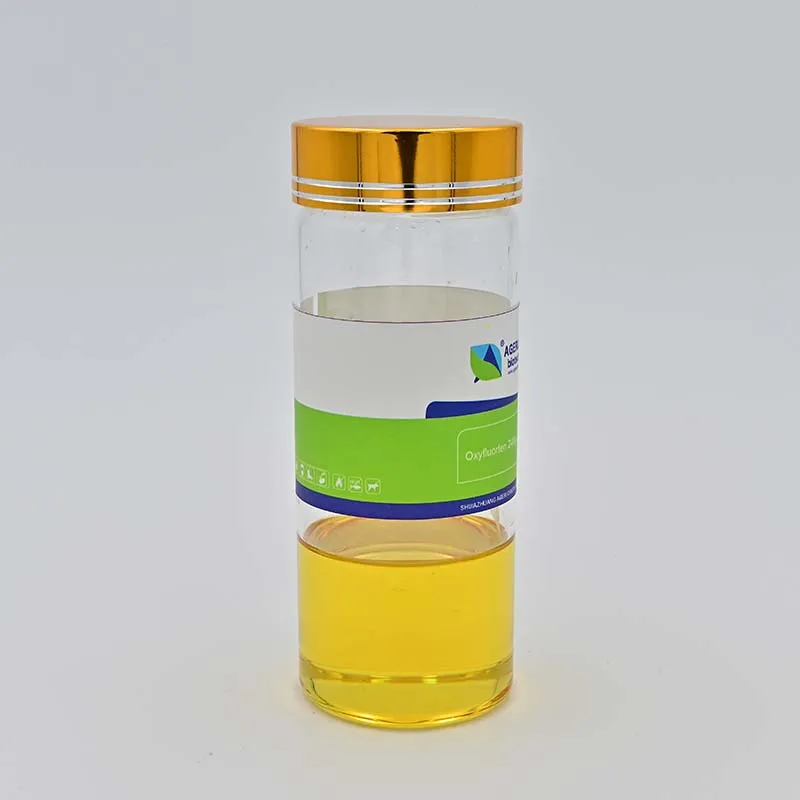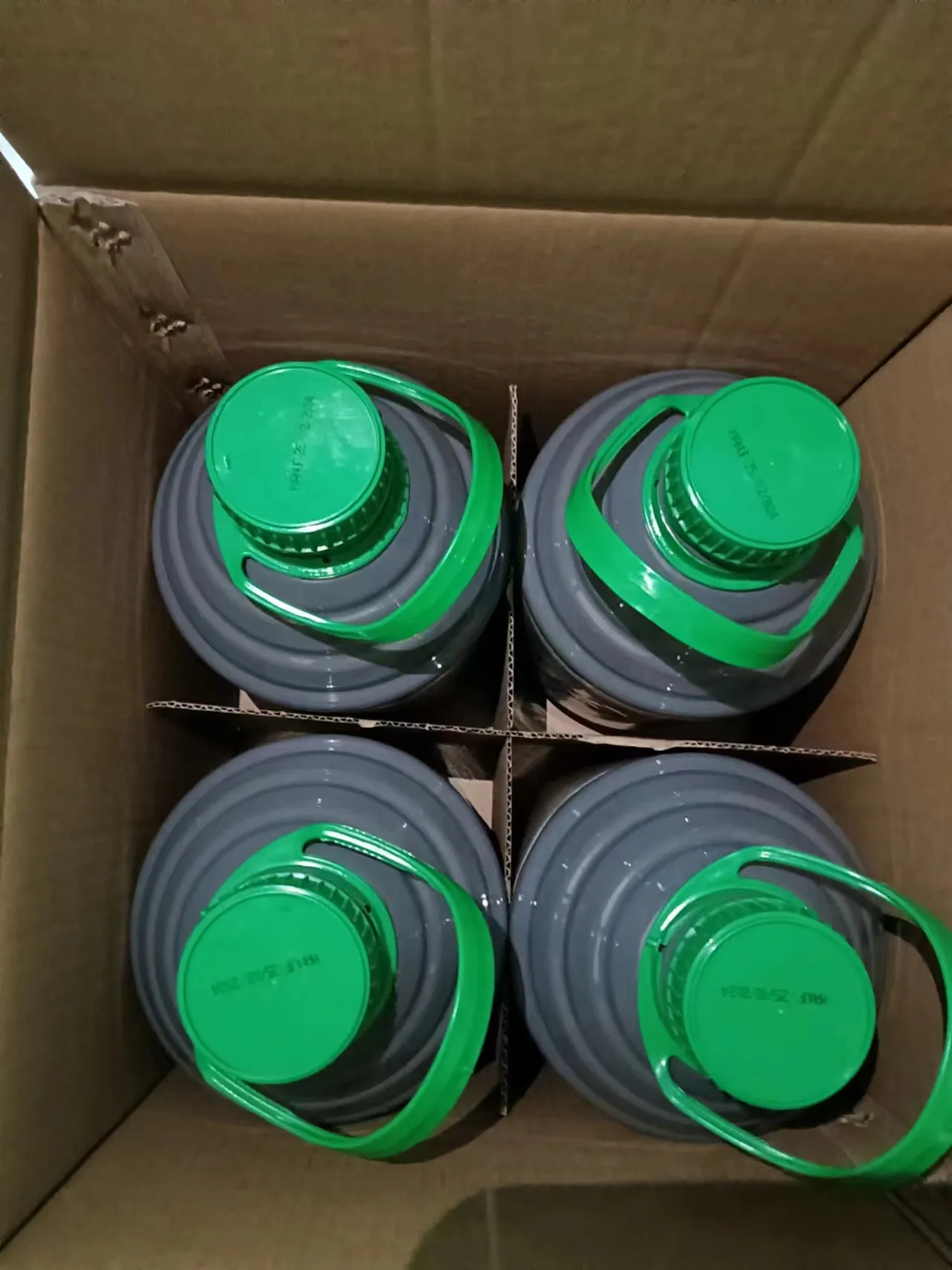
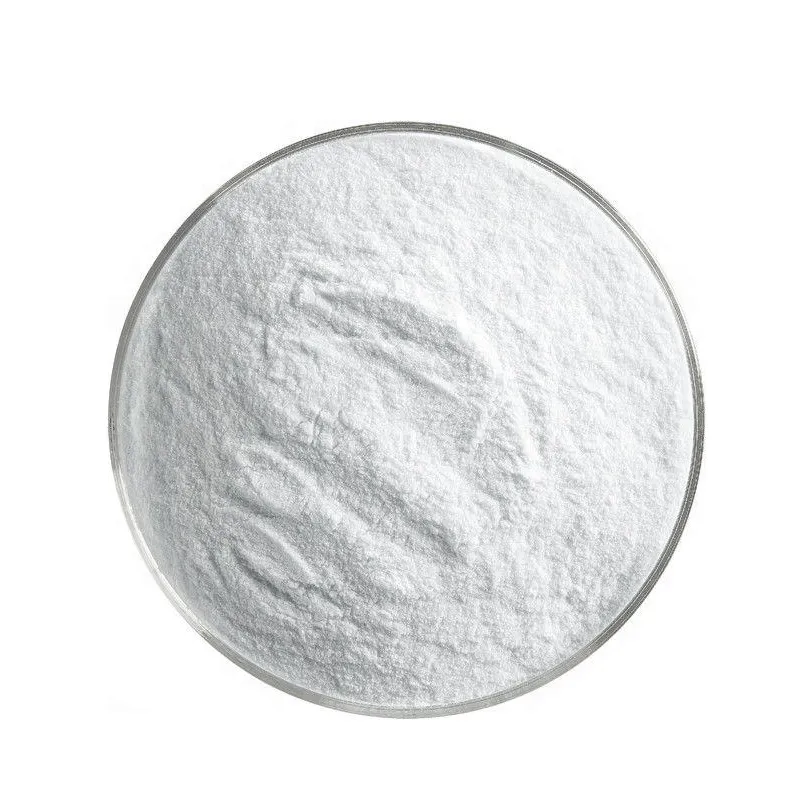
Oxadiazon 30% WP & 35% SC Herbicide
POMAIS Oxadiazon 30% WP & 35% SC Herbicide is a selective Group 14 PPO-inhibiting herbicide developed primarily for pre-emergence management of annual grass and broadleaf weeds.
Oxadiazon acts mainly in the treated soil surface zone, where susceptible weeds are exposed during germination and early emergence. It is particularly relevant to rice, turf, ornamental and other registered weed-control programs where residual early-season control is required.
POMAIS supplies both 30% WP and 35% SC formulations for importers, distributors, registration companies and agricultural brands requiring different handling, packaging and local-market formulation options.
- Designed for Professional Buyers & Bulk Orders
- We support custom packaging, labeling, and formulation to meet your market needs.
- Export wholesale inquiries only.
- Please include destination country, business type (importer/distributor/registrant), and expected volume.
- Retail requests will not be processed.

About Oxadiazon 30% WP & 35% SC Herbicide
| Product Attribute | Specification |
|---|---|
| Active Ingredient | Oxadiazon |
| Available Formulations | 30% WP, 35% SC |
| Product Type | Selective pre-emergence herbicide |
| HRAC / WSSA Group | Group 14 |
| Mode of Action | Protoporphyrinogen oxidase inhibition |
| Primary Activity | Pre-emergence and residual weed control |
| Main Weed Direction | Annual grasses and broadleaf weeds |
| Main Crop / Use Direction | Rice, turf, ornamentals and other approved uses |
| Plant Movement | Limited; primarily contact and soil-surface activity |
| Application Timing | Before weed emergence or during approved early-treatment stages |
| Standard MOQ | Normally 1,000 kg for WP or 1,000 L for SC |
| Available Documents | COA, SDS, TDS, product specification and available registration-supporting information |
| Supply Type | Bulk B2B supply for registration, import and distribution |
Final crops, target weeds, application rates, water-management instructions, seasonal limits and formulation-specific uses must follow the approved destination-market label.
What Is Oxadiazon Herbicide?
Oxadiazon is a selective herbicide used mainly before weeds emerge.
It belongs to the PPO-inhibiting herbicide group and is widely positioned for early weed control in systems where annual grasses and broadleaf weeds emerge from the upper soil layer.
Potential use directions include:
- Paddy rice
- Direct-seeded rice where registered
- Transplanted rice
- Turf
- Ornamental nurseries
- Landscape systems
- Other approved crops or non-crop areas
Oxadiazon should not be presented as a general-purpose systemic post-emergence herbicide.
Its strongest positioning is pre-emergence residual control.
How Does Oxadiazon Work?
Group 14 PPO Inhibition
Oxadiazon belongs to HRAC Group 14.
It inhibits protoporphyrinogen oxidase, commonly known as PPO.
This interferes with chlorophyll and heme-related biochemical processes and causes the accumulation of reactive intermediates in susceptible plant tissue.
When exposed to light, these processes lead to:
- Oxidative damage
- Cell membrane disruption
- Tissue desiccation
- Growth failure
- Weed death
Because this mechanism acts strongly on emerging weed tissue, application timing is critical.
Contact and Residual Activity
Oxadiazon has limited systemic movement.
It acts mainly where treated soil and susceptible weed tissue come into contact.
After application, the product remains in the upper treatment zone and affects germinating weeds as shoots pass through or contact the treated layer.
This is why soil-surface condition and herbicide placement matter.
The product should not be described as moving extensively from roots to leaves or throughout mature weeds.
What Weeds Does Oxadiazon Control?
Oxadiazon is mainly positioned against annual grass and broadleaf weeds.
The exact weed spectrum varies by crop, formulation and market registration.
| Weed Group | Typical Direction | Product Positioning |
|---|---|---|
| Annual Grasses | Barnyardgrass, crabgrass and other registered annual grasses | Core pre-emergence control |
| Rice-Field Grasses | Barnyardgrass and other approved paddy grasses | Rice weed-management direction |
| Broadleaf Weeds | Purslane and other registered annual broadleaves | Residual early control |
| Paddy Broadleaf Weeds | Monochoria and other approved aquatic or semi-aquatic weeds | Rice-specific direction |
| Selected Sedges | Crop- and market-specific species | Registration-dependent |
| Mixed Annual Weed Populations | Grass + broadleaf combinations | Pre-emergence residual program |
The product should not be claimed to control every sedge, perennial weed or mature emerged weed.
Oxadiazon for Rice Weed Management
Rice is one of the most important agricultural directions for Oxadiazon.
The herbicide may be positioned during early crop establishment, when weed emergence can rapidly reduce stand uniformity and crop competitiveness.
Main Rice Weed Directions
Potential target directions may include:
- Barnyardgrass
- Annual grasses
- Monochoria
- Selected broadleaf paddy weeds
- Selected sedges where registered
- Other early-emerging rice-field weeds
The exact weed list must follow the local label.
Direct-Seeded Rice
Direct-seeded rice can experience strong early competition because weeds and rice may emerge at similar times.
Oxadiazon may be used in registered programs before or during approved early weed-emergence windows.
Application planning should consider:
- Rice seeding method
- Seed coverage
- Soil condition
- Water level
- Crop emergence
- Weed-emergence stage
- Rainfall or irrigation
- Product formulation
Do not apply one transplanted-rice recommendation automatically to direct-seeded systems.
Transplanted Rice
In transplanted rice, Oxadiazon may be positioned around transplant establishment and early weed emergence where registered.
The crop must be at an appropriate growth stage and field water must be managed according to the local label.
Young or stressed rice may respond differently to treatment.
Water Management in Rice
Water management strongly affects herbicide placement and crop safety.
Depending on the registration, application may require control of:
- Standing water depth
- Drainage timing
- Re-flooding
- Water movement between fields
- Treated-water discharge
- Soil moisture
- Rainfall after application
A universal water depth or re-flooding interval should not be published for all markets.
The main principle is to maintain the herbicide in the intended treatment zone while preventing movement into sensitive areas.
Oxadiazon for Turf and Ornamentals
Oxadiazon also has a strong international market direction in turf and ornamental weed control.
The product may be positioned before weed emergence in:
- Turfgrass
- Ornamental nurseries
- Landscape plantings
- Conifer nurseries
- Approved non-crop areas
Turf Weed Management
Pre-emergence treatment may help reduce annual grass and broadleaf establishment before weeds become visible.
Application timing should be based on:
- Local weed germination period
- Turf species
- Soil temperature
- Irrigation schedule
- Turf stress
- Local label restrictions
Do not apply to turf species or establishment stages not included on the label.
Ornamentals
Ornamental applications require particular attention to crop tolerance.
Different ornamental species and cultivars may react differently to soil-applied herbicides.
Use should therefore be limited to approved:
- Species
- Growth stages
- Containers
- Nursery systems
- Application methods
Do not claim universal safety on all ornamental plants.
When Should Oxadiazon Be Applied?
Before Weed Emergence
The primary timing is:
before target weeds emerge.
This is when Oxadiazon provides its strongest commercial value.
Application may be planned:
- Before known weed-germination periods
- After field or nursery preparation
- Before annual weeds break the soil surface
- During approved early rice-establishment stages
- Before seasonal turf weed emergence
Early Treatment Windows
Some local labels may allow application during very early weed development.
This should not be interpreted as broad post-emergence activity.
Do not rely on Oxadiazon when:
- Weeds are already mature
- Grasses have tillered heavily
- Broadleaf weeds have developed large canopies
- Perennial weeds are established
- Severe weed competition has already occurred
Not a Late Rescue Herbicide
Oxadiazon should not be promoted as a rescue treatment for advanced infestations.
Where established weeds are already present, another registered post-emergence herbicide may be required.
Soil Moisture and Herbicide Activation
Pre-emergence herbicides depend on correct placement in the upper soil zone.
After application, moisture may help distribute or activate Oxadiazon in the treatment layer.
Important factors include:
- Rainfall
- Irrigation
- Soil moisture
- Soil texture
- Organic matter
- Surface residues
- Soil disturbance
Avoid Excessive Soil Disturbance
Cultivation after application may break the treated herbicide layer.
This can reduce control by moving untreated soil to the surface or moving the herbicide away from the weed-germination zone.
Where the label permits, avoid unnecessary soil disturbance after treatment.
Irrigation
Irrigation may support activation, but excessive water movement may also redistribute the herbicide.
Follow the registered irrigation timing and quantity.
Do not publish a universal irrigation volume for all crops.
Oxadiazon 30% WP vs 35% SC
POMAIS supplies two formulation options for different registration and market requirements.
| Feature | Oxadiazon 30% WP | Oxadiazon 35% SC |
|---|---|---|
| Formulation Type | Wettable Powder | Suspension Concentrate |
| Active Ingredient Content | 30% | 35% |
| Physical Form | Dry powder | Liquid suspension |
| Dilution Behavior | Forms a suspension in water | Forms a liquid suspension after dilution |
| Agitation | Required | Required |
| Dust During Handling | Greater consideration | Lower than WP |
| Moisture Sensitivity | Important during storage | Less powder-related moisture concern |
| Packaging Direction | Bags, sachets or dry-product containers | Bottles and liquid containers |
| Main Buyer Logic | Dry formulation and compact transport | Liquid handling and dosing convenience |
| Key QC Focus | Wettability, suspensibility, moisture | Suspensibility, viscosity, redispersibility |
Neither formulation should be described as universally more effective.
The correct choice depends on:
- Registration
- Market preference
- Application equipment
- Packaging strategy
- Storage environment
- Distributor demand
- Local formulation acceptance
Oxadiazon 30% WP Formulation Features
WP means Wettable Powder.
The product disperses in water to form a spray suspension rather than dissolving completely.
Key WP Quality Parameters
Important parameters may include:
- Oxadiazon assay
- Wettability
- Suspensibility
- Wet sieve residue
- Particle size
- Moisture content
- Persistent foam
- Storage stability
- Pack-weight accuracy
Handling
WP products require careful handling to reduce powder exposure.
Operators should:
- Avoid inhaling dust
- Add the product carefully to water
- Maintain tank agitation
- Follow PPE requirements
- Keep packaging dry
Oxadiazon 35% SC Formulation Features
SC means Suspension Concentrate.
Fine Oxadiazon particles are dispersed in a liquid continuous phase.
Key SC Quality Parameters
Important parameters may include:
- Oxadiazon assay
- Suspensibility
- Particle size
- Wet sieve residue
- Viscosity
- Pourability
- pH
- Persistent foam
- Redispersibility
- Dilution stability
- Heat stability
- Cold stability
- Packaging compatibility
Storage Behavior
Some settling may occur during storage.
A properly formulated SC should return to a uniform suspension after the approved shaking or agitation procedure.
Hard sediment or irreversible separation may indicate a formulation-quality problem.
Application Guidance
1. Confirm the Crop and Weed
Verify:
- Registered crop
- Target weed species
- Weed-emergence stage
- Crop growth stage
- Soil or water conditions
- Local application rate
2. Apply at the Correct Timing
For most programs, application should occur before weeds emerge.
Avoid delaying treatment until weed populations are established.
3. Prepare the Product Correctly
For 30% WP:
- Prepare a slurry where required
- Add gradually to the tank
- Maintain agitation
For 35% SC:
- Shake the container before use
- Add the measured quantity to the tank
- Maintain agitation
4. Apply Uniformly
Uneven application can produce:
- Missed weed-control strips
- Excess crop exposure
- Variable residual performance
- Localized injury
Calibrate equipment carefully.
5. Maintain the Treatment Layer
Avoid unnecessary disturbance of treated soil.
Follow crop-specific irrigation or water-management instructions.
6. Follow the Registered Rate
Do not use one universal rate across:
- Rice
- Turf
- Ornamentals
- Nurseries
- Other registered systems
7. Observe Seasonal Restrictions
Follow the approved:
- Maximum number of applications
- Seasonal quantity
- Crop-stage restrictions
- Replanting interval
- Rotational restrictions
- Water-management requirements
Crop Safety and Use Precautions
Oxadiazon selectivity depends on correct application.
Crop response may be influenced by:
- Application rate
- Crop species
- Crop variety
- Crop stage
- Root exposure
- Soil texture
- Excessive rainfall
- Standing water
- Spray overlap
- Treated-soil movement
Avoid Direct Exposure of Sensitive Tissue
Pre-emergence herbicides may injure crops if concentrated around sensitive roots, shoots or germinating seeds outside the approved use pattern.
Follow planting depth and crop-stage instructions.
Newly Established Turf and Ornamentals
Do not assume that newly seeded turf or recently transplanted ornamentals have the same tolerance as established plants.
Use only according to the registered establishment stage.
Spray Drift
Prevent spray from moving onto:
- Sensitive vegetables
- Fruit crops
- Nurseries
- Flowering ornamentals
- Aquatic areas
- Non-target vegetation
Resistance Management
Oxadiazon belongs to HRAC Group 14.
Repeated dependence on one herbicide group can select resistant weed populations.
Do Not Rotate Only Within Group 14
Other Group 14 herbicides include:
- Oxyfluorfen
- Flumioxazin
- Fomesafen
- Saflufenacil
- Oxadiargyl
- Carfentrazone-ethyl
- Other PPO inhibitors
Changing from Oxadiazon to another Group 14 product should not be treated as a complete mode-of-action rotation.
Recommended Resistance Principles
- Apply at the registered rate.
- Treat weeds before emergence.
- Rotate with effective herbicides from other HRAC groups.
- Use different pre- and post-emergence mechanisms where approved.
- Prevent surviving weeds from producing seed.
- Use crop rotation where practical.
- Maintain field sanitation.
- Record herbicide history.
- Investigate unexpected weed survival.
Resistance management is especially important in fields with repeated rice or turf herbicide programs.
Oxadiazon Compared with Other PPO Herbicides
Oxadiazon belongs to the same broad Group 14 category as several other PPO inhibitors, but individual products can differ in:
- Crop registration
- Formulation
- Soil residual behavior
- Contact activity
- Weed spectrum
- Application timing
For example, POMAIS Oxyfluorfen herbicide is also a Group 14 PPO product but has a different commercial positioning and crop-use profile.
The two active ingredients should not be treated as interchangeable solely because they share the same HRAC group.
Storage and Transport
Oxadiazon 30% WP
Store:
- In the original sealed package
- In a dry warehouse
- Away from humidity
- Away from direct sunlight
- Away from excessive heat
- Away from food and feed
Prevent moisture entry that may cause caking or reduce formulation performance.
Oxadiazon 35% SC
Store:
- In the original sealed container
- Away from direct sunlight
- Away from excessive heat
- Away from freezing where relevant
- In accordance with the SDS
Inspect the product before use if it has been stored for a long period.
Quality Control and Packaging
POMAIS supplies Oxadiazon 30% WP and 35% SC for qualified importers, distributors, registration companies and agricultural brands.
Oxadiazon 30% WP Quality Focus
Commercial batch checks may include:
- Oxadiazon content
- Physical appearance
- Wettability
- Suspensibility
- Wet sieve residue
- Particle size
- Moisture content
- Persistent foam
- Storage stability
- Pack-weight accuracy
- Packaging integrity
Oxadiazon 35% SC Quality Focus
Commercial batch checks may include:
- Oxadiazon content
- Physical appearance
- Suspensibility
- Particle size
- Wet sieve residue
- Viscosity
- Pourability
- pH
- Persistent foam
- Redispersibility
- Dilution stability
- Low-temperature stability
- Heat stability
- Packaging compatibility
- Fill-volume accuracy
Packaging Options
Potential commercial packaging may include:
30% WP
- 100 g
- 250 g
- 500 g
- 1 kg
- 5 kg
- 10 kg
- 25 kg
35% SC
- 100 mL
- 250 mL
- 500 mL
- 1 L
- 5 L
- 10 L
- 20 L
Final packaging depends on local registration, order quantity and formulation compatibility.
Available Documents
Commercial document support may include:
- COA — Certificate of Analysis
- SDS — Safety Data Sheet
- TDS — Technical Data Sheet
- Product Specification
- Packaging Specification
- Available Stability Information
- Available Efficacy Information
- Available Crop-Safety Information
- Available Registration-Supporting Information
- Batch-Related Quality Documents
- Commercial and Shipping Documents
Frequently Asked Questions
What is Oxadiazon used for?
Oxadiazon is mainly used as a selective pre-emergence herbicide against approved annual grass and broadleaf weeds.
Is Oxadiazon a pre-emergence herbicide?
Yes.
Its main positioning is before weed emergence or during approved very early treatment stages.
What HRAC group is Oxadiazon?
Oxadiazon belongs to HRAC Group 14.
How does Oxadiazon work?
It inhibits protoporphyrinogen oxidase, or PPO.
This causes oxidative damage and membrane disruption in susceptible emerging weeds.
Is Oxadiazon systemic?
Oxadiazon has limited systemic movement.
Its main activity is contact and residual activity in the treated soil zone.
What weeds can Oxadiazon control?
Depending on registration, it may control barnyardgrass, crabgrass and other annual grasses, along with selected broadleaf and paddy weeds.
Can Oxadiazon control barnyardgrass?
Barnyardgrass is an important Oxadiazon weed direction in registered rice programs.
Can Oxadiazon be used in rice?
Yes, where the specific formulation and use pattern are registered.
Direct-seeded and transplanted rice programs may require different timing and water management.
Can Oxadiazon be used in direct-seeded rice?
It may be used where specifically registered.
Seed placement, rice emergence and field-water conditions must be considered carefully.
Can Oxadiazon be used on turf?
Oxadiazon has established pre-emergence turf uses in some markets.
The exact turf species and application timing must follow the local label.
Can Oxadiazon be used on ornamentals?
It may be used in registered ornamental and nursery systems.
Crop tolerance differs among species and cultivars.
What is the difference between Oxadiazon 30% WP and 35% SC?
30% WP is a dry wettable powder, while 35% SC is a liquid suspension concentrate.
The main difference is formulation handling rather than a universal difference in biological performance.
Does Oxadiazon control emerged weeds?
Its primary value is pre-emergence control.
Established weeds may require another registered post-emergence herbicide.
Does rain or irrigation affect Oxadiazon?
Moisture can influence herbicide activation and placement in the upper soil layer.
Follow the crop-specific label for irrigation and rainfall requirements.
Can Oxadiazon be rotated with Oxyfluorfen?
Both belong to HRAC Group 14.
They should not be treated as completely different modes of action for resistance management.
What packaging is available?
Potential packaging includes dry packs for 30% WP and liquid bottles or containers for 35% SC.
Final sizes depend on registration and order requirements.
What is the minimum order quantity?
The standard minimum order is normally 1,000 kg for 30% WP or 1,000 L for 35% SC.
Request Oxadiazon Product Specifications
To evaluate an Oxadiazon 30% WP or 35% SC purchasing or registration project, please provide:
- Destination country
- Required formulation
- Company type
- Required quantity
- Preferred package size
- Target crop or use system
- Target weeds
- Current registration status
- Required label language
- Required technical documents
- Expected purchasing schedule
We will review the formulation specification, target use, packaging feasibility, available technical documentation and destination-market requirements before confirming the commercial proposal.
Oxadiazon 30% WP and 35% SC are supplied for professional B2B procurement, registration and wholesale distribution.
Contact us!
We will reply to you within 24 hours on business days!