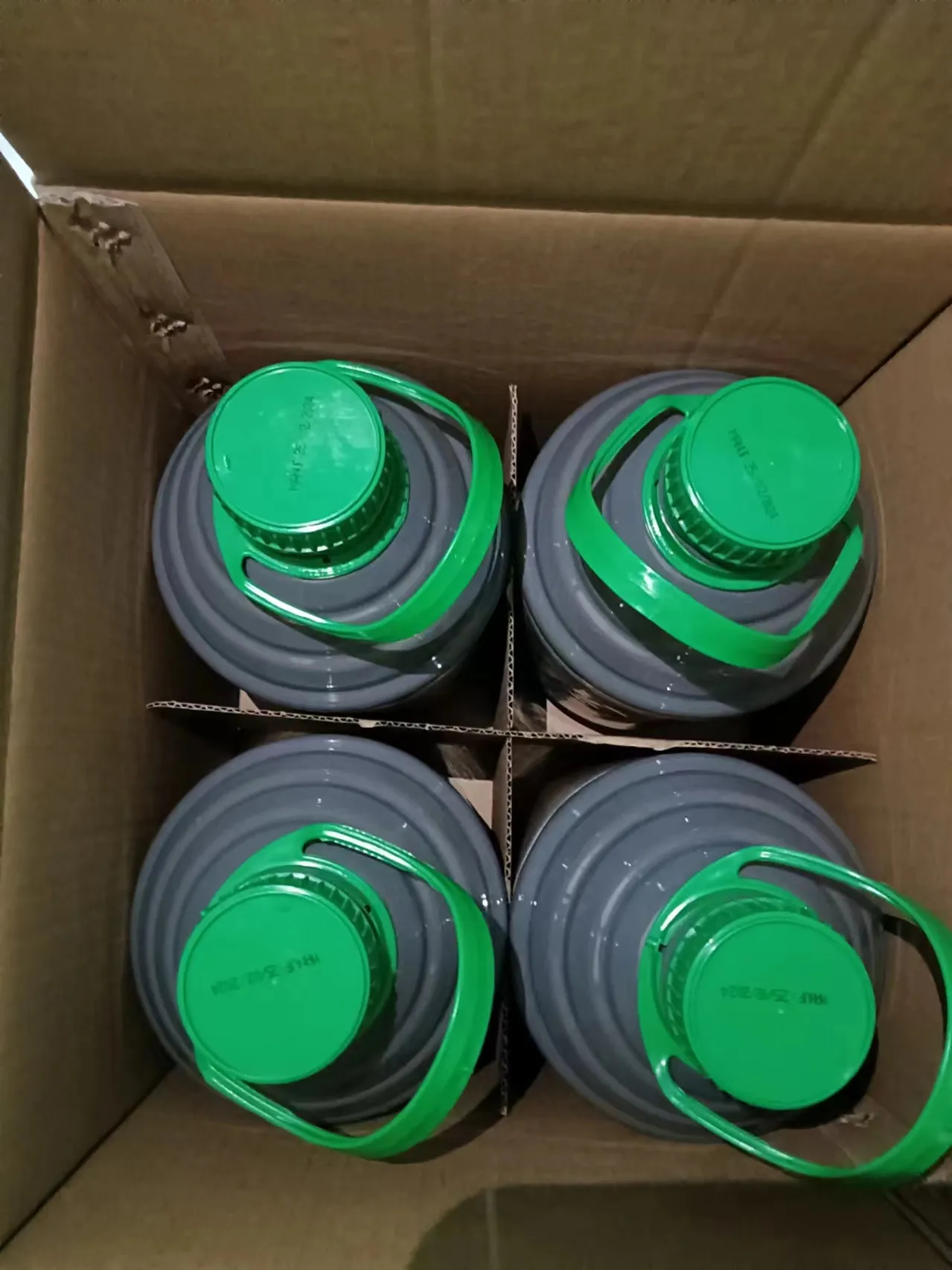
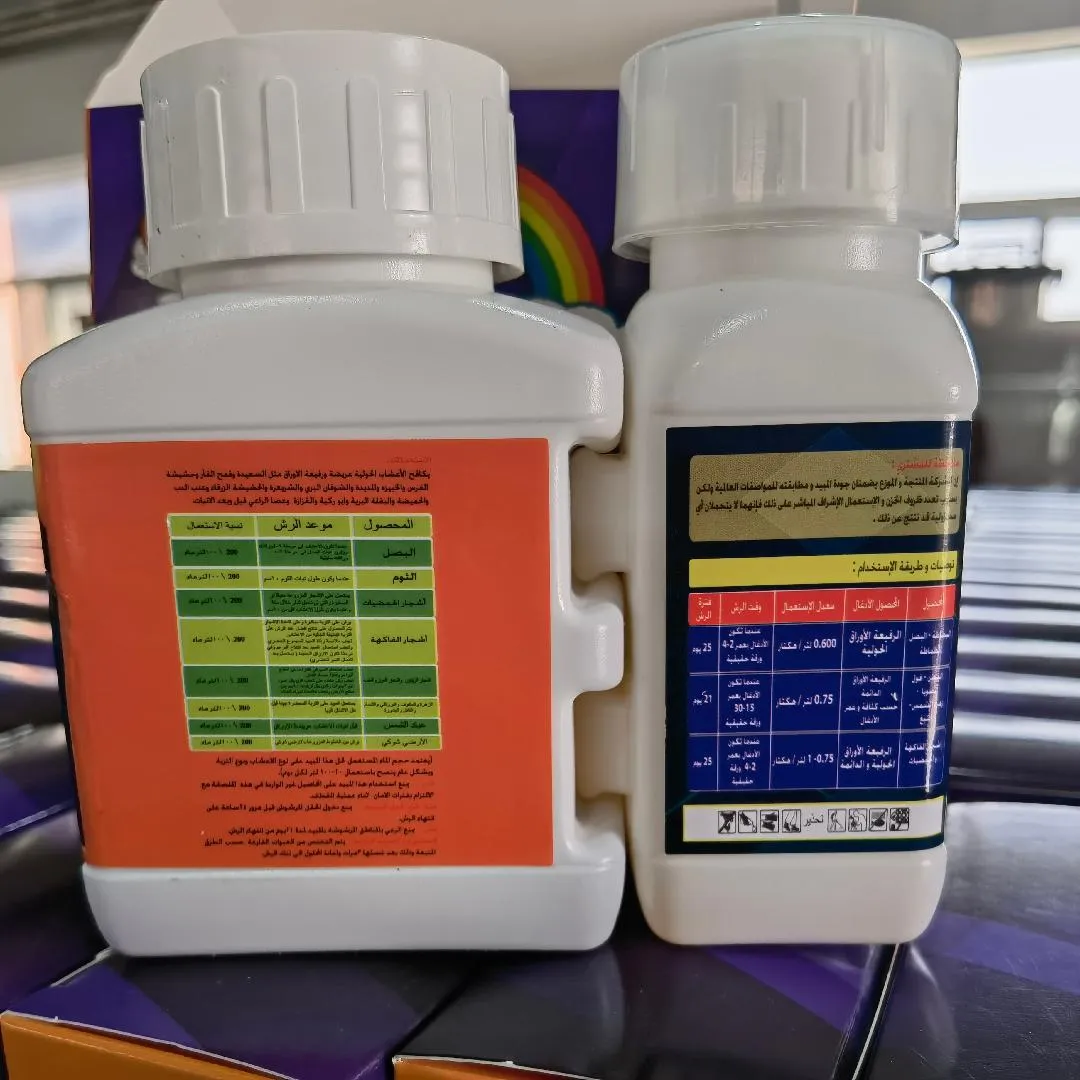


Quizalofop 5% EC + Oxyfluorfen 24% EC Herbicide
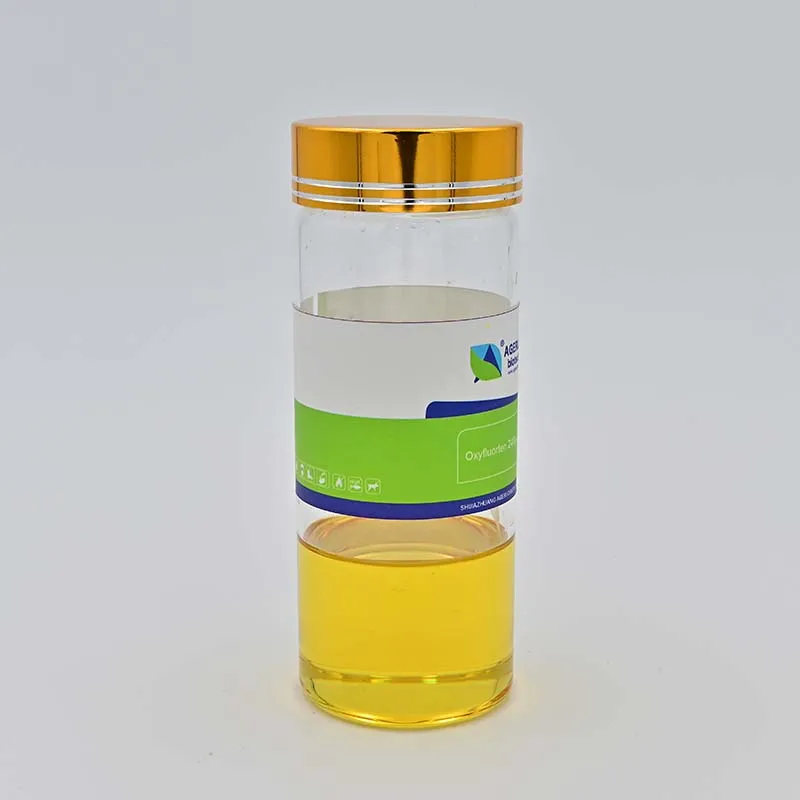
Quizalofop-P-Ethyl 5% + Oxyfluorfen 24% EC is a formulated emulsifiable concentrate (EC) containing two herbicidal ingredients with different modes of action. Quizalofop-P-Ethyl belongs to HRAC Group 1 and is primarily effective against susceptible grass weeds; Oxyfluorfen belongs to HRAC Group 14 and exhibits contact herbicidal activity as well as some residual soil activity.
The technical value of this combination lies in evaluating whether post-emergence control of grass weeds can be complemented by the management of specific broadleaf weeds and early-emerging weeds within a single formulation. However, since the optimal application timing, rate of action, and crop selectivity of the two ingredients are not entirely identical, the actual efficacy of a fixed-formulation product cannot be determined solely based on its theoretical herbicidal spectrum.
POMAIS provides procurement and supply consulting services for this formulation to pesticide importers, distributors, brand owners, and registration companies, including formulation quality assessment, bulk supply, customized packaging, and technical documentation support. The specific commercial availability, registered uses, and field performance of the 5% + 24% EC fixed formulation should be confirmed based on actual product data.
- Designed for Professional Buyers & Bulk Orders
- We support custom packaging, labeling, and formulation to meet your market needs.
- Export wholesale inquiries only.
- Please include destination country, business type (importer/distributor/registrant), and expected volume.
- Retail requests will not be processed.

About Quizalofop 5% EC + Oxyfluorfen 24% EC Herbicide
Quizalofop-P-Ethyl + Oxyfluorfen EC Product Specifications
This product specification includes two active ingredients: Quizalofop-P-Ethyl and Oxyfluorfen, which belong to the Aryloxyphenoxypropionate (FOP) and Diphenyl Ether classes of herbicides, respectively.
Since the two ingredients have different modes of action, they are theoretically capable of controlling different types of susceptible weeds.
However, a fixed-formulation product must have its own formulation quality standards and registration status; the product data for the two individual formulations cannot be directly used as technical evidence for the entire formulation.
| Technical Parameters | Specifications |
|---|---|
| Product Name | Quizalofop-P-Ethyl 5% + Oxyfluorfen 24% EC |
| Chinese Name | Quizalofop-P-Ethyl 5% + Oxyfluorfen 24% Emulsifiable Concentrate |
| Active Ingredient 1 | Quizalofop-P-Ethyl |
| Content 1 | 5% |
| CAS Number 1 | 100646-51-3 |
| Chemical Family 1 | Aryloxyphenoxypropionate (FOP) |
| HRAC Classification 1 | Group 1 |
| Mode of Action 1 | ACCase Inhibitor |
| Active Ingredient 2 | Oxyfluorfen |
| Content 2 | 24% |
| CAS Number 2 | 42874-03-3 |
| Chemical Family 2 | Diphenyl Ether |
| HRAC Classification 2 | Group 14 |
| Mode of Action 2 | PPO Inhibitor |
| Total Nominal Content | 29%; method of content expression to be confirmed |
| Formulation Type | Emulsifiable Concentrate (EC) |
| Main Activity | Post-emergence activity against grass weeds; contact action and specific soil residual activity |
| Registered Crops | Subject to actual registered label |
| Target Weeds | Subject to specific formulation trials and registration scope |
| Supply Model | Bulk Supply, OEM/ODM, Private Label |
| Technical Documentation | COA, SDS, TDS, and available registration support materials |
Does 5% + 24% equal 290 g/L?
This conversion cannot be made directly.
If 5% and 24% represent mass fractions (w/w), the corresponding active ingredient contents are 50 g/kg and 240 g/kg, respectively, with a total nominal active ingredient content of 290 g/kg.
However, g/L refers to the mass of the active ingredient per unit volume of the formulation, which is not exactly the same as g/kg.
To convert mass fractions to g/L, you must also know the actual density of the EC formulation and the corresponding measurement conditions.
Therefore, importers should clarify whether the procurement specifications are expressed in w/w, w/v, or g/L, and ensure consistency across labels, COAs, TDSs, and registration documents.
What is the difference between a fixed-formulation EC and a single-formulation combination?
If Quizalofop-P-Ethyl 5% EC and Oxyfluorfen 24% EC are packaged and sold separately, they are considered two distinct single-formulation products.
In contrast, a fixed premix such as Quizalofop-P-Ethyl 5% + Oxyfluorfen 24% EC consists of two active ingredients contained within a single commercial formulation.
These two product models should not be confused.
| Comparison | Fixed Premix EC | Two Separate EC Products |
|---|---|---|
| Commercial Product | Single Fixed Premix SKU | Two Separate SKUs |
| Active Ingredients | Two ingredients contained in the same formulation | Exist separately in different formulations |
| Quality Specification | Established for the entire premixed EC | Each uses its own individual formulation standard |
| Registration | Registration for the premixed product | Registration for each individual formulation and applicable tank-mixing regulations |
| Application Rate | Determined by the fixed-formulation label | Determined by each product’s authorized label and barrel-mixing regulations |
| Packaging | Single-product packaging | Two sets of separate packaging |
| Technical Documentation | Corresponds to the fixed-formulation product | Provided separately for both products |
If the customer requires the two single-ingredient products to be sold as a combination, this must be clearly specified in the inquiry rather than purchasing them directly under the fixed-formulation product designation.
How Does Quizalofop-P-Ethyl + Oxyfluorfen Work?
This formulation involves two distinct mechanisms of herbicidal action.
Quizalofop-P-Ethyl primarily targets the fatty acid synthesis process in susceptible grass weeds, while Oxyfluorfen primarily affects the normal cellular functions of susceptible plants by inhibiting PPO.
Although the two have different targets, this does not necessarily mean that a synergistic effect will occur when they are actually mixed.
Quizalofop-P-Ethyl – HRAC Group 1
Quizalofop-P-Ethyl is an ACCase inhibitor that primarily interferes with the fatty acid synthesis process in susceptible grass weeds by inhibiting Acetyl-CoA Carboxylase (ACCase).
Fatty acid synthesis is essential for cell membrane formation and normal growth.
When ACCase is inhibited, the growth of susceptible grass weeds is gradually affected, potentially leading to symptoms such as damage to the growing point, leaf discoloration, and tissue necrosis.
Quizalofop-P-Ethyl is a post-emergence systemic herbicide that is typically absorbed through the leaves and translocates to the growing tissues of susceptible grass weeds.
It does not cause widespread leaf scorch immediately after application.
The rate of weed death may vary depending on the weed species, growth stage, environmental conditions, and resistance status.
If customers require a product specifically for controlling single-species grass weeds, they may refer to POMAIS’s Quizalofop-P-Ethyl Herbicide product specifications.
Oxyfluorfen – HRAC Group 14
Oxyfluorfen is a protoporphyrinogen oxidase (PPO) inhibitor.
It interferes with processes in susceptible plants related to the biosynthesis of chlorophyll and heme, leading to the accumulation of phytotoxic porphyrin intermediates.
Under light conditions, these substances can cause oxidative damage, affecting cell membrane integrity and thereby producing contact herbicidal activity.
In sensitive weeds that have already emerged, oxyfluorfen may cause localized leaf necrosis.
In some approved pre-emergence application schemes, it can also affect the normal emergence and early growth of sensitive weed seedlings through its activity at the soil surface.
However, oxyfluorfen should not be described as a herbicide capable of completely killing the underground organs of all perennial weeds through long-distance systemic translocation.
Its residual soil activity is similarly influenced by soil conditions, application rates, environmental factors, and specific formulations; therefore, a fixed number of days of protection cannot be universally guaranteed.
Practical Significance of the Combination of Two Mechanisms
From the perspective of mode of action:
Quizalofop-P-Ethyl is primarily used against sensitive grass weeds that have already emerged.
Oxyfluorfen, under specific registration conditions, can provide contact or residual soil activity against certain susceptible broadleaf weeds and early-emerging weeds.
This division of roles gives the two ingredients a certain potential for complementarity.
However, to determine the true effectiveness of a fixed formulation, two issues must be considered.
First, whether both active ingredients can exert sufficient activity during the same application window.
Second, whether the two active ingredients and their respective formulation adjuvants will affect each other’s efficacy or crop safety.
Therefore, this combination should not be promoted as having a “proven synergistic effect” based solely on HRAC Groups 1 and 14.
Target Weeds: Grass and Broadleaf Weed Activity
Quizalofop-P-Ethyl and Oxyfluorfen primarily target different types of susceptible weeds.
For markets facing issues with mixed populations of grass and broadleaf weeds, this combination may have commercial development potential.
However, sensitivity varies among different weeds at different growth stages, and the effective targets for a fixed formulation must be confirmed through actual registration and trial data.
| Weed Group | Representative Weeds | Key Active Ingredients | Technical Applications |
|---|---|---|---|
| Annual Grasses | Barnyardgrass, Foxtail, Crabgrass | Quizalofop-P-Ethyl | Post-emergence control of susceptible grass weeds |
| Other Grass Weeds | Wild Oats and certain other grass weeds | Quizalofop-P-Ethyl | To be confirmed based on variety, growth stage, and resistance |
| Perennial Grasses | Johnsongrass, etc. | Quizalofop-P-Ethyl | Requires evaluation based on growth stage and regrowth potential |
| Annual Broadleaf Weeds | Amaranthus spp., Purslane, etc. | Oxyfluorfen | Contact or early weed control under registration conditions |
| Early-emerging weeds | Some susceptible annual weeds | Oxyfluorfen | Pre-emergence soil residual or early post-emergence use |
| Sedges | Cyperus spp., etc. | Not included as a uniformly guaranteed target | Specific registration and control efficacy must be verified |
The weed names listed above are used to illustrate potential control applications for the two active ingredients and do not imply that this fixed-formulation EC has confirmed field control efficacy against all listed weeds.
Annual Grass Weeds
Annual grass weeds are a key application area for Quizalofop-P-Ethyl.
For example, foxtail, crabgrass, and some barnyardgrass species may be affected by ACCase inhibitors under susceptible conditions.
However, weed susceptibility cannot be determined solely based on the weed name.
In some regions, grass weeds have already developed resistance to ACCase inhibitors.
Therefore, when selecting products containing Quizalofop-P-Ethyl, buyers should be aware of the major grass weed species in their area and whether HRAC Group 1 resistance is present.
Annual Broadleaf Weeds
Oxyfluorfen may be used in certain registered applications to control susceptible annual broadleaf weeds.
For example, certain Amaranthus, Portulaca, and other early-season weed populations may fall within the control spectrum of the corresponding products.
However, the contact activity of oxyfluorfen is influenced by factors such as the weed growth stage and spray coverage.
If weeds have grown larger or if there is a significant amount of growing tissue that has not come into contact with the herbicide, actual control efficacy may vary.
For soil residual applications, soil texture, organic matter, moisture, and other environmental conditions must also be considered.
Mixed Weed Populations
In agricultural production, both grass and broadleaf weeds may be present simultaneously in a single field.
If the optimal control periods for both weed types are similar, and the fixed formulation has appropriate registration and trial support, a mixed-formulation product may offer some convenience for weed management.
However, if grass weeds have already grown large while broadleaf weeds are still in the pre-emergence stage, the optimal application times for the two active ingredients may not fully align.
Therefore, the suitability of a fixed formulation for local mixed weed populations cannot be determined solely based on a weed list.
Distributors who need to plan product portfolios for different weed categories can further refer to POMAIS’s Oxyfluorfen Herbicide single-component page to understand the characteristics and application limits of PPO herbicides.
Crop Applications and Selectivity
Crop safety is one of the most critical technical review items for this formulation.
Quizalofop-P-Ethyl is typically used in crop systems where it exhibits appropriate selectivity, whereas Oxyfluorfen may cause damage to sensitive crop tissues upon contact with the spray solution.
Therefore, one cannot simply assume that because two individual active ingredients are approved for use on a particular crop, this fixed-formulation mixture can be used safely without further consideration.
| Crop or Production System | Key Evaluation Criteria | Procurement and Registration Considerations |
|---|---|---|
| Soybean | Post-emergence control of grass weeds and contact phytotoxicity from Oxyfluorfen | Crop safety and registration data required for the fixed formulation |
| Peanut | Selectivity of the formulation at different growth stages | The application conditions for the two individual active ingredients cannot be directly applied |
| Onion | Oxyfluorfen application timing and crop tissue sensitivity | Specific growth stages and application methods must be confirmed |
| Garlic | Weed growth stages and crop safety | Registration details, formulation, and phytotoxicity trials must be verified |
| Cotton | Targeted Spraying and Crop Growth Stages | Do not assume that post-emergence spraying across the entire field is safe |
| Tomato | Risks during the seedling stage, after transplanting, and from foliar contact | Confirm the specific crop system and approved uses |
| Orchards | Targeted applications under trees and between rows, etc. | Avoid contact between the product and sensitive green tissues |
| Sugarcane | Sensitivity of grass crops to ACCase inhibitors | Not recommended for general, field-wide selective use |
These crops represent market opportunities requiring further verification and do not constitute the list of registered crops for this fixed formulation.
Soybean and Peanut
Soybean and peanut are broadleaf crops of commercial value.
Under certain approved uses, Quizalofop-P-Ethyl can be used for the management of sensitive grass weeds in fields of relevant broadleaf crops.
However, oxyfluorfen has contact activity and may cause phytotoxicity to certain crop tissues.
Therefore, even if a crop exhibits adequate selectivity toward quizalofop-P-ethyl, this does not guarantee that the crop can safely tolerate all application conditions when fixed-formulated with oxyfluorfen.
For the soybean and peanut markets, particular attention should be paid to confirming the crop growth stage, application method, specific formulation, and field safety trials.
Onions and Garlic
Mixed infestations of grass and broadleaf weeds are common in onion and garlic production.
However, the use of Oxyfluorfen on onion and garlic crops typically involves specific restrictions regarding growth stage, application method, and crop damage.
For these markets, importers cannot simply promote the product as “selectively safe throughout the entire growth stage.”
Contact herbicides may cause varying degrees of crop damage, particularly when seedlings are more sensitive or environmental conditions are unfavorable.
If developing the onion and garlic market is a priority, verify the technical specifications of locally approved products first, and then determine whether fixed-formulation specifications are necessary.
Cotton and Tomato
The selection of herbicides for cotton and tomatoes typically depends on the specific production system.
For example, targeted spraying, inter-row application, and full-field foliar spraying represent different modes of herbicide exposure.
Oxyfluorfen may cause localized scorching when it comes into contact with the green tissue of sensitive crops.
Therefore, if a product is intended for use on cotton or tomatoes, it must be clearly specified whether it is for soil treatment, targeted application, or another fully validated registered application method.
The application history of the two individual active ingredients cannot be directly used as a guarantee of crop safety for the entire fixed-formulation product.
Orchards and Sugarcane
In orchards, certain registered herbicides may be used to manage weeds through directed applications under trees or between rows.
However, this method of application does not mean the herbicide can be sprayed directly onto young leaves, tender shoots, or other sensitive green tissues of fruit trees.
Special caution is required for sugarcane.
Sugarcane belongs to the Poaceae (grass) family, and Quizalofop-P-Ethyl primarily targets sensitive grass species.
Therefore, in the absence of specific tolerance, directed application, or clear registration grounds, this fixed formulation should not be recommended as a post-emergence selective herbicide for the entire sugarcane field.
Importers seeking to address weed management needs across different crops can refer to our Crop Weed Management Solutions to evaluate other product options based on crop type, weed spectrum, and mode of action.
Application Timing: Pre-Emergence and Post-Emergence Considerations
The optimal application windows for the two active ingredients may not be the same, which is an issue that must be addressed in the development of fixed-rate formulations.
Post-emergence activity of Quizalofop-P-Ethyl
Quizalofop-P-Ethyl primarily targets sensitive grass weeds that have already emerged and are in an appropriate growth stage.
If the target weeds have not yet emerged, Quizalofop-P-Ethyl cannot be described as the active ingredient primarily responsible for pre-emergence soil seed treatment.
For perennial grass weeds, their growth stage, underground regrowth capacity, and local resistance status must also be considered.
Pre-emergence and Early Post-emergence Activity of Oxyfluorfen
Oxyfluorfen exhibits contact activity and some residual soil activity.
In different registered products, it may be used for pre-emergence soil treatment or specific early post-emergence applications.
However, not all Oxyfluorfen formulations can be applied in the same manner across all crops.
Especially when crops have already emerged, the risk of contact phytotoxicity may become a key factor in determining the application window.
Can both ingredients perform optimally during the same period?
This cannot be directly guaranteed.
Suppose that grassy weeds in a field have already emerged, but most broadleaf weeds have not yet emerged; in this case, the two active ingredients may perform their respective roles related to post-emergence control and soil residual activity.
However, whether reliable control can be achieved during the same application window still depends on field trials of the fixed formulation, crop tolerance, and local registration.
Therefore, fixed formulations require verification of a common application window, rather than simply combining the optimal application periods of the two single-ingredient products into a single set of recommendations.
Application Rates and Label Requirements
The specific application rate for Quizalofop-P-Ethyl 5% + Oxyfluorfen 24% EC should be determined based on the registered label of the fixed formulation product.
The application rates of the two individual formulations—Quizalofop-P-Ethyl 5% EC and Oxyfluorfen 24% EC—must not be added together and used directly as application guidelines for the fixed-formulation product.
Why can’t the application rates of the two individual formulations be directly applied?
The two active ingredients in a fixed-formulation product are used in a fixed ratio.
When the application rate changes, the actual application rates of both ingredients change simultaneously.
However, different weed categories may exhibit varying sensitivities to the two active ingredients and require different effective doses.
Furthermore, the solvents, emulsifiers, and other adjuvants used in the complete formulation may alter the physical properties of the spray solution, its foliar activity, or crop safety.
Therefore, fixed-rate mixtures require independent formulation and application validation.
Key Parameters to Confirm Before Use
| Application Parameter | Items to Be Confirmed |
|---|---|
| Product Formulation | Confirmed 5% + 24% EC fixed formulation |
| Concentration Basis | w/w, w/v, or other legally permitted labeling methods |
| Target Crop | Approved crops and production systems |
| Target Weeds | Specific registered weeds and their sensitivity |
| Growth Stage | Applicable growth stages for crops and weeds |
| Application Method | Field-wide, spot treatment, or other approved application methods |
| Application Rate | Registered application rate for the fixed formulation |
| Spray Volume | Determined based on registration and spray equipment requirements |
| Rainfastness | Validation data for this formulation is required |
| PHI / REI | Follow the local registered label |
| Maximum Applications | Follow registration and resistance management requirements |
| Rotational Crop Restrictions | Determined based on pesticide residue and safety requirements for subsequent crops |
Is there a standardized rainfastness interval?
There are no universal values that can be directly applied to this specific formulation.
Quizalofop-P-Ethyl and Oxyfluorfen have different modes of action, and formulation, weather, and application conditions may also affect actual performance.
The fact that the product is an EC formulation does not guarantee complete rainfastness 4–6 hours after application.
If the actual product has corresponding rainfastness test data, this can be specified in the technical documentation based on validated conditions.
Herbicide Interaction and Resistance Management
Quizalofop-P-Ethyl belongs to HRAC Group 1, while Oxyfluorfen belongs to Group 14.
This indicates that the two active ingredients act on different biochemical targets.
However, there remain technical limitations that need to be clarified regarding the relationship between different combinations of modes of action and actual resistance management efficacy.
Can these two active ingredients mutually reduce the risk of resistance?
One cannot assume, based solely on the combination of HRAC Groups 1 and 14, that this mixture will necessarily reduce the risk of resistance in all target weeds.
For example:
For grass weeds primarily controlled by Quizalofop-P-Ethyl, if Oxyfluorfen does not provide an effective second mode of action under actual field conditions, this weed population may still be subject primarily to HRAC Group 1 selection pressure.
Similarly, for broadleaf weeds primarily controlled by Oxyfluorfen, Quizalofop-P-Ethyl generally does not automatically constitute an effective second mode of action.
Therefore, resistance management must consider whether both ingredients possess sufficient activity against the same target weed, rather than simply counting the number of HRAC groups present in the entire product.
Is there a possibility of antagonism?
In plant protection research, antagonistic effects—resulting in reduced control efficacy against grass weeds—have been observed when certain ACCase inhibitors are used in combination with specific broadleaf herbicides.
This does not prove that antagonism necessarily exists in this specific fixed formulation of Quizalofop-P-Ethyl and Oxyfluorfen.
However, it does illustrate that one cannot directly claim that the combination of these two ingredients will definitely improve control efficacy without actual field trials.
For fixed-formulation products under development, the actual performance of the single-component formulation versus the fixed formulation against target grass and broadleaf weeds should be compared to determine whether there is improved control efficacy, no significant effect, or antagonism.
How to Establish a Reasonable Resistance Management Plan?
Importers and professional distributors should consider:
- Major local grass and broadleaf weed species.
- History of use of HRAC Groups 1 and 14.
- Whether resistance to related herbicides exists.
- Whether the two ingredients exhibit adequate activity under actual field conditions.
- Whether they are suitable for rotation with products having different modes of action.
- Crop rotation, mechanical weeding, and other integrated weed management measures.
Fixed mixtures can be one option among herbicide product combinations, but they cannot replace long-term resistance monitoring and integrated management.
EC Formulation Quality Control
For this product, quality control of the EC formulation is a critical factor in determining whether the fixed mixture has commercial viability.
EC (Emulsifiable Concentrate) is typically formulated by dissolving the active ingredients in a suitable solvent and emulsifying system.
When used, the formulation must be mixed with water according to label instructions to form an emulsion that meets quality requirements.
For fixed EC products containing both Quizalofop-P-Ethyl and Oxyfluorfen, it is necessary to confirm that both active ingredients maintain the specified quality status within the complete formulation system.
What Should Be Checked in a Fixed EC Formulation?
| Quality Parameter | Technical Procurement Requirements |
|---|---|
| Quizalofop-P-Ethyl Content | Verify Actual Content and Identity of Active Ingredients |
| Oxyfluorfen Content | Confirm actual content |
| Concentration Basis | Specify expression method (e.g., w/w or g/L) |
| Appearance | Inspect appearance, uniformity, and visible abnormalities |
| Emulsion Characteristics | Examine emulsification and emulsion stability after adding water |
| Persistent Foam | Evaluate according to applicable standards |
| Relevant Impurities | Confirm according to actual product standards and regulations |
| Low-Temperature Stability | Examine the formulation’s condition under low-temperature conditions |
| Accelerated Storage Stability | Examine content and physical properties before and after storage |
| Packaging Compatibility | Examine compatibility of containers, caps, and sealing materials |
| Batch COA | Verify the quality of specific batches |
The above quality parameters should be determined based on the actual formulation, applicable test methods, and procurement contracts.
It is not possible to claim that all parameters have been validated without experimental data.
Why does a fixed formulation require separate stability validation?
The fact that two active ingredients can each be formulated into an EC does not mean they can form a stable fixed-formulation EC in any proportion.
The dissolved state, emulsification properties, low-temperature stability, and changes after storage of the mixture may all differ from those of the original individual formulations.
In addition, certain formulation excipients may also affect the performance of the active ingredients during application.
Therefore, prior to formal commercial procurement, priority should be given to confirming that this 5% + 24% fixed formulation already possesses the corresponding formulation quality data.
Why is Batch Consistency Important?
For importers operating their own pesticide brands over the long term, the most important factor is not merely passing a single sample test.
Subsequent commercial batches must also consistently meet requirements for active ingredient content, emulsion performance, storage stability, and packaging standards.
POMAIS can discuss sample validation, quality documentation, and batch acceptance criteria based on the verified formulation and order requirements.
Crop Safety and Environmental Considerations
For fixed-formulation products containing Quizalofop-P-Ethyl + Oxyfluorfen, crop selectivity and risks to non-target plants should be evaluated as separate review items.
In particular, Oxyfluorfen exhibits contact herbicidal activity, and inappropriate contact with the spray solution may damage sensitive crop tissues.
Risk of Crop Damage
Crop safety may be affected by the following factors:
- Crop type and variety.
- Crop growth stage.
- Application method and spray site.
- Actual application rate of the active ingredients.
- Formulation adjuvant system.
- Weather conditions and plant growth status.
- Interactions with other pesticides or adjuvants.
Therefore, one cannot directly conclude that a fixed-formulation product is safe for all broadleaf crops based solely on the historical use of the two active ingredients in single-component products.
Spray Drift and Non-Target Plants
The EC formulation itself does not guarantee a reduction in spray drift.
The actual risk of drift depends on factors such as equipment, nozzles, droplet size, wind speed, and application conditions.
Since both active ingredients possess herbicidal activity, spray drift onto sensitive non-target plants should be avoided.
Specific buffer zones, spraying requirements, and environmental restrictions should be determined based on the registered label for the target market.
Soil Residual Activity and Rotational Crops
Oxyfluorfen exhibits soil residual activity under certain application conditions.
However, its persistence and actual biological activity are influenced by soil properties, environmental conditions, and application rates.
Therefore, it is not possible to simultaneously claim that a fixed formulation has long-term soil residual activity while making a general assertion that there are no safety risks for subsequent crops.
For markets requiring crop rotation, local registration requirements, sensitive subsequent crops, and corresponding rotation restrictions should be confirmed.
Product Safety Data Sheet
The hazard classification, operational precautions, environmental toxicity, and transportation requirements for this fixed formulation should be based on the SDS for the complete formulation and relevant regulatory documents.
The toxicological conclusions for two individual formulations cannot be directly applied to demonstrate that a fixed-formulation EC has low skin irritation, low inhalation risk, or other specific safety advantages.
For properties lacking actual test data, commercial claims such as “absolutely safe” or “environmentally friendly” should not be used.
Registration and Market Requirements
The registration status of Quizalofop-P-Ethyl and Oxyfluorfen may vary by country.
Even if both active ingredients are legally registered separately, it cannot be directly assumed that the 5% + 24% EC fixed-formulation product is eligible for sale and use in the same country.
Importers must verify the approval status of the active ingredients and the product registration requirements for the fixed formulation separately.
What needs to be confirmed for the registration of fixed-formulation products?
| Registration Item | Key Verification Points |
|---|---|
| Active Ingredient Approval | Approval status of both active ingredients in the target country |
| Formulation Identity | 5% + 24% EC fixed formulation |
| Concentration Basis | Consistency between the expressed active ingredient content and the registered formulation |
| Crop Registration | Crops actually approved |
| Weed Claims | Specific weeds approved for control |
| Application Method | Permitted application methods |
| Crop Safety | Safety for specific crops and growth stages |
| Residue Requirements | MRLs and related residue regulations |
| Environmental Requirements | Non-target Plants, Drift, and Other Restrictions |
| Registration Documents | Technical Data Available for the Actual Product |
For clients with existing fixed-formulation registrations, priority should be given to confirming whether the purchased product is consistent with the registration certificate and relevant quality specifications.
For customers preparing to pursue new registrations, they should first assess the approval requirements of the target market and determine whether the actual formulation, quality data, and field trial data meet the project’s needs.
Can the registrations of two single-ingredient products directly replace a fixed-formulation registration?
Generally, this cannot be assumed directly.
Two single-ingredient products may each have their own registrations, but processing them into a single fixed-formulation product may involve different requirements regarding quality, safety, crop phytotoxicity, and field application data.
The specific registration pathway is determined by the competent authorities of the target country and its current regulations.
Similarly, the fact that a country permits a specific tank mix of two registered products does not automatically mean that the corresponding fixed-formulation product has also been registered.
Packaging and OEM/ODM Bulk Supply
POMAIS provides liquid herbicide procurement and packaging partnership services to professional pesticide importers, distributors, and brand clients.
For this fixed-formulation EC, the packaging must simultaneously meet the compatibility, storage stability, and transportation requirements of the complete formulation, as well as the labeling requirements of the target market.
Packaging Options
| Packaging Type | Available Specifications | Key Considerations |
|---|---|---|
| Small Bottles | 100 mL, 250 mL, 500 mL | Container compatibility and seal integrity |
| Standard Bottles | 1 L | Labeling, metering, and shipping requirements |
| Larger Containers | 5 L, 10 L, 20 L | Container strength and storage stability |
| Bulk Packaging | Approved large-capacity drums | Packaging Compatibility and Logistics Conditions |
| Custom Packaging | To be discussed based on actual orders | Target Market Regulations and Branding Requirements |
The specifications listed above represent potential packaging options open for discussion. Actual availability and suitable materials must be confirmed based on the specific EC formulation and order requirements.
Private Label Packaging
For importers with their own pesticide brands, the following services can be discussed based on actual supply conditions:
- Custom brand labeling and packaging design.
- Various commercial packaging volumes.
- Multilingual labels and outer carton information.
- Sample packaging and commercial order packaging.
- Batch codes and product traceability.
- Export shipping and delivery arrangements.
The active ingredient identity, concentration, formulation, crop uses, and safety information on product labels must be consistent with the registration documentation approved for the target market.
Private label customization does not replace product registration, nor can it arbitrarily expand the scope of applicable crops and weeds.
Technical Documentation
Depending on the specific product and project requirements, we can discuss providing or coordinating the following materials.
| Document | Main Purpose |
|---|---|
| Certificate of Analysis (COA) | Batch Quality Parameter Confirmation |
| Safety Data Sheet (SDS) | Formulation safety and transportation information |
| Technical Data Sheet (TDS) | Product technical parameters |
| Product Specification | Quality standards and acceptance requirements |
| Emulsion Stability Information | Emulsion Performance and Formulation Quality Assessment |
| Storage Stability Information | Support for storage and registration evaluation to the extent possible |
| Packaging Information | Packaging Compatibility and Export Requirements |
| Registration Support Documents | Availability Confirmation Based on Actual Data |
If the customer requires field trials for specific formulations, crop safety studies, analytical methods, or other registration data, a detailed list must be provided prior to purchase.
Standard COAs, SDSs, and TDSs cannot be directly equated with a complete registration dossier for a fixed-formulation product.
What Should Importers Confirm Before Ordering?
For Quizalofop-P-Ethyl 5% + Oxyfluorfen 24% EC, buyers should first confirm whether they need a fixed-formulation product or a combination of the two individual formulations.
This distinction directly affects pricing, product quality standards, packaging, and registration documentation.
If the customer already holds a local registration certificate for a fixed-formulation product, we recommend prioritizing verification of the consistency between the actual product specifications and the registration documentation.
If the customer plans to develop a new fixed-formulation product, they should first assess the common application window for both ingredients, crop safety, and the feasibility of registration in the target market.
| Buyer Requirements | Recommended Information |
|---|---|
| Product Type | Pre-formulated EC or combination of two single-ingredient products |
| Destination Country | Target Import Country |
| Required Content | 5% + 24% and specific concentration expressions |
| Formulation | EC |
| Target Crop | Planned target crops |
| Target Weeds | Major local grass and broadleaf weeds |
| Registration Status | Registered, in the process of registration, or under development |
| Packaging Requirements | Packaging specifications, brand, and label language |
| Expected Purchase Volume | Estimated Purchase Volume and Annual Demand |
| Technical Documents | Required COA, SDS, TDS, and Other Documentation |
| Delivery Schedule | Estimated Purchase and Delivery Timelines |
For distributors preparing to enter new markets, product development should not be driven solely by the goal of expanding the weed spectrum.
If there are significant differences in the optimal application windows for two types of weeds in a given region, or if crops are particularly sensitive to contact phytotoxicity from Oxyfluorfen, then using the two active ingredients as separate single-component formulations may be more suitable for certain markets than a fixed mixture.
Selections should be based on actual registration status, field requirements, and product quality data.
Frequently Asked Questions
What Is Quizalofop-P-Ethyl 5% + Oxyfluorfen 24% EC?
This is an EC formulation designed with Quizalofop-P-Ethyl and Oxyfluorfen as active ingredients in a 5% + 24% formulation.
The two ingredients belong to HRAC Group 1 and Group 14, respectively.
The specific commercial availability, registration status, and scope of application for a fixed formulation must be confirmed based on actual product data.
Are Quizalofop-P-Ethyl and Oxyfluorfen in Different Herbicide Groups?
Yes.
Quizalofop-P-Ethyl belongs to HRAC Group 1 and is an ACCase inhibitor.
Oxyfluorfen belongs to HRAC Group 14 and is a PPO inhibitor.
Although the two have different modes of action, this does not automatically imply that the fixed mixture exhibits synergistic effects or can prevent resistance development in all weeds.
Can This Combination Control Grass and Broadleaf Weeds?
Each ingredient exhibits activity against susceptible grasses and specific broadleaf weeds, respectively.
However, the actual weed control spectrum of this fixed-formulation product should be determined by the registered label and field trials.
The weed targets listed separately for the two individual ingredients cannot be directly considered as the full range of approved uses for the fixed-formulation product.
Is Quizalofop-P-Ethyl a Pre-Emergence Herbicide?
Quizalofop-P-Ethyl is primarily used on sensitive grass weeds that have already emerged and exhibits post-emergence systemic activity.
It should not be regarded as the ingredient in this fixed combination product that provides the primary pre-emergence soil residual activity.
Does Oxyfluorfen Have Residual Soil Activity?
Oxyfluorfen exhibits residual soil activity under certain registered uses and can affect the emergence and early development of certain susceptible weeds.
However, actual residual efficacy is influenced by application rate, soil properties, and environmental conditions; therefore, a fixed number of days of control cannot be uniformly guaranteed.
Is This Herbicide Safe for Soybeans and Peanuts?
It cannot be concluded that this fixed-formulation product is definitely safe for soybeans and peanuts based solely on the historical use of the two active ingredients individually.
The target crops, growth stages, application methods, actual formulation, and local registrations must also be verified.
In particular, since oxyfluorfen has contact herbicidal activity, the risk of phytotoxicity to sensitive crop tissues must be considered.
Can This Product Be Used on Onions and Garlic?
Whether this product can be used on onions and garlic depends on the actual registration of the fixed-formulation product and crop safety trials.
Oxyfluorfen has a history of use in the management of certain onion and garlic crops, but the application timing and crop sensitivity may be subject to strict restrictions.
The application instructions for the two individual active ingredients cannot be directly used as guidelines for the fixed-formulation mixture.
Can It Be Used in Sugarcane?
This formulation cannot be generally recommended as a selective herbicide for whole-field application on sugarcane.
Sugarcane belongs to the Poaceae family, and Quizalofop-P-Ethyl exhibits herbicidal activity against susceptible Poaceae plants.
Unless there is clear evidence of specific tolerance, targeted application, or other approved specific uses, the risk of crop phytotoxicity must be given high priority.
Does Quizalofop-P-Ethyl + Oxyfluorfen Have Synergistic Activity?
Different modes of action do not automatically indicate synergistic effects.
If it is necessary to demonstrate that this fixed mixture has a combined control efficacy exceeding that expected from the individual ingredients, this should be verified through appropriate trials.
Antagonism may also occur when certain ACCase inhibitors are mixed with broadleaf herbicides; therefore, actual formulations must undergo efficacy and crop safety evaluations.
Can the Two EC Products Be Tank-Mixed?
Whether two separate EC single-ingredient products can be tank-mixed in the field must be determined based on the actual product labels, local regulations, and compatibility data.
A fixed-formulation EC product and two single-ingredient products temporarily mixed in a spray tank do not constitute the same product.
The application rates of the two single-ingredient products cannot be simply added together to determine the recommended application rate for the fixed-formulation EC product.
What Is the Recommended Application Rate?
There is no single application rate for this fixed formulation that is universally applicable to all countries, crops, and weeds.
The rate should be determined based on the specific registered product, target weeds, and crop safety requirements.
It is not recommended to use the previously listed application rates for the individual formulations—Quizalofop-P-Ethyl 5% EC and Oxyfluorfen 24% EC—as general application guidelines for this mixture.
How Long Does the Product Remain Effective?
Actual effectiveness is influenced by factors such as target weeds, application timing, formulation quality, environmental conditions, and the residual activity of Oxyfluorfen in the soil.
No uniform promise can be made regarding the rapid control of all weeds, nor can a fixed duration of soil residual efficacy be guaranteed.
Relevant performance must be based on actual formulation trials and the registered label.
Does the EC Formulation Reduce Spray Drift?
The EC formulation itself does not inherently reduce spray drift.
The actual risk of drift depends on the spray nozzle, droplet size, equipment, weather conditions, and application method.
Protection of non-target plants and spray restrictions must be followed in accordance with the product’s registered label.
What Quality Parameters Should Buyers Check?
Importers should focus on verifying the individual concentrations of the two active ingredients, the method of concentration expression, emulsion stability, low-temperature and storage stability, relevant impurities, and packaging compatibility.
Fixed-formulation products must have their own quality standards; the COAs for the two individual ingredients cannot be used directly to substitute for the quality documentation of the entire formulation.
Can POMAIS Supply This Formulation with Private Label Packaging?
POMAIS can discuss bulk purchasing, OEM/ODM packaging, and multilingual labeling based on actual fixed-formulation supply capacity, target market requirements, and order conditions.
Specific MOQs, packaging, production lead times, and the scope of documentation must be confirmed on a project-by-project basis.
What Documents Can POMAIS Provide?
Depending on the specific product and procurement project, POMAIS can provide or coordinate the following: COAs, SDSs, TDSs, product specifications, packaging information, and available registration support documentation.
If a customer requires data on formulation stability, crop safety, or field efficacy for a fixed formulation, this must be explicitly requested prior to project initiation.
Request Quizalofop-P-Ethyl + Oxyfluorfen EC Specifications and Quotation
If you are looking for a supplier of the fixed formulation Quizalofop-P-Ethyl 5% + Oxyfluorfen 24% EC, or wish to evaluate the feasibility of developing this combination in your local market, POMAIS can discuss product specifications, quality documentation, and packaging solutions based on your specific needs.
We primarily provide bulk procurement and export partnership services to professional pesticide importers, distributors, wholesalers, brand owners, and registration companies.
For this product, we recommend confirming the following prior to issuing a formal quotation: the status of the fixed formulation, registration requirements in the target country, crop safety, and any required technical documentation.
Please provide:
- Destination Country: Target import country.
- Required Product: Fixed-formulation EC or separate procurement of the two single-ingredient products.
- Active Ingredient Content: 5% + 24% and the desired method of expressing the concentration.
- Target Crop: Crop markets for which sales are planned.
- Target Weeds: Primary grass and broadleaf weeds.
- Registration Status: Registered, pending registration, or under evaluation.
- Packaging Requirements: Package size, brand, and label language.
- Expected Purchase Volume: Estimated purchase quantity.
- Technical Documents: Required COA, SDS, TDS, and other specific documentation.
- Delivery Schedule: Planned procurement and delivery dates.
If your market faces significant ACCase resistance, crop phytotoxicity risks, or mismatched application windows, please also provide details on local weed management practices so we can further discuss more suitable product procurement options.
Contact POMAIS for Quizalofop-P-Ethyl + Oxyfluorfen Supply
We will confirm a feasible procurement partnership plan for you based on actual product data, formulation supply capabilities, quality requirements, and target market regulations.
Contact us!
We will reply to you within 24 hours on business days!