
Cyhalofop-Butyl 250 g/L + Quinclorac 120 g/L + Bensulfuron-Methyl 130 g/L OD
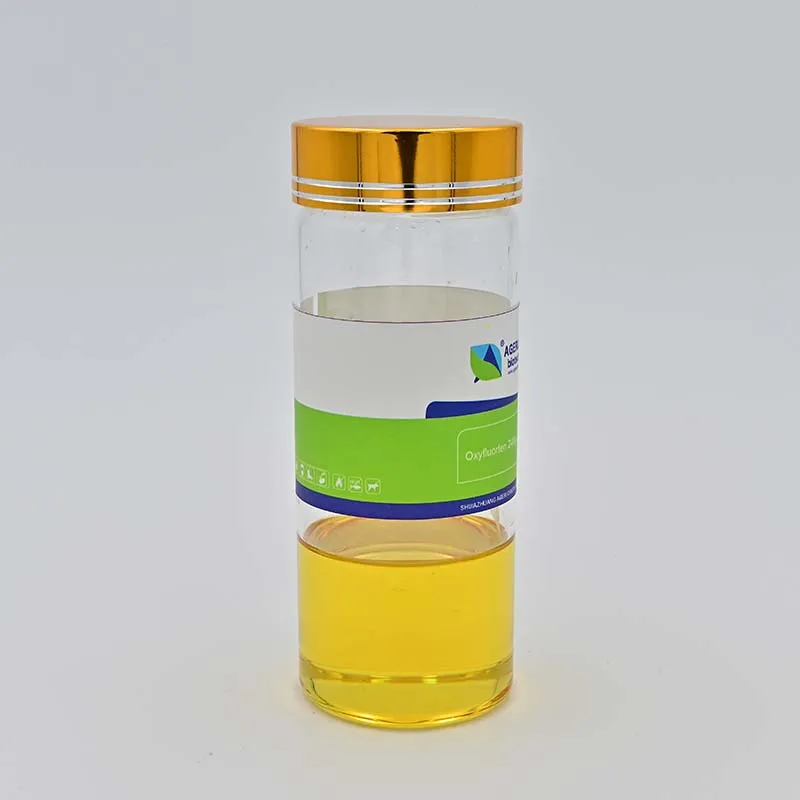
POMAIS Cyhalofop-Butyl 250 g/L + Quinclorac 120 g/L + Bensulfuron-Methyl 130 g/L OD is a high-load post-emergence rice herbicide developed for mixed populations of grass, sedge and broadleaf weeds.
Cyhalofop-Butyl provides the main activity against annual grass weeds. Quinclorac reinforces barnyardgrass control and adds activity against selected broadleaf weeds, while Bensulfuron-Methyl extends the spectrum toward sedges and broadleaf species.
With a total active ingredient content of 500 g/L, this oil dispersion formulation is positioned for importers, distributors, registration companies and rice herbicide brands requiring a fixed-ratio product for complex paddy weed programs.
- Designed for Professional Buyers & Bulk Orders
- We support custom packaging, labeling, and formulation to meet your market needs.
- Export wholesale inquiries only.
- Please include destination country, business type (importer/distributor/registrant), and expected volume.
- Retail requests will not be processed.

About Cyhalofop-Butyl 250 g/L + Quinclorac 120 g/L + Bensulfuron-Methyl 130 g/L OD
| Product Attribute | Specification |
|---|---|
| Product Name | Cyhalofop-Butyl 250 g/L + Quinclorac 120 g/L + Bensulfuron-Methyl 130 g/L OD |
| Cyhalofop-Butyl Content | 250 g/L |
| Quinclorac Content | 120 g/L |
| Bensulfuron-Methyl Content | 130 g/L |
| Total Active Content | 500 g/L |
| Formulation | OD — Oil Dispersion |
| Product Type | Triple-active post-emergence rice herbicide |
| Cyhalofop-Butyl HRAC Group | Group 1 |
| Quinclorac HRAC Classification | Group 4/29 |
| Bensulfuron-Methyl HRAC Group | Group 2 |
| Primary Weed Direction | Annual grasses, sedges and broadleaf weeds |
| Main Crop Direction | Direct-seeded and transplanted rice where registered |
| Application Method | Post-emergence foliar treatment |
| Standard MOQ | Normally 1,000 L |
| Available Documents | COA, SDS, TDS and product specification |
| Supply Type | Bulk B2B supply for registration, import and distribution |
Final rice systems, weed species, application rates, crop stages, water-management instructions and seasonal-use limits must follow the approved destination-market label.
What Is This Triple-Active Rice Herbicide?
This product combines three herbicidal active ingredients in one oil dispersion formulation.
It is designed for rice fields where grass weeds occur together with sedges and broadleaf weeds.
The formulation may be positioned in approved programs for:
- Direct-seeded rice
- Transplanted rice
- Early post-emergence weed control
- Mixed weed populations
- Fields with barnyardgrass-led infestations
- Distributor product lines requiring broader weed-spectrum coverage
It is not a pre-emergence residual herbicide for every rice system.
Use timing, crop selectivity and water management must match the exact local registration.
Importers comparing additional products can review the POMAIS rice herbicide portfolio.
Why Combine Three Active Ingredients?
Rice fields often contain more than one weed group.
A grass-only herbicide may leave sedges and broadleaf weeds untreated. A sedge and broadleaf herbicide may not provide sufficient control of difficult annual grasses.
This formulation combines three functions:
| Weed-Control Requirement | Main Active Ingredient Contribution |
|---|---|
| Annual grass control | Cyhalofop-Butyl |
| Barnyardgrass reinforcement | Cyhalofop-Butyl + Quinclorac |
| Selected broadleaf weed control | Quinclorac + Bensulfuron-Methyl |
| Sedge control | Bensulfuron-Methyl |
| Mixed weed populations | Combined three-active profile |
The fixed-ratio product can reduce the need to measure three separate herbicides in the field.
However, the three active ingredients do not act equally on every weed species.
How Do the Three Active Ingredients Work?
Cyhalofop-Butyl Group 1 Activity
Cyhalofop-Butyl is a selective post-emergence rice herbicide in HRAC Group 1.
It inhibits acetyl-CoA carboxylase, commonly known as ACCase, in susceptible grass weeds. This interrupts fatty-acid synthesis and stops the production of new plant tissue.
Cyhalofop-Butyl is mainly absorbed through weed foliage and moves toward active growing points.
After effective treatment, susceptible grass weeds may show:
- Growth cessation
- Yellowing of young leaves
- Weakening of growing points
- Discoloration
- Gradual plant death
Its main role in this formulation is the control of registered annual grass weeds.
Quinclorac Group 4/29 Activity
Quinclorac is a quinoline-carboxylate rice herbicide with activity that differs between susceptible grass and broadleaf weeds.
It is associated with auxin-type effects and inhibition of cellulose development in susceptible monocot weeds.
Quinclorac may be absorbed through:
- Leaves
- Shoots
- Roots
- Soil-contacting plant tissues
Its main contribution is to reinforce barnyardgrass control and add activity against selected broadleaf weeds.
Quinclorac should not be described as a universal broadleaf or sedge herbicide.
Bensulfuron-Methyl Group 2 Activity
Bensulfuron-Methyl belongs to HRAC Group 2.
It inhibits acetolactate synthase, also known as ALS. This prevents the production of essential branched-chain amino acids in susceptible weeds.
The active ingredient can be absorbed through both foliage and roots and moves toward growing tissues.
Its main role is to extend the product spectrum toward:
- Annual sedges
- Selected perennial sedges where registered
- Aquatic broadleaf weeds
- Semi-aquatic broadleaf weeds
- Other label-approved paddy weeds
Combined Weed-Control Profile
The three active ingredients provide three complementary activity profiles:
Cyhalofop-Butyl targets annual grasses, Quinclorac reinforces barnyardgrass control, and Bensulfuron-Methyl adds sedge and broadleaf weed activity.
This creates a broader weed-management profile than a single-active grass herbicide.
It does not mean that every target weed is affected by all three modes of action.
Target Weed Directions
The following table describes typical product-positioning directions rather than a universal registration label.
| Weed Group | Typical Weed Direction | Main Active Contribution |
|---|---|---|
| Annual Grasses | Barnyardgrass, jungle rice and other approved annual grasses | Cyhalofop-Butyl + Quinclorac |
| Sprangletop-Type Grasses | Registered Leptochloa species | Mainly Cyhalofop-Butyl |
| Sedges | Rice flatsedge, umbrella sedges and other approved species | Bensulfuron-Methyl |
| Broadleaf Weeds | Monochoria, Ammannia and other registered paddy broadleaves | Bensulfuron-Methyl + Quinclorac |
| Mixed Weed Populations | Grass, sedge and broadleaf combinations | Three-active formulation |
| Resistant Populations | Weeds with reduced sensitivity to one or more groups | Performance may be reduced |
Exact weed claims must match the approved local label and supporting efficacy data.
Barnyardgrass Management
Barnyardgrass is one of the main commercial targets for this formulation.
Cyhalofop-Butyl and Quinclorac provide two different activity profiles against susceptible barnyardgrass populations.
Best performance is generally expected when weeds are:
- Small
- Actively growing
- Not covered by dense rice foliage
- Not under drought or low-temperature stress
- Within the label-approved leaf stage
Large, tillered or resistant barnyardgrass may respond less consistently.
The product should not be promoted as automatically controlling all Quinclorac- or ACCase-resistant populations.
Sedge and Broadleaf Weed Management
Bensulfuron-Methyl expands the formulation beyond grass-only control.
Potential sedge and broadleaf directions may include:
- Rice flatsedge
- Smallflower umbrella sedge
- Monochoria
- Ammannia
- Arrowhead species
- Other registered paddy weeds
Young and actively growing weeds are generally more responsive than mature plants.
ALS-resistant sedges or broadleaf weeds may show reduced control.
Suitable Rice Production Systems
Direct-Seeded Rice
Direct-seeded rice often faces early competition from grasses, sedges and broadleaf weeds.
Application planning should consider:
- Rice leaf stage
- Weed leaf stage
- Root establishment
- Exposed seed
- Field moisture
- Water depth
- Previous herbicide use
Do not apply before the rice reaches the minimum safe growth stage stated on the label.
Exposed or poorly covered seed may increase crop-injury risk in some direct-seeded systems.
Transplanted Rice
In transplanted rice, the crop should normally be established and actively growing before treatment.
Avoid applying to rice that is:
- Newly transplanted and not rooted
- Severely water-stressed
- Damaged by cold
- Affected by nutrient deficiency
- Under disease or insect pressure
- Recovering from another herbicide treatment
The approved transplanting interval and rice stage must be confirmed for each destination market.
When Should the Product Be Applied?
Early Post-Emergence Timing
This formulation is best positioned as an early post-emergence rice herbicide.
Apply when target weeds are small and actively growing.
Do not wait until:
- Grass weeds have produced multiple tillers
- Sedges have developed large underground structures
- Broadleaf weeds cover the water surface
- The rice canopy prevents spray penetration
- Severe weed competition has already reduced crop growth
Match the Dominant Weed Stage
Grass, sedge and broadleaf weeds may not emerge at the same time.
Before application, identify:
- Dominant weed species
- Weed density
- Weed leaf stage
- Resistant survivors
- Previous treatment history
A fixed-ratio product works best when the main target weeds are within a common, label-approved treatment window.
Avoid Stressed Weeds
Herbicide activity may be reduced when weeds are affected by:
- Drought
- Low temperatures
- Excessive flooding
- Nutrient stress
- Dust or mud covering the foliage
- Poor growth conditions
Allow actively growing foliage to remain exposed where the label requires foliar uptake.
Water Management Before and After Application
Water management is a critical part of paddy herbicide performance and crop safety.
Before Application
Depending on the approved label, field preparation may require:
- Lowering the water level
- Draining standing water
- Exposing weed foliage
- Keeping the soil surface moist
- Avoiding excessive soil cracking
- Preventing water movement between fields
The objective is to improve foliar contact while maintaining suitable rice and soil conditions.
After Application
After the required absorption period, the label may require shallow water to be restored.
Important principles include:
- Follow the registered re-flooding interval
- Avoid early drainage
- Maintain stable water depth where required
- Prevent treated water from leaving the field
- Avoid movement into sensitive crops
- Do not discharge into aquaculture areas
There is no universal drainage period, water depth or re-flooding time for every country.
Application Guidance
1. Confirm the Rice System
Check whether the product is approved for:
- Direct-seeded rice
- Transplanted rice
- Dry-seeded rice
- Water-seeded rice
- Irrigated paddy systems
Do not transfer instructions between production systems without registration support.
2. Identify the Weed Spectrum
Confirm that the field contains weeds controlled by the three active ingredients.
The presence of a mixed weed population does not guarantee that every species appears on the product label.
3. Check Crop and Weed Growth Stages
Apply only when both rice and weeds are within the approved treatment window.
Young rice or mature weeds can reduce selectivity and efficacy.
4. Adjust the Water Level
Lower or drain field water where required so the target foliage is sufficiently exposed.
Do not allow treated water to move into adjacent fields.
5. Shake the OD Container
OD formulations can settle during storage.
Shake, roll or circulate the container according to the product instructions before measuring.
6. Prepare the Spray Tank
Where permitted by the label:
- Fill the tank partly with clean water.
- Start agitation.
- Add the measured product slowly.
- Add only approved tank-mix partners.
- Complete filling with water.
- Maintain agitation throughout application.
7. Apply Uniformly
Use calibrated equipment to avoid:
- Missed strips
- Spray overlap
- Excessive rate
- Uneven droplet distribution
- Drift into sensitive crops
- Product accumulation at field edges
8. Restore Water According to the Label
Allow sufficient time for foliar uptake before restoring field water.
Follow the exact registered interval and water-depth instructions.
OD Formulation Features
OD means Oil Dispersion.
The active ingredient particles are dispersed in an oil-based continuous phase. When added to water, the formulation forms a sprayable dispersion.
Main OD Advantages
A properly developed OD formulation may provide:
- Strong wetting of grassy weed foliage
- Improved spreading on waxy leaf surfaces
- A built-in oil-based delivery system
- Support for high active ingredient loading
- Reduced need to combine multiple field products
- Convenient liquid measurement
- Fixed three-active ratio
The final performance depends on the complete formulation, not only the OD abbreviation.
High-Load Formulation Requirements
This product contains 500 g/L of total active ingredients.
A high-load three-active OD requires careful control of:
- Active ingredient stability
- Particle size
- Viscosity
- Water content
- Dispersion behavior
- Storage temperature
- Packaging compatibility
Bensulfuron-Methyl stability should receive particular attention because sulfonylurea active ingredients can be sensitive to unsuitable formulation conditions.
Key Quality Parameters
| Quality Parameter | Buyer Relevance |
|---|---|
| Cyhalofop-Butyl Content | Confirms the declared 250 g/L specification |
| Quinclorac Content | Confirms the declared 120 g/L specification |
| Bensulfuron-Methyl Content | Confirms the declared 130 g/L specification |
| Content Uniformity | Maintains the correct three-active ratio |
| Physical Appearance | Identifies separation, sediment or crystallization |
| Particle Size Distribution | Influences storage and spray performance |
| Wet Sieve Residue | Helps reduce nozzle blockage |
| Dispersibility | Supports rapid dilution in water |
| Suspensibility | Maintains uniform spray concentration |
| Dilution Stability | Evaluates the oil-water spray system |
| Viscosity | Affects pumping, pouring and filling |
| Pourability | Reduces product remaining in the container |
| Persistent Foam | Influences tank-filling operation |
| Water Content | Supports active ingredient stability |
| Redispersibility | Confirms recovery after storage |
| Low-Temperature Stability | Supports cold-market transport |
| Heat Stability | Supports warm-market storage and shipping |
| Packaging Compatibility | Helps prevent leakage and seal failure |
| Fill-Volume Accuracy | Supports commercial consistency |
Continuous Agitation
Maintain agitation:
- During tank filling
- During transport
- Throughout application
- After operational interruptions
Re-agitate fully before spraying resumes.
Rice Selectivity and Crop-Injury Risks
Rice selectivity depends on more than the active ingredient names.
Important factors include:
- Rice variety
- Crop growth stage
- Application rate
- Spray overlap
- Water depth
- Soil texture
- Temperature
- Crop stress
- Previous herbicide treatments
Young or Stressed Rice
Do not apply to rice that has not reached the label-approved stage.
Stressed plants may metabolize the herbicide more slowly and show greater injury.
Quinclorac-Type Symptoms
Under unfavorable conditions, Quinclorac exposure may be associated with:
- Leaf twisting
- Abnormal leaf growth
- Temporary crop suppression
- Delayed development
Risk may increase with excessive rate, overlap or unsuitable crop stage.
ALS-Inhibitor Injury
Excessive Bensulfuron-Methyl exposure may suppress crop growth, especially where rice is stressed or another ALS inhibitor has been used recently.
Spray Overlap
Avoid double application near:
- Headlands
- Field entrances
- Obstacles
- Turning areas
- Irregular field boundaries
The high active ingredient concentration makes accurate calibration especially important.
Resistance Management
This formulation contains three herbicide classifications:
- Cyhalofop-Butyl: HRAC Group 1
- Quinclorac: HRAC Group 4/29
- Bensulfuron-Methyl: HRAC Group 2
The combination can support a broader weed-management program, but it is not resistance-proof.
Weed-Specific Exposure
Not every weed receives effective activity from all three ingredients.
For example:
- Grass weeds may receive activity mainly from Cyhalofop-Butyl and Quinclorac.
- Sedges may depend mainly on Bensulfuron-Methyl.
- Some broadleaf weeds may receive activity from Bensulfuron-Methyl and Quinclorac.
- Resistant populations may survive one or more components.
Avoid Repeated Dependence
Do not rely on the same triple-active product every season without changing the program.
Repeated use can select weeds with multiple resistance traits.
Recommended Resistance Principles
- Identify weed species before spraying.
- Apply to small, actively growing weeds.
- Use the complete registered rate.
- Avoid repeated consecutive applications.
- Rotate with effective herbicides outside Groups 1, 2 and 4/29.
- Use pre-emergence and post-emergence programs where approved.
- Remove surviving weeds before seed production.
- Clean equipment between fields.
- Maintain treatment records.
- Integrate water, cultivation and crop-rotation practices.
Unexpected survivors should be investigated rather than treated immediately with the same product.
Comparison with Related Rice Herbicides
| Product Direction | Main Positioning |
|---|---|
| Cyhalofop-Butyl OD | Single-active annual grass control |
| Cyhalofop-Butyl + Quinclorac WP | Dual-active barnyardgrass and grass-weed direction |
| Bensulfuron-Methyl WP | Sedge and broadleaf weed control |
| Metamifop + Cyhalofop-Butyl + Quinclorac OD | Complex grass-weed management |
| This Triple-Active OD | Mixed grass, sedge and broadleaf weed programs |
Buyers seeking a simpler grass-focused formulation can review the Cyhalofop-Butyl + Quinclorac rice herbicide.
For sedge and broadleaf-focused programs, see the Bensulfuron-Methyl herbicide.
Tank Mixing and Adjuvant Use
Do not assume that additional oil or surfactant is required.
The OD formulation already contains an oil-based delivery system.
Extra adjuvant may increase:
- Rice injury
- Leaf penetration
- Spray overlap effects
- Tank-mix instability
- Non-target exposure
Use only label-approved adjuvants.
Compatibility Testing
For unfamiliar mixtures:
- Use the intended water source
- Follow the planned mixing order
- Use proportional quantities
- Check for separation or sediment
- Observe excessive foam or heat
- Review crop-safety information
Physical compatibility does not guarantee weed control or rice safety.
Herbicide Mixtures
Some broadleaf and sedge herbicides may reduce the grass activity of ACCase-inhibiting herbicides under certain conditions.
Do not make additional tank mixtures unless the exact combination is supported by the local label and efficacy data.
Rotational, Water and Field Restrictions
Quinclorac and Bensulfuron-Methyl may create rotational-crop restrictions depending on:
- Application rate
- Soil pH
- Soil texture
- Rainfall
- Temperature
- Time before planting
Sensitive rotational crops should not be planted until the registered interval has passed.
Treated Water
Do not use treated paddy water to irrigate sensitive crops unless the label specifically permits it.
Prevent discharge into:
- Vegetable fields
- Orchards
- Nurseries
- Aquaculture ponds
- Natural wetlands
- Surface-water systems
Rice Straw and Crop Residues
Use restrictions for treated rice straw, forage or crop residues depend on the destination-market label.
Equipment Cleaning
Clean the spray tank, hoses, filters and nozzles after application.
Small residues of high-load herbicide can injure sensitive crops treated later with the same equipment.
Operator and Environmental Precautions
Handle the product according to the approved label and final SDS.
Operator Protection
General precautions include:
- Wear the required protective clothing.
- Use chemical-resistant gloves where specified.
- Protect the eyes during mixing.
- Avoid skin contact.
- Avoid inhaling spray mist.
- Do not eat, drink or smoke during handling.
- Wash exposed skin after application.
- Follow the registered re-entry interval.
Prevent Spray Drift
Avoid movement into:
- Non-rice crops
- Vegetable fields
- Fruit trees
- Nurseries
- Irrigation channels
- Aquatic areas
Use appropriate nozzles, droplet size, wind limits and buffer zones.
Container Disposal
Do not reuse empty herbicide containers.
Dispose of containers, rinsate and unused product according to local regulations.
Storage and Transport
Store the product:
- In its original sealed container
- In a cool and dry warehouse
- Away from direct sunlight
- Away from excessive heat
- Away from freezing where relevant
- Away from food and animal feed
- Away from children and unauthorized persons
- Under conditions stated in the SDS
Before shipment, inspect:
- Bottle condition
- Cap security
- Induction seal
- Leakage
- Label adhesion
- Batch coding
- Fill volume
- Carton condition
- Pallet stability
Packaging, Quality Control and Documentation
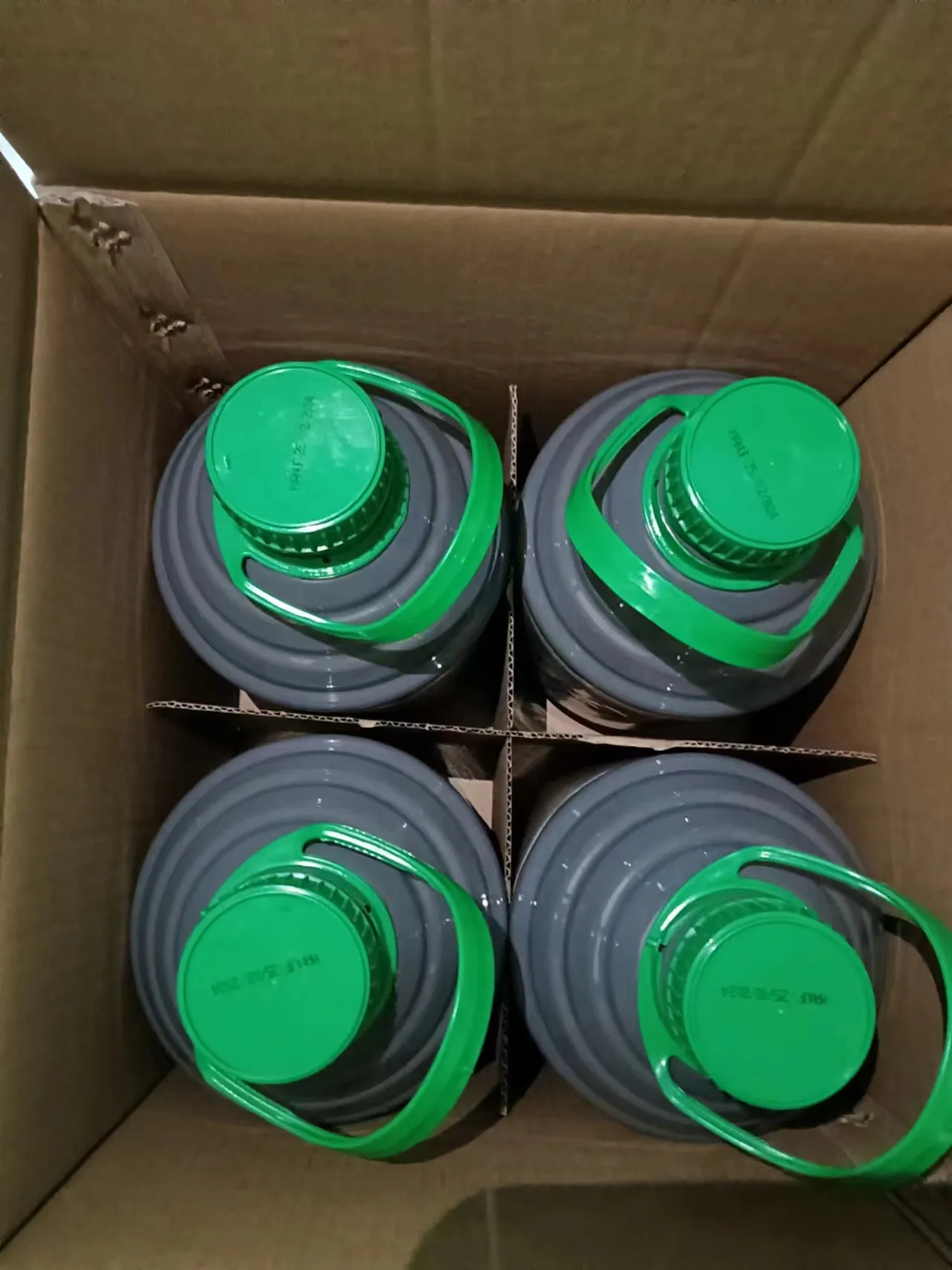
POMAIS supplies this high-load rice herbicide for qualified B2B procurement, registration and distribution projects.
Packaging Options
Commercial packaging may include:
- 100 mL bottles
- 250 mL bottles
- 500 mL bottles
- 1 L bottles
- 5 L containers
- 10 L containers
- 20 L containers
- Larger commercial packaging where suitable
- Induction seals
- Tamper-evident caps
- Multilingual labels
- Retail cartons
- Master cartons
- Batch and expiry coding
- Shipping marks
Final packaging depends on registration, order quantity and formulation compatibility.
Quality-Control Focus
Quality checks may include:
- Cyhalofop-Butyl content
- Quinclorac content
- Bensulfuron-Methyl content
- Product identity
- Three-active content uniformity
- Physical appearance
- Particle size
- Wet sieve residue
- Dispersibility
- Suspensibility
- Dilution stability
- Viscosity
- Pourability
- Persistent foam
- Water content
- Redispersibility
- Low-temperature stability
- Heat stability
- Packaging compatibility
- Fill-volume accuracy
- Batch consistency
Available Documents
Commercial document support may include:
- COA — Certificate of Analysis
- SDS — Safety Data Sheet
- TDS — Technical Data Sheet
- Product Specification
- Packaging Specification
- Available stability information
- Available efficacy information
- Available crop-safety information
- Available registration-supporting information
- Batch-related quality documents
- Commercial and shipping documents
Frequently Asked Questions
What is this rice herbicide used for?
It is designed for approved post-emergence programs involving mixed populations of grass, sedge and broadleaf weeds in rice.
Is the product suitable for direct-seeded rice?
It may be positioned for direct-seeded rice where registered.
The rice leaf stage, seed coverage and water-management requirements must follow the local label.
Can it be used in transplanted rice?
It may be used in transplanted rice where approved.
The crop should be established and actively growing before treatment.
What HRAC groups are included?
Cyhalofop-Butyl belongs to Group 1, Bensulfuron-Methyl belongs to Group 2, and Quinclorac is classified under Group 4/29.
What grass weeds can it control?
Potential directions include barnyardgrass, jungle rice, sprangletop and other approved annual grass weeds.
Exact claims depend on the registered label.
Can it control sedges?
Bensulfuron-Methyl provides the main sedge activity.
Control depends on the sedge species, growth stage and resistance status.
Can it control broadleaf weeds?
Bensulfuron-Methyl and Quinclorac may control selected broadleaf paddy weeds where registered.
Is it a pre-emergence or post-emergence herbicide?
Its main positioning is post-emergence.
It should not be presented as a universal pre-emergence product.
Why is water management important?
Water depth influences weed exposure, foliar uptake, root uptake, crop safety and herbicide movement.
Follow the exact drainage and re-flooding instructions on the local label.
Can it control resistant barnyardgrass?
No universal resistant-weed claim should be made.
Barnyardgrass resistant to Cyhalofop-Butyl, Quinclorac or multiple mechanisms may show reduced control.
Do all three active ingredients control every weed?
No.
Each ingredient contributes to a different part of the total weed spectrum.
Can extra oil adjuvant be added?
Only where the registered label recommends it.
The OD formulation already contains an oil-based delivery system.
What does OD mean?
OD means Oil Dispersion.
The active ingredient particles are dispersed in an oil-based liquid phase and form a spray dispersion after dilution with water.
Can the product be mixed with other rice herbicides?
Only where the exact combination is supported by the local label.
Unsupported mixtures may reduce grass control, increase crop injury or create physical instability.
What packaging is available?
Potential package directions include 100 mL, 250 mL, 500 mL, 1 L, 5 L, 10 L and 20 L containers.
Final package sizes depend on registration and order requirements.
What is the minimum order quantity?
The standard minimum order quantity is normally 1,000 L.
Request Product Specifications
To evaluate a Cyhalofop-Butyl 250 g/L + Quinclorac 120 g/L + Bensulfuron-Methyl 130 g/L OD project, please provide:
- Destination country
- Company type
- Required quantity
- Preferred package size
- Rice production system
- Target weed species
- Target weed growth stage
- Current registration status
- Required label language
- Required technical documents
- Expected purchasing schedule
We will review the active ingredient specification, OD stability, rice selectivity, packaging feasibility and destination-market requirements before confirming the commercial proposal.
Cyhalofop-Butyl 250 g/L + Quinclorac 120 g/L + Bensulfuron-Methyl 130 g/L OD is supplied for professional B2B procurement, registration and wholesale distribution.
Contact us!
We will reply to you within 24 hours on business days!