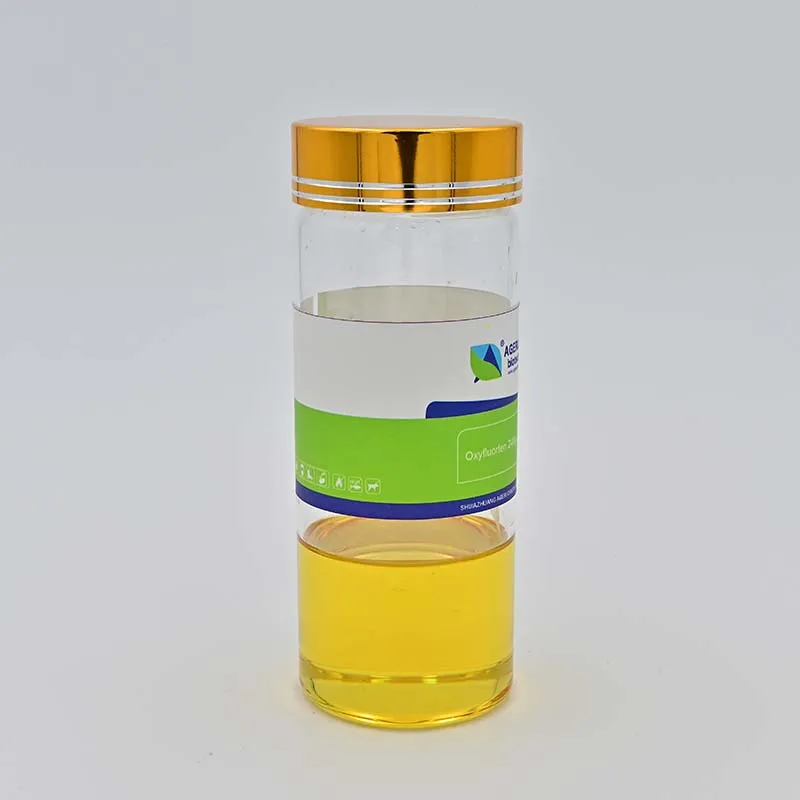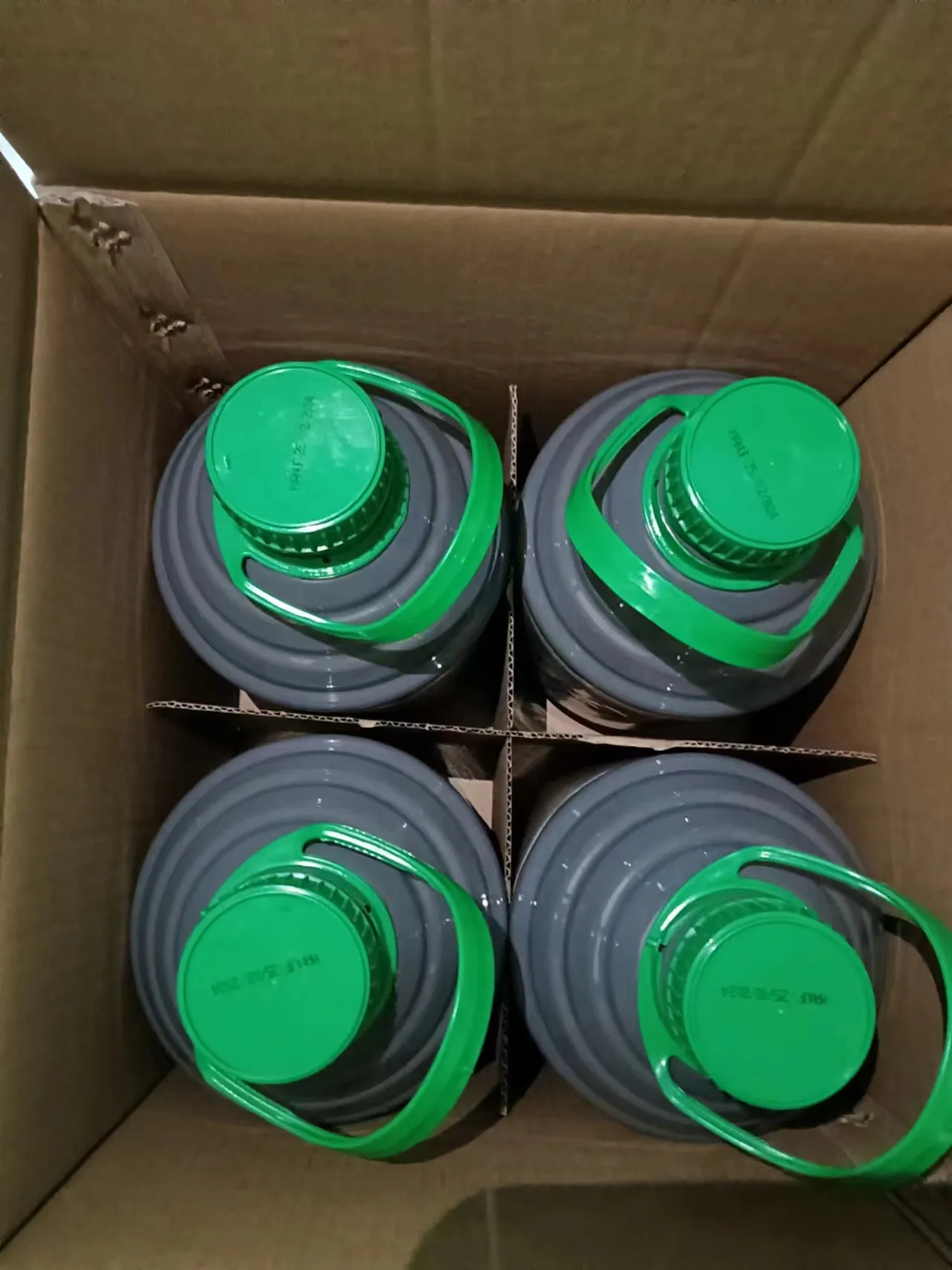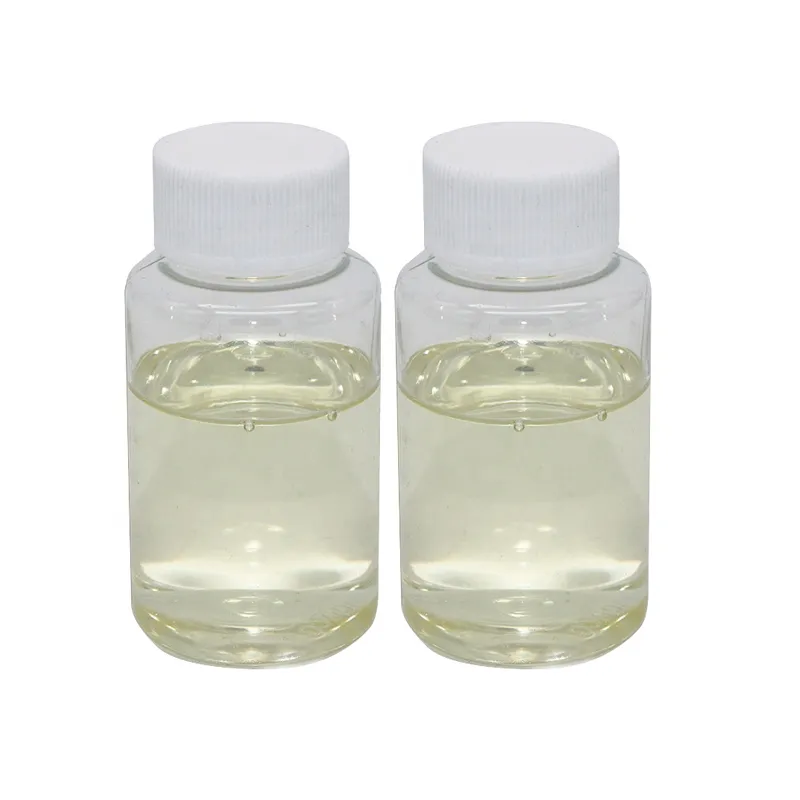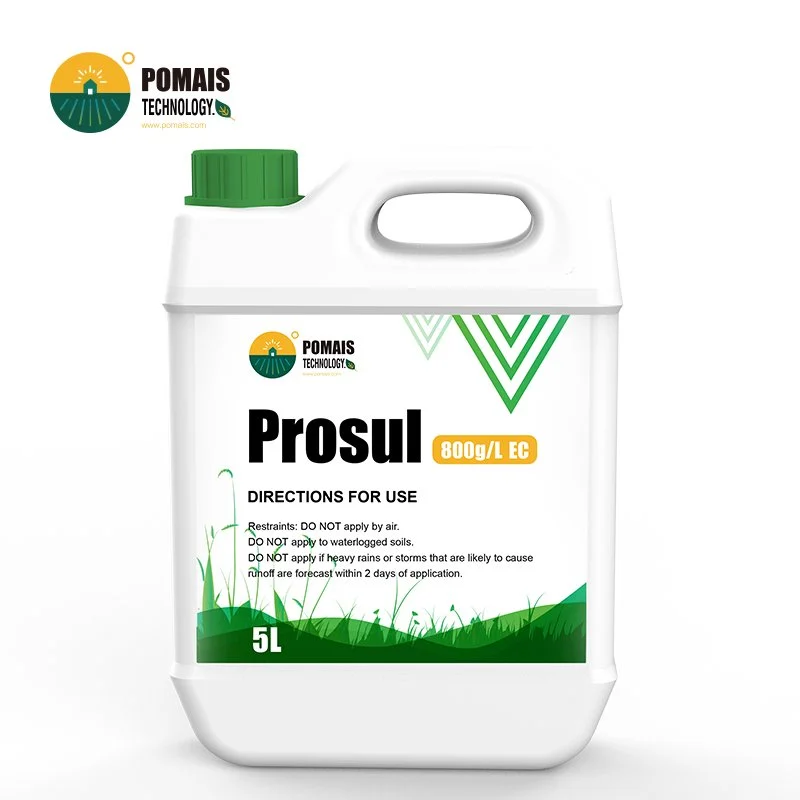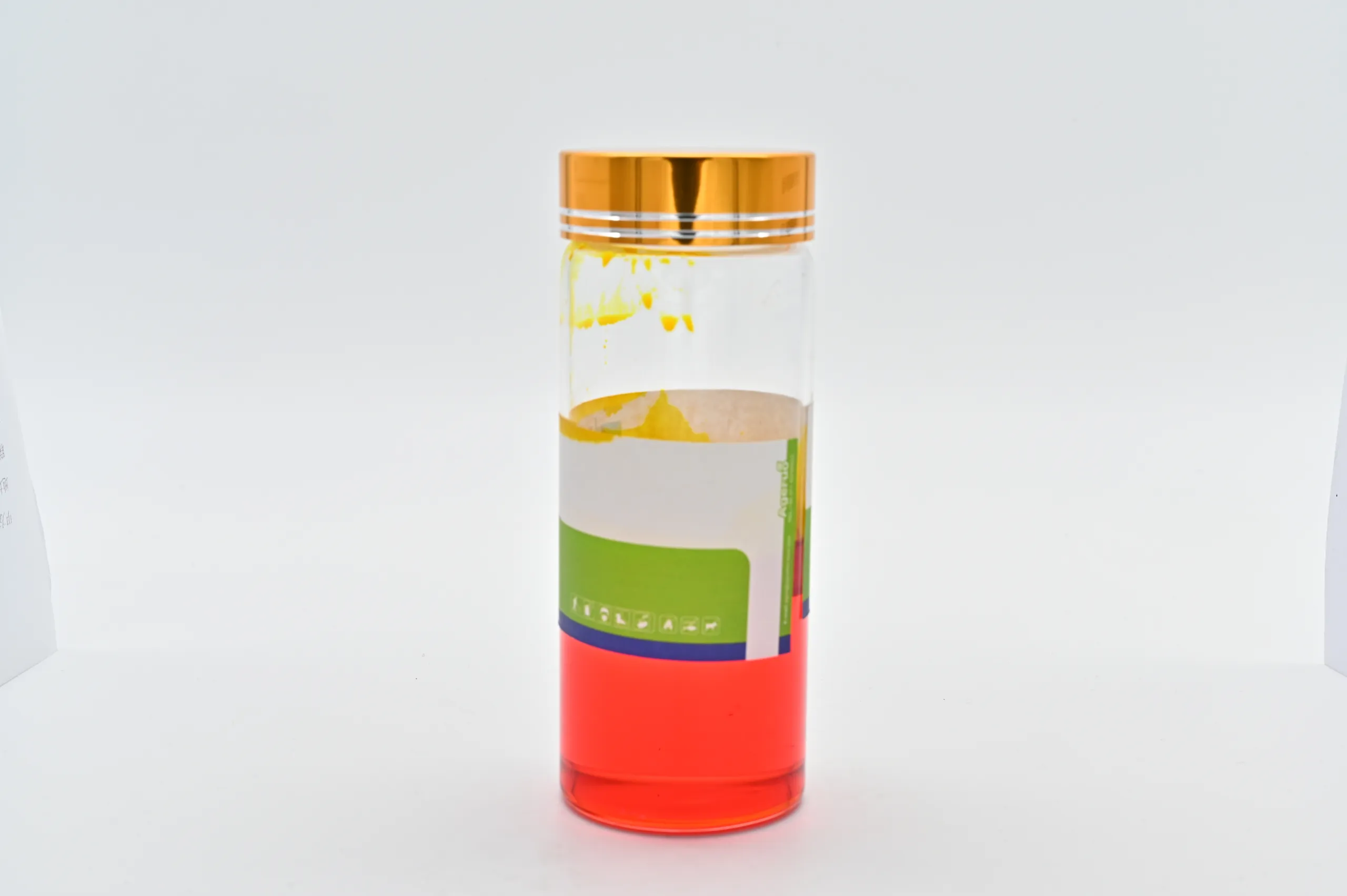

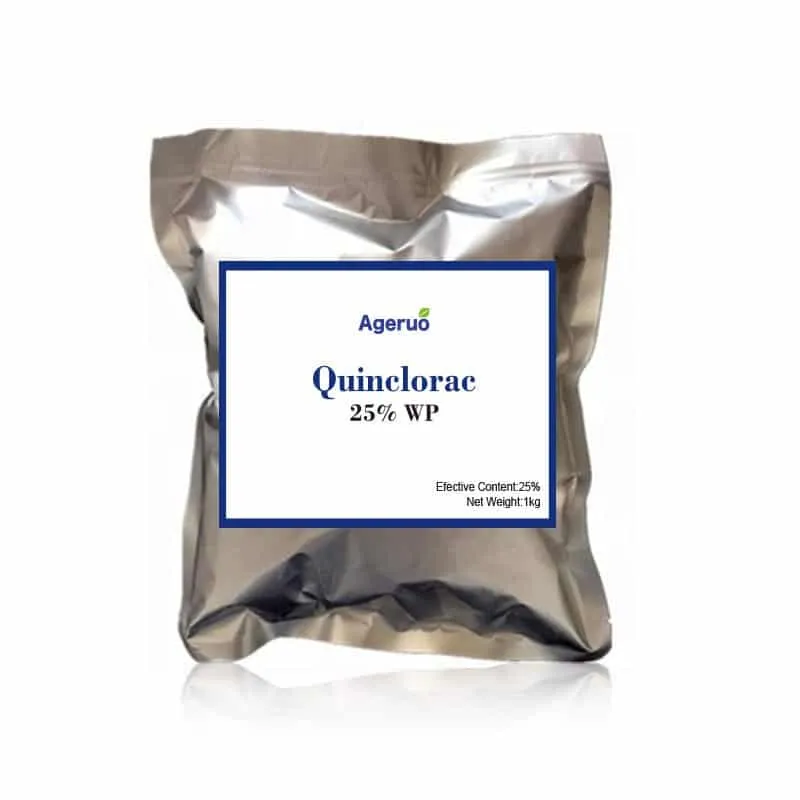
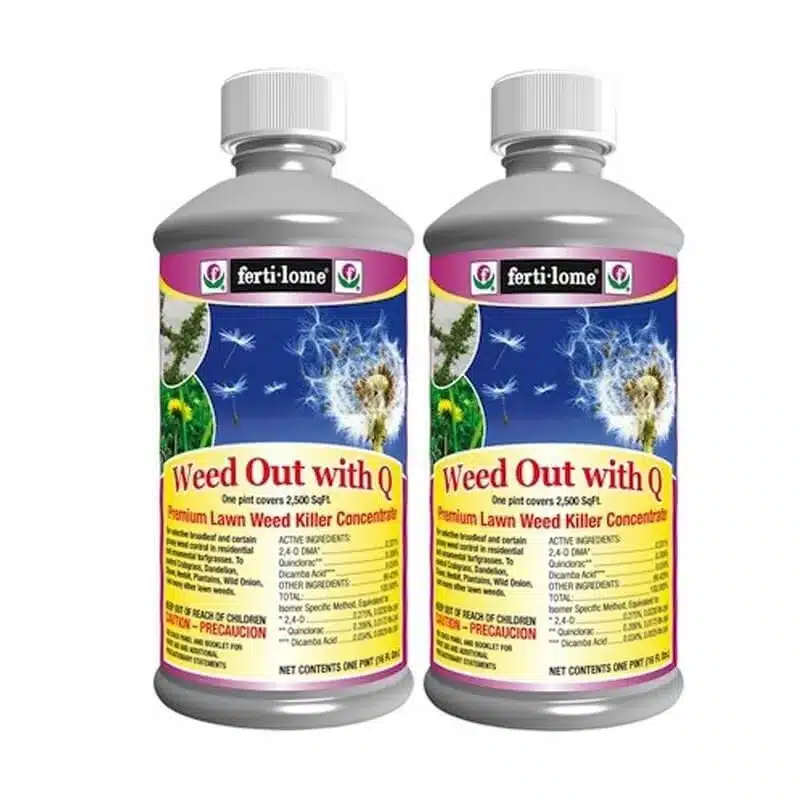
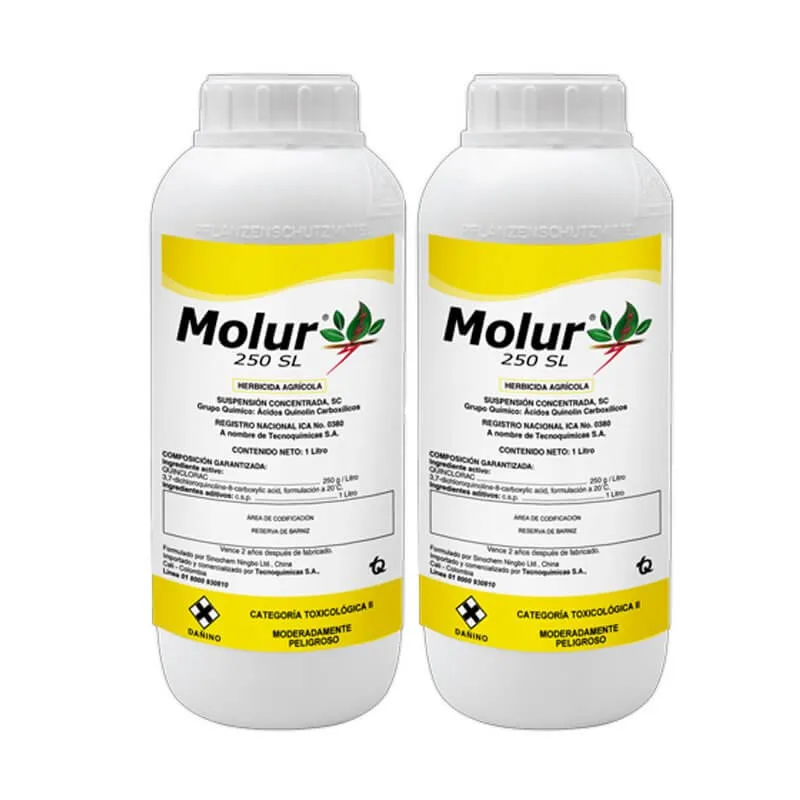
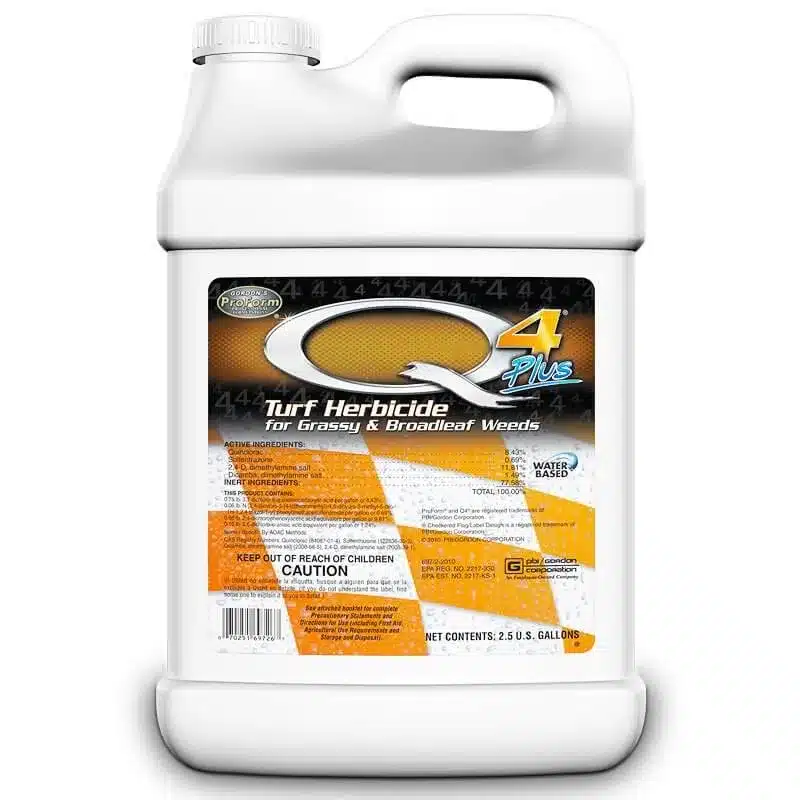
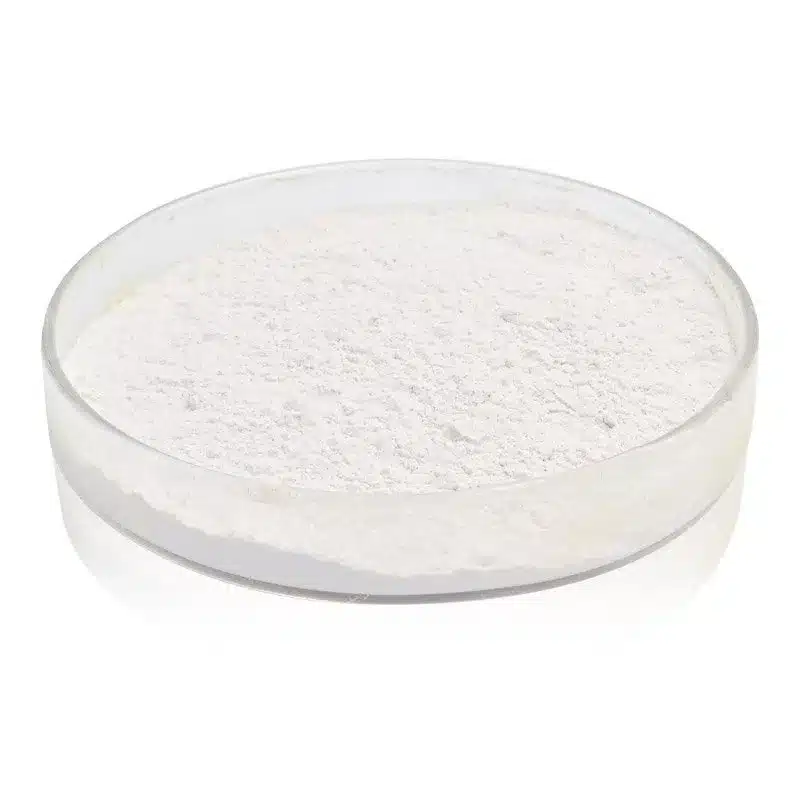
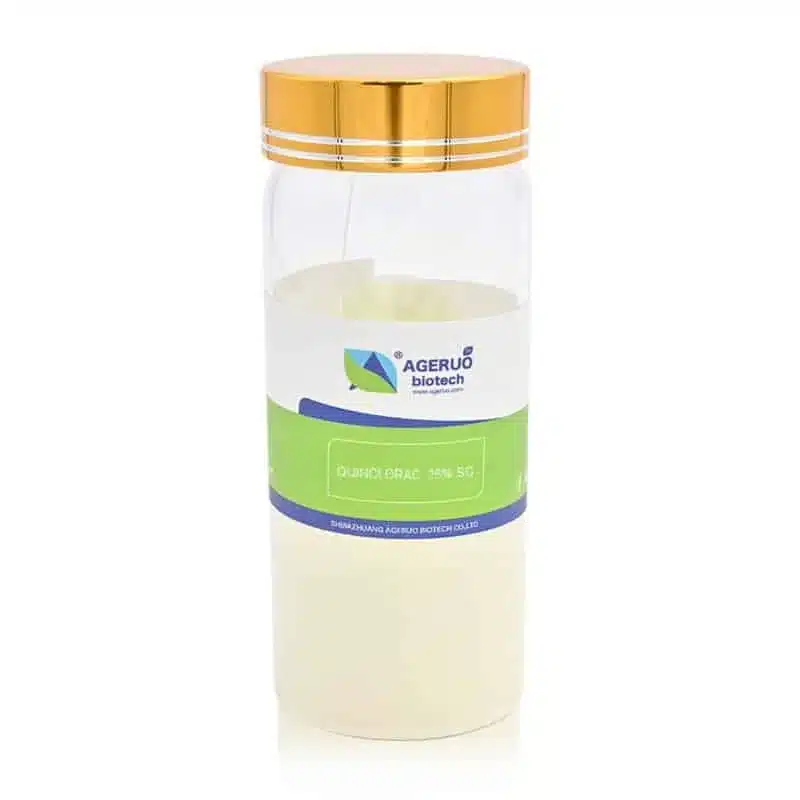
Quinclorac 250 g/L SC Selective Herbicide
Quinclorac 250 g/L SC is a selective herbicide used in registered turf and rice weed-control programs, with important commercial positioning against crabgrass, barnyardgrass, and selected annual grass and broadleaf weeds.
Quinclorac belongs to the quinoline-carboxylate herbicide family and is currently classified by HRAC under the combined Group 4/29 auxin-mimic and cellulose-synthesis-inhibition classification.
Its commercial value depends strongly on use site. In turf, Quinclorac is best known for selective post-emergence crabgrass control. In rice, it can be positioned against barnyardgrass and other registered weeds through soil and/or foliar programs depending on the local product label.
POMAIS supplies Quinclorac 250 g/L SC for agricultural importers, distributors, registration companies, turf-care brands, and private-label herbicide projects.
- Designed for Professional Buyers & Bulk Orders
- We support custom packaging, labeling, and formulation to meet your market needs.
- Export wholesale inquiries only.
- Please include destination country, business type (importer/distributor/registrant), and expected volume.
- Retail requests will not be processed.

About Quinclorac 250 g/L SC Selective Herbicide
| Attribute | Product Information |
|---|---|
| Active Ingredient | Quinclorac |
| Content | 250 g/L |
| Formulation | Suspension Concentrate (SC) |
| Herbicide Type | Selective herbicide |
| HRAC Classification | Group 4/29 |
| Chemical Family | Quinoline-carboxylate |
| Uptake | Roots and foliage |
| Core Turf Position | Post-emergence crabgrass control |
| Core Rice Position | Barnyardgrass and selected weed control |
| Soil Activity | Use-site and label specific |
| Main Target Weeds | Crabgrass, barnyardgrass and selected annual weeds |
| Grass Weed Spectrum | Selective, species-specific |
| Documentation | COA, SDS/MSDS, TDS |
| OEM / Private Label | Available |
| Packaging | Customized according to market requirements |
Exact crops, weeds, application rates, intervals, turf species, water-management requirements, and rotational restrictions depend on the registered product label in the destination market.
What Is Quinclorac 250 g/L SC?
Quinclorac is a selective herbicide with both root and foliar uptake.
Its behavior is different from a simple contact herbicide and also different from conventional phenoxy herbicides such as 2,4-D.
Quinclorac has particularly strong commercial recognition in two markets:
- Turfgrass crabgrass control
- Rice barnyardgrass control
That does not mean every Quinclorac product can automatically be used in both systems.
Crop registration, weed spectrum, application timing, formulation, and local label requirements still determine actual use.
For a broader technical explanation of the active ingredient, see our Comprehensive Guide on Quinclorac Herbicide.
How Does Quinclorac Work?
Quinclorac has a more complex herbicide classification than simply “Group 4 synthetic auxin.”
Why Is Quinclorac Classified as HRAC Group 4/29?
Quinclorac is currently associated with both:
- Auxin-mimic activity
- Cellulose-synthesis inhibition
This combined classification reflects its distinctive biological behavior in susceptible weeds.
Quinclorac can trigger abnormal growth and physiological disruption, while susceptible grasses may also show effects linked to cell-wall and cellulose development.
This helps explain why Quinclorac behaves differently from many other traditional auxin herbicides.
Root and Foliar Uptake
Quinclorac can be absorbed through:
- Leaves
- Shoots
- Roots
The relative importance of each pathway depends on:
- Use site
- Soil moisture
- Weed species
- Application timing
- Product label
This is especially important in rice, where soil moisture and water management can influence root uptake and residual activity.
Typical Weed Symptoms
Susceptible weeds may show:
- Growth inhibition
- Leaf twisting
- Chlorosis
- Red or purple discoloration
- Abnormal growth
- Progressive necrosis
Symptom development varies by weed species and environmental conditions.
Where Does Quinclorac 250 g/L SC Fit Best?
The product should be positioned by market rather than presented as one universal weed-control solution.
Turfgrass and Crabgrass Control
Quinclorac is widely recognized for selective post-emergence control of crabgrass in registered turf systems.
Important target species may include:
- Large crabgrass
- Smooth crabgrass
- Other labeled annual grasses
Depending on the exact product label, Quinclorac may also provide activity against selected:
- Foxtails
- Barnyardgrass
- Broadleaf signalgrass
- Clover
- Dandelion
- Wild violet
- Other registered weeds
However, weed spectrum varies substantially by product and turf species.
The strongest commercial positioning remains:
Quinclorac as a selective post-emergence crabgrass herbicide.
Rice and Barnyardgrass Control
In rice, Quinclorac is particularly associated with barnyardgrass management.
Depending on registration, target weeds may include:
- Barnyardgrass
- Junglerice
- Large crabgrass
- Broadleaf signalgrass
- Selected broadleaf weeds
Rice programs can be very different from turf programs.
Depending on the label, Quinclorac may be used through:
- Soil-directed programs
- Early-season applications
- Post-emergence foliar treatment
- Water-managed rice systems
Water depth, soil moisture, crop stage, and flooding conditions should always follow the registered local label.
Which Weeds Does Quinclorac Control?
The clearest way to evaluate Quinclorac is by weed category.
| Weed Category | Quinclorac Position |
|---|---|
| Crabgrass | Core turf target |
| Barnyardgrass | Core rice target |
| Junglerice | Important in selected rice programs |
| Broadleaf signalgrass | Registered in selected programs |
| Foxtails | Product- and use-site specific |
| Clover | Selected turf activity |
| Dandelion | Selected turf activity |
| Wild violet | Product- and program-specific |
| Sedges | Not a core stand-alone target |
| Dallisgrass | Limited or inconsistent; not primary positioning |
| Perennial grasses | Species-specific and often limited |
Quinclorac should not be marketed as a universal grass herbicide.
Its spectrum is selective and strongly dependent on species.
What Does Quinclorac Not Control Reliably?
Correctly communicating limitations improves both field performance and customer expectations.
Sedges
Quinclorac should not be positioned as a primary sedge herbicide.
Where sedges such as nutsedge are an important problem, another registered herbicide or tank-mix partner may be required.
Dallisgrass
Quinclorac is not the preferred stand-alone solution for dallisgrass.
Performance can be limited or inconsistent.
Many Perennial Grasses
Deep-rooted perennial grasses often require different herbicide strategies.
Weeds Outside the Registered Spectrum
The presence of “grass herbicide” activity does not mean every grass weed is susceptible.
Always match the weed species to the product label.
Why Crabgrass Growth Stage Matters
Quinclorac has an unusual relationship with crabgrass growth stage.
It should not be simplified into:
smaller crabgrass is always easier and mature crabgrass is always harder.
In some registered turf programs, crabgrass response can vary through the tillering process.
Young Crabgrass
Newly emerged plants and early tiller stages are often favorable treatment targets.
The 2–4 Tiller Stage
Some Quinclorac labels specifically indicate that crabgrass in an intermediate 2–4 tiller stage may show less complete control under certain conditions.
This is an important practical point.
If a user reports weaker control, the explanation may involve:
- Growth stage
- Weather
- Product rate
- Coverage
- Adjuvant
- Turf condition
rather than herbicide resistance alone.
More Mature Crabgrass
Quinclorac can still have important activity on more developed crabgrass in registered programs, but application requirements should follow the exact product label.
Do not transfer timing recommendations from one Quinclorac formulation to another.
Which Turfgrasses Tolerate Quinclorac?
Turf tolerance is one of the most important buying considerations.
Quinclorac can be selective in many turf species, but not every turfgrass has the same tolerance.
| Turfgrass | General Position |
|---|---|
| Kentucky bluegrass | Often tolerant where labeled |
| Tall fescue | Often tolerant where labeled |
| Common bermudagrass | Frequently tolerant, but temporary discoloration may occur |
| Perennial ryegrass | Product-specific |
| Fine fescue | May have restrictions |
| Zoysiagrass | Product-specific |
| St. Augustinegrass | Some Quinclorac products prohibit use |
| Centipedegrass | Some products prohibit use |
| Bahiagrass | May be sensitive |
| Newly seeded turf | Seeding interval is species-specific |
Never describe Quinclorac as:
harmless to turf.
A better description is:
selective in labeled tolerant turf species under the registered application conditions.
Can Quinclorac Injure Turf?
Yes, temporary turf response can occur.
Possible symptoms include:
- Yellowing
- Discoloration
- Temporary growth response
- Localized injury
Risk can increase with:
- Heat stress
- Drought stress
- Sensitive turf species
- Incorrect rate
- Spray overlap
- Incompatible tank mixes
- Adjuvant misuse
- Newly seeded turf
Turf condition should be evaluated before treatment.
Can Quinclorac Be Used on Newly Seeded Turf?
This depends strongly on turf species and product label.
Different grasses can have different restrictions regarding:
- Application at seeding
- Days after emergence
- Number of mowings before treatment
- Overseeding intervals
Do not use a universal rule such as:
wait 7–14 days.
The correct interval must come from the exact Quinclorac product label for the turf species being managed.
How Is Quinclorac Used in Rice?
Quinclorac rice programs require more than simply selecting an application rate.
Performance can depend heavily on field water management.
Important variables include:
- Soil moisture
- Rice growth stage
- Weed stage
- Irrigation
- Flood establishment
- Drainage
- Rainfall
Soil Activity
Quinclorac can provide soil activity in some registered rice systems.
Moist soil can influence root uptake and residual weed control.
Foliar Activity
Post-emergence treatment can also target susceptible emerged grasses.
Water Management
Flood depth and irrigation timing can affect:
- Herbicide uptake
- Residual performance
- Crop tolerance
- Weed response
Because rice production systems differ substantially by region, POMAIS does not recommend one universal flood-depth or irrigation schedule.
Follow the local registered label.
Does Quinclorac Have Residual Activity?
It can.
Quinclorac may provide soil residual activity in certain registered use systems, particularly where root uptake contributes to weed control.
However, residual duration is influenced by:
- Soil
- Moisture
- Temperature
- Application rate
- Use site
- Formulation
- Local program
Do not market Quinclorac as providing a fixed number of weeks of residual protection in every crop or turf situation.
Can Quinclorac Be Tank Mixed?
Quinclorac may be used in registered tank-mix programs to expand weed spectrum.
However, “compatible” should not be treated as a universal product characteristic.
Before tank mixing, confirm:
- Both product labels
- Crop or turf registration
- Weed spectrum
- Application timing
- Adjuvant requirements
- Physical compatibility
- Turf or crop injury risk
Some combinations can reduce weed control or increase phytotoxicity.
Use the most restrictive label requirements when products are combined.
Quinclorac and Herbicide Resistance
Repeated dependence on the same effective herbicide can select for resistant weed populations.
A resistance-aware Quinclorac program should include:
- Correct weed identification
- Review of field treatment history
- Appropriate growth-stage timing
- Effective registered rates
- Rotation with other effective modes of action
- Registered tank mixtures where appropriate
- Cultural weed-management practices
- Prevention of survivor seed production
Because Quinclorac has a distinctive Group 4/29 classification, resistance management should not be simplified to changing product brand names.
Why SC Formulation Quality Matters
SC means Suspension Concentrate.
In this formulation, finely divided active ingredient particles are maintained in a liquid suspension.
A high-quality Quinclorac 250 g/L SC must remain physically stable during:
- Manufacturing
- Filling
- Transport
- Warehouse storage
- Dilution
- Field mixing
Important formulation characteristics can include:
- Active-content consistency
- Particle-size distribution
- Suspensibility
- Wet-sieve performance
- pH
- Pourability
- Redispersibility
- Low-temperature stability
- Accelerated storage stability
- Packaging compatibility
A product that separates heavily, settles into a hard layer, or does not redisperse properly can create problems even when the active-ingredient assay is correct.
Quality Control and Batch Documentation
For professional buyers, formulation quality should be measurable.
| QC Item | Buyer Concern |
|---|---|
| Active content | Confirms product strength |
| Appearance | Detects abnormal separation |
| pH | Supports formulation stability |
| Suspensibility | Indicates spray-mixture consistency |
| Wet sieve | Evaluates oversized particles |
| Particle size | Influences physical stability |
| Pourability | Important for field handling |
| Redispersibility | Prevents hard sediment problems |
| Low-temperature stability | Relevant to winter transport/storage |
| Accelerated storage stability | Supports shelf-life evaluation |
| Packaging compatibility | Reduces leakage and deformation risk |
Final limits and test methods should follow the actual Quinclorac 250 g/L SC specification and registration dossier.
POMAIS can provide project-specific documentation including:
- COA
- SDS/MSDS
- TDS
- Product specification
- Packaging information
- Registration-support documents
Packaging and Private Label Supply
Quinclorac 250 g/L SC is a liquid formulation and should be packaged accordingly.
POMAIS can support:
- Customized bottle sizes
- Private-label artwork
- Multilingual labels
- Outer cartons
- Batch coding
- Shipping marks
- Distributor-specific branding
Packaging should be confirmed for:
- SC formulation compatibility
- Storage stability
- Export transport
- Destination-market registration
This page focuses specifically on Quinclorac 250 g/L SC. Other Quinclorac concentrations or dry formulations should be treated as separate commercial specifications rather than combined into one product page.
How Should Importers Evaluate Quinclorac 250 g/L SC?
A professional purchasing decision should consider more than concentration.
| Procurement Question | Why It Matters |
|---|---|
| Which country will import it? | Registration determines crops and weeds |
| Is 250 g/L SC the required formulation? | Must match market demand and dossier |
| Is the market turf or rice? | Use logic differs substantially |
| Which weeds drive sales? | Crabgrass and barnyardgrass are different markets |
| Which turf species dominate? | Turf tolerance varies |
| Which rice system is used? | Water management affects performance |
| What growth stages are targeted? | Crabgrass response can be stage-dependent |
| Are sedges also a major problem? | Additional herbicides may be needed |
| What QC specification is required? | SC physical stability matters |
| What pack sizes are preferred? | Distribution channels differ |
| Which documents are required? | Import and registration requirements vary |
| What is cost per treated hectare? | More useful than price per liter |
Frequently Asked Questions
What is Quinclorac 250 g/L SC?
It is a selective suspension-concentrate herbicide used in registered turf, rice, and other approved weed-control programs.
What HRAC group is Quinclorac?
Quinclorac is currently classified under HRAC Group 4/29.
Is Quinclorac pre- or post-emergence?
It depends on the use site. Turf positioning is primarily post-emergence, while some rice programs can include soil or earlier application timing where registered.
Does Quinclorac kill crabgrass?
Yes. Crabgrass is one of the most important turf targets for Quinclorac.
Why can 2–4 tiller crabgrass be difficult?
Some registered Quinclorac programs note reduced control at intermediate tiller stages under certain conditions.
Does Quinclorac control barnyardgrass?
Yes. Barnyardgrass is a major Quinclorac target in registered rice programs.
Does Quinclorac control sedges?
It should not be positioned as a primary sedge herbicide. Additional registered products may be required.
Does Quinclorac control dallisgrass?
Control is generally limited or inconsistent. Quinclorac should not be the primary dallisgrass positioning.
Can Quinclorac be used in rice?
Yes, where registered. Application timing and water management must follow the local label.
Is Quinclorac safe for bermudagrass?
Many Quinclorac turf products allow use on common bermudagrass, but temporary yellowing or other turf response may occur.
Is Quinclorac safe for tall fescue?
Tall fescue is often tolerant where the specific product is labeled for use.
Can Quinclorac be used on St. Augustinegrass?
Some Quinclorac products prohibit use on St. Augustinegrass. Check the exact label.
Can Quinclorac be used on newly seeded turf?
This depends on the grass species and product label. Seeding and overseeding intervals are not universal.
Does Quinclorac have residual activity?
It may provide residual soil activity in selected registered systems, particularly where root uptake contributes to control.
Can Quinclorac be tank mixed?
Yes in some registered programs, but compatibility, crop or turf tolerance, adjuvants, and both product labels must be checked.
What QC tests matter for Quinclorac 250 g/L SC?
Important tests can include active content, pH, suspensibility, wet sieve, particle size, redispersibility, low-temperature stability, storage stability, and packaging compatibility.
Can POMAIS provide private-label Quinclorac?
Yes. Packaging, labels, cartons, technical documents, and private-label specifications can be customized for suitable B2B projects.
Choose Quinclorac by Use Site, Weed Spectrum and Formulation Quality
Quinclorac 250 g/L SC should not be positioned as a universal herbicide for every grass weed.
Its strongest commercial identity is:
Turfgrass → selective post-emergence crabgrass control
and:
Rice → barnyardgrass and selected weed control where registered
A professional Quinclorac program should therefore follow this sequence:
- Identify the destination market.
- Confirm turf, rice, or other registered use.
- Identify the target weed species.
- Check growth stage and crop/turf tolerance.
- Confirm application and water-management requirements.
- Evaluate SC physical stability and QC.
- Confirm documentation, packaging, and registration.
For importers, distributors, registration companies, and private-label herbicide brands, POMAIS can support Quinclorac 250 g/L SC projects with formulation specifications, batch documentation, customized packaging, multilingual labeling, and registration-oriented technical support.
The correct procurement question is not:
How many different uses can Quinclorac have?
It is:
Does this Quinclorac 250 g/L SC formulation match the target weed, turf or crop system, application program, quality specification, and registration requirements of the destination market?
Contact us!
We will reply to you within 24 hours on business days!