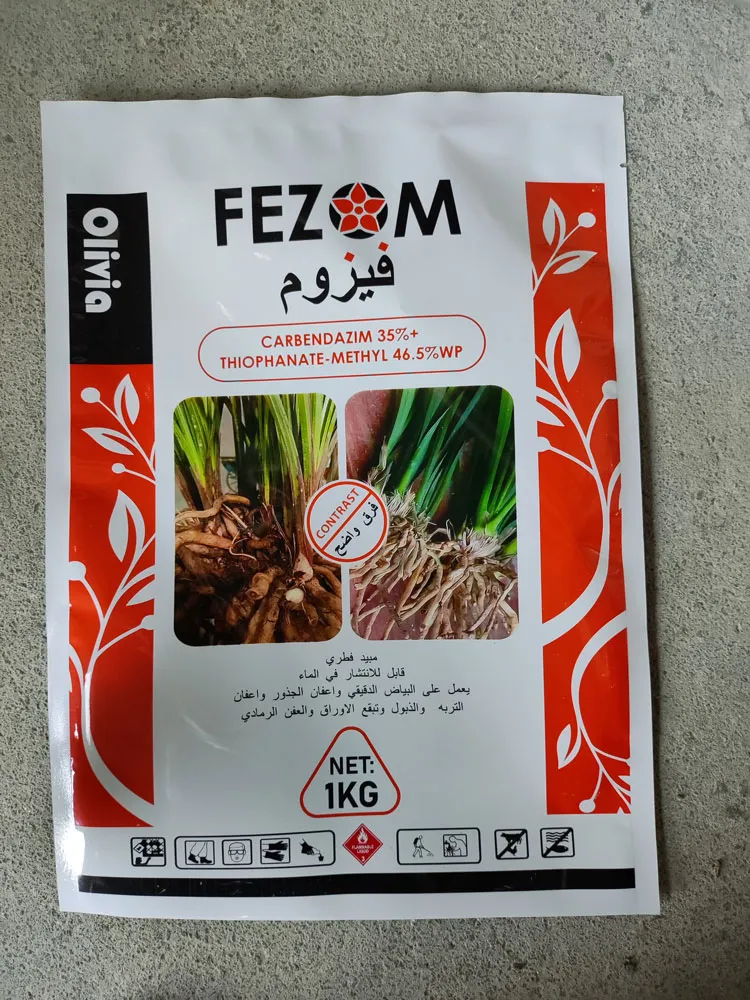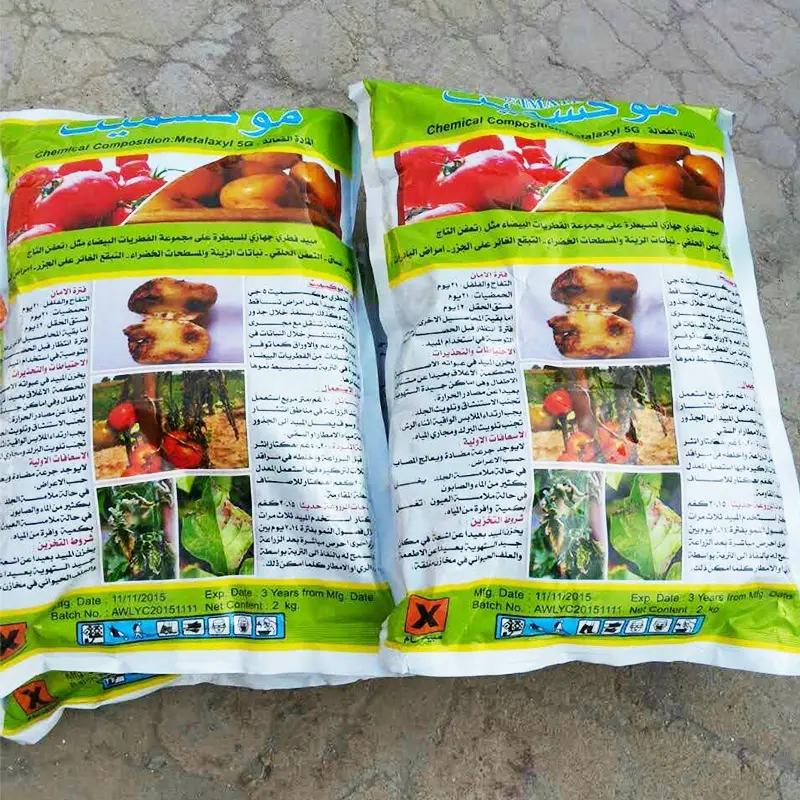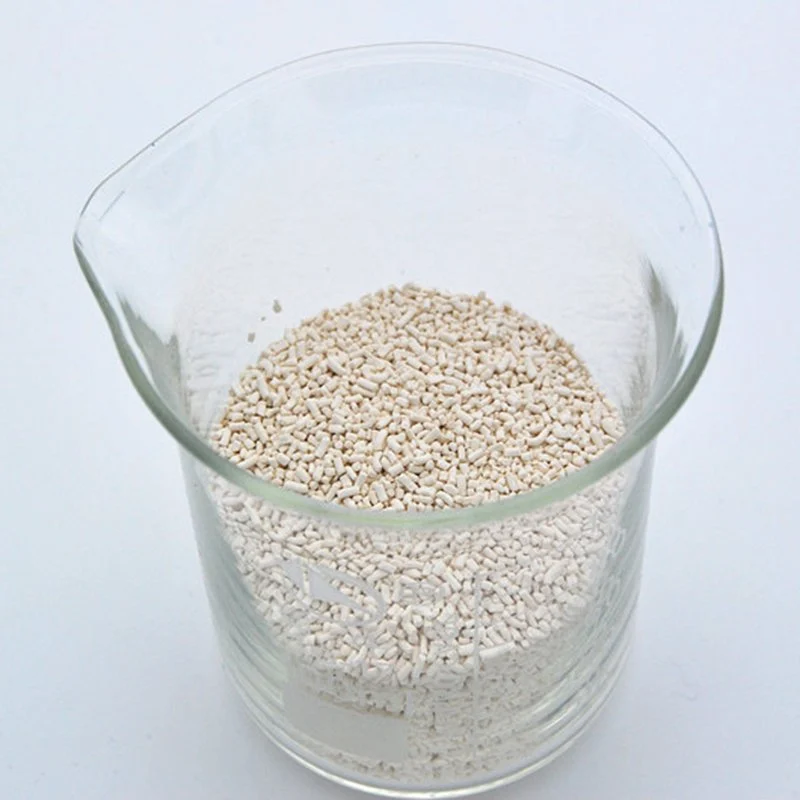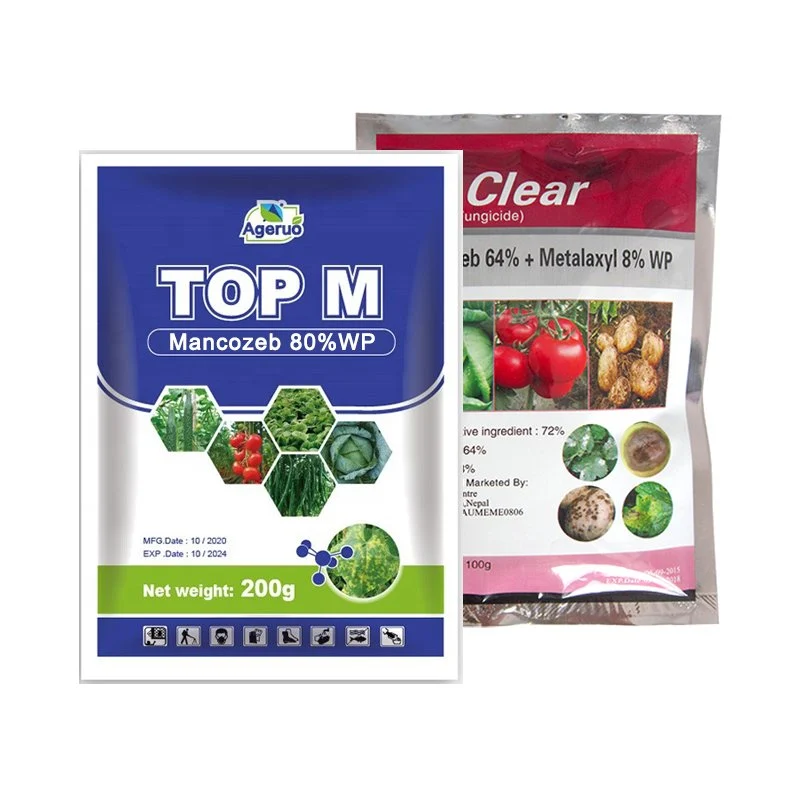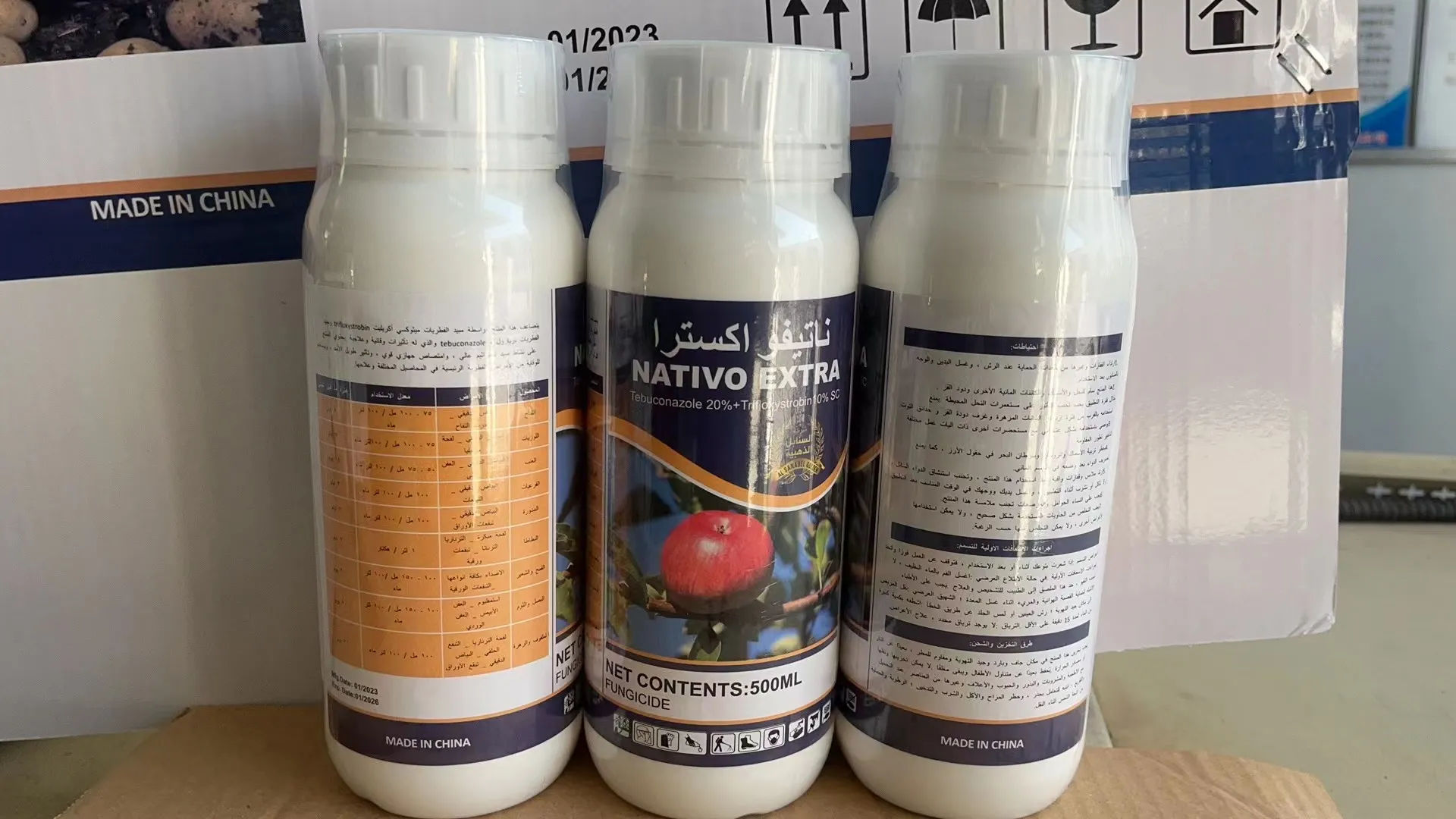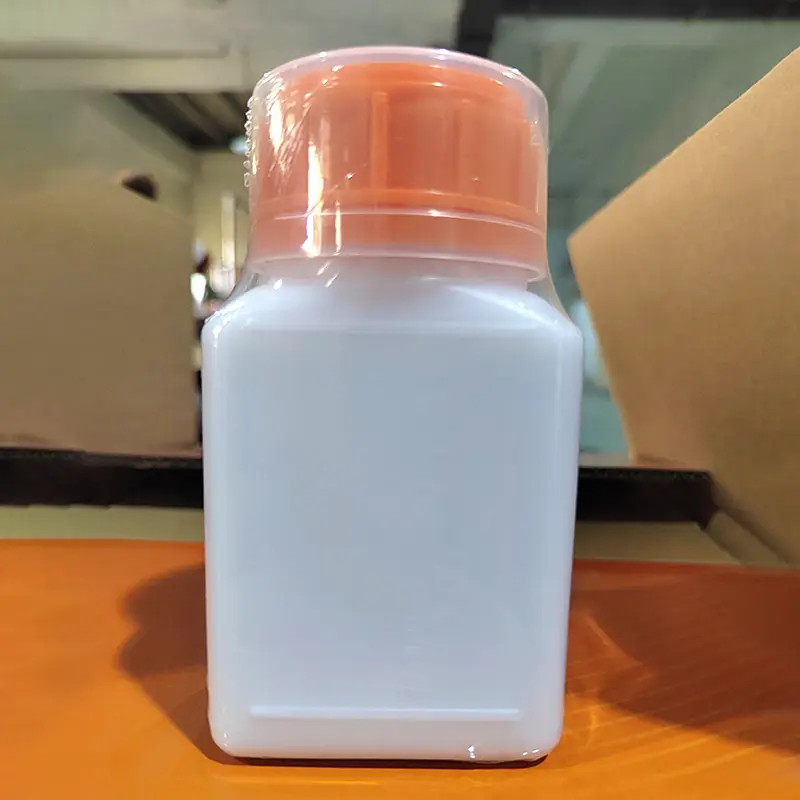
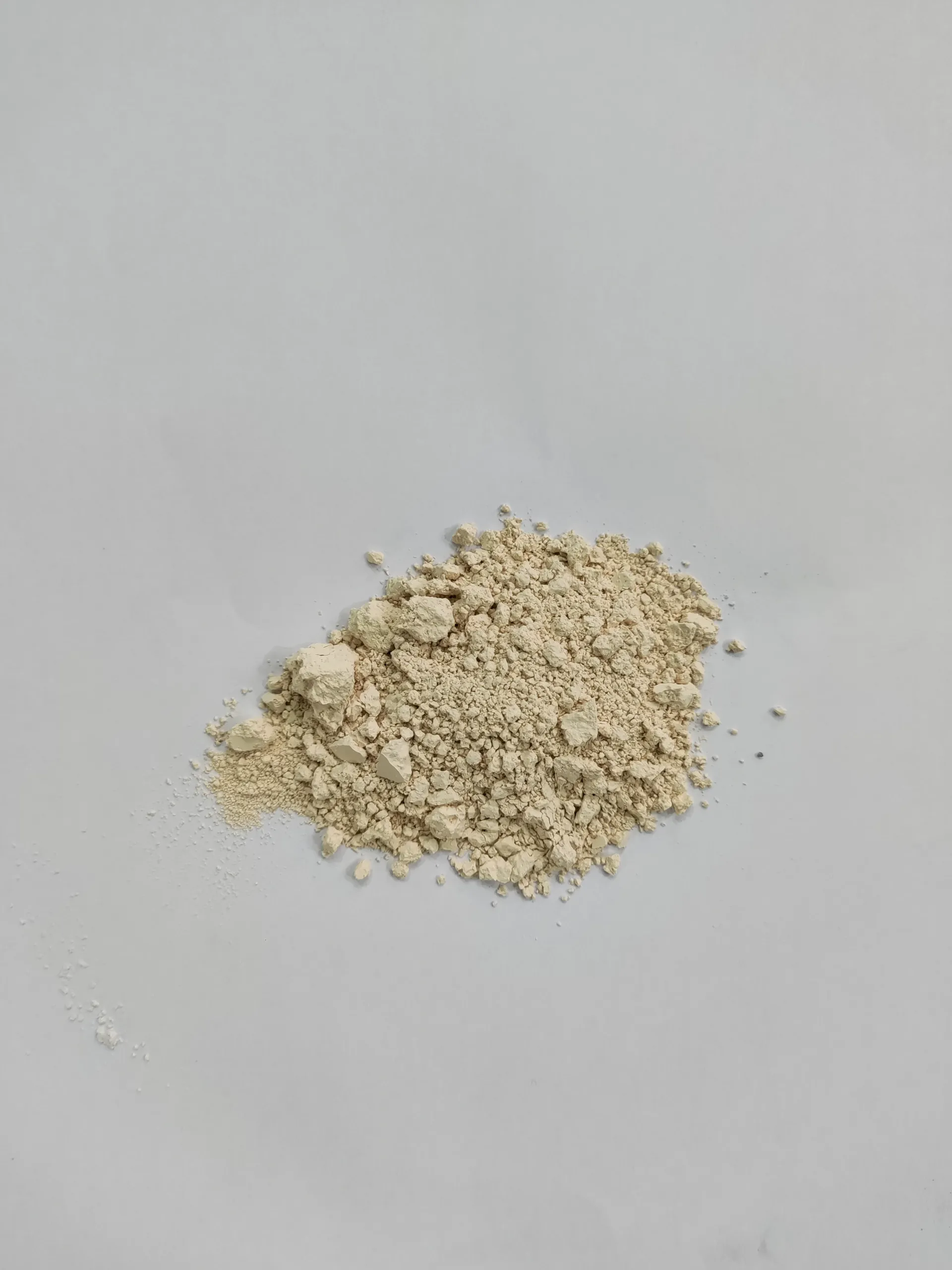
Metalaxyl 15% + Propamocarb 10% WP Fungicide
POMAIS Metalaxyl 15% + Propamocarb 10% WP Fungicide is a dual-active systemic product developed for preventive and early-stage management of approved Oomycete diseases.
Metalaxyl provides FRAC Group 4 activity by disrupting ribosomal RNA synthesis in susceptible pathogens. Propamocarb adds FRAC Group 28 activity affecting cell membrane function and lipid-related processes.
This wettable powder formulation is positioned for late blight, downy mildew, Pythium damping-off and Phytophthora disease programs in potatoes, tomatoes, vegetables, nursery plants and other approved crops.
- Designed for Professional Buyers & Bulk Orders
- We support custom packaging, labeling, and formulation to meet your market needs.
- Export wholesale inquiries only.
- Please include destination country, business type (importer/distributor/registrant), and expected volume.
- Retail requests will not be processed.

About Metalaxyl 15% + Propamocarb 10% WP Fungicide
| Product Attribute | Specification |
|---|---|
| Product Name | Metalaxyl 15% + Propamocarb 10% WP Fungicide |
| Active Ingredient 1 | Metalaxyl |
| Metalaxyl Content | 15% |
| Active Ingredient 2 | Propamocarb |
| Propamocarb Content | 10% |
| Total Active Content | 25% |
| Formulation | WP — Wettable Powder |
| Product Type | Dual-systemic Oomycete fungicide |
| Metalaxyl FRAC Group | Group 4 |
| Propamocarb FRAC Group | Group 28 |
| Primary Disease Direction | Late blight, downy mildew, Pythium and Phytophthora diseases |
| Main Crop Direction | Potatoes, tomatoes, vegetables, ornamentals and other approved crops |
| Application Methods | Foliar spray or root-zone treatment where registered |
| Standard MOQ | Normally 1,000 kg |
| Available Documents | COA, SDS, TDS and product specification |
| Supply Type | Bulk B2B supply for registration, import and distribution |
The exact chemical basis of the Propamocarb content, including whether it is expressed as active ingredient or salt equivalent, must match the final product specification.
Final crops, diseases, application rates, spray intervals, PHI, REI and seasonal-use limits must follow the approved destination-market label.
What Is Metalaxyl + Propamocarb WP?
Metalaxyl 15% + Propamocarb 10% WP combines two systemic active ingredients with different modes of action.
Both components are primarily positioned against Oomycete pathogens rather than all groups of fungi.
The product may be used in approved programs involving:
- Potato late blight
- Tomato late blight
- Downy mildew
- Pythium damping-off
- Phytophthora blight
- Root and crown rot caused by susceptible Oomycetes
- Nursery and transplant diseases where registered
This product should not be promoted as a universal treatment for powdery mildew, rust, grey mould, anthracnose, Alternaria or bacterial diseases.
Importers comparing other disease-control products can review the POMAIS fungicide product portfolio.
Why Combine Metalaxyl and Propamocarb?
Metalaxyl and Propamocarb both provide systemic activity, but they affect susceptible pathogens through different biochemical pathways.
The combination offers:
- FRAC Group 4 and Group 28 activity
- Root and foliar uptake potential
- Activity within treated plant tissues
- Preventive and early-stage disease positioning
- A fixed two-active ratio
- Foliar and root-zone application flexibility where registered
- Broader Oomycete program support than a single-active product
Propamocarb should not be described as a multi-site contact protectant.
The product contains two systemic Oomycete fungicides rather than one systemic ingredient combined with a surface barrier.
How Do the Two Active Ingredients Work?
Metalaxyl FRAC Group 4 Activity
Metalaxyl belongs to the phenylamide fungicide group and is classified as FRAC Group 4.
It inhibits RNA polymerase I and interferes with ribosomal RNA synthesis in susceptible Oomycete pathogens.
This affects essential processes required for:
- Mycelial growth
- Infection development
- Pathogen reproduction
- Disease spread within susceptible plant tissues
Metalaxyl can be absorbed through roots and foliage and may move upward through the plant.
Its main disease direction includes susceptible:
- Phytophthora species
- Pythium species
- Downy mildew pathogens
- Other registered Oomycetes
Metalaxyl is not the same product entity as Metalaxyl-M or Mefenoxam.
Propamocarb FRAC Group 28 Activity
Propamocarb belongs to FRAC Group 28.
Its activity is associated with disruption of cell membrane permeability and interference with fatty-acid and phospholipid processes in susceptible pathogens.
Propamocarb can be absorbed through roots and foliage and may move upward through the xylem.
Its main technical contribution includes:
- Pythium disease management
- Phytophthora disease management
- Root-zone protection
- Seedling and nursery disease programs
- Additional activity against susceptible downy mildew pathogens
Combined Oomycete Disease Profile
Metalaxyl and Propamocarb provide two complementary systemic activity profiles.
Metalaxyl inhibits RNA synthesis, while Propamocarb disrupts membrane and lipid-related functions in susceptible Oomycetes.
The combination may support more complete Oomycete disease programs than a single-active fungicide.
However, the presence of two modes of action does not guarantee control of Metalaxyl-resistant pathogens or prevent future resistance.
Target Disease Directions
The following table describes typical product-positioning directions. It is not a universal registration label.
| Disease Direction | Typical Pathogen Group | Product Positioning |
|---|---|---|
| Potato Late Blight | Phytophthora infestans | Preventive and early-stage foliar program |
| Tomato Late Blight | Phytophthora infestans | Crop-specific foliar protection |
| Downy Mildew | Peronospora, Pseudoperonospora and related genera | Preventive foliar treatment |
| Damping-Off | Pythium-related cases | Nursery or root-zone treatment |
| Root and Crown Rot | Phytophthora and Pythium | Soil or root-zone use where registered |
| Phytophthora Blight | Susceptible Phytophthora species | Foliar or root-zone disease management |
| Black Shank and Collar Rot | Phytophthora-related diseases | Crop-specific use |
| Ornamental Diseases | Registered Oomycete pathogens | Variety and label confirmation required |
Disease names should only appear on the final label when supported by local registration and efficacy data.
Potato Late Blight Programs
Potato late blight is an important commercial direction for this formulation.
Preventive use is preferred because late blight can spread rapidly under:
- Cool and humid weather
- Frequent rainfall
- Long periods of leaf wetness
- Dense crop canopies
- High regional disease pressure
Application planning should consider:
- Crop growth stage
- Canopy development
- Weather forecasting
- Irrigation schedule
- Previous fungicide use
- Local Metalaxyl sensitivity
- Maximum seasonal applications
The product should not be relied upon to restore foliage already destroyed by late blight.
Tomato and Solanaceous Crop Programs
Registered tomato programs may include late blight and other approved Phytophthora diseases.
Application should begin before severe infection develops.
Do not automatically include tomato early blight because early blight is generally associated with Alternaria rather than an Oomycete.
Exact crop and disease claims must follow the destination-market label.
Downy Mildew Programs
Metalaxyl and Propamocarb may be positioned against registered downy mildew diseases in crops such as:
- Cucurbits
- Grapes
- Leafy vegetables
- Onion crops
- Other approved vegetables
Applications should be timed before infection or during the earliest disease stage.
Dense foliage requires adequate spray volume and canopy penetration.
Pythium Damping-Off Programs
The term “damping-off” can refer to several different pathogens.
This product should only be positioned for Pythium-related damping-off or other specifically registered Oomycete causes.
Potential application directions may include:
- Seedling trays
- Nursery beds
- Transplant production
- Root-zone drenches
- Growing media treatments
- Other registered soil applications
It should not be assumed to control damping-off caused by Rhizoctonia or Fusarium.
Phytophthora Root and Crown Diseases
Phytophthora may infect roots, crowns, stems, leaves or fruit depending on the crop and pathogen.
The product may be positioned for approved:
- Root rot
- Crown rot
- Collar rot
- Black shank
- Phytophthora blight
- Other crop-specific Phytophthora diseases
Root-zone applications require accurate concentration and uniform distribution.
Excess product in a limited substrate volume may increase crop-safety risk.
Typical Crop Directions
Potential crop directions include:
- Potatoes
- Tomatoes
- Cucurbits
- Grapes
- Leafy vegetables
- Onion crops
- Tobacco
- Roses
- Ornamentals
- Nursery plants
These are commercial positioning directions rather than a global use label.
An approved use on one vegetable or ornamental crop should not be extended automatically to another species.
When Should the Product Be Applied?
Preventive Timing
The preferred timing is before the pathogen establishes a severe infection.
Applications may be considered when:
- Weather favors Oomycete disease development
- Rainfall and humidity are increasing
- The crop is entering a susceptible stage
- The field has a history of late blight or root rot
- Disease forecasting indicates infection risk
- Symptoms have appeared in nearby production areas
Early Disease Development
Where permitted by the label, the product may also be used at the earliest stage of infection.
Do not wait until:
- Large areas of foliage are damaged
- Roots are extensively rotted
- Severe wilting has developed
- Multiple disease cycles have occurred
- The crop canopy prevents adequate coverage
Avoid Late Rescue Dependence
Systemic movement does not mean that the product can cure advanced disease.
Dead plant tissue cannot be restored.
Severe disease may require a different registered treatment program and removal of heavily infected plant material.
Foliar and Root-Zone Application
Foliar Spray
Foliar application may be suitable for approved:
- Late blight
- Downy mildew
- Phytophthora leaf and stem diseases
- Other registered Oomycete infections
Spray coverage should reach:
- Upper leaf surfaces
- Lower leaf surfaces
- Inner canopy foliage
- Young leaves
- Stems
- Infection-prone tissues
Systemic movement supports protection inside treated tissues but does not replace uniform spray application.
Soil or Root-Zone Treatment
Root-zone application may be used where the label includes:
- Pythium damping-off
- Phytophthora root rot
- Crown rot
- Nursery diseases
- Transplant treatments
The solution should be distributed evenly through the treated root zone.
Avoid:
- Excessive concentration
- Uneven drenching
- Waterlogged substrates
- Runoff into drainage systems
- Repeated treatments outside the label
Greenhouse and Nursery Use
Greenhouse and nursery applications require separate registration support.
Protected environments can change:
- Drying time
- Root-zone concentration
- Humidity
- Temperature
- Worker exposure
- Variety sensitivity
- Disease pressure
An outdoor crop registration should not be assumed to cover greenhouse production.
Application Guidance
1. Confirm the Disease
Verify that the problem is caused by an Oomycete pathogen.
Diseases caused by bacteria, viruses, Alternaria, Botrytis, Fusarium or Rhizoctonia may require different products.
2. Confirm the Application Method
Check whether the product is registered for:
- Foliar spray
- Soil drench
- Root-zone treatment
- Nursery use
- Greenhouse use
- Other application methods
Do not transfer a foliar rate to a soil treatment.
3. Apply Preventively or Early
Begin the program before severe disease develops.
This is especially important where Metalaxyl resistance is a local concern.
4. Prepare a WP Slurry
WP means Wettable Powder.
The product disperses in water to form a suspension and does not dissolve completely.
Where permitted:
- Fill the tank partly with clean water.
- Start agitation.
- Mix the measured product with a small amount of water.
- Add the slurry slowly to the tank.
- Add approved tank-mix partners.
- Complete filling with water.
- Maintain agitation.
5. Maintain Uniform Distribution
For foliar use, achieve complete canopy coverage.
For root-zone use, distribute the solution evenly through the target soil or substrate volume.
6. Use the Registered Rate
Application rate depends on:
- Crop
- Disease
- Application method
- Crop stage
- Canopy or substrate volume
- Destination market
Do not publish one global rate for every use.
7. Follow PHI and REI
Pre-harvest and re-entry intervals must come from the exact approved label.
Do not copy values from another Metalaxyl or Propamocarb product.
WP Formulation Features
WP means Wettable Powder.
The formulation contains finely divided active ingredients together with wetting, dispersing and stabilizing components.
After dilution, the product forms a spray or drench suspension.
Main WP Advantages
A stable WP formulation may offer:
- Fixed Metalaxyl-to-Propamocarb ratio
- Compact dry-product transport
- Flexible small and bulk packaging
- No liquid-container leakage
- Convenient distributor inventory
- Foliar and root-zone preparation where registered
Key Quality Parameters
| Quality Parameter | Buyer Relevance |
|---|---|
| Metalaxyl Content | Confirms the declared 15% specification |
| Propamocarb Content | Confirms the declared 10% specification |
| Content Uniformity | Maintains the correct two-active ratio |
| Wettability | Supports efficient premixing |
| Suspensibility | Maintains uniform treatment concentration |
| Wet Sieve Residue | Helps reduce nozzle and filter blockage |
| Particle Size | Influences dispersion and sedimentation |
| Moisture Content | Affects caking and storage stability |
| Persistent Foam | Influences spray and drench preparation |
| Dilution pH | Supports formulation and tank-mix assessment |
| Storage Stability | Supports commercial shelf life |
| Pack-Weight Accuracy | Supports correct field dosing |
| Moisture-Barrier Packaging | Protects the powder during storage |
Continuous Agitation
The diluted suspension may settle if left without movement.
Maintain agitation:
- During tank filling
- During transport
- Throughout foliar spraying
- During root-zone application
- After operational interruptions
Re-agitate fully before treatment resumes.
Dust and Moisture Control
WP products can produce dust during handling and may absorb moisture during storage.
Operators should avoid breathing powder while opening and measuring the product.
Packaging should protect against:
- Humidity
- Caking
- Powder leakage
- Reduced wettability
- Damaged inner liners
Resistance Management
Resistance management is essential because Metalaxyl belongs to high-risk FRAC Group 4.
Metalaxyl Resistance Risk
Metalaxyl resistance has been reported in several important Oomycete pathogens.
Cross-resistance may occur among phenylamide fungicides, including Metalaxyl and Metalaxyl-M.
Changing only between these products does not provide an effective mode-of-action rotation.
Role of Propamocarb
Propamocarb adds FRAC Group 28 activity through a different biochemical pathway.
This supports a dual-mode product profile, but it does not guarantee control of a Group 4-resistant population.
Where Metalaxyl sensitivity is reduced, overall product performance may depend more heavily on Propamocarb.
Recommended Program Principles
- Apply preventively.
- Use the complete registered rate.
- Avoid repeated consecutive applications.
- Rotate with effective fungicides outside Groups 4 and 28.
- Use effective multi-site partners where the registered program permits.
- Follow crop-specific FRAC guidance.
- Improve drainage and field sanitation.
- Use resistant varieties where available.
- Remove severely infected plants where practical.
- Investigate unexpected disease survival.
Do not increase the dose as a substitute for managing confirmed resistance.
Crop Safety and Tank Mixing
Use only on registered crops, varieties and application systems.
Crop response may be influenced by:
- Application rate
- Root-zone concentration
- Crop growth stage
- Variety sensitivity
- Waterlogging
- Temperature
- Plant stress
- Tank-mix partners
- Greenhouse conditions
Young and Stressed Plants
Seedlings and transplants may be more sensitive to excessive root-zone concentration.
Avoid treating plants that are:
- Severely wilted
- Waterlogged
- Cold-damaged
- Nutrient-deficient
- Affected by root injury
- Recovering from another pesticide treatment
Tank-Mix Compatibility
Do not assume compatibility with every fungicide, fertilizer or adjuvant.
Compatibility may depend on:
- Water hardness
- Water pH
- Partner formulation
- Mixing order
- Fertilizer salts
- Tank temperature
Conduct a small jar test for unfamiliar mixtures.
Physical compatibility does not confirm crop safety or biological performance.
Follow the most restrictive label in the mixture.
Comparison with Related Metalaxyl Products
| Product Direction | Main Positioning |
|---|---|
| Metalaxyl Single-Active Product | Flexible FRAC Group 4 Oomycete product |
| Mancozeb + Metalaxyl WP | Systemic Group 4 activity plus multi-site contact protection |
| Metalaxyl-M Products | Separate product identity based on the more active R-enantiomer |
| Metalaxyl + Propamocarb WP | Dual-systemic FRAC 4 + 28 Oomycete program |
Buyers requiring a systemic and multi-site protectant combination can review the Mancozeb + Metalaxyl WP fungicide.
For information about Metalaxyl as a single active ingredient, see the Metalaxyl fungicide product page.
Operator and Environmental Precautions
Handle the product according to the approved label and final SDS.
Operator Protection
General precautions include:
- Wear the required protective clothing.
- Avoid inhaling WP dust.
- Use chemical-resistant gloves where specified.
- Protect the eyes during mixing.
- Avoid skin contact.
- Avoid breathing spray mist.
- Do not eat, drink or smoke during handling.
- Wash exposed skin after use.
- Follow the approved re-entry interval.
Protect Surface Water
Prevent spray, runoff and equipment rinsate from entering:
- Rivers
- Streams
- Lakes
- Wells
- Irrigation canals
- Fish ponds
- Wetlands
- Drainage systems
Root-Zone Application Precautions
Do not allow excessive drench solution to move beyond the intended treatment area.
Poor drainage can increase:
- Root exposure
- Crop stress
- Product movement
- Environmental contamination
Container Disposal
Do not reuse empty pesticide packaging.
Dispose of containers, spills and unused product according to local regulations.
Storage and Transport
Store Metalaxyl 15% + Propamocarb 10% WP:
- In its original sealed packaging
- In a cool and dry warehouse
- Away from direct sunlight
- Away from moisture
- Away from food and animal feed
- Away from children and unauthorized persons
- Under the conditions stated in the SDS
Before shipment, inspect:
- Packaging integrity
- Inner-liner condition
- Moisture protection
- Label accuracy
- Batch coding
- Pack weight
- Carton strength
- Pallet stability
Packaging, Quality Control and Documentation
POMAIS supplies this product for qualified importers, distributors, registration companies and crop protection brands.
Packaging Options
Potential commercial packaging may include:
- 100 g bags
- 250 g bags
- 300 g bags
- 500 g bags
- 1 kg bags or containers
- 5 kg bags
- 10 kg bags
- 25 kg bags
- Moisture-resistant inner liners
- Multilingual labels
- Retail cartons
- Master cartons
- Batch and expiry coding
- Shipping marks
Final packaging depends on registration, order quantity and filling feasibility.
Quality-Control Focus
Quality checks may include:
- Metalaxyl content
- Propamocarb content
- Product identity
- Content uniformity
- Physical appearance
- Wettability
- Suspensibility
- Wet sieve residue
- Particle size
- Moisture content
- Persistent foam
- Dilution pH
- Storage stability
- Pack-weight accuracy
- Seal integrity
- Batch consistency
Available Documents
Commercial document support may include:
- COA — Certificate of Analysis
- SDS — Safety Data Sheet
- TDS — Technical Data Sheet
- Product Specification
- Packaging Specification
- Available stability information
- Available efficacy information
- Available crop-safety information
- Available registration-supporting information
- Batch-related quality documents
- Commercial and shipping documents
Frequently Asked Questions
Request Product
To evaluate a Metalaxyl 15% + Propamocarb 10% WP purchasing or registration project, please provide:
- Destination country
- Company type
- Required quantity
- Preferred package size
- Target crops
- Target Oomycete diseases
- Intended application method
- Current registration status
- Required label language
- Required technical documents
- Expected purchasing schedule
We will review the product specification, active ingredient basis, WP quality, packaging feasibility and destination-market requirements before confirming the commercial proposal.
Metalaxyl 15% + Propamocarb 10% WP is supplied for professional B2B procurement, registration and wholesale distribution.
Contact us!
We will reply to you within 24 hours on business days!