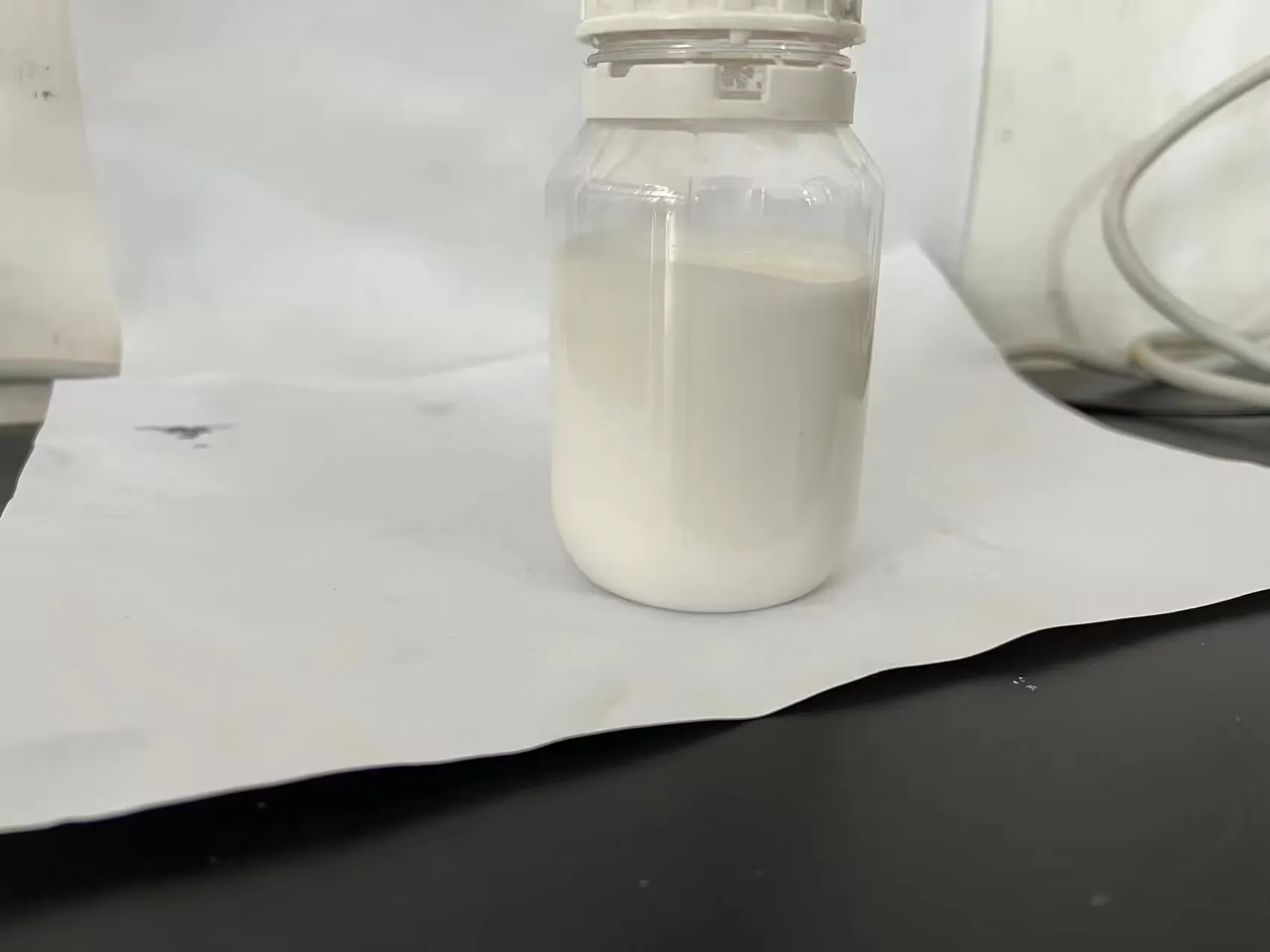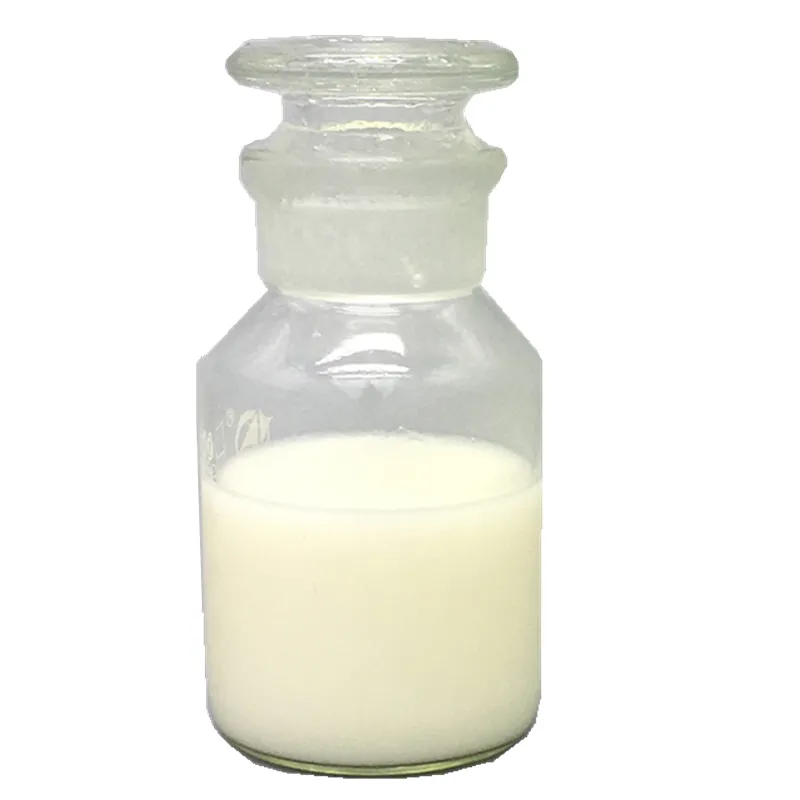
Fluopicolide 10% + Benzisothiazolinone 6% SC
POMAIS Fluopicolide 10% + Benzisothiazolinone 6% SC is a dual-active fungicide and bactericide developed for disease programs involving Oomycete pathogens and selected bacterial or fungal infections.
Fluopicolide provides focused activity against downy mildew, Phytophthora blight, late blight and other registered Oomycete diseases. Benzisothiazolinone broadens the product profile toward selected bacterial and fungal pathogens.
The combination is positioned for grapes, potatoes, vegetables, fruit crops and other high-value agricultural markets. POMAIS supplies the product for importers, distributors, registration companies and crop protection brands requiring SC formulation, packaging and technical-document support.
- Designed for Professional Buyers & Bulk Orders
- We support custom packaging, labeling, and formulation to meet your market needs.
- Export wholesale inquiries only.
- Please include destination country, business type (importer/distributor/registrant), and expected volume.
- Retail requests will not be processed.

About Fluopicolide 10% + Benzisothiazolinone 6% SC
| Product Attribute | Specification |
|---|---|
| Product Name | Fluopicolide 10% + Benzisothiazolinone 6% SC |
| Active Ingredient 1 | Fluopicolide |
| Fluopicolide Content | 10% |
| Active Ingredient 2 | Benzisothiazolinone |
| Benzisothiazolinone Content | 6% |
| Total Active Content | 16% |
| Formulation | SC — Suspension Concentrate |
| Product Type | Dual-active fungicide and bactericide |
| Fluopicolide FRAC Group | Group 43 |
| Primary Disease Direction | Oomycete diseases and selected bacterial or fungal diseases |
| Main Crop Direction | Grapes, potatoes, vegetables, fruits and other approved crops |
| Application Method | Primarily foliar spray and other label-approved methods |
| Standard MOQ | Normally 1,000 L |
| Available Documents | COA, SDS, TDS, product specification and available registration-supporting information |
| Packaging Support | Bottles, larger containers, multilingual labels and export cartons |
| Supply Type | Bulk B2B supply for import, registration and distribution |
Final crops, diseases, application rates, dilution ratios, spray intervals, PHI, REI and seasonal-use limits must follow the approved destination-market label.
What Is Fluopicolide + Benzisothiazolinone SC?
This product combines an Oomycete-focused fungicide with an antimicrobial active ingredient in one SC formulation.
It is designed for crop programs where disease pressure may include:
- Downy mildew
- Phytophthora blight
- Potato late blight
- Damping-off
- Selected bacterial leaf diseases
- Selected fruit, stem and root diseases
- Mixed fungal and bacterial infections
The product should not be presented as a universal treatment for every fungal or bacterial disease.
Its commercial value depends on the disease spectrum supported by local registration, efficacy trials and crop-safety data.
Buyers developing a broader disease-management portfolio can review other fungicide products.
How Do the Two Active Ingredients Work?
Fluopicolide Group 43 Activity
Fluopicolide belongs to FRAC Group 43.
It disrupts the normal location and function of spectrin-like proteins in susceptible Oomycete pathogens. This affects important cellular structures and disease-development processes.
Fluopicolide may interfere with:
- Zoospore movement
- Spore germination
- Germ-tube development
- Mycelial growth
- Infection establishment
- Sporulation
Its strongest commercial positioning is against diseases caused by Oomycetes, including downy mildew, Phytophthora and selected Pythium diseases.
Fluopicolide Movement in Plants
Fluopicolide provides translaminar and locally systemic activity.
It may move from the treated leaf surface into the leaf tissue and upward through the xylem under suitable crop and application conditions.
This movement supports protection within treated tissues, but it does not mean that a partial spray deposit can protect the entire plant.
Complete canopy coverage remains important.
Benzisothiazolinone Antimicrobial Activity
Benzisothiazolinone is an antimicrobial active ingredient with activity against selected bacterial and fungal pathogens.
Its activity is associated with disruption of microbial cellular processes and interference with essential metabolic functions.
Within this formulation, Benzisothiazolinone is positioned to:
- Extend the disease spectrum beyond Oomycetes
- Support management of selected bacterial diseases
- Add activity against selected fungal pathogens
- Complement the Fluopicolide disease profile
Exact bacterial and fungal claims must be supported by the final product registration.
Combined Disease-Control Profile
The two active ingredients provide complementary functions:
Fluopicolide targets Oomycete disease development, while Benzisothiazolinone extends the product profile toward selected bacterial and fungal pathogens.
This makes the product relevant where crops face overlapping disease risks rather than one clearly isolated pathogen.
The formulation should not be described as containing copper or Thiadiazole Copper.
Main Product Advantages
Broader Mixed-Disease Positioning
Many high-value crops can be affected by more than one type of pathogen during the same production period.
This product may support programs involving:
- Oomycete disease pressure
- Bacterial infection risk
- Secondary fungal diseases
- Wet and humid production conditions
- Repeated disease history
Preventive and Early-Stage Use
The formulation is best positioned before disease becomes severe.
Early treatment can help reduce infection establishment and limit the development of new lesions where the pathogens remain susceptible.
It should not be promoted as restoring plant tissue already destroyed by disease.
Two Active Ingredients in One SC
The fixed-ratio formulation reduces the need to measure and combine two separate products in the spray tank.
This can support:
- Consistent active ingredient ratios
- Simpler distributor positioning
- Easier packaging and inventory planning
- More convenient field preparation
- One registration identity
High-Value Crop Direction
The product has useful market positioning in crops where disease damage can quickly affect yield, appearance or marketability.
Potential crop channels include:
- Grapes
- Potatoes
- Melons
- Vegetables
- Citrus
- Tropical fruits
- Tobacco
- Ginger
- Garlic and onion crops
Final claims remain registration-specific.
Typical Crop and Disease Directions
The following table preserves the main market directions of this formulation. It is not a universal crop and disease label.
| Crop Direction | Typical Disease Direction | Product Positioning |
|---|---|---|
| Grapes | Downy mildew and approved bacterial or fungal diseases | Preventive canopy disease program |
| Melons and Beans | Downy mildew, Phytophthora blight and selected bacterial diseases | Mixed disease pressure |
| Solanaceous Crops | Phytophthora blight, damping-off and approved leaf diseases | Early protection |
| Potatoes | Late blight and selected bacterial or fungal diseases | Preventive and early-stage management |
| Taro | Phytophthora blight and approved soft-rot or leaf diseases | Crop-specific use |
| Leafy Vegetables | Downy mildew, damping-off and selected bacterial diseases | Short-cycle crop program |
| Citrus and Pitaya | Phytophthora, canker and anthracnose directions where registered | Fruit disease management |
| Litchi and Mango | Downy mildew, Phytophthora and selected fruit or leaf diseases | High-value fruit positioning |
| Tobacco | Black shank, downy mildew and selected bacterial diseases | Field disease program |
| Kiwifruit and Passion Fruit | Phytophthora and approved bacterial or fungal diseases | Crop-specific protection |
| Ginger and Allium Crops | Downy mildew, Phytophthora and selected bacterial soft rots | Root, bulb and foliage programs |
Disease names should only appear on the final label when supported by registration and local efficacy data.
Grape Disease Programs
Grapes are an important market direction because warm, wet and humid conditions can favor rapid downy mildew development.
Applications may be considered:
- Before an infection period
- When disease forecasting indicates risk
- Before extended wet weather
- At the earliest visible disease stage
- As part of a structured rotation program
Bacterial canker, anthracnose, grey mould and other grape claims require separate confirmation for this exact formulation.
Potato and Solanaceous Crop Programs
Fluopicolide provides a strong technical basis for Phytophthora and late blight positioning.
In potatoes and solanaceous crops, application planning should consider:
- Crop growth stage
- Canopy development
- Infection forecast
- Irrigation
- Rainfall
- Disease history
- Resistance-management program
Bacterial wilt, scab, blackleg and other bacterial claims must be supported by the product registration.
Vegetable and Melon Programs
Vegetable and melon crops may experience downy mildew, Phytophthora and bacterial leaf diseases during the same growing period.
The product may be positioned where the label includes crops such as:
- Cucurbits
- Beans
- Tomatoes
- Peppers
- Eggplants
- Leafy vegetables
Short harvest intervals and crop-specific residue limits must be reviewed carefully.
Fruit and Specialty Crop Programs
Citrus, pitaya, mango, litchi, kiwifruit and passion fruit can be commercially valuable directions where local registration supports use.
Disease programs may involve:
- Phytophthora-related diseases
- Downy mildew
- Canker
- Anthracnose
- Leaf spots
- Stem and fruit infections
Do not assume that registration on one fruit crop automatically covers another.
When Should the Product Be Applied?
Preventive Timing
The preferred application timing is before infection becomes well established.
Treatment may be considered when:
- Weather favors Oomycete infection
- Rainfall and humidity are increasing
- The crop is entering a susceptible growth stage
- The field has a known disease history
- Disease has appeared in nearby production areas
- Forecasting models indicate high infection risk
Early Disease Development
Where the label permits, the product may also be used at the earliest visible disease stage.
Do not wait until:
- Lesions cover large parts of the crop
- Stem or root damage is advanced
- Severe wilting has developed
- Multiple infection cycles have occurred
- The crop canopy is too dense for adequate coverage
Mixed Disease Pressure
Correct disease identification remains important.
Symptoms caused by:
- Oomycetes
- True fungi
- Bacteria
- Viruses
- Nutrient disorders
- Environmental stress
may appear similar in the field.
The product should only be selected after the likely disease cause has been assessed.
Application Guidance
The following principles do not replace the approved label.
1. Confirm the Crop and Disease
Before treatment, verify:
- Registered crop
- Pathogen or disease
- Crop growth stage
- Disease-development stage
- Local resistance status
- PHI and REI
2. Apply Preventively or Early
Use the product before severe disease development.
This is especially important for downy mildew, Phytophthora and late blight programs, where infection can spread rapidly under favorable weather.
3. Shake the SC Container
SC formulations contain suspended particles.
Shake or circulate the product container according to the label before measuring.
4. Prepare the Spray Tank
Where permitted:
- Fill the tank partly with clean water.
- Start agitation.
- Measure the required product volume.
- Add the product slowly.
- Add approved tank-mix partners in the correct order.
- Complete filling with water.
- Maintain agitation during application.
5. Achieve Complete Coverage
Coverage should reach:
- Upper and lower leaf surfaces
- Inner canopy foliage
- Young growth
- Stems
- Fruit surfaces where relevant
- Disease-prone plant zones
Translaminar movement does not replace proper application.
6. Follow the Registered Rate
Do not apply one universal rate or dilution ratio to all crops.
Application rate depends on:
- Crop
- Disease
- Crop stage
- Canopy size
- Application method
- Destination-market label
7. Respect Spray Intervals and PHI
Spray interval, PHI, REI and maximum seasonal use must come from the exact registered label.
Do not transfer values from another Fluopicolide or Benzisothiazolinone product.
SC Formulation Features
SC means Suspension Concentrate.
Fine particles of the active ingredients are dispersed in a liquid carrier. The product forms a spray suspension after dilution with water.
Key SC Quality Parameters
| Quality Parameter | Buyer Relevance |
|---|---|
| Fluopicolide Content | Confirms the declared 10% specification |
| Benzisothiazolinone Content | Confirms the declared 6% specification |
| Content Uniformity | Maintains the correct two-active ratio |
| Physical Appearance | Identifies crystals, sediment or separation |
| Suspensibility | Maintains uniform concentration after dilution |
| Particle Size Distribution | Influences storage and spray performance |
| Wet Sieve Residue | Helps reduce nozzle blockage |
| Viscosity | Affects pouring, pumping and filling |
| pH | Supports formulation stability |
| Persistent Foam | Influences spray-tank operation |
| Redispersibility | Confirms recovery after storage |
| Low-Temperature Stability | Supports cold-market transport |
| Heat Stability | Supports warm-market storage and shipping |
| Packaging Compatibility | Reduces leakage and seal failure |
| Fill-Volume Accuracy | Supports batch consistency |
Suspension Stability
Some settling may occur during storage.
The product should return to a uniform suspension after the approved shaking or agitation procedure.
Hard sediment, persistent crystals or irreversible separation may indicate a quality problem.
Continuous Agitation
Maintain tank agitation:
- During filling
- During transport
- Throughout application
- After spray interruptions
This helps ensure both active ingredients remain evenly distributed.
Packaging Compatibility
Bottle, cap, seal and label materials should be tested with the complete formulation.
Packaging checks should include:
- Leakage
- Bottle deformation
- Cap security
- Seal performance
- Label adhesion
- High-temperature storage
- Long-distance transport
Resistance Management
Fluopicolide belongs to FRAC Group 43 and requires structured resistance management.
Limit Repeated Group 43 Exposure
Repeated use of the same mode of action can select less-sensitive Oomycete populations.
Avoid relying on Fluopicolide-containing products throughout the entire season.
Rotation Principles
- Apply preventively.
- Use the complete registered rate.
- Avoid repeated consecutive applications where restricted.
- Rotate with effective fungicides from other FRAC groups.
- Use mixtures only when the partner is effective against the target pathogen.
- Follow crop-specific resistance guidance.
- Integrate sanitation and resistant varieties where available.
- Investigate unexpected disease survival.
Benzisothiazolinone Classification
Benzisothiazolinone adds a separate antimicrobial activity profile, but it should not be assigned an unsupported FRAC code.
Resistance programs must follow the final label and local technical guidance for the complete formulation.
Tank Mixing and Compatibility
Do not assume compatibility with every fungicide, bactericide, fertilizer or adjuvant.
Compatibility may be influenced by:
- Water hardness
- Water pH
- Partner formulation
- Mixing order
- Fertilizer salts
- Tank temperature
- Number of products
Copper and Alkaline Products
Do not assume automatic compatibility with:
- Copper fungicides
- Strongly alkaline materials
- Lime-containing products
- Concentrated foliar fertilizers
Check the exact product label and conduct a compatibility test before use.
Jar Testing
For unfamiliar mixtures:
- Use the intended water source
- Follow the planned mixing order
- Use proportional quantities
- Observe for separation, sediment or excessive foam
- Check for heat or gel formation
Physical compatibility does not confirm crop safety or disease-control performance.
Crop Safety and Use Precautions
Use only on registered crops and varieties.
Crop response can be influenced by:
- Application rate
- Crop stage
- High temperature
- Water stress
- Spray overlap
- Adjuvant selection
- Tank-mix partners
- Variety sensitivity
- Greenhouse conditions
Do not describe the product as safe for all crops.
Where crop tolerance is uncertain, follow local instructions for a small-area test before commercial treatment.
Operator and Environmental Safety
Handle the product according to the final SDS and approved label.
Operator Protection
General precautions include:
- Wear the required protective clothing.
- Use chemical-resistant gloves where specified.
- Protect the eyes during mixing.
- Avoid skin contact.
- Avoid inhaling spray mist.
- Do not eat, drink or smoke during handling.
- Wash exposed skin after use.
- Follow the approved re-entry interval.
Benzisothiazolinone-containing formulations may require specific skin and eye protection according to the final hazard classification.
Protect Surface Water
Prevent spray, runoff and equipment rinsate from entering:
- Rivers
- Streams
- Lakes
- Wells
- Irrigation canals
- Fish ponds
- Wetlands
- Drainage systems
Prevent Spray Drift
Use appropriate:
- Nozzles
- Droplet sizes
- Wind limits
- Boom height
- Buffer zones
- Application speed
Container Disposal
Do not reuse empty pesticide containers.
Dispose of containers, spills and unused product according to local regulations.
Storage and Transport
Store the product:
- In its original sealed container
- In a cool and dry warehouse
- Away from direct sunlight
- Away from excessive heat
- Away from freezing where relevant
- Away from food and animal feed
- Away from children and unauthorized persons
- Under the conditions stated in the SDS
Before shipment, inspect:
- Bottle condition
- Cap security
- Induction seal
- Leakage
- Label adhesion
- Batch coding
- Fill volume
- Carton condition
- Pallet stability
Packaging, Quality Control and Documentation
POMAIS supplies Fluopicolide 10% + Benzisothiazolinone 6% SC for qualified B2B procurement and registration projects.
Packaging Options
Commercial packaging may include:
- 100 mL bottles
- 250 mL bottles
- 500 mL bottles
- 1 L bottles
- 5 L containers
- 10 L containers
- 20 L containers
- Larger commercial packaging where suitable
- Induction seals
- Tamper-evident caps
- Multilingual labels
- Retail cartons
- Master cartons
- Batch and expiry coding
- Shipping marks
Final packaging depends on registration, order quantity and formulation compatibility.
Quality-Control Focus
Quality checks may include:
- Fluopicolide content
- Benzisothiazolinone content
- Product identity
- Content uniformity
- Physical appearance
- Suspensibility
- Particle size
- Wet sieve residue
- Viscosity
- pH
- Persistent foam
- Redispersibility
- Low-temperature stability
- Heat stability
- Packaging compatibility
- Fill-volume accuracy
- Batch consistency
Available Documents
Commercial document support may include:
- COA — Certificate of Analysis
- SDS — Safety Data Sheet
- TDS — Technical Data Sheet
- Product Specification
- Packaging Specification
- Available stability information
- Available efficacy information
- Available crop-safety information
- Available registration-supporting information
- Batch-related quality documents
- Commercial and shipping documents
Frequently Asked Questions
Request Product price
To evaluate a Fluopicolide 10% + Benzisothiazolinone 6% SC purchasing or registration project, please provide:
- Destination country
- Company type
- Required quantity
- Preferred package size
- Target crops
- Target Oomycete diseases
- Target bacterial or fungal diseases
- Current registration status
- Required label language
- Required technical documents
- Expected purchasing schedule
We will review formulation specifications, SC quality, packaging feasibility, technical-document availability and destination-market requirements before confirming the commercial proposal.
Fluopicolide 10% + Benzisothiazolinone 6% SC is supplied for professional B2B procurement, registration and wholesale distribution.
Contact us!
We will reply to you within 24 hours on business days!