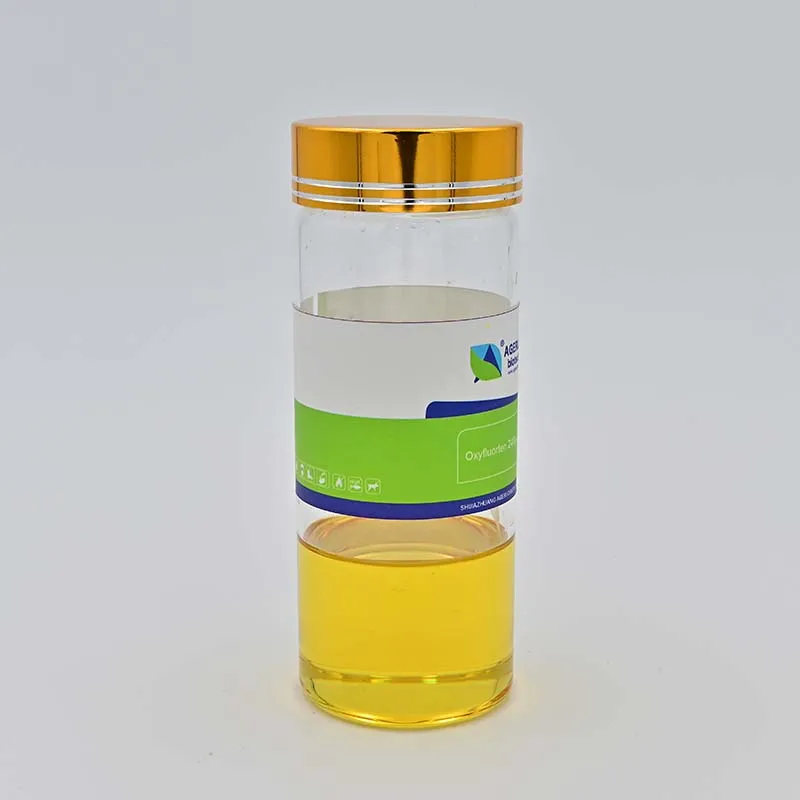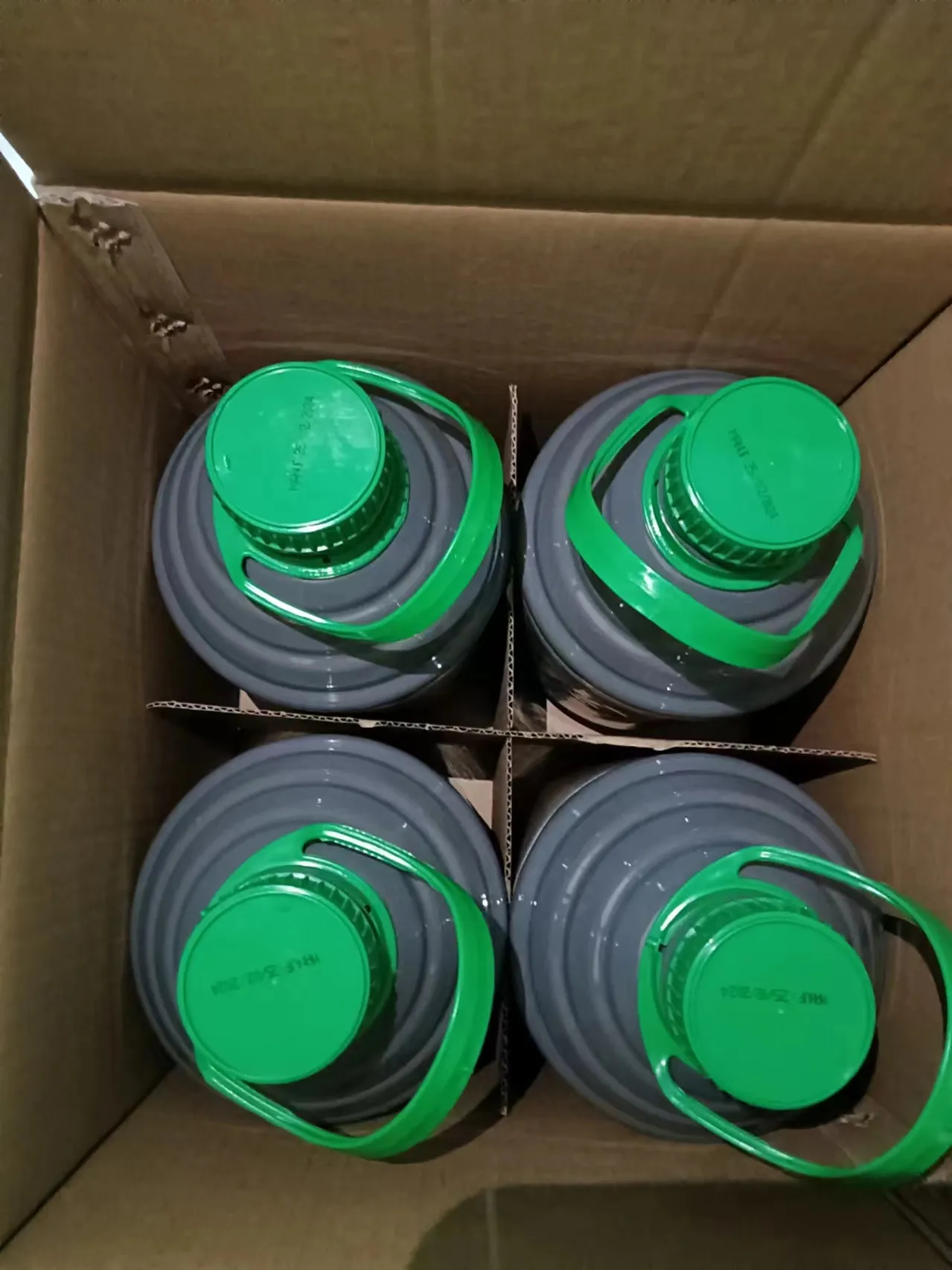
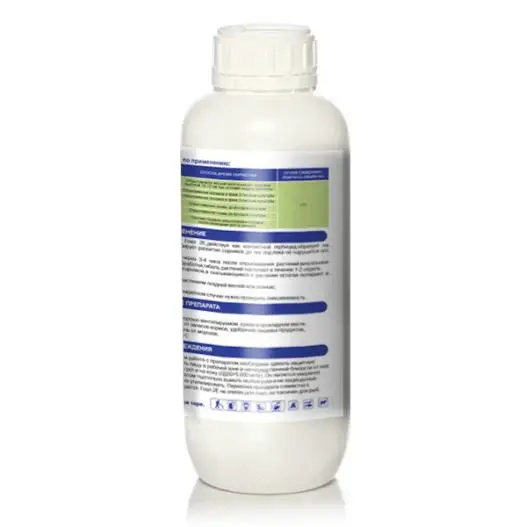


Oxyfluorfen Herbicide
HRAC Group 14 PPO Inhibitor | Pre-emergence and Early Post-emergence Weed Control | Available in Multiple Formulations
Oxyfluorfen is a diphenyl ether herbicide primarily used to control susceptible annual broadleaf weeds and certain grass weeds. It combines contact herbicidal activity with some residual soil activity; in registered applications, it can be used for pre-emergence weed control and early post-emergence treatment under specific conditions.
For pesticide importers and distributors, the value of sourcing Oxyfluorfen lies not only in its herbicidal activity but also in the product flexibility offered by different formulations, active ingredient concentrations, and locally registered uses.
POMAIS offers professional pesticide importers, distributors, and brand clients support for the procurement of Oxyfluorfen formulations, OEM/ODM packaging, label customization, and related technical documentation.
- Designed for Professional Buyers & Bulk Orders
- We support custom packaging, labeling, and formulation to meet your market needs.
- Export wholesale inquiries only.
- Please include destination country, business type (importer/distributor/registrant), and expected volume.
- Retail requests will not be processed.

About Oxyfluorfen Herbicide
Oxyfluorfen Herbicide Specifications
Oxyfluorfen belongs to the diphenyl ether class of herbicides and primarily acts by inhibiting protoporphyrinogen oxidase (PPO) in plants.
Its chemical identity, mode of action, and formulation parameters are as follows.
| Technical Parameters | Specification |
|---|---|
| Product Name | Oxyfluorfen Herbicide |
| Active Ingredient | Oxyfluorfen |
| Chinese Generic Name | Ethoxyfluorfen |
| CAS Number | 42874-03-3 |
| Molecular Formula | C15H11ClF3NO4 |
| Molecular Weight | 361.70 g/mol |
| Chemical Family | Diphenyl Ether |
| Mode of Action | PPO Inhibitor |
| HRAC Classification | Group 14 |
| Herbicide Activity | Contact activity and soil residual activity |
| Main Weed Spectrum | Susceptible annual broadleaf weeds and some grass weeds |
| Application Timing | Pre-emergence or specific early post-emergence treatments as specified on the registered label |
| Formulation Options | EC, SC, GR |
| Technical Material | TC, supplied subject to separate evaluation |
| Technical Documents | COA, SDS, TDS, and available registration support materials |
Oxyfluorfen Formulations and Available Specifications
Different markets have varying requirements regarding the active ingredient content, formulation type, and packaging specifications for Oxyfluorfen.
For example, some importers require traditional EC formulations, while other customers may wish to evaluate the availability of SC products or seek other specifications suitable for local registration programs.
POMAIS’s current product documentation lists the following specifications, which can serve as a basis for preliminary procurement inquiries.
EC – Emulsifiable Concentrate
| Formulation | Active Ingredient Content |
|---|---|
| Oxyfluorfen 20% EC | 20% |
| Oxyfluorfen 22.4% EC | 22.4% |
| Oxyfluorfen 24% EC | 24% |
| Oxyfluorfen 240 g/L EC | 240 g/L |
| Oxyfluorfen 32% EC | 32% |
EC stands for emulsifiable concentrate, a formulation typically prepared using appropriate solvents and an emulsification system; when diluted with water according to product specifications, it forms an emulsifiable spray solution.
Importers with prior experience in the registration or commercial sale of corresponding EC products should focus on verifying the active ingredient content, emulsion stability, packaging material compatibility, and local labeling requirements during procurement.
It is particularly important to note that percentage content and mass concentration in g/L are not directly interchangeable units of measurement. Before purchasing, confirm the basis for content measurement, the formulation density, and the actual product standards.
SC – Suspension Concentrate
| Formulation | Active Ingredient Content |
|---|---|
| Oxyfluorfen 5% SC | 5% |
| Oxyfluorfen 25% SC | 25% |
| Oxyfluorfen 35% SC | 35% |
| Oxyfluorfen 480 g/L SC | 480 g/L |
SC stands for suspension concentrate, which uses an appropriate dispersion system to stably disperse solid particles of the active ingredient in a liquid medium.
When evaluating SC products, importers must consider not only the active ingredient content but also the suspension rate, particle size distribution, redispersibility, pourability, and storage stability.
SC and EC may differ in composition, physical stability, and performance, but one formulation cannot be deemed to have better field efficacy or higher crop safety based solely on its formulation name.
GR – Granules
Current product information also lists Oxyfluorfen 2% GR (granules).
Granules differ from spray formulations in terms of application equipment, distribution methods, and usage conditions. Whether a product can be used on a specific crop or for a particular soil treatment method must be determined based on the specific granule product’s registered label and trial data.
Oxyfluorfen Technical Material
POMAIS’s current documentation also lists Oxyfluorfen 95% TC, which is available for consultation by professional clients with needs for active ingredient procurement or formulation development.
TC is a technical-grade material and should not be presented as a finished formulation ready for direct field application. Procurement of the active ingredient requires separate confirmation of active ingredient content, impurity requirements, batch quality specifications, and relevant technical documentation.
Specification Notes: The specifications listed above are based on current product data and are available for inquiry; however, this does not imply that every specification is in stock or has been registered in the target country. Specific available specifications, actual content standards, MOQs, production lead times, and the scope of technical documentation are subject to formal confirmation.
How Does Oxyfluorfen Work?
Oxyfluorfen interferes with porphyrin metabolism in plants by inhibiting the PPO enzyme.
PPO is involved in porphyrin metabolism related to the biosynthesis of chlorophyll and heme. When this enzyme is inhibited, porphyrin compounds accumulate abnormally. Under light conditions, these compounds can promote the formation of reactive oxygen species, triggering lipid peroxidation in cell membranes and ultimately causing damage to sensitive plant tissues.
Contact Herbicide Activity
Oxyfluorfen exhibits distinct contact herbicidal characteristics.
When the active ingredient comes into contact with the leaves or tender tissues of susceptible weeds, it can cause localized tissue damage, manifested as chlorosis, browning, or necrosis.
Since it is not a typical, highly systemic herbicide, it should not be assumed that it can completely eradicate perennial weeds that have already developed extensive root systems or underground reproductive organs.
Pre-Emergence Weed Control
Oxyfluorfen is also active at the soil surface.
Under pre-emergence treatment conditions that meet registration requirements, the active ingredient remaining on the soil surface can affect the emergence and early growth stages of susceptible weed seedlings, thereby reducing the establishment of some annual weeds.
Its actual residual efficacy and control performance are influenced by the formulation, application rate, soil conditions, weather, weed species, and field management practices.
Therefore, soil residual efficacy should not be interpreted as a fixed duration of control, nor should it be directly equated with resistance to rain leaching.
What Weeds Does Oxyfluorfen Control?
Oxyfluorfen primarily targets susceptible annual broadleaf weeds and can control certain grass weeds under specific registered uses and application conditions.
The target weeds listed on different product labels may not be entirely consistent. When determining a product’s target market, importers should prioritize verifying the local major weed species, the registered target weeds for the formulation they intend to purchase, and actual control efficacy data.
Annual Broadleaf Weeds
| Weed Species | Common Name | Control Profile |
|---|---|---|
| Amaranthus spp. | Pigweed / Amaranth | Certain susceptible Amaranthus weeds, especially at the seedling stage |
| Portulaca oleracea | Common Purslane | Susceptible purslane seedlings |
| Chenopodium album | Common Lambsquarters | Sensitive Chenopodium weeds under specific registered uses |
| Polygonum / Persicaria spp. | Smartweed | Some sensitive species; specific targets must be confirmed |
| Senecio vulgaris | Common Groundsel | Evaluate based on local label and efficacy data |
These weeds are merely representative targets for Oxyfluorfen; this does not imply that all formulations will exhibit the same efficacy against each weed listed in the table.
Annual Grass Weeds
In some registered uses, oxyfluorfen may also inhibit the germination and early growth of certain annual grass weeds.
For example:
- Setaria spp. (Foxtail)
- Echinochloa spp. (Barnyardgrass)
- Digitaria spp. (Crabgrass)
It is important to emphasize that control efficacy against these grass weeds is often influenced by species, growth stage, soil conditions, and specific application practices. Oxyfluorfen should not be regarded as a universal, specialized herbicide suitable for all grass weeds.
Limitations Against Established Weeds
For larger weeds, perennial weeds with underground reproductive organs, and certain Cyperaceae weeds, a single application of Oxyfluorfen may not achieve the desired control objectives.
When faced with such market needs, further consideration should be given to registered products with different modes of action, mechanical control, and other integrated weed management measures, rather than simply increasing the application rate of Oxyfluorfen.
If you would like to understand the relationship between different weed categories and herbicide modes of action, please refer to our Integrated Weed Management Solutions.
Crop Applications and Use Considerations
Oxyfluorfen may have different registered crops and application methods in various countries and regions.
For pesticide importers, what truly needs to be confirmed is not whether a particular active ingredient has ever been used on a certain crop, but whether the specific formulation they intend to import has obtained approval in the target market for the corresponding crop, target, and application method .
The following scenarios can serve as guidelines for evaluating product registration and procurement.
| Crop or Application Area | Potential Applications | Key Points to Verify |
|---|---|---|
| Onions & Garlic | Specific pre-emergence or early post-emergence weed control | Direct seeding or transplanting methods, crop growth stage, leaf wax coating, risk of phytotoxicity |
| Citrus Orchards | Weed management on the ground or between rows in orchards | Age of fruit trees, fruiting status, directional application requirements, restrictions on contact with branches and leaves |
| Vineyards | Specific weed management applications in vineyards | Vine growth stage, spray direction, variety, and registration conditions |
| Cotton | Application schemes for specific crops in certain markets | Sowing and emergence stages, permitted application methods, and crop safety restrictions |
| Rice | Evaluation limited to specific products with corresponding legal registrations | Direct-seeding or transplanting systems, application timing, water management, and weed targets |
| Other Registered Uses | Other approved crop or non-agricultural uses | Actual registered labels, environmental restrictions, and conditions of use |
Onion and Garlic Weed Management
Weed competition during the seedling stage of onion and garlic crops is one of the key application areas for oxyfluorfen.
However, these crops are relatively sensitive to application timing and environmental conditions. Registered products in different regions may specify different usage restrictions regarding direct seeding, transplanting, the number of true leaves, and crop growth stages.
In particular, under conditions of low temperatures, high humidity, crop stress, or when the protective layer on the leaves has not yet fully developed, certain treatments may increase the risk of phytotoxicity.
Therefore, product offerings for the onion and garlic market should be based on validated, specific application protocols; application parameters from other crops should not be directly applied.
Orchard and Vineyard Weed Management
Orchards and vineyards are managed as perennial crops, and weed control typically involves management needs related to tree rows, ground cover, and different growing seasons.
When used for approved purposes, oxyfluorfen can be part of a specific orchard weed management program.
However, during procurement and technical promotion, it must be clearly specified which plant tissues may come into contact with the spray solution, which parts must be avoided, whether application is limited to non-fruiting trees, and whether there are other restrictions based on growth stage.
For distributors serving existing citrus customers, it is recommended to use the Citrus Crop Protection Program to evaluate the overall crop protection product portfolio, rather than determining how to use Oxyfluorfen based solely on the name of the orchard crop.
Field Crop Applications
In the cotton, rice, and other field crop markets, whether Oxyfluorfen is suitable for procurement should be determined based on the approved registered uses, cropping systems, and target weeds in the respective country.
Different crops may require entirely different application timings and crop protection measures.
POMAIS can assess whether product data is suitable for further use in local registration or procurement projects based on the target country, crop, and required formulation specifications provided by the client.
Application Timing and Rate Considerations
The effectiveness of oxyfluorfen is closely related to the weed growth stage, soil conditions, and application method.
Although some registered products allow for pre-emergence or early post-emergence treatment, these usage conditions cannot be automatically applied to other formulations and crops.
Pre-Emergence Application
Pre-emergence treatment typically targets weeds that have not yet emerged or are in the early stages of germination.
Where applicable registration is obtained, soil treatment methods, application rates, timing, and relevant crop safety measures must be followed in accordance with product label requirements.
Early Post-Emergence Application
For weeds that have already emerged, the contact action of oxyfluorfen is closely related to weed size, leaf coverage, and sensitivity.
Young, susceptible weeds are generally better suited for evaluating contact treatment strategies than older weeds.
However, early post-emergence applications also carry a risk of crop phytotoxicity, particularly when the product label specifies restrictions regarding the number of true leaves, crop health, or application conditions.
How Is the Correct Application Rate Determined?
There is no single recommended rate for Oxyfluorfen that applies to all formulations, countries, and crops.
The actual application rate must be determined based on the following information:
| Determining Factors | Why It Matters |
|---|---|
| Formulation & Concentration | Active ingredient content and application rates vary by formulation |
| Registered Crop | Crop selectivity and permitted scope of use vary |
| Target Weed | Weed species and sensitivity vary |
| Weed Growth Stage | Technical requirements differ between pre-emergence and post-emergence applications |
| Soil Conditions | Soil texture, organic matter, and other conditions may affect performance |
| Application Method | Requirements differ for soil spraying, directed application, etc. |
| Local Label Requirements | Determine legal application rates, restrictions, and safety intervals |
When inquiring about application rates for Oxyfluorfen 23.5% EC, 24% EC, 25% SC, or other formulations, please provide the official registered label for the specific formulation. Application rate data cannot be directly applied to products of different concentrations.
Key Product Characteristics and Limitations
Contact Activity on Susceptible Weeds
Oxyfluorfen’s contact activity against susceptible weeds is one of its key characteristics.
This characteristic allows it to be used in certain registered early post-emergence treatment scenarios, though it is subject to specific requirements regarding foliar coverage, weed size, and environmental conditions.
Soil Residual Activity
Under appropriate conditions, Oxyfluorfen retains some activity in the topsoil, affecting certain susceptible weeds that emerge subsequently.
This activity may contribute to pre-emergence weed control; however, the specific residual efficacy must be evaluated in conjunction with the registered application rate, soil conditions, and field trials.
Defined Mode of Action
Oxyfluorfen belongs to HRAC Group 14 and has a different mode of action from ALS inhibitors, ACCase inhibitors, and EPSPS inhibitors.
This classification helps distributors understand the product’s technical positioning within their herbicide portfolio, but does not imply that the product alone can solve all resistance issues with weeds.
Important Product Limitations
When promoting the product and evaluating its use, the following limitations must be clearly understood:
- Complete control of underground reproductive organs should not be promised for established perennial weeds.
- Not all annual grass weeds are reliable targets.
- Contact with sensitive crop tissues may cause phytotoxicity.
- Differences in formulation types do not imply that crop safety can be directly compared or inferred.
- Actual soil residual efficacy and resistance to rain leaching must be supported by specific application conditions and data.
Clearly defining a product’s scope of application helps distributors choose a more appropriate product positioning and can reduce technical disputes during subsequent promotion.
Oxyfluorfen Resistance Management and Combination Options
Oxyfluorfen belongs to HRAC Group 14 (PPO inhibitors).
When designing herbicide product combinations, one should distinguish the relationships between the modes of action of different active ingredients; resistance management value should not be judged solely based on the number of ingredients in the mixture.
For example, oxyfluorfen, sulfentrazone, and oxadiazon all belong to HRAC Group 14. Even if they differ in their weed control spectrum or product characteristics, this does not mean that these active ingredients have different HRAC modes of action.
For markets requiring coverage of different weed types, importers can further evaluate products with different modes of action, but should simultaneously consider product registration, target efficacy, field control performance, and crop safety.
Single-Active vs. Premix Herbicides
Oxyfluorfen as a single-active ingredient is suitable for procurement projects requiring a clear product positioning as a PPO inhibitor.
For markets with existing mixed weed management needs, premix formulations with different modes of action can also be evaluated.
For example, POMAIS’s existing Oxyfluorfen 3% + Glyphosate 37% OD combines active ingredients from HRAC Group 14 and Group 9 in a single formulation.
However, combining different modes of action does not automatically result in synergistic effects, nor does it guarantee effective control of all weeds that have developed resistance to a particular ingredient. Actual technical value still needs to be confirmed based on the formulation, registration scope, and efficacy data.
Any tank-mix recommendations should also be based on local label approvals and compatibility data; physicochemical compatibility cannot be inferred solely from the modes of action of the two ingredients.
Packaging, Quality Control, and Export Supply
For pesticide importers, sourcing oxyfluorfen involves more than just selecting an active ingredient; it also encompasses product stability, packaging compatibility, transportation, and local market compliance requirements.
POMAIS offers customized packaging and export partnership services for B2B clients and can discuss appropriate solutions based on the confirmed formulation and order specifications.
Packaging Options
| Packaging Item | Discussable Options |
|---|---|
| Small Bottles | 100 mL, 250 mL, 500 mL |
| Standard Bottles | 1 L, 5 L |
| Bulk Packaging | 20 L and other confirmed packaging sizes |
| Bottle Material | Selection of materials such as HDPE and PET based on formulation compatibility |
| Cap & Sealing | Tamper-evident features, sealing solutions, and applicable safety caps |
| Labeling | Multilingual labels, product batch information, and brand design |
| Shipping Packaging | Determined based on product shipping classification and destination country requirements |
The packaging options listed above are common solutions available for consultation; not all container types are suitable for every dosage form. The final packaging materials and dimensions must meet formulation compatibility, stability, and shipping requirements.
Quality Control
Quality control priorities vary by dosage form.
For EC formulations, attention must be paid to active ingredient content, emulsion stability, and relevant physicochemical parameters.
For SC formulations, attention must be paid to active ingredient content, suspension rate, particle size, redispersibility, and storage stability, among other parameters.
We can provide applicable batch quality documentation based on confirmed product specifications and discuss relevant testing and sample validation requirements in conjunction with production schedules.
OEM/ODM and Technical Documentation
Based on the customer’s product specifications, brand, and target market requirements, POMAIS can assist in discussing:
- Custom brand labeling and multilingual packaging design.
- Bulk purchasing of existing dosage forms.
- Feasibility assessment for formulation development of specific dosage forms.
- COA, SDS, and TDS for corresponding products.
- Coordination of registration technical data and documentation within the scope of services provided.
- Preparation of export packaging, delivery arrangements, and logistics documentation.
The scope of applicability and availability of specific documents should be confirmed prior to placing an order or initiating a registration project. The provision of technical data does not guarantee approval of registration in the target country.
What Should Importers Confirm Before Ordering?
If you are sourcing Oxyfluorfen for the local market, we recommend first clarifying the product’s commercial positioning rather than simply comparing quotes based on the active ingredient name.
For example, importers with existing registration certificates typically focus more on product specification consistency, quality parameters, packaging, and delivery times; whereas clients preparing to develop new registration projects need to confirm the formulation identity, data availability, and regulatory requirements of the target market at an earlier stage.
The following information will help us assess your procurement needs more accurately.
| Buyer Information | Details to Confirm |
|---|---|
| Destination Market | Target Import Country or Region |
| Product Specification | Required active ingredient content and EC, SC, or GR formulation |
| Registration Status | Registered, pending registration, or under evaluation |
| Intended Application | Crops, weeds, and usage scenarios proposed for approval on the local label |
| Packaging Requirements | Packaging capacity, label language, and branding requirements |
| Purchase Volume | Estimated purchase quantity and annual demand |
| Documentation Needs | COA, SDS, TDS, and registration-related documentation |
| Delivery Schedule | Estimated shipment dates and delivery requirements |
If the final formulation has not yet been determined, you may also provide specifications for legally registered products currently on the market or the required quality standards to facilitate further discussion on feasible supply options.
Frequently Asked Questions
Is Oxyfluorfen a Pre-Emergent or Post-Emergent Herbicide?
Oxyfluorfen exhibits pre-emergent activity and contact post-emergent activity.
However, this does not mean that any Oxyfluorfen formulation can be used in both ways simultaneously on all crops. The actual application timing must comply with the registration label of the corresponding product.
Does Oxyfluorfen Control Grass Weeds?
Oxyfluorfen controls certain susceptible annual grass weeds under specific registered uses, particularly at the germination or seedling stage.
However, it is not a universal herbicide for all grass weeds. For older grass weeds or perennial grass weeds, other registered products should be evaluated based on the specific target.
Can Oxyfluorfen Be Used on Onions and Garlic?
Oxyfluorfen products registered in some countries and regions have uses related to onions or garlic.
However, application conditions may impose strict restrictions on direct-seeding or transplanting methods, crop growth stages, timing of application, and environmental conditions. Before purchasing a product, you must verify the specific formulation approved in your area and review its label.
What Is the Recommended Dosage of Oxyfluorfen 23.5% EC?
There is no single recommended dosage applicable to all countries and crops.
Even with the same active ingredient, different formulation concentrations, registered crops, target weeds, and application methods may require different dosages.
For specific application parameters, you should first confirm the registered label for Oxyfluorfen 23.5% EC in the target country; dosages from other EC or SC products cannot be directly applied.
What Is the Difference Between Oxyfluorfen EC and SC?
EC stands for emulsifiable concentrate, and SC stands for suspension concentrate; the formulation compositions and physicochemical quality requirements of the two differ.
In commercial procurement, for EC formulations, special attention should be paid to emulsion stability, solvent systems, and packaging compatibility; for SC formulations, focus should be on suspension rate, particle size, redispersibility, and storage stability.
One cannot determine which formulation is more effective based solely on the EC or SC designation. The actual choice depends on target market registration, formulation performance, application requirements, and procurement conditions.
Can Oxyfluorfen Be Mixed with Glyphosate?
Commercially available mixed formulations containing Oxyfluorfen and Glyphosate as active ingredients exist on the market.
However, commercially developed mixed formulations are distinct from users mixing two separate products in a bucket on their own.
Before barrel mixing, users must verify local registration approvals, product labels, and compatibility. The existence of commercial blends on the market does not imply that all Oxyfluorfen and Glyphosate formulations can be mixed and used directly.
Is 95% TC Oxyfluorfen Used Directly in the Field?
95% TC should not be recommended as a standard end-use field formulation.
TC is a technical-grade material typically used for further formulation processing or other regulated professional applications. Actual field products must meet formulation quality requirements and obtain the appropriate registration for use.
Does Oxyfluorfen Have Soil Residual Activity?
Oxyfluorfen exhibits some soil residual activity, but its performance is influenced by the formulation, application rate, soil conditions, and environmental factors.
It is not possible to make a uniform commitment regarding a fixed number of days of residual activity across all markets, nor should soil residual activity be interpreted to mean that the treatment can withstand any level of rainfall after application.
Is Oxyfluorfen Safe for All Crops?
No.
Oxyfluorfen may cause phytotoxicity in sensitive crop tissues; its selectivity depends on the crop species, growth stage, specific formulation, application method, and environmental conditions.
Even if a particular crop is listed on a registered label in a specific region, this does not mean that other formulations of oxyfluorfen can be used safely under the same conditions.
What Documents Can POMAIS Provide for Importers?
Depending on specific product and project requirements, POMAIS can assist in providing or coordinating COAs, SDSs, TDSs, and available registration support documents.
Importers should specify the target country, product specifications, and intended use of the documents in advance to confirm whether the relevant materials meet the requirements of local procurement or registration procedures.
Request Oxyfluorfen Herbicide Specifications and Quotation
If you are looking for a supplier of Oxyfluorfen formulations or planning to source new herbicide products for your local market, we can discuss viable supply solutions based on your project requirements.
POMAIS primarily serves pesticide importers, distributors, brand owners, wholesalers, and registration project clients, supporting bulk procurement, OEM/ODM packaging, and export partnerships.
Please include the following in your inquiry:
- Target country and your company’s business type.
- Required Oxyfluorfen concentration and formulation.
- Estimated purchase quantity and packaging requirements.
- Local product registration status.
- Technical documents or delivery times that need to be confirmed.
Contact POMAIS for Oxyfluorfen Supply
We will confirm available products, packaging solutions, and pricing based on actual product specifications, production conditions, and target market requirements.
Contact us!
We will reply to you within 24 hours on business days!