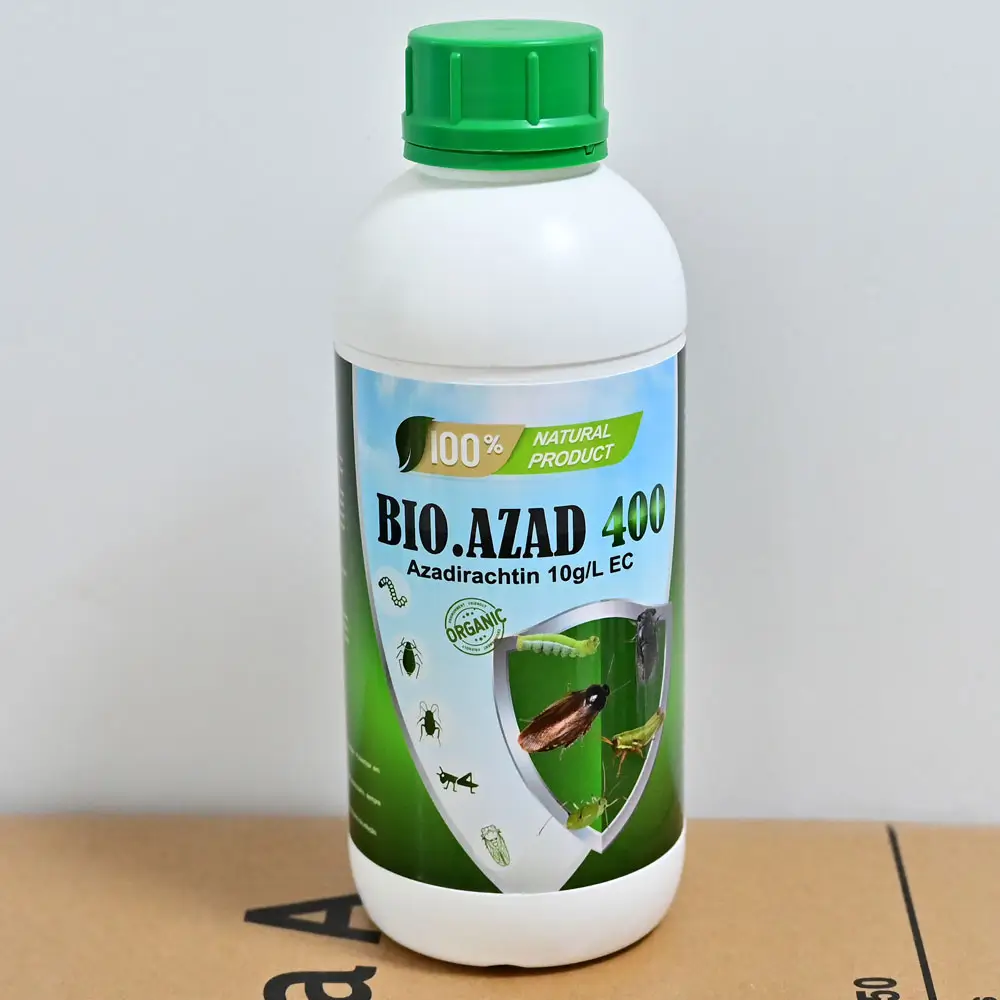
Azadirachtin Insecticide 0.3% EC, 1% ME Featured
If you’re sourcing a botanical insecticide that supports modern crop protection programs, Azadirachtin Insecticide is one of the most practical options to evaluate. It is widely used as a neem-derived bio-insecticide in IPM-style strategies because it works through behavior and development disruption rather than pure contact knockdown.
At POMAIS, you can source Azadirachtin in multiple formulations for different market needs. We recommend 0.3% EC and 1% ME for most commercial distribution scenarios, while keeping other formulations available for registration or channel fit.
- Designed for Professional Buyers & Bulk Orders
- We support custom packaging, labeling, and formulation to meet your market needs.
- Export wholesale inquiries only.
- Please include destination country, business type (importer/distributor/registrant), and expected volume.
- Retail requests will not be processed.

About Azadirachtin Insecticide 0.3% EC, 1% ME Featured
| Product name | Azadirachtin Insecticide |
| Featured formulations | 0.3% EC, 1% ME |
| Additional formulations | 12% TK, 0.5% SL, 0.5% EC, 1% EC, 1% WDG |
| Positioning | Neem-derived bio-insecticide for crop protection programs |
| Documentation | COA, MSDS, TDS available; batch-level QC support |
| OEM support | Multi-language label design, private label/OEM packaging options |
| Packaging | Small pack and bulk options available (market-fit) |
| Supply lead time | Typically 20–30 days (project-based confirmation) |
What Is Azadirachtin Insecticide
Azadirachtin insecticide is a neem-derived active used to manage insect pests by disrupting feeding and development. In practice, buyers choose it when they want a product positioned as a bio-insecticide / biopesticide with broad crop compatibility and strong fit for integrated programs.
Azadirachtin is often discussed alongside neem oil, but they are not the same product type. Neem oil is a plant oil mixture, while azadirachtin refers to a specific bioactive component commonly associated with neem-derived pest management solutions. For procurement and registration work, it’s important that your product documentation clearly states Azadirachtin content and formulation type.
How Azadirachtin Works
Azadirachtin is valued because it is not a “single-action” contact insecticide. Its performance is commonly described through four practical effects that matter in field programs:
- Feeding disruption (anti-feedant behavior)
Many target pests reduce feeding after exposure, which helps reduce crop damage pressure over time. - Growth and development disruption (IGR-like effects)
Azadirachtin is widely associated with interference in normal insect development, which is why it is often positioned for larval/nymph management within staged programs. - Reproduction pressure reduction
In real-world programs, buyers often view azadirachtin as a tool that can help suppress population growth trends when used correctly within an overall plan. - Repellency / deterrence characteristics
Some programs leverage its deterrent profile to reduce pest activity and feeding intensity.
What to expect in commercial use: Azadirachtin is typically selected for program value rather than instant knockdown. It performs best when aligned with the right pest stage, crop scenario, and overall pest management strategy. Always follow the approved product label and local regulations.
Target Pests and Use Cases in Agriculture
Azadirachtin products are commonly positioned for a range of insect pressure patterns where “soft-bodied pests” or development-stage control are key considerations. Typical use cases include:
Common target pest groups (program-level coverage)
- Sap-feeding pests: aphids, whiteflies, leafhoppers and similar groups
- Thrips-type pressure in horticulture and protected cropping
- Caterpillar and larval feeding pressure (program support, stage-dependent)
- Mite-related management programs where azadirachtin is used as part of a broader strategy
Typical crop scenarios
- Vegetables and horticultural crops (open field and greenhouse programs)
- Fruit and orchard systems that prefer diversified mode-of-action planning
- Export-focused crops where buyers prioritize documentation and program compatibility
If your market requires a tighter label scope (by crop or pest), we can support you with documentation packages aligned to your registration pathway and channel positioning.
Featured Products: 0.3% EC and 1% ME
Your channel success often depends on choosing a formulation that matches distributor expectations, storage realities, and application preferences. This is where the right formulation positioning matters.
Azadirachtin 0.3% EC (Featured)
0.3% EC is a common commercial positioning for azadirachtin because it balances practicality and distribution readiness. Many buyers select it as an “easy-to-sell” option for standard crop protection portfolios.
Best-fit reasons importers and distributors choose 0.3% EC:
- Familiar product format for many markets
- Straightforward positioning for bio-insecticide portfolios
- Suitable for broad channel distribution and multi-language labeling
Azadirachtin 1% ME (Featured)
1% ME (Microemulsion) is positioned for buyers who want a more “formulation-driven” product story—often focusing on dispersion quality, handling experience, and consistent presentation under a wider range of operating conditions.
Why 1% ME is attractive for brand owners:
- Strong premium positioning for formulated bio-insecticide lines
- Differentiation versus standard EC-only competitor pages
- Better storytelling around formulation performance and consistency (depending on market expectations)
Available Formulations (Full Portfolio)
POMAIS can supply azadirachtin in multiple formulation types so you can match local channel needs, registration routes, or portfolio strategy:
- 12% TK
- 0.5% SL
- 0.3% EC (Featured)
- 0.5% EC
- 1% EC
- 1% ME (Featured)
- 1% WDG
If you are building a “good / better / best” portfolio ladder, we can help you position 0.3% EC for mainstream distribution while using 1% ME as a higher-value formulation option.
Quality Assurance and Batch Consistency
When you sell a bio-insecticide across different climates and distribution conditions, batch-to-batch consistency and documentation discipline decide whether you can scale reliably. Our QC system is designed to support importers, distributors, and brand owners who need repeatable product performance and defensible paperwork.
What you can expect from POMAIS quality management:
- Pre-production control: raw material checks and formulation stability screening (where applicable)
- In-process control: controlled production workflow with monitoring to reduce variability
- Finished-product verification: batch testing and documentation issuance (COA available)
- Packaging integrity checks: leakage prevention and shipping robustness verification for export scenarios
If you need a market-specific pack file (COA/MSDS/TDS + label-ready text), we can assemble it as part of your procurement workflow.
Packaging, OEM Labeling, and Market Access Support
Packaging options built for distribution
Your channel may require everything from small packs for retail networks to bulk packs for professional programs. We support:
- Flexible small packs (liquid products can start from small-volume packs depending on market needs)
- Standard export cartons and palletization planning
- Bulk packaging options for tender-style or large farm distribution
OEM label and brand execution
If you’re building your own azadirachtin line, packaging and compliance details are where most projects slow down. We help you keep timelines predictable:
- Multi-language label layout support
- Brand presentation alignment (logo, series design, product family look)
- Documentation workflow support for registration and channel onboarding (project-based)
Safety and Environmental Profile
Azadirachtin is typically positioned as a bio-insecticide, but “bio” does not mean risk-free. In professional procurement, the right approach is:
Risk = Hazard × Exposure.
Your safety outcome depends on where, when, and how the product is used—and on compliance with the approved label in your market.
Human safety positioning
Azadirachtin products are commonly selected when buyers want a crop protection tool with a more favorable handling narrative than many conventional chemistries, while still requiring professional risk management. Always follow the approved label and local regulations.
Bees and beneficial insects
Questions about bees are common in the market. The practical answer is that risk depends heavily on exposure timing and use scenario. For pollinator-sensitive programs, buyers typically plan product use to reduce exposure risk and follow local guidance.
If your market requires specific environmental statements, we can align the product communication to your compliance expectations and labeling rules.
FAQs
Is azadirachtin the same as neem oil?
No. Neem oil is a plant oil mixture, while azadirchtin refers to a specific bioactive associated with neem-derived pest management solutions. For procurement, focus on azadirachtin content and formulation type shown on the COA and label documents.
What pests does azadirachtin target best?
Azadirachtin is commonly positioned for programs managing sap-feeding pests, thrips-type pressure, larval feeding pressure, and certain mite-management programs. Performance expectations should be aligned to pest stage and local label scope.
Does azadirachtin provide fast knockdown?
Azadirachtin is generally chosen for program value rather than instant knockdown. It is typically described as influencing feeding and development patterns, which can support control outcomes when used correctly within an overall strategy.
Is azadirachtin harmful to humans?
Safe use depends on exposure and label compliance. Professional buyers treat azadirachtin as a regulated crop protection product: read the label, follow local rules, and ensure appropriate handling measures.
Is azadirachtin safe for bees?
There is no universal “always safe” answer. Risk depends on exposure timing, application context, and local guidance. Pollinator-sensitive programs typically adopt risk-reduction practices and follow label directions strictly.
What formulations do you offer?
We supply 0.3% EC and 1% ME as featured products, and we also support 12% TK, 0.5% SL, 0.5% EC, 1% EC, and 1% WDG for market-fit needs.
Can you provide COA/MSDS/TDS and support registration documents?
Yes. We provide documentation packages (COA/MSDS/TDS) and can support label-ready content preparation and project documentation workflows based on your market requirements.
Can you do OEM labels and customized packaging?
Yes. We support private label execution, multi-language label design, and packaging customization to help you launch or upgrade your own azadirachtin product line.
Next Step: Get a Label-Ready Answer
If you’re evaluating Azadirachtin Insecticide for distribution or private label, send us the basics below and we’ll reply with a market-fit specification pack:
- Target country/region and registration pathway expectations
- Preferred formulation (0.3% EC for mainstream positioning or 1% ME for premium differentiation)
- Target crops and typical pest pressure scenarios (high-level is enough)
- Packaging format targets (small pack, bulk, or mixed)
- Documentation needs (COA/MSDS/TDS, label language, tender file requirements)
You’ll receive a clear recommendation on the best-fit grade, available packaging options, and a label-ready document set aligned to your market workflow.