Last Updated: January 13th, 20261120 words5.6 min read

Spider Mite Control on Tomato Plants

A Comprehensive Strategy and the Latest Advances

Spider mites are one of the most persistent challenges faced by tomato growers, particularly during hot, dry conditions. These microscopic pests reproduce rapidly, feed on leaf sap, and cause visible symptoms such as leaf stippling, discoloration, curling, and fine webbing. If left unmanaged, infestations can result in severe plant stress, significant yield loss, and even complete plant failure.

Effective spider mite management relies on early detection, continuous monitoring, and an integrated pest management (IPM) approach rather than a single control method.

Key Takeaways: Three Pillars of Tomato Spider Mite Control

1. Early Detection and Physical Intervention

Regularly inspect tomato leaves—especially the undersides. At the first sign of spider mites, apply physical controls such as strong water sprays and increase humidity to disrupt mite reproduction.

2. Integrated Control Strategy

Combine organic solutions (neem oil, diatomaceous earth, seaweed extracts) with biological control (predatory mites, lady beetles). For severe infestations, selective chemical miticides may be used cautiously.

3. Prevention Through Plant Health

Healthy, well-watered tomato plants are less susceptible. Reducing environmental stress, maintaining balanced nutrition, and planting companion plants that attract beneficial insects are critical for long-term suppression.

Understanding Spider Mite Damage and Identification

Spider mites—most notably the two-spotted spider mite—are extremely small and often go unnoticed until damage becomes visible. They primarily colonize the undersides of tomato leaves, piercing plant cells and extracting sap.

Common Symptoms Include:

  • Leaf Stippling and Discoloration
    Early signs appear as tiny yellow or bronze spots, which gradually merge into large chlorotic areas.
  • Leaf Curling and Wilting
    Affected leaves may curl upward, become brittle, dry out, and eventually drop.
  • Fine Webbing
    Heavy infestations produce fine silk webs between leaves and stems—one of the most recognizable indicators.
  • Stunted Growth and Yield Reduction
    Photosynthesis efficiency declines, leading to poor fruit development and reduced yield and quality.

Spider mites thrive in warm, dry, dusty environments, making summer fields and greenhouses particularly vulnerable. Weekly inspection of leaf undersides is essential for early intervention.

Tomato leaves infested with spider mites show noticeable spots and lesions.

Physical and Biological Control

The First Line of Eco-Friendly Defense

Prioritizing ecological methods protects beneficial organisms and helps maintain long-term pest balance.

Early Physical Control Methods

High-Pressure Water Spray

For light to moderate infestations, washing tomato plants with a strong stream of water, especially on leaf undersides, can physically remove large numbers of mites while increasing humidity—an unfavorable condition for mite reproduction.
Application can be done daily until populations decline.

Diatomaceous Earth (DE)

Diatomaceous earth is a natural powder made from fossilized algae with sharp microscopic edges. When applied to plant surfaces, it damages the mite’s exoskeleton, causing dehydration and death.
It is non-toxic to humans and pets and works as a mechanical insecticide.

Biological Control Using Natural Enemies

Biological control offers sustainable, long-term suppression by restoring natural predator–prey balance.

  • Predatory Mites
    Phytoseiulus persimilis and Neoseiulus cucumeris feed exclusively on spider mites. A single predatory mite can consume up to 10 spider mites per day.
  • Lady Beetles and Lacewing Larvae
    These beneficial insects also prey on spider mites. Encourage their presence by planting nectar-rich companion plants and avoiding broad-spectrum insecticides.
  • Parasitic Wasps
    While less direct, certain species can reduce spider mite reproduction.

Critical Note: Avoid broad-spectrum insecticides when using biological control, as they eliminate beneficial insects and can cause spider mite resurgence.

Organic Solutions

Smart Use of Natural Ingredients

For home gardens and organic production systems, several natural options provide effective control.

Neem Oil

Neem oil contains azadirachtin, which disrupts mite feeding, growth, and reproduction. It is effective against multiple pests while remaining relatively safe for beneficial insects.
Apply as a diluted foliar spray, ensuring full coverage of leaf undersides.
Recommended frequency: every 7 days until control is achieved.

Insecticidal Soap

Insecticidal soap works by breaking down the mite’s cell membranes. As a contact insecticide, it must directly hit the mites to be effective.
It leaves minimal residue and is ideal for early infestations.

Seaweed Extract Spray

Seaweed extracts provide over 70 trace minerals, enhancing plant vigor and stress tolerance. Research suggests they also have ovicidal (egg-killing) effects against spider mites.
Apply twice per week as both a nutritional supplement and preventive measure.

Essential Oil Blends

Garlic, thyme, rosemary, and peppermint oils exhibit repellent and miticidal properties.
A mild homemade spray can be prepared by mixing essential oils with water and a small amount of gentle soap for emulsification.
Best suited for light infestations and prevention.

Chemical Control

Solutions for Severe Infestations

For commercial operations or heavy outbreaks where organic and biological measures are insufficient, chemical miticides may be required. Always follow label instructions, including PHI (Pre-Harvest Interval) and REI (Re-Entry Interval), and favor selective products to protect beneficial species.

Common Active Ingredients for Tomato Spider Mite Control

Active Ingredient Mode of Action & Features Best Use Scenario Key Considerations
Pyrethrins + Canola Oil Fast-acting contact insecticide Home gardens, light–moderate infestations Degrades quickly; impacts beneficial insects
Spinosad Organic-approved; limited mite efficacy Mild infestations Not a first-choice miticide
Abamectin Highly effective; translaminar activity Severe infestations, professional use Resistance management required
Spirotetramat Lipid biosynthesis inhibitor; systemic Hidden or persistent infestations Bee exposure risk—apply carefully
Etoxazole Inhibits egg hatch and larval molting Long-term control targeting eggs Rotate to prevent resistance
Fenpropathrin / Fenpyroximate Selective miticides Targeted mite control Observe effects on beneficials
Bifenthrin / Permethrin Broad-spectrum insecticides Emergency knockdown High risk to natural enemies

Important: Rotate products with different modes of action to prevent resistance development.
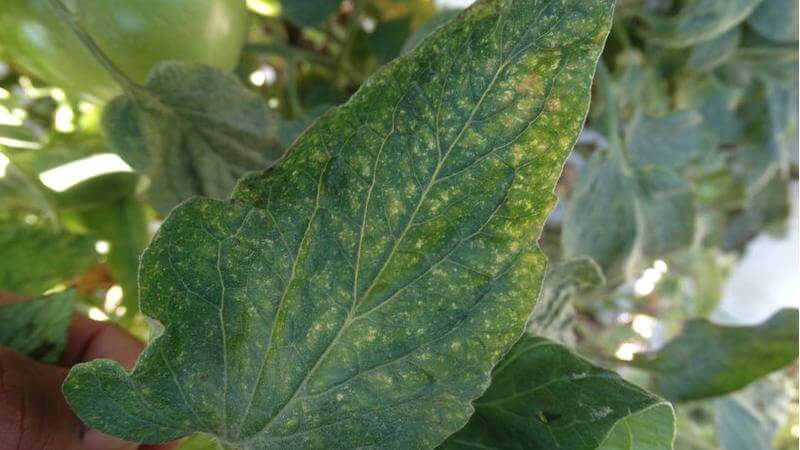
Typical damage caused by red spider mites to tomato leaves.

Prevention

Building a Healthy Tomato Ecosystem

Prevention is the most cost-effective spider mite control strategy.

Maintain Plant Health and Moisture

  • Ensure consistent irrigation; drought stress favors spider mites.
  • Apply balanced fertilization—avoid excessive nitrogen.
  • Weekly seaweed sprays improve resilience and micronutrient availability.

Cultural and Environmental Practices

  • Weed Control: Remove weeds that harbor mites.
  • Dust Reduction: Use mulch or frequent irrigation to suppress dust.
  • Companion Planting: Marigold, dill, and coriander attract beneficial insects.
  • Regular Monitoring: Inspect leaf undersides weekly for early signs.

Frequently Asked Questions (FAQ)

Which parts of tomato plants are most affected by spider mites?
Primarily the leaves, especially the undersides, where mites feed and reproduce.

What are the most effective organic control methods?
Water spraying, diatomaceous earth, neem oil, insecticidal soap, and predatory mites.

Do chemical miticides affect tomato food safety?
When applied according to label instructions, including PHI and REI, they are safe for consumption.

How can spider mite outbreaks be prevented long term?
Maintain plant health, manage moisture, reduce dust, encourage beneficial insects, and monitor regularly.

Conclusion

Spider mite management on tomatoes requires a multi-layered, continuous approach. From early detection and physical removal to strategic use of organic, biological, and—when necessary—chemical controls, each step plays a vital role. By fostering a healthy growing environment and adopting scientifically grounded management practices, growers can protect tomato crops, secure yields, and support sustainable production systems.

A Comprehensive Strategy and the Latest Advances

Spider mites are one of the most persistent challenges faced by tomato growers, particularly during hot, dry conditions. These microscopic pests reproduce rapidly, feed on leaf sap, and cause visible symptoms such as leaf stippling, discoloration, curling, and fine webbing. If left unmanaged, infestations can result in severe plant stress, significant yield loss, and even complete plant failure.

Effective spider mite management relies on early detection, continuous monitoring, and an integrated pest management (IPM) approach rather than a single control method.

Key Takeaways: Three Pillars of Tomato Spider Mite Control

1. Early Detection and Physical Intervention

Regularly inspect tomato leaves—especially the undersides. At the first sign of spider mites, apply physical controls such as strong water sprays and increase humidity to disrupt mite reproduction.

2. Integrated Control Strategy

Combine organic solutions (neem oil, diatomaceous earth, seaweed extracts) with biological control (predatory mites, lady beetles). For severe infestations, selective chemical miticides may be used cautiously.

3. Prevention Through Plant Health

Healthy, well-watered tomato plants are less susceptible. Reducing environmental stress, maintaining balanced nutrition, and planting companion plants that attract beneficial insects are critical for long-term suppression.

Understanding Spider Mite Damage and Identification

Spider mites—most notably the two-spotted spider mite—are extremely small and often go unnoticed until damage becomes visible. They primarily colonize the undersides of tomato leaves, piercing plant cells and extracting sap.

Common Symptoms Include:

  • Leaf Stippling and Discoloration
    Early signs appear as tiny yellow or bronze spots, which gradually merge into large chlorotic areas.
  • Leaf Curling and Wilting
    Affected leaves may curl upward, become brittle, dry out, and eventually drop.
  • Fine Webbing
    Heavy infestations produce fine silk webs between leaves and stems—one of the most recognizable indicators.
  • Stunted Growth and Yield Reduction
    Photosynthesis efficiency declines, leading to poor fruit development and reduced yield and quality.

Spider mites thrive in warm, dry, dusty environments, making summer fields and greenhouses particularly vulnerable. Weekly inspection of leaf undersides is essential for early intervention.

Tomato leaves infested with spider mites show noticeable spots and lesions.

Physical and Biological Control

The First Line of Eco-Friendly Defense

Prioritizing ecological methods protects beneficial organisms and helps maintain long-term pest balance.

Early Physical Control Methods

High-Pressure Water Spray

For light to moderate infestations, washing tomato plants with a strong stream of water, especially on leaf undersides, can physically remove large numbers of mites while increasing humidity—an unfavorable condition for mite reproduction.
Application can be done daily until populations decline.

Diatomaceous Earth (DE)

Diatomaceous earth is a natural powder made from fossilized algae with sharp microscopic edges. When applied to plant surfaces, it damages the mite’s exoskeleton, causing dehydration and death.
It is non-toxic to humans and pets and works as a mechanical insecticide.

Biological Control Using Natural Enemies

Biological control offers sustainable, long-term suppression by restoring natural predator–prey balance.

  • Predatory Mites
    Phytoseiulus persimilis and Neoseiulus cucumeris feed exclusively on spider mites. A single predatory mite can consume up to 10 spider mites per day.
  • Lady Beetles and Lacewing Larvae
    These beneficial insects also prey on spider mites. Encourage their presence by planting nectar-rich companion plants and avoiding broad-spectrum insecticides.
  • Parasitic Wasps
    While less direct, certain species can reduce spider mite reproduction.

Critical Note: Avoid broad-spectrum insecticides when using biological control, as they eliminate beneficial insects and can cause spider mite resurgence.

Organic Solutions

Smart Use of Natural Ingredients

For home gardens and organic production systems, several natural options provide effective control.

Neem Oil

Neem oil contains azadirachtin, which disrupts mite feeding, growth, and reproduction. It is effective against multiple pests while remaining relatively safe for beneficial insects.
Apply as a diluted foliar spray, ensuring full coverage of leaf undersides.
Recommended frequency: every 7 days until control is achieved.

Insecticidal Soap

Insecticidal soap works by breaking down the mite’s cell membranes. As a contact insecticide, it must directly hit the mites to be effective.
It leaves minimal residue and is ideal for early infestations.

Seaweed Extract Spray

Seaweed extracts provide over 70 trace minerals, enhancing plant vigor and stress tolerance. Research suggests they also have ovicidal (egg-killing) effects against spider mites.
Apply twice per week as both a nutritional supplement and preventive measure.

Essential Oil Blends

Garlic, thyme, rosemary, and peppermint oils exhibit repellent and miticidal properties.
A mild homemade spray can be prepared by mixing essential oils with water and a small amount of gentle soap for emulsification.
Best suited for light infestations and prevention.

Chemical Control

Solutions for Severe Infestations

For commercial operations or heavy outbreaks where organic and biological measures are insufficient, chemical miticides may be required. Always follow label instructions, including PHI (Pre-Harvest Interval) and REI (Re-Entry Interval), and favor selective products to protect beneficial species.

Common Active Ingredients for Tomato Spider Mite Control

Active Ingredient Mode of Action & Features Best Use Scenario Key Considerations
Pyrethrins + Canola Oil Fast-acting contact insecticide Home gardens, light–moderate infestations Degrades quickly; impacts beneficial insects
Spinosad Organic-approved; limited mite efficacy Mild infestations Not a first-choice miticide
Abamectin Highly effective; translaminar activity Severe infestations, professional use Resistance management required
Spirotetramat Lipid biosynthesis inhibitor; systemic Hidden or persistent infestations Bee exposure risk—apply carefully
Etoxazole Inhibits egg hatch and larval molting Long-term control targeting eggs Rotate to prevent resistance
Fenpropathrin / Fenpyroximate Selective miticides Targeted mite control Observe effects on beneficials
Bifenthrin / Permethrin Broad-spectrum insecticides Emergency knockdown High risk to natural enemies

Important: Rotate products with different modes of action to prevent resistance development.

Typical damage caused by red spider mites to tomato leaves.

Prevention

Building a Healthy Tomato Ecosystem

Prevention is the most cost-effective spider mite control strategy.

Maintain Plant Health and Moisture

  • Ensure consistent irrigation; drought stress favors spider mites.
  • Apply balanced fertilization—avoid excessive nitrogen.
  • Weekly seaweed sprays improve resilience and micronutrient availability.

Cultural and Environmental Practices

  • Weed Control: Remove weeds that harbor mites.
  • Dust Reduction: Use mulch or frequent irrigation to suppress dust.
  • Companion Planting: Marigold, dill, and coriander attract beneficial insects.
  • Regular Monitoring: Inspect leaf undersides weekly for early signs.

Frequently Asked Questions (FAQ)

Which parts of tomato plants are most affected by spider mites?
Primarily the leaves, especially the undersides, where mites feed and reproduce.

What are the most effective organic control methods?
Water spraying, diatomaceous earth, neem oil, insecticidal soap, and predatory mites.

Do chemical miticides affect tomato food safety?
When applied according to label instructions, including PHI and REI, they are safe for consumption.

How can spider mite outbreaks be prevented long term?
Maintain plant health, manage moisture, reduce dust, encourage beneficial insects, and monitor regularly.

Conclusion

Spider mite management on tomatoes requires a multi-layered, continuous approach. From early detection and physical removal to strategic use of organic, biological, and—when necessary—chemical controls, each step plays a vital role. By fostering a healthy growing environment and adopting scientifically grounded management practices, growers can protect tomato crops, secure yields, and support sustainable production systems.

Share to:
Share to: