
Last Updated: January 13th, 20262187 words10.9 min read

Fipronil Rapidly Eliminates Fleas, Providing Swift Relief for Your Pet

Key Insights into Fipronil’s Flea-Killing Speed

  1. Rapid Onset: Fleas typically begin to die within 4 to 8 hours after fipronil application, offering fast relief.
  2. High Efficacy within 24 Hours: Most fipronil treatments achieve 98-100% elimination of adult fleas within 12 to 24 hours.
  3. Sustained Protection: Fipronil provides residual efficacy for up to 30 days, preventing re-infestation and breaking the flea life cycle when combined with IGRs.

Fipronil, a powerful insecticide, is a cornerstone in the fight against flea infestations on pets. Pet owners frequently seek treatments that offer not only effective but also rapid relief for their companions. This comprehensive guide delves into the speed at which fipronil acts, its mechanism, lasting effects, and practical advice for optimal use, all designed to ensure your pet remains flea-free and comfortable.

Understanding Fipronil: The Science Behind the Speed

Fipronil is an active ingredient widely recognized for its efficacy in flea and tick treatments. It belongs to the phenylpyrazole chemical family and targets the central nervous system of insects, leading to their rapid demise. Its selective action makes it highly effective against pests while being generally safe for mammals when used as directed.

How Fipronil Targets Fleas’ Nervous System

The core of fipronil’s effectiveness lies in its unique mode of action. Fipronil disrupts the normal function of an insect’s central nervous system by blocking gamma-aminobutyric acid (GABA) receptors and glutamate-gated chloride channels. These receptors are crucial for controlling nerve signals. By blocking them, fipronil causes hyperexcitation of the insect’s nerves and muscles, leading to paralysis and ultimately death.

The specificity of fipronil towards insects is a key safety feature. It binds much more strongly to insect GABAA receptors compared to those in mammals, which is why it poses a low hazard to pets and humans when applied correctly.

Fipronil’s Flea-Killing Timeline: From Application to Eradication

One of fipronil’s most compelling attributes is its impressive speed of kill. This rapid action is critical for alleviating discomfort in infested pets and preventing further complications like allergic reactions or the spread of flea-borne diseases.

Immediate Effects: Within Hours

Upon topical application, fipronil begins to spread across the pet’s skin and coat, accumulating in the sebaceous glands. As fleas come into contact with the treated animal, they absorb the fipronil, and its neurotoxic effects quickly manifest. Studies consistently show that fleas typically begin to die within 4 to 8 hours after the initial application. This rapid onset provides noticeable relief for pets, reducing scratching and irritation.

Peak Efficacy: Within 12-24 Hours

The majority of adult fleas are eliminated within a short timeframe. Research indicates that fipronil achieves 98-100% effectiveness against adult fleas within 12 to 24 hours post-treatment. For instance, some studies report complete elimination of cat fleas within 12 to 18 hours. This rapid and near-total kill is a testament to fipronil’s potent action.

While fleas succumb quickly, the action against ticks may be slightly slower, typically achieving 100% effectiveness within 24 to 48 hours.

Sustained Protection: Residual Efficacy

Beyond the initial rapid kill, fipronil provides ongoing protection. It is slowly released from the sebaceous glands, creating a reservoir that continuously coats the skin and hair follicles. This residual activity ensures that newly infesting fleas are quickly targeted and killed, maintaining efficacy for approximately 30 days. Even with exposure to water or bathing (though it’s often recommended to avoid water contact for the first 48 hours post-application), fipronil maintains its protective qualities.

Some formulations, particularly those combining fipronil with permethrin, can demonstrate knock-down effects in as little as 5 minutes post-infestation, with high efficacy maintained for the first two weeks of treatment and remaining above 85% at two hours post-infestation throughout the month.

The Importance of Comprehensive Flea Control: Beyond Adult Fleas

While fipronil is highly effective against adult fleas, it’s crucial to remember that adult fleas represent only a small fraction (about 5%) of a total flea infestation. The vast majority of the flea population exists as eggs, larvae, and pupae in the pet’s environment.

Combining Fipronil with Insect Growth Regulators (IGRs)

To achieve truly comprehensive flea control, many fipronil-based products are formulated with an insect growth regulator (IGR), such as S-methoprene. This combination offers a dual-action approach:

  • Fipronil: Rapidly kills adult fleas on the pet.
  • S-methoprene: Acts as “flea birth control” by preventing the development of flea eggs, larvae, and pupae. It mimics juvenile hormones, effectively sterilizing female fleas and halting the life cycle.

This synergistic approach tackles the infestation from multiple angles, ensuring not only the elimination of existing adult fleas but also the prevention of future generations, leading to a significant reduction in the overall flea population.
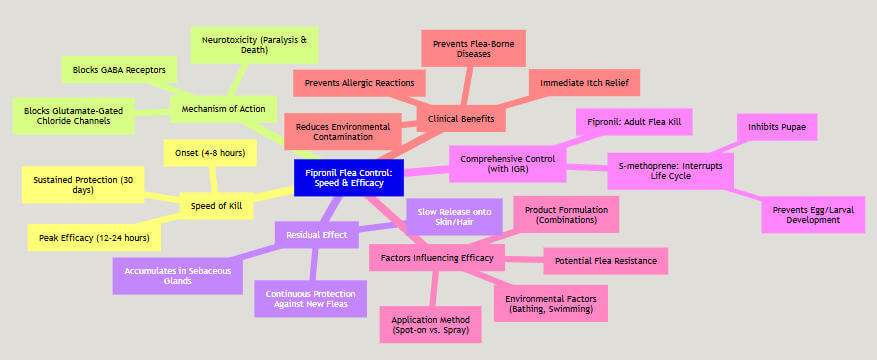
A visual representation of Fipronil’s multi-faceted approach to flea control.

Factors Influencing Fipronil’s Speed and Effectiveness

While fipronil is consistently effective, several factors can influence its speed of action and overall efficacy in real-world scenarios. Understanding these can help pet owners maximize treatment success.

Application Method and Product Formulation

Different fipronil products come in various formulations (spot-ons, sprays) and may include other active ingredients. These variations can slightly alter the onset and duration of action. For instance, combinations with ingredients like dinotefuran can sometimes offer an even faster onset of action due to synergistic effects.

Environmental Factors and Pet Care

  1. Bathing and Swimming: While fipronil is designed to be water-resistant, excessive bathing or swimming, especially immediately after application, can potentially reduce the residual protection. Most manufacturers recommend avoiding water exposure for at least 24-48 hours post-application.
  2. Correct Application: Proper application is paramount. Applying the correct dose based on the pet’s weight and ensuring it reaches the skin (not just the fur) allows for optimal absorption and distribution.

Flea Resistance Concerns

While some anecdotal reports and local variations in flea strains have raised questions about potential resistance, scientific consensus generally suggests that widespread, significant resistance to fipronil has not been definitively proven. Apparent treatment failures are more often attributed to:

  1. Improper application.
  2. Overwhelming environmental infestation with immature flea stages.
  3. Misdiagnosis of the problem.

Veterinarians recommend discussing any concerns about persistent flea issues with a professional, who can advise on alternative treatments or integrated pest management strategies.

Clinical Benefits of Fipronil’s Rapid Action

The swift action of fipronil carries significant clinical implications for pet health and welfare. Its ability to eliminate fleas quickly offers numerous advantages:

  • Immediate Relief from Discomfort: Rapid flea kill means pets experience less itching, scratching, and overall irritation, improving their quality of life.
  • Prevention of Flea Allergy Dermatitis (FAD): For pets sensitive to flea bites, fipronil’s ability to kill fleas before they can feed for extended periods helps prevent allergic reactions. A treatment that achieves close to 100% flea kill within 24 hours effectively prevents fleas from triggering FAD.
  • Interruption of the Flea Life Cycle: By killing adult fleas quickly (within 24 hours), fipronil prevents them from laying eggs. This immediately halts the environmental contamination with new flea stages, allowing the overall flea population to decline within a single generation.
  • Reduced Risk of Flea-Borne Diseases: Fleas can transmit various pathogens. A rapid and effective flea treatment helps minimize the risk of diseases like tapeworm or Bartonellosis.

Comparative Efficacy of Flea Treatments

To illustrate fipronil’s performance relative to other considerations in flea control, consider the following radar chart. This chart provides an opinionated analysis of different aspects of flea treatment efficacy, with values ranging from 1 (lowest) to 5 (highest).
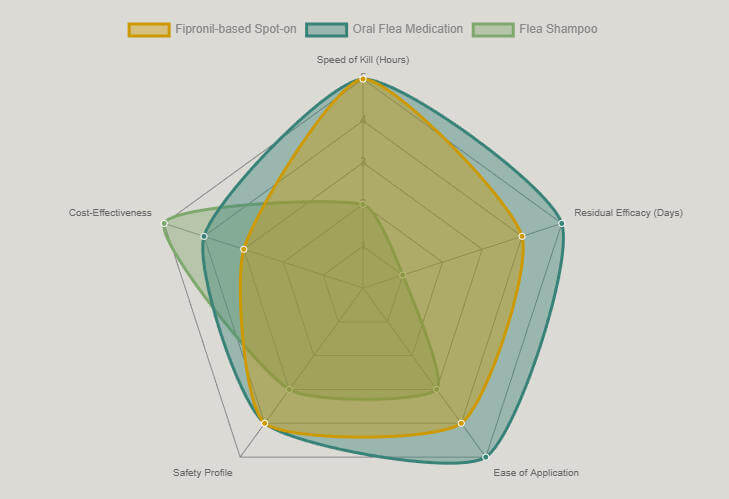
This chart compares Fipronil-based spot-ons with oral medications and flea shampoos across several critical metrics.

Radar Chart: This chart compares Fipronil-based spot-ons with oral medications and flea shampoos across several critical metrics. Fipronil excels in speed of kill, offering a rapid onset of action, comparable to oral medications for initial impact. While its residual efficacy is strong, some newer oral treatments might offer slightly longer protection. Its ease of application is generally good for spot-ons, and its safety profile is well-established. The cost-effectiveness is generally good, though not as low as basic shampoos, which lack the residual power.

Optimizing Fipronil Use for Best Results

To ensure maximum effectiveness and safety when using fipronil, follow these practical guidelines:

  • Follow Instructions Carefully: Always adhere to the product’s label instructions regarding dosage, application method, and frequency. This is crucial for both efficacy and pet safety.
  • Apply Correctly: For spot-on treatments, part the fur at the base of the neck or between the shoulder blades and apply directly to the skin. This prevents the pet from licking the product off and ensures proper absorption.
  • Environmental Treatment: Combine topical treatments with environmental control measures. Regular vacuuming, washing pet bedding, and treating infested areas in the home can significantly reduce the overall flea burden.
  • Consistency is Key: Apply fipronil treatments monthly, as recommended, to maintain continuous protection and effectively break the flea life cycle.
  • Consult Your Veterinarian: If you have any concerns about flea infestations, product effectiveness, or your pet’s health, always consult your veterinarian. They can provide tailored advice and recommend the most appropriate treatment plan.

Understanding Treatment Coverage: Fleas vs. Ticks

While fipronil is highly effective against fleas, its action extends to other parasites like ticks. However, the speed of kill can vary slightly between these pests.

Fipronil’s Speed of Kill for Common External Parasites
Target Parasite Initial Kill Onset Peak Efficacy (Near 100% Kill) Residual Protection
Adult Fleas (Ctenocephalides felis) 4-8 hours 12-24 hours Up to 30 days
Brown Dog Ticks (Rhipicephalus sanguineus) 12-24 hours 24-48 hours Up to 30 days
Lice Generally within 24 hours 48 hours Up to 30 days

Table: This table summarizes the approximate speed of kill for fipronil against fleas, ticks, and lice. While fleas are eliminated very rapidly, ticks may take slightly longer, typically within 24-48 hours, highlighting fipronil’s broad-spectrum efficacy.

This table illustrates that while fipronil is potent against both fleas and ticks, the time required for complete elimination can differ. Fleas, due to their smaller size and biology, often succumb faster than ticks. This demonstrates fipronil’s versatility as a broad-spectrum parasiticide.

Spotlight on Fipronil and Pet Safety

Fipronil is generally considered safe for use in dogs and cats over 8 weeks of age when applied according to the manufacturer’s instructions. The specific targeting of insect nervous systems, with minimal impact on mammalian receptors, contributes to its safety profile.

Important Safety Considerations:

  1. Species-Specific Products: Always use products specifically formulated for the animal you are treating (e.g., never use a dog fipronil product on a cat, as some dog formulations may contain permethrin, which is toxic to cats).
  2. Avoid Ingestion: Prevent pets from licking the application site until it is completely dry. If ingested, mild, temporary side effects such as salivation may occur.
  3. Consult a Vet: For pregnant or nursing pets, or those with underlying health conditions, always consult a veterinarian before applying any flea treatment.


Understanding Product Longevity and Efficacy

The sustained effectiveness of flea treatments is as crucial as their initial speed. This bar chart provides an opinionated comparison of the duration of protection offered by various flea control methods.
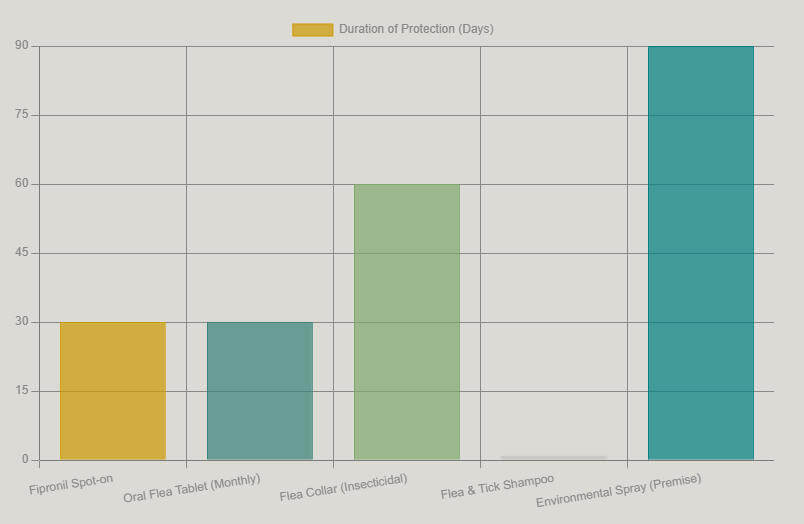
Bar Chart: This bar chart illustrates the typical duration of protection offered by various flea control methods. Fipronil spot-ons provide consistent monthly protection, comparable to many oral tablets. Insecticidal collars can offer longer continuous protection, while shampoos provide only immediate, short-lived relief. Environmental sprays are designed for extended control in the home environment, complementing on-pet treatments.

Frequently Asked Questions (FAQ)

How often should I apply fipronil to my pet?

Fipronil-based treatments are typically applied monthly to maintain continuous protection against fleas and ticks. Always refer to the specific product’s instructions for the recommended frequency.

Can fipronil prevent flea eggs from hatching?

Standalone fipronil primarily kills adult fleas. However, many fipronil products are combined with an Insect Growth Regulator (IGR) like S-methoprene, which prevents flea eggs and larvae from developing, thus breaking the flea life cycle.

Is fipronil safe for all pets?

Fipronil is generally safe for dogs and cats over 8 weeks of age when used as directed. It is crucial to use species-specific products (e.g., dog-specific treatments for dogs, cat-specific treatments for cats) to avoid adverse reactions. Consult your veterinarian for advice on pregnant, nursing, or medically compromised pets.

What if my pet is still scratching after fipronil application?

While fipronil kills fleas rapidly, some pets may continue to scratch for a short period due to residual irritation or allergic reactions to flea saliva. If scratching persists beyond a day or two, or if you suspect the treatment isn’t working, consult your veterinarian. Ensure proper application and consider environmental treatment as well.

Does fipronil repel fleas?

Fipronil primarily works as an insecticide, killing fleas on contact or ingestion after they come into contact with the treated pet. While it doesn’t actively “repel” in the way some chemicals do, its rapid killing action means fleas die quickly after encountering the treated animal, effectively preventing them from settling and biting.

Conclusion: Fipronil — A Fast and Reliable Solution for Flea Control

Fipronil stands as a highly effective and rapid-acting solution for flea control, delivering noticeable results within hours of application and achieving near-complete eradication of adult fleas within 24 hours. Its mechanism of action targets the insect nervous system, making it potent against pests while maintaining a favorable safety profile for pets. When combined with insect growth regulators, fipronil provides a comprehensive strategy that not only eliminates existing adult fleas but also prevents future generations, offering sustained protection for up to a month. By understanding its speed, efficacy, and proper application, pet owners can confidently utilize fipronil to keep their companions comfortable and free from the nuisance and health risks associated with flea infestations.

Key Insights into Fipronil’s Flea-Killing Speed

  1. Rapid Onset: Fleas typically begin to die within 4 to 8 hours after fipronil application, offering fast relief.
  2. High Efficacy within 24 Hours: Most fipronil treatments achieve 98-100% elimination of adult fleas within 12 to 24 hours.
  3. Sustained Protection: Fipronil provides residual efficacy for up to 30 days, preventing re-infestation and breaking the flea life cycle when combined with IGRs.

Fipronil, a powerful insecticide, is a cornerstone in the fight against flea infestations on pets. Pet owners frequently seek treatments that offer not only effective but also rapid relief for their companions. This comprehensive guide delves into the speed at which fipronil acts, its mechanism, lasting effects, and practical advice for optimal use, all designed to ensure your pet remains flea-free and comfortable.

Understanding Fipronil: The Science Behind the Speed

Fipronil is an active ingredient widely recognized for its efficacy in flea and tick treatments. It belongs to the phenylpyrazole chemical family and targets the central nervous system of insects, leading to their rapid demise. Its selective action makes it highly effective against pests while being generally safe for mammals when used as directed.

How Fipronil Targets Fleas’ Nervous System

The core of fipronil’s effectiveness lies in its unique mode of action. Fipronil disrupts the normal function of an insect’s central nervous system by blocking gamma-aminobutyric acid (GABA) receptors and glutamate-gated chloride channels. These receptors are crucial for controlling nerve signals. By blocking them, fipronil causes hyperexcitation of the insect’s nerves and muscles, leading to paralysis and ultimately death.

The specificity of fipronil towards insects is a key safety feature. It binds much more strongly to insect GABAA receptors compared to those in mammals, which is why it poses a low hazard to pets and humans when applied correctly.

Fipronil’s Flea-Killing Timeline: From Application to Eradication

One of fipronil’s most compelling attributes is its impressive speed of kill. This rapid action is critical for alleviating discomfort in infested pets and preventing further complications like allergic reactions or the spread of flea-borne diseases.

Immediate Effects: Within Hours

Upon topical application, fipronil begins to spread across the pet’s skin and coat, accumulating in the sebaceous glands. As fleas come into contact with the treated animal, they absorb the fipronil, and its neurotoxic effects quickly manifest. Studies consistently show that fleas typically begin to die within 4 to 8 hours after the initial application. This rapid onset provides noticeable relief for pets, reducing scratching and irritation.

Peak Efficacy: Within 12-24 Hours

The majority of adult fleas are eliminated within a short timeframe. Research indicates that fipronil achieves 98-100% effectiveness against adult fleas within 12 to 24 hours post-treatment. For instance, some studies report complete elimination of cat fleas within 12 to 18 hours. This rapid and near-total kill is a testament to fipronil’s potent action.

While fleas succumb quickly, the action against ticks may be slightly slower, typically achieving 100% effectiveness within 24 to 48 hours.

Sustained Protection: Residual Efficacy

Beyond the initial rapid kill, fipronil provides ongoing protection. It is slowly released from the sebaceous glands, creating a reservoir that continuously coats the skin and hair follicles. This residual activity ensures that newly infesting fleas are quickly targeted and killed, maintaining efficacy for approximately 30 days. Even with exposure to water or bathing (though it’s often recommended to avoid water contact for the first 48 hours post-application), fipronil maintains its protective qualities.

Some formulations, particularly those combining fipronil with permethrin, can demonstrate knock-down effects in as little as 5 minutes post-infestation, with high efficacy maintained for the first two weeks of treatment and remaining above 85% at two hours post-infestation throughout the month.

The Importance of Comprehensive Flea Control: Beyond Adult Fleas

While fipronil is highly effective against adult fleas, it’s crucial to remember that adult fleas represent only a small fraction (about 5%) of a total flea infestation. The vast majority of the flea population exists as eggs, larvae, and pupae in the pet’s environment.

Combining Fipronil with Insect Growth Regulators (IGRs)

To achieve truly comprehensive flea control, many fipronil-based products are formulated with an insect growth regulator (IGR), such as S-methoprene. This combination offers a dual-action approach:

  • Fipronil: Rapidly kills adult fleas on the pet.
  • S-methoprene: Acts as “flea birth control” by preventing the development of flea eggs, larvae, and pupae. It mimics juvenile hormones, effectively sterilizing female fleas and halting the life cycle.

This synergistic approach tackles the infestation from multiple angles, ensuring not only the elimination of existing adult fleas but also the prevention of future generations, leading to a significant reduction in the overall flea population.

A visual representation of Fipronil’s multi-faceted approach to flea control.

Factors Influencing Fipronil’s Speed and Effectiveness

While fipronil is consistently effective, several factors can influence its speed of action and overall efficacy in real-world scenarios. Understanding these can help pet owners maximize treatment success.

Application Method and Product Formulation

Different fipronil products come in various formulations (spot-ons, sprays) and may include other active ingredients. These variations can slightly alter the onset and duration of action. For instance, combinations with ingredients like dinotefuran can sometimes offer an even faster onset of action due to synergistic effects.

Environmental Factors and Pet Care

  1. Bathing and Swimming: While fipronil is designed to be water-resistant, excessive bathing or swimming, especially immediately after application, can potentially reduce the residual protection. Most manufacturers recommend avoiding water exposure for at least 24-48 hours post-application.
  2. Correct Application: Proper application is paramount. Applying the correct dose based on the pet’s weight and ensuring it reaches the skin (not just the fur) allows for optimal absorption and distribution.

Flea Resistance Concerns

While some anecdotal reports and local variations in flea strains have raised questions about potential resistance, scientific consensus generally suggests that widespread, significant resistance to fipronil has not been definitively proven. Apparent treatment failures are more often attributed to:

  1. Improper application.
  2. Overwhelming environmental infestation with immature flea stages.
  3. Misdiagnosis of the problem.

Veterinarians recommend discussing any concerns about persistent flea issues with a professional, who can advise on alternative treatments or integrated pest management strategies.

Clinical Benefits of Fipronil’s Rapid Action

The swift action of fipronil carries significant clinical implications for pet health and welfare. Its ability to eliminate fleas quickly offers numerous advantages:

  • Immediate Relief from Discomfort: Rapid flea kill means pets experience less itching, scratching, and overall irritation, improving their quality of life.
  • Prevention of Flea Allergy Dermatitis (FAD): For pets sensitive to flea bites, fipronil’s ability to kill fleas before they can feed for extended periods helps prevent allergic reactions. A treatment that achieves close to 100% flea kill within 24 hours effectively prevents fleas from triggering FAD.
  • Interruption of the Flea Life Cycle: By killing adult fleas quickly (within 24 hours), fipronil prevents them from laying eggs. This immediately halts the environmental contamination with new flea stages, allowing the overall flea population to decline within a single generation.
  • Reduced Risk of Flea-Borne Diseases: Fleas can transmit various pathogens. A rapid and effective flea treatment helps minimize the risk of diseases like tapeworm or Bartonellosis.

Comparative Efficacy of Flea Treatments

To illustrate fipronil’s performance relative to other considerations in flea control, consider the following radar chart. This chart provides an opinionated analysis of different aspects of flea treatment efficacy, with values ranging from 1 (lowest) to 5 (highest).

This chart compares Fipronil-based spot-ons with oral medications and flea shampoos across several critical metrics.

Radar Chart: This chart compares Fipronil-based spot-ons with oral medications and flea shampoos across several critical metrics. Fipronil excels in speed of kill, offering a rapid onset of action, comparable to oral medications for initial impact. While its residual efficacy is strong, some newer oral treatments might offer slightly longer protection. Its ease of application is generally good for spot-ons, and its safety profile is well-established. The cost-effectiveness is generally good, though not as low as basic shampoos, which lack the residual power.

Optimizing Fipronil Use for Best Results

To ensure maximum effectiveness and safety when using fipronil, follow these practical guidelines:

  • Follow Instructions Carefully: Always adhere to the product’s label instructions regarding dosage, application method, and frequency. This is crucial for both efficacy and pet safety.
  • Apply Correctly: For spot-on treatments, part the fur at the base of the neck or between the shoulder blades and apply directly to the skin. This prevents the pet from licking the product off and ensures proper absorption.
  • Environmental Treatment: Combine topical treatments with environmental control measures. Regular vacuuming, washing pet bedding, and treating infested areas in the home can significantly reduce the overall flea burden.
  • Consistency is Key: Apply fipronil treatments monthly, as recommended, to maintain continuous protection and effectively break the flea life cycle.
  • Consult Your Veterinarian: If you have any concerns about flea infestations, product effectiveness, or your pet’s health, always consult your veterinarian. They can provide tailored advice and recommend the most appropriate treatment plan.

Understanding Treatment Coverage: Fleas vs. Ticks

While fipronil is highly effective against fleas, its action extends to other parasites like ticks. However, the speed of kill can vary slightly between these pests.

Fipronil’s Speed of Kill for Common External Parasites
Target Parasite Initial Kill Onset Peak Efficacy (Near 100% Kill) Residual Protection
Adult Fleas (Ctenocephalides felis) 4-8 hours 12-24 hours Up to 30 days
Brown Dog Ticks (Rhipicephalus sanguineus) 12-24 hours 24-48 hours Up to 30 days
Lice Generally within 24 hours 48 hours Up to 30 days

Table: This table summarizes the approximate speed of kill for fipronil against fleas, ticks, and lice. While fleas are eliminated very rapidly, ticks may take slightly longer, typically within 24-48 hours, highlighting fipronil’s broad-spectrum efficacy.

This table illustrates that while fipronil is potent against both fleas and ticks, the time required for complete elimination can differ. Fleas, due to their smaller size and biology, often succumb faster than ticks. This demonstrates fipronil’s versatility as a broad-spectrum parasiticide.

Spotlight on Fipronil and Pet Safety

Fipronil is generally considered safe for use in dogs and cats over 8 weeks of age when applied according to the manufacturer’s instructions. The specific targeting of insect nervous systems, with minimal impact on mammalian receptors, contributes to its safety profile.

Important Safety Considerations:

  1. Species-Specific Products: Always use products specifically formulated for the animal you are treating (e.g., never use a dog fipronil product on a cat, as some dog formulations may contain permethrin, which is toxic to cats).
  2. Avoid Ingestion: Prevent pets from licking the application site until it is completely dry. If ingested, mild, temporary side effects such as salivation may occur.
  3. Consult a Vet: For pregnant or nursing pets, or those with underlying health conditions, always consult a veterinarian before applying any flea treatment.


Understanding Product Longevity and Efficacy

The sustained effectiveness of flea treatments is as crucial as their initial speed. This bar chart provides an opinionated comparison of the duration of protection offered by various flea control methods.

Bar Chart: This bar chart illustrates the typical duration of protection offered by various flea control methods. Fipronil spot-ons provide consistent monthly protection, comparable to many oral tablets. Insecticidal collars can offer longer continuous protection, while shampoos provide only immediate, short-lived relief. Environmental sprays are designed for extended control in the home environment, complementing on-pet treatments.

Frequently Asked Questions (FAQ)

How often should I apply fipronil to my pet?

Fipronil-based treatments are typically applied monthly to maintain continuous protection against fleas and ticks. Always refer to the specific product’s instructions for the recommended frequency.

Can fipronil prevent flea eggs from hatching?

Standalone fipronil primarily kills adult fleas. However, many fipronil products are combined with an Insect Growth Regulator (IGR) like S-methoprene, which prevents flea eggs and larvae from developing, thus breaking the flea life cycle.

Is fipronil safe for all pets?

Fipronil is generally safe for dogs and cats over 8 weeks of age when used as directed. It is crucial to use species-specific products (e.g., dog-specific treatments for dogs, cat-specific treatments for cats) to avoid adverse reactions. Consult your veterinarian for advice on pregnant, nursing, or medically compromised pets.

What if my pet is still scratching after fipronil application?

While fipronil kills fleas rapidly, some pets may continue to scratch for a short period due to residual irritation or allergic reactions to flea saliva. If scratching persists beyond a day or two, or if you suspect the treatment isn’t working, consult your veterinarian. Ensure proper application and consider environmental treatment as well.

Does fipronil repel fleas?

Fipronil primarily works as an insecticide, killing fleas on contact or ingestion after they come into contact with the treated pet. While it doesn’t actively “repel” in the way some chemicals do, its rapid killing action means fleas die quickly after encountering the treated animal, effectively preventing them from settling and biting.

Conclusion: Fipronil — A Fast and Reliable Solution for Flea Control

Fipronil stands as a highly effective and rapid-acting solution for flea control, delivering noticeable results within hours of application and achieving near-complete eradication of adult fleas within 24 hours. Its mechanism of action targets the insect nervous system, making it potent against pests while maintaining a favorable safety profile for pets. When combined with insect growth regulators, fipronil provides a comprehensive strategy that not only eliminates existing adult fleas but also prevents future generations, offering sustained protection for up to a month. By understanding its speed, efficacy, and proper application, pet owners can confidently utilize fipronil to keep their companions comfortable and free from the nuisance and health risks associated with flea infestations.

Share to:
Share to: