
Scale Insects: Why They Keep Coming Back and How to Think About Control
What are scale insects?
Scale insects are small, sap-sucking pests that sit tightly on stems, leaves, or fruit. Many look like bumps or shells. They feed with a needle-like mouthpart and weaken plants over time.
Why do they matter?
When scales suck sap, plants lose energy. You may see yellowing leaves, leaf drop, weak shoots, and poor flowering or fruiting. Scales also produce sticky honeydew. Honeydew grows sooty mold (black coating) and attracts ants that protect the scales from natural enemies.
Where do you find them?
Common hosts include citrus, olives, landscape shrubs, succulents, indoor plants, and greenhouse crops. Check the undersides of leaves, young stems, and around leaf veins. If you see “scale on plants” that looks like small brown, gray, or white domes, it is likely a scale insect.
Key fact for control
Scales are easiest to control during the crawler stage (the mobile young nymphs). After they settle and form a protective cover, contact sprays work poorly. Timing is everything; the rest of this guide explains how to monitor and choose a safe, effective scale insecticide or other methods.
Identification & Life Cycle (What to Look For, and When)
How to identify a scale bug
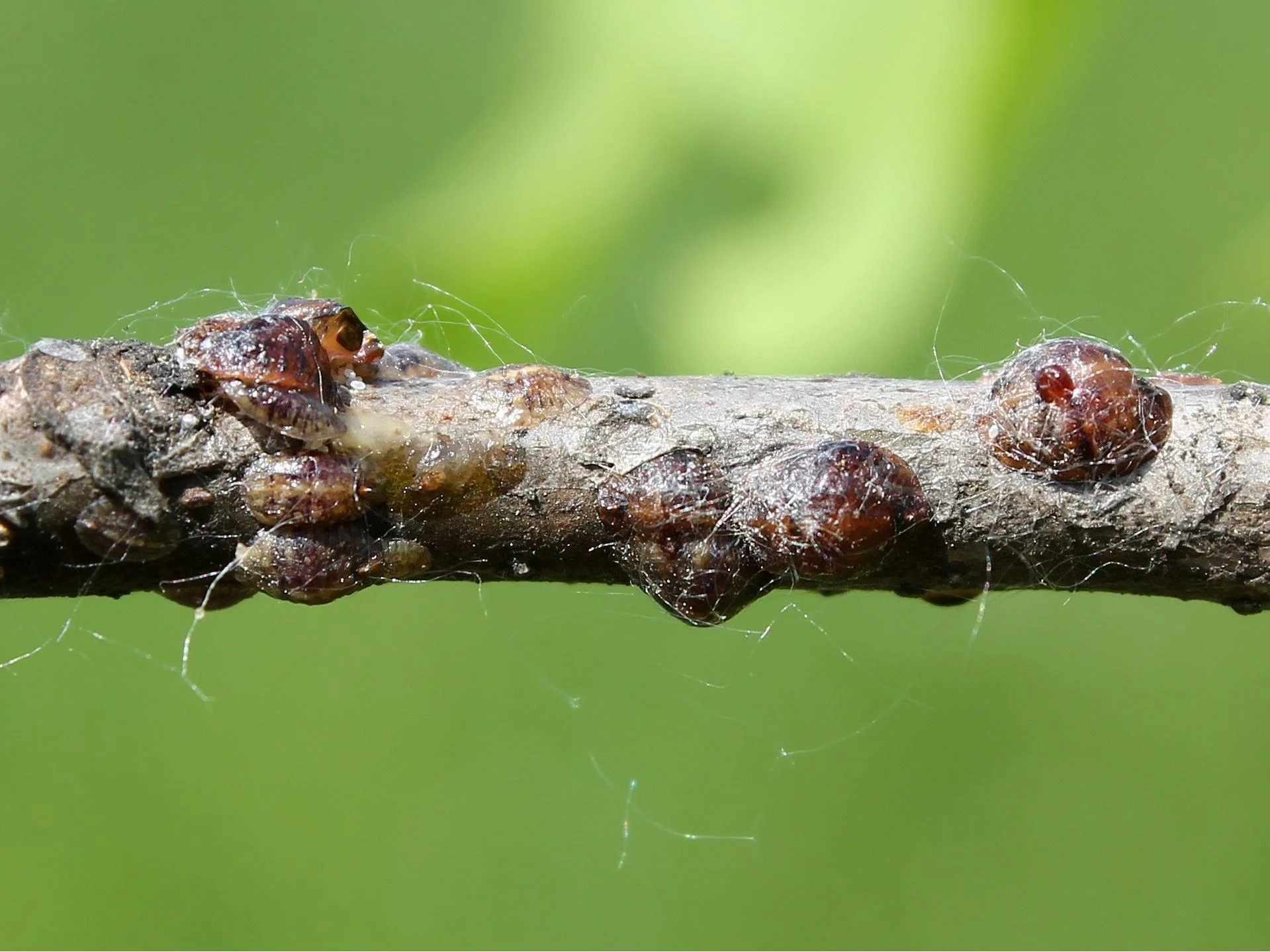
- Look and feel: Like tiny bumps or shells stuck to stems, leaf veins, petioles, or fruit. They don’t move when touched.
- Color & shape: Brown, gray, yellow, white; dome, oval, or flat shield. Soft scales feel slightly squishy; armored scales feel hard and dry.
- Where to check first: The underside of leaves, young shoots, and branch crotches. Use a hand lens. If you see shiny honeydew or black sooty mold, look nearby for scales.
- Quick test: Gently lift one “bump” with a toothpick. If it flakes off as a cap with a body underneath, it’s likely an armored scale. If the whole “bump” is the insect (soft, with body inside), it’s likely a soft scale.
Common signs on plants
- Yellow spots along leaf veins
- Leaf drop or weak new growth
- Sticky leaves (honeydew), ants running on stems
- Black film (sooty mold) on leaves or fruit
Life cycle in one page
- Eggs are laid under the female’s cover.
- Crawler stage (young nymphs): the only mobile stage for most species. They spread to new sites, then settle. This is the best time to control scales.
- Settled nymphs → adults: once they build a protective cover, contact sprays have limited effect. Systemic insecticides and oils/soaps targeted at crawlers work better.
- Generations per year: varies by species and climate. Warm greenhouses and indoor plants may have overlapping stages for months.
Why the crawler stage matters
The crawler’s cuticle is thin and unprotected. Mineral oils, soap sprays, or systemic actives are most effective at this moment. If you miss it, you will need repeat monitoring and a timed follow-up.
Typical host examples
- Citrus & olives: soft scales, armored scales on twigs and leaves
- Landscape shrubs (boxwood, camellia, ficus): multiple scale species along stems and leaf midribs
- Succulents & indoor plants: mealybugs and soft scales around nodes and leaf bases
Monitoring & Thresholds (Find Crawlers, Time Your Action)
Where to look and how often
- Sampling spots: underside of leaves, young shoots, leaf midribs, twig crotches.
- Tools: hand lens (10×), white paper or beating tray, clear tape or double-sided tape, small brush, marker, notebook/phone.
- Frequency: every 7–10 days in warm seasons; every 2–3 weeks in cool seasons or indoors with stable temperatures.
Crawler detection: simple, reliable methods
- Tape method: wrap a thin band of clear tape (sticky side out) around an infested twig. Crawlers stick to it. Check in 2–3 days.
- Beat test: hold white paper under a branch and tap it. Tiny yellow/orange crawlers drop and crawl.
- Lift-cap check (armored scales): gently lift a few “caps.” If many tiny nymphs are underneath, a hatch is underway.
- Ant traffic = hint: more ants on stems often means fresh honeydew and active scales. If ants surge, increase scouting frequency.
Record what you see
Track by plant/block: date, plant ID, % shoots with scales, average crawlers per tape, presence of sooty mold/ants, action taken.
- Quick template: Date | Block/Plant | % infested shoots | Crawlers per tape (avg) | Ants (low/med/high) | Decision
When to act (practical thresholds)
Thresholds vary by crop and market standards; use these as practical cues, not strict rules.
- Ornamentals/landscape: if >5–10% of shoots carry fresh scales or crawlers appear on multiple tapes in a block, schedule control.
- Fruit trees/citrus: if crawlers are found across several trees and honeydew/sooty mold is building, plan a timed treatment.
- Indoor/greenhouse plants: any crawler detection across benches plus sticky leaves/sooty mold = intervene early; stages can overlap for months.
Best timing = crawler wave
- Spray timing: the first crawler peak is your best window. Oils/soaps or labeled systemics work far better now than after covers harden.
- Follow-up check: re-check tapes 7–14 days later. A second small wave may require a follow-up application (always follow the label).
Supportive actions that boost success
- Control ants first (baits/barriers per label) so natural enemies can help.
- Prune heavily infested twigs before treatments to lower pressure and improve coverage.
- Avoid broad-spectrum sprays during peak beneficial activity if possible; protect parasitoids and lady beetles.
IPM Strategy: Prevent First, Reduce Pressure, Protect Beneficials
1) Cultural control (make plants harder to colonize)
- Balanced fertilization: Avoid heavy nitrogen. Soft, lush growth invites scales. Use slow-release or split doses based on soil tests.
- Irrigation fit: Keep even moisture; water stress + heat = flare-ups. Improve drainage around tree bases.
- Canopy airflow: Thin dense canopies so leaves dry faster; scales and sooty mold thrive in still, humid pockets.
- Quarantine new plants: Isolate and inspect new stock for 2–3 weeks; treat early if needed.
- Sanitation: Remove honeydew-coated debris and weeds under canopy to reduce ant bridges and mold.
2) Mechanical control (physically remove what you can)
- Targeted pruning: Cut out heavily infested twigs before sprays. Bag and bin them—don’t compost if alive.
- High-pressure water wash: Rinse undersides of leaves and stems. Repeat weekly during crawler waves.
- Soft scrubbing for ornamentals: On tough, woody stems, gently rub with a soft brush to dislodge clusters.
- Sticky bands for monitoring: Keep clear tape bands on key twigs to track crawler peaks.
3) Ant management (unlock natural enemy help)
- Why it matters: Ants farm honeydew and protect scales, reducing parasitism.
- Practical steps: Use labeled ant baits and trunk barriers; trim branches touching walls/fences; keep irrigation off trunks.
- Sequence: Control ants before you rely on beneficials or oils/soaps, or your gains won’t last.
4) Biological control (work with nature, not against it)
- Key allies: Lady beetles (e.g., Chilocorus spp.), lacewings, parasitoid wasps (Aphytis, Encarsia).
- Habitat support: Maintain flowering groundcovers or refuge strips; avoid mowing all flowers at once.
- Spray compatibility: If sprays are needed, time them outside peak beneficial activity and choose options with lower impact (see next sections).
- Release programs (greenhouses/indoor): Consider periodic introductions from reputable suppliers; monitor results with tape bands and beat tests.
5) Integration rule of thumb
- Start with pruning + ant control to drop pressure.
- Time any spray to the crawler peak you’re tracking.
- Protect beneficials by avoiding broad-spectrum kills during active parasitoid periods.
- Follow up in 7–14 days to verify a second wave isn’t building.
Chemical Control: Pick the Right Tool, Hit the Right Stage
How chemistry fits
Use chemicals when monitoring shows a crawler wave or when IPM steps (pruning, ant control) still leave high pressure. Choose systemic options for protected stages, and contact/cover options for exposed crawlers. Always follow the product label and local regulations.
A) Systemic insecticides (move inside the plant)
Best when many scales have settled or covers harden; still, time to crawlers for fastest knockdown.
| Active ingredient | Group / MoA (plain language) | Where it shines | Notes |
|---|---|---|---|
| Imidacloprid | Neonicotinoid; acts on nerves | Ornamentals, citrus, indoor plants | Soil application or trunk-directed use; good on young scales; watch bee-safe use rules. |
| Thiamethoxam | Neonicotinoid; similar nerve action | Fruit trees, greenhouse | Long residual; align with bee protection and label site limits. |
| Spirotetramat | Lipid biosynthesis inhibitor | Citrus, grapes, ornamentals | Moves both up and down in plant; soft on many beneficials. |
| Buprofezin | IGR; chitin synthesis blocker | Citrus, tea, ornamentals | Strong on nymphs; pair with crawler timing for best results. |
Application logic
- Prefer soil or trunk-directed routes where labeled to reach hidden stages.
- If you detect active crawlers, systemics + a light oil/soap program can speed results and reduce honeydew/sooty mold.
B) Contact / cover sprays (work on contact, smother, or desiccate)
Best on crawler stage or lightly infested foliage with good coverage.
| Option | How it works | Pros | Watch-outs |
|---|---|---|---|
| Mineral oil (horticultural oil) | Smothers eggs/nymphs | Low residue, fits organic programs | Avoid heat/cold stress windows; test on sensitive plants. |
| Insecticidal soap | Disrupts cuticle/membranes | Indoor/greenhouse friendly | Needs direct contact; repeat during crawler waves. |
| Neem/paraffinic oils | Multiple modes; repellent/smother | Gentle to many beneficials | Phytotoxicity risk under stress; spot-test first. |
Coverage tips (no rates, just practice)
- Aim at leaf undersides, petioles, and twig crotches where crawlers land.
- Use fine spray quality for film coverage; avoid runoff.
- Repeat based on monitoring (7–14 days) if a second crawler wave appears.
C) Timing & sequencing that works
- 1)Prune + control ants → 2) Hit the first crawler peak with oil/soap (and/or a labeled systemic) → 3) Re-check in 7–14 days for a second wave → 4) Protect beneficials by avoiding broad-spectrum, off-window sprays.
D) Safety & compatibility
- Protect pollinators and parasitoids: apply outside bloom and when beneficial activity is low.
- Rotate MoA groups to slow resistance.
- Do not mix incompatible products; follow label tank-mix guidance.
- Always wear PPE and respect re-entry/pre-harvest intervals as labeled.
Organic & Low-Residue Options (Oils, Soaps, Neem)
When to use them
Use organic options when you:
- want low residue and beneficial-friendly control,
- target the crawler stage, or
- manage indoor/greenhouse and ornamental plants with frequent visitors.
Main tools and how they work
- Horticultural mineral oil: coats eggs and crawlers; smothers them.
- Insecticidal soap: breaks the insect’s outer layer; needs direct contact.
- Neem / paraffinic oils: light oils with multiple soft effects (repel, smother, disrupt).
How to apply for best results
- Timing: hit the first crawler wave you detected (tape/beat test).
- Coverage: spray leaf undersides, petioles, twig crotches—where crawlers land.
- Repeat: check in 7–10 days; repeat during a second wave if monitoring shows activity.
- Sequence: prune → control ants → oil/soap → verify → repeat only if new crawlers appear.
Greenhouse & indoor specifics
- Good air movement helps leaves dry quickly after sprays.
- Use fine droplets for an even film; avoid runoff.
- Stagger benches (treat one side first) to watch for plant sensitivity.
Compatibility with beneficials
- Oils/soaps are generally friendly to parasitoids and lady beetles when used correctly.
- Spray outside peak beneficial activity and avoid blanket treatments.
Common mistakes to avoid
- Heat/cold stress: don’t use oils during temperature extremes or on drought-stressed plants.
- Stacking: avoid layering multiple oils or soap + oil too close together—phytotoxicity risk.
- Coverage gaps: missing leaf undersides = poor results, more sooty mold later.
Where organic shines
- Citrus & olives: early crawler waves on young twigs.
- Landscape shrubs & indoor plants: light to moderate infestations; frequent, gentle touch-ups.
- Sensitive sites: schools, public gardens, high-traffic interiors.
Environmental & Safety Considerations (Protect What You Don’t Intend to Kill)
1) Think beyond the pest
Good pest control never means spraying more—it means spraying smart. Scale insects live close to beneficial species like lady beetles, lacewings, and parasitic wasps. If they die, the scales will come back stronger.
Always design your plan to protect non-targets such as pollinators, fish, and natural enemies.
2) Timing and weather windows
- Avoid extremes: Do not spray oils or soaps during very hot (>32 °C) or very cold (<10 °C) conditions.
- Humidity balance: High humidity lengthens drying time and increases risk of leaf burn.
- Wind & drift: Spray early morning or late afternoon when wind is calm to prevent drift onto sensitive plants or water bodies.
- Rain forecast: Wait at least 24 hours of dry weather for contact products to set.
3) Beneficial safety & compatibility
- Systemic products: Apply soil or trunk treatments when pollinators are not active.
- Oils and soaps: Relatively safe but can still harm tiny parasitoid wasps if sprayed directly—time treatments between activity peaks.
- Rotate MoA (Mode of Action) groups: Helps prevent resistance buildup while keeping natural enemies effective.
4) Worker protection & compliance
- Always follow label PPE (gloves, mask, protective clothing).
- Observe REI (Re-Entry Interval) and PHI (Pre-Harvest Interval) on the product label.
- Keep chemical storage cool, dry, and locked; label every container clearly.
- Rinse sprayers and dispose of wash water according to local regulation.
5) Environmental responsibility
- Prevent runoff into ditches or ponds; use buffer strips.
- Collect and dispose of contaminated pruning waste properly.
- Choose formulations with lower VOCs (volatile organic compounds) when possible.
- Support recycling of empty containers where programs exist.
6) Balance efficacy and ecology
Every program can be balanced: a timed, limited chemical use plus ongoing IPM yields long-term stability.
When you protect beneficials, you spend less on repeated sprays, keep trees healthier, and gain market confidence in low-residue produce.
Regional & Crop Scenarios (Pick a Playbook That Fits Your Site)
A) Citrus orchards (outdoor, warm climates)
- Main risks: armored and soft scales on twigs/leaves; honeydew → sooty mold on fruit.
- Monitoring focus: crawler bands on fruiting twigs; weekly checks around flush periods.
- Core playbook: prune infested twigs → control ants along trunks → hit first crawler wave with mineral oil; if pressure stays high, add a labeled systemic (e.g., imidacloprid/spirotetramat) by soil or trunk route where allowed.
- Notes: avoid oils during heat spikes; protect pollinators; rotate MoA across seasons.
B) Olive & Mediterranean landscapes (dry summers, urban dust)
- Main risks: sticky leaves attract soot; urban ants protect scales.
- Monitoring focus: tape bands on mid-canopy twigs; watch for ant trails at dusk.
- Core playbook: light oil film at crawler peak + ant bait/barriers; prune for airflow; if canopies are tall/old, consider a systemic route per label to reach upper wood.
C) Greenhouse ornamentals (benches, steady temps)
- Main risks: overlapping stages year-round; mealybugs + soft scales around nodes.
- Monitoring focus: beat test over white card; tape bands on representative benches; log by variety.
- Core playbook: bench-by-bench oil/soap at first crawler finds; stagger applications (A side today, B side 48–72 h later) to test sensitivity; integrate beneficial releases (lady beetles, parasitoids) between spray windows; keep RH and airflow balanced for quick leaf drying.
- Notes: prefer soft chemistries; avoid blanket sprays during peak beneficial activity.
D) Indoor plants & malls/hotels (public spaces, low residue)
- Main risks: honeydew on floors/displays; complaints from visitors.
- Monitoring focus: monthly spot checks; use discreet tape bands on back-of-house plants.
- Core playbook: wipe + prune first; use insecticidal soap or light oil at crawler detection; plan after-hours treatments and signage; repeat only if new crawlers appear; manage ants from building entry points.
E) Succulents & cacti (water-stress prone)
- Main risks: soft tissues scorch easily; scales hide at leaf bases.
- Monitoring focus: hand lens at crown and leaf bases; gentle beat test.
- Core playbook: dry-leaf conditions before any oil/soap; spot-target rather than blanket; short, fine sprays to avoid runoff; if pressure persists, consider systemic labeled for the host and site; extend intervals to watch for phytotoxicity.
F) Tropical fruit & high-humidity gardens (rain + shade pockets)
- Main risks: rapid sooty mold growth; ants surge after rains.
- Monitoring focus: crawler waves after warm rains; ant trails on trunks and ties.
- Core playbook: prune for airflow; ant control first; oils timed to crawlers during dry breaks (avoid imminent rain); if frequent showers, a systemic may stabilize pressure while you maintain oil/soap on new growth.
G) Nurseries & landscape contractors (mixed hosts, logistics)
- Main risks: new stock introductions; cross-bench spread.
- Monitoring focus: quarantine zone with tape bands; intake checklist per shipment.
- Core playbook: 2–3 week quarantine for new plants; treat hot spots early; standardize records (Date | Lot | % infested | Action); train teams on crawler timing; keep a rotational menu: oil/soap → systemic (labeled) → IGR (buprofezin) on nymph windows.
FAQ
Why Work With Pomais (OEM, Registration, and Reliable Delivery)
- Actives & formulations: EC, SC, SL, WDG, oil-based sprays for scale insects—customized for host plants and climates.
- Registration pack: ISO/SGS support, COA / MSDS / TDS, stability tests (cold/heat), HPLC batch control.
- Private label: multi-language labels, small-pack options, artwork and compliance alignment.
- Logistics ready: door-to-door, region-fit clearance experience for MEA, LATAM, Africa, and Central Asia.
- Technical support: timing plans (crawler windows), ant-management integration, and beneficial-friendly programs.
- Lead time: typical 20–30 days with traceable production and pre-shipment QC.
Need a best-in-class scale insect program for citrus, ornamentals, or indoor plants?
Contact Pomais for custom formulations, label sets, and a clean, step-by-step IPM plan that your team can run tomorrow.
What are scale insects?
Scale insects are small, sap-sucking pests that sit tightly on stems, leaves, or fruit. Many look like bumps or shells. They feed with a needle-like mouthpart and weaken plants over time.
Why do they matter?
When scales suck sap, plants lose energy. You may see yellowing leaves, leaf drop, weak shoots, and poor flowering or fruiting. Scales also produce sticky honeydew. Honeydew grows sooty mold (black coating) and attracts ants that protect the scales from natural enemies.
Where do you find them?
Common hosts include citrus, olives, landscape shrubs, succulents, indoor plants, and greenhouse crops. Check the undersides of leaves, young stems, and around leaf veins. If you see “scale on plants” that looks like small brown, gray, or white domes, it is likely a scale insect.
Key fact for control
Scales are easiest to control during the crawler stage (the mobile young nymphs). After they settle and form a protective cover, contact sprays work poorly. Timing is everything; the rest of this guide explains how to monitor and choose a safe, effective scale insecticide or other methods.
Identification & Life Cycle (What to Look For, and When)
How to identify a scale bug
- Look and feel: Like tiny bumps or shells stuck to stems, leaf veins, petioles, or fruit. They don’t move when touched.
- Color & shape: Brown, gray, yellow, white; dome, oval, or flat shield. Soft scales feel slightly squishy; armored scales feel hard and dry.
- Where to check first: The underside of leaves, young shoots, and branch crotches. Use a hand lens. If you see shiny honeydew or black sooty mold, look nearby for scales.
- Quick test: Gently lift one “bump” with a toothpick. If it flakes off as a cap with a body underneath, it’s likely an armored scale. If the whole “bump” is the insect (soft, with body inside), it’s likely a soft scale.
Common signs on plants
- Yellow spots along leaf veins
- Leaf drop or weak new growth
- Sticky leaves (honeydew), ants running on stems
- Black film (sooty mold) on leaves or fruit
Life cycle in one page
- Eggs are laid under the female’s cover.
- Crawler stage (young nymphs): the only mobile stage for most species. They spread to new sites, then settle. This is the best time to control scales.
- Settled nymphs → adults: once they build a protective cover, contact sprays have limited effect. Systemic insecticides and oils/soaps targeted at crawlers work better.
- Generations per year: varies by species and climate. Warm greenhouses and indoor plants may have overlapping stages for months.
Why the crawler stage matters
The crawler’s cuticle is thin and unprotected. Mineral oils, soap sprays, or systemic actives are most effective at this moment. If you miss it, you will need repeat monitoring and a timed follow-up.
Typical host examples
- Citrus & olives: soft scales, armored scales on twigs and leaves
- Landscape shrubs (boxwood, camellia, ficus): multiple scale species along stems and leaf midribs
- Succulents & indoor plants: mealybugs and soft scales around nodes and leaf bases
Monitoring & Thresholds (Find Crawlers, Time Your Action)
Where to look and how often
- Sampling spots: underside of leaves, young shoots, leaf midribs, twig crotches.
- Tools: hand lens (10×), white paper or beating tray, clear tape or double-sided tape, small brush, marker, notebook/phone.
- Frequency: every 7–10 days in warm seasons; every 2–3 weeks in cool seasons or indoors with stable temperatures.
Crawler detection: simple, reliable methods
- Tape method: wrap a thin band of clear tape (sticky side out) around an infested twig. Crawlers stick to it. Check in 2–3 days.
- Beat test: hold white paper under a branch and tap it. Tiny yellow/orange crawlers drop and crawl.
- Lift-cap check (armored scales): gently lift a few “caps.” If many tiny nymphs are underneath, a hatch is underway.
- Ant traffic = hint: more ants on stems often means fresh honeydew and active scales. If ants surge, increase scouting frequency.
Record what you see
Track by plant/block: date, plant ID, % shoots with scales, average crawlers per tape, presence of sooty mold/ants, action taken.
- Quick template: Date | Block/Plant | % infested shoots | Crawlers per tape (avg) | Ants (low/med/high) | Decision
When to act (practical thresholds)
Thresholds vary by crop and market standards; use these as practical cues, not strict rules.
- Ornamentals/landscape: if >5–10% of shoots carry fresh scales or crawlers appear on multiple tapes in a block, schedule control.
- Fruit trees/citrus: if crawlers are found across several trees and honeydew/sooty mold is building, plan a timed treatment.
- Indoor/greenhouse plants: any crawler detection across benches plus sticky leaves/sooty mold = intervene early; stages can overlap for months.
Best timing = crawler wave
- Spray timing: the first crawler peak is your best window. Oils/soaps or labeled systemics work far better now than after covers harden.
- Follow-up check: re-check tapes 7–14 days later. A second small wave may require a follow-up application (always follow the label).
Supportive actions that boost success
- Control ants first (baits/barriers per label) so natural enemies can help.
- Prune heavily infested twigs before treatments to lower pressure and improve coverage.
- Avoid broad-spectrum sprays during peak beneficial activity if possible; protect parasitoids and lady beetles.
IPM Strategy: Prevent First, Reduce Pressure, Protect Beneficials
1) Cultural control (make plants harder to colonize)
- Balanced fertilization: Avoid heavy nitrogen. Soft, lush growth invites scales. Use slow-release or split doses based on soil tests.
- Irrigation fit: Keep even moisture; water stress + heat = flare-ups. Improve drainage around tree bases.
- Canopy airflow: Thin dense canopies so leaves dry faster; scales and sooty mold thrive in still, humid pockets.
- Quarantine new plants: Isolate and inspect new stock for 2–3 weeks; treat early if needed.
- Sanitation: Remove honeydew-coated debris and weeds under canopy to reduce ant bridges and mold.
2) Mechanical control (physically remove what you can)
- Targeted pruning: Cut out heavily infested twigs before sprays. Bag and bin them—don’t compost if alive.
- High-pressure water wash: Rinse undersides of leaves and stems. Repeat weekly during crawler waves.
- Soft scrubbing for ornamentals: On tough, woody stems, gently rub with a soft brush to dislodge clusters.
- Sticky bands for monitoring: Keep clear tape bands on key twigs to track crawler peaks.
3) Ant management (unlock natural enemy help)
- Why it matters: Ants farm honeydew and protect scales, reducing parasitism.
- Practical steps: Use labeled ant baits and trunk barriers; trim branches touching walls/fences; keep irrigation off trunks.
- Sequence: Control ants before you rely on beneficials or oils/soaps, or your gains won’t last.
4) Biological control (work with nature, not against it)
- Key allies: Lady beetles (e.g., Chilocorus spp.), lacewings, parasitoid wasps (Aphytis, Encarsia).
- Habitat support: Maintain flowering groundcovers or refuge strips; avoid mowing all flowers at once.
- Spray compatibility: If sprays are needed, time them outside peak beneficial activity and choose options with lower impact (see next sections).
- Release programs (greenhouses/indoor): Consider periodic introductions from reputable suppliers; monitor results with tape bands and beat tests.
5) Integration rule of thumb
- Start with pruning + ant control to drop pressure.
- Time any spray to the crawler peak you’re tracking.
- Protect beneficials by avoiding broad-spectrum kills during active parasitoid periods.
- Follow up in 7–14 days to verify a second wave isn’t building.
Chemical Control: Pick the Right Tool, Hit the Right Stage
How chemistry fits
Use chemicals when monitoring shows a crawler wave or when IPM steps (pruning, ant control) still leave high pressure. Choose systemic options for protected stages, and contact/cover options for exposed crawlers. Always follow the product label and local regulations.
A) Systemic insecticides (move inside the plant)
Best when many scales have settled or covers harden; still, time to crawlers for fastest knockdown.
| Active ingredient | Group / MoA (plain language) | Where it shines | Notes |
|---|---|---|---|
| Imidacloprid | Neonicotinoid; acts on nerves | Ornamentals, citrus, indoor plants | Soil application or trunk-directed use; good on young scales; watch bee-safe use rules. |
| Thiamethoxam | Neonicotinoid; similar nerve action | Fruit trees, greenhouse | Long residual; align with bee protection and label site limits. |
| Spirotetramat | Lipid biosynthesis inhibitor | Citrus, grapes, ornamentals | Moves both up and down in plant; soft on many beneficials. |
| Buprofezin | IGR; chitin synthesis blocker | Citrus, tea, ornamentals | Strong on nymphs; pair with crawler timing for best results. |
Application logic
- Prefer soil or trunk-directed routes where labeled to reach hidden stages.
- If you detect active crawlers, systemics + a light oil/soap program can speed results and reduce honeydew/sooty mold.
B) Contact / cover sprays (work on contact, smother, or desiccate)
Best on crawler stage or lightly infested foliage with good coverage.
| Option | How it works | Pros | Watch-outs |
|---|---|---|---|
| Mineral oil (horticultural oil) | Smothers eggs/nymphs | Low residue, fits organic programs | Avoid heat/cold stress windows; test on sensitive plants. |
| Insecticidal soap | Disrupts cuticle/membranes | Indoor/greenhouse friendly | Needs direct contact; repeat during crawler waves. |
| Neem/paraffinic oils | Multiple modes; repellent/smother | Gentle to many beneficials | Phytotoxicity risk under stress; spot-test first. |
Coverage tips (no rates, just practice)
- Aim at leaf undersides, petioles, and twig crotches where crawlers land.
- Use fine spray quality for film coverage; avoid runoff.
- Repeat based on monitoring (7–14 days) if a second crawler wave appears.
C) Timing & sequencing that works
- 1)Prune + control ants → 2) Hit the first crawler peak with oil/soap (and/or a labeled systemic) → 3) Re-check in 7–14 days for a second wave → 4) Protect beneficials by avoiding broad-spectrum, off-window sprays.
D) Safety & compatibility
- Protect pollinators and parasitoids: apply outside bloom and when beneficial activity is low.
- Rotate MoA groups to slow resistance.
- Do not mix incompatible products; follow label tank-mix guidance.
- Always wear PPE and respect re-entry/pre-harvest intervals as labeled.
Organic & Low-Residue Options (Oils, Soaps, Neem)
When to use them
Use organic options when you:
- want low residue and beneficial-friendly control,
- target the crawler stage, or
- manage indoor/greenhouse and ornamental plants with frequent visitors.
Main tools and how they work
- Horticultural mineral oil: coats eggs and crawlers; smothers them.
- Insecticidal soap: breaks the insect’s outer layer; needs direct contact.
- Neem / paraffinic oils: light oils with multiple soft effects (repel, smother, disrupt).
How to apply for best results
- Timing: hit the first crawler wave you detected (tape/beat test).
- Coverage: spray leaf undersides, petioles, twig crotches—where crawlers land.
- Repeat: check in 7–10 days; repeat during a second wave if monitoring shows activity.
- Sequence: prune → control ants → oil/soap → verify → repeat only if new crawlers appear.
Greenhouse & indoor specifics
- Good air movement helps leaves dry quickly after sprays.
- Use fine droplets for an even film; avoid runoff.
- Stagger benches (treat one side first) to watch for plant sensitivity.
Compatibility with beneficials
- Oils/soaps are generally friendly to parasitoids and lady beetles when used correctly.
- Spray outside peak beneficial activity and avoid blanket treatments.
Common mistakes to avoid
- Heat/cold stress: don’t use oils during temperature extremes or on drought-stressed plants.
- Stacking: avoid layering multiple oils or soap + oil too close together—phytotoxicity risk.
- Coverage gaps: missing leaf undersides = poor results, more sooty mold later.
Where organic shines
- Citrus & olives: early crawler waves on young twigs.
- Landscape shrubs & indoor plants: light to moderate infestations; frequent, gentle touch-ups.
- Sensitive sites: schools, public gardens, high-traffic interiors.
Environmental & Safety Considerations (Protect What You Don’t Intend to Kill)
1) Think beyond the pest
Good pest control never means spraying more—it means spraying smart. Scale insects live close to beneficial species like lady beetles, lacewings, and parasitic wasps. If they die, the scales will come back stronger.
Always design your plan to protect non-targets such as pollinators, fish, and natural enemies.
2) Timing and weather windows
- Avoid extremes: Do not spray oils or soaps during very hot (>32 °C) or very cold (<10 °C) conditions.
- Humidity balance: High humidity lengthens drying time and increases risk of leaf burn.
- Wind & drift: Spray early morning or late afternoon when wind is calm to prevent drift onto sensitive plants or water bodies.
- Rain forecast: Wait at least 24 hours of dry weather for contact products to set.
3) Beneficial safety & compatibility
- Systemic products: Apply soil or trunk treatments when pollinators are not active.
- Oils and soaps: Relatively safe but can still harm tiny parasitoid wasps if sprayed directly—time treatments between activity peaks.
- Rotate MoA (Mode of Action) groups: Helps prevent resistance buildup while keeping natural enemies effective.
4) Worker protection & compliance
- Always follow label PPE (gloves, mask, protective clothing).
- Observe REI (Re-Entry Interval) and PHI (Pre-Harvest Interval) on the product label.
- Keep chemical storage cool, dry, and locked; label every container clearly.
- Rinse sprayers and dispose of wash water according to local regulation.
5) Environmental responsibility
- Prevent runoff into ditches or ponds; use buffer strips.
- Collect and dispose of contaminated pruning waste properly.
- Choose formulations with lower VOCs (volatile organic compounds) when possible.
- Support recycling of empty containers where programs exist.
6) Balance efficacy and ecology
Every program can be balanced: a timed, limited chemical use plus ongoing IPM yields long-term stability.
When you protect beneficials, you spend less on repeated sprays, keep trees healthier, and gain market confidence in low-residue produce.
Regional & Crop Scenarios (Pick a Playbook That Fits Your Site)
A) Citrus orchards (outdoor, warm climates)
- Main risks: armored and soft scales on twigs/leaves; honeydew → sooty mold on fruit.
- Monitoring focus: crawler bands on fruiting twigs; weekly checks around flush periods.
- Core playbook: prune infested twigs → control ants along trunks → hit first crawler wave with mineral oil; if pressure stays high, add a labeled systemic (e.g., imidacloprid/spirotetramat) by soil or trunk route where allowed.
- Notes: avoid oils during heat spikes; protect pollinators; rotate MoA across seasons.
B) Olive & Mediterranean landscapes (dry summers, urban dust)
- Main risks: sticky leaves attract soot; urban ants protect scales.
- Monitoring focus: tape bands on mid-canopy twigs; watch for ant trails at dusk.
- Core playbook: light oil film at crawler peak + ant bait/barriers; prune for airflow; if canopies are tall/old, consider a systemic route per label to reach upper wood.
C) Greenhouse ornamentals (benches, steady temps)
- Main risks: overlapping stages year-round; mealybugs + soft scales around nodes.
- Monitoring focus: beat test over white card; tape bands on representative benches; log by variety.
- Core playbook: bench-by-bench oil/soap at first crawler finds; stagger applications (A side today, B side 48–72 h later) to test sensitivity; integrate beneficial releases (lady beetles, parasitoids) between spray windows; keep RH and airflow balanced for quick leaf drying.
- Notes: prefer soft chemistries; avoid blanket sprays during peak beneficial activity.
D) Indoor plants & malls/hotels (public spaces, low residue)
- Main risks: honeydew on floors/displays; complaints from visitors.
- Monitoring focus: monthly spot checks; use discreet tape bands on back-of-house plants.
- Core playbook: wipe + prune first; use insecticidal soap or light oil at crawler detection; plan after-hours treatments and signage; repeat only if new crawlers appear; manage ants from building entry points.
E) Succulents & cacti (water-stress prone)
- Main risks: soft tissues scorch easily; scales hide at leaf bases.
- Monitoring focus: hand lens at crown and leaf bases; gentle beat test.
- Core playbook: dry-leaf conditions before any oil/soap; spot-target rather than blanket; short, fine sprays to avoid runoff; if pressure persists, consider systemic labeled for the host and site; extend intervals to watch for phytotoxicity.
F) Tropical fruit & high-humidity gardens (rain + shade pockets)
- Main risks: rapid sooty mold growth; ants surge after rains.
- Monitoring focus: crawler waves after warm rains; ant trails on trunks and ties.
- Core playbook: prune for airflow; ant control first; oils timed to crawlers during dry breaks (avoid imminent rain); if frequent showers, a systemic may stabilize pressure while you maintain oil/soap on new growth.
G) Nurseries & landscape contractors (mixed hosts, logistics)
- Main risks: new stock introductions; cross-bench spread.
- Monitoring focus: quarantine zone with tape bands; intake checklist per shipment.
- Core playbook: 2–3 week quarantine for new plants; treat hot spots early; standardize records (Date | Lot | % infested | Action); train teams on crawler timing; keep a rotational menu: oil/soap → systemic (labeled) → IGR (buprofezin) on nymph windows.
FAQ
Why Work With Pomais (OEM, Registration, and Reliable Delivery)
- Actives & formulations: EC, SC, SL, WDG, oil-based sprays for scale insects—customized for host plants and climates.
- Registration pack: ISO/SGS support, COA / MSDS / TDS, stability tests (cold/heat), HPLC batch control.
- Private label: multi-language labels, small-pack options, artwork and compliance alignment.
- Logistics ready: door-to-door, region-fit clearance experience for MEA, LATAM, Africa, and Central Asia.
- Technical support: timing plans (crawler windows), ant-management integration, and beneficial-friendly programs.
- Lead time: typical 20–30 days with traceable production and pre-shipment QC.
Need a best-in-class scale insect program for citrus, ornamentals, or indoor plants?
Contact Pomais for custom formulations, label sets, and a clean, step-by-step IPM plan that your team can run tomorrow.