
Rotenone for Fish Control: What is Rotenone Piscicide?
Rotenone is used for fish control as a regulated piscicide (fish toxicant) in fisheries management—typically to remove invasive or unwanted fish so a waterbody can be restored. It’s not a casual “pond fix.” In most jurisdictions, its use is tied to permits, trained applicators, and an SOP-driven project plan.
What rotenone is, its meaning/definition, its mechanism of action (MOA), how it kills fish, and what determines how long it lasts in water—without turning into a how-to application guide.
What Is Rotenone? Rotenone Meaning and Definition (Fish Control Context)
In fisheries management language, rotenone means a fish management chemical used to remove fish from a waterbody—often as part of invasive species removal, native fish recovery, or ecosystem restoration projects. You’ll also see it described as a piscicide or fish toxicant.
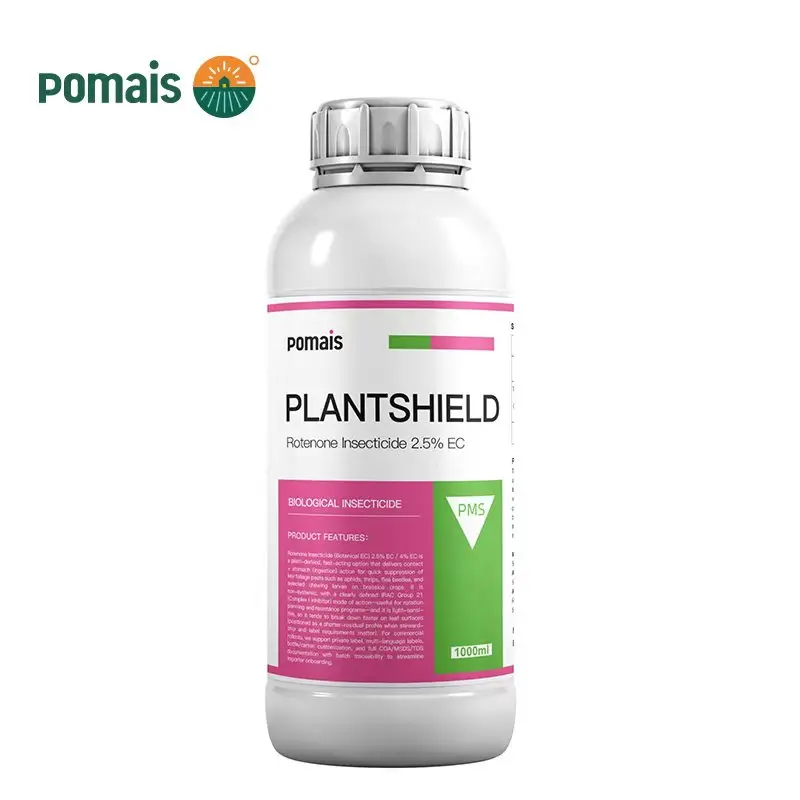
Rotenone Mechanism of Action (MOA): How Does Rotenone Work?
Rotenone’s MOA is commonly described as inhibiting cellular respiration by disrupting mitochondrial energy production (often referenced as inhibition at mitochondrial complex I). In plain English: it interferes with how cells generate usable energy. When energy production collapses, vital functions fail.
Why this matters in fish control: this MOA translates into a predictable “system shutdown” effect in organisms that are highly exposed through the gills and rely on oxygen-dependent metabolism. That’s why rotenone is positioned as a management tool for fish removal projects—not a general-purpose product.
How Does Rotenone Kill Fish? (And How Can Rotenone Cause Death?)
From a decision-grade perspective, rotenone kills fish because fish are continuously moving water across gill surfaces, creating a high-exposure pathway. Once exposure is sufficient, the MOA (cellular respiration disruption) can lead to loss of normal physiological function and death.
Rotenone is often described as non-selective for gill-breathing organisms, meaning non-target aquatic species can be affected depending on the setting and controls used in a project. That’s why professional planning, timing, and monitoring are central to how agencies manage risk.
How Long Does Rotenone Last in Water?
There is no single universal number, because persistence is condition-driven. The most consistent, high-confidence message is:
- Rotenone tends to break down faster with more sunlight and higher temperatures.
- It can persist longer in colder conditions, which is sometimes discussed as operationally relevant in certain fisheries contexts.
USGS studies in controlled pond settings report that decay is correlated with water temperature, and they also show that some rotenone can be associated with suspended material rather than staying entirely in the dissolved phase. For readers, the takeaway is simple: warm, bright water speeds breakdown; cold water slows it; and water chemistry/solids can change measured persistence.
What drives “how long it lasts”
| Driver | What changes | What you should conclude |
|---|---|---|
| Water temperature | Breakdown rate | Warm water typically shortens persistence; cold water can extend it |
| Sunlight | Photodegradation | More light generally speeds degradation |
| Suspended solids / organic matter | Binding and measured concentration | Some portion may bind to material; monitoring results vary by water conditions |
| Waterbody type | Flow, mixing, sediment | Lakes/ponds/streams behave differently; persistence is project-specific |
Non-Target Risk: What the Evidence Says
Stakeholders often ask about amphibians and aquatic invertebrates. A practical way to write this section is “evidence + context”:
- The U.S. National Park Service (Yellowstone) summarizes research indicating no significant long-term impacts to amphibians or benthic macroinvertebrates in the cited work, in that park’s monitored context.
- Other research and stewardship materials acknowledge potential immediate effects, especially to sensitive life stages, which is part of why projects emphasize planning and monitoring.
Buyer Checklist: What to Request From a Rotenone Supplier
If you’re sourcing for public-sector projects, distributors, or professional applicators, use this checklist to reduce tender risk:
- Identity & specification clarity: formulation type, declared active content, batch identifiers (no ambiguity).
- Quality documentation: COA per batch, SDS, and a basic technical datasheet aligned to the destination market’s expectations.
- Use governance alignment: evidence that label/SOP framework is understood and supported (buyers care about auditability).
- Traceability: lot-level traceability and a defined retention policy (practical for public projects).
- Packaging & transport integrity: packaging that supports compliant transport and reduces leakage risk (especially for institutional buyers).
This checklist also protects your downstream partners: when documentation is tight, fewer projects stall at the compliance gate.
FAQ: Rotenone for Fish Control
What is rotenone used for in fish control?
It’s used as a regulated piscicide in fisheries management projects—commonly for removing unwanted or invasive fish to support restoration goals, under permits and SOP frameworks.
How does rotenone work (MOA)?
It is commonly described as inhibiting cellular respiration by disrupting mitochondrial energy production, which can cause systemic failure when exposure is sufficient.
How does rotenone kill fish?
Fish exposure pathways (notably through gills) plus the MOA can lead to physiological failure and death; projects manage this as a professional application with governance and monitoring.
How long does rotenone last in water?
Persistence varies. Higher temperature and sunlight generally speed breakdown; cold conditions can extend it. USGS work shows temperature-linked decay and that suspended material can influence measured concentrations.
Is rotenone use regulated?
Yes. Labeling and stewardship materials emphasize SOP-based use, and some specimen labels explicitly require an EPA-approved Rotenone SOP Manual alongside the label.
Where to Go From Here
If you’re evaluating rotenone for fish control in a tender, restoration program, or professional services scope, the fastest way to de-risk the decision is to treat it like a compliance-led procurement: confirm the jurisdictional permissions, confirm SOP alignment, then verify your supplier can deliver batch-level documentation and traceability that matches your project governance requirements.
Hot Products
Hot news
Recommended news
FAQ