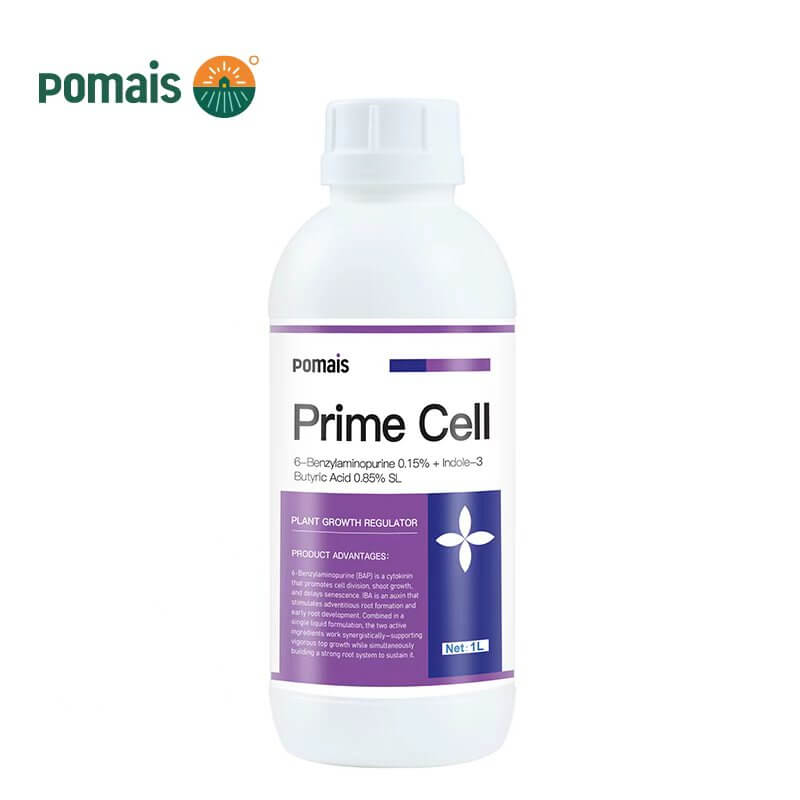
6-Benzylaminopurine 0.15% + Indole-3-Butyric Acid 0.85% SL
If you are looking for a liquid plant growth regulator that supports both root establishment and balanced early plant development, this formulation gives you a clearer market position than a generic “growth promoter.” It combines 6-Benzylaminopurine, a synthetic cytokinin associated with cell division, shoot initiation, and delayed senescence, with Indole-3-Butyric Acid, an auxin widely used to promote root formation and help plants recover from transplant stress. That combination makes this product especially suitable for programs built around seedling vigor, transplant recovery, nursery performance, and more uniform crop establishment.
- Designed for Professional Buyers & Bulk Orders
- We support custom packaging, labeling, and formulation to meet your market needs.
- Export wholesale inquiries only.
- Please include destination country, business type (importer/distributor/registrant), and expected volume.
- Retail requests will not be processed.

About 6-Benzylaminopurine 0.15% + Indole-3-Butyric Acid 0.85% SL
POMAIS positions this product as a practical plant growth regulator for customers who need a more targeted solution than a broad, vague “yield enhancer.” The value of this formulation is not based on overstimulation. It comes from hormone balance. 6-Benzylaminopurine helps maintain active tissue development and supports new growth processes, while IBA is closely linked with adventitious rooting and root initiation. Together, they create a product line that is easier to explain to importers, distributors, and brand owners who want a clear use story for seedling recovery, root rebuilding, vegetative restart, and crop uniformity programs.
Technical Parameters
| Item | Specification |
|---|---|
| Product Name | 6-Benzylaminopurine 0.15% + Indole-3-Butyric Acid 0.85% SL |
| Product Type | Plant Growth Regulator |
| Active Ingredients | 6-Benzylaminopurine + Indole-3-Butyric Acid |
| Hormone Class | Cytokinin + Auxin |
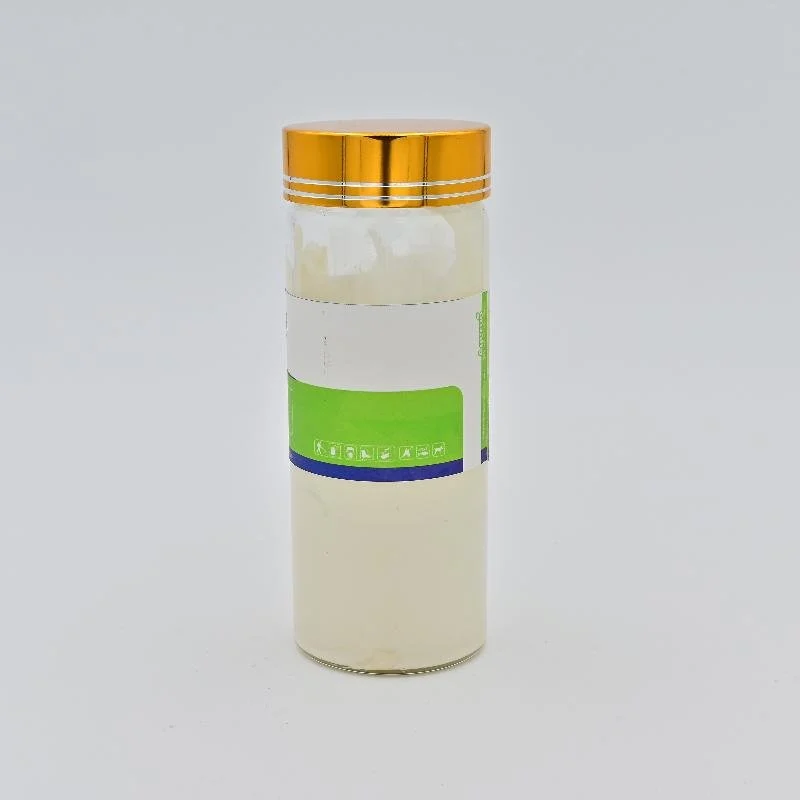
| Formulation | Liquid soluble formulation |
| Core Positioning | Root establishment, transplant recovery, balanced vegetative development |
| Typical Use Direction | Seedling stage, nursery management, transplant recovery, weak-root recovery programs |
| Commercial Support | OEM, private label, multilingual labels, export document support |
Mode of Action
This formulation works through complementary hormone pathways rather than a single-direction push. 6-Benzylaminopurine belongs to the cytokinin group. Cytokinins regulate cell division and differentiation, influence shoot initiation and growth, and are also known to modulate senescence-related processes. IBA belongs to the auxin group and is strongly associated with adventitious root formation, root initiation, and early root system development. When these two active ingredients are combined in one liquid formulation, the commercial story becomes stronger: you are not only supporting visible top growth, but also helping the plant rebuild or establish the root system needed to sustain that growth.
Target Crops / Pests & Application Areas
This product is best presented around use situations rather than an overlong crop list. It is suitable for programs that focus on seedling nurseries, transplanting stages, early vegetative establishment, recovery after stress, and root rebuilding where plants show weak restart performance. In practical sales language, that means it fits crops and systems where uniform establishment matters commercially, including vegetables, fruit crops, nursery plants, and other production systems where uneven recovery can directly affect later management, canopy development, and output consistency. The biological rationale for this positioning comes from the known roles of cytokinins in growth regulation and auxins in root induction.
Application Methods & Dosage
This section should follow your approved label, local registration text, and target market program. Because plant growth regulators are highly dependent on crop type, development stage, local agronomic practice, and regulatory requirements, POMAIS should not position one universal dosage across all markets without the corresponding approved use pattern. For commercial pages, the safer and more professional expression is to state that this liquid formulation can be adapted for foliar programs, nursery-stage use, transplant-support programs, or root-focused management plans according to local label requirements and agronomic recommendations.
Formulation Stability & Packaging Options
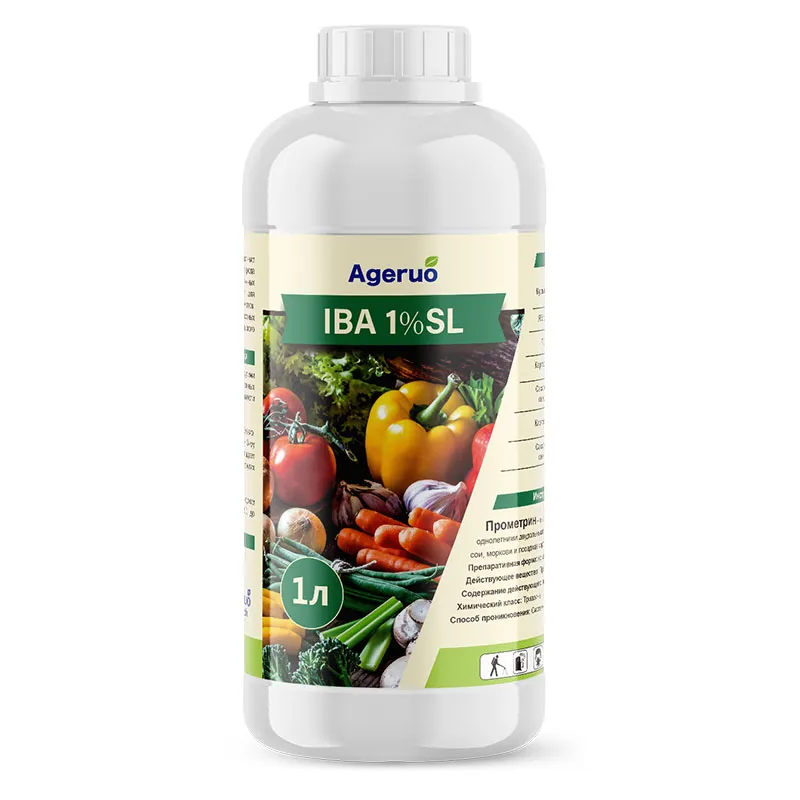
As a liquid formulation, this product is easier to position for convenient handling, faster dilution, and more flexible packaging programs. That matters for customers building retail-ready or distributor-ready PGR lines. A liquid product is also easier to adapt across multiple bottle sizes, outer carton formats, and private label presentation systems. For markets where appearance, label clarity, and pack consistency affect repeat purchase behavior, this creates real commercial value beyond the active ingredients themselves.
POMAIS can support flexible packaging options for different channels, including sample packs, standard distributor packs, and private label programs designed for regional agriculture markets. Label language, bottle style, carton design, and packing structure can all be adapted to your brand direction. This gives you more than a formulation. It gives you a product that can be turned into a market-ready SKU.
Tank Mix Compatibility & Safety Precautions
Tank-mix decisions for plant growth regulators should be handled with more care than for many conventional crop inputs. Compatibility is influenced by water quality, crop sensitivity, local spray practice, and the other products in the tank. For that reason, the professional recommendation is not to promise blanket compatibility. The correct approach is to advise customers to evaluate compatibility case by case, conduct a jar test before large-scale mixing, and follow the approved local label for all mixture decisions.
Safety communication should also remain disciplined. IBA has been reviewed by the U.S. EPA as a plant growth regulator used in very small amounts, but label-based handling precautions still matter, including normal occupational safety practice and correct use according to the product label. That means your page should emphasize proper handling, storage, and compliant use, not exaggerated “safe for everything” language.
Regulatory Compliance & Environmental Behavior
For international customers, this section should be written around compliance support rather than exaggerated regulatory claims. POMAIS can position this product with document packages such as COA, MSDS/SDS, and TDS to support distributor review, private label preparation, and market-entry workflows. Where customers need packaging adaptation, multilingual labeling, or registration support files, the page should make that clear. That is more useful to an importer than generic language about “high quality.”
From an environmental and handling perspective, IBA has been described by the EPA as structurally similar to naturally occurring plant substances and typically used at very low amounts in plant growth regulator programs. That does not remove the need for label compliance, but it supports a low-dose plant-regulator positioning when communicating with professional buyers. The correct message is responsible use, market-specific compliance, and document-backed supply.
OEM Services & Market Support
This is where POMAIS should separate itself from a trader-style product page. You are not only offering an active ingredient combination. You are offering a supply model that can be adapted to the customer’s sales channel. POMAIS supports OEM and private label programs, multilingual label customization, flexible packaging development, and export documentation for importers, distributors, and brand owners who want to build or expand a plant growth regulator line with a clearer market angle.
For customers building differentiated portfolios, this product is especially suitable because it has a strong commercial story. It can be positioned around root recovery, transplant support, nursery performance, and uniform crop restart. That gives your local market team a more specific message to sell than a standard general-purpose stimulant. POMAIS can also support document preparation and product presentation aligned with your target market workflow.
Field Use Scenarios
Imagine a vegetable seedling program where transplant survival is acceptable, but restart speed is inconsistent. Some plants recover quickly, while others remain weak, root activity lags, and the field becomes uneven within days. In that kind of situation, a product positioned around root initiation and balanced recovery is easier to justify than a generic foliar booster. This formulation helps you explain a more precise value proposition: support the plant’s restart process from the root zone upward, then improve uniformity for the next growth phase.
A second strong use scenario is nursery and young-plant distribution. Customers in this segment often care less about dramatic short-term visual claims and more about establishment quality, consistency, and downstream management stability. A product built around cytokinin-plus-auxin balance fits that commercial logic well. It gives distributors and brand owners a product story tied to real production pressure rather than vague promotional language.
FAQ
Is this product mainly for rooting or for general growth promotion?
It is better positioned as a rooting-and-recovery plant growth regulator with balanced vegetative support, rather than as a broad general-purpose stimulant. That makes the product easier to segment in the market.
Which customers is this product most suitable for?
It is well suited for importers, distributors, and brand owners who want to build a more targeted plant growth regulator line for transplant recovery, seedling establishment, nursery use, or weak-root recovery programs.
Can POMAIS support private label packaging?
Yes. POMAIS can support private label programs, multilingual labels, bottle and carton customization, and export-ready document packages.
Can the dosage be standardized across all crops?
No. Final dosage, dilution, and timing should be aligned with the approved local label, crop stage, and market-specific technical program.
What documents can POMAIS provide for this product?
Depending on the project, POMAIS can support standard commercial and technical documentation such as COA, MSDS/SDS, and TDS for customer review and supply coordination.
Why Choose POMAIS as Your Supplier
POMAIS is not only supplying a formulation. We help you convert a formulation into a workable market product. That includes stable supply coordination, packaging flexibility, OEM support, multilingual label adaptation, and document preparation for export business. For customers building regional brands or expanding a crop care portfolio, that combination is often more important than the active ingredient list alone.
You also need a supplier that understands how to present a product correctly. This formulation should not be sold as a vague “universal growth booster.” It performs better commercially when it is positioned with a clear use direction, such as rooting support, transplant recovery, or establishment uniformity. POMAIS helps you build that message into the product, the packaging, and the sales presentation so your team can move faster in the market.
Commercial Supply Support from POMAIS
If you want to build a more targeted plant growth regulator line for transplant recovery, nursery performance, or root establishment programs, POMAIS can help you turn this formulation into a practical commercial SKU. We support private label development, export documents, packaging customization, and market-oriented product presentation so you can bring a more differentiated regulator product to your customers.