

Gibberellic Acid (GA3) Plant Growth Regulator
Gibberellic Acid GA3 | Plant Growth Regulator | Powder, Tablets, and Technical Grade Supplies | OEM/ODM Customization
Gibberellic Acid (GA3) is a gibberellin-class plant growth regulator that primarily influences cell elongation, stem development, seed germination, and the flowering and fruit development processes of specific crops by regulating growth signals within plants.
In commercial agriculture, typical applications of GA3 include regulating grape cluster structure, berry development, citrus peel quality management, and specific growth and dormancy regulation in certain crops. The optimal application timing, concentration, and technical conditions vary depending on the specific application.
GA3 is not a fertilizer, nor is it a universal yield enhancer suitable for all crops. Its actual effectiveness depends on the crop variety, growth stage, product specifications, treatment objectives, and environmental conditions.
POMAIS provides pesticide importers, distributors, brand owners, and registration companies with GA3 formulation procurement, technical-grade material supply consulting, OEM/ODM packaging, and related technical documentation support.
- Designed for Professional Buyers & Bulk Orders
- We support custom packaging, labeling, and formulation to meet your market needs.
- Export wholesale inquiries only.
- Please include destination country, business type (importer/distributor/registrant), and expected volume.
- Retail requests will not be processed.

About Gibberellic Acid (GA3) Plant Growth Regulator
Gibberellic Acid GA3 Product Specifications
GA3 belongs to the gibberellin class of plant hormones and is an important bioactive substance involved in regulating plant growth and development.
Its function is not to directly provide nutrients to plants, but rather to influence the plants’ own physiological regulatory processes.
| Technical Parameters | Specification |
|---|---|
| Product Name | Gibberellic Acid |
| Common Name | GA3 / Gibberellin A3 |
| Chinese Name | Gibberellic Acid |
| CAS Number | 77-06-5 |
| Molecular Formula | C19H22O6 |
| Molecular Weight | 346.37 g/mol |
| Chemical Class | Gibberellin |
| Product Type | Plant Growth Regulator |
| Main Physiological Action | Gibberellin Hormone Signaling |
| Primary Functions | Cell Elongation, Growth Regulation, Seed Germination, Fruit Development |
| Formulation Directions | WP, SP, SG, TB |
| Technical Data | TC |
| Application Method | As specified on the registered label |
| Supply Model | Bulk Supply, OEM/ODM, Private Label |
| Technical Documents | COA, SDS, TDS, and other available product technical documentation |
GA3 is a plant growth regulator with different application objectives than insecticides, fungicides, and herbicides. Its primary function is not to control pests, diseases, or weeds, nor can it replace fertilizers, irrigation, or proper crop management.
Importers seeking to build a comprehensive PGR product line can learn more about POMAIS’s plant growth regulator product classifications and select the appropriate active ingredients based on specific physiological regulation objectives.
GA3 Formulations and Available Grades
For pesticide importers, procuring GA3 first requires clarifying the active ingredient content and formulation type.
Although there are various forms of GA3 products on the market, different formulations may exhibit significant differences in production processes, active ingredient content, solubility or dispersibility, packaging, and registration status.
POMAIS’s historical product data lists the following specifications, which can serve as a preliminary guide for procurement inquiries.
| GA3 Specification | Formulation | Product Type | Supply Status Description |
|---|---|---|---|
| GA3 90% TC | Technical Material | Technical-grade material | Actual specifications and supply capacity must be confirmed |
| GA3 40% WP | Wettable Powder | Wettable Powder | Formulation quality and supply status to be confirmed |
| GA3 20% WP | Wettable Powder | Wettable Powder | Formulation quality and supply status to be confirmed |
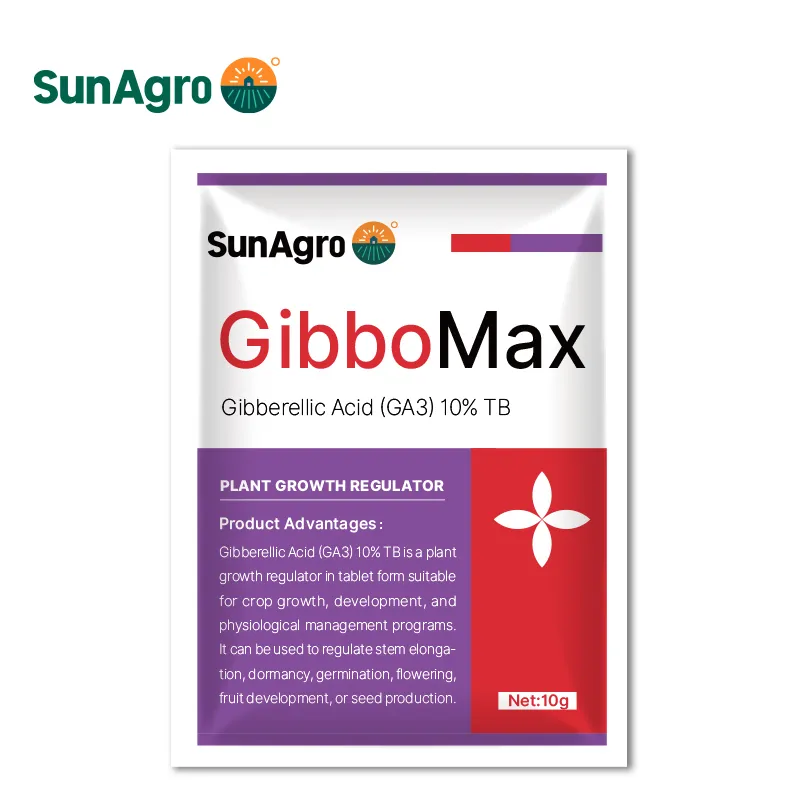
| GA3 20% TB | Tablet | Tablet | Unit weight and product performance to be confirmed |
| GA3 10% TB | Tablet | Tablet | Tablet weight and product performance to be confirmed |
| GA3 SP / SG | Soluble Powder / Soluble Granules | Soluble Powder and Water-Soluble Granules | To be evaluated based on actual formulation and technical capabilities |
Specification Notes: The specifications listed in the table for 90% TC, 40% WP, 20% WP, and TB are derived from existing historical product data and are provided solely as a reference for procurement inquiries; they do not indicate that all specifications are in stock or have been registered in the target country. Formulations such as SP and SG are also subject to the actual formulations and technical documentation available.
GA3 Wettable Powder (WP)
GA3 WP is a wettable powder, typically formulated by combining the active ingredient with appropriate formulation excipients.
When used, the product must be mixed with water according to label instructions to form a dispersion system that meets specified requirements.
For GA3 20% WP and 40% WP, importers should pay particular attention to active ingredient content, wettability, suspension rate, particle size, and storage stability.
It is important to note that WP and SP are not the same dosage forms.
WP primarily emphasizes the wetting and dispersion properties of the powder in water; it does not imply that the product is fully soluble.
GA3 Soluble Powder and Soluble Granules
SP (Water-Soluble Powder) and SG (Water-Soluble Granules) are types of water-soluble formulations.
Both typically need to meet corresponding dissolution performance and solution stability requirements, but specific quality indicators should be determined based on the formulation and applicable standards.
For importers, key procurement considerations for these products include active ingredient content, dissolution performance, insolubles, storage stability, and the moisture-proof properties of the packaging.
One should not assume, based solely on the characteristic of “water solubility,” that a product necessarily possesses higher field activity or is suitable for all crop growth regulation needs.
GA3 Tablet Formulations (TB)
GA3 tablets are a solid dosage form used in certain markets.
Compared to powders, tablets can be measured and packaged individually, making them suitable for specific commercial channels that require fixed product units.
However, for tablet products, simply labeling them as “GA3 10% TB” or “20% TB” is not sufficient.
Importers must also verify:
- Total weight per tablet.
- Active ingredient content per tablet.
- Consistency of tablet weight and active ingredient content.
- Disintegration or dissolution characteristics of the tablets.
- Actual application method.
- Storage stability and moisture-proof packaging requirements.
For example, a product label stating “5 g/tablet” refers to the weight of a single tablet and does not mean that each tablet contains 5 g of the active ingredient GA3.
The specific amount of GA3 contained in each tablet must be determined by considering both the tablet weight and the mass fraction of the active ingredient.
Furthermore, the dissolution or disintegration characteristics may vary among different tablet formulations. The method of use should be determined based on the actual formulation design and the registered label, rather than treating all TB products as identical products that can be directly dissolved in water.
GA3 Technical Material (TC)
GA3 90% TC falls under the procurement guidance for technical-grade materials and is primarily intended for customers with the corresponding processing capabilities or specialized procurement needs.
When purchasing TC, it is essential to carefully verify the actual measured content of the active ingredient, relevant impurities, product stability, and batch quality documentation.
TC cannot be directly marketed as a standard end-use product for which formulation development and registration have been completed.
Specific active ingredient specifications and technical documentation should be confirmed based on actual supply conditions.
How Does Gibberellic Acid GA3 Work?
GA3 primarily exerts its effects through the gibberellin signaling pathway within plants.
Plants are capable of synthesizing gibberellin hormones on their own. These hormones are involved in multiple processes, ranging from seed germination and vegetative growth to reproductive development.
The purpose of exogenous application of GA3 is to regulate relevant physiological responses in specific crops and at specific growth stages, rather than simply to make plants grow as fast as possible.
GA3 and the GID1–DELLA Signaling Pathway
Plants contain GID1 receptors involved in gibberellin signal perception, as well as DELLA proteins that inhibit certain growth responses.
In the classical gibberellin signaling pathway, after biologically active gibberellins bind to GID1 receptors, they promote the recognition and degradation of associated DELLA proteins, thereby lifting the inhibition on certain growth processes.
This process is associated with plant cell elongation, stem growth, germination, and other developmental responses.
However, the growth changes ultimately exhibited by plants are not determined by GA3 alone.
Auxins, cytokinins, abscisic acid, ethylene, and environmental conditions may all contribute to the plant’s response to GA3.
How Does GA3 Affect Cell Elongation?
One of the key physiological roles of GA3 is the regulation of cell elongation.
In susceptible tissues, appropriate gibberellin signaling can influence processes related to cell wall softening and growth, thereby altering the elongation patterns of organs.
This helps explain why GA3 can be used to regulate stem elongation, panicle development, and fruit growth in certain crops.
However, the same elongation effect may not necessarily have commercial value in all crops.
For example, some production systems aim to promote the elongation of specific organs, while others require controlling plant height to prevent excessive vegetative growth or lodging.
Therefore, GA3 should not be positioned as a universal growth promoter suitable for all crops.
Effects of GA3 on Seed Germination and Dormancy
Gibberellin signaling is also involved in some seed germination and dormancy regulation processes.
In certain seeds or propagation materials, GA3 can influence physiological activities related to germination.
However, not all seeds and tubers require GA3 treatment, nor does treatment necessarily improve germination rates or final yield.
For specialized uses such as seed potatoes, it is also necessary to consider the treatment objectives, storage conditions, subsequent management, and local regulations.
GA3 Applications by Crop
The uses of GA3 in agricultural production vary significantly by crop and growth stage.
The same active ingredient may be used to regulate grape cluster structure in viticulture, to manage peel quality in citrus production, or to influence germination, flowering, or specific growth processes in other crops.
These are not interchangeable treatment options.
| Crop | Primary Physiological Regulation Targets | Procurement and Technical Considerations |
|---|---|---|
| Grapes | Bunch elongation, berry thinning, and berry development | Variety, growth stage, treatment objectives |
| Citrus | Peel quality and specific harvest management | Variety, fruit ripening stage, market requirements |
| Sweet Cherry | Specific fruit quality and ripening regulation | Variety, fruit development stage |
| Rice | Specific seed production or growth regulation applications | Production systems, registered uses, and growth stages |
| Potato | Specific seed potato dormancy and germination management | Uses, treatment methods, and subsequent storage |
| Horticultural Crops | Specific Growth, Flowering, or Germination Management | Crop Sensitivity and Registration Requirements |
These application areas include examples of relevant research or registered products; however, this does not imply that all POMAIS GA3 specifications have obtained registration for the corresponding crops.
GA3 for Grapes: Cluster Elongation, Thinning, and Berry Sizing
Grapes are one of the most representative commercial applications for GA3.
However, simply stating that “GA3 promotes grape berry enlargement” overlooks the important differences between its various treatment objectives.
In some seedless table grape production systems, GA3 may be used for cluster elongation, berry thinning, and berry enlargement. These objectives correspond to different physiological processes and require treatment at different stages.
Cluster Elongation – 果穗伸长
In certain grape varieties and registered production protocols, GA3 can be used to regulate the elongation of the cluster rachis and associated tissues.
Changes in cluster structure may affect the spatial distribution of berries within the cluster.
For varieties prone to forming compact clusters, growers may wish to improve cluster morphology through appropriate structural adjustments.
However, this does not mean that all grapes require cluster elongation.
Excessive elongation may also alter the appearance of marketable clusters and deviate from production objectives.
Berry Thinning – Berry Thinning
In certain seedless grape varieties, GA3 can be used for berry thinning treatments at specific flowering stages.
The goal of berry thinning is typically to regulate berry number and cluster density, rather than simply increasing berry count.
This point is often misunderstood.
If a customer’s goal is berry enlargement but an inappropriate berry thinning regimen is applied, the results may be entirely different.
Therefore, when introducing GA3 applications for grapes, distributors should first confirm whether the grower requires cluster structure management, berry thinning, or berry development regulation.
Berry Sizing – Berry Enlargement
GA3 can also be used to regulate berry size during specific stages of fruit development in certain grape varieties.
Its effect is related to physiological activities such as cell elongation during berry development.
However, the final berry size is also influenced by variety, crop load, nutrition, water, and environmental conditions.
GA3 cannot replace proper vineyard management, nor should it be promised that all berries will reach a uniform size after application.
The response to GA3 may also differ between seeded and seedless grapes; therefore, the same treatment regimen cannot be directly applied to both.
Key Conclusions for Grape Applications: Cluster elongation, berry thinning, and berry enlargement are three distinct commercial objectives. Even the same GA3 product requires a treatment regimen tailored to the specific variety, objective, and registered label.
GA3 for Citrus and Other Fruit Crops
In addition to grapes, GA3 has specific applications in certain citrus and other fruit tree production systems.
However, the commercial uses of plant growth regulators for fruit trees are often quite nuanced and should not be broadly described as promoting flowering, increasing fruit set, or boosting yield.
Citrus Peel Quality Management
In some approved citrus production protocols, GA3 may be used to regulate peel aging, peel quality, or fruit condition at specific harvest stages.
For fresh-market citrus, peel appearance and commercial quality influence market acceptance.
However, the physiological effects of GA3 on the peel do not equate to a direct increase in fruit weight, nor should they be simplistically interpreted as extending the shelf life of all citrus varieties.
Certain treatments may also affect peel coloration and ripening-related characteristics; therefore, they must be evaluated in conjunction with cultivar characteristics and market requirements.
Importers of citrus plant protection products can refer to POMAIS’s Citrus Crop Protection Solutions to understand the comprehensive management needs during the fruit development, ripening, and harvest stages.
Applications for Cherries and Other Fruit Trees
In some approved sweet cherry production programs, GA3 is used for specific fruit quality and ripening management.
Its specific targets may relate to fruit firmness, the ripening process, or market quality.
However, responses may vary depending on the variety, application timing, and environmental conditions.
For apples, pears, and other fruit trees, the suitability of GA3 application programs must be confirmed based on the specific crop and locally registered products.
Just because GA3 is a plant hormone does not mean it can universally improve fruit set, fruit size, and quality on all fruit trees.
GA3 Applications in Field Crops and Propagation
In addition to its use on fruit trees, GA3 may also be employed in specific field crops, seed production, and horticultural propagation management systems.
However, special attention must be paid to the intended purpose of such applications.
Rice Seed Production and Specialized Growth Management
In some hybrid rice seed production systems, GA3 may be incorporated into management practices related to panicle emergence and specific reproductive development processes.
These applications differ from conventional yield-enhancement management practices in standard commercial rice production.
Therefore, GA3 should not be simply described as a substance that universally promotes tillering in rice, increases the number of effective panicles, or boosts yields across all rice varieties.
Seed Germination and Propagation Material Management
In plant physiology research and certain specialized seed and propagation material treatments, GA3 is used to regulate germination or dormancy responses.
However, dormancy mechanisms vary among plant species.
For example, some seeds require specific low temperatures, light exposure, or other conditions to germinate normally, and exogenous GA3 may not be able to substitute for these requirements.
For these markets, buyers should verify whether the product has the appropriate registered uses and supporting trial data.
Horticulture and Ornamental Plant Production
In certain horticultural and ornamental plant production, GA3 may be used to regulate stem elongation, flower stalk growth, or other specific developmental processes.
However, not all ornamental plants are suitable for GA3 application.
If the goal is to produce compact potted plants, promoting elongation may actually conflict with commercial objectives.
Therefore, before selecting GA3, it is essential to first clarify the desired plant morphology and production goals.
GA3 Application Timing and Concentration
The effectiveness of GA3 is closely related to the crop’s growth stage.
The same crop may exhibit different physiological responses to GA3 at different developmental stages.
This is why GA3 cannot be treated like ordinary nutrient products, where a single, uniform concentration applicable to all uses is set based solely on crop area.
What Factors Determine the Actual Response to GA3?
| Factor | Impact on GA3 Application |
|---|---|
| Crop Species | Different crops exhibit varying hormone sensitivities |
| Cultivar | Different cultivars of the same crop may exhibit different responses |
| Growth Stage | Determines which physiological process the treatment affects |
| Treatment Objective | Elongation, thinning, berry development, or germination management have different objectives |
| Product Formulation | Formulation and active ingredient content affect actual preparation requirements |
| Application Rate | Determines the level of active ingredient per unit treatment |
| Application Method | Spraying, dipping, or other methods must comply with registration requirements |
| Environmental Conditions | Temperature, moisture, and plant growth status may affect the response |
| Local Registration | Determines authorized crops, application periods, rates, and restrictions |
Why Can’t a Uniform Recommended Concentration for GA3 Be Established?
For example, treatments aimed at promoting grape cluster elongation differ from those aimed at berry enlargement in terms of target tissues and physiological stages.The concentration of GA3 may also vary among different products.GA3 20% WP, 40% WP, and 20% TB cannot use the same formulation weight as a uniform application rate.Furthermore, even if the nominal concentration is the same, the specific application methods and registration conditions may differ.Therefore, if specific application rates in mg/L, g/ha, or other units are required, you must first confirm the corresponding registered product, crop variety, intended use, and approved label.
Does a higher concentration mean better results?
Not necessarily.GA3 is a plant growth regulator, and there is not necessarily a simple linear relationship between the actual physiological response and the application rate.Excessively high application concentrations, inappropriate timing of treatment, or incorrect use on sensitive crops may all result in growth changes that do not meet production objectives.For example, treatment may alter plant elongation, ear structure, kernel development, or maturity characteristics.Therefore, the value of GA3 products should not be promoted based on the notion that “higher concentrations yield better results,” but rather should be grounded in clear crop objectives and validated application protocols.
GA3 Benefits and Limitations
GA3 has clear plant physiological regulatory value, but its benefits must be understood within the context of suitable crops and production scenarios.
| Technical Characteristics | Potential Application Benefits | Clear Limitations |
|---|---|---|
| Gibberellin Activity | Regulates plant growth signals | Does not imply that all crops require elongation promotion |
| Cell Elongation | Involved in the elongation and development of specific organs | Excessive elongation may not align with production goals |
| Fruit Development Regulation | Used for managing certain aspects of fruit development | Significant variations exist across varieties and growth stages |
| Germination Regulation | Used for managing germination or dormancy in certain cases | Cannot replace all conditions for dormancy breaking |
| Multiple Formulation Options | Adapted to different procurement and packaging needs | Formulations are not directly interchangeable |
| Commercial PGR Positioning | Can be incorporated into a specialized plant growth regulator product portfolio | Must comply with local registration requirements |
For agricultural distributors, GA3 is not a basic input that needs to be recommended to all growers.It is better suited for markets with specific growth regulation objectives, where growers understand the product’s application conditions and require specialized PGR products.
GA3 Compared with Other Plant Growth Regulators
Although GA3, Paclobutrazol, CPPU, and 1-MCP all fall under the category of plant growth regulators, they do not share the same mechanism of action and cannot simply be substituted for one another.
| Active Ingredient | Primary Physiological Effects | Typical Commercial Positioning |
|---|---|---|
| Gibberellic Acid (GA3) | Gibberellin signaling regulation, cell elongation, and developmental management | Specific growth, fruit, and sprouting regulation |
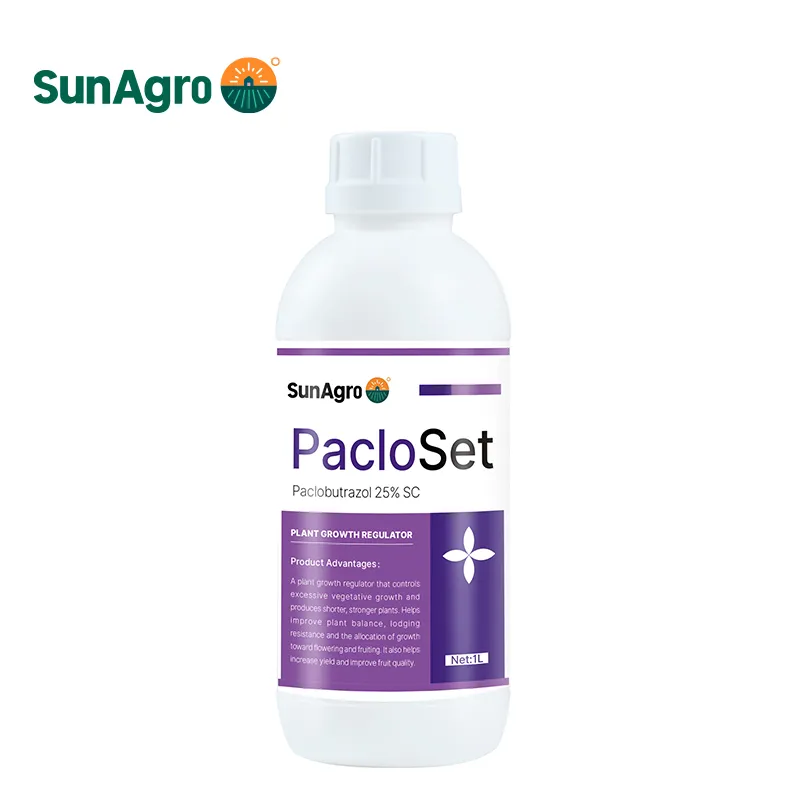
| Paclobutrazol | Inhibition of gibberellin biosynthesis | Specific vegetative growth and plant height control |
| Forchlorfenuron (CPPU) | Cytokinin-like growth-regulating effects | Management of certain aspects of fruit development and enlargement |
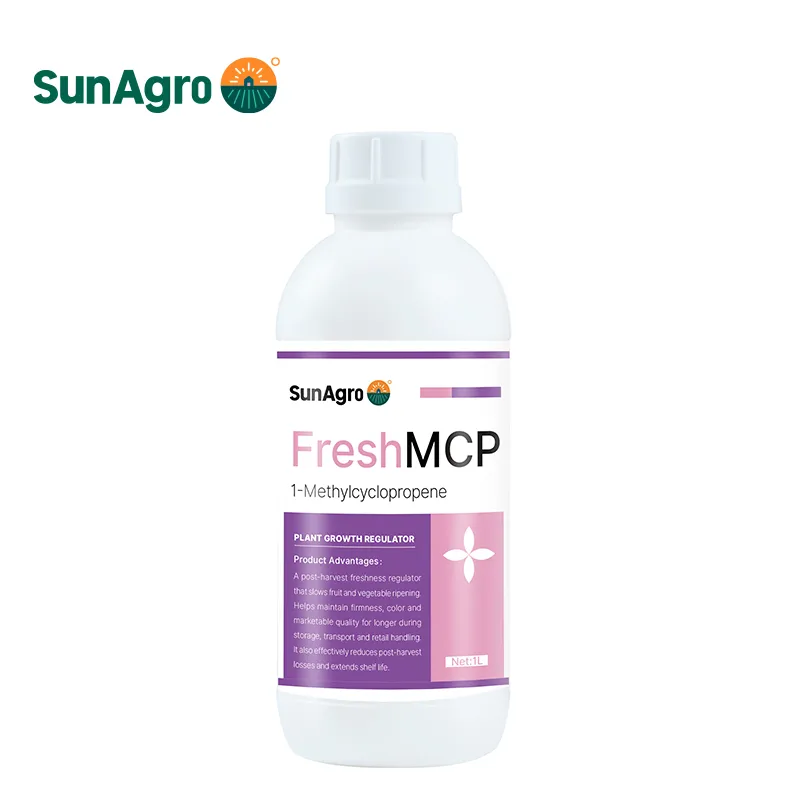
| 1-Methylcyclopropene (1-MCP) | Inhibits ethylene signal perception | Specific postharvest ripening and quality management |
What is the difference between GA3 and Paclobutrazol?
GA3 primarily regulates growth responses through the gibberellin signaling pathway.Paclobutrazol, on the other hand, primarily reduces gibberellin-related growth responses in specific tissues by inhibiting gibberellin biosynthesis.Therefore, the two compounds have different regulatory mechanisms in many application scenarios.For example, GA3 can be used to manage elongation in specific tissues, while Paclobutrazol is typically employed in production schemes requiring the suppression of excessive vegetative growth or the control of plant height.However, this does not mean that the two compounds can be used interchangeably as antidotes or direct substitutes for one another.Distributors looking to build a comprehensive PGR product portfolio may refer to Paclobutrazol 25% SC Plant Growth Regulator for further insight into the product positioning of different growth regulation strategies.
GA3 Single-Active vs. Combination Plant Growth Regulators
GA3 is available both as a single-active-ingredient product and in combination with other plant growth regulators.Importers should select between single-ingredient and combination products based on specific crop targets and registration requirements.Single-active GA3 products are clearly positioned as gibberellin-based regulators and are suitable for markets requiring single-active-ingredient formulations.For certain fruit development management programs, combination products with different hormonal modes of action may also be evaluated.For example, forchlorfenuron (CPPU) belongs to the cytokinin class of regulators, which differs from the primary physiological mode of action of GA3.POMAIS currently offers Forchlorfenuron 0.1% + Gibberellic Acid 0.2% SLformulations for professional buyers requiring this specific formulation to evaluate further.This product combines CPPU and GA3 in a single SL formulation; however, one should not assume—based solely on the theoretical effects of these two hormones—that the product will achieve better fruit set or fruit enlargement on all fruit trees.Actual performance still depends on the crop, variety, application timing, specific formulation, and local registration status.
GA3 and Postharvest Growth Regulation
Both GA3 and 1-MCP are sometimes included in fruit quality management product portfolios, but their mechanisms of action differ.GA3 belongs to the gibberellin class of regulators and primarily influences specific growth and development processes.1-MCP, on the other hand, acts on plant ethylene receptors to inhibit ethylene signal perception and is primarily used for postharvest quality management of certain ethylene-sensitive fruits and vegetables.Therefore, GA3 cannot directly replace 1-MCP for postharvest ripening control.Distributors looking to market postharvest preservation and ripening management products may refer to POMAIS’s 1-MCP Plant Growth Regulator to distinguish the actual commercial uses of these two product categories.
GA3 Quality Control and Product Stability
For GA3 importers, active ingredient content is a fundamental procurement parameter, but it is not the only quality indicator that needs to be verified.The physical properties of different dosage forms, the stability of the active ingredient, packaging integrity, and batch consistency also affect the commercial supply quality of the product.In particular, tablets and powders should be evaluated according to different quality acceptance criteria.
Key Quality Inspection Items for Different GA3 Formulations
| Quality Parameter | TC | WP | SP / SG | TB |
|---|---|---|---|---|
| Active Ingredient Content | Must be confirmed | Must be confirmed | Must be confirmed | Must be confirmed |
| Relevant Impurities | As per specifications | As per specifications | As per specifications | As per specifications |
| Wettability | Not applicable | Key focus | As per dosage form standards | As per actual formulation |
| Suspensibility | Not applicable | Key focus | Not a general requirement | Based on tablet design |
| Dissolution Performance | Based on technical application | Complete dissolution not required | Key Focus | Determined by tablet type |
| Moisture Content | Requires evaluation | Requires evaluation | Requires evaluation | Requires evaluation |
| Tablet Weight Uniformity | Not applicable | Not applicable | Not applicable | Key Focus |
| Storage Stability | Must be confirmed | Must be confirmed | Must be confirmed | Must be confirmed |
| Packaging Integrity | Must be confirmed | Must be confirmed | Must be confirmed | Must be confirmed |
| Batch COA | According to acceptance requirements | According to acceptance requirements | According to acceptance requirements | According to acceptance requirements |
The above test items fall under the scope of procurement quality control. The specific test methods, criteria, and limits to be applied should be determined based on the standards for the corresponding dosage form and the procurement contract.
Why do GA3 tablets require separate inspection?
If a distributor procures 10% TB or 20% TB, attention must typically also be paid to the consistency of individual tablet weight and active ingredient content.For example, even if a batch of tablets passes the overall active ingredient test, it is necessary to further verify whether the weight and content of individual tablets meet the agreed-upon requirements.
If tablets are designed for a specific dissolution or disintegration profile, their actual performance under use should also be verified.
This is particularly important for commercial channels where products are sold or used by the tablet.
What should be considered regarding the storage of GA3 products?
The stability of GA3 products may be affected by dosage form, temperature, humidity, packaging materials, and storage duration.
Stability requirements vary among different formulations.
For solid GA3 products, moisture protection and packaging integrity are critical.For liquid formulations, solution stability, container compatibility, and storage conditions must be evaluated based on the specific formulation.A uniform shelf life cannot be guaranteed for all formulations based solely on the name of the GA3 active ingredient.
Batch Consistency and Procurement Acceptance
Before making bulk purchases, importers should clarify the following details as much as possible:
- Active ingredient content and acceptable tolerance.
- Applicable formulation quality standards.
- Relevant impurity and stability requirements.
- Packaging materials and sealing requirements.
- Quality consistency between samples and commercial orders.
- Batch COA and other necessary documents.
POMAIS can discuss sample confirmation, batch quality documentation, and related acceptance arrangements based on confirmed GA3 product specifications and order requirements.
GA3 Packaging and OEM/ODM Supply
POMAIS provides GA3 packaging customization and bulk procurement services for professional importers, distributors, and brand clients.
For GA3 products, packaging design must be tailored to the specific dosage form.
Powders, tablets, granules, and liquid formulations cannot simply use the same packaging solution.
| Product Type | Packaging Direction | Key Considerations |
|---|---|---|
| WP / SP | Sachets, composite pouches, and approved large-format packaging | Moisture protection, sealing, powder stability |
| SG | Moisture-proof bagging, composite packaging, and other suitable containers | Granule integrity, sealing |
| TB | Individual tablet packaging, multi-tablet packs, and validated commercial packaging | Single-tablet units, moisture protection, and breakage prevention |
| TC | Specialized packaging suitable for technical-grade materials | Batch identification, quality protection, and shipping conditions |
| Liquid Formulations | Approved bottling or drumming | Container compatibility, sealing, and solution stability |
The packaging options listed above are subject to discussion; specific specifications are subject to actual production capacity, product quality requirements, and order conditions.
Private Label Packaging
For customers with their own agricultural brands, POMAIS can discuss the following services based on confirmed product and market requirements:
- Custom product packaging and brand labeling.
- Various commercial packaging volumes.
- Multilingual labels and instructions.
- Batch codes and outer carton labeling.
- OEM/ODM product partnerships.
- Sample packaging and confirmation of commercial order packaging.
- Export packing and shipping arrangements.
The names of active ingredients, concentrations, intended uses, and safety information on labels must comply with the approved registration details in the target country.
Brand design cannot substitute for registration requirements, nor can it arbitrarily expand the product’s scope of application.
GA3 Registration and Procurement Considerations
GA3 may have different regulatory classifications, registration requirements, and approved uses in different countries.
Customers planning to import GA3 must confirm not only the product’s concentration but also the target country’s regulations governing plant growth regulators prior to procurement.
For example, a GA3 product may be approved for use on grapes in one market, but this does not mean that a product with the same concentration can be used directly on grapes in another country.
Similarly, a registered use of GA3 for managing the development of specific fruits cannot be automatically extended to rice, potatoes, or other crops.
What Information Should Importers Confirm?
| Buyer Requirements | Details to Confirm |
|---|---|
| Destination Market | Target Country and Import Regulations |
| Product Formulation | WP, SP, SG, TB, or TC |
| Active Ingredient Content | Specific active ingredient content |
| Target Crop | Crop market for which the product is intended for sale locally |
| Application Objective | Specific objectives such as ear regulation, grain development, germination, etc. |
| Registration Status | Registered, in the process of registration, or preparing for registration |
| Packaging Requirements | Packaging specifications, label language, and branding requirements |
| Expected Order Volume | Estimated purchase quantity and annual demand |
| Documentation | COA, SDS, TDS, and other required documents |
| Delivery Schedule | Estimated delivery time and port of destination |
For customers who already hold a registration certificate, priority should be given to confirming whether the products being procured are consistent with the existing registration specifications.
For customers preparing to initiate new registration projects, it is necessary to verify the product technical documentation, formulation identity, source of production, and the availability of registration supporting documents at an earlier stage.
Technical Documentation
Based on actual product and project requirements, POMAIS can provide or coordinate:
- Certificate of Analysis (COA)
- Safety Data Sheet (SDS)
- Technical Data Sheet (TDS)
- Product Specification
- Packaging Information
- Available Stability Information
- Registration Support Documents
- Export Documentation
The specific scope of documentation depends on the specifications of the purchased product and the actual availability of information.
For special registration projects, please specify the target country and the list of required documents in advance so that we can confirm the feasible scope of support.
Frequently Asked Questions
What Is Gibberellic Acid GA3?
Gibberellic Acid (GA3) is a gibberellin-class plant growth regulator that influences plant cell elongation, germination, and certain growth and fruit development processes.
It is a plant hormone; it is not a fertilizer, nor is it a pest or disease control product.
Is GA3 a Fertilizer or Plant Growth Regulator?
GA3 is a Plant Growth Regulator (PGR), not a fertilizer.
Fertilizers are primarily used to provide the nutrients necessary for plant growth, whereas GA3 primarily exerts its effects by influencing plant physiological signaling.
GA3 cannot replace normal fertilization, irrigation, or other crop management practices.
What Is GA3 Used for in Grapes?
In some seedless table grape production systems, GA3 can be used to manage bunch elongation, berry thinning, and berry development.
These three applications have different physiological objectives, and the actual timing and concentration of treatment must be determined based on the specific variety and registered label.
A treatment regimen developed for one grape variety cannot be directly applied to all varieties or for other treatment objectives.
Does GA3 Increase Fruit Size?
In certain crops and under validated treatment regimens, GA3 can influence fruit development and size.
However, final fruit size is also influenced by variety, crop load, nutrition, water, and environmental conditions.
It cannot be guaranteed that GA3 will produce the same fruit enlargement effect on all fruit trees.
Can GA3 Increase Crop Yield?
GA3 may affect yield composition or market quality in certain specific crops and under specific application conditions, but it is not a universal yield enhancer.
Actual performance depends on the crop, variety, growth stage, and management conditions.
Fixed percentage yield increases should not be promised in the absence of corresponding experimental evidence.
What Is the Difference Between GA3 20% WP and GA3 20% TB?
Although both are labeled as containing 20% GA3, their formulations differ.
WP stands for wettable powder, and its quality is primarily evaluated based on the powder’s wetting and suspension properties.
TB stands for tablet, which requires additional verification of the weight per tablet, the amount of active ingredient per tablet, and its actual disintegration or dissolution properties.
The two cannot be directly substituted for one another simply because they have the same active ingredient content.
How Much GA3 Is in One Tablet?
This must be calculated based on the total weight per tablet and the active ingredient content.
For example, a label stating “20% TB” only indicates the mass fraction of GA3 in the formulation; it cannot, on its own, determine how much GA3 is contained in each tablet.
Importers must also verify the weight per tablet, the active ingredient content, and the actual product quality standards.
Can GA3 Break Seed Dormancy?
GA3 can participate in the germination and dormancy regulation processes of certain plants and has relevant applications in the treatment of specific seeds or propagation materials.
However, since dormancy mechanisms vary among plants, GA3 cannot guarantee the breaking of dormancy in all seeds.
Specific applications must comply with local registration requirements and validated technical protocols.
What Is the Difference Between GA3 and Paclobutrazol?
GA3 primarily influences plant growth and development through the gibberellin signaling pathway.
Paclobutrazol primarily regulates specific vegetative growth and plant height by inhibiting gibberellin biosynthesis.
The two have different regulatory mechanisms and cannot simply be used interchangeably.
Can GA3 Be Mixed with CPPU?
Commercially formulated products combining GA3 and Forchlorfenuron (CPPU) are available on the market.
However, commercially formulated products are not the same as ad hoc field mixtures.
Actual mixing requires verification of registration labels, formulation compatibility, crop safety, and specific application requirements; one cannot assume that the two active ingredients can be mixed directly simply because they have different physiological effects.
Is GA3 Safe for All Crops?
No.
GA3 affects plant physiological processes, and sensitivity to it varies among different crops and varieties.
If the application timing or concentration is inappropriate, it may result in elongation, flowering, or fruit development responses that do not meet production objectives.
Specific crop applications must comply with local registration labels.
What Documents Can POMAIS Provide for GA3?
Depending on the specific product and order requirements, POMAIS can provide or coordinate COAs, SDSs, TDSs, product specifications, packaging materials, and available registration support documents.
Customers requiring special stability testing or registration documentation should clarify the list of required documents before order confirmation.
Does POMAIS Support Private Label GA3 Products?
POMAIS is open to discussing OEM/ODM partnerships for GA3 powders, tablets, and other confirmed specifications based on actual product supply capacity and target market requirements.
Services may include custom packaging, multilingual labeling, brand design, and bulk export partnerships.
Specific MOQs, production lead times, and quotations are subject to the actual product and order requirements.
Request Gibberellic Acid GA3 Specifications and Quotation
If you are looking for a supplier of Gibberellic Acid (GA3) plant growth regulators or are preparing to develop new GA3 products for your local market, POMAIS can discuss viable product and packaging solutions based on your procurement needs.
We primarily serve pesticide importers, distributors, wholesalers, brand owners, and registration companies, offering bulk supply and OEM/ODM partnerships tailored to professional B2B clients.
To more accurately confirm product specifications, quality requirements, and pricing, please provide:
- Destination Country: Target import country.
- Required Specification: GA3 active ingredient content.
- Formulation Type: WP, SP, SG, TB, TC, or other specific formulations.
- Target Application: Crops to be treated and target pests.
- Packaging Requirements: Package weight, tablet specifications, brand labeling, and language requirements.
- Expected Purchase Volume: Estimated purchase quantity and annual demand.
- Registration Status: Registered, pending registration, or under evaluation.
- Technical Documents: Required COA, SDS, TDS, and other specific documentation.
If you have not yet finalized the formulation type, you may provide specifications of existing GA3 products in your target market or the direction of products you plan to develop; we will evaluate these based on our actual supply capabilities.
Contact POMAIS for Gibberellic Acid GA3 Supply
Contact us!
We will reply to you within 24 hours on business days!