
Imazalil on Oranges
What Is Imazalil and Why It Is Used on Oranges
Imazalil is a synthetic imidazole-class fungicide, commonly applied as a post-harvest treatment on citrus fruit such as oranges to control storage rots. Its adoption is driven by its ability to both prevent and treat fungal decay in the packing, storage and shipping phase.
Chemical class and fungicide category of imazalil
Imazalil belongs to the imidazole fungicide group, designated by fungicide classification systems as having a protective and curative mode of action against storage fungi. It is registered globally for post-harvest use on citrus, including oranges.
Post-harvest decay problems in oranges and imazalil’s role
Oranges are vulnerable to green mould (caused by Penicillium digitatum) and blue mould during storage and export transit. Imazalil is used at the packing line—via dip, drench or wax coating—to suppress these fungi and extend shelf life of oranges for domestic and international markets.
Mechanism of Action of Imazalil on Citrus Fruit
Mode of action – sterol 14α-demethylase inhibition and impact on fungal cell membranes
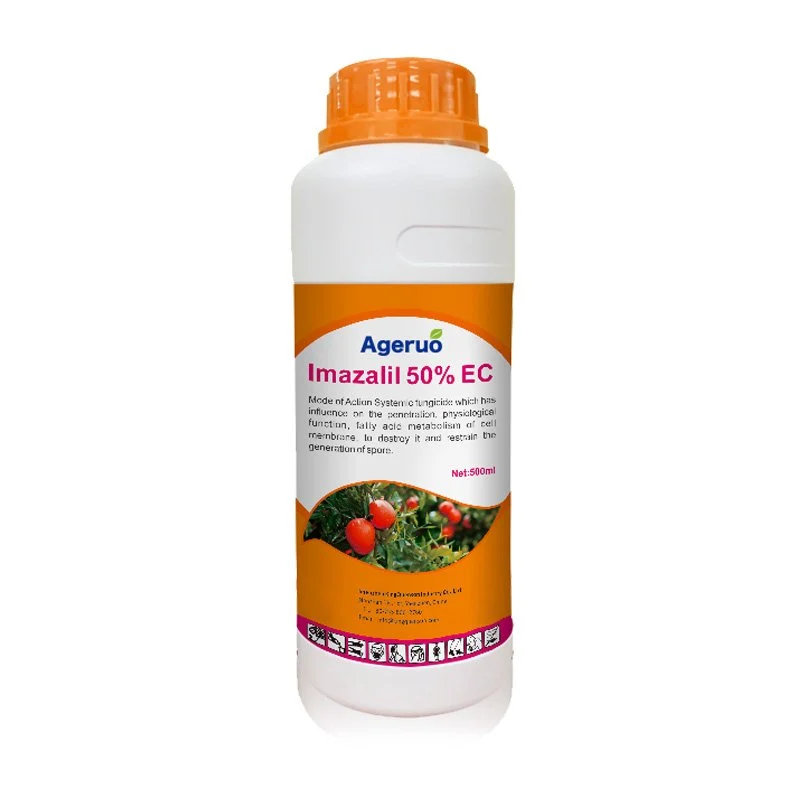
The key mechanism underlying imazalil’s efficacy is inhibition of fungal sterol (ergosterol) synthesis, which is critical for maintaining fungal cell-membrane integrity. By disrupting ergosterol production, imazalil weakens fungal membranes, causes leakage of intracellular contents and arrests fungal growth and sporulation.
Uptake in orange peel and distribution behaviour after treatment
In packing-house operations, imazalil is delivered via fruit dipping, spray or integration into wax coatings. After application, it penetrates into the orange peel and upper cell layers, providing residual protection beyond surface contact. The extent of uptake and internal distribution influences the protective window and exported fruit quality.
Factors affecting fungicide uptake and efficacy (temperature, pH, wax load, peel injury)
Performance of imazalil depends heavily on operational variables: solution temperature, pH of dip tank, contact time, wax load on fruit, and the extent of peel micro-injuries. Higher residue loading correlates with better control of mould and longer shelf life; conversely, poor application conditions may reduce uptake and weaken the mechanism of action.
Residue Behaviour, MRLs and Consumer Safety for Oranges
Typical residue levels of imazalil on orange peel and pulp, and influence of wax coatings
In citrus post-harvest use, studies show residue levels of imazalil on whole fruit frequently remain below regulated maxima when applied appropriately. Residues in orange pulp are substantially lower than peel levels, and wax coatings may further modulate surface residue behaviour and translocation into fruit tissue.
Maximum residue limits (MRLs) for oranges in major export markets and export compliance considerations
Major import regions (e.g., European Union, United States, Middle East, Africa) set specific maximum residue limits (MRLs) for imazalil on citrus fruit. Export-oriented packhouses and distributors must align dipping/spray operations and documentation to ensure outbound consignments comply with target-market thresholds and avoid rejection or detention at border checks.
Risk framework: Hazard vs Exposure, and labelling/packaging implications for downstream clients
From a safety standpoint, the fungicide’s hazard profile is mitigated by proper application, post-treatment handling and adherence to label instructions—all reducing exposure risk to consumers. For exporters, explicit labelling, batch analytics (COA) and traceability support downstream clients and retailers in demonstrating compliance with consumer-safety, regulatory-compliance and shelf-life expectations.
Export Market Considerations and Packhouse Best Practices
Application methods in packhouses and operational parameters
To harness imazalil’s mechanism of action and deliver export-ready oranges, packhouses commonly use dip tanks, drench lines or wax treatments. Key parameters include solution concentration, contact time, fruit load, solution pH/temperature and wax addition. These influence residue loading and efficacy against post-harvest fungi.
Resistance management and rotation of fungicide modes of action in citrus post-harvest operations
While imazalil remains effective, fungal populations with reduced sensitivity have emerged in some regions. To protect long-term performance, post-harvest programmes should rotate modes of action and vary fungicide groups rather than relying solely on imidazole chemistry, thus preserving both efficacy and export access.
Documentation, certification and logistics implications for target markets (Central Asia, South America, Africa)
For export to diverse regions, agrochemical brands, packers and trading partners must ensure documentation (COA, MSDS, label in required languages), ensure residual testing data and align with logistic protocols (cold-chain, traceability). These steps ensure that oranges treated with imazalil satisfy both phytosanitary and chemical-residue requirements in the destination market.
Comparison With Other Post-Harvest Fungicides used on Oranges
Imazalil vs Thiabendazole (TBZ) – spectrum, mechanism, residue behaviour
Thiabendazole belongs to the benzimidazole class and acts on fungal tubulin; imazalil’s mechanism (sterol inhibition) is distinct. In many packhouses, imazalil replaced TBZ where resistance to benzimidazoles had emerged. Imazalil often delivers improved shelf-life with comparable or lower residue levels under good practice.
Imazalil vs newer fungicides (e.g., Fludioxonil/Azoxystrobin blends) – advantages and limitations
Newer post-harvest fungicides may offer broad-spectrum efficacy including non-Penicillium moulds, but packers must evaluate cost, residual regulations, export market acceptance and established data. Imazalil remains a reliable baseline in many export chains, while newer chemistries may supplement or rotate with it.
FAQ: Key Questions About Imazalil on Oranges
Q1: Does imazalil protect oranges from all post-harvest rots?
It is effective against many key fungi such as green and blue mould of citrus, but no single fungicide provides complete protection. Good handling, cold-chain and hygiene must accompany chemical treatment.
Q2: Can I wash off imazalil residue from orange peel?
Standard washing may reduce surface residue, but peel penetration and wax treatments mean residual levels in layers beyond the surface may remain. The packaged product must meet market MRLs, not just surface removal.
Q3: What should exporters do to document imazalil use and compliance?
Record the pesticide batch, concentration, application time, contact method, residue testing results and retain certification. Transparent documentation supports clearance at destination and buyer confidence.
Q4: Does wax coating affect imazalil residue on orange peel?
Yes. Wax coatings can alter the deposition and distribution of imazalil on the peel surface and influence residue retention or removal. In some systems, imazalil is integrated into wax to extend control and manage residue dynamics.
Q5: Is imazalil use compatible with organic-labelled citrus?
No. Imazalil is a synthetic chemical fungicide and is not accepted in organic-certified citrus. Exporters must check certification schemes and alternative fungicides if organic labelling is required.
Hot Products
Hot news
Recommended news
FAQ