
Will 2,4-D Kill Centipede Grass?
My direct answer: 2,4-D typically won’t “instantly kill” a mature centipedegrass lawn, but it can injure centipedegrass, and repeated or off-label exposure can weaken the turf enough that it thins, stalls, or declines. Whether you see mild yellowing or serious damage depends on (1) the exact product label, (2) turf condition, and (3) exposure factors such as heat, drift, and volatility.
If you want a defensible yes/no for your lawn, there is only one reliable method: confirm that your specific product label explicitly allows use on centipedegrass and follow local regulations.
Why Centipedegrass May React to 2,4-D
Centipedegrass is widely regarded as a warm-season turf that can be less tolerant of certain broadleaf herbicide programs than other lawn grasses.
2,4-D is selective, but turf tolerance is not universal
2,4-D is designed to control many broadleaf weeds. That does not automatically mean it is “safe on every grass.” Turf species vary in how they metabolize and tolerate herbicides, so the same active ingredient can look “fine” in one lawn and “rough” in another.
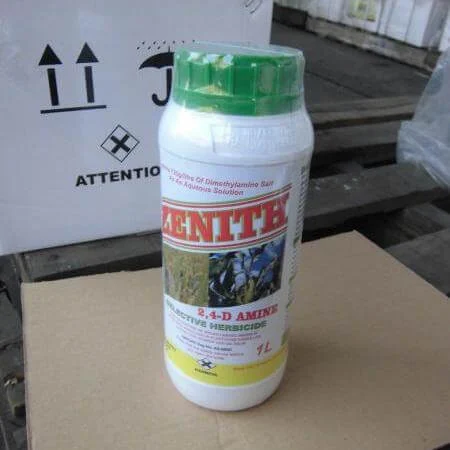
What “sensitivity” looks like in a homeowner’s lawn
When centipedegrass reacts poorly to products containing 2,4-D, you may see:
- Yellowing or discoloration
- Stunting or slowed growth
- Temporary thinning
- Delayed recovery after stress
These symptoms matter commercially because they often lead to customer complaints like “it killed my lawn,” even when the turf is technically injured rather than fully terminated.
Will 2,4-D Kill Centipedegrass—or “Only” Injure It?
This is not a simple yes/no question. It’s a risk spectrum.
The common outcome is injury, not immediate wipe-out
In most real-world lawn scenarios, the most common outcome is injury—sometimes mild, sometimes severe—rather than instant death. However, turf injury can become long-term decline if it happens repeatedly or under high stress.
If you want to kill weeds other than Centipede Grass, you need to apply the herbicide according to the label instructions.
If you want to kill Centipede Grass, you will need to apply the herbicide multiple times or choose a different herbicide.
Label-First Checklist: How to Confirm if Your 2,4-D Product Is Approved for Centipedegrass
If you only read one section, read this one.
Step 1: Look for a turf species list (not marketing claims)
Many lawn products clearly list the turf species they are intended for. If centipedegrass is not listed, do not assume compatibility. “Broadleaf weed killer” is a category description, not permission for all turf types.
Step 2: Check restrictions and limitations
Even when a product is labeled for certain turf, labels often include restrictions related to:
- turf growth stage (for example, sensitive transition periods)
- turf stress conditions (drought, disease pressure, poor vigor)
- environmental conditions (temperature, wind, and other drift/volatility risk factors)
- maximum use frequency or seasonal limitations
Step 3: Keep the compliance rule simple
The label is the legal boundary. If the label does not support your turf species and use-site, you do not have a compliant application scenario.
When Centipedegrass Injury Is Most Likely
Turf damage is rarely “just the product.” It is usually product × exposure × turf condition.
Heat and weather increase exposure risk
Higher temperatures can increase the chance of off-target movement (such as drift or volatility) and can also make turf less resilient. In warm-season climates, this is one of the most common factors behind unexpected injury.
Turf stress reduces recovery capacity
Centipedegrass that is already stressed—by drought, compacted soil, nutrient imbalance, disease, or aggressive mowing—can show stronger injury and slower recovery after herbicide exposure.
Risk framework professionals use
Risk = Hazard × Exposure
Even with the same active ingredient, the outcome changes when exposure increases (drift/volatility, repeated contact, stressed turf).
If Your Goal Is Broadleaf Weed Control in a Centipedegrass Lawn
Most readers are trying to control broadleaf weeds while keeping a healthy lawn.
Match the product to the turf species first
Professionals start with turf identity, then match the product:
- Confirm the lawn is centipedegrass
- Confirm the product is labeled for centipedegrass
- Confirm the product is intended for your use-site (home lawn, commercial turf, etc.)
- Respect label restrictions designed to protect turf
Do not trade turf quality for “fast control”
Broadleaf control is not a win if the lawn becomes thin, weak, or patchy afterward. The best programs protect turf density and recovery while managing weeds within label boundaries.
If Centipedegrass Is the Weed in Another Lawn
This is the opposite intent, and it changes the answer.
Why this becomes a different problem
When centipedegrass is invading another turf (for example, fescue), you’re asking about selective removal. That is a more complex decision that depends on:
- the desirable turf species
- site category and legal allowances
- product label scope in your market
What a responsible answer looks like
Instead of copying “internet recipes,” treat this as a turf management decision:
- verify turf species and invasion pattern
- confirm legal options with label-supported use
- consult qualified local guidance if the area is large or high-value
Quick Decision Matrix: Will 2,4-D Kill Centipedegrass?
| Your situation | What you’re really asking | Likely outcome (general) | Risk level | What to verify (label-first) |
|---|---|---|---|---|
| Centipedegrass lawn + broadleaf weeds | “Will I hurt my lawn?” | Injury is possible; severe injury can occur in sensitive conditions | Medium–High | Turf species listed? Restrictions? Sensitive timing/heat warnings? |
| Mixed turf / unknown grass | “Is it safe in my yard?” | Misidentification increases injury risk | High | Identify turf first; then match label scope |
| Centipedegrass is invading another turf | “Can I remove centipedegrass?” | Selective removal is complex and label-dependent | High | Desirable turf type; permitted use-site; legal options in your market |
Common Injury Signals and Likely Drivers
| What you may notice | What it can indicate | Common drivers | What to do next (non-instructional) |
|---|---|---|---|
| Yellowing/discoloration | Turf stress response | Heat, sensitive timing, turf already weak | Stop escalating exposure; verify label scope; reassess turf health |
| Stunting/slow growth | Reduced vigor | Stress + herbicide sensitivity interaction | Focus on recovery and compliance checks |
| Thinning/patchiness | Decline trend | Repeated injury, off-label scenario, high exposure | Treat as a turf quality issue, not a “stronger product” problem |
| Nearby plant distortion | Off-target movement | Drift/volatility risk | Review exposure pathways and boundaries; align to label and local rules |
FAQs: Will 2,4-D Kill Centipede Grass?
Will 2,4-D kill centipedegrass or only injure it?
Most often it injures rather than instantly kills. But severe injury, repeated exposure, or off-label use can lead to long-term decline that homeowners interpret as “killing the lawn.”
Is 2,4-D safe for centipedegrass lawns?
It depends on the specific product label and the lawn’s condition. Centipedegrass is often considered more sensitive than many turf types, so label confirmation is essential.
Why does centipedegrass turn yellow after exposure to 2,4-D products?
Yellowing is a common turf injury signal. It is more likely when the lawn is stressed or when exposure conditions increase risk (such as heat or off-target movement).
Does temperature matter?
Yes. Heat can increase off-target movement risk and can reduce turf resilience, making visible injury more likely.
What if my product label does not list centipedegrass?
Treat that as a stop sign. Do not assume compatibility. Use-site and turf species listing are core compliance boundaries.
Can 2,4-D drift and injure other plants?
Yes, off-target movement is a known risk category for some herbicides. Always manage exposure risk and follow label restrictions.
What if centipedegrass is the weed in my other lawn?
That’s a different problem (selective removal) and needs a different, label-supported decision path based on the desirable turf species and local legal allowances.
Reduce Complaints with Label-Ready Turf Products
If you serve turf channels, “will 2,4-D kill centipedegrass?” is a predictable, high-impact customer question. The brands that reduce returns and complaints are the ones that ship label-ready, documentation-ready, and stewardship-ready products.
If you’re sourcing 2,4-D formulations for your market, prepare three inputs before you list or distribute:
- destination country and permitted use-site scope
- target turf channels (home lawn, professional turf, ornamental, etc.)
- packaging sizes and label language requirements
With those inputs, you can align product documentation and label language to local requirements and protect your channel reputation.
Hot Products
Hot news
Recommended news
FAQ
