
Will 2,4-D Kill Cattails?
2,4-D can control cattails, but it does not always “kill” them in one round. Cattails often come back if the underground rhizomes (root-like stems) survive. So the real question is not only “Will 2,4-D turn cattails brown?” but “Will 2,4-D suppress the rhizomes enough to stop regrowth?”
If your cattails are in or near water, there is a second critical filter: you must use a product that is labeled for aquatic or shoreline use, and you must follow water-use restrictions and local approvals.
What “Kill Cattails” Means
Cattails (Typha) are hard to eliminate because the visible stalks are only part of the plant. The long-term survival engine is below the surface.
Kill vs. Knockdown
- Knockdown means the tops yellow, bend, or collapse. This can look like success, but it may be temporary.
- Kill means the plant does not recover because the rhizomes are seriously suppressed.
A key reality many pond owners learn the hard way: cutting or removing the tops alone will not kill cattails, because the rhizomes remain active.
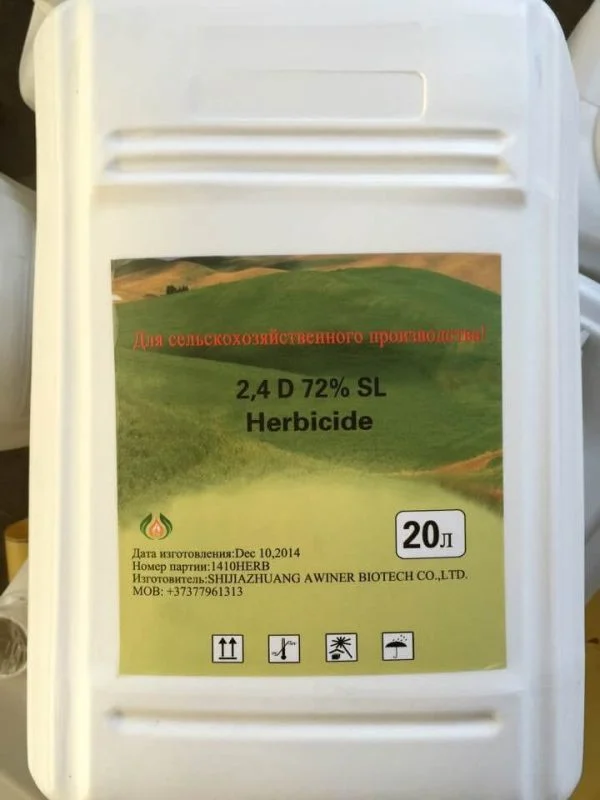
2,4D72%SL
Will 2,4-D Kill Cattails in Ponds, Lakes, and Shorelines?
In water environments, the effectiveness of 2,4-D depends heavily on label legality and site constraints, not just the ingredient.
1) Aquatic label comes first
Not every 2,4-D product is allowed for water. In the U.S., guidance on aquatic weed management stresses that aquatic herbicides must be registered, labeled, and typically state-approved, and they often carry water-use restrictions.
2) Set realistic expectations
In many aquatic weed programs, the goal is control and reduction, not instant elimination. Cattail stands are often managed over time because one treatment is seldom sufficient for durable control in real sites.
3) “Does it work?” is different from “Is it allowed here?”
Even when 2,4-D is effective, your decision must also pass these checks:
- Is your water used for irrigation?
- Is the pond stocked with fish?
- Is it near sensitive plants or crops?
- Are permits or licensed applicators required?
These constraints often determine whether 2,4-D is the right tool for your cattails.
Why 2,4-D Formulation Matters for Killing Cattails
People search “will 2,4-D kill cattails,” but they often do not realize that different forms of 2,4-D behave differently—especially around water.
Amine/salt vs. ester: risk profile is not the same
Risk assessments frequently note that acid and amine salt forms of 2,4-D tend to be lower in fish toxicity than ester forms, and ester forms can be more toxic to aquatic organisms.
Practical takeaway for cattails near water
If your cattails are in a pond, lake, ditch, or wetland edge, the formulation choice is not only about results. It is also about:
- aquatic safety profile
- water-use restrictions
- off-target movement risk (drift/volatility)
- compliance in your market
For most buyers, the “best” option is the one that is aquatic-labeled and compliance-fit for the waterbody and its uses.
Why 2,4-D Sometimes Fails to Kill Cattails
When people say “2,4-D didn’t work,” the root cause usually sits in one of these buckets.
1) Rhizomes survived, so cattails returned
Cattails can regrow from below-ground rhizomes. If the rhizomes stay viable, the stand can reappear even after the tops are damaged.
2) The product was not labeled for the site
Using a non-aquatic 2,4-D product near water is a high-risk mistake. Aquatic weed guidance emphasizes label scope and water-use restrictions as core decision factors.
3) Site constraints limit effective exposure
In real ponds and shorelines, the “ideal” exposure may not be possible because of:
- water-use restrictions
- fish and wildlife considerations
- sensitive adjacent vegetation
- local permit rules
This is why many successful programs are built around risk-managed control, not “one-shot elimination.”
Safety and Compliance: The Non-Negotiables for 2,4-D and Cattails
If you are treating cattails in or near water, you must treat compliance as part of performance. Here are the checks that protect your site and reduce legal risk.
Water-use restrictions can be decisive
Permits and labels can restrict how treated water may be used, especially for irrigation of plants not labeled for 2,4-D exposure. Always verify these restrictions before any aquatic application.
Fish and aquatic life considerations
Risk documents highlight differences in toxicity across 2,4-D forms, with ester forms often showing higher toxicity to aquatic life than amine/salt forms. This is one reason aquatic labeling and formulation selection matter.
Local approval is not optional
Aquatic herbicide use is commonly tied to state or local oversight in the U.S. Practical guidance notes that approvals can be required beyond federal registration.
Quick Decision Table: Will 2,4-D Kill Cattails?
| Your situation (cattails) | What “kill” usually means here | Can 2,4-D be a fit? | Key risk gate to check first |
|---|---|---|---|
| Cattails growing in open water / pond edges | Long-term suppression, not just browning | Often possible only with aquatic-labeled products | Water-use restrictions + approvals/permits |
| Cattails on shoreline with sensitive plants nearby | Control without off-target injury | Sometimes, but drift/volatility risk must be managed | Formulation choice + buffer constraints |
| Cattails in wetlands / managed habitat areas | Reduce density, protect habitat function | Often managed as “control,” not instant removal | Habitat rules + permit requirements |
| Cattails keep coming back after “successful” treatment | Rhizomes survived | 2,4-D may still help, but outcomes depend on rhizome suppression | Confirm label scope and site limitations |
Failure Audit Table: When 2,4-D Didn’t “Kill” Your Cattails
| What you observed | What it often means | Most common cause | What to verify next (non-instructional) |
|---|---|---|---|
| Tops browned but new shoots appeared later | Not a true kill | Rhizomes remained viable | Confirm whether the program is rhizome-suppressive under your label scope |
| Little to no visible change | Poor exposure or mismatch | Product/site mismatch | Confirm aquatic labeling and approvals |
| Concerns about fish, irrigation, or potable use | Compliance risk is present | Restrictions apply | Check water-use restrictions and local rules |
FAQs: Will 2,4-D Kill Cattails?
1) Will 2,4-D kill cattails or only knock them back?
It can do either. Many outcomes are “knockdown” rather than a full kill, because cattails can regrow from rhizomes if they survive.
2) Why do cattails come back after 2,4-D?
Because the underground rhizomes can remain alive even when the tops are damaged. Regrowth is a classic cattail behavior.
3) Can I use any 2,4-D product to kill cattails in a pond?
No. In water settings, you generally need products specifically labeled for aquatic use, and you must follow water-use restrictions and local approvals.
4) Is 2,4-D for cattails safe for fish?
Safety depends on the formulation and label scope. Risk documents commonly note ester forms can be more toxic to fish than acid/amine salt forms.
5) Does the type of 2,4-D matter (amine vs ester)?
Yes. Different 2,4-D forms differ in aquatic toxicity and movement behavior. That can change both risk and suitability near water.
6) Do I need a permit or a licensed applicator to use 2,4-D on cattails?
In many places, aquatic herbicide use requires local approvals, and in some jurisdictions permits or licensing may apply. Always check your local authority before treatment.
7) Can treated water be used for irrigation after 2,4-D cattail control?
Sometimes restrictions apply, especially for irrigation of crops or plants not labeled for 2,4-D exposure. Always follow the applicable label and permit restrictions.
8) If I don’t want chemicals, can cattails still be reduced?
Yes, but results usually require controlling the rhizomes. Guidance on cattail management notes that one-time efforts are often not enough and control can involve several approaches.
For Importers, Distributors, and Project Buyers
If your customers ask “will 2,4-D kill cattails,” they are not only buying chemistry. They are buying risk control: aquatic labeling, water-use restrictions, and documentation that stands up to local checks.
If you are sourcing 2,4-D products for cattail control, share:
- destination country/state and use-site (pond, lake, ditch, shoreline)
- whether fish are present and how the water is used (irrigation, livestock, recreation)
- your preferred packaging size and label language
We can support you with a documentation-ready package (COA, SDS, and label adaptation support) aligned to your market requirements.
Hot Products
Hot news
Recommended news
FAQ