
Diquat: A Rapid Solution for Tackling Pesky Lily Pads
Diquat, specifically diquat dibromide, is a widely recognized and effective aquatic herbicide for controlling lily pads in various aquatic environments. Its primary mechanism of action is as a non-selective contact herbicide, meaning it impacts nearly all plant tissues it touches rather than being absorbed and distributed throughout the plant’s system. This characteristic makes it a fast-acting solution, often showing visible results such as browning and wilting of lily pad leaves within hours to days of application.
Understanding Diquat’s Mechanism and Effectiveness
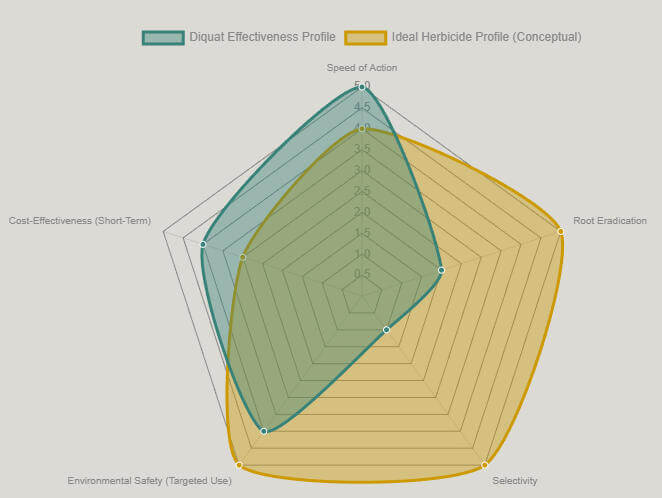
Diquat functions as a contact herbicide, meaning it acts upon direct contact with plant tissues. This makes it particularly effective for controlling floating and submerged aquatic weeds, including the challenging water lily species. Upon absorption, diquat disrupts plant cell membranes, leading to rapid cellular breakdown, wilting, and eventual death of the exposed foliage. This quick knockdown ability is highly valued in aquatic weed management, especially when dealing with dense mats of lily pads that can impede light penetration, restrict water flow, and negatively impact aquatic ecosystems.
While its fast action is a significant advantage, it also presents a key limitation: diquat’s contact-only nature means it may not fully penetrate and destroy the deep, extensive root systems that characterize many lily pad species. This often leads to regrowth from viable roots, necessitating repeated applications or a more integrated approach to achieve sustained, long-term control. The efficacy of diquat can also be influenced by various environmental factors, such as water temperature, turbidity (muddy water), and the presence of silt, which can bind the herbicide and reduce its effectiveness.
Factors Influencing Diquat’s Efficacy
- Contact Action: Diquat directly impacts plant parts it touches, causing rapid wilting and browning of leaves.
- Root System Persistence: Due to its contact nature, the root systems of lily pads often remain intact, allowing for potential regrowth.
- Environmental Conditions: Optimal effectiveness is achieved in water temperatures above 60°F (15°C). Muddy or silty water can reduce its potency by binding the herbicide.
- Targeted Application: Precise application is crucial to maximize efficacy on lily pads while minimizing impact on non-target aquatic plants and organisms.
Comparing Diquat with Other Aquatic Herbicides
While diquat offers significant advantages, particularly its fast-acting nature, it’s essential to consider its place within the broader spectrum of aquatic herbicides. For instance, systemic herbicides like 2,4-D or glyphosate are absorbed by the plant and translocated throughout its vascular system, reaching the root structure. This characteristic makes them potentially more effective for long-term control of established lily pad infestations, as they can kill the entire plant, including the roots, reducing the likelihood of regrowth.
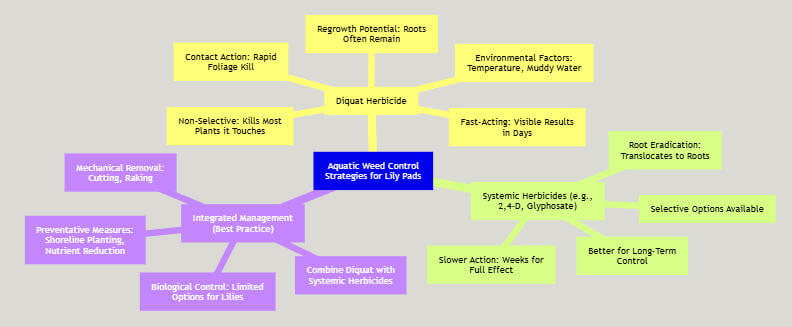
However, systemic herbicides often have a slower rate of action compared to diquat, taking weeks rather than days to show full effects. The choice between diquat and a systemic herbicide, or a combination of both, often depends on the specific circumstances: the urgency of control, the density and maturity of the lily pad infestation, the presence of desirable plants, and regulatory requirements. An integrated pest management approach that combines different herbicide types with mechanical removal or preventative measures is often recommended for sustainable aquatic weed control.
The Environmental and Safety Considerations
When using any aquatic herbicide, including diquat, environmental and safety considerations are paramount. Diquat is generally considered to have a low risk to non-target organisms like fish when applied correctly and according to label instructions. Its rapid binding to sediment particles helps minimize its persistence in the water column, further reducing potential environmental impact. However, improper application, such as exceeding recommended dosages or applying in conditions unsuitable for dispersion, can temporarily affect water quality or pose risks to aquatic fauna.
It’s vital for users to understand that “low risk” does not mean “no risk,” and adherence to all safety guidelines and regulatory requirements is non-negotiable. This includes obtaining any necessary permits for application in public or regulated waters, using appropriate personal protective equipment, and being aware of water use restrictions (e.g., for swimming or irrigation) that may follow treatment. Consulting with local extension services or certified aquatic applicators can provide valuable guidance tailored to specific local conditions and regulations.
Below is a comparative overview of different aquatic weed control methods, highlighting their strengths and weaknesses:
| Method | Effectiveness on Foliage | Effectiveness on Roots | Speed of Action | Selectivity | Environmental Impact (General) |
|---|---|---|---|---|---|
| Diquat | High | Low (regrowth possible) | Fast (days) | Non-selective | Low (when applied correctly) |
| Systemic Herbicides (2,4-D, Glyphosate) | High | High | Slower (weeks) | Can be selective | Moderate (varies by product) |
| Mechanical Removal | High (immediate) | Moderate (if roots removed) | Immediate | Highly selective | Low (physical disruption) |
| Biological Control | Variable | Variable | Slow | Highly selective | Very low |
| Preventative Measures | Low (for existing growth) | Low (for existing growth) | Very slow (long-term) | N/A | Very low |
This table offers a comparative analysis of common aquatic weed control methods, focusing on their efficacy and environmental considerations.
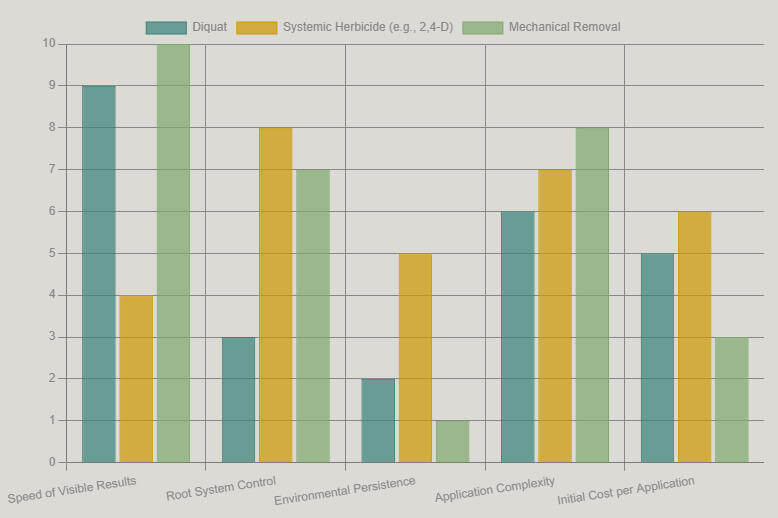
Visualizing Herbicide Performance Factors
For those looking for a practical demonstration of how diquat is applied, the video titled “How To Use Diquat Dibromide Aquatic Herbicide” offers valuable insights. This video typically covers the essential steps and considerations for applying diquat in an aquatic setting, providing visual guidance on product mixing, equipment use, and safety protocols. It can be particularly useful for individuals new to aquatic weed management or those seeking to refine their application techniques. Watching such a video can help reinforce the importance of accurate measurement, proper targeting, and adherence to safety guidelines, all of which are critical for effective and responsible herbicide use.
Frequently Asked Questions
Will diquat permanently get rid of lily pads?
Diquat is highly effective at killing the foliage of lily pads, but because it is a contact herbicide, it often does not completely eradicate the deep root systems. This means that while it provides quick visual control, regrowth is possible, and repeat treatments or a combination with systemic herbicides may be necessary for long-term control.
Is diquat safe for fish and other aquatic life?
When applied according to label instructions and at recommended dosages, diquat is generally considered to have a low risk to fish and other non-target aquatic organisms. However, improper application or excessive concentrations can temporarily affect water quality and harm aquatic life. Always follow safety guidelines and local regulations.
How quickly does diquat work on lily pads?
Diquat is a fast-acting herbicide. You can typically expect to see visible results, such as browning and wilting of lily pad leaves, within hours to a few days after application, depending on environmental conditions and the specific plant species.
Can diquat be used in muddy water?
The effectiveness of diquat can be reduced in muddy or turbid water because the herbicide can bind to suspended sediment particles, making it less available for absorption by the plants. Clearer water conditions generally yield better results.
Conclusion
In summary, diquat is a potent and fast-acting non-selective aquatic herbicide that effectively controls lily pads by rapidly killing their foliage. While it offers a quick solution for immediate reduction of lily pad infestations, its contact-only nature means that the robust root systems may persist, leading to potential regrowth. For comprehensive and long-term management, an integrated approach combining diquat with other methods, such as systemic herbicides or mechanical removal, is often recommended. Adherence to strict application guidelines, environmental considerations, and safety protocols is crucial to ensure both efficacy and the protection of aquatic ecosystems. Ultimately, diquat serves as a valuable tool in the aquatic weed management arsenal, particularly for rapid knockdown and initial control of challenging lily pad growth.
Diquat, specifically diquat dibromide, is a widely recognized and effective aquatic herbicide for controlling lily pads in various aquatic environments. Its primary mechanism of action is as a non-selective contact herbicide, meaning it impacts nearly all plant tissues it touches rather than being absorbed and distributed throughout the plant’s system. This characteristic makes it a fast-acting solution, often showing visible results such as browning and wilting of lily pad leaves within hours to days of application.
Understanding Diquat’s Mechanism and Effectiveness
Diquat functions as a contact herbicide, meaning it acts upon direct contact with plant tissues. This makes it particularly effective for controlling floating and submerged aquatic weeds, including the challenging water lily species. Upon absorption, diquat disrupts plant cell membranes, leading to rapid cellular breakdown, wilting, and eventual death of the exposed foliage. This quick knockdown ability is highly valued in aquatic weed management, especially when dealing with dense mats of lily pads that can impede light penetration, restrict water flow, and negatively impact aquatic ecosystems.
While its fast action is a significant advantage, it also presents a key limitation: diquat’s contact-only nature means it may not fully penetrate and destroy the deep, extensive root systems that characterize many lily pad species. This often leads to regrowth from viable roots, necessitating repeated applications or a more integrated approach to achieve sustained, long-term control. The efficacy of diquat can also be influenced by various environmental factors, such as water temperature, turbidity (muddy water), and the presence of silt, which can bind the herbicide and reduce its effectiveness.
Factors Influencing Diquat’s Efficacy
- Contact Action: Diquat directly impacts plant parts it touches, causing rapid wilting and browning of leaves.
- Root System Persistence: Due to its contact nature, the root systems of lily pads often remain intact, allowing for potential regrowth.
- Environmental Conditions: Optimal effectiveness is achieved in water temperatures above 60°F (15°C). Muddy or silty water can reduce its potency by binding the herbicide.
- Targeted Application: Precise application is crucial to maximize efficacy on lily pads while minimizing impact on non-target aquatic plants and organisms.
Comparing Diquat with Other Aquatic Herbicides
While diquat offers significant advantages, particularly its fast-acting nature, it’s essential to consider its place within the broader spectrum of aquatic herbicides. For instance, systemic herbicides like 2,4-D or glyphosate are absorbed by the plant and translocated throughout its vascular system, reaching the root structure. This characteristic makes them potentially more effective for long-term control of established lily pad infestations, as they can kill the entire plant, including the roots, reducing the likelihood of regrowth.
However, systemic herbicides often have a slower rate of action compared to diquat, taking weeks rather than days to show full effects. The choice between diquat and a systemic herbicide, or a combination of both, often depends on the specific circumstances: the urgency of control, the density and maturity of the lily pad infestation, the presence of desirable plants, and regulatory requirements. An integrated pest management approach that combines different herbicide types with mechanical removal or preventative measures is often recommended for sustainable aquatic weed control.
The Environmental and Safety Considerations
When using any aquatic herbicide, including diquat, environmental and safety considerations are paramount. Diquat is generally considered to have a low risk to non-target organisms like fish when applied correctly and according to label instructions. Its rapid binding to sediment particles helps minimize its persistence in the water column, further reducing potential environmental impact. However, improper application, such as exceeding recommended dosages or applying in conditions unsuitable for dispersion, can temporarily affect water quality or pose risks to aquatic fauna.
It’s vital for users to understand that “low risk” does not mean “no risk,” and adherence to all safety guidelines and regulatory requirements is non-negotiable. This includes obtaining any necessary permits for application in public or regulated waters, using appropriate personal protective equipment, and being aware of water use restrictions (e.g., for swimming or irrigation) that may follow treatment. Consulting with local extension services or certified aquatic applicators can provide valuable guidance tailored to specific local conditions and regulations.
Below is a comparative overview of different aquatic weed control methods, highlighting their strengths and weaknesses:
| Method | Effectiveness on Foliage | Effectiveness on Roots | Speed of Action | Selectivity | Environmental Impact (General) |
|---|---|---|---|---|---|
| Diquat | High | Low (regrowth possible) | Fast (days) | Non-selective | Low (when applied correctly) |
| Systemic Herbicides (2,4-D, Glyphosate) | High | High | Slower (weeks) | Can be selective | Moderate (varies by product) |
| Mechanical Removal | High (immediate) | Moderate (if roots removed) | Immediate | Highly selective | Low (physical disruption) |
| Biological Control | Variable | Variable | Slow | Highly selective | Very low |
| Preventative Measures | Low (for existing growth) | Low (for existing growth) | Very slow (long-term) | N/A | Very low |
This table offers a comparative analysis of common aquatic weed control methods, focusing on their efficacy and environmental considerations.
Visualizing Herbicide Performance Factors
For those looking for a practical demonstration of how diquat is applied, the video titled “How To Use Diquat Dibromide Aquatic Herbicide” offers valuable insights. This video typically covers the essential steps and considerations for applying diquat in an aquatic setting, providing visual guidance on product mixing, equipment use, and safety protocols. It can be particularly useful for individuals new to aquatic weed management or those seeking to refine their application techniques. Watching such a video can help reinforce the importance of accurate measurement, proper targeting, and adherence to safety guidelines, all of which are critical for effective and responsible herbicide use.
Frequently Asked Questions
Will diquat permanently get rid of lily pads?
Diquat is highly effective at killing the foliage of lily pads, but because it is a contact herbicide, it often does not completely eradicate the deep root systems. This means that while it provides quick visual control, regrowth is possible, and repeat treatments or a combination with systemic herbicides may be necessary for long-term control.
Is diquat safe for fish and other aquatic life?
When applied according to label instructions and at recommended dosages, diquat is generally considered to have a low risk to fish and other non-target aquatic organisms. However, improper application or excessive concentrations can temporarily affect water quality and harm aquatic life. Always follow safety guidelines and local regulations.
How quickly does diquat work on lily pads?
Diquat is a fast-acting herbicide. You can typically expect to see visible results, such as browning and wilting of lily pad leaves, within hours to a few days after application, depending on environmental conditions and the specific plant species.
Can diquat be used in muddy water?
The effectiveness of diquat can be reduced in muddy or turbid water because the herbicide can bind to suspended sediment particles, making it less available for absorption by the plants. Clearer water conditions generally yield better results.
Conclusion
In summary, diquat is a potent and fast-acting non-selective aquatic herbicide that effectively controls lily pads by rapidly killing their foliage. While it offers a quick solution for immediate reduction of lily pad infestations, its contact-only nature means that the robust root systems may persist, leading to potential regrowth. For comprehensive and long-term management, an integrated approach combining diquat with other methods, such as systemic herbicides or mechanical removal, is often recommended. Adherence to strict application guidelines, environmental considerations, and safety protocols is crucial to ensure both efficacy and the protection of aquatic ecosystems. Ultimately, diquat serves as a valuable tool in the aquatic weed management arsenal, particularly for rapid knockdown and initial control of challenging lily pad growth.