
Deltamethrin vs Cypermethrin: Which Is Better for Your Use Case?
Deltamethrin vs Cypermethrin
Decision driver: target pest, canopy density, UV exposure, spray interval discipline, and any history of pyrethroid tolerance.
| Criterion | Deltamethrin | Cypermethrin |
|---|---|---|
| Knockdown visibility (0–6 h) | Very fast, highly visible | Fast, less dramatic |
| Residual feel in strong sun | Slightly firmer | Solid; more coverage-dependent |
| Program role | “Rescue”/clean-out passes | Backbone for scheduled acreage |
| Sensitivity to interval gaps | Slightly more forgiving | Needs tighter interval control |
Use it when
- Deltamethrin: exposed chewers, bright/hot windows, urgent reset.
- Cypermethrin: large-acre, repeatable rounds with strong coverage/timing.
If efficacy slips, rotate out of IRAC 3A rather than toggling between the two.
Chemistry & Isomer Profile — Practical Implications (Deltamethrin vs Cypermethrin)
| Axis | Deltamethrin | Cypermethrin | Field implication |
|---|---|---|---|
| Stereochemistry | Mostly single stereoisomer | Multi-isomer mixture (standard tech) | Deltamethrin feels more concentrated/consistent; cypermethrin outcomes lean harder on rate and coverage. |
| Intrinsic potency (per unit a.i.) | Higher | Moderate | Similar results at lower rates with deltamethrin; cypermethrin often uses mid–upper label bands. |
| Excito-repellency/flush | Higher | Moderate | Faster clean-out vs. steadier program control. |
| Photostability (relative) | Good under high UV | Good, timing matters | Deltamethrin may hold slightly longer; cypermethrin benefits from low-UV spray windows. |
Need crisp, consistent potency at lower dose → deltamethrin. Need broad utility and cost-per-hectare at scale → cypermethrin.
Same IRAC Group (3A), Different Field Behavior
| Behavior | Deltamethrin | Cypermethrin | Operational takeaway |
|---|---|---|---|
| Visible knockdown (Day 0–1) | Very pronounced | Pronounced but steadier | Choose deltamethrin for Immediate pest control. |
| Re-infestation tendency after flush | Slight rebound if residues uneven | More “stay-put” feel | After deltamethrin, scout tightly; with cypermethrin, maintain cadence. |
| Sheltered stages (whorls/undersides) | Potent, still coverage-bound | Solid, more coverage-sensitive | Dense canopy magnifies coverage discipline for cypermethrin. |
| Interval tolerance under sun | Slightly more forgiving | Less forgiving | Where UV is intense, deltamethrin is a touch more resilient. |
Deltamethrin for rapid resets; cypermethrin for scheduled stability—both require strong coverage; neither fixes 3A tolerance.
Target Pest Coverage — Cypermethrin vs Deltamethrin (Matrix)
| Pest group | Deltamethrin | Cypermethrin | Comparative note |
|---|---|---|---|
| Armyworms/Spodoptera (exposed) | Good–Very good | Good | Deltamethrin often faster visibly under strong sun. |
| Bollworms/Helicoverpa | Good | Good | Similar headline control; rotate out of 3A if slip appears. |
| Leaf folders/Loopers | Good | Good | Deltamethrin decisive on small instars; cypermethrin stable at scale. |
| Borers (concealed) | Moderate (timing-critical) | Moderate (timing-critical) | Both coverage/timing dependent; neither excels on concealed larvae. |
| Beetles (chewing) | Good | Good–Very good | Cypermethrin is a workhorse across acreage. |
| Aphids/Whiteflies | Limited–Moderate | Limited–Moderate | Variable; consider non-3A when outcomes slip. |
| Leaf/planthoppers | Moderate | Moderate | Results hinge on interval & coverage, not the active choice alone. |
| Thrips | Moderate | Moderate | Partial on exposed stages; canopy limits both. |
| Leaf miners | Limited | Limited | Choose targeted non-3A options. |
| Mites (flare risk) | Limited | Limited | Pyrethroids can flare mites; monitor and pivot. |
Both are good on exposed chewing larvae; neither is reliable on concealed or sap-sucking complexes—pivot MOA when required.
Crop Context — Deltamethrin and Cypermethrin (Comparative)
| Crop context | Tendency to favor | Why (comparative) |
|---|---|---|
| Cotton | Deltamethrin for outbreak resets; Cypermethrin for rounds | Deltamethrin = crisp clean-out in heat; cypermethrin = repeatable acreage control. |
| Maize | Deltamethrin for hot spots; Cypermethrin for scale | Fast visible hits vs. cost-effective routines. |
| Rice | Deltamethrin in high-UV windows; Cypermethrin with tight intervals | Slightly better hold vs. cadence-driven consistency. |
| Soybean | Cypermethrin for programs; Deltamethrin for spikes | Program stability vs. urgent resets. |
| Vegetables/Orchards | Context-dependent | Exposed stages → deltamethrin impact; large blocks → cypermethrin repeatability. |
In bright/hot windows or for rapid resets, lean deltamethrin; for large, scheduled programs with good coverage, lean cypermethrin.
Onset Speed vs Residual Length — Deltamethrin vs Cypermethrin
Plain comparison for field decisions only.
| Aspect | Deltamethrin | Cypermethrin |
|---|---|---|
| Onset (0–6 h) | Very fast, highly visible knockdown on exposed chewers | Fast, reliable; less “dramatic” than deltamethrin |
| First-day control (0–24 h) | Strong “clean-out” feel | Steady suppression across large acreage |
| Residual feel between sprays | Tends to “hold” slightly better under strong sun | Solid but more dependent on coverage and tight intervals |
| Best fit | Rescue passes, hot spots, short pre-bloom windows | Scheduled rounds where timing and coverage are disciplined |
Choose deltamethrin when you need Immediate pest control and a touch more persistence under high UV. Choose cypermethrin for routine, repeatable control over large areas—provided intervals and coverage are well managed. If performance slips, rotate out of IRAC 3A.
Repellency & Flushing — Deltamethrin vs Cypermethrin (Strictly Comparative)
Scope: visible field effects only (excito-repellency, flushing, rebound risk), comparing deltamethrin and cypermethrin.
| Effect Axis | Deltamethrin | Cypermethrin | Operational Note |
|---|---|---|---|
| Excito-repellency intensity | Higher | Moderate | Deltamethrin triggers faster pest agitation and exit. |
| Visible flushing (0–2 h) | Strong | Steady | Quicker “clean-out” look with deltamethrin; cypermethrin changes are less dramatic. |
| Dislodging of hidden pests | Better at exposing | Moderate | Flushed larvae/adults become more spray-exposed; coverage still decisive. |
| Re-infestation risk after flush | Slightly higher if residues are uneven | Lower perceived rebound | After a strong flush, scout sooner to catch new arrivals or survivors. |
| Best program fit | Rescue/outbreak passes | Scheduled acreage rounds | Choose by need: rapid reset vs. routine stability. |
| Scouting cadence implication | Tighter (24–48 h) | Standard (48–72 h) | Deltamethrin requires quicker post-spray checks. |
If you need high flushing and a rapid visual reset, choose deltamethrin. For steadier suppression without pronounced flushing, choose cypermethrin. In both cases, maintain coverage and post-spray scouting; if control slips, rotate out of IRAC 3A.
Dose & Formulation Equivalence — Deltamethrin vs Cypermethrin (Head-to-Head)
Confirm local labels. Comparative tendencies only.
| Axis | Deltamethrin | Cypermethrin | Practical Read |
|---|---|---|---|
| Dose to achieve similar field effect | Lower a.i./ha tendency | Mid–upper label bands more common | Deltamethrin often reaches outcomes at lower dose; cypermethrin may rely on higher ends or tighter intervals. |
| Formulations seen (EC/EW/SC/ULV) | Common across EC/EW/SC; ULV where applicable | Same spread of formats | Choice of carrier/solvent and wetting affects both; difference is less about format, more about potency. |
| Adjuvant sensitivity | Benefits from good spread; less rate-sensitive | More coverage-sensitive | If coverage is variable, deltamethrin’s potency cushion helps; cypermethrin gains more from adjuvants and water conditioning. |
| Droplet/coverage dependency | High (contact insecticide) | Very high | Both need coverage; cypermethrin’s field success tracks most closely with pattern and deposition. |
For equivalent outcomes, deltamethrin typically works at lower dose; cypermethrin can match performance with coverage discipline, adjuvant strategy, and rate within label.
Photostability, Temperature & Rainfastness — Deltamethrin vs Cypermethrin
| Condition | Deltamethrin | Cypermethrin | Operational Note |
|---|---|---|---|
| High UV / bright sun | Slightly more resilient perception | Good, but timing matters | Deltamethrin may hold a touch longer; cypermethrin benefits from low-UV windows (late afternoon/dusk). |
| Heat (hot afternoons) | Knockdown remains crisp on exposed chewers | Solid with interval discipline | Under heat + sun, deltamethrin’s visible effect is more immediate. |
| Cooler/cloudy periods | Both perform reliably | Both perform reliably | Choice hinges on program role rather than climate. |
| Light rain within hours | Lipophilic; modest resilience once dried | Lipophilic; similar profile | Both prefer drying time before rain; any early wash-off penalizes cypermethrin more if rate/coverage are marginal. |
| Canopy/waxiness variation | Slightly less sensitive to minor misses | More sensitive to misses | On waxy leaves/dense canopy, cypermethrin outcomes swing more with deposition quality. |
Both are UV-sensitive pyrethroids; field users often perceive deltamethrin to “hold” slightly better under bright, hot conditions, while cypermethrin performs strongly when spray timing and coverage are optimized.
Resistance & Cross-Resistance — Deltamethrin vs Cypermethrin (IRAC 3A)
| Question | Comparative Answer | Action Cue |
|---|---|---|
| Does switching between the two fix slippage? | Usually no. Cross-resistance within 3A is common. | If control declines at label-like rates, pivot to a different IRAC group, not just 3A→3A. |
| Any consistent edge vs tolerant populations? | No reliable advantage; local sensitivity may vary but trends track together. | Build a rotation that alternates away from 3A and limits pyrethroid rounds. |
| Early signals of 3A tolerance | Slower knockdown, survivors in well-covered zones, shorter apparent residual. | Tight scouting 24–72 h post-spray; adjust immediately. |
| Program design implication | Use either as a component, not the sole pillar. | Interleave with non-3A MOAs; avoid back-to-back 3A cycles when pressure is persistent. |
| When one “feels” better than the other | Often due to coverage, timing, or rate, not true resistance separation. | Fix spray quality first; if slip persists, change MOA. |
Deltamethrin and cypermethrin rise and fall together when 3A tolerance emerges. Don’t toggle between them; step out of 3A, correct coverage/timing, and rebuild the program with MOA diversity.
Non-Target Selectivity (Relative) — Deltamethrin vs Cypermethrin
Scope: comparative tendencies only; follow local labels and good agricultural practice.
| Aspect | Deltamethrin | Cypermethrin | Operational Note |
|---|---|---|---|
| Beneficial insects (predators/parasitoids) | Similar, contact-driven impact | Similar, contact-driven impact | Minimize direct contact; spray when beneficial activity is lower and avoid drift. |
| Pollinators | Comparable caution required | Comparable caution required | Avoid bloom, prefer evening/low-bee windows; both are pyrethroids with contact risk. |
| Aquatic organisms | High sensitivity (pyrethroid class effect) | High sensitivity (pyrethroid class effect) | Respect buffer zones; prevent run-off and equipment rinsate entering water. |
| Secondary pest flare (mites) | Possible | Possible | Monitor post-spray; be ready to pivot MOA if mites increase. |
From a non-target perspective, both behave similarly. Choice between deltamethrin and cypermethrin should be driven by efficacy/program fit, while mitigation practices remain the same for both.
PHI/REI — Relative View (Deltamethrin vs Cypermethrin)
Scope: principle-level comparison only; specific intervals are label- and crop-dependent.
| Consideration | Deltamethrin | Cypermethrin | What It Means When Choosing |
|---|---|---|---|
| Pre-Harvest Interval (PHI) | Typically comparable ranges by crop/label | Typically comparable ranges by crop/label | Expect no decisive difference; select by field performance rather than PHI alone. |
| Re-Entry Interval (REI) | Generally similar within pyrethroids | Generally similar within pyrethroids | Plan re-entry around label REI; no consistent advantage for either. |
| Residue/market sensitivity | Program design drives outcome more than active choice | Program design drives outcome more than active choice | Align spray timing with harvest schedule; avoid late cycles irrespective of which 3A is used. |
| Worker safety practices | Identical principles (PPE, hygiene, drift control) | Identical principles (PPE, hygiene, drift control) | Safety stewardship does not determine the choice between the two. |
For PHI/REI, there is no stable winner between deltamethrin and cypermethrin. Make the choice on efficacy and program role, then execute the label-specific intervals accordingly.
Field Variables That Shift the Choice — Deltamethrin vs Cypermethrin
| Field Variable | Favors Deltamethrin When… | Favors Cypermethrin When… | Comparative Rationale |
|---|---|---|---|
| Spray water pH | pH correction is done but rates must stay low | pH correction is done and coverage is excellent | Both dislike alkaline water; cypermethrin outcomes track more with coverage and conditioning. |
| Canopy density/waxiness | You need a crisp reset despite minor misses | Pattern/deposition are well-optimized | Deltamethrin’s potency gives a small cushion; cypermethrin rewards precise deposition. |
| Sunlight/UV intensity | Bright, hot windows dominate | You can spray in low-UV windows (late afternoon/dusk) | Users often perceive deltamethrin to hold slightly better under high UV. |
| Interval discipline | Intervals may stretch slightly between rounds | Intervals are tight and predictable | Cypermethrin performs strongly when cadence is maintained. |
| Outbreak vs routine | Outbreak/hot-spot clean-out is needed | Routine, large-acre rounds dominate | Deltamethrin for rapid resets; cypermethrin for program stability. |
| Budget focus | Cost is secondary to immediate effect | Cost-per-hectare and repeatability matter | Cypermethrin typically offers program economy at scale. |
Let your field constraints decide. Under high UV or outbreak pressure, deltamethrin often edges ahead; under tight intervals, strong coverage, and budget control, cypermethrin is a dependable mainstay.
Decision Framework — Deltamethrin vs Cypermethrin (Which Should You Choose?)
Use this quick path to decide, keeping the choice strictly between these two actives.
Stepwise Path
1. Target pest & exposure
- Exposed chewing larvae (armyworms, leaf-feeders): proceed to Step 2.
- Concealed/sap-sucking complexes dominate (borers, miners, established aphids/whiteflies): neither is ideal → pivot to a non-3A MOA.
2. Sunlight/UV intensity
- High UV / hot, bright windows: lean deltamethrin (slightly firmer “hold,” crisper early knockdown).
- Moderate UV or late-day spraying possible: go to Step 3.
3. Coverage & interval discipline
- Excellent coverage and tight, predictable intervals: cypermethrin suits scheduled acreage.
- Coverage variable or intervals may stretch: deltamethrin offers a small potency cushion.
4. Urgency of visual reset
- Need rapid, visible clean-out (0–24 h): deltamethrin.
- Steady suppression acceptable: cypermethrin.
5. Signals of 3A tolerance (slower kill at label-like rates, survivors in well-covered zones)
- Present: toggling 3A→3A rarely fixes it → step out of 3A.
- Absent: proceed based on Steps 2–4.
6. Operating economics
- Cost-per-hectare priority with strong operations: cypermethrin.
- Outcome priority in outbreak windows: deltamethrin.
Canonical Scenarios
| Field Scenario | Better Pick | Why |
|---|---|---|
| Exposed armyworms under intense sun | Deltamethrin | Faster visible knockdown; slightly better perceived hold in high UV. |
| 2,000+ ha, fixed spray cadence, mixed chewers | Cypermethrin | Stable, repeatable control when coverage and timing are disciplined. |
| Dense canopy; deposition not always perfect | Deltamethrin | Potency gives a small buffer against minor misses. |
| Late-afternoon sprays with excellent coverage | Cypermethrin | Performs strongly when UV is lower and intervals are tight. |
| Concealed borers or sap-sucking complexes dominate | Neither | Shift to non-3A solutions; these two are contact-biased. |
| Suspected pyrethroid tolerance emerging | Neither | Rotate away from 3A; fix coverage/timing before reassessing. |
Choose deltamethrin for rapid resets and high-UV windows; choose cypermethrin for large-acre program stability with strong coverage and cadence. If performance slips, don’t toggle between them—change MOA.
FAQ
Q1. Is deltamethrin stronger than cypermethrin?
Short answer: Often more potent per unit a.i. in field perception, giving crisper early knockdown. Cypermethrin matches outcomes with coverage discipline and rate within label.
Q2. Which is better for exposed chewing caterpillars (cypermethrin vs deltamethrin)?
For fast visible reset under strong sun, deltamethrin. For large-acre, repeatable programs with tight intervals, cypermethrin.
Q3. Which holds longer between sprays in high UV?
Users often perceive deltamethrin to “hold” slightly better. Cypermethrin performs strongly when applied in low-UV windows with good coverage.
Q4. Which is better in dense canopy or on partially sheltered feeders?
Both are contact-biased and coverage-dependent. Deltamethrin offers a small potency cushion against minor misses; cypermethrin rewards precise deposition.
Q5. Which suits routine, scheduled acreage better?
Cypermethrin is a workhorse for program rounds when coverage and timing are consistent. Deltamethrin excels for rescue/hot-spot passes.
Q6. Which is better for sap-sucking complexes (aphids/whiteflies)?
Neither is a reliable primary answer when those complexes dominate; if outcomes slip, pivot to non-3A MOAs rather than toggling deltamethrin and cypermethrin.
Q7. Which is more likely to cause visible flushing?
Deltamethrin generally shows stronger excito-repellency/flushing. Scout sooner post-spray to prevent rebound.
Q8. Will switching between deltamethrin and cypermethrin solve resistance?
Usually not. Cross-resistance within IRAC 3A is common. If efficacy declines at label-like rates, rotate out of 3A.
Q9. Which offers better cost-per-hectare at scale?
Programs often favor cypermethrin for economy at scale, assuming tight intervals and solid coverage.
Q10. Which should I choose in hot, bright conditions?
For Immediate pest control and slightly firmer perceived persistence, deltamethrin. If you can spray late-day with excellent deposition, cypermethrin is equally compelling.
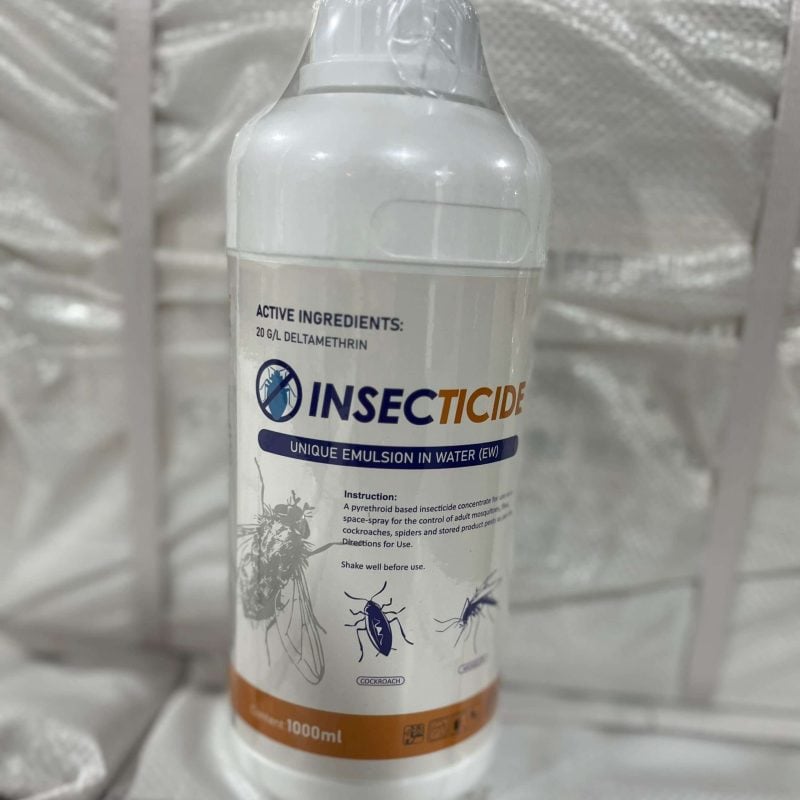
20g/L EW
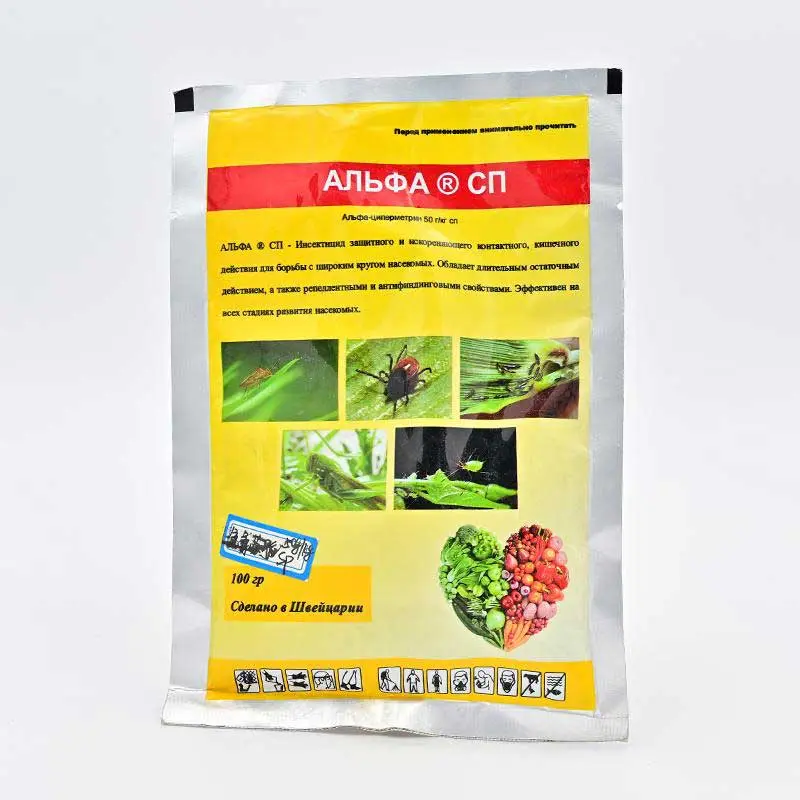
50g/L SP
Hot Products
Hot news
Recommended news
FAQ
