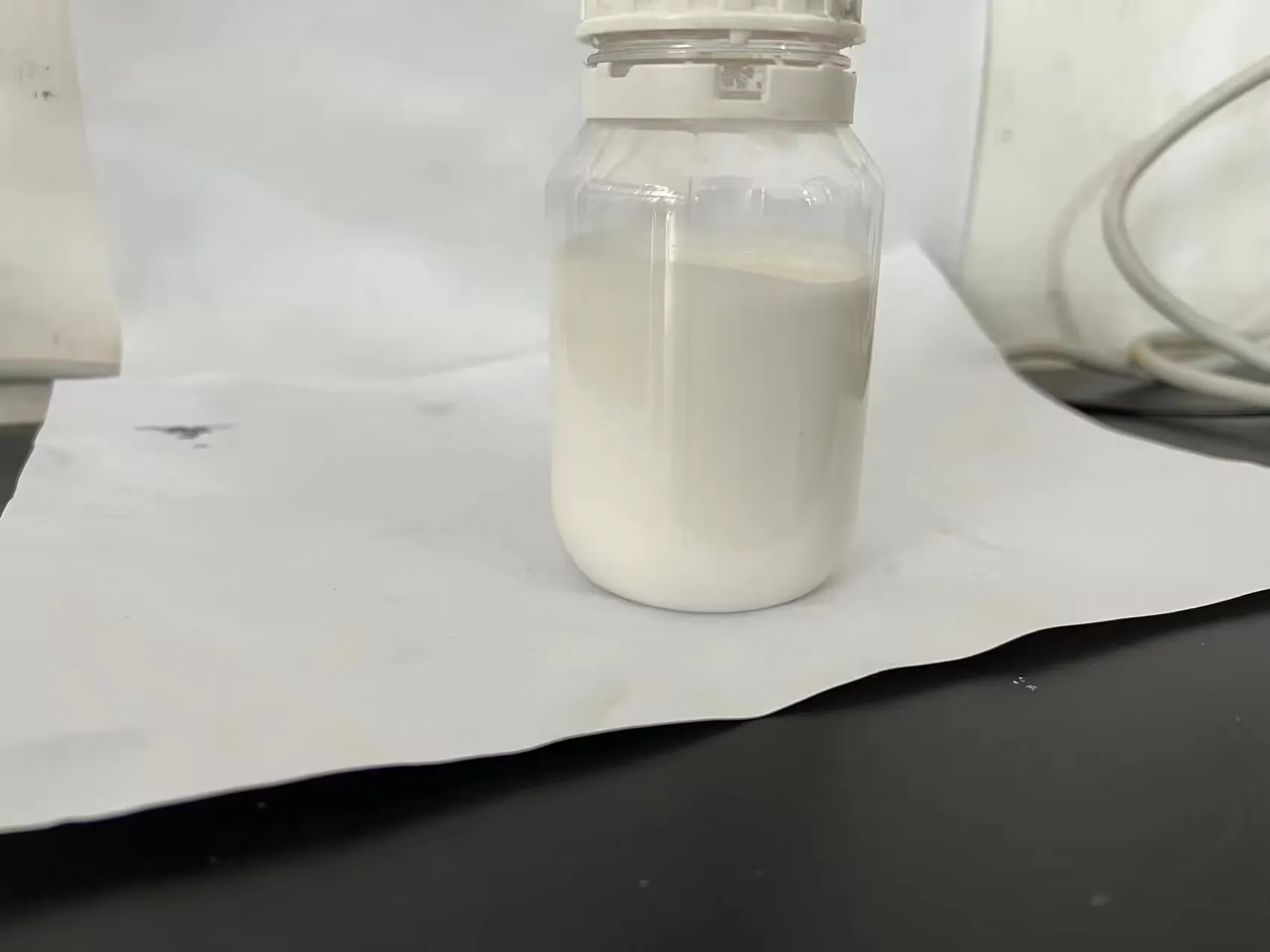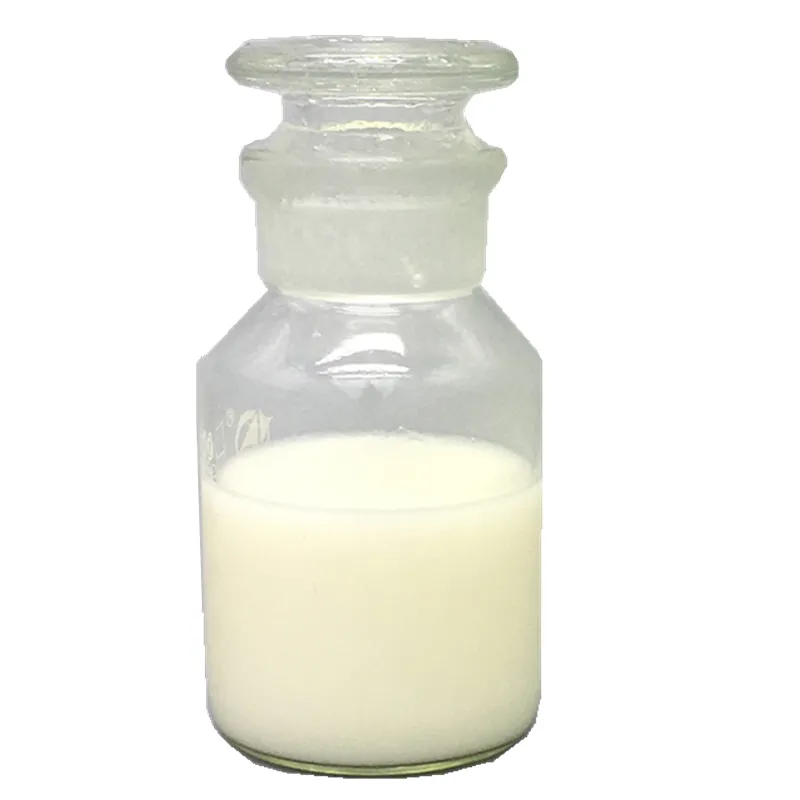


Pyraclostrobin 20% SC Fungicide
POMAIS Pyraclostrobin 20% SC Fungicide is a single-active suspension concentrate developed for preventive and early-stage management of registered fungal diseases in cereals, rice, fruits, vegetables, legumes and other commercial crops.
Pyraclostrobin is a FRAC Group 11 QoI fungicide. It inhibits mitochondrial respiration in susceptible fungi, reducing the energy required for spore germination, infection establishment and early pathogen development.
The product provides translaminar activity and local redistribution on treated plant surfaces. It should be applied with complete spray coverage and integrated into a resistance-management program rather than used repeatedly as a stand-alone curative treatment.
POMAIS supplies Pyraclostrobin 20% SC for agrochemical importers, fungicide distributors, registration companies and crop protection brands. Product specification, packaging, multilingual labels and available technical documents can be reviewed according to the destination market.
- Designed for Professional Buyers & Bulk Orders
- We support custom packaging, labeling, and formulation to meet your market needs.
- Export wholesale inquiries only.
- Please include destination country, business type (importer/distributor/registrant), and expected volume.
- Retail requests will not be processed.

About Pyraclostrobin 20% SC Fungicide
| Product Attribute | Specification |
|---|---|
| Product Name | Pyraclostrobin 20% SC Fungicide |
| Active Ingredient | Pyraclostrobin |
| Content | 20% |
| Equivalent Concentration | Commonly 200 g/L where confirmed by the product specification |
| Formulation | SC — Suspension Concentrate |
| Product Type | Foliar fungicide |
| Chemical Class | QoI / Strobilurin fungicide |
| FRAC Group | Group 11 |
| Mode of Action | Inhibition of mitochondrial respiration at the Complex III Qo site |
| Primary Activity | Preventive protection and early-stage disease suppression |
| Plant Movement | Translaminar and locally redistributive activity |
| Main Crop Direction | Label-approved cereals, rice, legumes, fruits, vegetables and commercial crops |
| Main Disease Direction | Registered rusts, powdery mildews, anthracnose, leaf spots and other foliar diseases |
| Application Method | Primarily foliar spray |
| Standard MOQ | Normally 1,000 L |
| Available Documents | COA, SDS, TDS, product specification and available registration-supporting information |
| Packaging Support | Bottles, larger containers, multilingual labels, cartons and export packing |
| Supply Type | Bulk B2B supply for import, registration and distribution |
Final crops, diseases, application rates, spray intervals, pre-harvest intervals and maximum seasonal applications must follow the registered product label in the destination country.
What Is Pyraclostrobin 20% SC Fungicide?
Pyraclostrobin 20% SC is a liquid suspension concentrate containing Pyraclostrobin as the only fungicidal active ingredient.
It is mainly used in foliar disease-management programs where preventive protection and early intervention are required.
The product is valued for:
- Broad disease-management potential where registered
- Preventive activity against susceptible fungal pathogens
- Translaminar movement within treated leaves
- Local redistribution on plant surfaces
- Convenient liquid handling
- Compatibility with structured fungicide programs
- Flexible positioning as a single-active product
Pyraclostrobin is not a multi-site fungicide. It acts at one specific biochemical site and therefore requires careful resistance management.
Importers comparing different fungicide product options should distinguish this single-active SC from fixed-ratio combination fungicides.
How Does Pyraclostrobin Work?
FRAC Group 11 QoI Fungicide
Pyraclostrobin belongs to FRAC Group 11, commonly known as the QoI or strobilurin group.
QoI fungicides act at a specific site in the fungal mitochondrial respiratory chain.
This highly targeted activity can provide strong disease control against susceptible pathogens, but it also creates a significant resistance risk when Group 11 products are overused.
Inhibition of Mitochondrial Respiration
Pyraclostrobin binds to the quinol oxidation site of the cytochrome bc1 complex, also referred to as mitochondrial Complex III.
This blocks electron transport and reduces ATP production.
Without sufficient cellular energy, susceptible fungal pathogens cannot maintain normal:
- Spore germination
- Germ-tube development
- Infection establishment
- Mycelial growth
- Sporulation
The strongest program value is generally achieved before infection becomes well established.
Why Preventive Timing Matters
Germinating spores and early infection structures require substantial energy.
Applying Pyraclostrobin before infection or at the earliest stage of disease development allows the fungicide to interfere before the pathogen causes extensive tissue damage.
The product should not be positioned as a guaranteed cure for severe, established disease.
Preventive, Translaminar and Local Activity
Preventive Protection
Pyraclostrobin is primarily positioned as a preventive fungicide.
Suitable application timing may include:
- Before expected infection
- At the beginning of a high-risk weather period
- When disease forecasting indicates increasing pressure
- Before visible symptoms become widespread
- At the first sign of disease where the label permits early intervention
Once plant tissue has been seriously damaged, fungicide application cannot restore it.
Early-Stage Disease Suppression
Some registered programs may include early-stage or limited post-infection activity.
This should not be confused with strong eradicative action.
Correct wording includes:
- Early infection suppression
- Early-stage disease management
- Limited curative activity where supported by the label
- Application before disease becomes established
The product should not be promoted as eliminating advanced infections.
Translaminar Movement
After application, Pyraclostrobin can move from the treated leaf surface into the leaf tissue and toward the opposite side.
This translaminar activity helps improve protection within treated leaves.
However, it does not mean that a small amount of spray can protect the entire plant.
Local Redistribution
Pyraclostrobin can redistribute locally across treated plant surfaces.
This may improve deposit continuity around the application area, but it does not replace proper nozzle selection, spray volume or canopy penetration.
Coverage Still Matters
Spray coverage remains important because Pyraclostrobin should not be treated as a fully systemic product that automatically protects all new growth.
Applications should reach:
- Upper leaf surfaces
- Lower leaf surfaces
- Inner canopy foliage
- Young leaves
- Infection-prone plant tissues
- Dense crop areas
New plant growth emerging after treatment may require protection from a later registered application.
Typical Crop and Disease Directions
Pyraclostrobin has broad commercial use potential, but every crop and disease claim must be supported by the exact destination-market registration.
| Crop Direction | Typical Disease Direction | Product Positioning |
|---|---|---|
| Cereals | Rusts, leaf spots and other registered foliar diseases | Preventive foliar disease programs |
| Rice | Sheath, leaf and panicle disease programs where registered | Early disease management |
| Soybean and Legumes | Rust, anthracnose and leaf spots | Foliar protection where approved |
| Vegetables | Powdery mildew, Alternaria, anthracnose and other registered diseases | Crop-specific use |
| Grapes | Powdery mildew and other approved fungal diseases | Preventive canopy protection |
| Fruit Crops | Anthracnose, leaf spots and other registered diseases | Early infection management |
| Potatoes and Field Crops | Crop-specific foliar diseases | Registration-dependent |
| Ornamentals | Registered foliar fungal diseases | Variety and label confirmation required |
The table describes common Pyraclostrobin market directions. It is not a universal global label.
Pyraclostrobin in Cereal Disease Programs
Pyraclostrobin may be positioned in registered cereal programs for diseases such as:
- Rust diseases
- Septoria-related leaf diseases
- Net blotch
- Tan spot
- Other registered foliar pathogens
Applications should be timed according to crop growth stage, disease risk and local resistance-management guidance.
Repeated Group 11 use should be avoided.
Pyraclostrobin in Rice Disease Programs
Registered rice uses may include sheath, leaf or panicle disease-management programs.
The exact positioning depends on:
- Rice variety
- Disease species
- Crop stage
- Application method
- Water management
- Local disease pressure
- Registration status
Pyraclostrobin 20% SC should not be promoted for every rice disease unless the local label includes those claims.
Pyraclostrobin in Fruits and Vegetables
Fruit and vegetable programs may use Pyraclostrobin against selected powdery mildew, anthracnose, Alternaria and leaf-spot diseases.
Application planning must consider:
- Crop sensitivity
- Canopy density
- Harvest timing
- Pre-harvest interval
- Spray residue management
- Export-market MRL requirements
Greenhouse uses require separate confirmation. An outdoor registration does not automatically authorize protected-crop use.
Oomycete Disease Claims
Late blight, downy mildew and other Oomycete diseases should only be included where the exact registered label supports them.
The presence of broad-spectrum activity in the active ingredient does not mean every Pyraclostrobin 20% SC product has identical approved claims.
When Should Pyraclostrobin 20% SC Be Applied?
Before Disease Establishment
Preventive application is the preferred position for Pyraclostrobin.
Treatment may be considered when:
- Weather favors infection
- Disease has appeared in the region
- The crop is entering a susceptible stage
- Field history indicates high disease pressure
- Forecasting models indicate infection risk
- The first symptoms are detected and the label permits early treatment
Before Canopy Closure Becomes a Barrier
Dense foliage can reduce spray penetration.
Applications should be planned before the canopy becomes too difficult to cover, or spray equipment and water volume should be adjusted accordingly.
According to the Registered Interval
Spray intervals depend on:
- Crop
- Disease
- Product rate
- Weather
- Disease pressure
- Growth stage
- Resistance-management restrictions
There is no universal application interval for every market.
Avoid Late Rescue Expectations
Pyraclostrobin should not be relied upon as the only treatment when:
- Disease is already severe
- Large areas of tissue are damaged
- The pathogen is resistant to Group 11 fungicides
- Multiple infection cycles have occurred
- Spray coverage is no longer possible
A different fungicide program may be required according to the local label.
Application Guidance
1. Confirm the Crop and Disease
Before application, verify:
- Registered crop
- Disease identification
- Crop growth stage
- Disease-development stage
- Local resistance status
- PHI and REI requirements
Misidentifying a bacterial, viral or physiological disorder as a fungal disease may lead to ineffective treatment.
2. Apply Preventively or Very Early
Do not wait for severe symptoms.
The product performs best when infection is prevented or interrupted at an early stage.
3. Calibrate the Sprayer
Check:
- Nozzle condition
- Spray pressure
- Water volume
- Ground speed
- Boom or nozzle position
- Spray pattern
- Tank agitation
Uneven application can leave unprotected areas.
4. Use Adequate Canopy Coverage
Spray volume should be sufficient to reach the target foliage without excessive runoff.
Dense crops may require:
- Higher approved water volume
- Slower travel speed
- Improved nozzle arrangement
- Better inner-canopy penetration
5. Maintain Agitation
Pyraclostrobin 20% SC contains suspended particles.
Maintain agitation:
- During tank filling
- While adding the product
- During application
- After operational interruptions
6. Follow the Registered Rate
Do not use a universal global rate.
The correct rate depends on the crop, disease, country, application method and approved label.
Reduced rates may provide incomplete disease control and increase resistance-selection pressure.
7. Respect PHI and REI
Pre-harvest and re-entry intervals are product- and market-specific.
Do not transfer an interval from another Pyraclostrobin formulation or another country.
Pyraclostrobin 20% SC Formulation Features
SC means Suspension Concentrate.
Fine Pyraclostrobin particles are dispersed in a water-based liquid carrier.
The formulation must remain physically stable during storage and redistribute uniformly before and during application.
Advantages of the SC Formulation
A well-developed SC formulation may offer:
- Convenient liquid measurement
- No liquid organic-solvent system typical of many EC products
- Good compatibility with commercial filling lines
- Controlled particle size
- Efficient dilution in spray water
- Reduced dust compared with dry powders
- Flexible bottle and container options
The final hazard profile still depends on the complete formulation.
Key Quality Parameters
| Quality Parameter | Buyer Relevance |
|---|---|
| Pyraclostrobin Content | Confirms the declared 20% specification |
| Physical Appearance | Identifies crystals, hard sediment or separation |
| Suspensibility | Maintains uniform concentration after dilution |
| Particle Size Distribution | Influences storage and nozzle performance |
| Wet Sieve Residue | Helps reduce nozzle blockage |
| Viscosity | Affects pouring, pumping and filling |
| pH | Supports formulation stability |
| Persistent Foam | Influences tank-filling operation |
| Redispersibility | Confirms recovery after storage |
| Pourability | Reduces product remaining in the container |
| Low-Temperature Stability | Supports cold-market transport and storage |
| Heat Stability | Supports warm-climate storage and shipping |
| Packaging Compatibility | Helps prevent leakage and seal failure |
| Fill-Volume Accuracy | Supports batch and commercial consistency |
Suspension Stability
Some settling may occur during long-term storage.
The formulation should return to a uniform suspension after the approved shaking or agitation procedure.
Hard sediment that cannot be redispersed may lead to uneven application.
Particle Size
Particle size affects:
- Suspension behavior
- Spray uniformity
- Nozzle passage
- Leaf deposition
- Storage stability
Oversized particles may increase sediment or nozzle-blockage risk.
Packaging Compatibility
Bottle, cap, liner, induction seal and label adhesive should be tested with the final SC formulation.
Packaging checks should include:
- Leakage
- Seal integrity
- Cap security
- Bottle deformation
- Label adhesion
- High-temperature storage
- Freeze-thaw exposure where relevant
- Long-distance shipping
Main Product Advantages
Single-Active Product Flexibility
A single-active Pyraclostrobin product allows local agronomists and registration partners to build crop-specific programs around their approved disease spectrum.
It can be positioned:
- As a stand-alone product where permitted
- In rotation with other FRAC groups
- In label-approved tank mixtures
- As part of a distributor’s broader fungicide portfolio
Broad Commercial Crop Direction
Pyraclostrobin has established market relevance in cereals, rice, fruits, vegetables and other commercial crops.
The final product page should preserve this broad commercial positioning while clearly stating that approved uses differ by market.
Preventive Disease-Management Value
Pyraclostrobin is most valuable when applied before severe disease development.
This makes it suitable for planned fungicide programs rather than only reactive spraying.
Convenient SC Supply Format
The 20% SC specification provides a practical liquid format for:
- Importers
- Agricultural distributors
- Registration companies
- Commercial farms
- Crop protection brands
Single-Active Pyraclostrobin vs Combination Fungicides
Buyers comparing Pyraclostrobin fungicide products should distinguish between a single-active SC and a factory-formulated combination.
| Comparison Factor | Pyraclostrobin 20% SC | Pyraclostrobin Combination Fungicide |
|---|---|---|
| Number of Active Ingredients | One | Two or more |
| FRAC Profile | Group 11 only | Depends on the partner active ingredient |
| Program Flexibility | Allows local partner selection | Fixed active ingredient ratio |
| Resistance Management | Requires rotation or an effective partner | May include another FRAC group |
| Formulation | SC | SC, WDG or another formulation |
| Registration Identity | Single-active registration | Separate combination registration |
| Buyer Positioning | Flexible single-active product channel | Market-ready combination product |
A combination product is not automatically superior.
Selection should consider:
- Target disease
- Resistance status
- Registered crops
- Partner activity
- Formulation preference
- Distributor strategy
- Local market demand
Importers requiring Group 11 activity combined with a multi-site protective component can review the Pyraclostrobin + Metiram combination fungicide.
Fungicide Resistance Management
Pyraclostrobin is a single-site FRAC Group 11 fungicide.
Group 11 fungicides have a high resistance risk in several important pathogen groups.
Cross-Resistance within FRAC Group 11
Products containing the following active ingredients may belong to the same resistance group:
- Pyraclostrobin
- Azoxystrobin
- Trifloxystrobin
- Kresoxim-Methyl
- Picoxystrobin
- Other QoI fungicides
Rotating only between these active ingredients does not provide a true change in mode of action.
Do Not Depend on Repeated Group 11 Applications
Repeated consecutive use can increase selection pressure.
Avoid:
- Continuous Pyraclostrobin applications
- Rotation only with another Group 11 product
- Repeated reduced rates
- Late curative use
- Multiple Group 11 products in the same program without considering total exposure
Resistance-Management Principles
- Apply preventively.
- Use the complete registered rate.
- Limit the number of Group 11 applications.
- Avoid consecutive Group 11 sprays where the label or FRAC guidance restricts them.
- Rotate with effective fungicides from other FRAC groups.
- Use mixtures only when the partner controls the target disease.
- Follow crop-specific resistance guidance.
- Integrate sanitation and resistant varieties where available.
- Monitor fields after treatment.
- Investigate unexpected disease survival.
Existing QoI Resistance
Where the pathogen population is already resistant to Group 11 fungicides, Pyraclostrobin may provide reduced or no control.
Increasing the rate should not be presented as a solution to confirmed resistance.
Tank Mixing and Compatibility
Pyraclostrobin 20% SC should not be described as compatible with every pesticide, fertilizer or adjuvant.
Compatibility may be influenced by:
- Partner active ingredient
- Partner formulation
- Water hardness
- Water pH
- Mixing order
- Adjuvant type
- Fertilizer salts
- Tank temperature
- Number of products in the mixture
General Mixing Principles
Where the label permits:
- Fill the tank partly with clean water.
- Start agitation.
- Shake the Pyraclostrobin 20% SC container.
- Add the measured product.
- Add approved tank-mix partners in the correct sequence.
- Complete filling with water.
- Maintain agitation during application.
- Use the mixture within the recommended period.
Compatibility Test
Conduct a small jar test before preparing an unfamiliar mixture.
Observe for:
- Separation
- Sediment
- Gel formation
- Heat
- Excessive foam
- Irregular suspension
Physical compatibility does not guarantee crop safety or biological effectiveness.
Most Restrictive Label
When products are mixed, follow the most restrictive requirement concerning:
- Crop
- Rate
- Application timing
- PHI
- REI
- PPE
- Seasonal use
- Environmental protection
A tank mixture does not replace a formally registered combination product.
Crop Response Beyond Disease Control
Some Pyraclostrobin programs have been associated with physiological crop responses beyond visible disease reduction.
Reported responses may include:
- Extended green-leaf duration
- Changes in crop senescence
- Improved maintenance of photosynthetic tissue
- Better crop condition under certain disease and environmental situations
These effects depend on:
- Crop
- Variety
- Disease pressure
- Application timing
- Weather
- Nutrition
- Local registration claims
Pyraclostrobin 20% SC should not be promoted as guaranteeing higher yield, drought tolerance or improved crop quality.
Its primary function remains fungal disease management.
Crop Safety and Use Precautions
Use only on registered crops and varieties.
Crop response may be influenced by:
- Growth stage
- Temperature
- Water stress
- Variety sensitivity
- Spray overlap
- Tank-mix partners
- Adjuvant selection
- Greenhouse conditions
- Previous pesticide treatments
Greenhouse Use
Do not assume that an outdoor crop registration also permits greenhouse use.
Protected crops can experience different:
- Temperature
- Humidity
- Drying time
- Spray concentration
- Residue behavior
- Variety sensitivity
Greenhouse application requires specific registration support.
Spray Overlap
Overlap may increase crop exposure.
Avoid double application near:
- Field boundaries
- Headlands
- Obstacles
- Turning areas
- Irregular rows
Operator Safety
Handle the product according to the approved label and final SDS.
General requirements may include:
- Wear the required protective clothing.
- Use chemical-resistant gloves where specified.
- Protect the eyes during mixing.
- Avoid skin contact.
- Avoid inhaling spray mist.
- Do not eat, drink or smoke during handling.
- Wash exposed skin after use.
- Remove contaminated clothing.
- Follow the registered re-entry interval.
- Do not reuse empty pesticide containers.
The final hazard classification depends on the complete SC formulation.
Environmental Precautions
Protect Surface Water
Prevent the product from entering:
- Rivers
- Streams
- Lakes
- Wells
- Irrigation canals
- Fish ponds
- Drainage systems
- Wetlands
Follow all registered buffer-zone and runoff requirements.
Prevent Spray Drift
Use appropriate:
- Nozzles
- Droplet size
- Boom height
- Wind limits
- Buffer areas
- Application speed
Avoid spray movement into neighboring crops and non-target habitats.
Equipment Cleaning
Clean the tank, hoses, filters and nozzles after use.
Do not allow rinsate to enter surface water or drainage systems.
Container Disposal
- Follow local rinsing requirements.
- Do not reuse empty containers.
- Use approved collection programs where available.
- Dispose of unused product according to local regulations.
Label and Registration Requirements
There is no single global Pyraclostrobin 20% SC label.
Every commercial label must match the exact:
- Active ingredient
- Content
- Formulation
- Registration holder
- Manufacturer
- Destination country
- Approved crops
- Approved diseases
- Application rates
- Spray intervals
- PHI
- REI
- Seasonal application limits
- Packaging size
Confirming 20% and 200 g/L
The relationship between 20% and 200 g/L must be confirmed by the product specification and registration document.
The label, COA, SDS and TDS should use consistent concentration terminology.
Information Required for Registration Review
Importers should provide:
- Destination country
- Target crops
- Target diseases
- Required package sizes
- Label language
- Registration status
- Expected annual volume
- Required technical documents
- Local resistance concerns
- Intended fungicide program
Storage and Transport
Store Pyraclostrobin 20% SC:
- In its original sealed container
- In a cool, dry and ventilated warehouse
- Away from direct sunlight
- Away from excessive heat
- Away from freezing where relevant
- Away from food and animal feed
- Away from incompatible materials
- In a secure pesticide-storage area
- Under conditions stated in the SDS
Before shipment, inspect:
- Bottle condition
- Cap security
- Induction seal
- Leakage
- Label adhesion
- Batch coding
- Fill volume
- Carton strength
- Shipping marks
- Pallet condition
Transport classification must be confirmed from the final formulation, packaging and SDS.
Packaging, Quality Control and Documentation Support
POMAIS supplies Pyraclostrobin 20% SC for bulk import, registration and wholesale distribution.
Packaging Options
Commercial packaging may include:
- Small agricultural bottles
- 500 mL bottles
- 1 L bottles
- 5 L containers
- 10 L containers
- 20 L containers
- Larger commercial packaging where suitable
- Induction seals
- Tamper-evident caps
- Multilingual labels
- Retail cartons
- Master cartons
- Batch and expiry coding
- Shipping marks
- Pallet planning
Final packaging depends on:
- Destination-country registration
- Order quantity
- Filling-line feasibility
- Formulation compatibility
- Distributor requirements
- Transport conditions
Quality-Control Focus
Quality checks may include:
- Pyraclostrobin content
- Product identity
- Physical appearance
- Suspensibility
- Particle size
- Wet sieve residue
- Viscosity
- pH
- Persistent foam
- Redispersibility
- Pourability
- Low-temperature stability
- Heat stability
- Packaging compatibility
- Fill-volume accuracy
- Seal integrity
- Label verification
- Batch consistency
Available Documents
Commercial document support may include:
- COA — Certificate of Analysis
- SDS — Safety Data Sheet
- TDS — Technical Data Sheet
- Product Specification
- Packaging Specification
- Available stability information
- Available registration-supporting technical information
- Batch-related quality documents
- Commercial and shipping documents
Document availability depends on the destination market, registration pathway and cooperation stage.
Frequently Asked Questions
Request Pyraclostrobin 20% SC Specifications
To evaluate a Pyraclostrobin 20% SC purchasing or registration project, please provide:
- Destination country
- Company type
- Required quantity
- Preferred package size
- Target crops
- Target diseases
- Current registration status
- Required label language
- Required technical documents
- Expected purchasing schedule
We will review product specifications, formulation quality, packaging compatibility, document availability and destination-market requirements before confirming the commercial proposal.
Pyraclostrobin 20% SC Fungicide is supplied for professional B2B procurement, registration and wholesale distribution.
Contact us!
We will reply to you within 24 hours on business days!