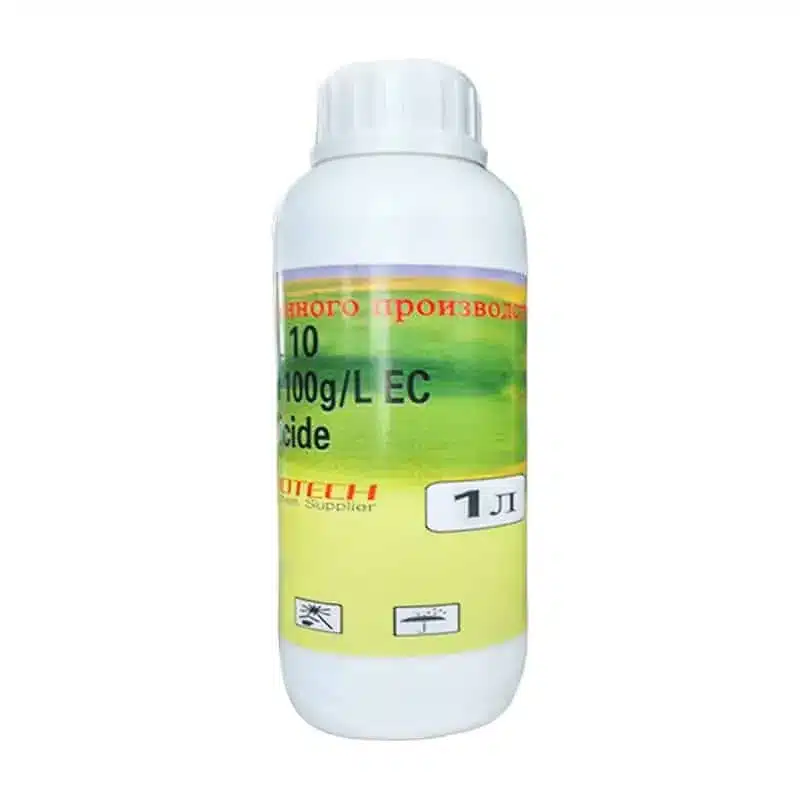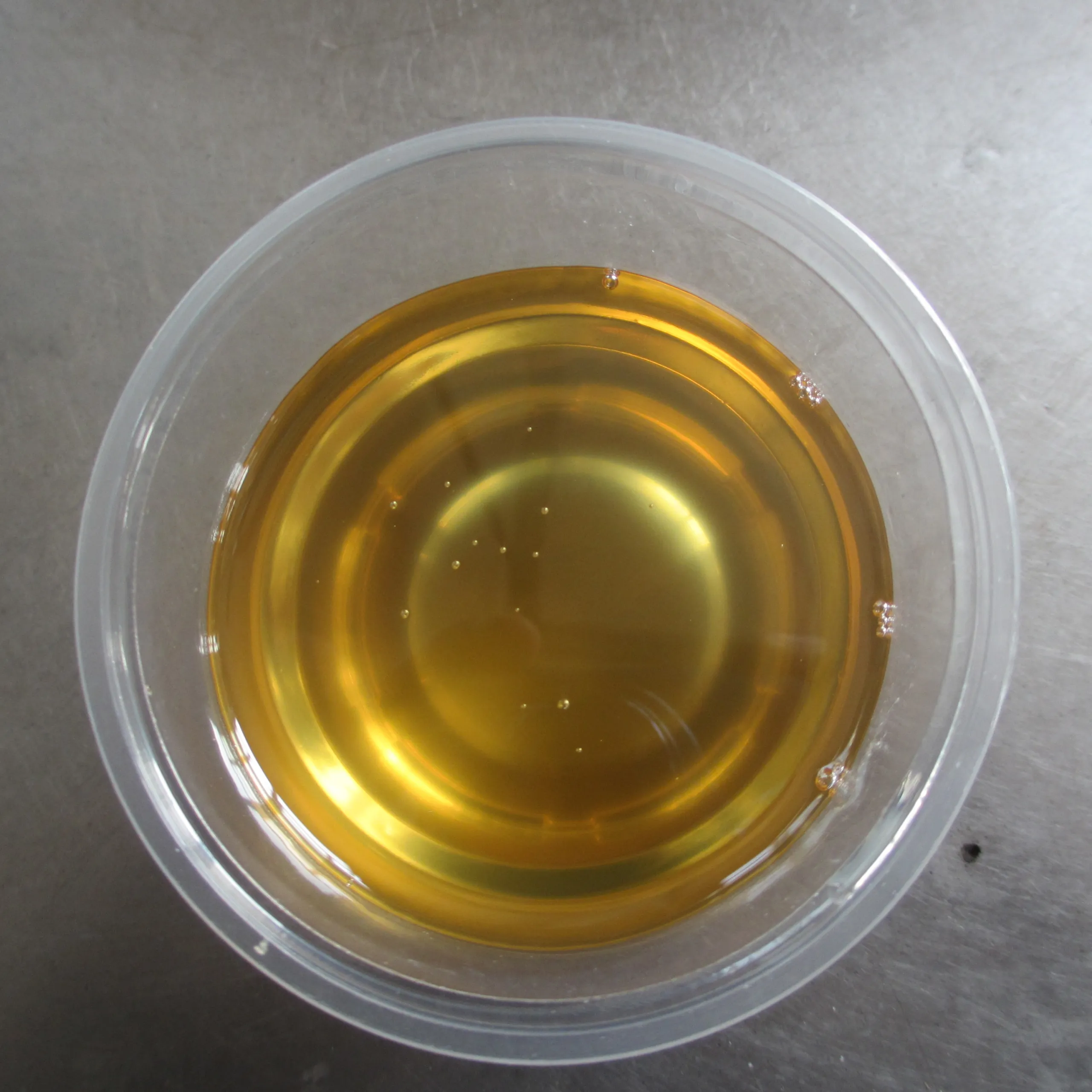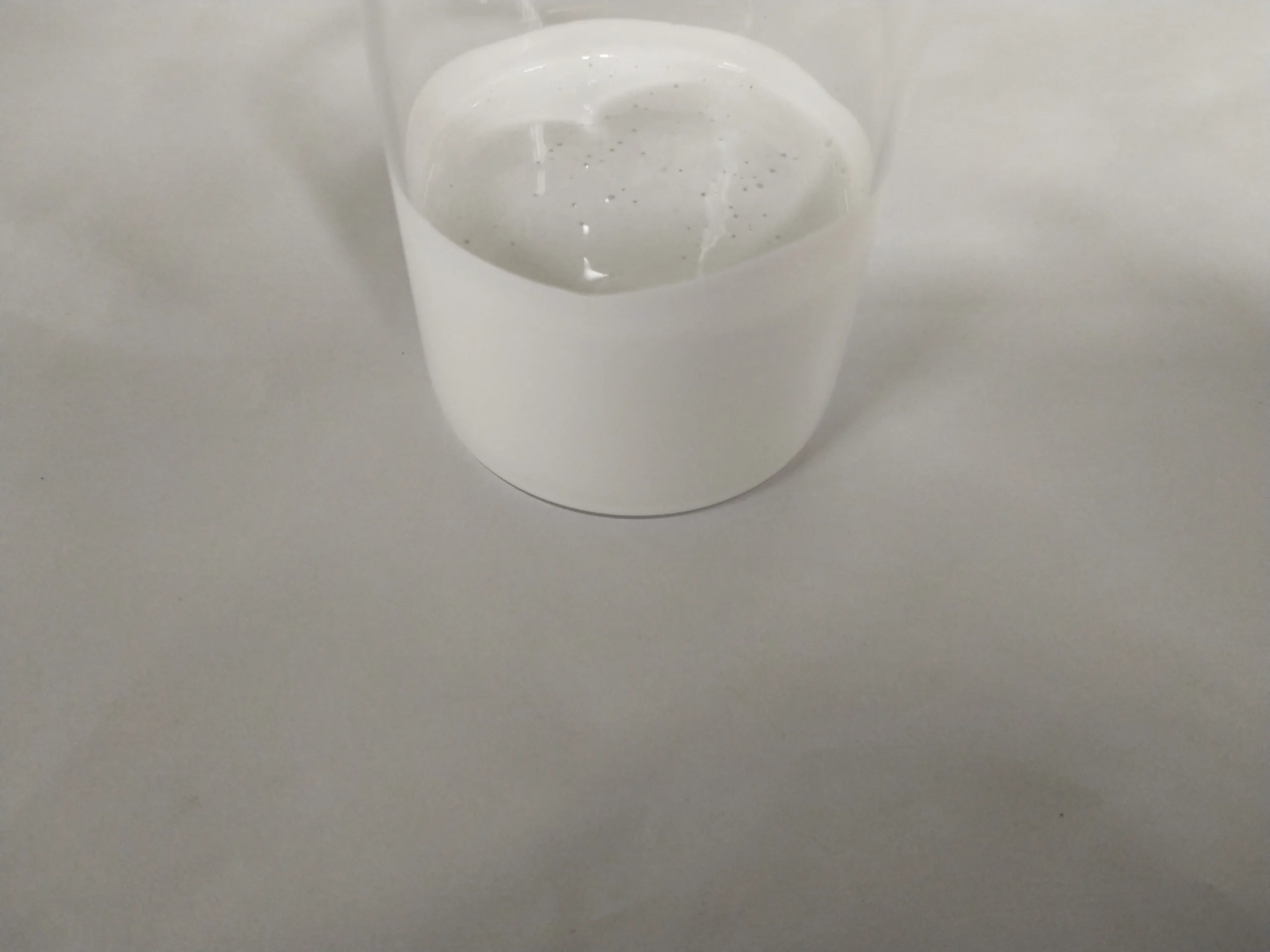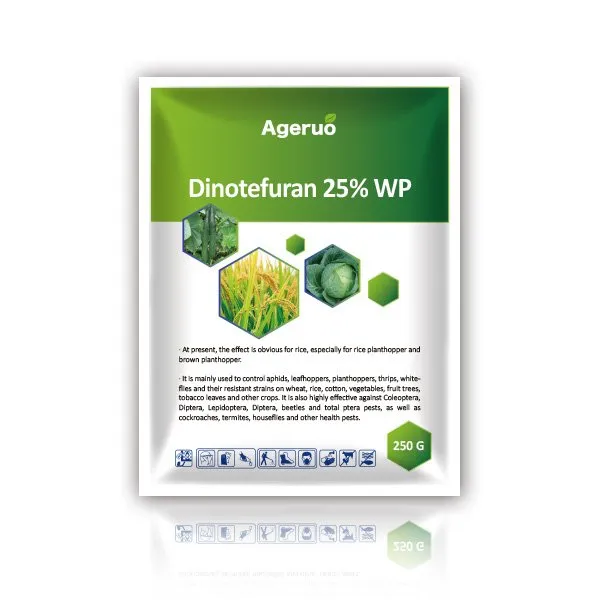

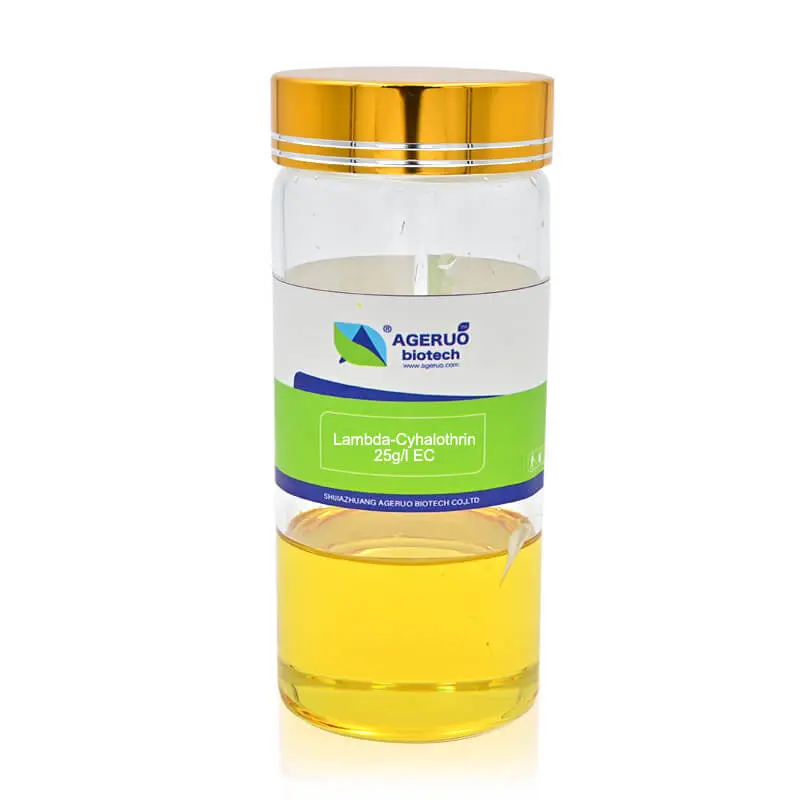
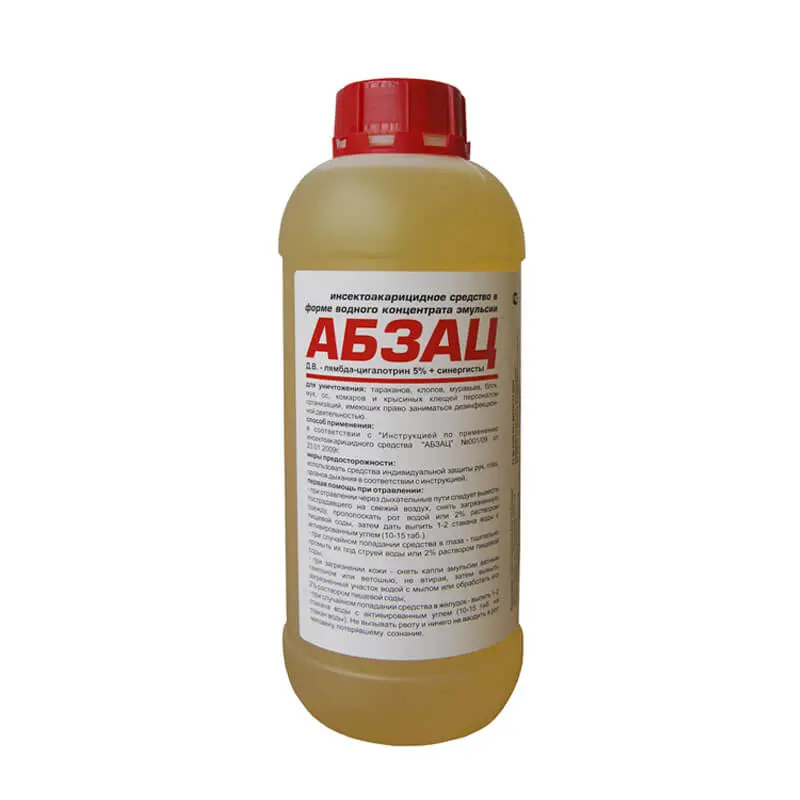
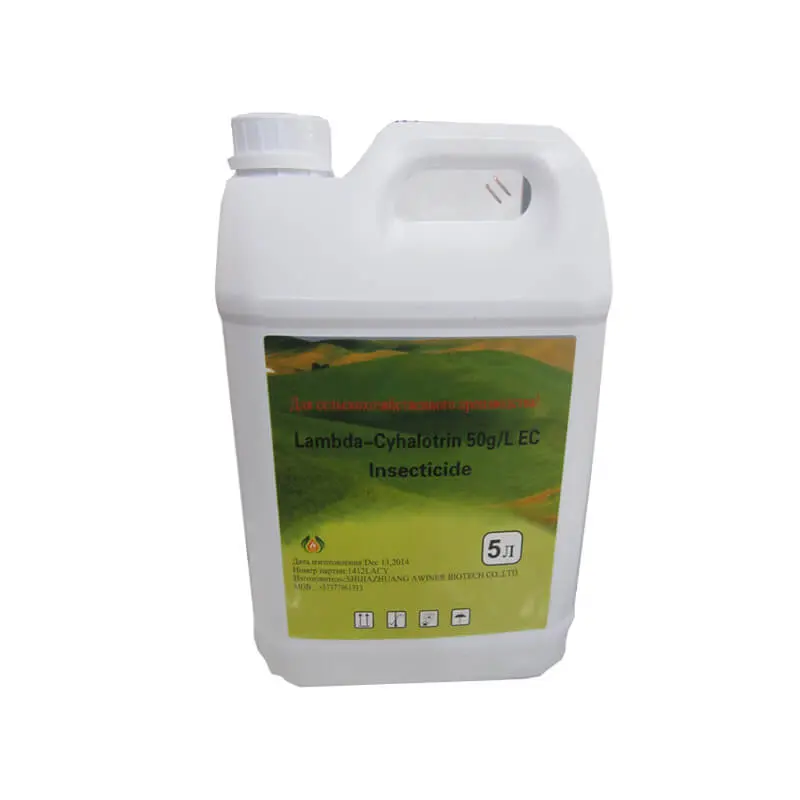
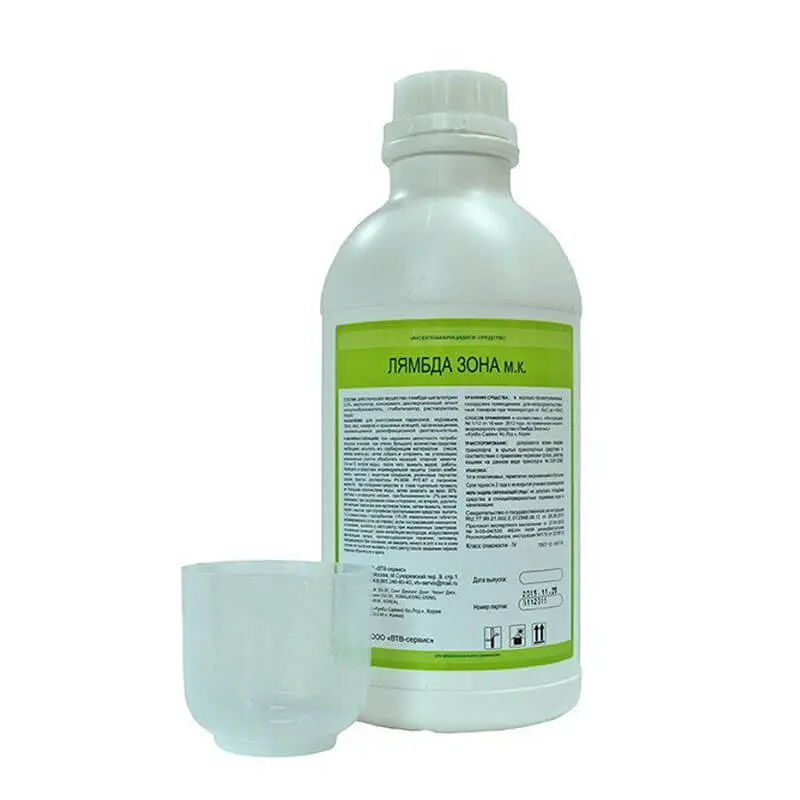
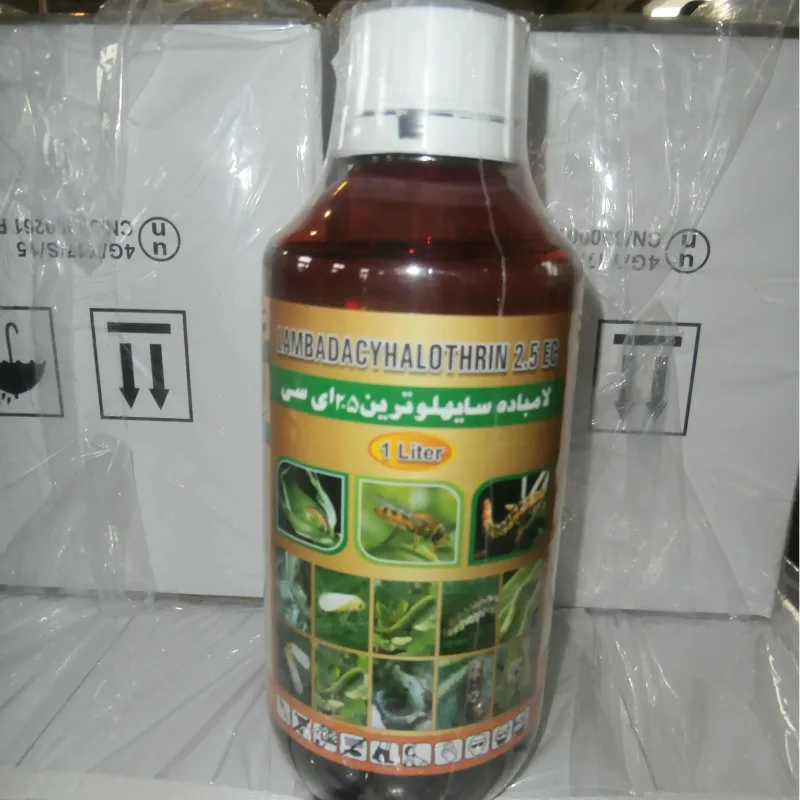

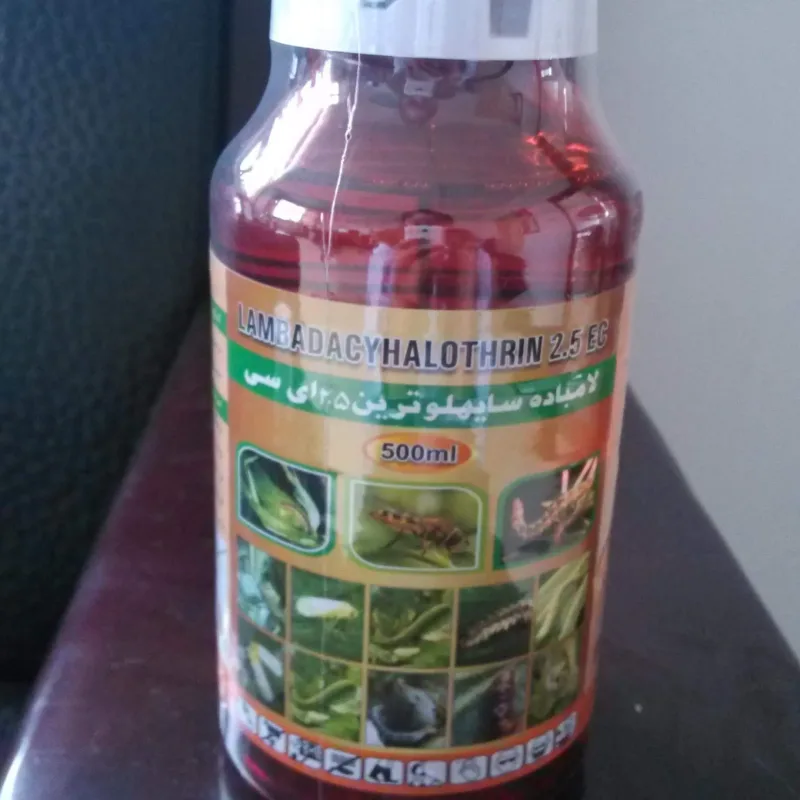
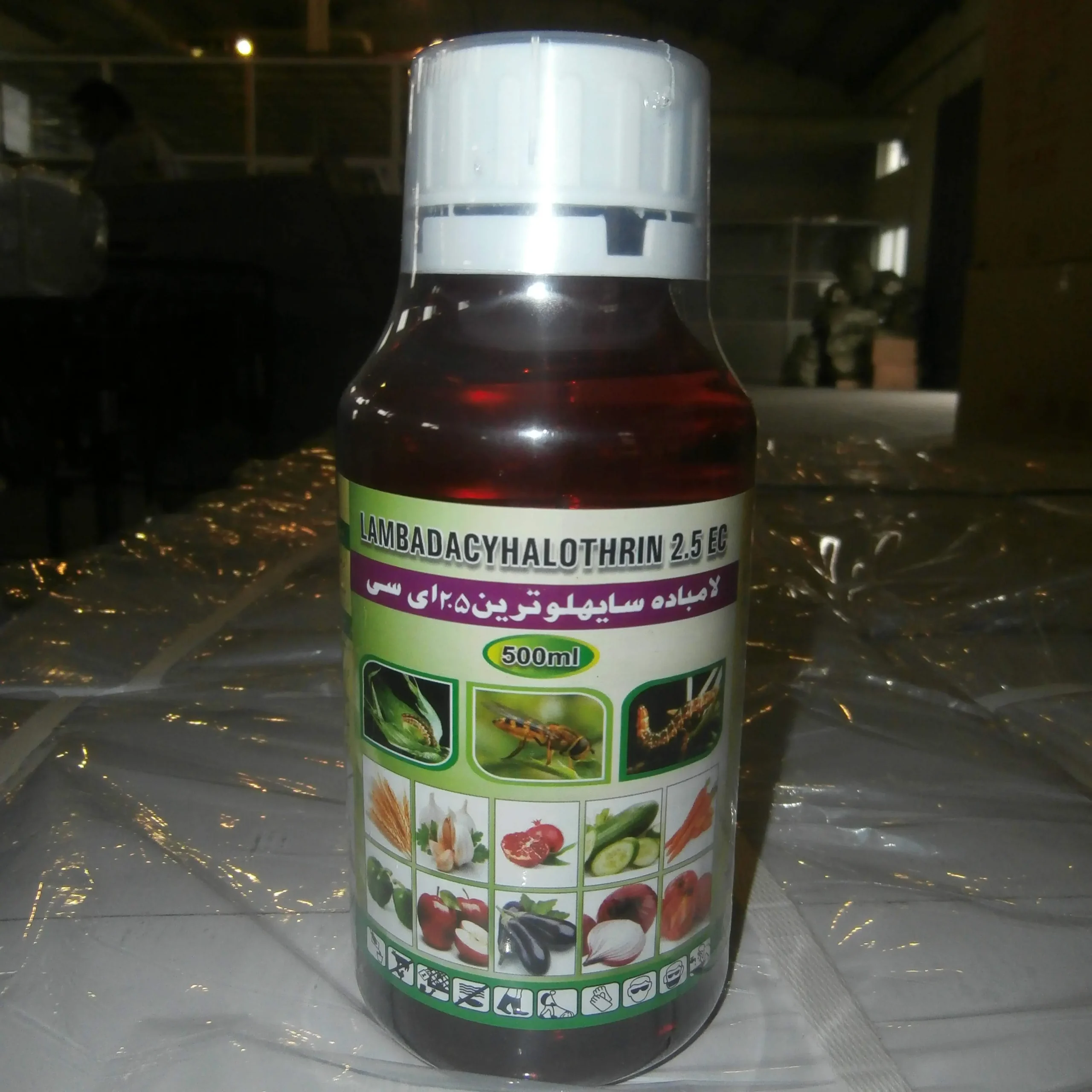
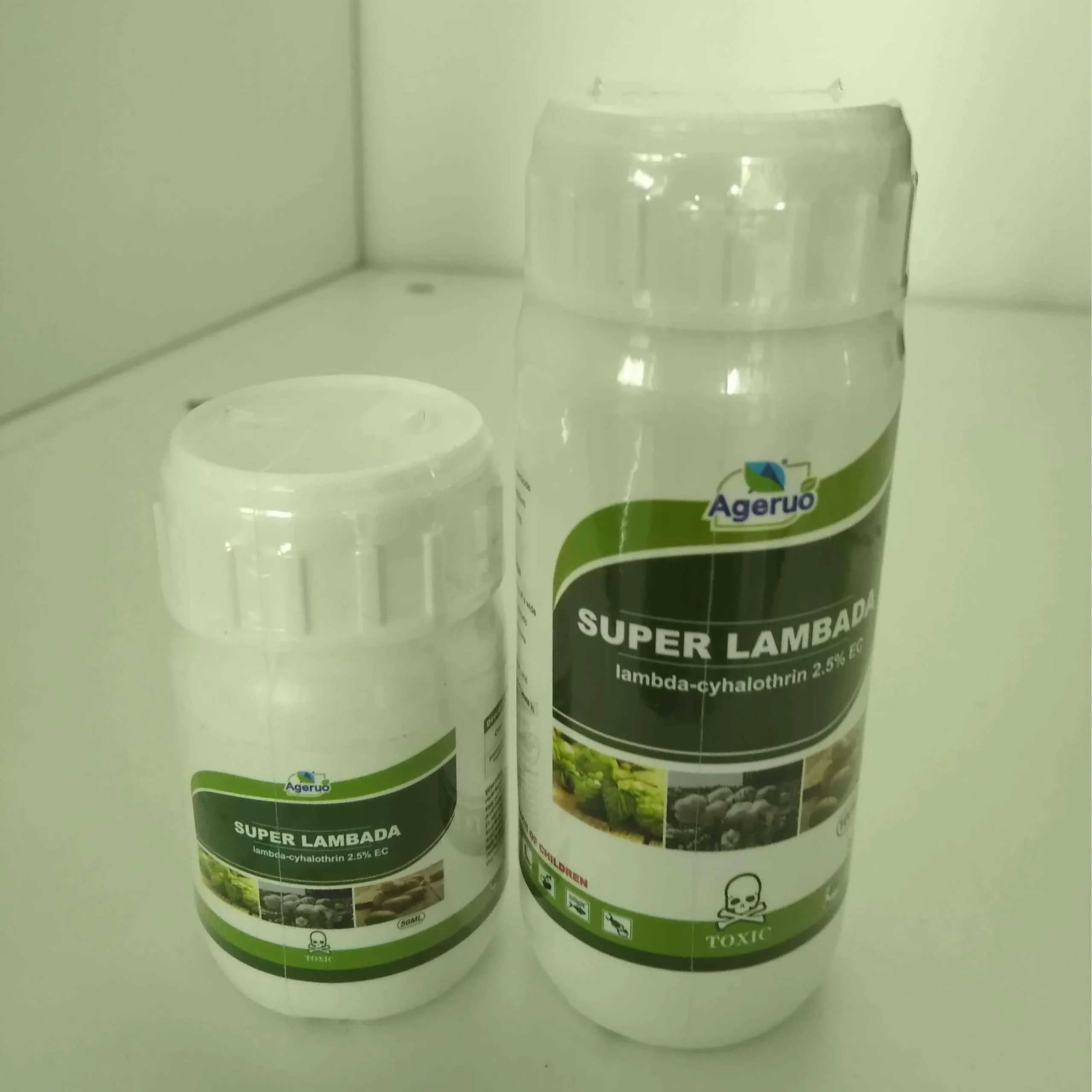
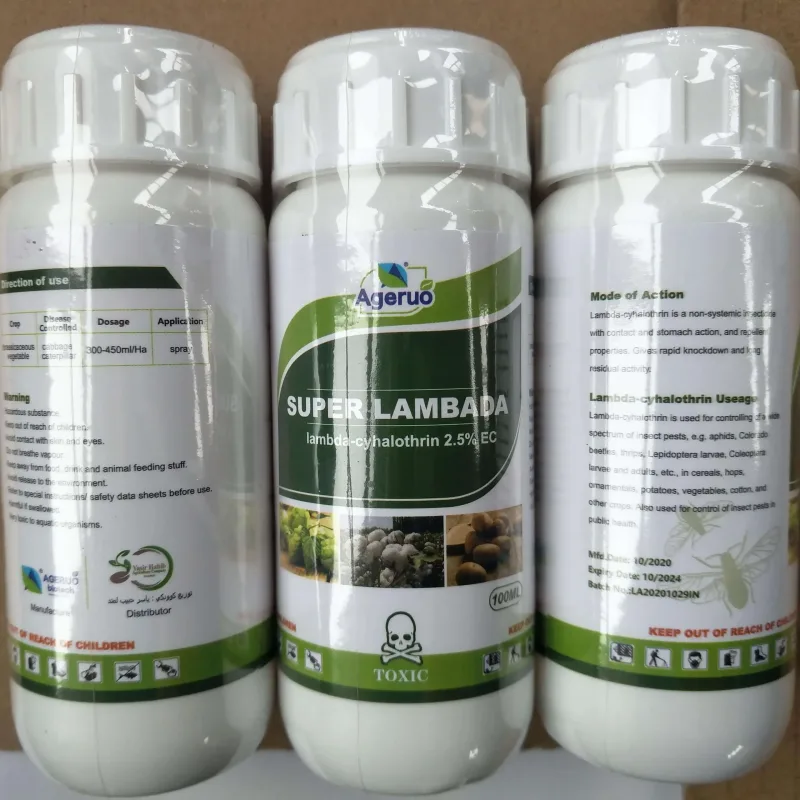
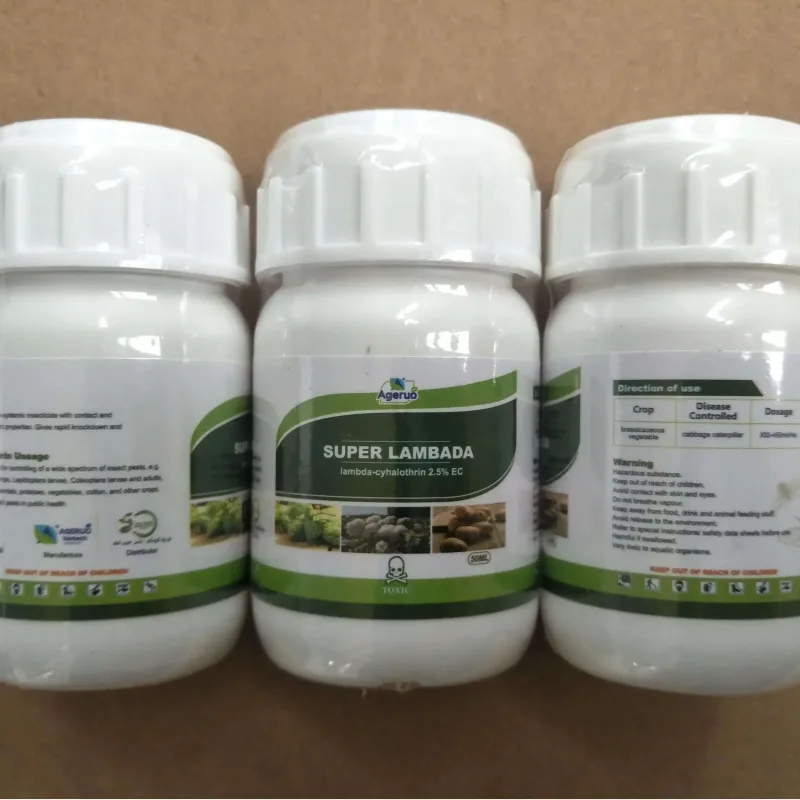
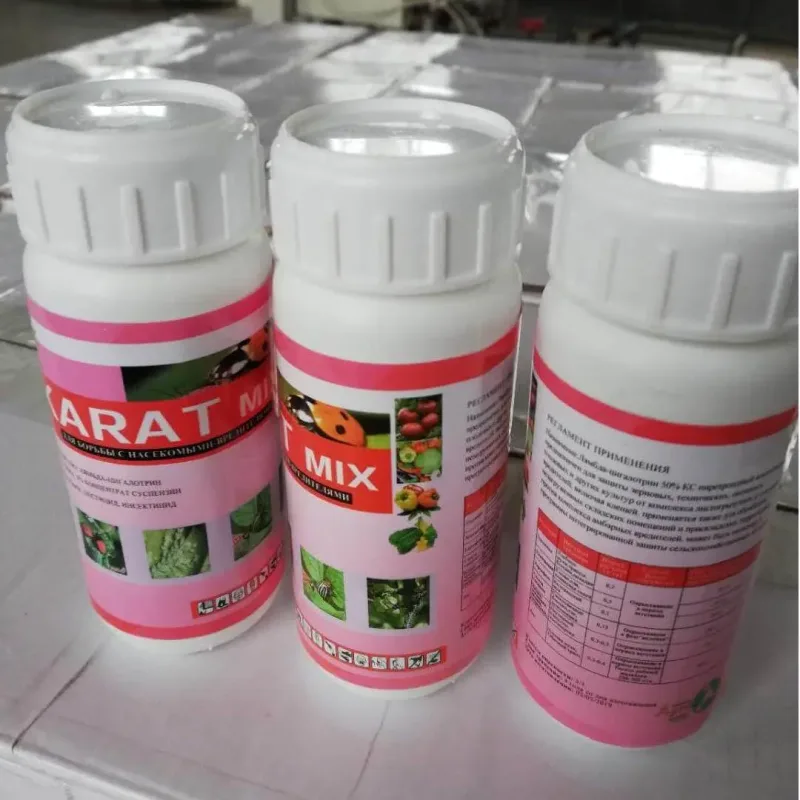
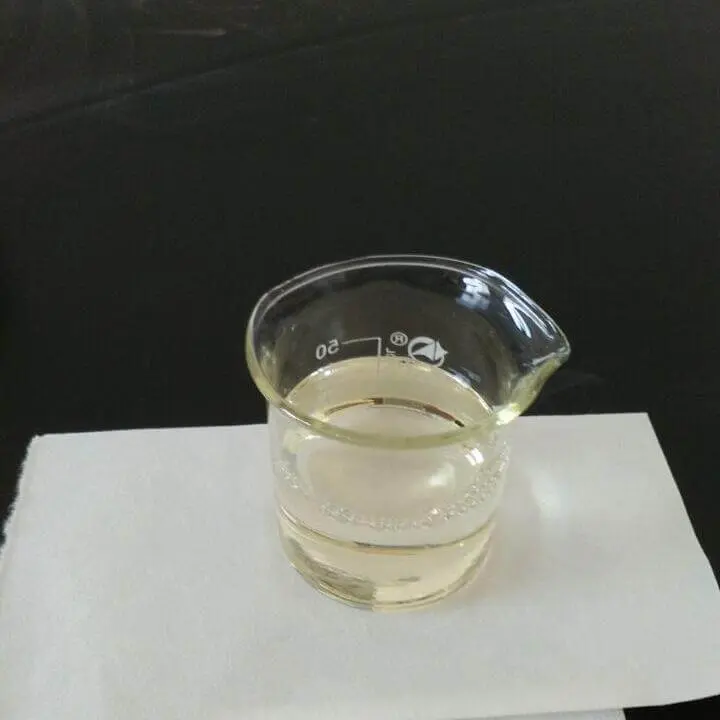
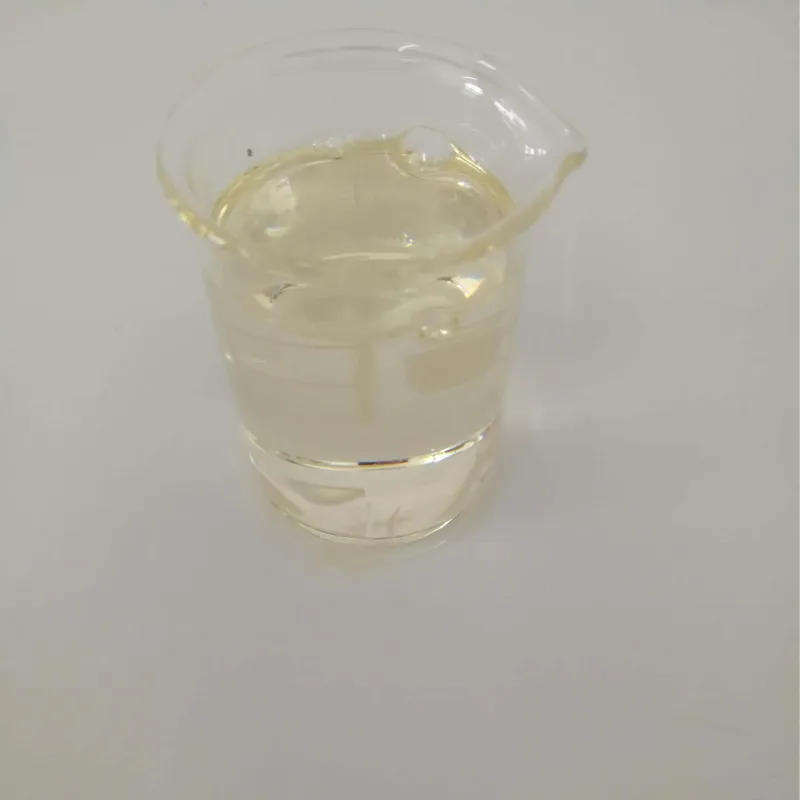
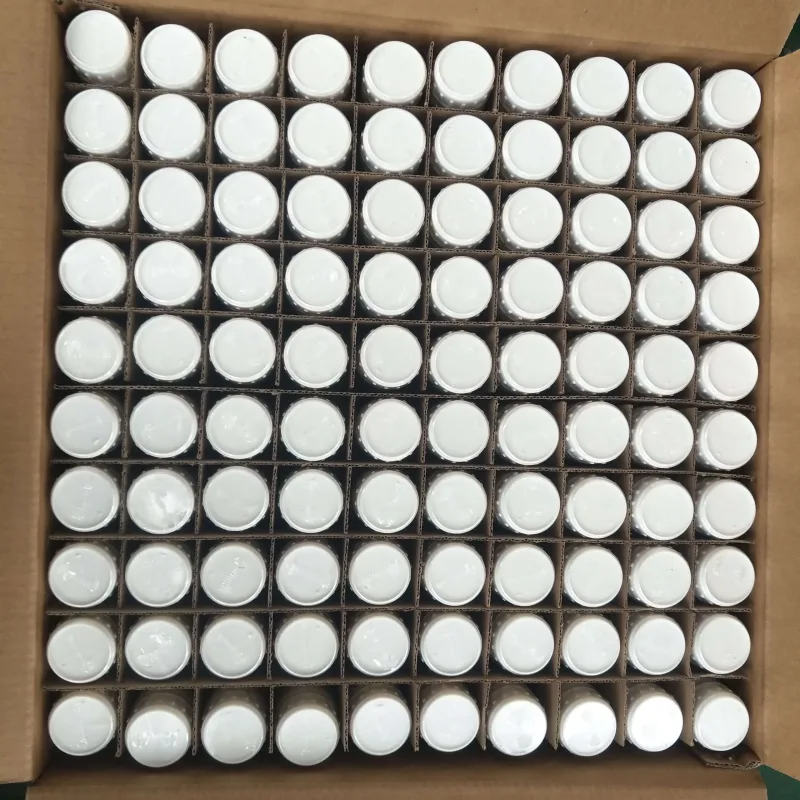
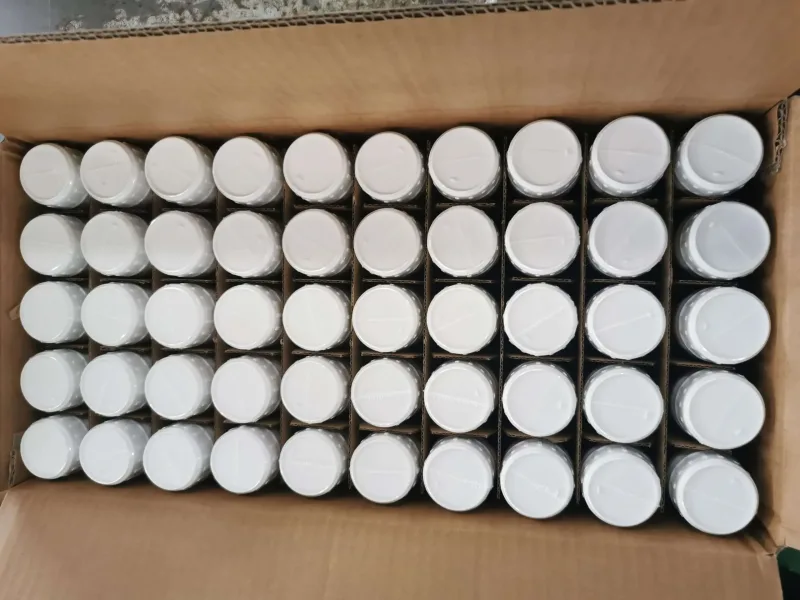
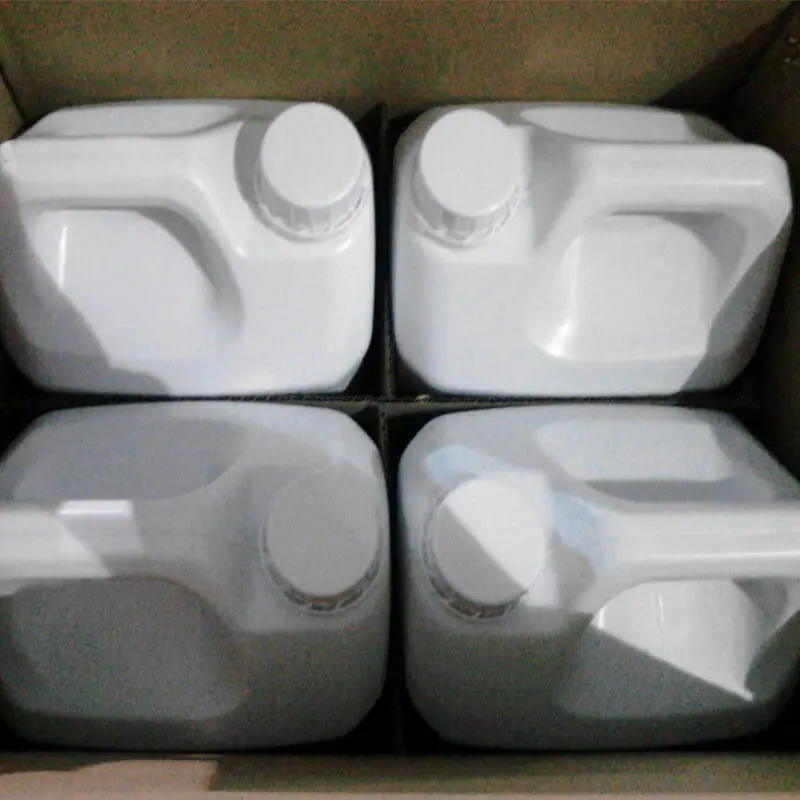
Lambda-Cyhalothrin Insecticide 25g/l EC, 10%WP, 25%WP
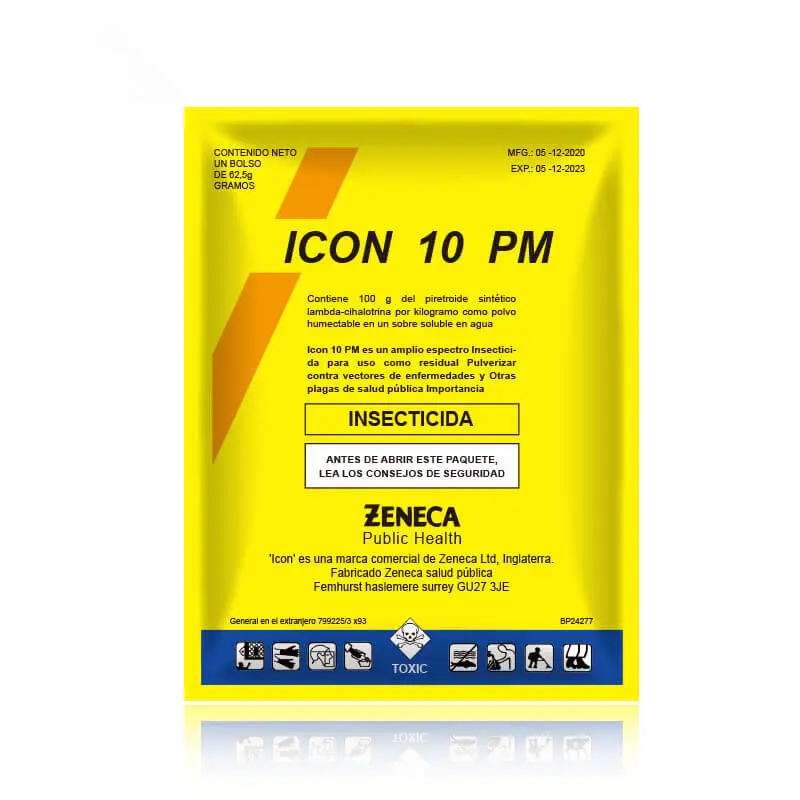
POMAIS supplies Lambda-Cyhalothrin insecticide formulations for registered agricultural and professional pest-control markets. Lambda-Cyhalothrin is a synthetic pyrethroid in IRAC Group 3A, with contact and ingestion activity against susceptible chewing and sucking insects.
Available specifications may include 25 g/L EC, 5% EC, 10% WP, 25% WP, 4.9% CS, and 9.7% CS. Final availability depends on destination-country registration, formulation specifications, packaging requirements, and production confirmation.
We work with agrochemical importers, distributors, registration companies, and crop-protection brands requiring bulk supply, multilingual labels, market-specific packaging, and technical documentation.
- Designed for Professional Buyers & Bulk Orders
- We support custom packaging, labeling, and formulation to meet your market needs.
- Export wholesale inquiries only.
- Please include destination country, business type (importer/distributor/registrant), and expected volume.
- Retail requests will not be processed.

About Lambda-Cyhalothrin Insecticide 25g/l EC, 10%WP, 25%WP
| Product Attribute | Specification |
|---|---|
| Active Ingredient | Lambda-Cyhalothrin |
| CAS Number | 91465-08-6 |
| Chemical Class | Synthetic pyrethroid |
| IRAC Group | Group 3A |
| Product Type | Insecticide |
| Mode of Action | Sodium channel modulation |
| Main Activity | Contact and ingestion |
| Plant Movement | Non-systemic |
| Available Formulations | 25 g/L EC, 5% EC, 10% WP, 25% WP, 4.9% CS, 9.7% CS |
| Main Pest Direction | Registered chewing and sucking insect pests |
| Main Application Direction | Agricultural foliar use and separately registered professional pest-control programs |
| Supply Type | Bulk supply, private label, packaging, and registration-document support |
| Standard MOQ | 1000 L for liquid formulations or 1000 kg for solid formulations |
| Standard Lead Time | Approximately 20 to 30 days |
The approved crop, pest, application method, rate, PHI, REI, and MRL must be confirmed from the destination-market label.
Available Lambda-Cyhalothrin Formulations
The correct Lambda-Cyhalothrin formulation should be selected according to local registration, application equipment, packaging channel, storage conditions, and buyer preference.
A higher active ingredient concentration does not automatically provide a wider pest spectrum, stronger control, or longer residual performance.
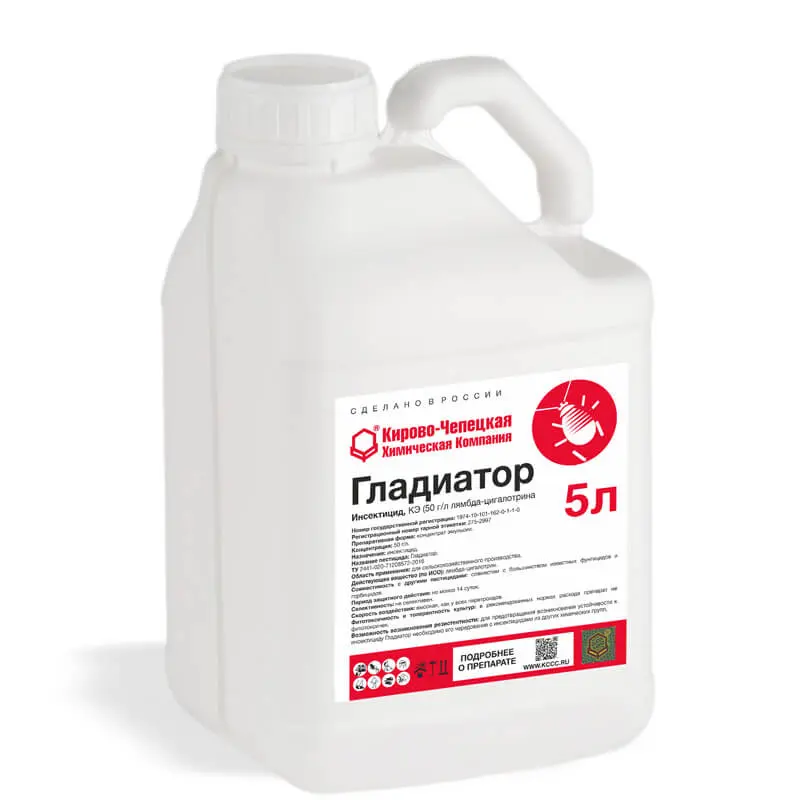
Lambda-Cyhalothrin 25 g/L EC and 5% EC
Lambda-Cyhalothrin EC is a liquid emulsifiable concentrate intended for dilution in water before application.
The 25 g/L EC specification may also be described as 2.5% EC in markets using a percentage-based concentration convention. Buyers should confirm how the concentration is expressed in the registration documents.
EC formulations may suit markets requiring:
- Liquid concentrate packaging
- Easy measurement and dilution
- Established EC registration specifications
- Retail bottles or bulk liquid drums
- Conventional foliar spray equipment
The solvent system, emulsion stability, low-temperature behavior, packaging compatibility, and storage stability should be evaluated for the final formulation.
The 5% EC specification contains more active ingredient per unit of formulated product than 25 g/L EC. It may therefore require a lower formulated product volume to deliver an equivalent registered active ingredient rate.
This concentration difference does not automatically mean that 5% EC:
- Controls more pests
- Is suitable for more crops
- Performs better under high pest pressure
- Provides longer residual activity
- Requires fewer applications
These factors depend on the approved label, delivered active ingredient rate, formulation quality, pest sensitivity, and field conditions.
Lambda-Cyhalothrin 10% WP and 25% WP
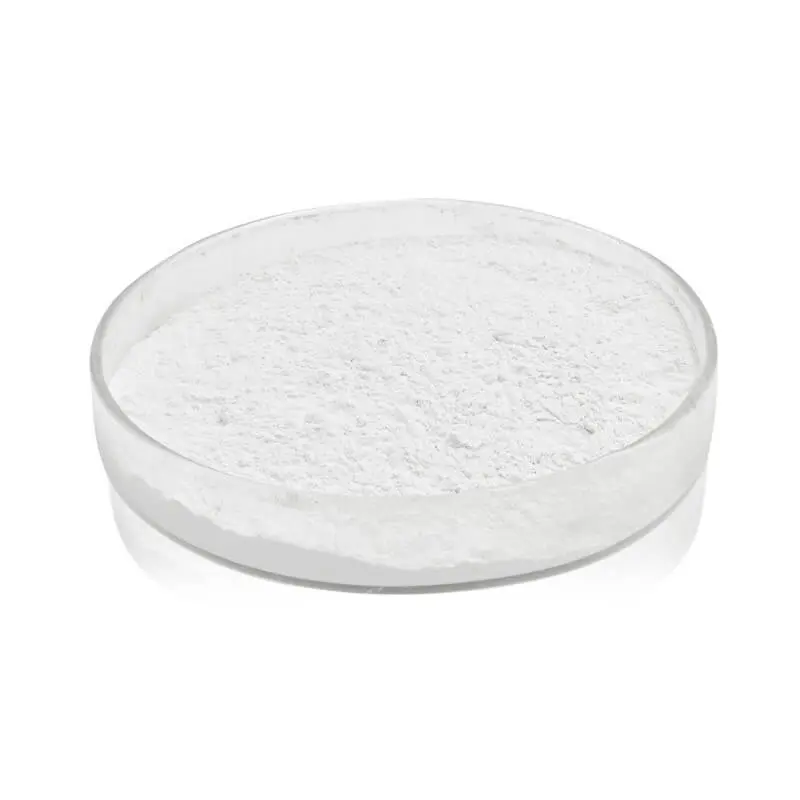
Lambda-Cyhalothrin WP is a wettable powder formulation that disperses in water before spraying.
WP products may be relevant for markets that prefer:
- Powder pesticide packaging
- Aluminum foil bags or fiber drums
- Reduced dependence on liquid solvent systems
- Existing WP registration specifications
- Compact storage and transport formats
Adequate agitation is important during mixing and application to maintain a uniform suspension.
Dust exposure should also be controlled during opening, measuring, mixing, and disposal. The exact PPE requirements must follow the product label and SDS.
Lambda-Cyhalothrin 25% WP contains more active ingredient per unit of product than 10% WP. The final choice should be based on registration, packaging size, application convenience, commercial channel, and market preference.
Lambda-Cyhalothrin 4.9% CS and 9.7% CS
CS means Capsule Suspension.
In a CS formulation, the active ingredient is contained within suspended capsules in a liquid system. This creates a different formulation profile from conventional EC and WP products.
A CS formulation may be selected when the market requires:
- A registered capsule suspension specification
- Liquid packaging
- Differentiated handling characteristics
- A distinct commercial product position
- Formulation-specific release performance supported by product data
Residual activity and rainfastness should not be assumed from the letters CS alone. These properties must be supported by formulation-specific stability, drying, rainfall, efficacy, and field-performance data.
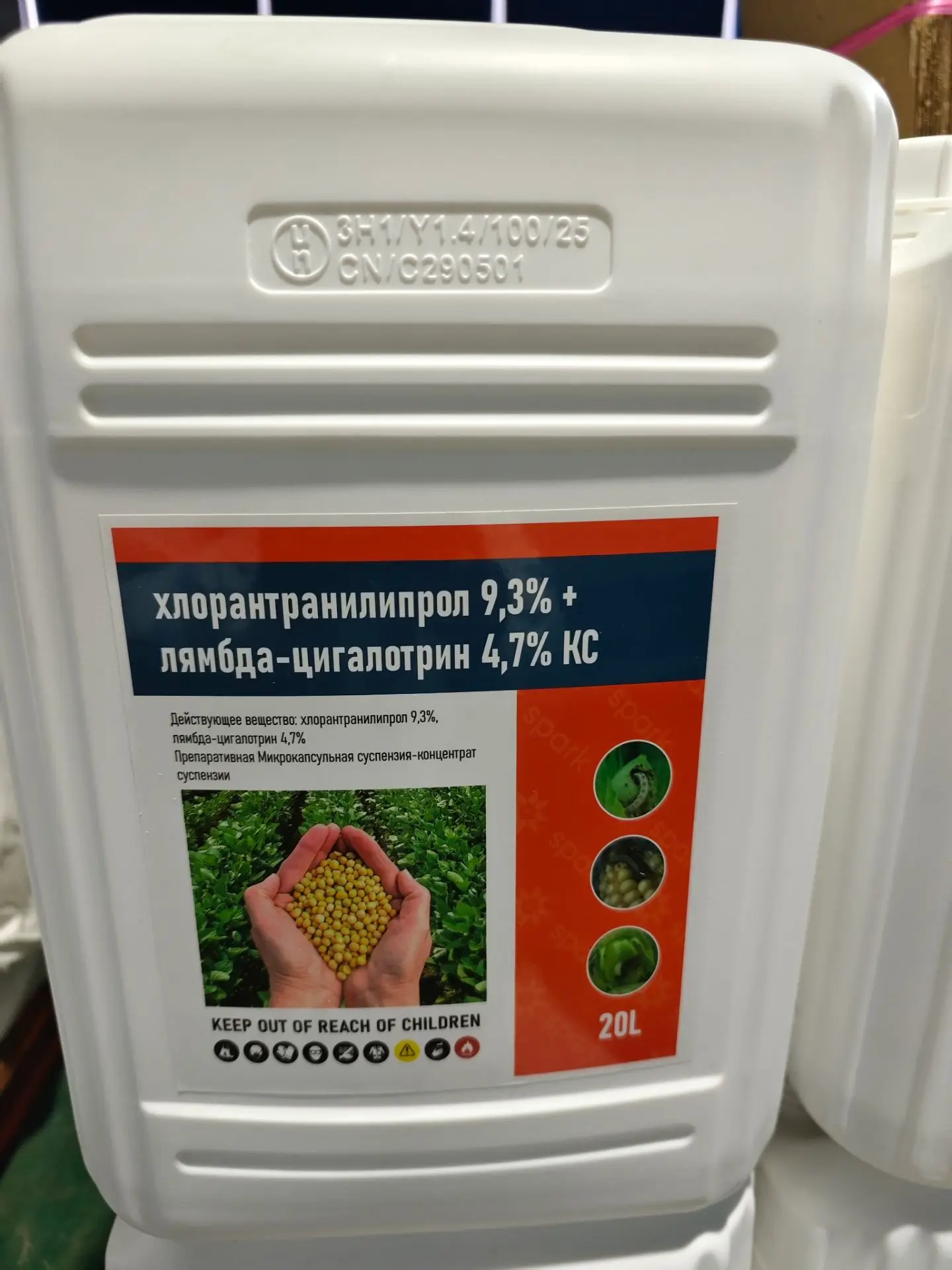
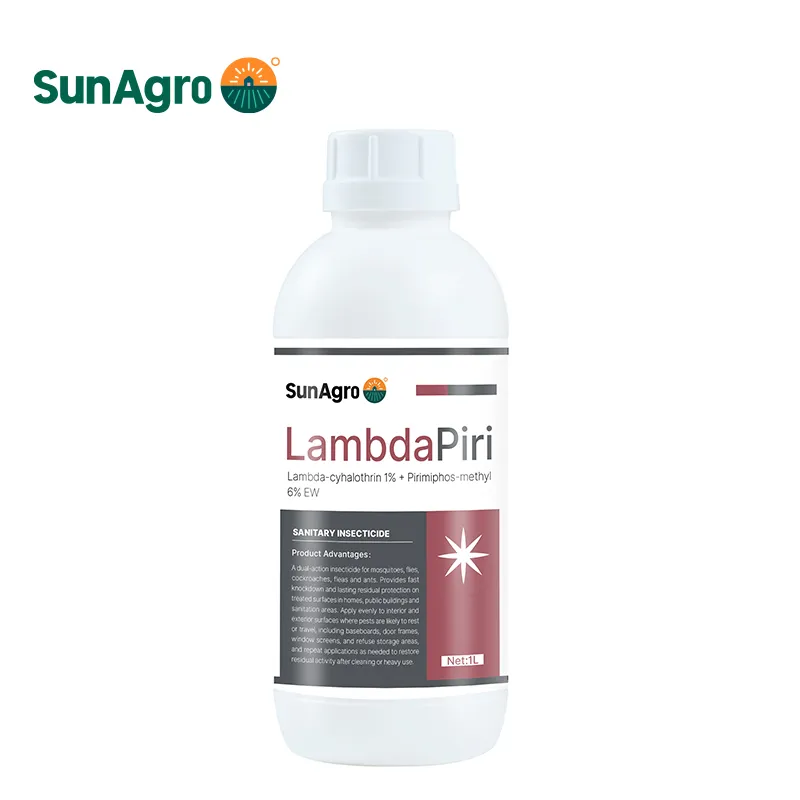
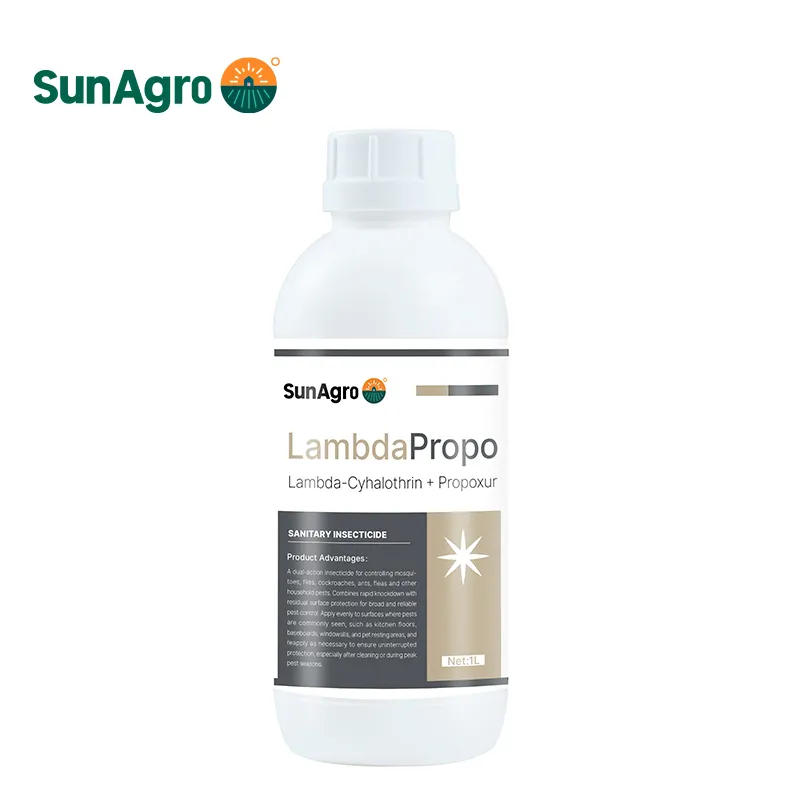
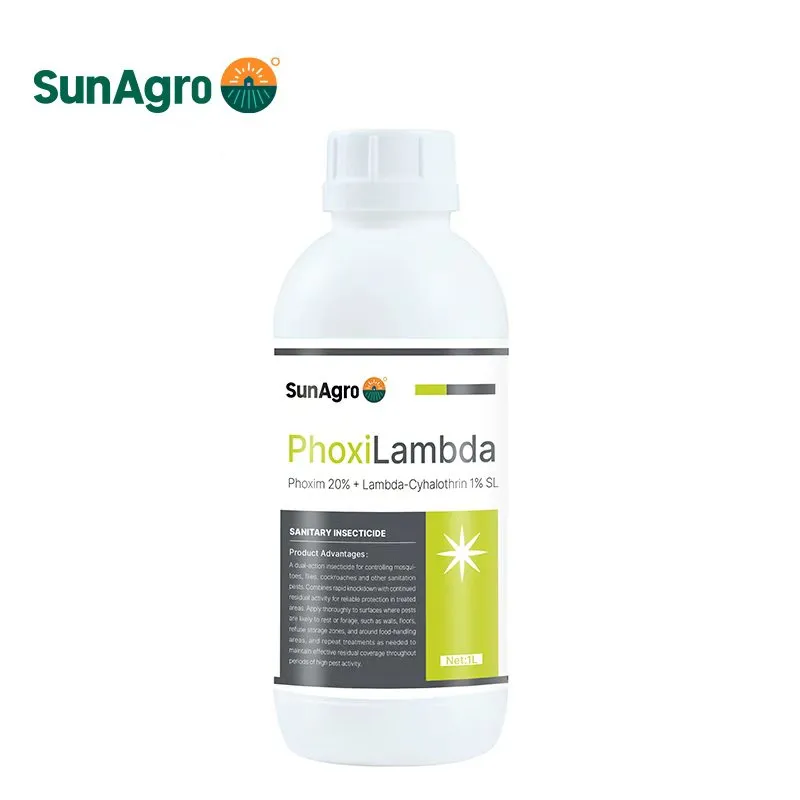
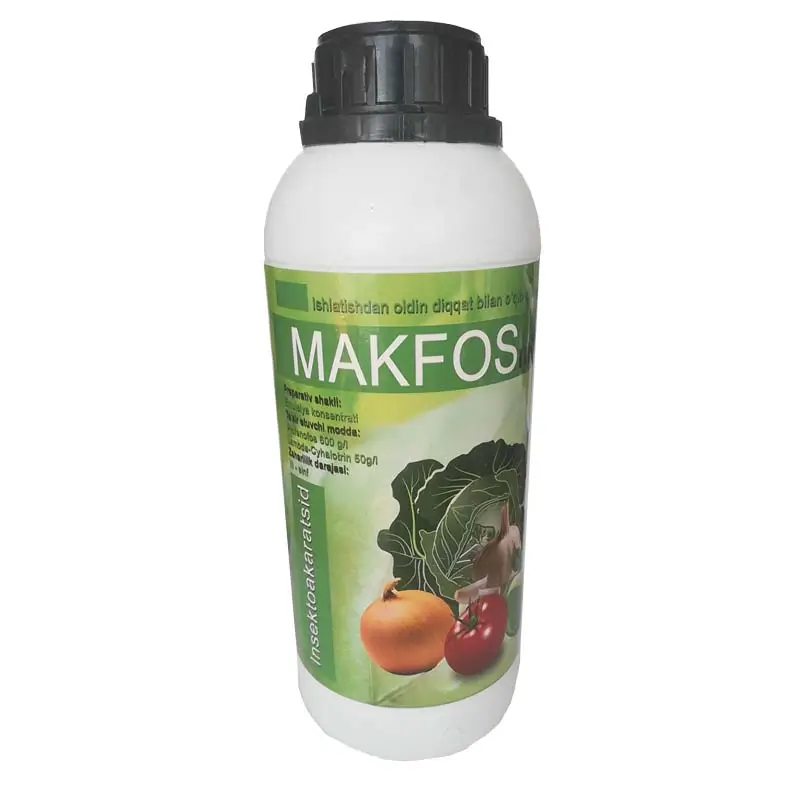
Products containing Lambda-Cyhalothrin

Main Functions
Lambda-Cyhalothrin is used in registered programs to reduce crop damage caused by susceptible chewing and sucking insects.
Its main functions include:
- Rapid contact activity against exposed pests
- Ingestion activity after pests feed on treated material
- Knockdown of susceptible mobile insect stages
- Reduction of continued feeding and crop injury
- Protection of treated crop surfaces
- Use within an IRAC-based resistance-management program
Lambda-Cyhalothrin is non-systemic. It does not move through the complete plant vascular system or automatically protect new growth appearing after application.
Spray coverage remains important, especially when insects are located on leaf undersides, inside dense canopies, under crop residues, or within folded plant tissue.
Mode of Action
Lambda-Cyhalothrin belongs to IRAC Group 3A and acts as a sodium channel modulator in the insect nervous system.
After sufficient contact or ingestion exposure, it interferes with the normal opening and closing of voltage-gated sodium channels. This may cause:
- Repeated nerve firing
- Hyperexcitation
- Loss of coordination
- Knockdown
- Paralysis
- Death of susceptible insects
Visible knockdown may occur before complete population control is achieved.
Final performance depends on pest species, life stage, delivered dose, exposure, formulation quality, environmental conditions, and local pyrethroid resistance.
For a more detailed technical explanation, read the complete Lambda-Cyhalothrin guide.
Target Pest Directions
Lambda-Cyhalothrin may be used against different pest groups where the crop, pest, and formulation are included on the local product label.
| Pest Group | Representative Pest Direction |
|---|---|
| Lepidopteran larvae | Armyworms, cutworms, bollworms, leafrollers, leaf folders, and selected borers |
| Sucking pests | Aphids, leafhoppers, planthoppers, whiteflies, and selected psyllids |
| Beetles | Flea beetles, weevils, and other registered crop beetles |
| Thrips | Label-listed species on approved crops |
| Field and turf insects | Grasshoppers, cutworms, and selected surface-active pests |
| Professional pest-control targets | Mosquitoes, flies, ants, cockroaches, or other pests in separately registered products |
These are product-development directions rather than universal control claims.
The target pest should be confirmed by:
- Scientific or accepted common name
- Crop or treatment site
- Pest life stage
- Local susceptibility
- Resistance history
- Approved label claim
Lambda-Cyhalothrin should not be positioned as a primary miticide unless a specific product registration and efficacy data support the intended mite claim.
Suitable Crops and Application Areas
Depending on local registration, Lambda-Cyhalothrin formulations may be developed for selected programs in:
- Wheat and other cereals
- Corn
- Rice
- Cotton
- Soybean and other oilseeds
- Potatoes
- Brassica vegetables
- Fruiting vegetables
- Cucurbits
- Legumes
- Fruit crops
- Plantation crops
- Ornamentals
- Turf and non-crop areas where approved
Crop and pest combinations vary between markets.
Agricultural formulations should not automatically be promoted for residential, livestock, warehouse, veterinary, indoor, or public-health applications.
Professional sanitation and vector-control projects require separately registered formulations, use sites, application methods, safety instructions, and labels.
Buyers evaluating mosquito, fly, cockroach, or warehouse-pest projects can review the POMAIS public health pest-control products.
Application Guidance
There is no single application rate suitable for every Lambda-Cyhalothrin product.
Rates vary according to:
- Active ingredient concentration
- EC, WP, or CS formulation
- Crop
- Target pest
- Pest life stage
- Application method
- Spray volume
- Local registration
- Maximum permitted rate
A professional application program should confirm:
- The crop or treatment site is approved.
- The target pest is listed on the product label.
- The pest is at a susceptible and exposed stage.
- The sprayer is correctly calibrated.
- The water volume can cover the target surface.
- The application rate follows the local label.
- The maximum application number is not exceeded.
- The required PHI and REI are observed.
- Domestic and export MRL requirements are considered.
- Drift, runoff, and non-target exposure are controlled.
Early pest monitoring and correct spray placement are usually more valuable than waiting until the infestation becomes severe.
Application timing should be based on field scouting, economic thresholds, pest development, and local technical guidance rather than a fixed calendar.
Differences Between EC, WP, and CS Formulations
| Comparison Factor | EC | WP | CS |
|---|---|---|---|
| Physical form | Liquid emulsifiable concentrate | Dispersible powder | Liquid capsule suspension |
| Dilution behavior | Forms an emulsion in water | Forms a suspended dispersion | Suspended capsules disperse in water |
| Main packaging | Bottles and drums | Bags and fiber drums | Bottles and drums |
| Handling focus | Solvent system and emulsion stability | Dust control and continuous agitation | Capsule stability and suspension behavior |
| Buyer consideration | Established liquid formulation and easy measurement | Powder channel and compact storage | Differentiated formulation profile |
| Residual performance | Formulation- and label-specific | Formulation- and label-specific | Requires formulation-specific support |
| Crop and pest spectrum | Determined by label | Determined by label | Determined by label |
| Final selection | Registration and market demand | Registration and market demand | Registration and market demand |
No formulation is universally superior.
An EC may suit one market because of established registration and application practices. A WP may suit another because distributors prefer powder packaging. A CS may be selected where the commercial channel and registration require capsule suspension technology.
Product Advantages for Importers and Distributors
Multiple Formulation Options
POMAIS can evaluate EC, WP, and CS specifications according to the target market.
This allows buyers to select a formulation that fits:
- Existing registration references
- Local farmer preferences
- Retail packaging formats
- Application equipment
- Distribution channels
- Product portfolio positioning
Consistent Batch Quality
Quality-control testing may include, depending on the formulation:
- Active ingredient content
- Relevant impurity control
- Appearance
- pH
- Emulsion stability
- Suspensibility
- Wet sieve testing
- Particle-size distribution
- Pourability
- Persistent foam
- Low-temperature stability
- Accelerated storage stability
- Packaging compatibility
The final inspection plan depends on the agreed product specification.
Flexible Packaging
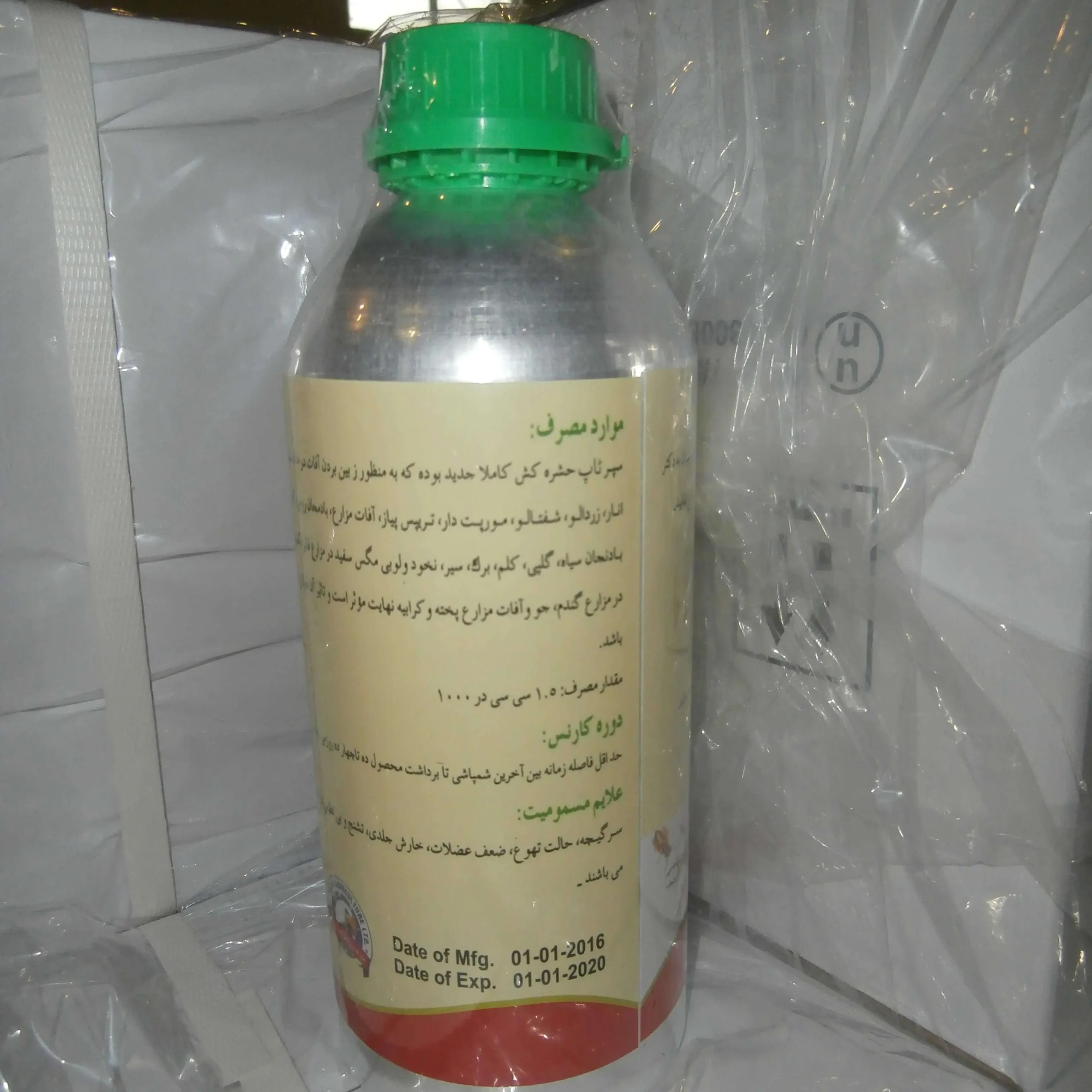
Liquid EC and CS formulations may be supplied in:
- 100 mL bottles
- 250 mL bottles
- 500 mL bottles
- 1 L bottles
- 5 L containers
- 20 L containers
- 200 L drums
- Other confirmed formats
WP formulations may be supplied in:
- 100 g bags
- 250 g bags
- 500 g bags
- 1 kg bags
- 5 kg packs
- 10 kg packs
- 25 kg drums
- Other confirmed formats
Packaging material, bottle type, cap, liner, seal, label, carton, pallet, and transport requirements should be confirmed before production.
Private Label and Multilingual Packaging
Support may include:
- Private label production
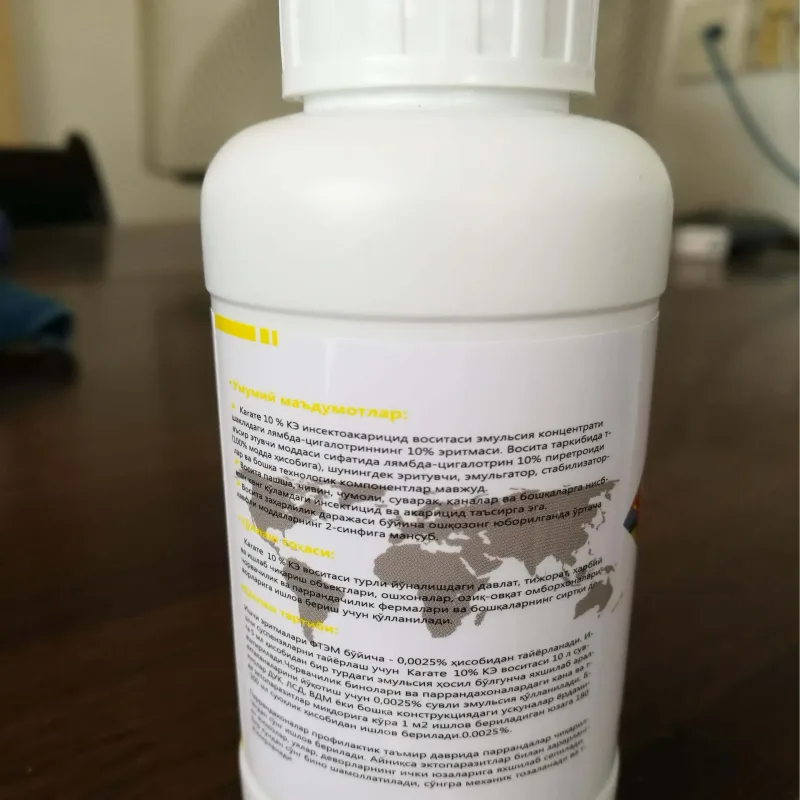
- Multilingual label printing
- Bottle and bag selection
- Carton design
- Barcode and QR code placement
- Tamper-evident packaging
- Shipping-mark preparation
- Market-specific warning statements
Final artwork remains subject to destination-country pesticide-label requirements and buyer approval.
Technical Document Support
Available documents may include:
- Certificate of Analysis
- Safety Data Sheet
- Technical Data Sheet
- Product specification
- Batch inspection record
- Packaging information
- Sample label
- Manufacturing and quality documents
- Registration-support files subject to project review
Document availability depends on the formulation, destination country, and registration project.
Resistance Management
Repeated use of Lambda-Cyhalothrin or other IRAC Group 3A insecticides can select resistant pest populations.
Changing from Lambda-Cyhalothrin to another pyrethroid does not create a new mode of action when the alternative remains in Group 3A.
A resistance-management program should:
- Use Lambda-Cyhalothrin only against approved pests.
- Apply at the most susceptible pest stage.
- Avoid unnecessary repeat applications.
- Follow the maximum application number on the label.
- Rotate with effective insecticides from different IRAC groups.
- Base spray windows on pest generations where possible.
- Monitor field performance.
- Integrate biological, cultural, and mechanical controls.
- Investigate control failure before increasing rate or frequency.
A mixture should not automatically be described as a resistance solution.
Each active ingredient in a mixture should be registered, effective against the target pest, and used according to local resistance-management guidance.
Tank Mix and Compatibility Guidance
Do not assume that Lambda-Cyhalothrin is compatible with every insecticide, fungicide, herbicide, fertilizer, oil, or adjuvant.
Before considering a tank mixture, confirm:
- Both labels permit the combination.
- The crop and application timing are compatible.
- The mixture is legally registered where required.
- Water quality is suitable.
- The formulation order is correct.
- Physical stability has been evaluated.
- Crop-safety data are available.
- The combined PHI, REI, and MRL requirements can be met.
A jar test may help identify visible physical incompatibility, but it does not confirm legal approval, chemical stability, biological efficacy, or crop safety.
Safety and Environmental Precautions
Lambda-Cyhalothrin products should be handled according to the exact formulation label and SDS.
General precautions include:
- Wear label-specified PPE during mixing, loading, and application.
- Avoid contact with skin, eyes, and clothing.
- Avoid inhaling spray mist or formulation dust.
- Do not eat, drink, or smoke while handling the product.
- Keep unauthorized people and animals away during application.
- Follow product-specific re-entry instructions.
- Prevent spray drift and runoff.
- Do not contaminate ponds, streams, drains, or irrigation water.
- Avoid non-target pollinator exposure according to label restrictions.
- Store the product away from food and animal feed.
Do not use a universal re-entry period across all formulations and markets.
For accidental dermal exposure, follow the exact product label and review the guide to Lambda-Cyhalothrin skin contact first aid.
Residual Performance and Weather Considerations
Residual performance varies according to:
- Formulation
- Registered active ingredient rate
- Crop or treatment surface
- Ultraviolet exposure
- Rainfall
- Irrigation
- Temperature
- Crop growth
- Surface abrasion
- Pest pressure
- Local resistance
- Spray coverage
No universal rainfast time or residual period applies to every formulation.
A higher active ingredient concentration does not automatically produce longer residual control.
Reapplication decisions should follow:
- The product-specific label
- Registered treatment interval
- Rainfall and irrigation conditions
- Crop growth
- Pest monitoring
- Formulation-specific efficacy data
Storage and Transport
Store Lambda-Cyhalothrin products:
- In the original labeled container
- With the seal intact
- In a cool, dry, and ventilated pesticide storage area
- Away from direct sunlight, heat, and ignition sources
- Away from food, feed, seed, and drinking water
- Away from unauthorized personnel
- According to the temperature limits in the specification
Do not transfer the product into food, beverage, or unmarked containers.
Shelf life should be stated according to the approved formulation specification, packaging system, stability data, and storage conditions.
Transport classification, outer packaging, pallet requirements, shipping marks, and dangerous-goods documents should be confirmed before shipment.
Registration, Documentation, and Supply Support
Before starting a Lambda-Cyhalothrin supply project, POMAIS reviews:
- Destination country
- Active ingredient approval status
- Registered or proposed formulation
- Target crops or use sites
- Target pests
- Required concentration
- Packaging format
- Label language
- Registration-document requirements
- Annual procurement volume
- Production and shipping schedule
Standard MOQ is generally:
- 1000 L for liquid formulations
- 1000 kg for powder formulations
Standard production lead time is generally 20 to 30 days after the formulation, packaging, artwork, payment, and document requirements have been confirmed.
Final MOQ and lead time may vary according to:
- Formulation
- Packaging size
- Printed packaging quantity
- Registration-document requirements
- Production schedule
- Raw material availability
- Shipment plan
Frequently Asked Questions
Request Lambda-Cyhalothrin Product Details
POMAIS works with qualified agrochemical importers, distributors, registration companies, and crop-protection brands.
To review a Lambda-Cyhalothrin project, provide:
- Destination country
- Required formulation and concentration
- Target crops or use sites
- Target pests
- Registration status
- Packaging sizes
- Label language
- Required documents
- Expected annual volume
We will evaluate the formulation, packaging, documentation, MOQ, production schedule, and supply direction for your market.
For additional active ingredients and formulations, review the POMAIS insecticide portfolio.
Contact us!
We will reply to you within 24 hours on business days!