Botrytis Control | Procymidone 10% + Pyrimethanil 5% FU
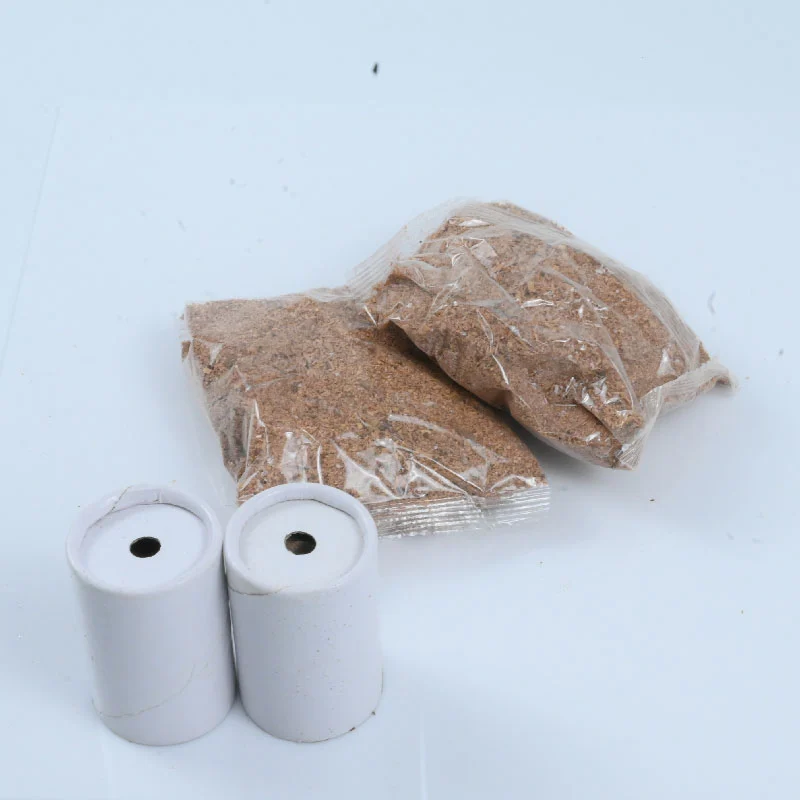
You face Botrytis (gray mold) pressure in closed structures where flowers, calyces, wounds, and leaf undersides are hard to cover with conventional sprays. This FU (smoke/aerosol) formulation pairs Procymidone 10% (FRAC 2) with Pyrimethanil 5% (FRAC 9) to deliver space-filling micro-aerosols that disperse across sealed volumes and settle uniformly on high-risk infection courts—without water spotting or rinsewater handling. Designed for seal → expose → vent → REI workflows, it fits IPM programs alongside sanitation and climate control. We support OEM private label, multilingual GHS artwork, and complete COA/MSDS (SDS)/TDS to accelerate audits and distributor onboarding.
- Designed for Professional Buyers & Bulk Orders
- We support custom packaging, labeling, and formulation to meet your market needs.
- Export wholesale inquiries only.
- Please include destination country, business type (importer/distributor/registrant), and expected volume.
- Retail requests will not be processed.

About Botrytis Control | Procymidone 10% + Pyrimethanil 5% FU
| Product | Botrytis Control FU (smoke/aerosol; space-filling coverage) |
| Actives | Procymidone 10% (FRAC 2) + Pyrimethanil 5% (FRAC 9) |
| Target Pathogen | Botrytis cinerea complexes (gray mold) — blossoms, calyces, wounds (label-dependent) |
| Use Sites | Greenhouse / Net-house / High tunnel — sealed, label-guided workflow |
| Operational Fit | Seal → Expose → Vent → REI; night-window friendly; water-free surface coverage |
| Performance Focus | Uniform deposition on flowers/calyces/leaf undersides; complements spray blind-spot areas |
| IPM & Rotation | Integrates with sanitation & climate control; rotate with non-2/9 FRAC groups (label-dependent) |
| Documentation | COA / MSDS (SDS) / TDS, lot-level barcoding/QR traceability |
| Shelf Life | Typical 2 years in original packaging (see SDS/label) |
| OEM & Packs | Private label, multilingual GHS, tamper-evident options; pack weight/units per carton customizable |
| Compliance | No prescriptive rates published; all crops/sites/intervals are label-dependent |
Disease Primer — Botrytis (Gray Mold) in Protected Crops
What drives outbreaks
In greenhouses, net-houses, and high tunnels, Botrytis cinerea accelerates under high humidity, long leaf-wetness periods, and moderate temperatures. When airflow is limited and condensation cycles repeat after night cooling, spore germination and colonization rise quickly—making botrytis control a constant operational priority in protected cultivation.
Where it infects (infection courts)
- Flowers & calyces: senescing petals and tight floral tissues are highly vulnerable.
- Fresh wounds: pruning, harvest handling, and training create entry points.
- Leaf undersides & crevices: shaded, moist micro-sites that conventional sprays often miss (spray blind spots).
What you see (symptoms & impact)
- Blossom blight, calyx rot, pedicel/stem lesions, and the hallmark gray, velvety sporulation.
- Yield loss comes both pre-harvest (flower drop, fruit rot) and post-harvest (latent infections breaking under handling), increasing claims and waste.
Why protected systems struggle
- Dense canopies/trellises limit line-of-sight coverage; short labor windows restrict repeat passes.
- Hygiene gaps—petal drop accumulation, unremoved debris, unhealed cuts—seed local inoculum.
- Climate actions that reduce relative humidity and leaf-wetness duration help, but gray mold risk persists at flowering peaks and high-handling periods.
When risk spikes (timing cues)
- Flowering and immediately after pruning/harvest events.
- Nights with condensation and mornings with slow dry-down.
- Periods of limited ventilation or recirculating air in crowded bays.
Problem → FU Solution (Why This Approach Works)
The operational problem
In protected cultivation, Botrytis control fails most often where spray blind spots persist—flowers, calyces, leaf undersides, wounds, and crevices around trellis hardware. Conventional passes compete with short labor windows and risk water spotting on high-value crops. Even with sanitation and humidity management, gray mold spikes during flowering and after pruning/harvest because infection courts are delicate, numerous, and hard to wet uniformly—especially in greenhouse, net-house, and high tunnel microclimates.
The FU (smoke/aerosol) answer
- Space-filling coverage: Activated in sealed volumes, micro-aerosols disperse and settle uniformly on floral tissues and hidden surfaces that nozzles miss.
- Water-free deposition: No water marks, less rinsewater handling, cleaner night-window operations.
- Consistent outcomes: A repeatable particle profile improves uniformity across dense canopies and complex plant architecture.
- IPM alignment: Integrates with sanitation, climate control, and FRAC-guided rotations; this page remains label-guided with no published rates.
- Procurement & compliance: OEM private label, multilingual GHS, and complete COA/MSDS (SDS)/TDS accelerate audits and distributor onboarding while keeping evidence trails intact.
Focused on This FU Formulation and Strength
You need a Botrytis control tool that reaches infection courts your sprayers cannot. This page is dedicated to a single, closed-structure solution: Procymidone 10% (FRAC 2) + Pyrimethanil 5% (FRAC 9) in FU (smoke/aerosol) format. Activated inside a sealed zone, the formulation produces space-filling micro-aerosols that travel with the enclosed air mass and settle uniformly on flowers, calyces, fresh wounds, and leaf undersides—the highest-risk surfaces for gray mold. Because deposition is water-free, you avoid spotting on sensitive crops and reduce rinsewater tasks. Operationally, it fits your seal → expose → vent → REI workflow, aligns with IPM (sanitation and climate control), and keeps this page label-guided with no published rates or recipes.
In procurement and compliance terms, the product is engineered for auditable consistency across bays and cycles. You get COA/MSDS (SDS)/TDS with each lot and barcoding/QR for traceability, plus OEM private label with multilingual GHS artwork to accelerate market approvals. Programmatically, the FRAC 2 + 9 pairing offers complementary activity on Botrytis while leaving room to rotate with non-2/9 FRAC groups where labels permit, supporting resistance stewardship. Practically, you standardize night-window events, document outcomes for audits, and maintain a predictable cadence without committing operators to repeated line-of-sight passes in tight canopies.
Mode of Action — Dual FRAC 2 + 9 (How It Suppresses Gray Mold)
How the pairing works in closed structures
Under sealed conditions, the FU (smoke/aerosol) plume carries the actives into floral tissues and canopy crevices where Botrytis (gray mold) initiates infection. The goal is to interrupt the pathogen at multiple points in its cycle—spore germination, penetration, lesion expansion, and sporulation—while keeping operations label-guided and water-free for a clean finish on high-value crops.
Active roles (complementary mechanisms)
- Procymidone 10% — FRAC 2 (dicarboximide): Single-site fungicide widely used against B. cinerea. It disrupts early infection events on plant surfaces and reduces sporulation on colonized tissues, helping protect flowers, calyces, wounds, and leaf undersides that are hard to wet with sprays.
- Pyrimethanil 5% — FRAC 9 (anilinopyrimidine): Acts on fungal amino-acid/secreted-enzyme pathways associated with penetration and lesion development, thereby slowing lesion expansion and reducing pathogen pressure around delicate floral organs. In protected crops, its vapor/translaminar behavior supports coverage of complex plant architecture.
Program logic (stewardship & rotation)
- Use the dual FRAC 2 + 9 system to broaden activity on gray mold hotspots in greenhouse, net-house, and high tunnel environments.
- Maintain resistance stewardship by rotating with non-2/9 FRAC groups where your label allows; track outcomes by bay and flowering stage.
- This page does not publish rates or recipes. All intervals, timings, and precautions are label-dependent.
FU Formulation Benefits — Space-Filling Coverage
What you gain in closed structures
- Space-filling deposition: In a sealed zone, the FU plume disperses and settles uniformly onto flowers, calyces, wounds, and leaf undersides—the infection courts most sprays miss in greenhouses, net-houses, and high tunnels.
- Water-free finish: Dry deposition helps avoid spotting on delicate floral tissues and premium fruit finish; it also minimizes rinsewater handling and tank hygiene tasks.
Consistency you can operationalize
- Repeatable particle profile for more uniform coverage across dense canopies and trellis systems; better reliability where line-of-sight spraying fails.
- Night-window friendly: Aligns with seal → expose → vent → REI workflows to reduce labor conflicts and protect pollinators/biocontrol via post-ventilation re-introduction (per label).
- IPM fit: Complements sanitation and climate control, and supports FRAC-diverse rotations without publishing any prescriptive rates on this page.
Procurement & compliance advantages
- Auditable lots with COA/MSDS (SDS)/TDS and barcoding/QR keep inspections smooth.
- OEM private label and multilingual GHS accelerate approvals while maintaining a single master spec across markets.
Target Crops & Closed-Structure Scenarios
Where this FU format is a fit (label-dependent)
- Fruiting vegetables (tomato, pepper, cucumber, eggplant): High Botrytis risk on flowers, calyces, pedicels, pruning wounds. Dense trellises create spray blind spots; the FU plume fills space and settles uniformly on hard-to-wet floral tissues.
- Berries & small fruit (strawberry in tunnels/greenhouses): Blossom blight peaks during humid, low-airflow nights. Water-free deposition protects delicate bloom finish while aligning with night windows and vent → REI routines.
- Floriculture/ornamentals (rose, gerbera, chrysanthemum): Premium bloom finish and tight calyces demand non-wetting coverage. The space-filling plume reaches floral organs and structural crevices that nozzles miss.
- Leafy greens & herbs (basil, lettuce, mint): Repeated cutting and handling create fresh infection courts; benches and stacked systems restrict line-of-sight. FU supports uniform contact across crowded bays.
- Propagation & mother blocks (cuttings, grafts): Wounded tissues and high plant density elevate risk. A sealed seal → expose → vent → REI workflow standardizes coverage while staying label-guided.
Environmental envelope (closed-structure cues)
- Greenhouse, net-house, high tunnel with the ability to seal during exposure and ventilate to the required REI.
- Microclimates with high humidity/condensation cycles, limited airflow, or complex trellis hardware where sprays leave gaps.
- This page does not cover open-field or non-sealed environments. All crops/sites/intervals remain label-dependent; always follow the product label and local regulations.
Application Principles — Label-Led (No Rates)
Where and how it fits
Run this FU (smoke/aerosol) program only in sealed, closed structures with a disciplined seal → expose → vent → REI workflow. Confirm zone readiness, signage, worker clearance, and supervisor oversight before activation. During exposure, the plume should disperse and settle uniformly onto flowers, calyces, wounds, and leaf undersides—the infection courts most at risk for gray mold—then transition to controlled ventilation until the area meets your label-specified REI.
When to schedule
Prioritize flowering windows, immediately after pruning/harvest handling, and ahead of forecast humidity/condensation spikes. Align events to night or non-working windows to reduce labor conflicts and to support uniform space filling. Coordinate with pollinator and biocontrol release schedules so beneficials are re-introduced only after ventilation meets label and HSE criteria.
Stewardship and records
Keep the program label-guided at all times. Maintain application logs (date, bay/zone, crop stage, environmental notes, lot IDs), archive COA/MSDS (SDS)/TDS, and run small-area checks before broad deployment. For resistance management, embed this dual FRAC 2 + 9 tool within rotations that include non-2/9 FRAC groups where your label allows. This page publishes no prescriptive rates or operational recipes.
Quality & Stability — Batch You Can Audit
What we prove before release
- Assay & identity: Each lot is cleared against a documented QC plan with HPLC identity/assay for Procymidone 10% (FRAC 2) and Pyrimethanil 5% (FRAC 9), plus impurity and appearance checks consistent with the FU (smoke/aerosol) format.
- Plume behavior: Routine verification of activation consistency and particle-size profile that supports space-filling dispersion and uniform settling onto flowers, calyces, wounds, and leaf undersides in sealed volumes.
- Packaging integrity: Seal strength, headspace, canister weight tolerance, and label durability are validated to protect performance through storage, transport, and night-window deployment.
- Traceability & documents: Every shipment includes COA / MSDS (SDS) / TDS and lot-level barcoding/QR, aligning with importer audits and distributor ERPs.
How stability supports your season plan
- Stress testing: Finished goods undergo heat/cold holds, freeze–thaw cycling, and transport vibration/shock simulations to keep activation and plume characteristics within spec after shipping.
- Storage guidance: Keep in original packaging, cool, dry, and out of direct sunlight; segregate from food/feed areas and follow site HSE policies. Under standard conditions the product carries a typical 2-year shelf life (refer to SDS/label).
- Operational payoff: These controls help you standardize seal → expose → vent → REI cycles across bays and reduce variability between zones—without publishing prescriptive rates on this page.
All crops, sites, timings, and intervals are label-dependent. Always follow the product label and local regulations.
Packaging & OEM — Private Label & Traceability
What you can configure
- OEM private label with multilingual GHS artwork, region-specific icons, and tamper-evident options under a single master spec.
- Pack weight per canister, units per carton, cartons per pallet, and outer-case markings to match bay volumes and night-window cadence.
- Material & durability choices (laminated labels, solvent-resistant inks) to withstand condensation and handling in greenhouse/net-house/high tunnel logistics.
- Barcoding/QR mapped to lot IDs for fast inbound checks, traceability, and recall drills.
What ships with every lot
- Full COA / MSDS (SDS) / TDS packet, plus pallet plans and carton manifests aligned with your ERP field mapping.
- Lot-level traceability from actives to finished goods; seal strength and headspace checks documented in the QC release.
- Export paperwork synchronized with your broker (commercial invoice, packing list, HS code references), keeping audits clean while this page remains label-guided with no published rates.
How this reduces friction
- Shorter regulatory/artwork cycles via editable templates; fewer reprints when you add languages.
- Predictable lead-time windows via forecast-based production, so you can stage inventory ahead of Botrytis peaks.
- Standardized outer-case orientation and hazard panels that streamline HSE hand-offs during seal → expose → vent → REI operations.
All crops, sites, timings, and intervals are label-dependent. Always follow the product label and local regulations.
Field Scenarios — How Teams Apply This in Protected Crops
Tomato & Pepper (trellised fruiting crops)
In high-wire systems, flowers, calyces, pedicels, and training wounds become the primary infection courts for gray mold. Your crews work in tight canopies where spray blind spots are routine and water spotting is a real commercial risk. By activating this FU (smoke/aerosol) in a sealed bay, you drive space-filling micro-aerosols into floral clusters and hardware crevices, then vent to the label REI before re-entry. The result is uniform, water-free deposition that complements sanitation and climate controls during flowering peaks—without publishing any prescriptive rates here.
Strawberry in tunnels/greenhouses (blossom blight windows)
Strawberry blossoms are delicate, and frequent condensation cycles make Botrytis management unforgiving. The water-free FU plume helps protect bloom finish while reaching calyces and hidden floral tissue that nozzles miss in crowded benches. You schedule events in night or non-working windows, operate a seal → expose → vent → REI routine per label, and re-introduce pollinators/biocontrol only after ventilation meets site HSE rules. Because FRAC 2 + 9 offers complementary activity, you can rotate with non-2/9 groups where your label allows.
Floriculture/ornamentals (roses, gerbera, chrysanthemum)
Premium blooms suffer from spotting and uneven coverage. This space-filling format delivers uniform, dry deposition across flowers, calyces, and tight internodes, supporting finish quality while you maintain hygiene (spent petals, debris removal) and humidity discipline. For cut-flower houses, the FU cycle standardizes bay turnover—label-guided, documented by lot IDs and COA/MSDS/TDS—so audits stay clean and schedules remain predictable through peak demand.
Leafy greens & herbs (stacked benches, frequent cuts)
Cutting and handling create constant fresh wounds—ideal entry points for Botrytis. Stacked or tiered systems restrict line-of-sight and airflow, so smoke/aerosol coverage is fundamentally more reliable in reaching undersides and bench interfaces. You follow label exposure/ventilation protocols, log bay, stage, and environmental notes, and integrate the product within FRAC-diverse rotations to balance efficacy and stewardship.
Propagation & mother blocks (cuttings, grafting)
In propagation rooms, wounded tissue density is high and micro-climates are difficult. The FU plume fills the volume and settles uniformly on wound sites and leaf undersides, supporting a disciplined label-guided workflow. You keep documentation tight—COA/MSDS/TDS, barcoding/QR, application logs—so procurement, compliance, and operations move in lockstep while this page remains free of prescriptive rates or operational recipes.
All crops, sites, timings, and intervals are label-dependent. Always follow the product label and local regulations.
FAQ
Why Choose POMAIS
You’re buying more than a Botrytis control product—you’re buying execution certainty in closed structures. We release every lot of Procymidone 10% (FRAC 2) + Pyrimethanil 5% (FRAC 9) FU under an auditable QC plan: HPLC identity/assay for both actives, activation and particle-profile checks linked to space-filling behavior, plus seal integrity and headspace validation for canisters. Each shipment carries COA/MSDS (SDS)/TDS and barcoding/QR so your importer audits, distributor onboarding, and recall drills remain clean and fast. The outcome is predictable seal → expose → vent → REI cycles across bays, with less variability between zones and weeks.
Speed to market matters. Our OEM private label workflow bundles multilingual GHS artwork, tamper-evident options, and region icons under a single master spec—cutting artwork iteration time and avoiding reprints when languages change. We align pack weight per canister, units per carton, and pallet plans to your bay architecture and night windows, then commit to forecast-based production windows for dependable arrivals around flowering peaks. In short: quality proof, labeling agility, delivery predictability—without publishing prescriptive rates on this page.
Partner with POMAIS — Request Specs, Samples & a Lead-Time Window
Share the operational inputs and we’ll do the heavy lifting. Provide destination market, crop mix and bay volumes, preferred pack weight per canister and units per carton, label languages/GHS icons, and your target arrival window. We’ll return a fit-for-purpose package: spec sheets, OEM label templates, samples policy, MOQ & lead-time confirmation, and a palletization plan mapped to your logistics lane and ERP fields. Documentation ships with each lot: COA/MSDS (SDS)/TDS and barcoding/QR for traceability and audits.
Keep it label-guided, keep it predictable. We standardize closed-structure operations around your seal → expose → vent → REI SOP and leave all intervals and sequences to your approved label. If you operate multiple sites, we’ll harmonize pack/carton architectures to zone sizes so night-window events are repeatable and records are comparable across bays and weeks. No prescriptive rates appear on this page; we focus on compliance, speed, and reliability so your team can stay ahead of gray mold pressure.