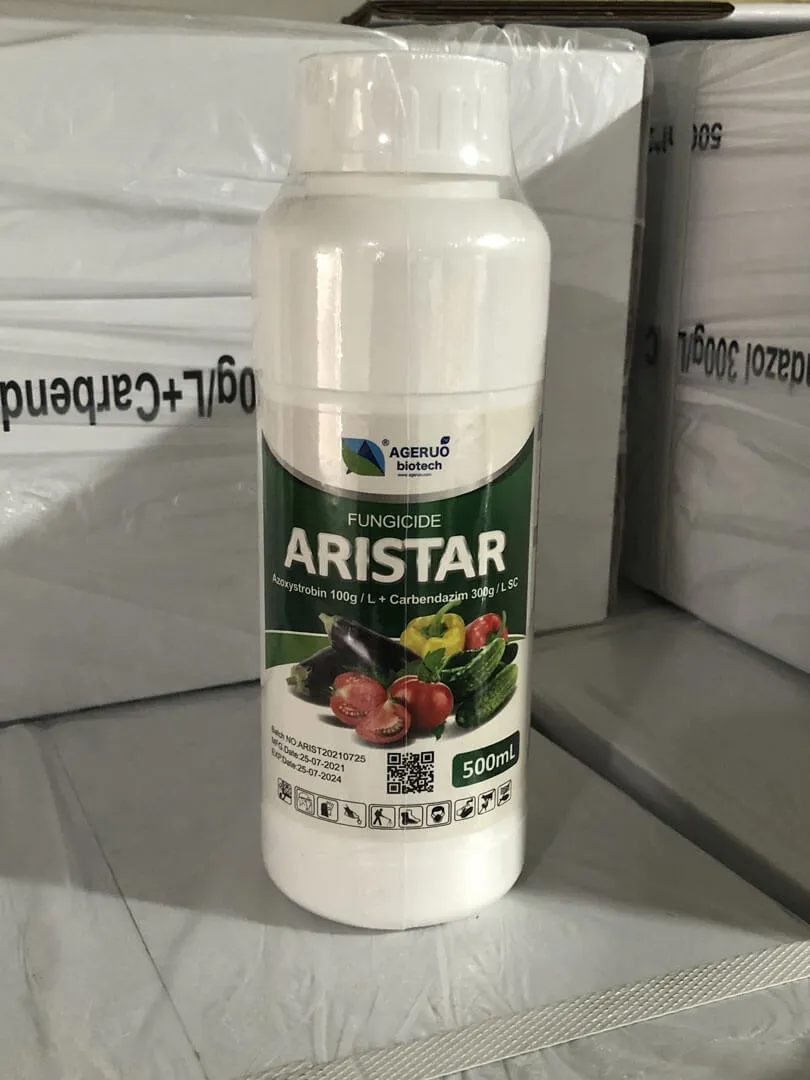


Azoxystrobin 100 g/L + Carbendazim 300 g/L SC Fungicide
Azoxystrobin 100 g/L + Carbendazim 300 g/L SC is a mixed fungicide formulated as a suspension concentrate (SC), containing two active ingredients with different modes of action. This product is intended for pesticide importers, distributors, brand owners and registration companies, and is suitable for procurement projects with clearly defined product specifications, quality documentation and target market requirements.
Azoxystrobin belongs to FRAC Group 11 and inhibits fungal mitochondrial respiration; Carbendazim belongs to FRAC Group 1 and interferes with fungal cell division. Although the two active ingredients have different modes of action, the combination does not necessarily imply a synergistic effect, nor does it guarantee control of pathogens that have already developed resistance.
Purchasers should not base their product selection solely on the combination of active ingredients; they should also verify the specific formulation’s scope of registration, the susceptibility of target pathogens, quality standards and import market requirements. Crop uses, application rates and pre-harvest intervals should all be determined in accordance with the product’s approved label in the target country.
- Designed for Professional Buyers & Bulk Orders
- We support custom packaging, labeling, and formulation to meet your market needs.
- Export wholesale inquiries only.
- Please include destination country, business type (importer/distributor/registrant), and expected volume.
- Retail requests will not be processed.

About Azoxystrobin 100 g/L + Carbendazim 300 g/L SC Fungicide
Product Specifications
| Technical Parameters | Product Information |
|---|---|
| Product Name | Azoxystrobin 100 g/L + Carbendazim 300 g/L SC |
| Active Ingredient 1 | Azoxystrobin |
| Content 1 | 100 g/L |
| Active Ingredient 2 | Carbendazim |
| Content 2 | 300 g/L |
| Formulation | SC (Suspension Concentrate) |
| FRAC Group | 11 + 1 |
| CAS Number — Azoxystrobin | 131860-33-8 |
| CAS Number — Carbendazim | 10605-21-7 |
| Product Category | Fungicide |
| Target Crops and Diseases | Subject to the product registration label for the target market |
| Application Method | Subject to the actual product label |
| Quality Standard | Subject to the actual product technical specifications |
| Packaging | To be confirmed based on the actual available specifications |
| Shelf Life | Subject to the product label and stability data |
| Technical Documentation | To be confirmed based on the actual product and order requirements |
Mode of Action
Azoxystrobin 100 g/L + Carbendazim 300 g/L SC contains two fungicides with different modes of action. Understanding how each active ingredient works helps importers assess the product’s positioning and determine whether it fits the local disease management portfolio.
Azoxystrobin — FRAC Group 11
Azoxystrobin belongs to the QoI (Quinone outside Inhibitors) class of fungicides.
It targets the Qo site within the cytochrome bc1 complex of fungal mitochondria. By interfering with electron transport in the mitochondrial respiratory chain, azoxystrobin can affect energy production and related physiological processes in fungi.
Its technical characteristics include:
- It acts primarily by inhibiting mitochondrial respiration.
- It can be used to prevent and manage disease against applicable pathogens under the conditions specified on the label.
- It exhibits some translaminar movement, but this should not be taken to imply that all parts of the plant will receive uniform protection.
- There is a high risk of resistance developing in certain pathogens; therefore, the applicable FRAC resistance management recommendations must be followed.
The actual control efficacy of azoxystrobin depends on the target pathogen, the stage of disease development, product quality, and specific application conditions; the active ingredient’s general mode of action cannot be directly equated with all registered uses of this formulated product.
Carbendazim — FRAC Group 1
Carbendazim belongs to the benzimidazole class of fungicides, classified under FRAC Group 1 (the MBC class).
It acts by targeting fungal β-tubulin in cell division, interfering with microtubule formation and mitosis.
It should be noted that the susceptibility of different pathogens to carbendazim varies. Some pathogen populations have already developed resistance to this class of fungicides; therefore, it cannot be generally claimed that it provides reliable control against all fungal diseases.
The product’s actual scope of application should be based on the relevant registration label and efficacy data.
What Does the Combination Mean for Buyers?
Although azoxystrobin and carbendazim have different modes of action, buyers cannot assume, based solely on their differing FRAC codes, that this combination formulation will necessarily show a synergistic effect or reduce the risk of resistance in all pathogens.
When evaluating a product, purchasers should focus on confirming the following:
- Whether both active ingredients are actually effective against the target pathogens.
- Whether relevant resistance issues exist within local pathogen populations.
- Whether the product registration covers the target crops and diseases.
- Whether the formulated product is supported by corresponding quality and efficacy data.
Target Crops and Disease Management
Azoxystrobin and carbendazim each possess a certain level of fungicidal activity; however, the general scope of activity of the active ingredients does not equate to the approved scope of use for the specific formulated product.
Consequently, the applicable crops, target diseases and application scenarios for the product should be determined in accordance with the approved label for that formulation in the target country.
Without a corresponding registered label or reliable product data, do not list diseases such as rice blast, sheath blight, powdery mildew, anthracnose, grey mould, leaf spot, or root rot as confirmed targets for control by this product.
How to Evaluate the Target Disease
Importers intending to procure or register this product are advised to conduct an assessment based on the following aspects:
- Crop Registration: Confirm whether the target crop falls within the product’s approved scope.
- Target Pathogen: Verify the specific pathogen or disease name listed on the registered label.
- Disease Sensitivity: Assess the target pathogen’s sensitivity to azoxystrobin and carbendazim.
- Application Conditions: Check the application timing, method of application and relevant restrictions.
- Residue Requirements: Confirm the Maximum Residue Limits (MRLs) and pre-harvest intervals for the target market.
For further information on disease management strategies for different crops, please refer to Crop Disease Management Solutions.
Application Guidelines
Different crops, pathogens and registered markets may have different application requirements. Do not apply Azoxystrobin 100 g/L + Carbendazim 300 g/L SC to all crops using a single, unverified dosage table.
Application Parameters
| Item | Confirmation Requirements |
|---|---|
| Target Crop | As specified on the product registration label |
| Target Disease | As specified in the approved list of target pests |
| Application Rate | To be confirmed in accordance with the relevant product label |
| Application Timing | To be confirmed according to the crop growth stage and the approved label |
| Spray Volume | To be confirmed according to the label and the applicable application method |
| Application Interval | As specified on the label |
| Pre-Harvest Interval (PHI) | As specified on the locally approved label |
| Re-Entry Interval (REI) | As specified on the locally approved label |
| Maximum Applications | As specified on the label |
Application Conditions
Where the product label specifies foliar application, the formulation must be prepared and applied in accordance with the label requirements, and operations must be carried out in accordance with the actual crop canopy, equipment conditions and environmental requirements.
A standardised application rate per hectare, spray volume, re-entry interval or fixed rainfast period must not be specified in the absence of supporting information from the product label.
For importers, providing details of the target country and the intended registered use will help further verify product parameters and usage requirements.
Resistance Management
Resistance management must be conducted in conjunction with the active ingredients’ modes of action, the susceptibility of the target pathogens, registration requirements, and the overall disease management programme.
Azoxystrobin belongs to FRAC Group 11, whilst carbendazim belongs to FRAC Group 1. Although the two active ingredients have different modes of action, the mere fact that they are formulated together does not guarantee that resistance development will be delayed.
Key Resistance Considerations
- Azoxystrobin is a QoI fungicide with a high risk of resistance and should be used in accordance with the applicable FRAC guidelines.
- Resistance issues also exist with carbendazim in certain pathogens; its efficacy should not be assumed in all cases.
- If the target pathogen’s susceptibility to one or both active ingredients declines, the combination product’s performance may be affected.
- Do not assume effective rotation between products solely on the basis of differing FRAC numbers.
- Application frequency, dosage and rotation schedules should comply with specific product labels and local resistance management recommendations.
Resistance management aims to maintain effective control, not simply increase the number of components in a combination product. Product selection should be based on the actual susceptibility of the target pathogens and the scope of registration.
SC Formulation Characteristics
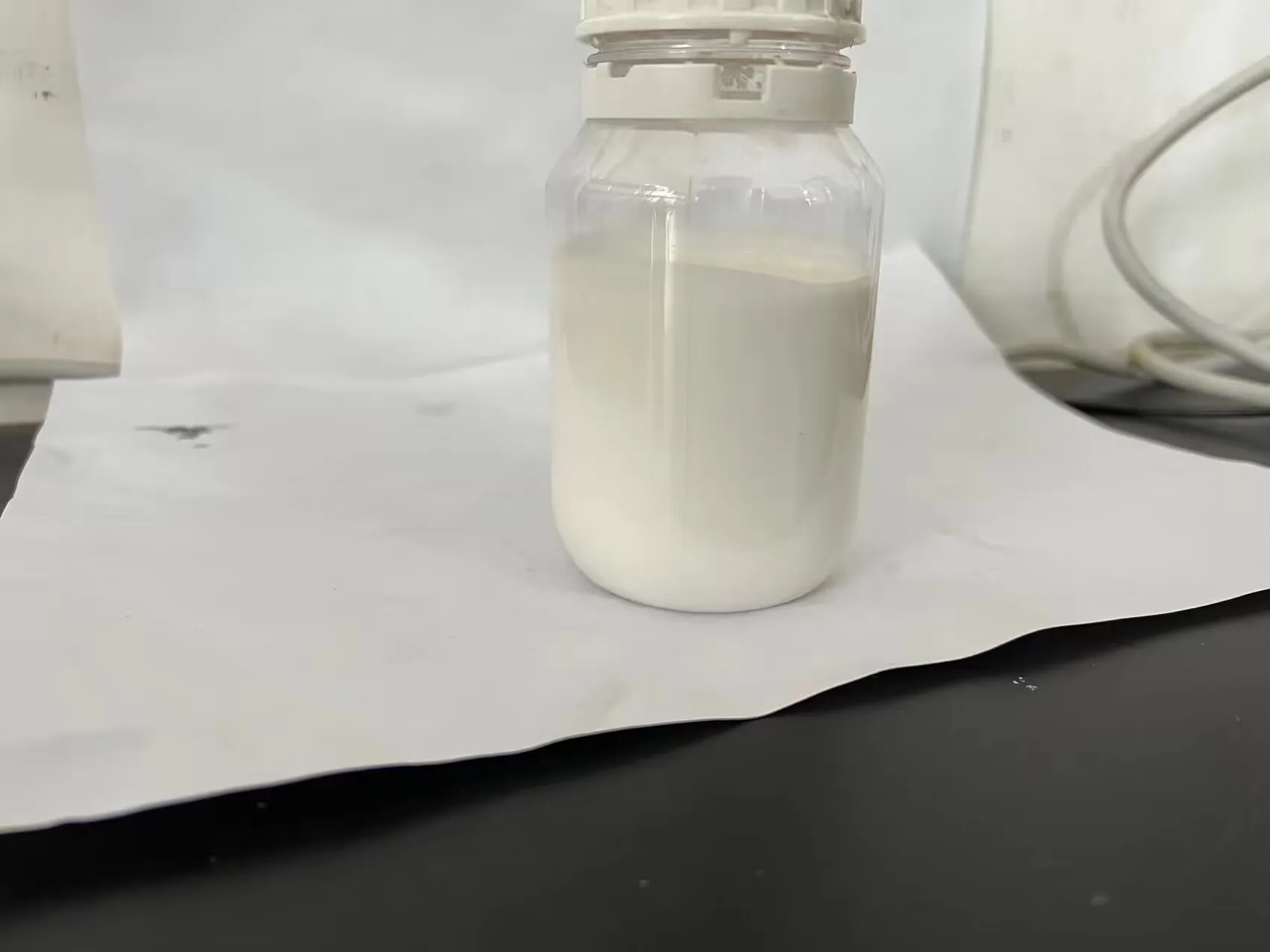
SC (Suspension Concentrate) is a liquid formulation in which solid active ingredients are dispersed as fine particles in a liquid matrix.
When evaluating SC products, purchasers should focus not only on the active ingredient content but also on parameters such as suspensibility, dispersibility, storage stability and packaging compatibility.
Formulation Quality Considerations
| Quality Parameters | Key points for procurement audit |
|---|---|
| Active Ingredient Content | Verify the nominal content and test results for both active ingredients |
| Suspensibility | Verify against actual product quality standards |
| Dispersibility | Confirm in accordance with applicable test methods and specifications |
| Physical Stability | Assess based on product stability data |
| Packaging Compatibility | Verify compatibility between packaging materials and the formulation |
| Batch Consistency | Confirm that different batches comply with the relevant quality standards |
Regulatory and Safety Considerations
For products containing carbendazim, carefully verify the regulatory status and residue requirements of the target market before procurement.
Carbendazim Regulatory Status
The European Union no longer approves carbendazim for use in plant protection products, and authorisations for relevant products have been revoked. Consequently, this product should not be promoted as a plant protection product currently authorised for routine use in the EU.
The EU has also amended the Maximum Residue Limits (MRLs) for substances such as Carbendazim in certain agricultural products through relevant regulations effective from 2026. When organising projects involving the export or import of agricultural products, purchasers should verify the latest specific commodity limits, effective dates and destination requirements.
Countries and regions outside the EU may adopt different registration systems and residue standards; the regulatory status of one market cannot be directly applied to other countries.
Market Registration and Residue Compliance
Prior to procurement, it is recommended to verify:
- Whether the target country permits the use of the relevant active ingredients and specific formulations.
- Whether the product has a valid registration or legal basis for sale.
- Whether the approved label covers the target crops and pests.
- Whether applicable MRL requirements apply to the relevant agricultural produce.
- Whether import documentation, product labelling and safety data sheets comply with local requirements.
One must not infer that a product currently meets local regulatory requirements solely on the basis of the historical use of an active ingredient in a particular market.
Handling and Storage
Product handling, storage, transport and emergency response procedures must comply with the relevant product’s SDS, approved label and applicable regulations.
This page does not prescribe standard hazard classifications, personal protective equipment levels, storage temperatures or shelf life. Relevant information should be based on the safety data sheets and stability data for the actual product supplied.
Quality Control and Technical Documentation
For Azoxystrobin 100 g/L + Carbendazim 300 g/L SC, purchasers should focus on verifying the product identity, active ingredient content, batch test results and relevant technical documentation.
Quality Verification
| Items | Verification Details |
|---|---|
| Product Identity | Confirm product name, active ingredients and formulation |
| Active Ingredient Content | Verify nominal content and batch test results |
| Physical Properties | Check relevant parameters in accordance with the actual product specifications |
| Stability | Subject to the stability data for the corresponding product |
| Batch Traceability | Verify batch numbers and relevant production records |
| Packaging Integrity | Confirm packaging integrity and suitability |
| Quality Standard | Subject to the actual product quality standards |
COA, SDS and TDS
Purchasers may request the following documentation according to project requirements:
- COA (Certificate of Analysis): Test results for the relevant batch.
- SDS (Safety Data Sheet): Information on product hazards, operational precautions, storage and emergency response procedures.
- TDS (Technical Data Sheet): Product technical specifications and relevant parameters.
- Other documents required for registration or import: To be confirmed based on target market requirements and the scope of documents available.
All technical documents must match the active ingredient content, formulation, and quality standards of the actual product supplied.
Packaging and B2B Supply
POMAIS offers professional product supply partnerships to pesticide importers, distributors, brand owners and registration companies.
For Azoxystrobin 100 g/L + Carbendazim 300 g/L SC, purchasers should confirm the actual supply conditions based on the target market, product registration status, packaging requirements and anticipated purchase volume.
Packaging and Procurement Requirements
| Procurement Item | Confirmation Details |
|---|---|
| Product Specification | Azoxystrobin 100 g/L + Carbendazim 300 g/L SC |
| Destination Market | Target import country |
| Registration Status | Registered, under registration or pending evaluation |
| Packaging | To be confirmed based on actual available specifications |
| Label Requirements | To be verified in accordance with target market regulations |
| Technical Documents | To be confirmed based on actual supply documentation |
| Purchase Volume | To be confirmed based on order requirements |
| Delivery Schedule | To be confirmed based on product, packaging and order conditions |
For procurement projects requiring coordination of labelling, packaging, or registration documentation, first confirm the target country’s regulatory requirements and the documentation actually available.
Arrangements regarding packaging and technical documentation do not constitute product registration, nor may they be used to commit to unauthorised crop uses.
Frequently Asked Questions
What Is Azoxystrobin 100 g/L + Carbendazim 300 g/L SC?
This is a mixed fungicide in SC formulation containing 100 g/L of azoxystrobin and 300 g/L of carbendazim. Specific crop uses and target pests should follow the product’s approved label in the target market.
What Are the FRAC Groups of Azoxystrobin and Carbendazim?
Azoxystrobin belongs to FRAC Group 11, whilst Carbendazim belongs to FRAC Group 1. Although the two active ingredients have different modes of action, their different group assignments do not necessarily mean this mixture will show synergistic effects or control resistant pathogens.
Which Crops Can This Fungicide Be Used On?
The specific crops and range of diseases controlled depend on the product’s registration status and approved label. Buyers should verify the actual registration details based on the requirements of the target country, crop and disease, and should not determine the product’s use solely on the basis of the generic activity of the active ingredients.
What Is the Recommended Application Rate?
This page does not provide generic dosage rates across crops. Application rates, timing, spray volume and re-treatment intervals should be determined in accordance with the approved label for the specific product.
Does This Combination Guarantee Better Resistance Management?
This cannot be guaranteed. Although the two active ingredients belong to different FRAC groups, resistance management still depends on the target pathogen’s susceptibility to each ingredient, the product’s actual efficacy, and local management recommendations.
Is This Product Approved for Use in the European Union?
Carbendazim is no longer authorised for use in plant protection products in the European Union; the relevant product authorisations have been withdrawn. Consequently, this formulation should not be marketed as a plant protection product currently authorised for routine use in the EU. Regulatory status in other markets must be verified on a case-by-case basis.
What Technical Documents Can Buyers Request?
Buyers may request a Certificate of Analysis (COA), Safety Data Sheet (SDS), Technical Data Sheet (TDS) and other necessary documentation in accordance with their order and the requirements of the target market. The documents provided must match the actual supply specifications and quality standards.
How Can Importers Request a Quotation?
Importers, distributors, brand owners, and registration companies may provide details of the target country, product specifications, registration status, anticipated purchase volume, and documentation requirements to help verify actual supply conditions and support subsequent procurement arrangements.
Request Product Specifications
POMAIS offers B2B product supply partnerships to pesticide importers, distributors, brand owners and registration companies.
If you are evaluating Azoxystrobin 100 g/L + Carbendazim 300 g/L SC, please provide the following information:
- Destination Country: Target import country.
- Product Specification: Required product specifications.
- Registration Status: Current registration status or plans.
- Target Crop and Disease: Target crops and disease requirements.
- Packaging Requirements: Packaging and labelling requirements.
- Expected Purchase Volume: Expected purchase volume.
- Technical Documents: Required COA, SDS, TDS and other documents.
- Delivery Requirements: Expected purchase and delivery arrangements.
We will further confirm the procurement cooperation plan based on the actual product specifications, available documentation, supply conditions and target market regulations.
Contact POMAIS for product specifications and procurement information
Contact us!
We will reply to you within 24 hours on business days!