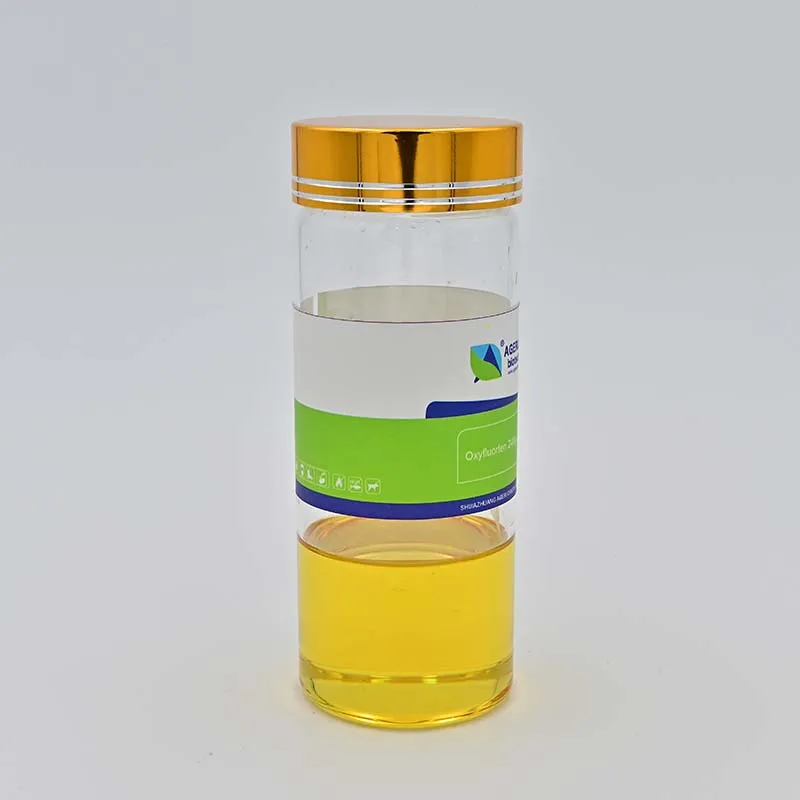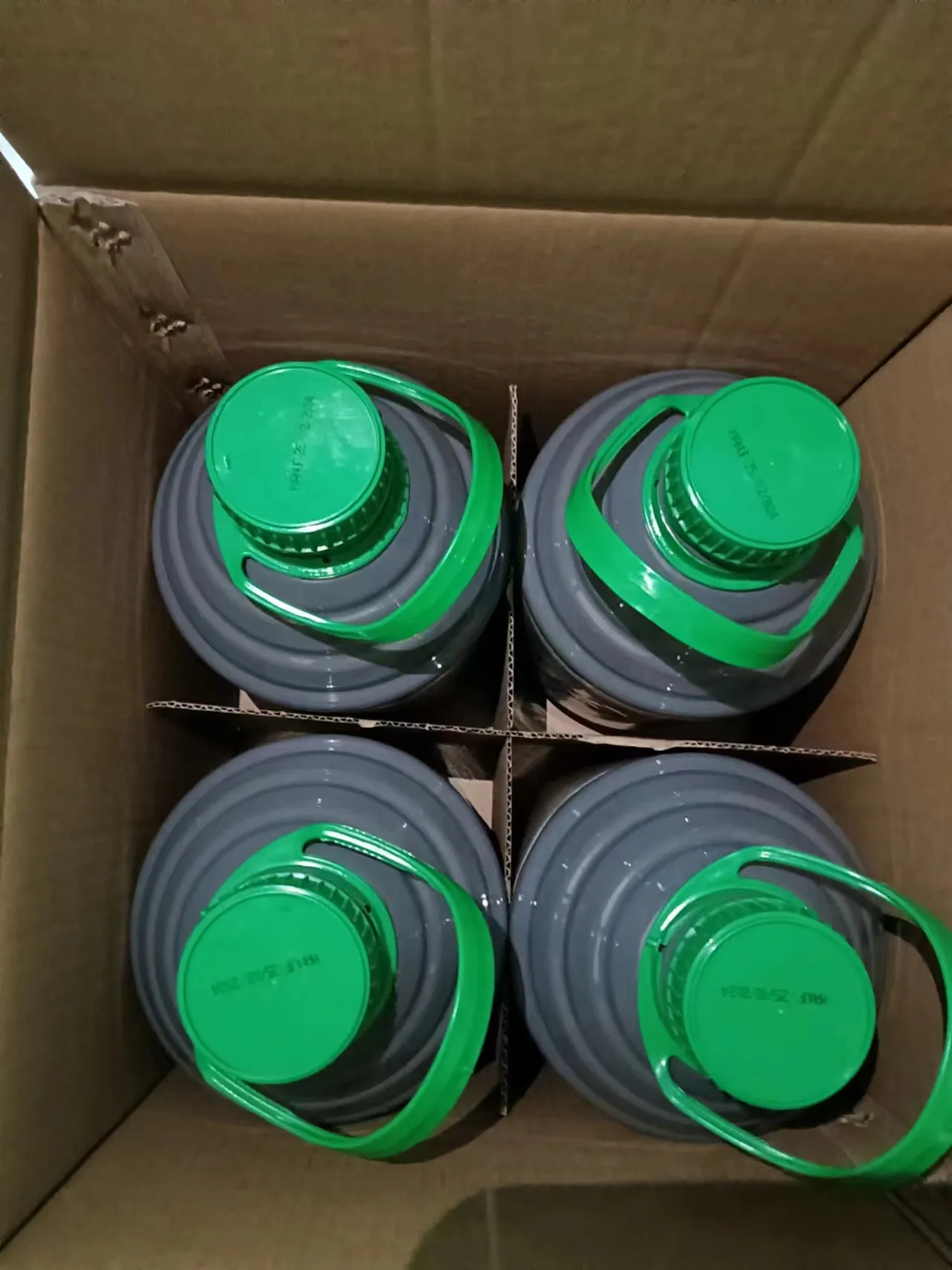
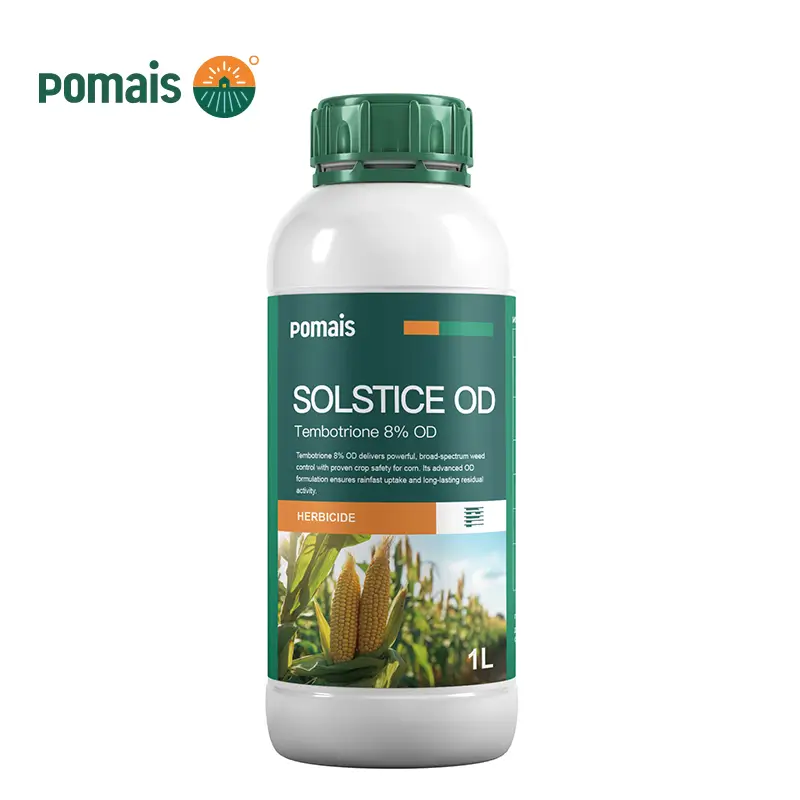
Tembotrione 8% OD Herbicide
Group 27 post-emergence weed control for corn
Deliver selective, post-emergence control in corn with tembotrione—an HPPD (Group 27) herbicide formulated as an 8% OD for consistent dispersion and uniform deposition on labeled broadleaf and grassy weeds. Built for distributor programs, it supports OEM/private label, multi-language packs, and export-ready documentation for registrations.
What you can expect
- Post-emergence fit for modern corn programs
- Broad weed spectrum where registered (broadleaf and grassy targets)
- 8% OD formulation optimized for stable sprayability and even coverage
- OEM labels, multi-language packaging, COA/MSDS/TDS support
- Designed for Professional Buyers & Bulk Orders
- We support custom packaging, labeling, and formulation to meet your market needs.
- Export wholesale inquiries only.
- Please include destination country, business type (importer/distributor/registrant), and expected volume.
- Retail requests will not be processed.

About Tembotrione 8% OD Herbicide
| Active ingredient | Tembotrione |
| CAS No. | 335104-84-2 |
| Chemical class / MoA | Triketone herbicide — Group 27 (HPPD inhibitor) |
| Formulation (this page) | 8% OD (Oil Dispersion) |
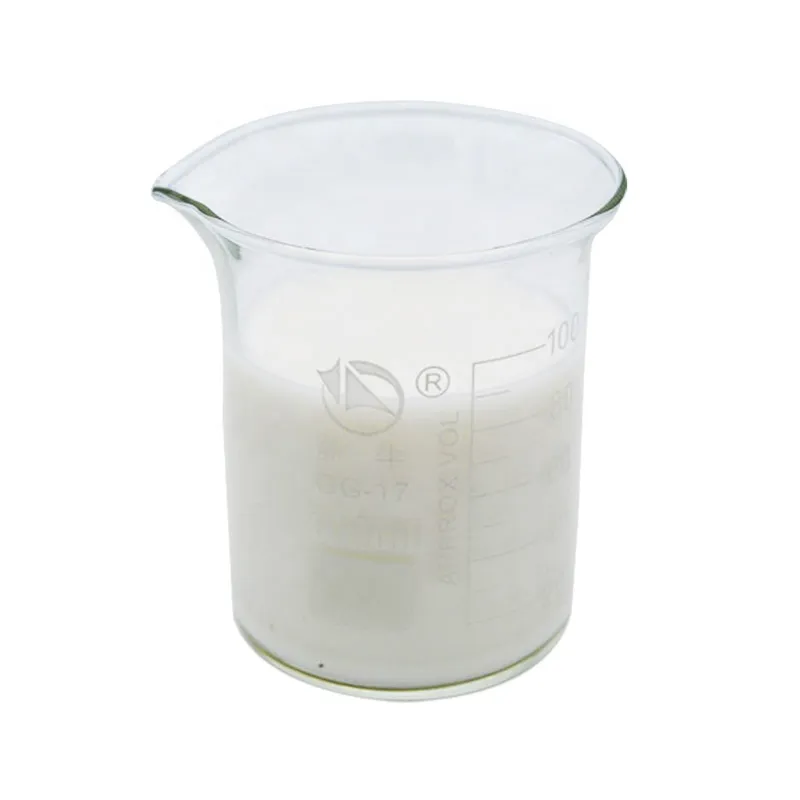
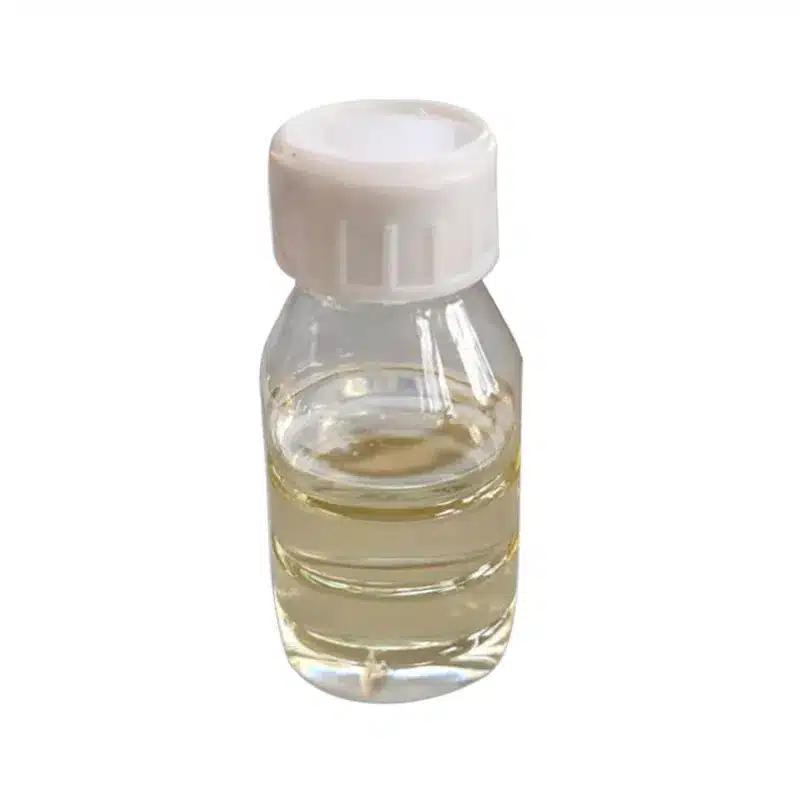
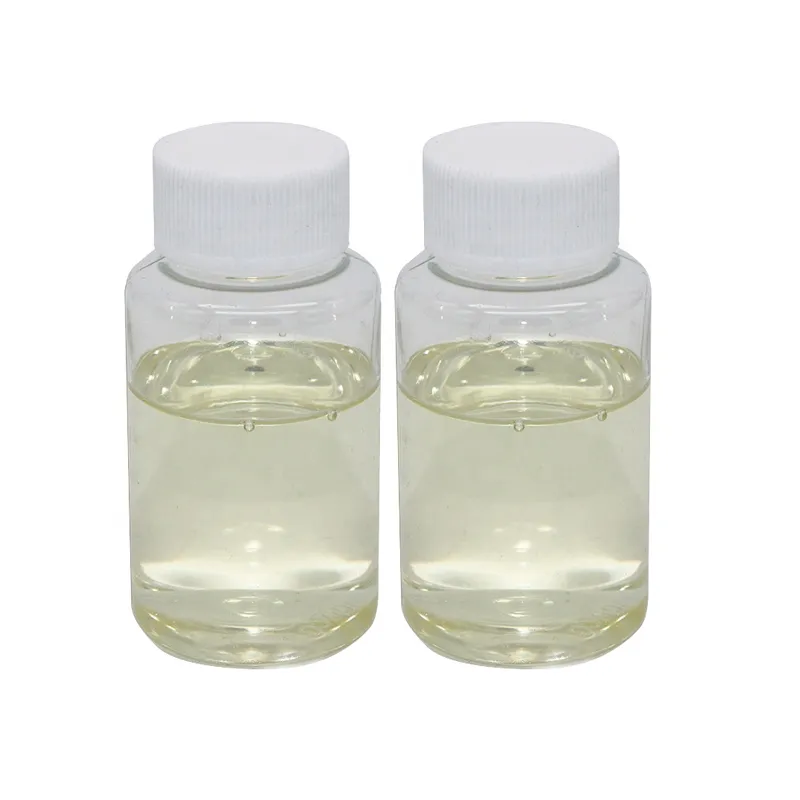
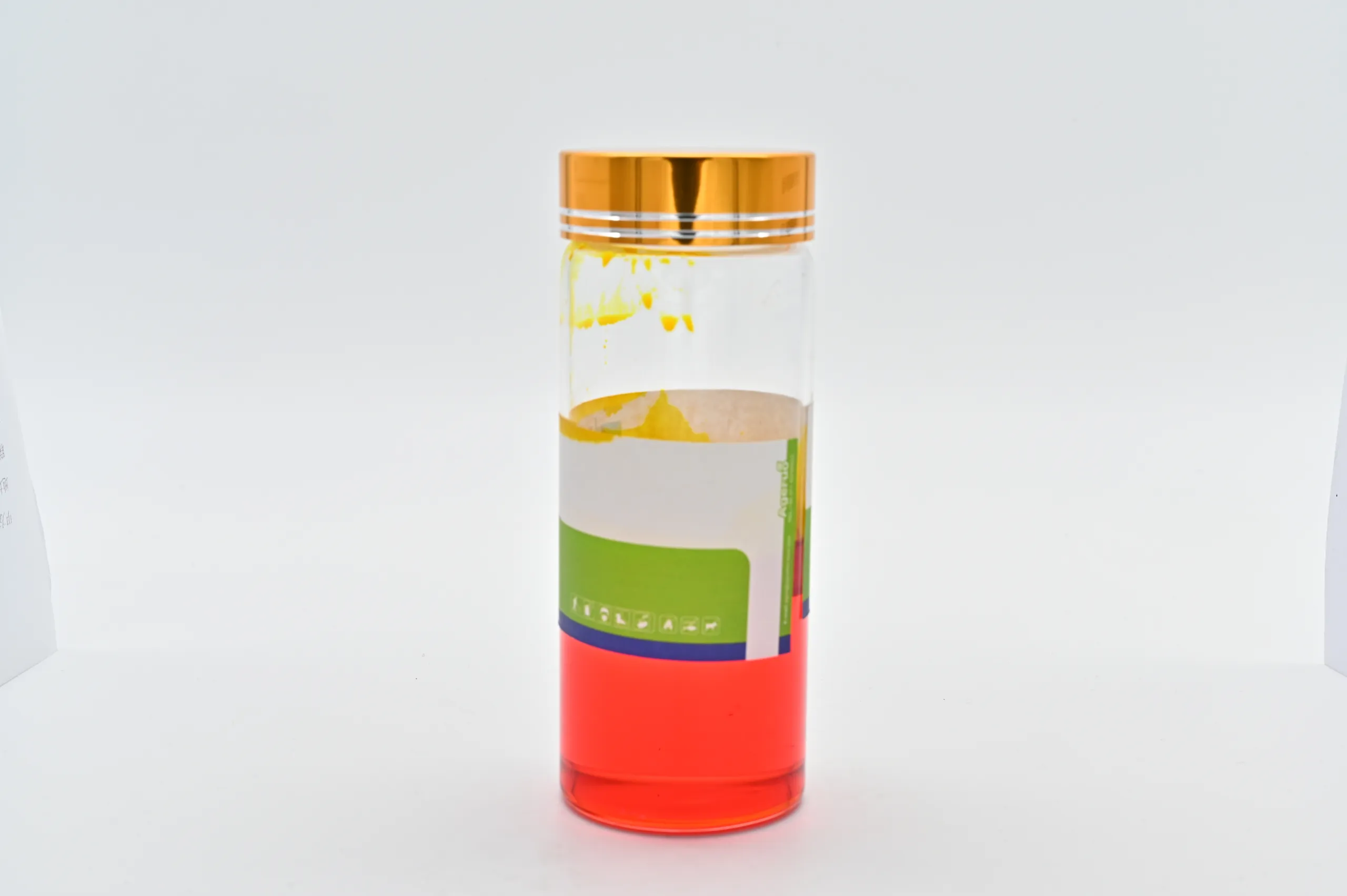
| Appearance | Homogeneous OD concentrate |
| Carrier system | Oil-based (non-aqueous) |
| Sprayability | Stable under normal agitation |
| pH (product) | n/a (non-aqueous OD) |
| Specific gravity / viscosity | Provided on COA |
| Storage | Cool, dry, ventilated; keep tightly closed; protect from freezing & direct sunlight |
| Packaging (examples) | 100 ml · 250 ml · 500 ml · 1 L · 5 L |
| Label languages (OEM) | EN / AR / FR / RU / ES |
| Quality control | HPLC assay; appearance; SG/viscosity checks; stability screening; fill-volume accuracy |
| Documentation | COA / MSDS / TDS; stability summary; registration support pack |
| Compliance | Use only where registered and strictly follow the approved label |
Mode of Action
Tembotrione is a selective, post-emergence triketone herbicide for corn programs. It belongs to Group 27 (HPPD inhibitors) and acts by inhibiting the 4-hydroxyphenylpyruvate dioxygenase (4-HPPD) enzyme, disrupting carotenoid biosynthesis. Without carotenoids to protect chlorophyll, susceptible weeds exhibit leaf bleaching followed by necrosis and death. In labeled uses, this mode of action provides reliable control across key broadleaf and grassy species in corn systems.
What the mode of action means for your program
- Visible, diagnostic symptoms: rapid chlorosis/bleaching on susceptible weeds supports faster scouting decisions.
- Selective fit in corn (per label): Group 27 chemistry is widely positioned for post-emergence grass and broadleaf control in corn solutions.
- Formulation alignment: an 8% OD (oil dispersion) is engineered for clean dispersion and stable deposition, supporting even coverage with ground rigs.
- Stewardship ready: clear MoA classification (Group 27) simplifies rotation planning with other groups to slow resistance evolution.
Use only in countries and on crops/sites where tembotrione products are registered. Always follow the registered product label and local regulations; labels supersede any general guidance.
Formulation Line-up
Primary SKU — 8% OD (Oil Dispersion).
Engineered for post-emergence corn programs, the 8% OD delivers uniform bleaching symptoms on susceptible weeds with clean dispersion and even deposition through standard ground rigs. Its oil-dispersion system is designed for stable suspension, consistent re-suspension after storage, and reliable leaf wetting when used according to the registered label.
How 8% OD fits real programs
- Coverage & film quality: builds a thin, even deposit on foliage to support the HPPD mode of action in labeled uses.
- Operational ease: fast re-suspension in the tank and predictable sprayability help service teams maintain throughput.
- Label-compliant flexibility: compatible with post-emergence timings in corn programs where registered.
Market references for context (not sold on this page)
- SC strengths in circulation: 34.4%–42% SC tembotrione products are widely marketed for post-emergence control in corn. In several markets, SC systems appear with a safener to widen the crop safety window.
- Safener practice: co-formulation with safeners such as isoxadifen-ethyl or pairing with cyprosulfamide is documented in branded offerings to enhance selectivity; availability varies by country and label.
OD vs. SC — quick comparison
| Attribute | 8% OD (this page) | SC (market reference) |
|---|---|---|
| Carrier | Oil dispersion | Aqueous suspension concentrate |
| Sprayability | Fast re-suspension; stable in tank with agitation | Disperses in water; stable in hard water (label dependent) |
| Deposit character | Tidy, uniform film supporting foliar activity | Clean deposits; low visible residue |
| Typical positioning | Post-emergence corn programs focusing on even coverage | Post-emergence corn; often offered in higher strengths, sometimes with a safener |
| Compliance note | Use only where registered and per label | Registration- and label-dependent by country |
Selection guidance
- Choose 8% OD when you want a clean, even foliar deposit and predictable handling for POST corn windows.
- Consider higher-strength SC alternatives (where registered) if your market favors concentrated inventory or safener-containing systems; verify local labels before selection.
Formulation availability, strengths, and any safener options are market- and registration-specific. Always use locally registered products and follow the approved label.
Target Weeds
Dial tembotrione 8% OD to the pressures that matter in post-em corn. The spectrum below reflects commonly listed targets for Group 27 HPPD inhibitors; always confirm country-specific registrations and labels before selection.
Broadleaf weeds (representative)
- Waterhemp (Amaranthus tuberculatus), pigweed species, ragweed, nightshade, velvetleaf, lambsquarters.
- Additional label-listed broadleaves may include morningglory and other regional species; verify local labels.
Grassy weeds (representative)
- Barnyardgrass, foxtail species, crabgrass, goosegrass, junglerice; johnsongrass and wild oats may be included where registered.
Use it smart
- Growth stage matters: POST applications perform best on small, actively growing weeds under suitable field conditions.
- Tough populations: Amaranthus species (e.g., waterhemp) can evolve resistance; plan rotations/mixtures with different MoA and use full stewardship (residuals, sanitation).
- Program fit: Where local labels allow, some markets position tembotrione for field, silage, seed, sweet and popcorn corn types in POST programs.
Actual control claims, weed lists, adjuvant requirements, and crop types vary by country and product registration. Labels and local regulations supersede general guidance.
Crops & Use Scenarios
Corn types where registered
Post-emergence programs commonly list field corn (including silage corn and seed corn), sweet corn, and popcorn. In some markets, labels also position tembotrione products for postharvest burndown in corn systems. Always confirm country-specific labels before selection.
Where an 8% OD fits
- POST windows in corn: Apply to small, actively growing weeds under suitable field conditions as allowed by the local label. The 8% OD design supports clean dispersion and uniform foliar deposition via standard ground rigs.
- Program environments: Row-crop corn fields and postharvest stubble/burndown where permitted. Use per label to minimize drift and runoff near sensitive areas.
- Adjuvant direction (label-dependent): Some labels for tembotrione products specify external adjuvants (e.g., MSO or other surfactants) and nitrogen sources for optimal activity; follow the registered product label in your market.
Outside the corn core (market-dependent)
Certain regional labels or distributor offerings reference additional crops such as sugarcane or bajra; availability varies by country and registration. Verify local approvals before planning.
Actual crop lists, application sites, adjuvant requirements, timing windows, and any aerial application provisions are entirely label- and country-specific. Labels and local regulations supersede all general guidance.
Application Guidance
Apply only where the product is registered and strictly follow the approved label. The points below align post-emergence corn programs while avoiding over-specification.
Program design
- Weed stage & crop stage: Target small, actively growing weeds within labeled POST windows for your corn type (field/silage/seed/sweet/popcorn).
- Field conditions: Treat under suitable temperatures, adequate soil moisture, and low wind. Avoid drought-stressed, chilled, or heat-stressed crops.
- Coverage: Aim for a thin, uniform foliar film. Use calibrated pressure and ground speed to maintain consistent spray patterns and minimize drift.
Adjuvants & carriers (label-dependent)
- Follow the registered product label for adjuvant direction. Some labels for tembotrione-based programs specify MSO/COC/NIS and may allow a nitrogen source (e.g., AMS/UAN) to optimize activity under tough conditions.
- Confirm local rules for water volume and droplet spectrum; do not exceed label limits.
Mixing & compatibility
- General order (principle): Part-fill tank with water → start agitation → add water conditioners (if used) → add dry formulations → add SC/OD → add EC → add adjuvant last → top up with water.
- Jar test: Check compatibility with tank-mix partners before full-scale mixing. Maintain agitation during application.
- Tank hygiene: Clean tanks/lines/nozzles after use; triple-rinse containers where allowed and dispose of rinsate per local regulations.
Application sites
- Row-crop corn fields: Uniform boom-spray coverage over labeled targets.
- Perimeter and stubble/burndown (where allowed): Respect buffer zones and avoid off-target movement to waterways and sensitive vegetation.
Stewardship & rotation
- Rotate modes of action: Alternate Group 27 with effective non-27 partners across the season to slow resistance in Amaranthus and other tough species.
- Don’t stack injury risks: Avoid overlapping HPPD residues/timings beyond label allowances.
- Integrate non-chemical controls: Residual partners, crop competition, sanitation, and prevention of seed return.
Re-entry, harvest & records
- Observe REI/PHI and any grazing/feeding restrictions on the label. Keep application logs (date, field, conditions, partners, lot numbers) for traceability.
Labels and local regulations supersede any general guidance. Requirements for adjuvants, nitrogen sources, spray volumes, intervals, and crop growth stages are country- and product-specific.
Selectivity & Safener
Tembotrione’s selectivity in corn comes from rapid metabolic detoxification in the crop. In many markets, safeners are included to further speed crop metabolism (e.g., induction of detox enzymes), widening the safety window under post-emergence timing. Common industry practice pairs tembotrione with isoxadifen-ethyl in branded SC products; other systems reference cyprosulfamide when tembotrione is combined with additional herbicide partners. Availability is country- and label-specific.
What this means for your program
- Crop safety by design: Safeners like isoxadifen-ethyl are co-formulated in well-known labels to enhance corn tolerance under POST use. When present, they help the crop recover faster while the weeds bleach out.
- Combination systems: In some markets, tembotrione is paired with other actives (e.g., thiencarbazone-methyl) and a safener (commonly isoxadifen-ethyl; cyprosulfamide is also documented as a safener in related HPPD programs). Always verify the exact actives and safener on the local label.
- Hybrid variability & stress: Sweet-corn and specific hybrids may differ in tolerance; crop or weather stress can raise injury risk. Follow label growth-stage limits, adjuvant rules, and environmental precautions.
Operational guardrails
- Check whether your market’s registered product includes a safener; if not, apply extra care to label growth-stage windows and adjuvant instructions.
- Avoid stacking HPPD timings beyond label allowances; rotate with effective non-Group 27 partners to reduce selection pressure.
Safener type, presence, and rates are label-defined. Always use the locally registered product and follow the approved label; labels supersede general guidance.
Resistance Management (Group 27 stewardship)
Build programs that make it hard for weeds to adapt—and easy for you to keep fields clean season after season.
Core principles
- Use multiple effective sites of action. In POST corn, don’t rely on a single Group 27 application. Pair and rotate with non-27 partners that are effective on your problem species (per label).
- Overlap residuals. Start clean, apply robust PRE residuals, and layer POST residual activity so new cohorts don’t emerge into a bare window.
- Hit weeds small. Target actively growing seedlings; late, stressed, or oversized weeds increase failure risk and select for resistance.
- Rotate within and across years. Diversify chemistry over time (PRE/POST and year-to-year) rather than repeating the same mode of action.
- Integrate non-chemical tactics. Tighten crop competition, sanitize equipment, manage borders, and prevent seed return at and after harvest.
- Avoid “cosmetic” mixtures. Tank mixes only count if each partner contributes control at a label-effective dose against the same weeds.
- Mind the label guardrails. Respect adjuvant rules, growth-stage limits, and any restrictions on sequential HPPD use to reduce injury risk and selection pressure.
Why this matters
- Documented resistance exists. Weeds like waterhemp and Palmer amaranth have evolved resistance to Group 27 HPPD inhibitors in parts of North America.
- Stacked resistance is rising. Many populations already carry resistance to multiple sites of action; diversified programs protect long-term performance.
- Records protect decisions. Keep detailed logs (field, date, weather, partners, lot numbers) to audit outcomes and refine rotations.
Follow the registered product label and local regulations. Crop tolerance, adjuvants, tank-mix partners, and spray windows are country- and label-specific.
Packaging & OEM / Private Label
- Pack sizes (liquids): 100 ml, 250 ml, 500 ml, 1 L, 5 L;bulk 20 L / 200 L;IBC on request
- Closures & seals: induction/foil liner, tamper-evident cap; child-resistant option where required
- Artwork workflow: dielines → artwork upload → color-match proof → print → mass production
- Label languages: EN / AR / FR / RU / ES(other languages on request)
- Traceability: GS1 barcode, QR batch code, production date & lot ID on label/carton
- Outer packs & pallets: export cartons, shrink-wrap, corner guards; destination-specific pallet plans
- Lead time & MOQ: typical 20–30 days after artwork approval & deposit;MOQ aligned to pack size & market rules
- What to specify in RFQ: target country/registration status, pack size, label language, desired ship window, annual volume range
Quality & Certificates
- Raw-material gatekeeping: assay & identity checks on technical grade before batching
- In-process controls: automated dosing/mixing with deviation alarms; retained in-process samples
- Finished goods tests: HPLC assay, appearance, viscosity/SG(OD),stability screen,fill-volume accuracy
- Packaging validation: drop test & 24 h inversion leak test for liquid SKUs
- Traceability: batch COA with retain samples and lot-to-document linkage
- Certificates & dossiers: ISO/SGS support;COA / MSDS / TDS;stability summary;registration support pack on request
Market Fit by Region
- Middle East & North Africa(MENA): heat-resilient logistics planning;Arabic/French labels;POST corn programs with label-listed adjuvant rules;door-to-door options where available
- Central Asia: Russian/English labels;customs-fit documents;seasonal shipping windows & cold-chain avoidance for OD products
- Sub-Saharan Africa: corn-led portfolios;ruggedized packaging;distributor training materials(POST windows, rotation, stewardship)
- South America: strong corn demand;Spanish/Portuguese labels;import-compliant cartons & pallets;registration dossier coordination
- Reminder: crop lists, adjuvant rules, application sites, and aerial provisions are country- and label-specific
FAQ
Q1. Can you supply private-label packs with multi-language artwork?
Yes. Provide your target market, label language, pack size, and brand assets; we return dielines and proofs before mass production.
Q2. Do I need an adjuvant with tembotrione 8% OD?
Adjuvant direction is label-dependent. Follow the registered product label for MSO/COC/NIS and any nitrogen source rules.
Q3. How should I manage resistance with Group 27 products?
Rotate with effective non-27 partners, overlap residuals, and target small weeds. Integrate cultural controls and prevent seed return.
Q4. What documents are included for registrations?
COA, MSDS, TDS, stability summary, and batch traceability. Additional dossier items can be prepared per market.
Q5. What are the typical lead time and MOQ?
Standard lead time is 20–30 days after artwork approval & deposit; MOQ depends on pack size and destination requirements.
Get a Quote — share your target country, pack size, label language, annual volume, and preferred ship window.
Request Spec Pack — receive COA/MSDS/TDS, a stability summary, and sample label templates for review.
Contact us!
We will reply to you within 24 hours on business days!