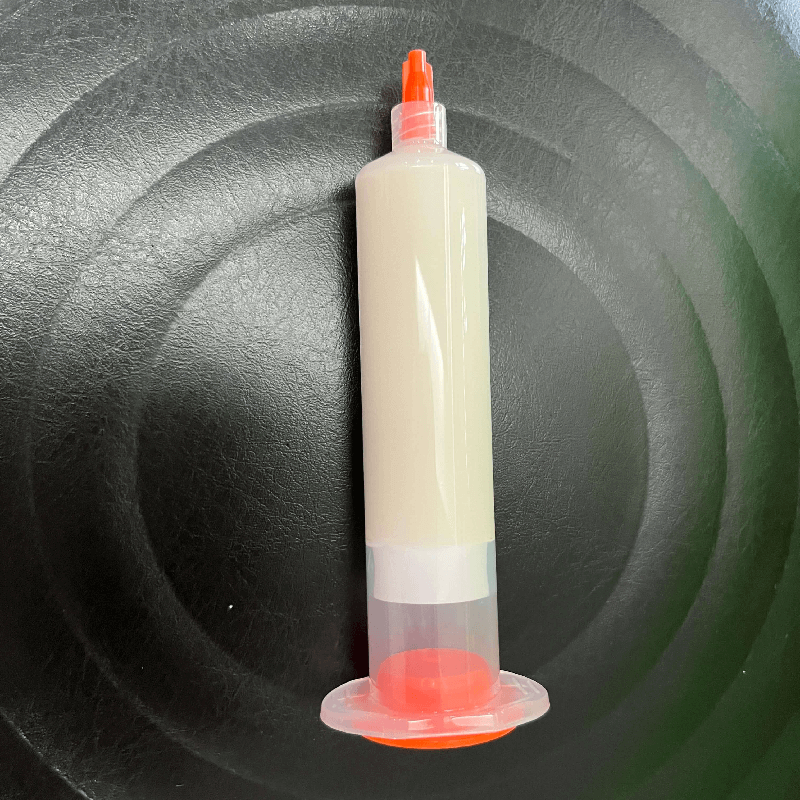
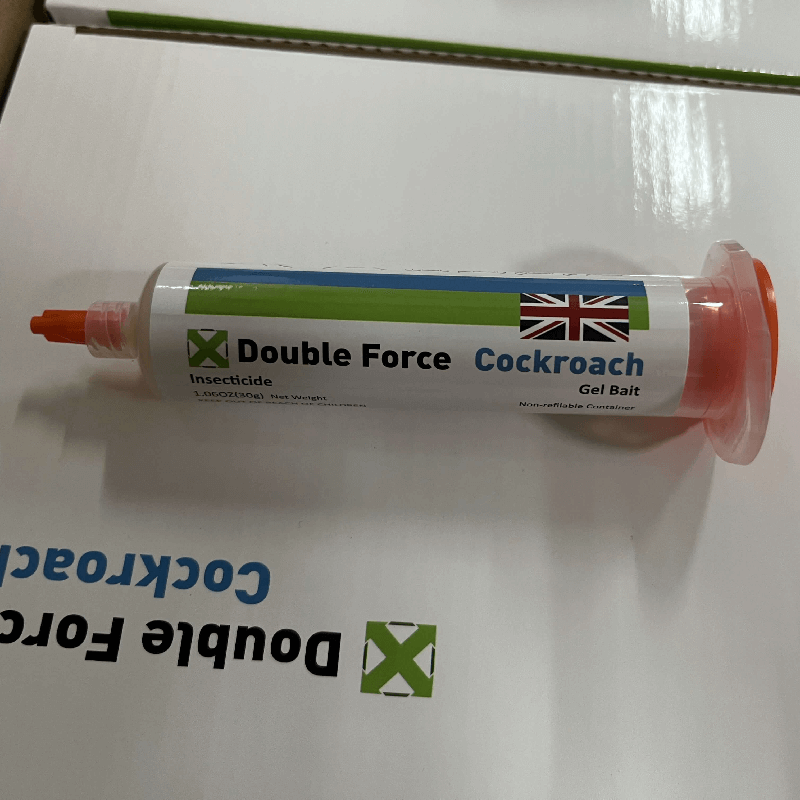
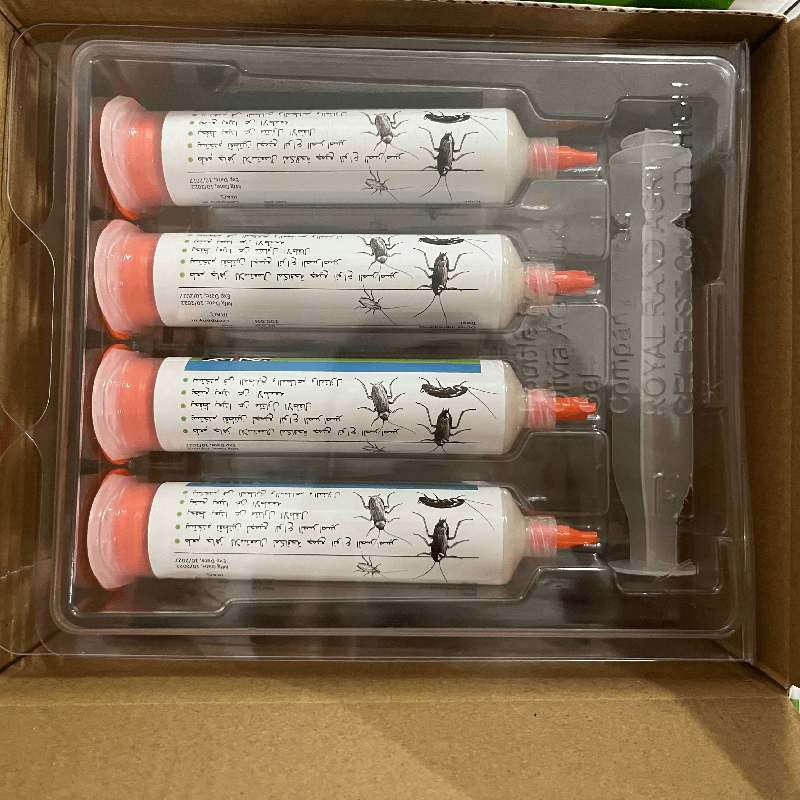
Imidacloprid 2% Bait Insecticide
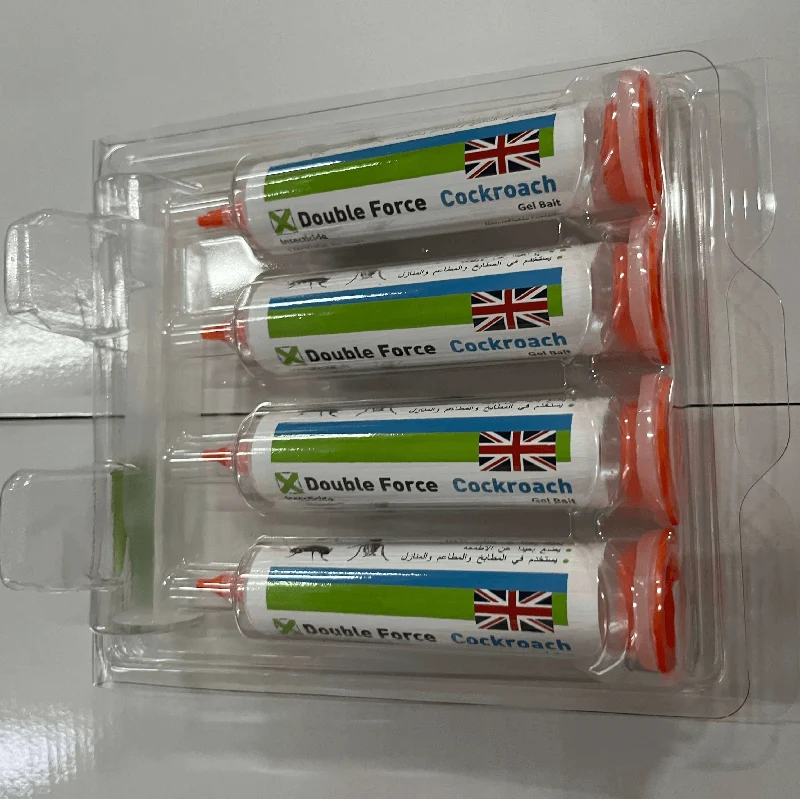
A non-repellent imidacloprid 2% bait designed for cockroach and household ant control on indoor, non-food-contact surfaces. The palatable matrix encourages active feeding and transfer, enabling colony-level impact while maintaining a low-odor, low-visibility profile. Fits IRAC 4A (nAChR agonist) programs and IPM workflows. OEM labels and full documents (COA/MSDS/TDS) available. Always follow the product label and local regulations.
- Designed for Professional Buyers & Bulk Orders
- We support custom packaging, labeling, and formulation to meet your market needs.
- Export wholesale inquiries only.
- Please include destination country, business type (importer/distributor/registrant), and expected volume.
- Retail requests will not be processed.

About Imidacloprid 2% Bait Insecticide
| Active / Content | Imidacloprid 2% |
| Formulation | Bait (non-repellent, moisture-stable, low-odor) |
| IRAC / MOA | 4A — nAChR agonist (nicotinic acetylcholine receptor) |
| Primary Use | Cockroaches and household ants via feeding and transfer |
| Placement Sites | Indoor, non-food-contact surfaces; cracks/crevices; discreet stations (per label) |
| Program Fit | Core layer in IPM with inspection, sanitation, and exclusion |
| Documentation | COA / MSDS (SDS) / TDS supplied with each batch |
| OEM Options | Private label, multilingual artwork, barcoding/QR, tamper-evident |
| Packs | Bulk & retail configurations; station/bait delivery options on request |
| Lead Time / MOQ | Confirmed at quotation; forecast-based scheduling |
Imidacloprid 2% Bait Insecticide
What you get
An imidacloprid 2% non-repellent bait built on a palatable, moisture-stable matrix that promotes active feeding and transfer within colonies. You gain low-odor, low-visibility performance for occupied sites, with reliable uptake on indoor, non-food-contact surfaces.
Where it fits
Use it as the primary control layer in IPM programs for cockroaches and household ants, supported by inspection, sanitation, and exclusion. The non-repellent profile helps maintain feeding lanes, enabling trophallaxis/relay effects that reach hidden nests. Align all use with local registration and the product label.
Why it matters
- Colony-level impact through transfer; not just knockdown at the point of baiting.
- High acceptance via a balanced carb/protein/oil matrix designed for sustained palatability.
- Low disruption to operations: minimal odor, clean placement, and discrete presentation.
- Procurement-ready: OEM labels, multilingual artwork, and full documentation (COA/MSDS/TDS) available.
Mode of Action & Program Fit (IRAC 4A)
How it works
Imidacloprid is an IRAC 4A, nicotinic acetylcholine receptor (nAChR) agonist. After ingestion, it overstimulates insect nerve synapses, leading to incoordination, paralysis, and death. Because this bait is non-repellent, foraging cockroaches and household ants continue feeding and carry the bait back to harborages. The delayed toxicity window is intentional: it preserves feeding and promotes trophallaxis/transfer, extending impact beyond the individuals that first contact the bait. On treated routes, you typically see a progressive decline rather than a sharp but short-lived knockdown.
Why the delay helps you
- Transfer effect: fed workers contaminate nestmates and brood via trophallaxis and grooming, enabling colony-level suppression.
- Lane stability: absence of repellency keeps foraging trails open, improving total bait intake over several hours.
- Operational fit: low odor and discreet placements reduce complaints in occupied sites while control builds.
Program fit (IPM-first approach)
- Pair with inspection, sanitation, and exclusion to remove water/food competitors and seal entry points; cleaner environments raise bait acceptance.
- Do not spray repellent/contact insecticides over or near placements; they reduce feeding and break transfer. If sprays are essential, schedule them away from bait zones and in a separate service window per label.
- Rotate or combine (subject to local label) with non-4A tools—e.g., IGR modules for population age structures— to slow resistance selection.
- Use monitoring points (traps, visual checks) before and after service to confirm trend lines and set re-service triggers that match the site’s risk profile.
Target Pests
Scope (label-dependent)
This imidacloprid 2% non-repellent bait targets cockroaches and household ants on indoor, non-food-contact surfaces. Real-world results depend on sanitation, competing food sources, and species behavior. Always confirm local registration and follow the product label.
- Cockroaches: German, American, Brown-banded, Oriental (nymphs & adults).
- Household ants: Pharaoh, Argentine, Odorous house, Little black, Pavement, Ghost (workers & brood via transfer).
- Other label-listed nuisances: Occasional indoor invaders where permitted.
Program notes
Non-repellent baits work best when you remove competing foods, reduce moisture, and minimize disturbance around placements so trails remain active and bait intake stays high.
Always follow the product label and local regulations.
Use Areas
Intended sites (where registered)
Professional treatments on indoor, non-food-contact surfaces in hotels, offices, retail, schools (unoccupied treatment windows), warehouses, equipment/utility rooms, stairwells, corridors, and other label-specified locations. Suitable for cracks/crevices, void access points, baseboards, conduit/pipe penetrations, appliance recesses, and discreet bait stations.
Restrictions & good practice
- Do not place on food-contact surfaces or in active food processing zones unless the label explicitly permits with special procedures.
- Keep bait away from cleaning chemicals, heat, and direct water flow; avoid areas that are frequently wet-cleaned.
- Do not spray contact insecticides over or near bait placements; this reduces feeding and breaks the transfer effect.
- Maintain treatment records (locations, dates, consumption observations) to guide follow-ups and audits.
Application (Label-Guided)
Placement strategy
Use small, discreet placements (dots, short beads, or bait stations) on indoor, non-food-contact surfaces exactly as the product label prescribes. Target harborages and transit routes: cracks/crevices, baseboards, void access points, pipe/conduit penetrations, appliance recesses, and shadowed corners. Keep placements accessible to foragers but protected from routine wet cleaning and foot traffic. Where allowed, increase placement density in high-pressure zones and reduce during maintenance.
Do not break the transfer effect
Avoid spraying repellent/contact insecticides over or near bait placements; this reduces feeding and interrupts trophallaxis. If a residual spray is necessary, schedule it away from bait zones and in a separate service window, following label guidance.
Service rhythm & verification
- Start with inspection + monitoring (traps/visual) to map pressure and set re-service triggers.
- During follow-ups, document consumption, replace depleted/dessicated placements, and adjust density to new pressure maps.
- Align with housekeeping so cleaning does not immediately remove bait; reposition if traffic patterns change.
- Log sites, dates, lots, and outcomes for audits and continuous improvement.
Always follow the product label and local regulations.
Formulation Advantages — Bait Matrix
Engineered for acceptance
A balanced carb/protein/oil matrix with humectant support promotes sustained palatability and active feeding under typical indoor conditions. The non-repellent profile keeps foraging lanes open, improving total intake and colony-level impact.
Indoors-friendly handling
The bait is low-odor and low-visibility, designed for clean, precise placement with minimal smearing. Controlled rheology supports bead integrity on vertical and overhead surfaces, while the matrix is formulated to resist premature drying so placements remain attractive between services.
Program compatibility
Integrates smoothly with IPM—inspection, sanitation, exclusion, and monitoring. Where the label allows, pair with IGR modules to target brood and disrupt population rebuild. Always spot-test on inconspicuous areas and keep bait away from cleaning agents and heat sources.
Stability & QC
What we validate
Each batch is released on HPLC identity/assay and checked for rheology, pH, homogeneity, and water activity (a₍w₎) to protect palatability and shelf integrity. We perform cold/heat storage holds to assess matrix stability and monitor dry-out resistance, smear/adhesion on typical indoor, non-food-contact substrates, and appearance/odor consistency. Retained samples and traceable batch IDs support audits and market complaints handling.
Storage & handling
Store in the original, tightly closed container under normal warehouse conditions, away from direct heat, sunlight, and oxidizing agents. Prevent freezing or excessive heat that could alter matrix texture. Follow the label and SDS for shelf-life guidance and spill procedures. Operate FIFO rotation and record receiving dates and lot numbers to maintain compliance readiness.
Always follow the product label and local regulations.
Safety & Stewardship
Worker protection & site readiness
Follow label-required PPE and ventilation. Plan treatments for non-occupied windows in sensitive premises; post temporary signage where required. Keep baits out of reach of children and pets; use discreet stations where the label permits and risk assessments suggest.
Good practice & restrictions
Apply only to indoor, non-food-contact surfaces and other label-listed sites. Do not place bait on food-contact surfaces. Prevent contamination from cleaners or insecticidal sprays that discourage feeding. Dispose of empties and residues per local rules (e.g., triple-rinse, puncture, and approved collection).
Program stewardship
Combine with inspection, sanitation, and exclusion; align with non-4A rotation partners/IGR modules where the label allows to slow resistance. Keep service records (placement maps, consumption notes, outcomes) to guide re-service and support audits.
Always follow the product label and local regulations.
OEM & Packaging
Brand execution
Private-label OEM with multilingual artwork, barcoding/QR, and tamper-evident options. Label layouts match local regulatory conventions (signal words, hazard/precaution phrases) and your brand style.
Pack formats
- Syringes/tubes for precise dot or bead placement (typical 10–35 g formats).
- Bait stations or cartridge systems (where permitted) for higher-traffic or sensitive sites.
- Bulk and retail multipacks with ship-ready outer cartons and cartonization notes.
Documentation & logistics
Every lot ships with COA/MSDS (SDS)/TDS and a batch-level QC summary. We confirm lead-time windows/MOQ at quotation and coordinate production slots for seasonal demand. Pallet patterns available on request to optimize container loading.
Always follow the product label and local regulations.
Field Use Scenarios
Hospitality & residential blocks
Discreet placements in cracks/crevices and stations near harborage routes help reduce complaints while housekeeping continues normal schedules (avoid immediate wet cleaning of baited zones).
Offices & retail
Low-odor, low-visibility dots along baseboards, conduit entries, and utility closets maintain control with minimal disruption to staff and customers.
Warehouses & back-of-house areas
Target wall-floor junctions, pallet lanes, and equipment rooms. Coordinating with sanitation and exclusion (door sweeps, sealing penetrations) improves acceptance and accelerates trend reduction.
Always follow the product label and local regulations.
FAQ
Why Choose POMAIS
Bait-matrix engineering
Palatability and moisture stability validated by HPLC release, matrix performance checks, and controlled storage holds.
Compliance & documentation
GHS-aligned labeling plus COA/MSDS/TDS for each lot; audit-ready records and technical summaries for registrations where appropriate.
OEM & speed to market
Fast private-label activation, multilingual artwork, barcoding/QR, tamper-evident packaging, and predictable lead-time windows.
Operational pragmatism
Clear guidance on placement strategy, sanitation alignment, and rotation planning, designed for real-world service constraints.
Partner with POMAIS Today
Request your spec sheet, label templates, samples, and a confirmed MOQ/lead-time window. Share target sites, pest pressure, and preferred pack formats—we will align formulation, labeling, and logistics to your rollout plan.