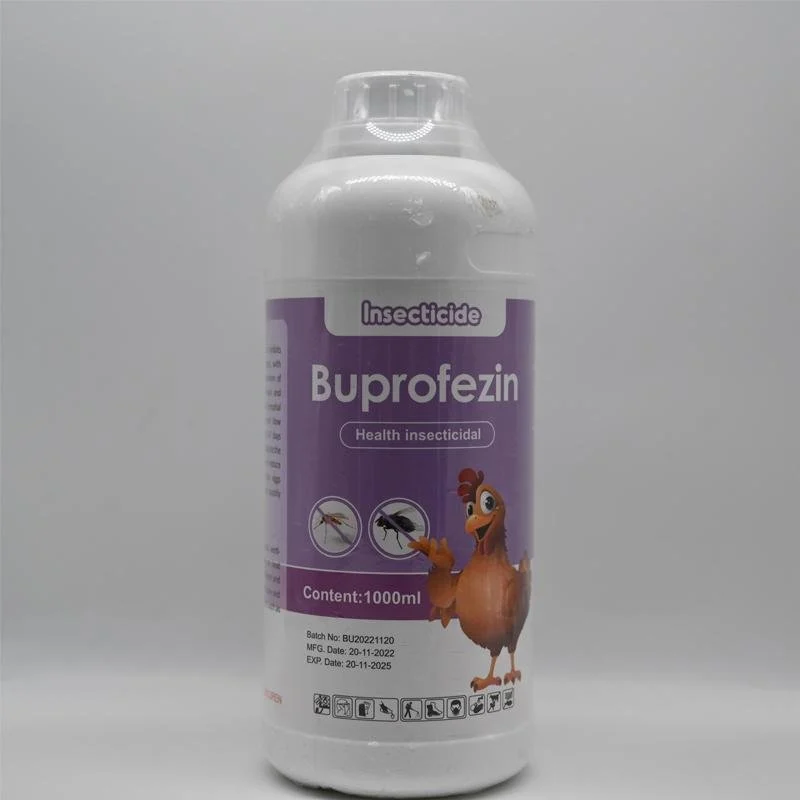
Buprofezin 25% SC | Public Health Pest Control
Insect Growth Regulator
Buprofezin 25% SC is a suspension concentrate insecticide specifically formulated for controlling juvenile stages of sanitation-related insects such as mosquitoes, houseflies, and gnats. As a potent insect growth regulator (IGR), it interferes with chitin synthesis and hormonal regulation during the molting process, effectively halting the development of larvae and nymphs.
This formulation is optimized for public health applications where population suppression of vector or nuisance insects is critical. It provides targeted control in urban, peri-urban, and semi-rural environments, making it suitable for use by municipal health departments, pest control operators, and institutional sanitation programs.
While buprofezin is also used in agriculture to manage sap-sucking insects such as whiteflies and leafhoppers, its application in urban sanitation is increasingly recognized for its long residual efficacy, low toxicity to mammals, and compatibility with integrated vector management (IVM) strategies.
- Designed for Professional Buyers & Bulk Orders
- We support custom packaging, labeling, and formulation to meet your market needs.
- Export wholesale inquiries only.
- Please include destination country, business type (importer/distributor/registrant), and expected volume.
- Retail requests will not be processed.

About Buprofezin 25% SC | Public Health Pest Control
| Parameter | Details |
|---|---|
| Product Name | Buprofezin 25% SC |
| Active Ingredient | Buprofezin, 250 g/L |
| Formulation Type | Suspension Concentrate (SC) |
| Chemical Class | Thiadiazinone insecticide (IGR) |
| CAS Number | 69327-76-0 |
| Molecular Formula | C16H23N3O4S |
| Appearance | Off-white to light beige liquid |
| Primary Use | Public health pest control – larvicidal |
| Brand | POMAIS (OEM/ODM available) |
| Shelf Life | 2 years under standard storage conditions |
Mode of Action: Chitin Synthesis and Hormonal Disruption in Insect Immature Stages
Buprofezin 25% SC functions by inhibiting chitin biosynthesis and disrupting hormonal balance in immature insects, preventing successful molting and leading to death before reaching adulthood. As a non-neurotoxic insect growth regulator, it provides a highly targeted and environmentally safer solution for sanitation insect control.
Technical Mechanism
- Primary Action: Inhibits chitin synthesis, essential for insect cuticle (exoskeleton) formation
- Secondary Action: Disrupts juvenile hormone regulation, interfering with development from larva/nymph to adult
- Target Life Stages: Eggs, larvae, nymphs (no adulticidal effect)
- Insect Groups Controlled: Dipterans and other holometabolous insects, including mosquito larvae, house fly maggots, midges, and gnats
Insecticide Classification
- Mode of Action Category: Group 16 (IRAC) – Insect growth regulators (IGRs)
- Mode Type: Contact and ingestion (acts when larvae feed or absorb through cuticle)
- Systemicity: Non-systemic; acts locally at site of application without translocation
Unlike knockdown adulticides that act immediately but often require repeated application, buprofezin delivers sustainable population control by cutting off the reproductive cycle, especially in mosquito-infested stagnant water, manure pits, and organic-rich drains.
This larvicidal specificity supports public health pest control campaigns seeking safer alternatives to conventional neurotoxic insecticides, and is ideal for resistance management programs in urban sanitation.
Application Scenarios and Target Pests: Larval Suppression in Urban and Sanitary Environments
Buprofezin 25% SC is designed for targeted larval control in public health settings where insect-borne diseases and sanitary nuisances originate from organic waste and stagnant water. Its mode of action makes it especially suited for environments with recurring infestations from dipteran insects such as mosquitoes and house flies.
Primary Use Environments
| Application Site | Typical Pest Targets | Function |
|---|---|---|
| Sewage systems, catch basins, drainage lines | Culex spp., Aedes spp., Anopheles spp. (mosquito larvae) | Break mosquito life cycle, reduce vector density |
| Animal housing, poultry sheds, manure pits | Musca domestica (house fly maggots), gnats, midges | Control larval development, reduce fly emergence |
| Composting facilities, organic waste areas | Fungus gnats, drain flies | Minimize population buildup from decaying material |
| Irrigation ditches, stagnant water tanks | Aquatic dipteran larvae | Safe for sensitive aquatic margins, indirect control of adult biting insects |
| Urban waste management zones | Multiple sanitation insects | Prevent public nuisance and breeding in high-risk areas |
Secondary or Extended Applications
- Not recommended for adult mosquito or fly control, but serves as a core tool in integrated vector management (IVM) when combined with adulticides or environmental sanitation measures.
- May be used in agriculture for controlling whiteflies and leafhoppers, but in this product format (25% SC), the priority use is public hygiene pest control.
By focusing on the immature stages of common sanitary pests, Buprofezin 25% SC offers a proactive approach to infestation prevention, reducing the need for frequent adulticide spraying and supporting long-term control strategies in urban infrastructure and waste-sensitive zones.
Usage Instructions and Recommended Dosage: Practical Guidelines for Public Health Pest Control
Buprofezin 25% SC should be applied directly to insect breeding grounds where the presence of larvae or nymphs is confirmed. This includes moist, organic-rich environments and stagnant water sources typical in urban and peri-urban areas. The suspension concentrate formulation allows for easy dilution and uniform surface coverage.
Recommended Application Rates
| Target Area | Dosage | Application Frequency | Notes |
|---|---|---|---|
| Mosquito breeding sites (clean or slightly polluted water) | 0.2–0.3 mL/m² | Every 3–4 weeks | Apply evenly on water surface; avoid flushing |
| Organic-rich drains, septic systems | 0.3–0.4 mL/m² | Every 2–3 weeks | Increase dosage for high organic load |
| Manure piles, compost areas | 30 mL in 10 L water per 100 m² | As needed | Spray directly on moist, insect-active surfaces |
| Livestock facilities (indoors/outdoors) | 25–35 mL per 100 m² | Every 2–4 weeks | Ensure contact with maggot-infested zones |
Application Method
- Dilution: Mix with clean water according to recommended rates.
- Application Tools: Use knapsack sprayers, ULV foggers, or automated spray systems for larger sites.
- Timing: Apply during low light hours (morning/evening) to reduce evaporation and enhance contact with larvae.
- Surface Coverage: Ensure uniform application over potential breeding surfaces to maximize larval exposure.
Key Safety Notes
- Do not use in potable water supplies.
- Do not apply to areas with strong water flow that could carry the product into unintended environments.
- Repeat applications may be necessary depending on rainfall, breeding intensity, and sanitation efforts.
Proper use of Buprofezin 25% SC ensures consistent suppression of sanitary pests at their origin, reducing the need for reactive adulticide spraying and contributing to long-term vector reduction strategies.
Product Advantages and Technical Highlights: Targeted Larval Control with Long-Lasting Impact
Buprofezin 25% SC offers a unique mode of action and environmental safety profile that make it an ideal choice for modern vector control programs, particularly in urban sanitation and public health sectors where long-term pest reduction is required without increasing chemical burden.
Key Advantages
- Selective Action Against Immature Insects
Acts only on larvae and nymphs, preserving beneficial insects and non-target species, including pollinators and aquatic vertebrates when used correctly. - Low Toxicity to Humans and Animals
Classified as low-risk under WHO and EPA guidelines. Safe for use around residential areas, animal facilities, and public infrastructure when label instructions are followed. - Long Residual Effect
Depending on environmental conditions, a single application can remain effective for up to 3–4 weeks, reducing the frequency and labor required for re-treatment. - No Cross-Resistance with Common Adulticides
As a non-neurotoxic IGR, buprofezin complements chemical classes like pyrethroids, organophosphates, or carbamates, making it suitable for resistance management in integrated vector control programs. - Environmentally Compatible
Non-volatile, non-persistent, and biodegradable under normal conditions. It is not prone to leaching or long-term accumulation in soil or aquatic systems. - Versatile Application Across Sanitary Zones
Equally effective in organic-rich drains, livestock areas, waste sites, and aquatic breeding habitats, offering high flexibility in operational campaigns.
By focusing on the root of insect reproduction—larval development—Buprofezin 25% SC delivers sustainable, long-term pest suppression, essential for reducing public health risks without the ecological downsides of broad-spectrum insecticides.
OEM/ODM and Packaging Services: Flexible Support for Global Distribution and Brand Customization
At POMAIS, we specialize in providing full-service OEM and ODM solutions for Buprofezin 25% SC, ensuring that our partners can confidently deliver effective vector control products tailored to their local markets and regulatory needs.
Whether you’re building a private label brand or responding to a government procurement tender, we offer end-to-end customization to meet your exact specifications.
Customization Services
- Label and Logo Customization: Multilingual labels, custom branding, and country-specific compliance labeling available.
- Regulatory Documentation: Includes COA, SDS, MSDS, TDS, and dossier files for local product registration.
- Anti-Counterfeiting Options: Barcode, QR code, holographic seal, or batch traceability upon request.
Packaging Formats Available
| Packaging Type | Volume Options |
|---|---|
| HDPE Bottles | 100 mL, 250 mL, 500 mL, 1 L |
| Plastic Jerry Cans | 5 L, 10 L, 20 L |
| Bulk Packaging | 200 L drum or 1000 L IBC (for central tender or refilling) |
| Custom Label Languages | English, French, Arabic, Spanish, Russian, etc. |
Export and Logistics Support
- Global shipping with compliance to IMDG, ADR, and local hazardous goods transport laws
- Stable supply capacity for long-term government programs or seasonal peak demand
- Door-to-door delivery available for many destinations in Africa, the Middle East, South America, and Southeast Asia
With scalable packaging solutions and full customization support, we help you expand market presence while maintaining local compliance and brand consistency.
Safety and Environmental Information: Low-Toxicity Vector Control with Environmental Compatibility
Buprofezin 25% SC is classified as a low-toxicity insecticide with minimal risk to humans, mammals, and aquatic life when used according to the label. Its selective mode of action—targeting only immature insect stages—reduces unintended ecological impact while enabling safe and repeated use in urban public health environments.
Toxicological Profile
| Subject | Toxicity Classification | Remarks |
|---|---|---|
| Humans | Low (Oral LD50 > 5,000 mg/kg in rats) | No known neurotoxicity or carcinogenicity |
| Livestock & Pets | Non-hazardous when kept away from concentrate | Avoid direct contact or ingestion |
| Aquatic Organisms | Low to moderate toxicity | Avoid application near flowing or uncontained water bodies |
| Bees and Beneficial Insects | Not harmful | Safe for pollinators due to non-contact action |
| Birds | Practically non-toxic | No accumulation or bio-concentration observed |
Environmental Characteristics
- Not persistent in soil or water; undergoes natural degradation through microbial and photolytic processes
- Non-systemic and non-volatile, reducing risks of drift or off-target exposure
- Suitable for repeated use in sensitive sanitary environments, such as near schools, hospitals, and animal facilities
User Safety Guidelines
- Wear gloves, protective clothing, and goggles during mixing and application
- Do not eat, drink, or smoke while handling the product
- After handling, wash hands and exposed skin thoroughly with soap and water
- Store away from direct sunlight, moisture, and sources of ignition
By combining high selectivity with environmental responsibility, Buprofezin 25% SC offers a modern, safe, and sustainable solution for urban vector control programs with minimal public health or ecological risk.
Storage and Transportation: Safe Handling for Long-Term Efficacy and Compliance
Buprofezin 25% SC must be stored and transported under regulated conditions to preserve product integrity, ensure operational safety, and maintain compliance with international pesticide handling standards. Proper logistics management ensures the formulation remains effective from factory to field.
Storage Recommendations
- Ideal Conditions: Store in a cool, dry, and well-ventilated facility away from direct sunlight
- Recommended Temperature: Between 5°C and 30°C (41°F – 86°F)
- Packaging Integrity: Keep the container tightly sealed to prevent contamination and evaporation
- Shelf Life: Stable for 24 months in unopened, original packaging under proper storage conditions
- Avoid: Freezing temperatures, high humidity, and exposure to open flames or reactive chemicals
Transportation Guidelines
| Aspect | Description |
|---|---|
| Transport Classification | Not listed as a hazardous material under UN classification for normal quantities |
| Labeling Compliance | Must include: product name, batch number, manufacturing & expiry date, safety symbols, and handling instructions |
| Packaging Stability | HDPE bottles or jerry cans designed for stacking, vibration resistance, and leak prevention |
| Logistics Compliance | Follows GHS/FAO guidelines and destination country import requirements (e.g., IMDG, ADR standards if applicable) |
Operator Handling Precautions
- During loading/unloading, wear protective gloves and avoid inhalation of vapors
- Do not transport with food, feed, or drinking water
- In case of container damage, contain the spill and follow local hazardous waste disposal protocols
By following these safety and storage standards, distributors and applicators can ensure the product arrives and performs at optimal efficacy, while meeting both local and international pesticide control regulations.
Frequently Asked Questions (FAQ)
Q1: Is Buprofezin 25% SC safe to use near people and animals?
Yes, Buprofezin 25% SC is classified as low in toxicity and is safe for use in public areas such as residential zones, animal housing, and waste treatment facilities when applied according to the label instructions. It is non-neurotoxic and does not pose harm to humans or mammals during standard use.
Q2: Can Buprofezin 25% SC be used in aquatic environments?
Yes, with caution. While buprofezin has relatively low toxicity to aquatic life, direct application to flowing water or fishponds is not recommended. It is suitable for use near stagnant water bodies, drains, and septic systems with controlled runoff.
Q3: How quickly does it work after application?
Buprofezin does not act instantly. It targets larval or nymph stages, interfering with their molting process. Visible impact typically appears within 3–7 days, with complete population interruption occurring after a full developmental cycle.
Q4: Will it kill adult mosquitoes or flies?
No. Buprofezin 25% SC only affects the immature stages (larvae or maggots). For comprehensive control, it should be used as part of an integrated pest management (IPM) program alongside adulticides or sanitation interventions.
Q5: Is it systemic or contact-based?
Buprofezin is a non-systemic insecticide. It acts by contact or ingestion and does not translocate within plants or water systems. Its effect is localized at the point of application.
Q6: Can I mix Buprofezin with other insecticides?
Yes, tank-mixing is possible with other IGRs or compatible larvicides. However, avoid mixing with strongly alkaline or acidic products, and conduct a compatibility test before large-scale application.
Partner with POMAIS: Your Trusted Source for Buprofezin-Based Sanitary Insect Control Solutions
At POMAIS, we combine advanced formulation technology, global logistics capabilities, and deep industry knowledge to support your success in the public health insecticide market. Whether you serve municipal pest control programs, government tenders, or private vector management companies, we provide not only a product—but a complete solution.
What You Can Expect from Us
- Consistent Quality: ISO-certified production, strict batch QC, and full compliance documentation (COA, SDS, MSDS, TDS)
- OEM/ODM Flexibility: Branding, packaging, multilingual labeling, and regulatory file support tailored to your market
- Regulatory Readiness: We assist with registration documents and support fast onboarding in Africa, Latin America, the Middle East, and Southeast Asia
- Reliable Fulfillment: Flexible production and logistics scheduling to meet seasonal demands or emergency vector outbreaks
- Technical Support: Professional consultation on application methods, resistance strategies, and compatibility
Let’s Work Together
We are actively seeking importers, distributors, and institutional buyers for Buprofezin 25% SC in the sanitary pest control field.
Contact us today to request:
- Product samples
- OEM quotations
- Registration dossiers
- Marketing support materials