
What Are the Main Challenges in Stored Grain Protection?
Stored grain facilities face several pest-related risks that can affect grain quality, storage efficiency, and commercial value. These problems are not limited to visible insects. Some pests develop inside kernels, while others multiply in grain residues, processing equipment, and storage structures.
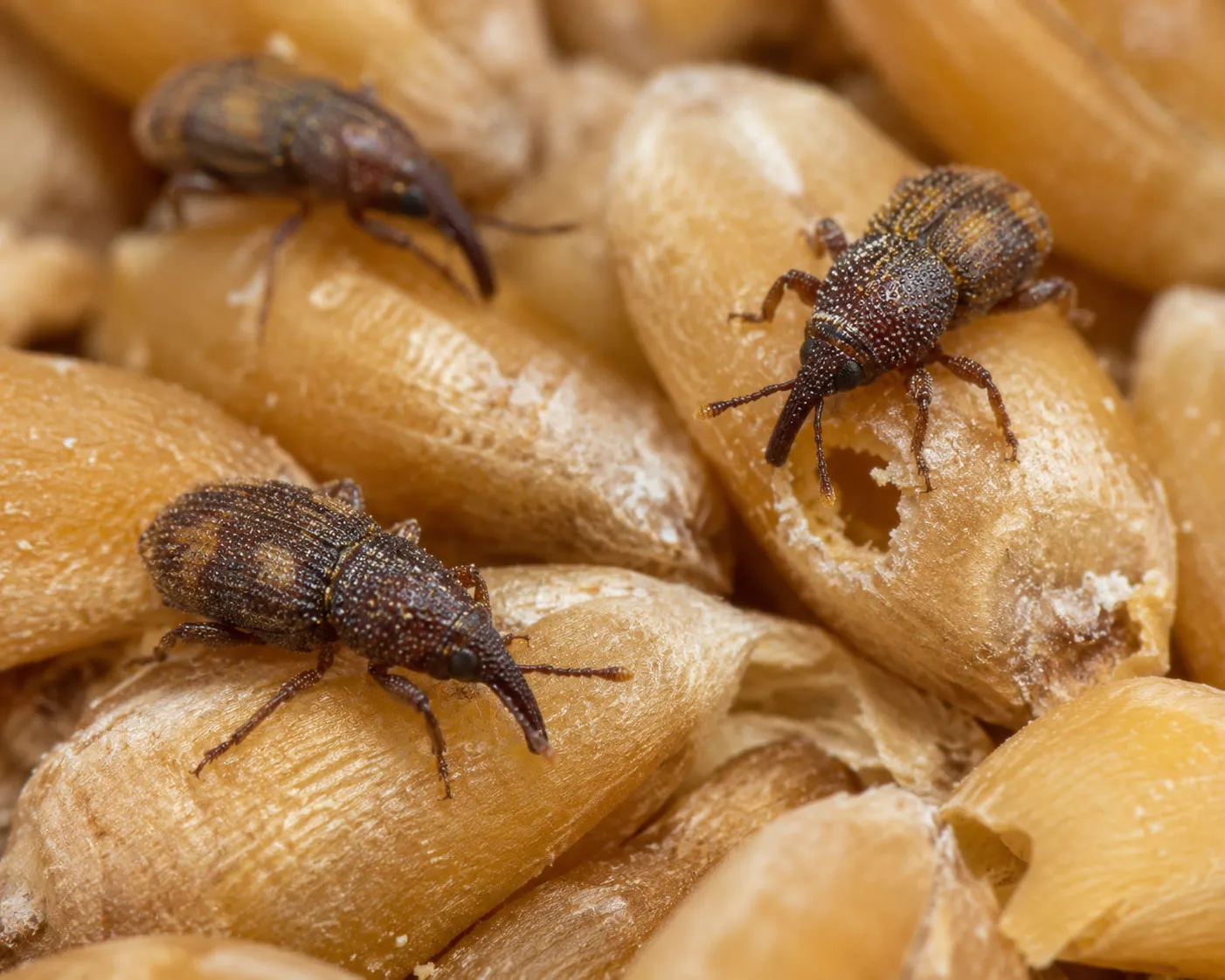
Internal Grain Infestation
Primary stored-grain insects, including weevils and lesser grain borers, can develop within or feed directly on whole kernels. Internal infestation is difficult to identify through surface inspection alone and may remain unnoticed until grain sampling or processing reveals damaged kernels.
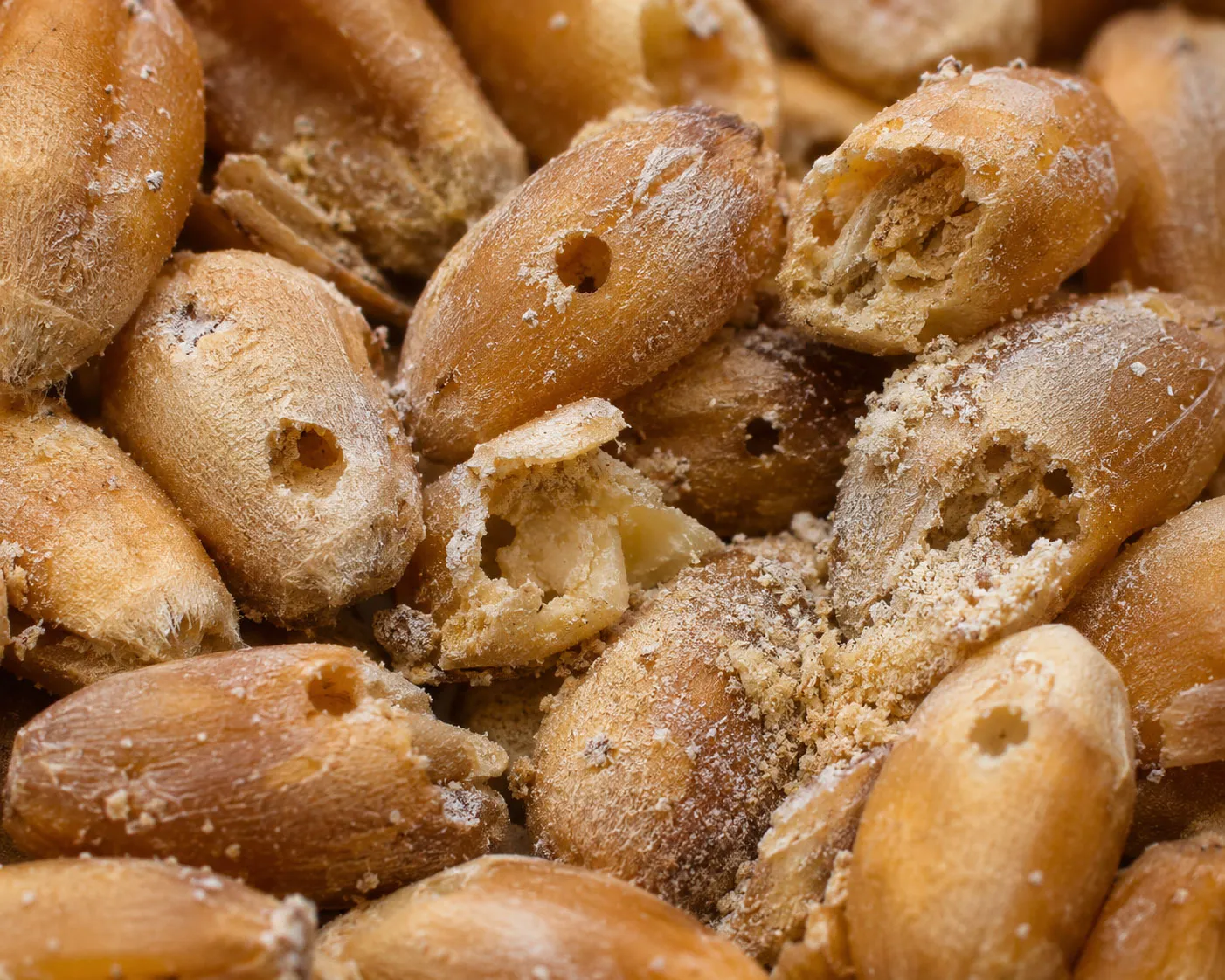
Secondary Insect Infestation
Flour beetles and saw-toothed grain beetles are commonly associated with broken kernels, grain dust, flour, and processing residues. Their presence may indicate poor housekeeping or an established infestation around handling and storage equipment.
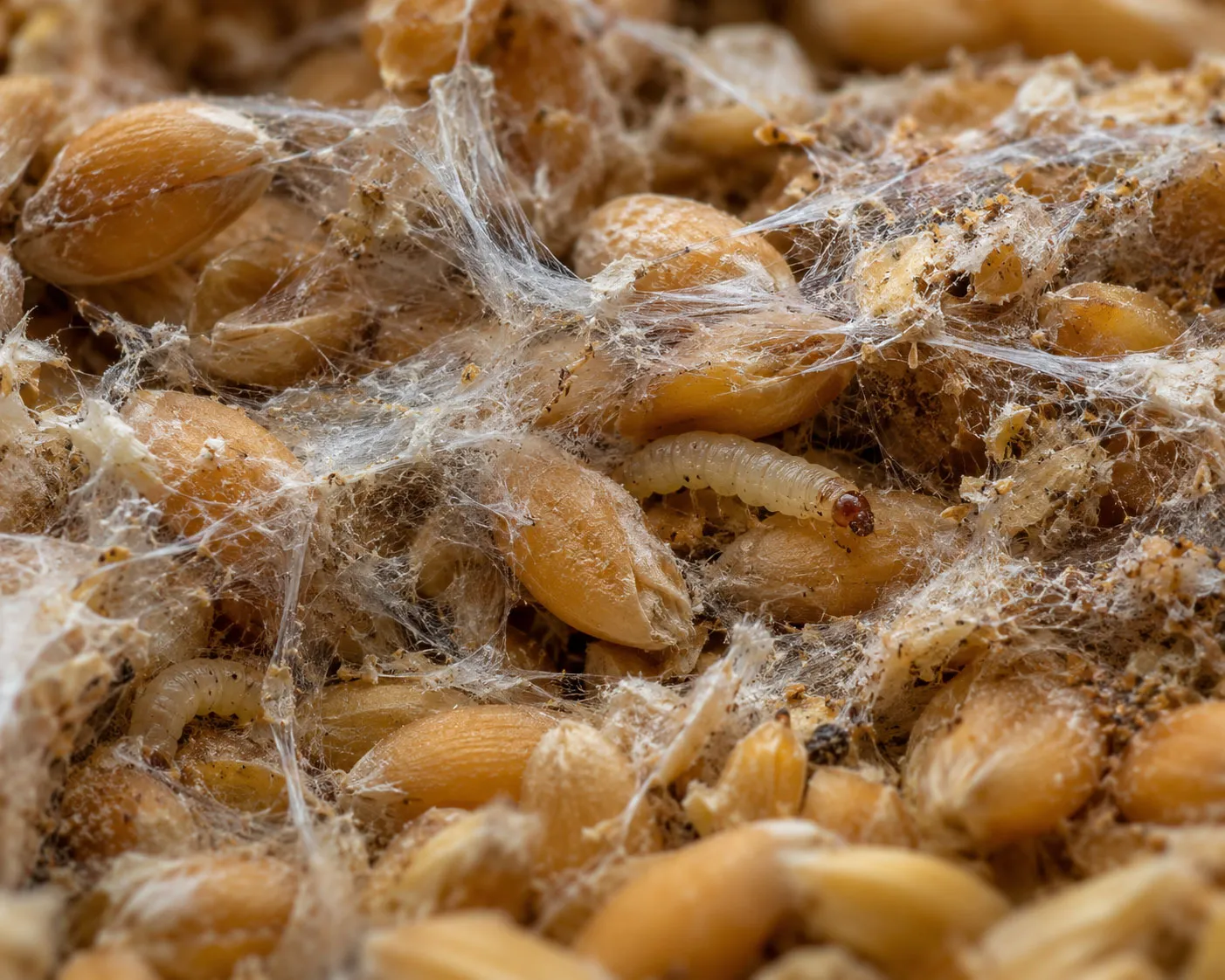
Moth and Larval Contamination
Stored-product moth larvae can damage grain and processed commodities through feeding, webbing, and contamination. These problems can affect the appearance, cleanliness, and processing suitability of stored products.
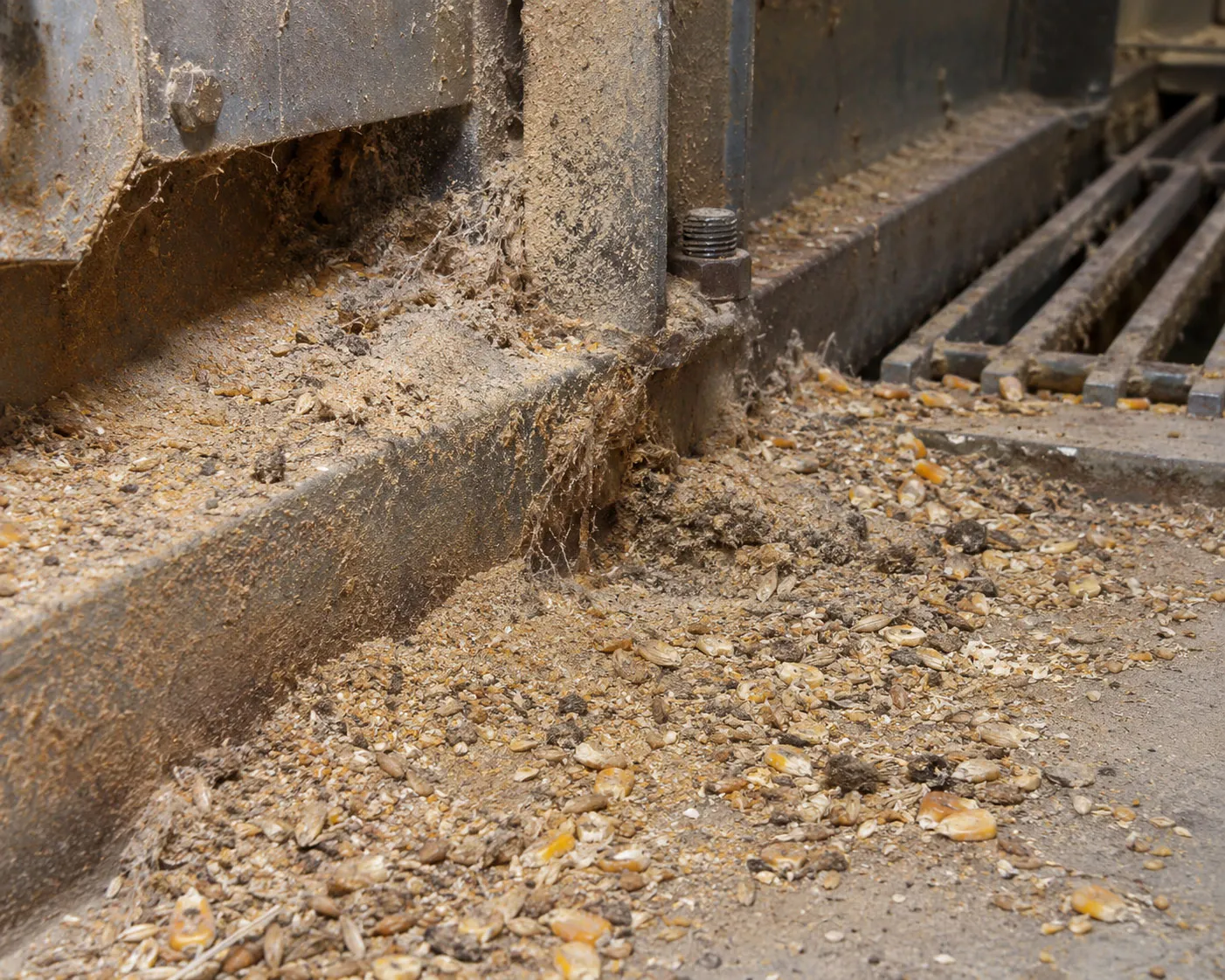
Reinfestation from Storage Facilities
Old grain residues, dust, cracks, conveyor systems, and inaccessible areas can provide shelter and food for insect populations. Even after a treatment, untreated infestation sources may cause pests to return to newly stored commodities.
Common Insects Found in Stored Grain
Identifying the insect group is an important step in selecting an appropriate stored grain pest management method. Different species occupy different parts of the grain mass, feed on different materials, and respond differently to control measures.
| Pest Group | Representative Species | Common Infestation Characteristics |
|---|---|---|
| Grain Weevils | Sitophilus oryzae, S. zeamais, S. granarius | Internal kernel infestation and feeding damage |
| Grain Borers | Rhyzopertha dominica | Kernel damage, grain dust, and weight loss |
| Flour and Grain Beetles | Tribolium castaneum, T. confusum, Oryzaephilus surinamensis | Infestation in broken grain, flour, and residues |
| Stored-Product Moths | Plodia interpunctella, Sitotroga cerealella, Ephestia spp. | Larval feeding, webbing, and commodity contamination |
Identifying the Infestation Location
Stored-product insects can be present in several locations:
- Inside whole kernels: Internal feeders may remain concealed during routine visual inspection.
- On the grain surface: Some adults and larvae are easier to detect through sampling and sieving.
- In broken grain and residues: Secondary pests often develop around grain dust, damaged kernels, and processing waste.
- Around storage structures: Insects may survive in equipment, floor gaps, wall joints, and other inaccessible areas.
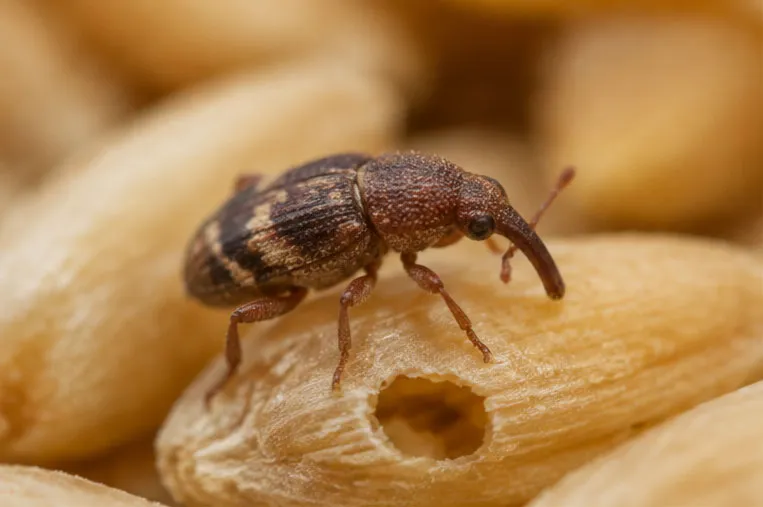
Grain Weevils
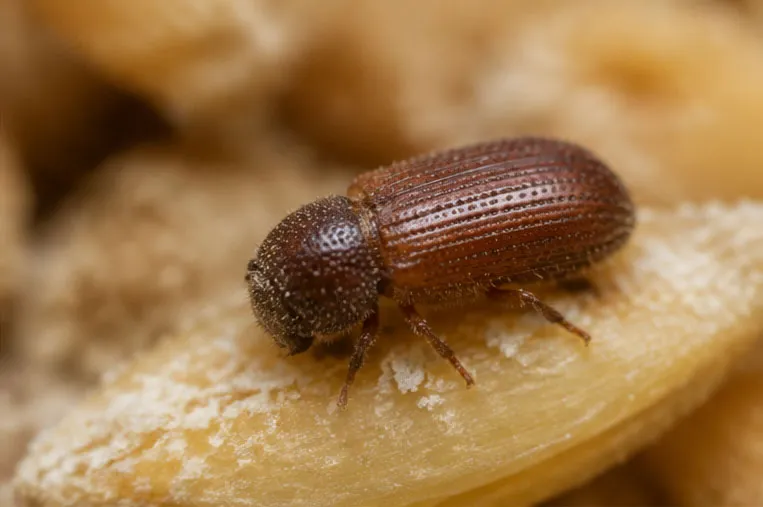
Grain Borers
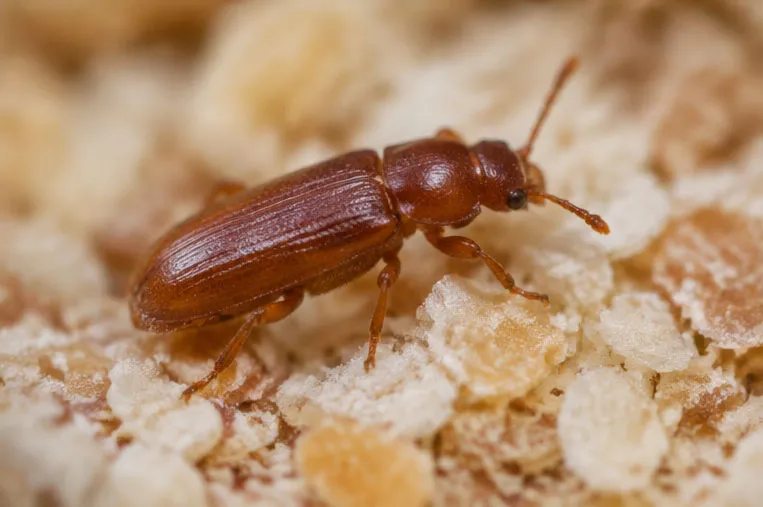
Flour and Grain Beetles
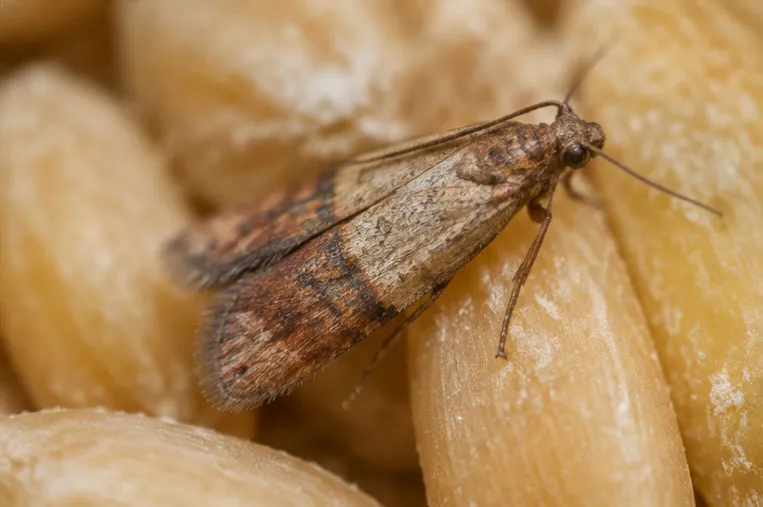
Stored-Product Moths
Why Accurate Identification Matters
A treatment suitable for one pest group may not provide adequate control of another. Before selecting an insecticide or fumigation method, confirm the pest identity, infestation location, commodity type, and relevant product approval.
For a more detailed explanation of stored-grain insect species and insecticide options, see our stored grain insecticide guide.
Grain Types Requiring Stored Pest Protection
Different agricultural commodities have different storage characteristics, end uses, and pest-management requirements. Grain intended for human consumption, animal feed, industrial processing, or seed production may also be subject to different treatment approvals and quality specifications.
| Grain Type | Common Storage Concerns | Protection Considerations |
|---|---|---|
| Wheat | Weevils, grain borers, flour beetles | Grain cleanliness, temperature monitoring, and approved pest protection |
| Maize | Weevils, grain moths, secondary beetles | Kernel condition, moisture management, and infestation monitoring |
| Rice and Paddy | Rice weevils, grain moths, storage beetles | Commodity-specific protection and storage hygiene |
| Barley | Grain borers, weevils, secondary pests | Storage condition and end-use requirements |
| Sorghum | Weevils, grain borers, and other storage insects | Bulk storage monitoring and appropriate treatment selection |
| Soybean and Other Pulses | Storage beetles and commodity-specific pests | Seed quality, germination, and commodity-specific label restrictions |
Protection According to Commodity End Use
The intended use of stored grain should be confirmed before selecting any chemical treatment.
- Food-grade grain: Treatment must comply with applicable food safety and residue requirements.
- Animal feed grain: Product approval must specifically cover the intended feed commodity and treatment conditions.
- Seed grain: Germination and seed viability must be considered.
- Processing grain: Treatment requirements should match the processing method and destination-market specifications.
A suitable stored grain pest control product must be approved for the specific commodity and intended use. One product approval should never be assumed to cover every grain type.
Where Does Stored Grain Pest Management Apply?
Stored grain protection is relevant to different types of commercial storage and grain-handling facilities. Each environment presents specific pest-entry routes, inspection challenges, and treatment requirements.
Grain Silos and Bulk Storage
Grain silos hold large quantities of bulk commodities for extended periods. Insect monitoring should consider the grain mass, loading and unloading systems, aeration ducts, access points, and potential hot spots.
Flat Storage Warehouses
Flat storage facilities may contain bulk grain or bagged commodities. Floor joints, wall gaps, roof structures, and accumulated grain residues can become important sources of infestation.
Grain Elevators and Handling Facilities
Grain elevators, conveyors, receiving pits, and transfer equipment handle grain throughout the supply chain. Residual grain and dust in these systems can support pest populations between operating cycles.
Flour Mills and Feed Processing Facilities
Milling and feed production facilities handle grain, flour, bran, and other processed materials. Dust accumulation, machinery residues, and inaccessible processing areas require coordinated sanitation and pest monitoring.
The management method should match the facility design, stored commodity, infestation location, and operational requirements.
Grain Protection from Intake to Dispatch
Stored grain pest management should begin before grain enters the storage facility and continue until the commodity is dispatched. A continuous management process helps identify infestation sources, maintain grain condition, and reduce the risk of recurring pest problems.
1. Pre-Storage Preparation
Prepare the storage facility before receiving a new grain lot. Remove old grain residues, dust, and debris from floors, walls, conveyors, elevators, and aeration systems. Inspect the structure for cracks, leaks, and possible pest entry points.
2. Grain Intake and Inspection
Inspect incoming grain for visible insects, damaged kernels, broken grain, foreign materials, and abnormal moisture conditions. Record the condition of each incoming lot to establish a baseline for future monitoring.
3. Grain Conditioning
Maintain grain moisture and temperature within ranges appropriate for the commodity and storage duration. Proper drying, cleaning, aeration, and temperature management help reduce conditions that favour insect development and grain deterioration.
4. Continuous Storage Monitoring
Monitor grain temperature, moisture, insect activity, and changes in grain condition throughout storage. Use representative grain samples, appropriate traps, and inspection records to identify developing problems.
5. Targeted Pest Intervention
When monitoring confirms an infestation, identify the pest, affected area, commodity, and severity before selecting a control method. Physical control, approved grain protectants, structural treatment, or professional fumigation may be considered according to the situation.
6. Pre-Dispatch Inspection
Before shipment or processing, review grain condition, treatment records, commodity specifications, and applicable residue or clearance requirements. Confirm that the commodity meets the receiving market’s requirements.
A consistent protection process helps storage operators manage pest risks before they become costly inventory problems.
Explore Stored Grain Pest Management Methods
Effective stored grain protection combines preventive measures, environmental management, monitoring, and targeted pest-control interventions. The appropriate method depends on the commodity, storage structure, pest species, infestation level, and local regulations.
Storage Sanitation
Remove old grain, dust, broken kernels, and infested residues from storage facilities and grain-handling equipment. Cleaning floors, walls, conveyors, elevators, and aeration systems helps reduce insect breeding and reinfestation sources.
Moisture and Temperature Management
Manage grain moisture, temperature, and aeration according to commodity-specific storage requirements. Avoid moisture accumulation, condensation, and localised heating that can contribute to grain deterioration and pest development.
Pest Monitoring and Inspection
Use grain sampling, sieving, suitable traps, and regular facility inspections to identify insect activity. Monitoring results help determine whether further intervention is necessary.
Grain Protectant Treatment
Registered grain protectants may be used on specified commodities to prevent or suppress stored-product insects. Direct grain treatment must follow the approved label for the exact grain type, application method, and destination market.
Structural Pest Treatment
Approved insecticides may be used on permitted surfaces of empty storage facilities and selected structural areas. These treatments must be distinguished from direct commodity treatments, as surface approval does not automatically permit application to stored grain.
Professional Fumigation
Fumigation may be considered when an established infestation requires treatment within a suitable enclosed storage environment. Aluminum phosphide is one fumigant option for approved stored-commodity applications and must only be handled by qualified personnel under applicable regulations and label requirements.
How to Select the Appropriate Stored Grain Pest Control Method
The correct control method should be selected according to the infestation location, storage condition, grain type, and intended use. Applying a treatment without identifying the source of infestation may result in incomplete control or unnecessary chemical exposure.
| Storage Situation | Recommended Management Direction | Key Consideration |
|---|---|---|
| Before new grain enters storage | Cleaning and facility preparation | Remove residues and potential infestation sources |
| Insects detected in incoming grain | Grain inspection and sampling | Confirm pest identity and commodity condition |
| Preventive protection required | Approved grain protectant treatment | Verify direct-grain approval |
| Infestation in an established grain bulk | Professional treatment assessment | Evaluate fumigation suitability and facility integrity |
| Insects found in an empty warehouse | Structural sanitation and approved surface treatment | Confirm permitted treatment surfaces |
| Repeated infestation after treatment | Source investigation and monitoring review | Identify reinfestation and possible resistance |
Important Factors Before Treatment
Before selecting a stored grain pest control product, confirm:
- The exact stored commodity and its intended end use.
- The insect species and infestation location.
- Whether the product is approved for direct grain treatment or structural use.
- The storage structure and its suitability for the proposed method.
- The destination market’s residue, treatment, and safety requirements.
The best control method is the one that addresses the confirmed infestation while protecting commodity quality, worker safety, and market compliance.
POMAIS Products for Stored Grain Pest Management
POMAIS offers selected products for different stored-grain pest management requirements. Product selection should be based on the intended treatment, commodity approval, target pest, and destination-market regulations.
Aluminum Phosphide Tablets and Pellets for Professional Fumigation
Aluminum phosphide is a fumigant active ingredient used in approved stored-commodity fumigation programs. When exposed to moisture, aluminum phosphide releases phosphine gas (PH₃), which acts against susceptible stored-product insects within properly treated commodities and enclosed storage environments.
POMAIS supplies aluminum phosphide fumigant products in tablet and pellet forms for professional agricultural and commodity-protection markets.
| Attribute | Product Information |
|---|---|
| Active Ingredient | Aluminum Phosphide |
| Available Forms | Tablets and Pellets |
| Typical Technical Content | 56% / 57% |
| Active Fumigant Gas | Phosphine (PH₃) |
| Product Category | Fumigant |
| Main Market | Professional stored-commodity fumigation |
Final commodity approvals, treatment conditions, packaging requirements, and operational procedures must be verified against the applicable product registration and local fumigation regulations.
For product specifications and wholesale inquiries, explore POMAIS Aluminum Phosphide Tablets and Pellets.
Deltamethrin 0.2% + Pirimiphos-Methyl 1.8% DP
Combination insecticide formulations can be considered for selected stored-product pest management markets where the formulation and intended use are approved.
POMAIS lists Deltamethrin 0.2% + Pirimiphos-Methyl 1.8% DP as a dustable powder product direction for stored-grain pest control.
| Attribute | Specification |
|---|---|
| Active Ingredient 1 | Deltamethrin 0.2% |
| Active Ingredient 2 | Pirimiphos-Methyl 1.8% |
| Formulation | DP – Dustable Powder |
| Product Positioning | Stored-grain insect control |
| Target Market | Professional agricultural and pest-control distributors |
Before selecting this formulation for a particular grain market, confirm its approved commodity, application method, treatment rate, residue requirements, and post-treatment interval under the destination country’s registered label.
A formulation intended for stored-grain treatment must not be assumed suitable for every food, feed, or seed commodity.
View Deltamethrin 0.2% + Pirimiphos-Methyl 1.8% DP.
How to Monitor Stored Grain Pest Activity
Regular monitoring helps storage operators identify insect activity before it develops into a major infestation. Visual inspection alone may not reveal pests hidden inside grain kernels or distributed throughout a large storage mass.
Grain Sampling and Inspection
Collect representative samples from different locations within the stored grain. Use suitable grain probes and sieving methods to identify insects, damaged kernels, and other signs of infestation.
Sampling should consider the grain surface, central areas, storage boundaries, and locations where abnormal temperature or moisture conditions are detected.
Insect Traps and Pest Detection
Appropriate monitoring tools can help identify pest activity around storage facilities.
Common options include:
- Grain probe traps for selected stored-product insects.
- Pheromone traps for monitoring susceptible moth species.
- Inspection traps for crawling insects around storage structures.
- Sieving and sample examination for detecting insects in grain.
Trap results should be interpreted together with grain sampling and facility inspection rather than used as the only basis for treatment decisions.
Grain Temperature and Moisture Monitoring
Temperature and moisture records help identify conditions associated with grain deterioration and potential insect development.
Monitoring should include:
- Grain temperature at representative locations.
- Moisture condition of stored commodities.
- Unusual heating or condensation.
- Changes in grain appearance and odour.
- Equipment and aeration system performance.
Inspection Records and Follow-Up
Maintain records of sampling locations, pest identification, monitoring results, previous treatments, and corrective actions.
Comparing records over time helps operators identify recurring infestation areas and evaluate whether previous control measures have been effective.
Why Resistance Management Matters in Stored Grain Protection
Repeated exposure to the same insecticide mode of action can select for resistant insect populations. Resistance is a long-term concern in stored-product pest management because grain may remain in storage for extended periods and facilities may experience repeated infestation cycles.
Avoid Repeated Dependence on One Mode of Action
Where multiple registered insecticide options are available, follow an appropriate mode-of-action rotation strategy. Product selection should consider the pest species, previous treatment history, local resistance information, and approved use conditions.
Consider Phosphine Resistance
Phosphine resistance has been documented in some stored-product insect populations. Repeated reliance on phosphine without appropriate resistance monitoring and professionally managed fumigation practices can undermine long-term control.
Integrate Non-Chemical Management
Reduce unnecessary insecticide exposure by combining chemical treatments with:
- Storage sanitation.
- Grain cleaning and conditioning.
- Temperature management and aeration.
- Regular pest monitoring.
- Removal of infestation sources.
- Evaluation of treatment performance.
A resistance-management program should be based on local pest populations and professional recommendations rather than simply switching between products with similar modes of action.
Preserving insecticide effectiveness is an important part of protecting stored grain inventory over successive storage cycles.
Protecting Grain Quality and Market Compliance
Stored grain pest management must protect both inventory condition and the commercial requirements of the intended market. A successful treatment is not determined only by insect mortality. Grain quality, treatment compliance, and product acceptance must also be considered.
| Quality and Compliance Factor | What Storage Operators Should Check |
|---|---|
| Commodity Approval | Whether the product is approved for the specific grain |
| Maximum Residue Limits (MRLs) | Applicable residue requirements in the destination market |
| Treatment Interval | Label-defined waiting, processing, or clearance requirements |
| Grain Moisture | Commodity-specific moisture specifications |
| Grain Temperature | Storage stability and quality conditions |
| Seed Germination | Viability requirements for seed grain |
| Treatment Records | Product identity, batch, treatment history, and relevant documentation |
Food-Grade and Feed-Grade Requirements
Grain intended for human consumption and animal feed must meet the applicable treatment and residue requirements of its destination market.
A product approved for one commodity or use pattern should not automatically be considered approved for another.
Seed Grain and Processing Quality
For seed grain, treatment compatibility with germination and seed viability is particularly important. For milling and processing commodities, contamination, odour, grain damage, and treatment records may affect acceptance.
Documentation and Traceability
Maintain relevant product labels, treatment records, batch information, and analytical documentation where required.
Grain protection should preserve the commercial usability of the commodity, not simply eliminate visible insect activity.
Professional Fumigation and Safety Requirements
Fumigation with aluminum phosphide requires strict operational control because the active fumigant gas, phosphine (PH₃), presents a serious acute inhalation hazard.
It must never be treated as an ordinary warehouse spray application or handled as a general-purpose pesticide by untrained personnel.
Qualified Fumigation Personnel
Fumigation should only be conducted by qualified and authorized personnel who understand the approved product label, site-specific hazards, gas monitoring requirements, and applicable regulations.
Fumigation Site Assessment
Before a professional fumigation program is considered, the storage structure, sealing condition, surrounding occupied areas, access restrictions, and emergency arrangements must be assessed.
Gas Monitoring and Restricted Access
Appropriate gas detection and exposure-control procedures are essential. Unauthorized personnel must be kept away from restricted treatment areas throughout the operation.
Aeration and Clearance
Following treatment, aeration, gas monitoring, clearance verification, and re-entry must be completed according to the approved product label and applicable regulations.
Emergency Preparedness
A suitable fumigation management plan should address operator responsibilities, emergency response, communication procedures, protective equipment, and relevant safety documentation.
POMAIS supplies aluminum phosphide products for professional fumigation markets. Product supply does not replace the responsibility of qualified operators to comply with local licensing, safety, and fumigation requirements.
Stored Grain Pest Control Products for Importers and Distributors
For agricultural importers, pest-control distributors, grain protection suppliers, and private-label brands, sourcing the right product is only one part of a successful supply arrangement. Product consistency, packaging flexibility, technical documentation, and export coordination also matter.
POMAIS supports international buyers with stored grain pest-control product sourcing and customized supply services.
Product and Formulation Support
We provide selected insecticide and fumigant product options for different stored-product pest management markets. Product recommendations are reviewed according to the target market, intended commodity, formulation requirements, and applicable registration conditions.
OEM and Private Label Packaging
Our packaging services include:
- Customized product labels and brand identity.
- Multilingual packaging for different export markets.
- Flexible bottle, bag, pouch, and outer-carton specifications.
- Customized product presentation for distributors and wholesalers.
Quality Control and Technical Documentation
Depending on the product and order requirements, documentation support can include:
- Certificate of Analysis (COA).
- Safety Data Sheet (SDS/MSDS).
- Technical Data Sheet (TDS).
- Product specifications.
- Packaging and shipment information.
- Supporting documents for registration assessment.
Export and Order Coordination
POMAIS supports customers throughout product confirmation, packaging coordination, production inspection, documentation preparation, and shipment arrangements.
Our objective is to help importers and distributors establish a more reliable supply channel for their stored grain pest-control product requirements.
Frequently Asked Questions About Stored Grain Pest Management
Which storage facilities can use stored grain pest management solutions?
These solutions are relevant to grain silos, bulk storage warehouses, bagged grain facilities, grain elevators, flour mills, feed mills, and other commercial agricultural storage environments.
The specific management method should match the facility structure, commodity, and pest pressure.
Does stored grain pest management rely on fumigation alone?
No. Effective management combines sanitation, grain conditioning, pest monitoring, structural maintenance, and appropriate control interventions. Fumigation is one option for specific infestation situations and should only be performed by qualified personnel.
How should pest control differ between bulk grain and bagged grain?
Bulk grain requires attention to the entire grain mass, including sampling locations, temperature distribution, aeration, and access for approved treatments.
Bagged grain requires additional attention to packaging integrity, stack inspection, storage-floor conditions, and potential infestation between bags and within the storage structure.
Can warehouse insecticides be applied directly to stored grain?
Not automatically. A product registered for warehouse surface treatment is not necessarily approved for direct grain treatment. Always verify the approved commodity, application method, residue requirements, and local product label.
What information should buyers provide when requesting stored grain pest-control products?
Buyers should provide the destination country, grain type, storage facility, target pest, required control method, preferred active ingredient, formulation, packaging requirements, and expected order quantity.
This information helps suppliers evaluate whether a product direction is appropriate for the intended market.
Does POMAIS supply aluminum phosphide fumigants?
Yes. POMAIS supplies aluminum phosphide tablets and pellets for professional fumigation markets. Product availability, approved applications, and regulatory requirements should be confirmed for the destination country.
Can POMAIS provide OEM stored grain pest-control products?
Yes. POMAIS supports customized formulations where feasible, private-label packaging, multilingual labels, and technical documentation according to customer and market requirements.
What documents can be provided for international procurement?
Depending on the product and destination market, available documents may include COA, SDS/MSDS, TDS, product specifications, label files, and supporting registration documents.
Discuss Your Stored Grain Pest Management Requirements
Every grain storage operation has different pest-control requirements. The appropriate product depends on the stored commodity, facility design, target insect, storage conditions, and destination-market regulations.
POMAIS works with agricultural importers, pest-control distributors, grain storage operators, and private-label brands to evaluate product requirements and coordinate suitable supply options.
Tell Us About Your Stored Grain Protection Project
To help us understand your requirements, please provide:
| Information | Details to Provide |
|---|---|
| Destination Country | Your target sales or application market |
| Company Type | Importer, distributor, wholesaler, or pest-control company |
| Grain Type | Wheat, maize, rice, barley, sorghum, or other commodities |
| Storage Facility | Silo, warehouse, grain elevator, or processing facility |
| Main Pest Problem | Weevils, grain borers, beetles, moths, or mixed infestation |
| Required Control Direction | Grain protectant, structural treatment, or professional fumigation |
| Preferred Active Ingredient | If already specified |
| Formulation | Tablet, pellet, DP, or another required form |
| Packaging | Bulk, commercial pack, or private label |
| Estimated Quantity | Expected purchasing volume |
| Registration Status | Registered, under evaluation, or requiring documentation support |