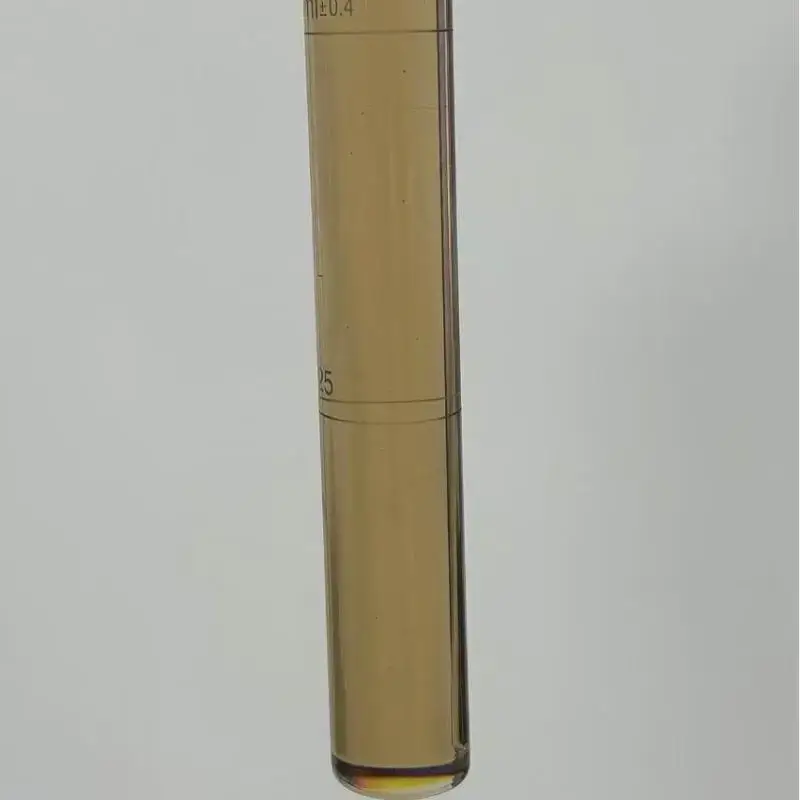
Phenmedipham 91 g/L + Desmedipham 71 g/L + Ethofumesate 112 g/L EC Herbicide
This product is a triple-mix, post-emergence selective herbicide for sugar beet fields. It combines Phenmedipham 91 g/L, Desmedipham 71 g/L and Ethofumesate 112 g/L in a single 274 g/L EC (emulsifiable concentrate) formulation. The mix is designed for sugar beet seedling stage, targeting annual broadleaf weeds that compete strongly with young beet plants.
For importers and distributors, this formulation gives you a well-known, proven solution for sugar beet weed control, with a clear technical story and strong market positioning in beet-growing regions.
- Designed for Professional Buyers & Bulk Orders
- We support custom packaging, labeling, and formulation to meet your market needs.
- Export wholesale inquiries only.
- Please include destination country, business type (importer/distributor/registrant), and expected volume.
- Retail requests will not be processed.

About Phenmedipham 91 g/L + Desmedipham 71 g/L + Ethofumesate 112 g/L EC Herbicide
| Product name | Phenmedipham 91 g/L + Desmedipham 71 g/L + Ethofumesate 112 g/L EC Herbicide |
| Total active ingredient | 274 g/L (Phenmedipham 91 g/L; Desmedipham 71 g/L; Ethofumesate 112 g/L) |
| Formulation type | Emulsifiable Concentrate (EC) |
| Main use | Post-emergence control of annual broadleaf weeds in sugar beet |
| Target weeds | Annual broadleaf weeds (e.g. amaranths, lambsquarters, mustards) |
| Crop | Sugar beet |
| Application method | Post-emergence foliar spray |
| Recommended timing | Sugar beet seedling stage; weeds at 2–4 leaf stage |
| Number of applications | Typically one application per season (follow local label) |
| Tank-mix compatibility | Do not mix with strongly acidic or alkaline products |
| Toxicological note | Use PPE; avoid contact with skin, eyes and water bodies |
| Packaging | 100 mL–5 L retail and professional sizes; larger packs on request |
| Shelf life | Normally 2 years in original unopened packaging under proper storage |
Phenmedipham 91 g/L + Desmedipham 71 g/L + Ethofumesate 112 g/L EC Herbicide
This herbicide is made specifically for post-emergence use in sugar beet. It is applied after the beet emerges, when young broadleaf weeds are at the 2–4 leaf stage. At this moment, weeds are sensitive, and the crop is strong enough to tolerate a selective herbicide.
Key points:
- Triple active ingredient blend with a total content of 274 g/L
- EC (emulsifiable concentrate) formulation for good spreading and leaf coverage
- Selective weed control in sugar beet when used at the correct timing and rate
- One application per season, fitting well into modern resistance management programs
For your customers, it can be described in simple terms as a “sugar beet post-emergence broadleaf herbicide” that should be used early, when weeds are still small and easy to control.
Active Ingredients and Formulation
This product contains three active ingredients:
- Phenmedipham – 91 g/L
- Desmedipham – 71 g/L
- Ethofumesate – 112 g/L
Total active ingredient content: 274 g/L in an EC (emulsifiable concentrate) formulation.
The EC formulation:
- Mixes quickly with clean water
- Spreads well across leaf surfaces
- Gives good contact with young weed leaves
- Is easy to handle, pour and measure in the field
The combination of these three active ingredients is designed to give fast knockdown and more reliable control of many annual broadleaf weeds compared with single-active products.
Mode of Action
The three active ingredients work together but in slightly different ways, which creates a strong and balanced herbicide effect.
- Phenmedipham and Desmedipham
- Both belong to the carbamate-type herbicides that disrupt photosynthesis.
- They work mainly as contact herbicides, acting on the leaves of the weed.
- They are absorbed through the foliage and quickly reduce the weed’s ability to produce energy via photosynthesis.
- Sensitive weeds stop growing, leaves become pale, then necrotic, and the plants die.
- Ethofumesate
- Provides both foliar and some root uptake.
- Helps to improve residual action and broadens the spectrum of weed control.
- Supports more complete control of difficult broadleaf weeds when used at the correct stage.
Together, the three components give:
- Fast contact effect on leaf tissue
- Improved depth and duration of action via ethofumesate
- Strong performance on a range of annual broadleaf weeds in sugar beet fields
Because of this multi-active mode of action, the product should be used only once per season and always at the right timing to balance weed control and crop safety.
Target Weeds
This triple-mix herbicide is designed to control annual broadleaf weeds that are common in sugar beet fields. Typical targets include:
- Amaranths and pigweeds
- Lambsquarters-type weeds
- Mustards and other small-seeded broadleaf weeds
- Various other annual broadleaf species that emerge soon after the beet crop
Control is best when:
- Weeds are at the 2–4 leaf stage
- Plants are actively growing and not hardened by drought or extreme weather
- Spray coverage is uniform across the field
By removing these early broadleaf weeds, the product helps sugar beet plants keep access to light, water and nutrients, supporting stronger growth and higher yield potential.
Crops and Application Scenarios
This herbicide is specifically intended for sugar beet fields.
Typical scenario:
- Crop: Sugar beet
- Timing: After crop emergence, when weeds have reached 2–4 leaf stage
- Site: Open-field sugar beet cultivation, including large commercial beet farms
It is not designed for cereals, maize, soybean or other crops. Because it is selective to sugar beet but can injure other crops, it is very important to keep spray drift away from neighbouring fields.
For seed production fields and special beet varieties, local experience and small-scale testing are recommended before broad use, especially when previous residual herbicides may still be present in the soil.
Usage Guidelines
The following guidelines are general. Always follow the official label in your country.
- Apply once per season in sugar beet.
- Use in post-emergence of the crop, when beet seedlings are established and broadleaf weeds are at 2–4 leaf stage.
- Use clean water to dilute the product, and select a spray volume that gives full coverage of the weed leaves. In dry conditions, a slightly higher spray volume helps to improve contact.
- Treat on calm days to avoid spray drift to neighbouring crops, gardens or non-target plants.
- Avoid spraying under extreme temperatures (too cold or too hot), severe drought or strong wind, as these conditions can reduce efficacy or increase crop stress.
- For sugar beet fields under plastic film or with very high soil temperatures near the surface, use the product with extra care and consider lower rates or local technical advice.
- On weak, stressed or diseased beet plants, treatment should be made cautiously, as crop tolerance is reduced.
The product should not be mixed with strongly acidic or alkaline pesticides or fertilizers, because it can break down more quickly in such tank mixes and lose effectiveness.
Because the herbicide is intended for early, small weeds, later applications on older, hardened weeds will give weaker results and higher risk of visible crop effects.
Product Performance and Benefits
For growers and your distribution network, this product offers several clear advantages.
Agronomic benefits
- Strong control of annual broadleaf weeds in sugar beet fields when applied on young weeds
- Fast visible effect on weed leaves, giving confidence to farmers that the product is working
- Good fit for seedling-stage weed management, which is critical for beet yield and quality
- Triple-active formulation helps to broaden weed control and improve reliability versus single-active products
Crop safety and flexibility
- Designed for post-emergence use in beet, not for pre-emergence
- When used at the right beet growth stage and under recommended conditions, crop injury is usually limited to temporary leaf spotting, and the plants recover within about two weeks
- Helps farmers avoid severe weed pressure later in the season, reducing the need for extra treatments
Commercial value
- Well-known active ingredients in many sugar beet markets
- Clear technical positioning: “Sugar beet post-emergence broadleaf herbicide”
- Good base for OEM/private label brands targeted at beet-growing regions
- Supports long-term relationships with farmers through stable performance and repeat sales
Safety and Environmental Information
This herbicide must be handled with care by trained operators.
Personal protection
- Wear long-sleeved shirt, long trousers, rubber boots, protective gloves, eye protection and a suitable mask when mixing and spraying.
- Do not eat, drink or smoke during handling and application.
- Avoid contact with eyes, skin and clothing.
- After spraying, wash hands, face and any exposed skin with soap and water, and wash work clothing before reuse.
Health and first aid
- If the product gets on the skin, wash immediately with plenty of water and soap.
- If the product splashes into the eyes, rinse with clean water for at least 15 minutes and seek medical advice if irritation continues.
- If the product is inhaled, move the person to fresh air and keep them at rest.
- If the product is swallowed, do not induce vomiting. Rinse the mouth and seek medical attention with the product label.
- There is no specific antidote; treatment is symptomatic and supportive as directed by medical professionals.
Pregnant women, nursing women and children must not handle or apply this product.
Environmental care
- Do not spray near rivers, ponds, fish farms or other water bodies.
- Do not clean application equipment in lakes, streams, canals or ponds.
- Do not pour leftover spray solution into water bodies.
- Respect local rules concerning beneficial insects and biological control agents. Do not use in areas where Trichogramma or other beneficials are being released, and avoid spraying flowering plants that attract pollinators.
Empty containers must be triple-rinsed where required and disposed of properly. They must never be reused for food, drink or any household purpose.
Packaging, OEM and Registration Support
We can supply this Phenmedipham + Desmedipham + Ethofumesate 274 g/L EC herbicide in a range of packaging options to match your market.
Packaging options
- Common retail and professional sizes such as:
- 100 mL, 250 mL, 500 mL
- 1 L and 5 L containers
- High-quality HDPE or COEX bottles with secure caps
- Export-ready master cartons designed for safe transport and storage
OEM / Private label
- Your own brand name, logo and colour design
- Multi-language labels (for example English, Russian, Spanish, French, Arabic and others)
- Label texts adapted to your local registration and crop–weed situation
- Consistent visual identity across your sugar beet herbicide portfolio
Registration and technical documents
- COA, MSDS, TDS and detailed specification sheets
- Samples for local trials and laboratory analysis
- Support with composition, safety statements and label content to fit your local regulatory framework
Frequently Asked Questions (FAQ)
What is this triple-mix herbicide used for?
It is used for post-emergence weed control in sugar beet fields. It targets annual broadleaf weeds when they are young and actively growing, helping to keep the beet rows clean and uniform.
Why combine Phenmedipham, Desmedipham and Ethofumesate?
The three active ingredients work together. Phenmedipham and Desmedipham provide strong contact activity on weed leaves, while Ethofumesate adds depth and some residual effect. The combination gives broader and more reliable control than many single-active products.
When should I apply the herbicide in sugar beet?
The best timing is after beet emergence, when the crop is stable and the broadleaf weeds are at the 2–4 leaf stage. Applying too early, too late or under extreme weather can reduce selectivity and performance.
Can this herbicide injure sugar beet?
The product is selective to sugar beet when used correctly. Some temporary leaf spotting or scorch may appear after spraying, but plants usually recover in about two weeks. On weak or stressed beet, or under extreme temperatures, the risk of visible injury is higher, so extra care is needed.
Can I mix it with other pesticides or fertilizers?
It should not be mixed with strongly acidic or alkaline products, as this may break down the actives and reduce efficacy. Always check local label guidance and, if allowed, test tank mixes on a small area before large-scale spraying.
What weather conditions are best for application?
Spray on a calm day, without strong wind, and avoid very hot or very cold conditions. In dry weather, a slightly higher spray volume can help improve coverage on weed leaves.
Work With Us as Your Triple-Mix Beet Herbicide Supplier
If you serve sugar beet growers and are looking for a reliable, export-ready supplier of Phenmedipham 91 g/L + Desmedipham 71 g/L + Ethofumesate 112 g/L EC, we can support you with:
- Consistent quality and strict batch control
- Flexible OEM/private label solutions and multi-language packaging
- Full technical and registration documentation for your market
- Experience supplying professional distributors in major beet regions
Share your target market, preferred packaging sizes and expected annual volume, and our team will propose a practical, long-term supply plan for this triple-mix beet herbicide and other herbicide products in your portfolio.