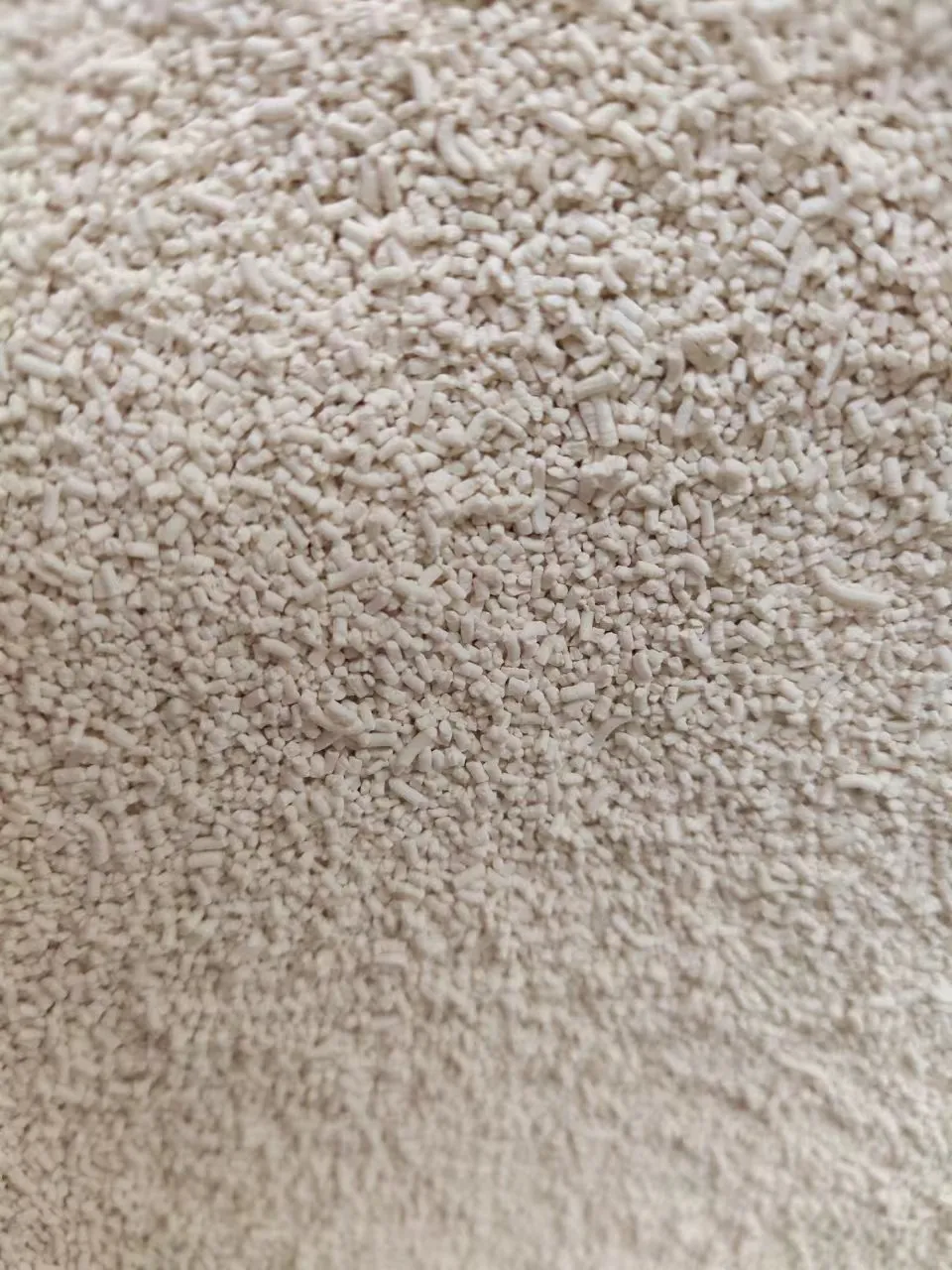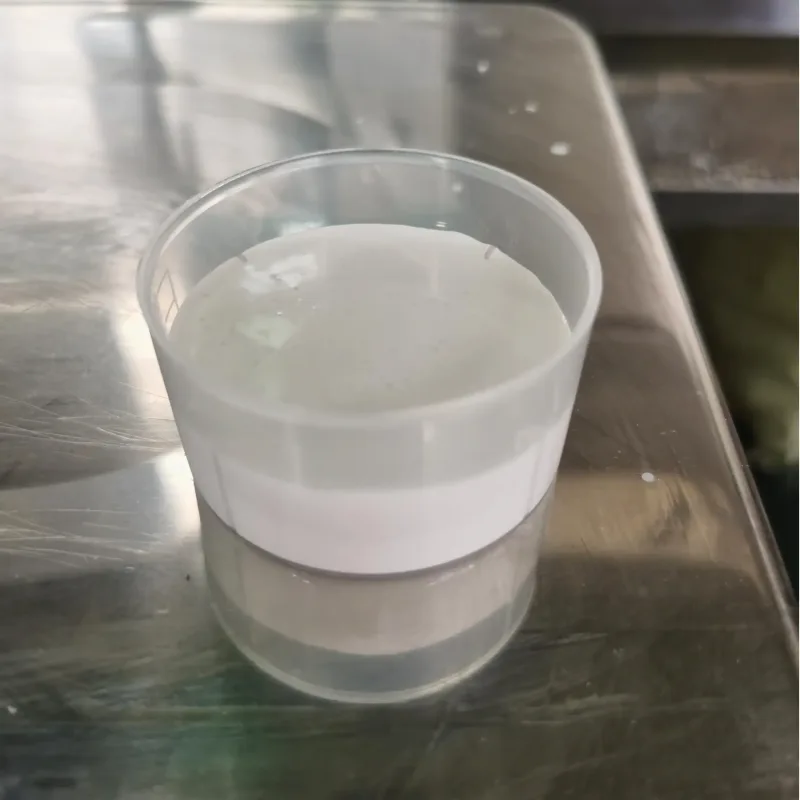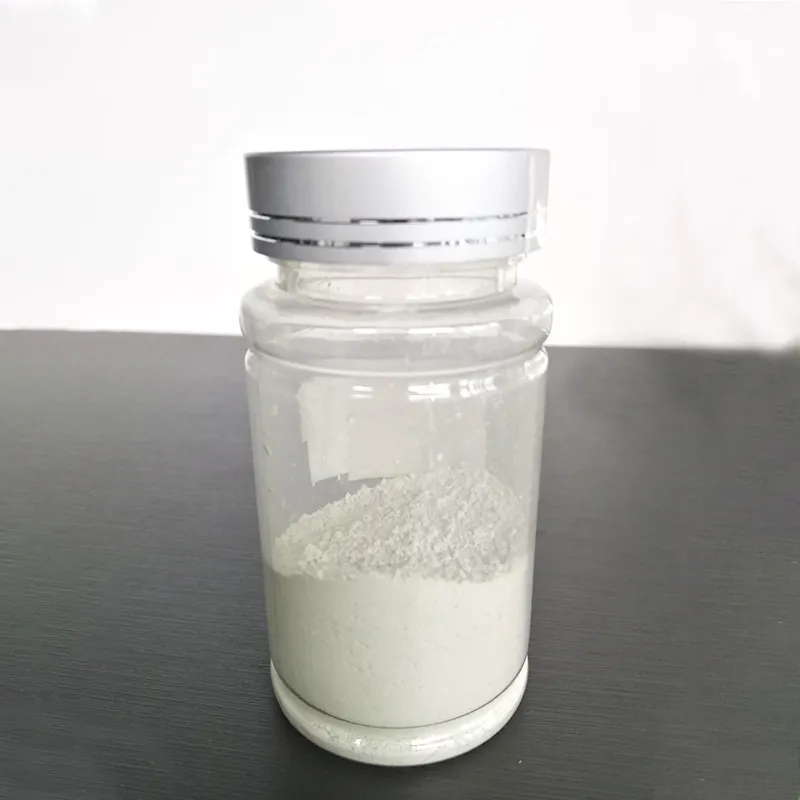


Diazinon 600 g/L EC Insecticide
POMAIS Diazinon 600 g/L EC is a non-systemic organophosphate insecticide classified in IRAC Group 1B. It is developed for approved agricultural programs targeting susceptible foliar and soil insect pests.
Diazinon inhibits acetylcholinesterase in susceptible insects. This causes acetylcholine to accumulate at nerve synapses, resulting in continuous nerve stimulation, loss of normal neuromuscular control, paralysis and death.
POMAIS supplies Diazinon 600 g/L EC for agricultural importers, distributors and registration partners requiring a concentrated EC formulation with commercial packaging, formulation quality control and technical-document support.
- Designed for Professional Buyers & Bulk Orders
- We support custom packaging, labeling, and formulation to meet your market needs.
- Export wholesale inquiries only.
- Please include destination country, business type (importer/distributor/registrant), and expected volume.
- Retail requests will not be processed.

About Diazinon 600 g/L EC Insecticide
| Product Attribute | Specification |
|---|---|
| Product Name | Diazinon 600 g/L EC |
| Active Ingredient | Diazinon |
| Content | 600 g/L |
| Formulation | EC — Emulsifiable Concentrate |
| CAS Number | 333-41-5 |
| Molecular Formula | C12H21N2O3PS |
| Product Type | Non-systemic insecticide |
| Chemical Class | Organophosphate |
| IRAC Group | Group 1B |
| Target Site | Acetylcholinesterase |
| Main Activity | Contact and stomach activity |
| Primary Use Direction | Agricultural foliar and soil insect control |
| Crop Direction | Registered field, fruit, vegetable and other crop programs |
| Application Direction | Foliar spray or soil-directed treatment where registered |
| Standard MOQ | Normally 1,000 L |
| Supply Direction | Import, distribution and registration cooperation |
| Document Support | COA, SDS, TDS, product specification and available registration information |
Final crops, pest species, application rates, treatment intervals, pre-harvest intervals, re-entry requirements and environmental restrictions must follow the approved destination-market label.
What Is Diazinon 600 g/L EC?
Diazinon is an organophosphate insecticide used in agricultural pest-management programs.
The 600 g/L EC formulation provides a concentrated liquid product for registered foliar or soil-directed applications.
Its main technical characteristics include:
- IRAC Group 1B mode of action
- Acetylcholinesterase inhibition
- Non-systemic activity
- Contact activity
- Stomach activity
- Agricultural foliar and soil pest positioning
- EC liquid formulation
Diazinon should not be described as a systemic insecticide.
Because the active ingredient does not rely on systemic movement throughout the crop, application placement and spray coverage are important parts of performance.
The product should also not be treated as one universal Diazinon formulation for every agricultural, structural or animal-health use.
Different uses may require different concentrations, formulations and registrations.
How Does Diazinon Work?
IRAC Group 1B Acetylcholinesterase Inhibition
Diazinon belongs to IRAC Group 1B, the organophosphate insecticide group.
Its primary target is acetylcholinesterase.
Under normal conditions, acetylcholinesterase breaks down the neurotransmitter acetylcholine after a nerve signal has been transmitted.
Diazinon inhibits this enzyme.
As acetylcholine accumulates at nerve junctions, affected insects experience continuous stimulation of the nervous system.
This may lead to:
- Uncontrolled nerve activity
- Muscle tremors
- Loss of normal coordination
- Paralysis
- Death
This mode of action is shared with other Group 1B organophosphate insecticides.
Contact and Stomach Activity
Diazinon can act when susceptible insects come into contact with treated surfaces or ingest treated material.
This makes it relevant to different agricultural pest situations, depending on the registered crop and application method.
Because the product is non-systemic, correct placement remains important.
For foliar pests, this means achieving adequate spray coverage.
For soil-directed uses, treatment must reach the zone where the registered target pest is active.
What Pests Is Diazinon Used For?
Diazinon has historically been used against a wide range of susceptible agricultural insects.
However, the exact pest spectrum depends on the product registration and local resistance status.
The product should not be described as controlling every chewing, sucking or soil insect.
Foliar Insect Pests
Where registered, Diazinon may be used against selected foliar pests such as:
- Aphids
- Selected beetles
- Cutworms
- Other approved chewing insects
- Other approved sucking insects
Aphid Programs
Diazinon may be used against susceptible aphid populations in registered crop programs.
Good spray coverage is important because the product is not systemic.
Where aphid populations are hidden deep within dense crop canopies or have developed reduced sensitivity to organophosphates, performance may be less predictable.
Chewing Insects
Selected chewing insects may also fall within registered Diazinon use patterns.
Treatment timing should target susceptible life stages before crop damage becomes severe.
Soil and Early-Season Insect Pests
Diazinon also has a history of use against selected soil-dwelling insects.
Potential directions may include:
- Grubs
- Root-feeding larvae
- Cutworms
- Selected soil insects
- Other approved early-season pests
Soil-directed applications require different placement and treatment logic from foliar sprays.
The correct method may depend on:
- Soil type
- Crop
- Pest depth
- Irrigation
- Incorporation requirements
- Local label
Do not transfer one foliar application rate directly to a soil-pest program.
Crop Programs Where Registered
Diazinon has historically been used in different agricultural production systems, but current registration varies by country.
Potential crop directions may include:
- Field crops
- Fruit crops
- Vegetable crops
- Orchard systems
- Selected specialty crops
The final page should not publish a universal crop list unless it matches the intended market registration.
Fruit and Orchard Programs
Where registered, Diazinon may be used as part of insect-management programs targeting susceptible foliar pests.
Application planning should consider:
- Crop growth stage
- Pest stage
- Canopy density
- Pollinator restrictions
- PHI
- MRL requirements
Vegetable Programs
Vegetable use requires particular attention to:
- Approved crop
- Pest species
- Maximum application number
- PHI
- Residue requirements
Field Crop Programs
In field crops, Diazinon may be positioned against registered foliar or soil insect pests.
Selection should be based on the actual pest complex rather than using Diazinon simply because it has a broad historical use range.
When Is Diazinon a Suitable Insecticide?
Diazinon may be a suitable option when:
- The crop is locally registered
- The target pest is susceptible
- Group 1B remains appropriate in the resistance program
- Contact or stomach activity fits the pest biology
- Correct spray or soil placement can be achieved
- Environmental restrictions can be followed
It may be less appropriate when:
- The target pest requires strong systemic activity
- The population has a history of organophosphate resistance
- Pollinator restrictions prevent application
- The crop or use is not registered
- A different IRAC group is needed for resistance rotation
Product selection should therefore be based on crop, pest, resistance history and local registration, not only on active ingredient familiarity.
Application Guidance
Diazinon 600 g/L EC should not be assigned one global application rate.
The correct rate depends on the crop, pest, country and treatment method.
1. Confirm the Exact Product
Verify that the intended product is:
Diazinon 600 g/L EC
Do not apply recommendations developed for Diazinon GR, WP or another concentration.
2. Confirm Crop Registration
Check:
- Crop
- Target pest
- Application method
- Growth stage
- Rate
- Seasonal restrictions
3. Identify the Pest
Determine whether the target is:
- Foliar
- Soil-dwelling
- Chewing
- Sucking
- Early-season
Correct pest identification improves treatment selection.
4. Review Resistance History
Consider previous use of Diazinon and other organophosphates.
Repeated Group 1B failures may indicate resistance.
5. Apply at the Registered Pest Stage
Do not wait until pest pressure becomes severe if the local label recommends earlier treatment.
6. Achieve Correct Placement
For foliar treatment:
- Calibrate spray equipment
- Maintain suitable coverage
- Adjust for canopy density
For soil-directed use:
- Follow the registered placement
- Observe irrigation or incorporation requirements
7. Follow the Registered Rate and Interval
Do not use a universal dilution ratio or g/ha recommendation across different crops.
8. Observe PHI and REI
Pre-harvest and re-entry intervals are crop- and market-specific.
Diazinon 600 g/L EC Formulation
EC means Emulsifiable Concentrate.
Diazinon is formulated in a concentrated liquid system that forms an emulsion after dilution with water.
The formulation should not be described as simply dissolving completely in spray water.
Main EC Characteristics
A properly developed Diazinon 600 g/L EC formulation should provide:
- High active ingredient loading
- Convenient liquid measurement
- Consistent emulsification
- Practical tank preparation
- Stable commercial handling
- Suitable packaging compatibility
Emulsion Stability Matters
Poor EC formulation quality can lead to:
- Phase separation
- Unstable emulsions
- Uneven active distribution
- Spray preparation problems
- Packaging damage
For this reason, EC quality is an important supplier-evaluation factor.
Quality Control for Diazinon 600 g/L EC
Professional buyers should evaluate more than the declared active ingredient concentration.
| Quality Parameter | Buyer Relevance |
|---|---|
| Diazinon Assay | Confirms the declared 600 g/L content |
| Physical Appearance | Identifies abnormal precipitation or separation |
| Density | Supports accurate dosing and filling |
| Emulsion Stability | Supports stable dilution in spray water |
| Re-Emulsification | Confirms recovery after standing |
| Acidity / pH | Supports formulation stability assessment |
| Water Content | Important for EC storage quality |
| Persistent Foam | Influences spray-tank preparation |
| Low-Temperature Stability | Supports cold-region transport |
| Heat Stability | Supports warm-market storage |
| Packaging Compatibility | Confirms compatibility with bottles, drums, caps and seals |
| Fill-Volume Accuracy | Supports commercial batch consistency |
For Diazinon 600 g/L EC, assay, emulsion stability, water content and packaging compatibility are important quality-control considerations.
Specific release limits should follow the actual POMAIS product specification.
Resistance Management
Diazinon belongs to IRAC Group 1B.
Resistance management is important because repeated exposure to the same insecticide mode of action can select resistant pest populations.
Other Group 1B Organophosphates
Other insecticides in the same broad IRAC group include active ingredients such as:
- Phoxim
- Malathion
- Chlorpyrifos
- Dimethoate
- Other organophosphate insecticides
Changing from Diazinon to another Group 1B insecticide should not automatically be treated as a complete mode-of-action rotation.
Diazinon + Phoxim Is Not a Two-Mode Mixture
This point is especially important.
Diazinon and Phoxim are both Group 1B organophosphates.
Therefore:
Diazinon + Phoxim does not provide two independent insecticide modes of action.
A mixture may have commercial or pest-spectrum value where registered, but it should not be promoted as a dual-mode resistance-management solution.
Different-Mode Mixtures
Combinations containing Diazinon plus an active ingredient from another IRAC group may provide different modes of action.
However, this only contributes meaningfully to resistance management when:
- Both active ingredients are effective against the target pest
- The mixture is locally registered
- Both components are used at effective rates
- Cross-resistance does not undermine the strategy
Resistance-Management Principles
Where appropriate:
- Avoid repeated Group 1B-only treatments.
- Rotate with effective insecticides from different IRAC groups.
- Use registered mixtures correctly.
- Treat pests at susceptible stages.
- Follow the complete registered rate.
- Monitor treatment failures.
- Prevent repeated survival of the same pest population.
- Integrate biological, cultural and agronomic controls.
Do not increase the application rate simply to overcome suspected resistance.
Environmental and Application Stewardship
Diazinon requires careful environmental management.
It should not be described as environmentally harmless or universally low-risk.
Pollinator Protection
Diazinon can present risks to bees and other beneficial insects.
Where relevant:
- Avoid application during prohibited bloom conditions.
- Follow pollinator-protection statements.
- Observe local timing restrictions.
- Prevent avoidable spray drift onto flowering vegetation.
Aquatic Protection
Prevent contamination of:
- Surface water
- Irrigation channels
- Ponds
- Streams
- Drainage systems
Follow any required buffer-zone, runoff or vegetative-filter restrictions.
Spray Drift
Use appropriate:
- Nozzles
- Droplet size
- Boom height
- Wind conditions
- Application equipment
Follow local drift-reduction requirements.
Disposal
Dispose of:
- Spray residues
- Rinse water
- Empty containers
according to the local pesticide label and environmental regulations.
Regulatory and Market Suitability
Diazinon regulatory status varies significantly between countries.
The active ingredient is not approved for all markets or all historical uses.
Before starting a Diazinon 600 g/L EC project, confirm:
- Active ingredient legal status
- Product registration requirements
- Approved crops
- Approved target pests
- Application rates
- PHI
- REI
- Maximum application number
- MRL requirements
- Pollinator restrictions
- Aquatic restrictions
- Import conditions
Historical Diazinon uses should not automatically be treated as current approved uses.
POMAIS reviews the intended destination market before confirming formulation, packaging or registration work.
Diazinon 600 g/L EC vs Other Diazinon Formulations
Different Diazinon products serve different application systems.
| Formulation Direction | Typical Positioning |
|---|---|
| Diazinon 600 g/L EC | Concentrated agricultural liquid insecticide |
| Lower-Concentration EC Products | Market-specific agricultural programs |
| Granular Diazinon Products | Soil-directed programs where registered |
| Diazinon Mixtures | Pest- and market-specific combination products |
These formulations should not share one universal application rate.
A customer requiring a granular product should evaluate a dedicated GR specification rather than applying EC recommendations to granules.
Tank Mixing and Compatibility
Diazinon may be used in registered mixture programs, but compatibility should not be assumed.
Before tank mixing, confirm:
- Registration
- Physical compatibility
- Crop safety
- Target pest
- Mixing order
- Water quality
- Resistance-management value
Physical Compatibility Is Not Enough
A tank mixture may remain physically stable but still:
- Increase crop injury
- Reduce biological performance
- Create environmental concerns
- Provide poor resistance-management value
Use only supported combinations.
Storage and Handling
Store Diazinon 600 g/L EC:
- In the original sealed container
- In a dry, well-managed pesticide warehouse
- Away from direct sunlight
- Away from excessive heat or cold
- Away from food and animal feed
- Under conditions specified by the final SDS and product specification
Do not publish a fixed shelf life or storage-temperature range unless supported by the actual stability data.
Before commercial shipment, check:
- Product appearance
- Container integrity
- Cap and seal condition
- Label accuracy
- Batch coding
- Fill volume
- Carton condition
- Pallet stability
Packaging, Documents and Commercial Supply
POMAIS supplies Diazinon 600 g/L EC for agricultural importers, distributors, registration companies and crop-protection brands in markets where the product is legally permitted.
Packaging Options
Potential commercial packaging may include:
- 100 mL
- 250 mL
- 500 mL
- 1 L
- 5 L
- 10 L
- 20 L
- 200 L
- Other suitable commercial containers
Available project options may include:
- Multilingual labels
- Tamper-evident closures
- Retail cartons
- Export cartons
- Drums
- Batch coding
- Shipping marks
- Market-specific packaging
Final packaging depends on:
- Destination registration
- Order volume
- Market application rate
- EC formulation compatibility
- Transport conditions
Available Documents
Project documentation may include:
- COA — Certificate of Analysis
- SDS — Safety Data Sheet
- TDS — Technical Data Sheet
- Product Specification
- Packaging Specification
- Available Stability Information
- Available Efficacy Information
- Available Crop-Safety Information
- Available Registration-Supporting Information
- Batch-Related Quality Documents
- Commercial and Export Documents
Frequently Asked Questions
What is Diazinon insecticide?
Diazinon is an organophosphate insecticide used in registered agricultural pest-control programs.
It belongs to IRAC Group 1B.
What is Diazinon 600 g/L EC used for?
It is a concentrated agricultural insecticide used against approved foliar and soil pests in crops where the product is registered.
Is Diazinon an organophosphate?
Yes.
Diazinon belongs to the organophosphate insecticide class.
What IRAC group is Diazinon?
Diazinon belongs to IRAC Group 1B.
How does Diazinon work?
Diazinon inhibits acetylcholinesterase, causing excessive acetylcholine accumulation and continuous nervous-system stimulation in susceptible insects.
Is Diazinon systemic?
No.
Diazinon is generally classified as a non-systemic insecticide.
Is Diazinon a contact insecticide?
Yes.
Contact activity is an important part of its insecticidal action.
Diazinon also has stomach activity against susceptible pests.
Does Diazinon control aphids?
Aphids are included in some registered Diazinon crop programs.
The exact crop, rate and use must follow the local label.
Does Diazinon control cutworms?
Cutworms may be included in selected registered Diazinon programs.
Application method and timing depend on the crop and local label.
Is Diazinon used for soil insects?
Yes, Diazinon has been used against selected soil insect pests where the formulation and use pattern are registered.
Does Diazinon control grubs?
Selected grub or root-feeding larval pests may be registered targets in some agricultural programs.
What does EC mean?
EC means Emulsifiable Concentrate.
The concentrated liquid forms an emulsion after dilution with water.
Is Diazinon 600 g/L EC the same as Diazinon granules?
No.
EC and GR are different formulations with different concentrations, application methods and registered rates.
Can Diazinon be mixed with other insecticides?
Only registered and compatible mixtures should be used.
Physical compatibility, crop safety, biological performance and resistance strategy should all be considered.
Is Phoxim + Diazinon a two-mode-of-action mixture?
No.
Both Phoxim and Diazinon are IRAC Group 1B organophosphates.
The combination contains two active ingredients but does not provide two separate IRAC modes of action.
Can Diazinon be rotated with another organophosphate?
Changing to another Group 1B organophosphate should not automatically be considered a complete mode-of-action rotation.
For resistance management, an effective insecticide from another IRAC group may be more appropriate where registered.
How should Diazinon resistance be managed?
Avoid repeated Group 1B-only treatments, rotate with effective insecticides from other IRAC groups and integrate non-chemical pest-management methods.
Is Diazinon approved in every country?
No.
Its regulatory status and approved uses vary significantly between markets.
Can Diazinon 600 g/L EC be used on livestock?
This page is for an agricultural crop-protection formulation.
Livestock or veterinary products require separate formulations, labels and registrations and should not be inferred from this product.
What documents can POMAIS provide?
Depending on the project, POMAIS can provide COA, SDS, TDS, product specifications, packaging information and available registration-supporting documents.
Request Diazinon 600 g/L EC Specifications
For a Diazinon 600 g/L EC purchasing, registration or distribution project, please provide:
- Destination country
- Company type
- Required quantity
- Target crops
- Target pests
- Foliar or soil-use requirement
- Preferred package size
- Current registration status
- Previous organophosphate use
- Known resistance history
- Required label language
- Required technical documents
- Expected purchasing schedule
POMAIS will review the destination-market regulatory status, Diazinon specification, EC formulation requirements, target pest program, packaging plan and available documentation before confirming commercial supply.
Diazinon 600 g/L EC is supplied for professional agricultural insect-management programs, import, distribution and registration projects in approved markets.
Contact us!
We will reply to you within 24 hours on business days!