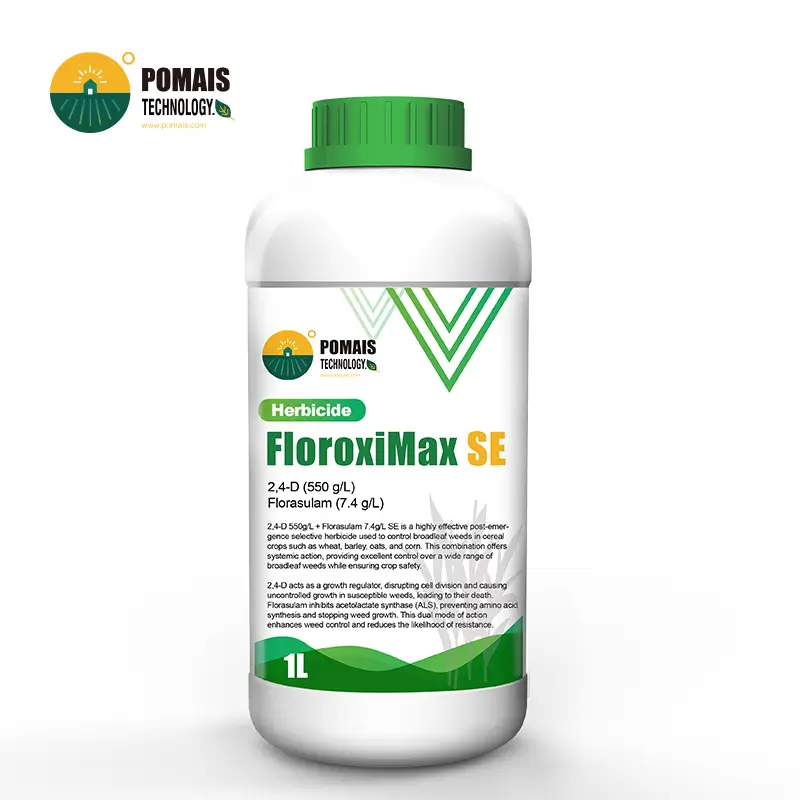
2,4-D 550g/L + Florasulam 7.4g/L SE Herbicide
If your market needs a reliable post-emergence broadleaf weed control solution for cereal programs, this 2,4-D 550 g/L + Florasulam 7.4 g/L SE delivers a practical balance of fast knockdown and program flexibility—supported by the documentation and private-label execution you need to commercialize confidently.
What you can request with this SKU (commercial-ready support):
- Batch-level COA plus MSDS / TDS for registration, tender, and distributor onboarding
- Private label artwork support (multi-language layouts aligned to your destination market)
- Flexible packaging formats for distribution and retail channels (custom options available)
- Designed for Professional Buyers & Bulk Orders
- We support custom packaging, labeling, and formulation to meet your market needs.
- Export wholesale inquiries only.
- Please include destination country, business type (importer/distributor/registrant), and expected volume.
- Retail requests will not be processed.

About 2,4-D 550g/L + Florasulam 7.4g/L SE Herbicide
| Product Name | 2,4-D 550g/L + Florasulam 7.4g/L SE |
| Active Ingredients | 2,4-D (550 g/L) Florasulam (7.4 g/L) |
| Chemical Family | 2,4-D: Phenoxy herbicide Florasulam: Triazolopyrimidine sulfonanilide |
| CAS Number | 2,4-D: 94-75-7 Florasulam: 145701-23-1 |
| Molecular Formula | 2,4-D: C8H6Cl2O3 Florasulam: C12H8F3N5O3S |
| Formulation Type | Suspo-emulsion (SE) |
| Mode of Action | 2,4-D: Disrupts plant growth by mimicking auxin, leading to uncontrolled growth and death Florasulam: Inhibits acetolactate synthase (ALS), blocking amino acid synthesis and stopping weed growth |
| Target Weeds | Broadleaf weeds such as chickweed, thistle, pigweed, mustards, smartweed, wild radish, and shepherd’s purse |
| Target Crops | Wheat, Barley, Oats, Maize, Sorghum, Pastures |
| Application Timing | Post-emergence (early weed growth stage) |
| Recommended Dosage | 0.5-1.0 L/ha (varies based on weed infestation level) |
| Application Method | Foliar spray using boom sprayers or backpack sprayers |
| Rainfastness | 2 hours after application |
| Solubility | 2,4-D: Soluble in water Florasulam: Low solubility in water, high solubility in organic solvents |
| Half-Life in Soil | 2,4-D: 7-14 days Florasulam: 15-20 days |
| Toxicity Classification | WHO Class III (Slightly Hazardous) |
| Environmental Impact | Moderate toxicity to aquatic organisms, avoid spraying near water bodies |
| Storage Stability | Stable for 2 years when stored in a cool, dry place |
| Packaging Options | 1L, 5L, 20L HDPE bottles/drums or customized bulk packaging |
| Regulatory Compliance | FAO, WHO, EPA, EU Standards |
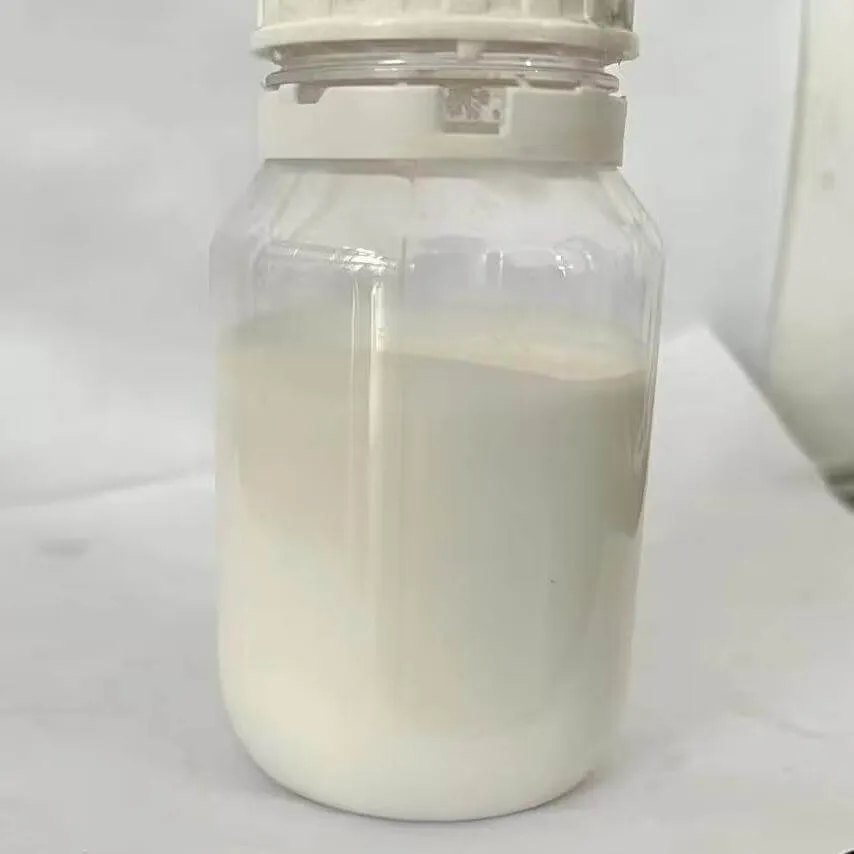
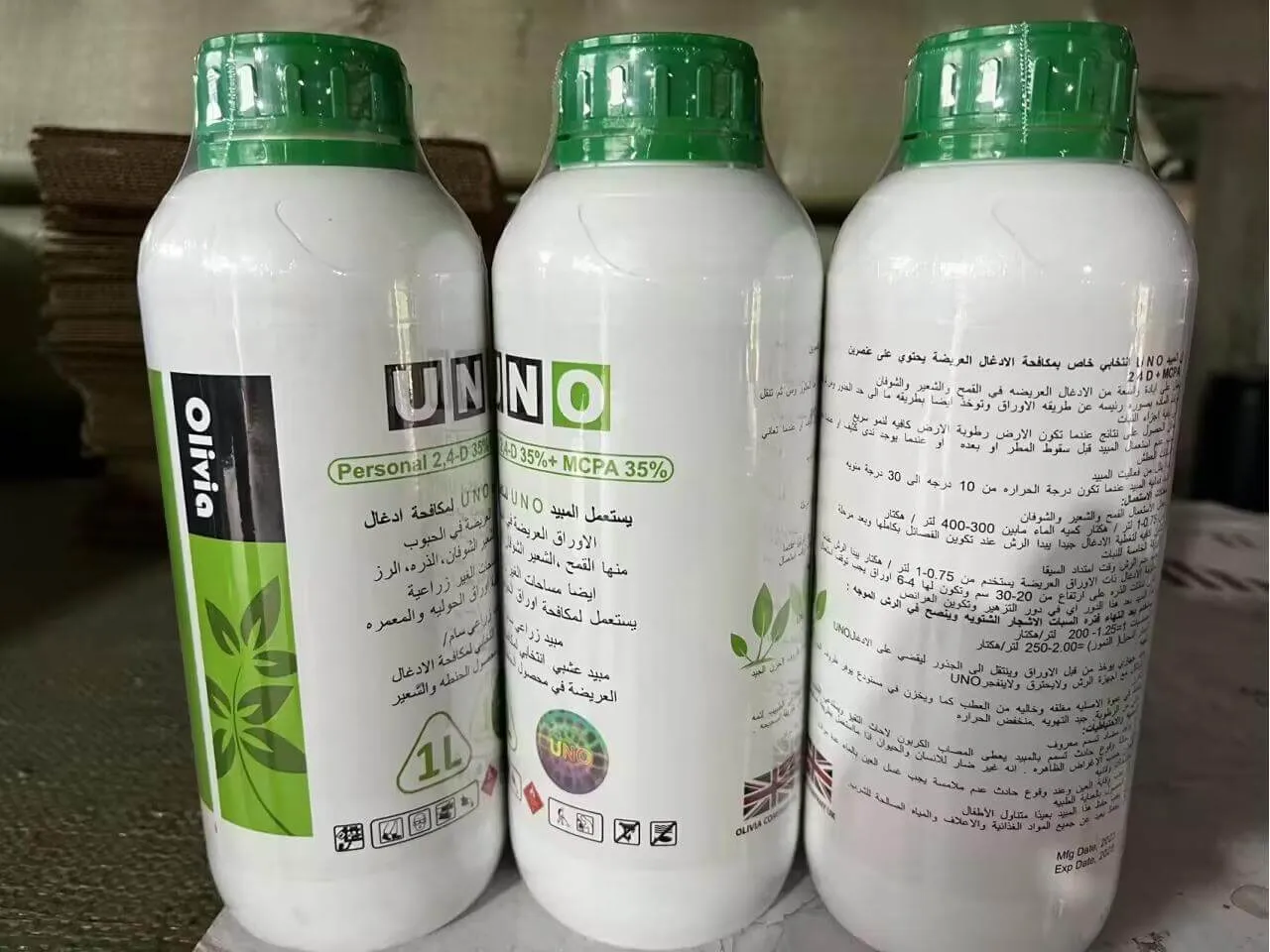
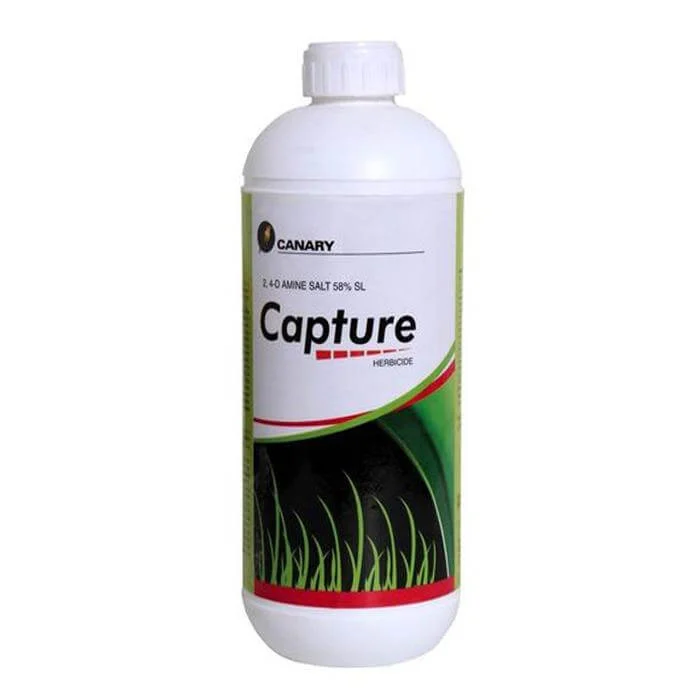
2,4-D 550g/L + Florasulam 7.4g/L SE Herbicide
This product is a selective, post-emergence herbicide designed to control broadleaf weeds in cereal crops (commonly positioned for wheat and other cereal systems depending on local registration).
It combines two complementary modes of action:
- 2,4-D: a synthetic auxin (HRAC Group 4) widely recognized for broadleaf control
- Florasulam: an ALS (AHAS) inhibitor (HRAC Group 2) used in post-emergence broadleaf programs
For trade buyers, this is not just a formulation—it is a sellable portfolio item that fits distributor catalogs, seasonal cereal campaigns, and tender-driven procurement where documentation and batch consistency matter.
Dual mode of action: why this combination is a portfolio asset
How 2,4-D works (synthetic auxin, Group 4)
2,4-D acts as a synthetic auxin, disrupting normal growth processes in susceptible broadleaf weeds and driving uncontrolled growth responses that lead to plant death. It is classified as HRAC Group 4.
How florasulam works (ALS inhibitor, Group 2)
Florasulam inhibits ALS/AHAS, a key enzyme involved in producing essential branched-chain amino acids. When ALS is inhibited, susceptible weeds stop growing and decline over time.
Why the combination matters commercially
In real cereal fields, weed populations are rarely “single-species, single-timing.” A dual-action positioning helps you:
- Build a stronger broadleaf control story for distributors who manage diverse farm conditions
- Strengthen program credibility where buyers demand mode-of-action clarity for stewardship messaging
- Differentiate your SKU beyond generic 2,4-D products by adding a recognized ALS component
Formulation matters: what SE means for your market execution
This product uses a suspo-emulsion (SE) formulation, designed to combine active ingredients with different physical properties into one water-based, stable product system. In industry terms, SE blends features of suspension concentrate (SC) and emulsion (EW) technologies.
Why buyers and distributors care about SE:
- More consistent dispersion when diluted, supporting predictable handling in the field
- A practical format for combination actives, helping reduce “two-pack complexity” for channel partners
- Better commercial presentation: one SKU, one label, one logistics flow
Target weeds and typical cereal market scenarios
This SKU is positioned for broadleaf weed control in cereals, where weed pressure can fluctuate across seasons and regions. Your downstream messaging should emphasize broadleaf spectrum and program fit, while keeping claims aligned to local label language.
Typical buyer-driven scenarios:
- Cereal rotations where broadleaf pressure drives yield loss and harvest inefficiency
- Distributor-led programs that require a simple “post-emergence broadleaf” solution with clear MOA communication
- Tender or project procurement where documentation completeness is as important as efficacy
Application principles (label-first, market-safe)
Because use patterns and approved crops vary by country, the correct global approach is label-first stewardship:
- Follow local label directions and regulations for crops, timing, buffers, and equipment requirements.
- Target actively growing broadleaf weeds and apply under conditions that support deposition and uptake.
- Manage drift risk carefully—synthetic auxins can impact sensitive broadleaf crops if off-target movement occurs.
If your team needs country-specific use statements, we provide them through market-matched label drafts and technical documents, not as open-web “one-size-fits-all” directions.
Resistance and stewardship (Group 4 + Group 2)
This product combines Group 4 (synthetic auxin) and Group 2 (ALS inhibitor) herbicide activity. That matters because many procurement teams now require a stewardship narrative that protects long-term efficacy.
What your distributors can communicate responsibly:
- Rotate or integrate herbicides with different modes of action where permitted and agronomically suitable.
- Avoid repeated reliance on a single MOA, especially ALS-based programs where resistance cases are documented in multiple regions and species.
- Combine chemical and non-chemical practices when feasible to reduce selection pressure.
Compatibility and tank-mix positioning (safe guidance)
In many markets, broadleaf weed programs are built as systems, not single-product events. We recommend you position compatibility as program-based:
- Conduct a jar test for physical compatibility when mixing products.
- Confirm crop safety and compliance through local label language and distributor guidance.
- For market-specific tank-mix claims, use approved label statements and technical support documentation.
Safety and environmental notes (buyer-ready, practical)
Your commercial positioning should treat risk as Hazard × Exposure and focus on exposure control:
- Prevent drift to non-target plants; respect buffers and application conditions required by local labels.
- Maintain equipment hygiene to avoid carryover between sensitive crops.
- Use only within approved crop and use-site registrations.
This approach protects your buyers’ brand reputation and reduces complaint risk in retail channels.
Packaging, private label, and commercialization support
You may source the formulation from China, but your success depends on in-market execution. We support your commercialization workflow end-to-end:
Packaging options for your channel plan:
- Distribution packs for regional wholesalers
- Retail-ready packs for agro-dealer networks
- Carton and pallet configurations optimized for container utilization
Private label support:
- Multi-language label layouts aligned to destination market conventions
- Artwork coordination (brand blocks, compliance sections, traceability elements)
- Consistent technical positioning for catalogs and sales materials
Suggested internal link (one only): Services (OEM/label/documentation support page).
Quality control and documentation pack (what buyers ask for first)
Professional procurement is documentation-driven. For this SKU, you can request a complete commercial documentation pack:
- Batch COA (quality release alignment)
- MSDS (logistics and warehouse compliance)
- TDS (product positioning, formulation description, and sales enablement)
If you are preparing for registration or tender, share the destination requirements early so we can align document formats and labeling priorities.
Frequently asked questions
What crops is this product positioned for?
It is positioned for cereal crop broadleaf weed control, commonly marketed for wheat and similar cereal systems depending on local registration. Always follow the destination country label.
What is the difference between Group 4 and Group 2 herbicides?
Group 4 herbicides act as synthetic auxins (e.g., 2,4-D). Group 2 herbicides inhibit ALS/AHAS (e.g., florasulam). Combining MOAs supports stewardship messaging and program design.
Why choose an SE formulation for a combo product?
SE formulations are designed to combine actives with different properties into one stable, water-based product system, supporting consistent handling and commercialization.
Is it rainfast?
Rainfastness statements are label-dependent and vary by local registration language and conditions. Share your destination country and intended program so we can provide the correct label-based guidance.
Can you support private label and documentation for importers?
Yes. We support private label execution and can provide COA/MSDS/TDS aligned to your order stage and destination market needs.
What information should I send to receive a quote quickly?
Destination country, target crop system, broadleaf problem profile, annual volume range, preferred pack format, and label language.
Request a spec pack and quotation
If you are preparing a cereal herbicide line for distribution, tenders, or retail networks, send us your requirements. You will receive:
- A market-ready technical spec pack (COA/MSDS/TDS as applicable)
- Packaging options aligned to your channel
- A quotation and supply plan aligned to your seasonal demand