
Key Citrus Production Challenges
Citrus is a perennial orchard crop, so pest and disease pressure can continue across several flushes and fruit-development stages within the same production year. A strong product portfolio should protect both tree health and fruit marketability.
Citrus Orchard Stage Protection Program
| Orchard Stage | Main Protection Direction | Commercial Selection Focus |
|---|---|---|
| Vegetative Flush | Psyllids, leafminer, aphids, thrips | Young-tissue protection, natural enemies |
| Pre-Bloom | Scales, mites, disease pressure | Monitoring, canopy condition, timing |
| Bloom | Pollinator-sensitive period, disease monitoring | Selectivity, bee precautions, label |
| Fruit Set | Thrips, scales, mites, young fruit disease | Fruit-surface protection |
| Fruit Enlargement | Scales, rust mites, foliar/fruit disease | Market quality, residual planning |
| Maturation & Harvest | Fruit finish, residues, late pests | PHI, MRLs, export compliance |
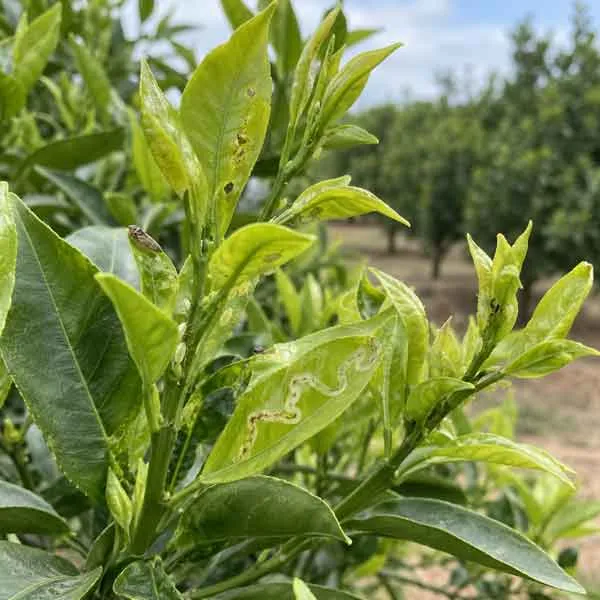
Vegetative Flush
Psyllids
Leafminer
Aphids
Thrips
Young foliage
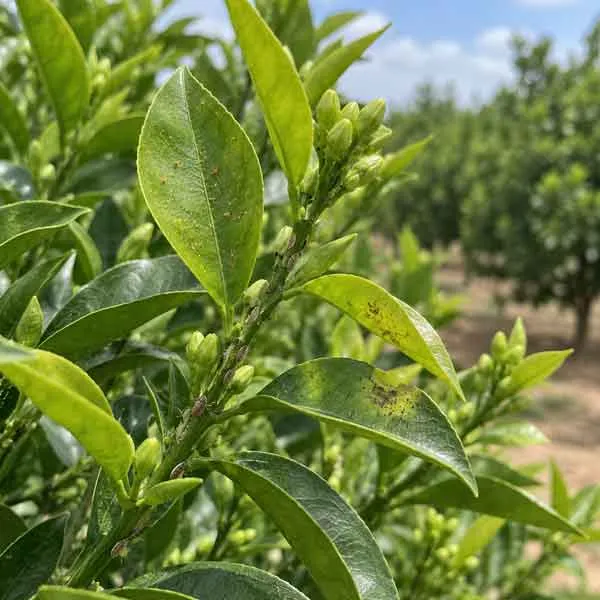
Pre-Bloom
Scale monitoring
Mites
Disease pressure
Canopy condition
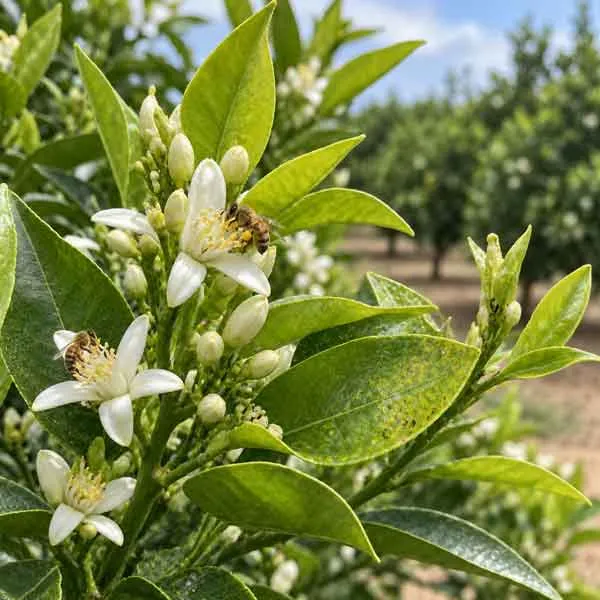
Bloom
Pollinator protection
Disease monitoring
Avoid unnecessary insecticide exposure
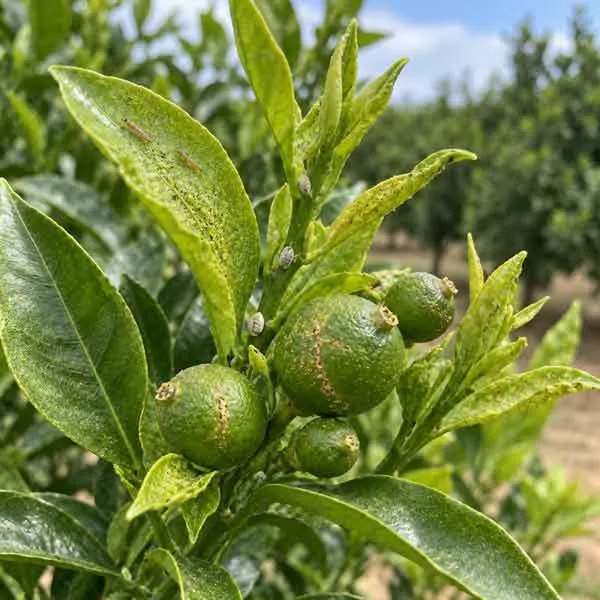
Fruit Set
Thrips
Scale
Mites
Fruit-surface damage
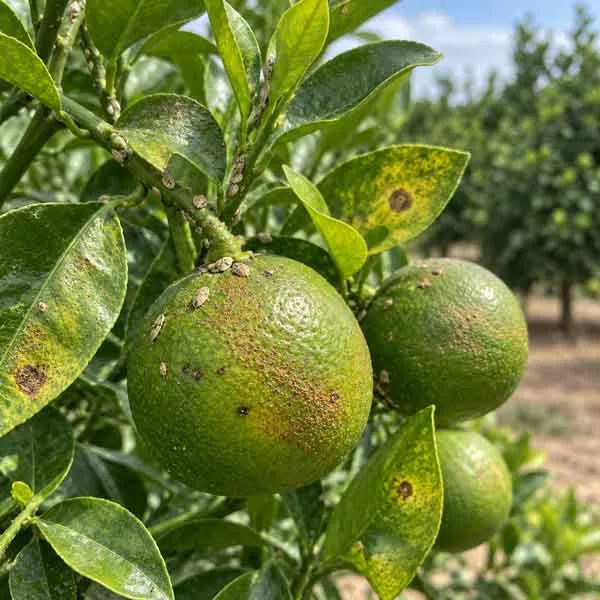
Fruit Enlargement
Scale
Rust mite
Disease
Fruit quality
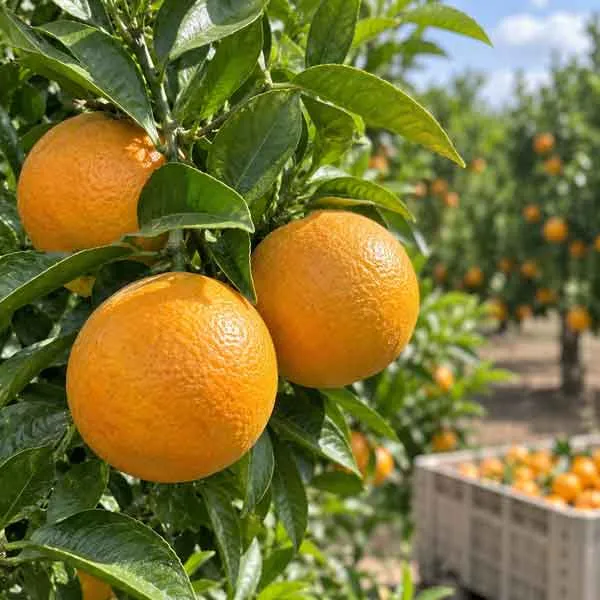
Maturation & Harvest
Fruit finish
PHI
MRL
Residues
Harvest quality
Common Citrus Diseases
1. Citrus Canker (Xanthomonas axonopodis)
Impact:
Citrus canker is a bacterial disease that affects leaves, stems, and fruits, causing lesions that lead to premature fruit drop, reduced fruit quality, and decreased marketability.
Symptoms:
- Raised, water-soaked lesions on leaves and stems that later turn yellow or brown.
- Scabby lesions on fruit that can affect the appearance and quality.
- Premature leaf and fruit drop, causing yield reduction.
Control Methods:
- Critical Control Period: From early growth stages to fruit ripening.
- Recommended Pesticides: Copper-based bactericides, such as Copper Hydroxide, effectively control citrus canker.
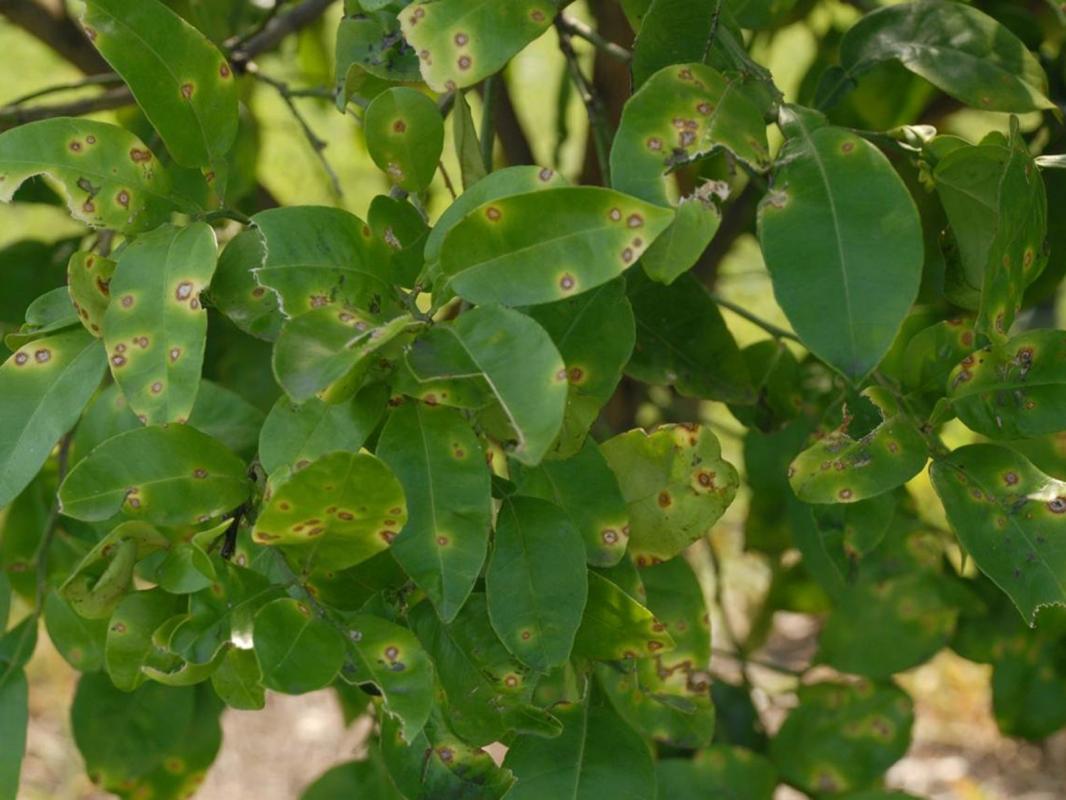
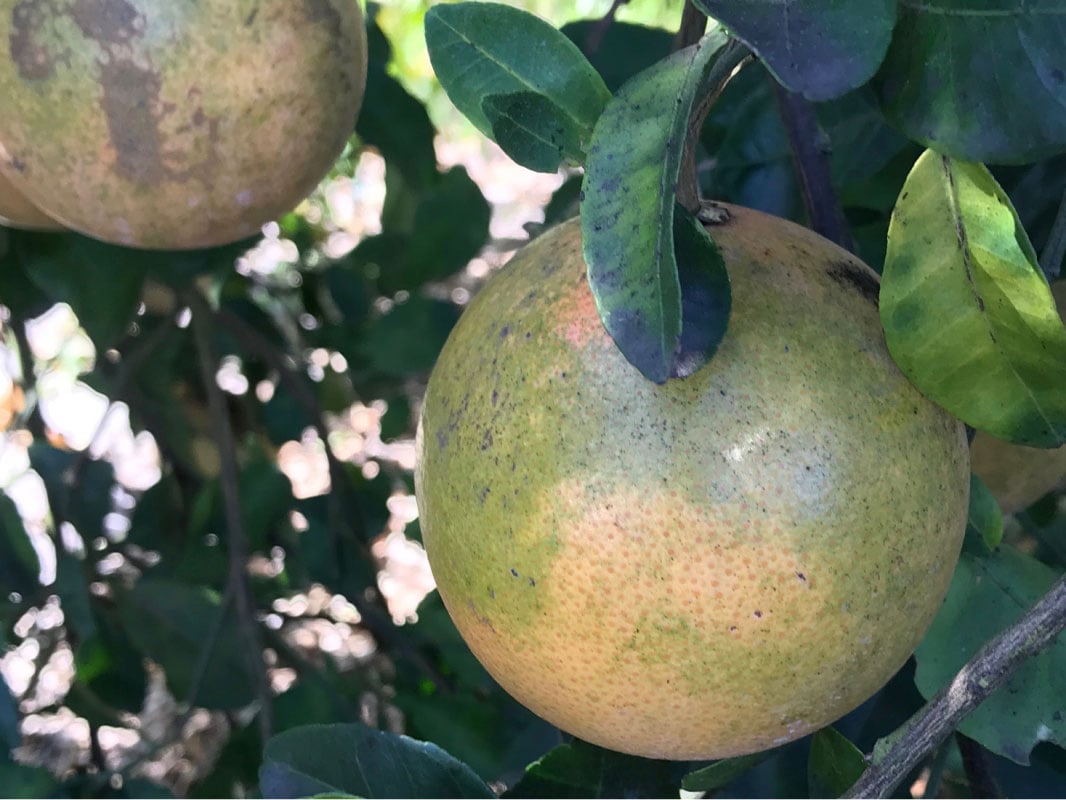
2. Greasy Spot (Mycosphaerella citri)
Impact:
Greasy spot is a fungal disease that affects citrus leaves and can result in reduced fruit production and quality. If not controlled, it leads to defoliation and decreased photosynthesis, reducing plant vitality.
Symptoms:
- Yellowish spots with greasy or oily appearance on the upper leaf surface.
- Dark, irregular lesions on the underside of leaves.
- Premature leaf drop, resulting in weakened plants and reduced fruit yield.
Control Methods:
- Critical Control Period: Primarily during the growing season before fruit ripening.
- Recommended Pesticides: Fungicides like Mancozeb or Copper-based fungicides offer effective control of greasy spot.

Mancozeb

Common Citrus Pests
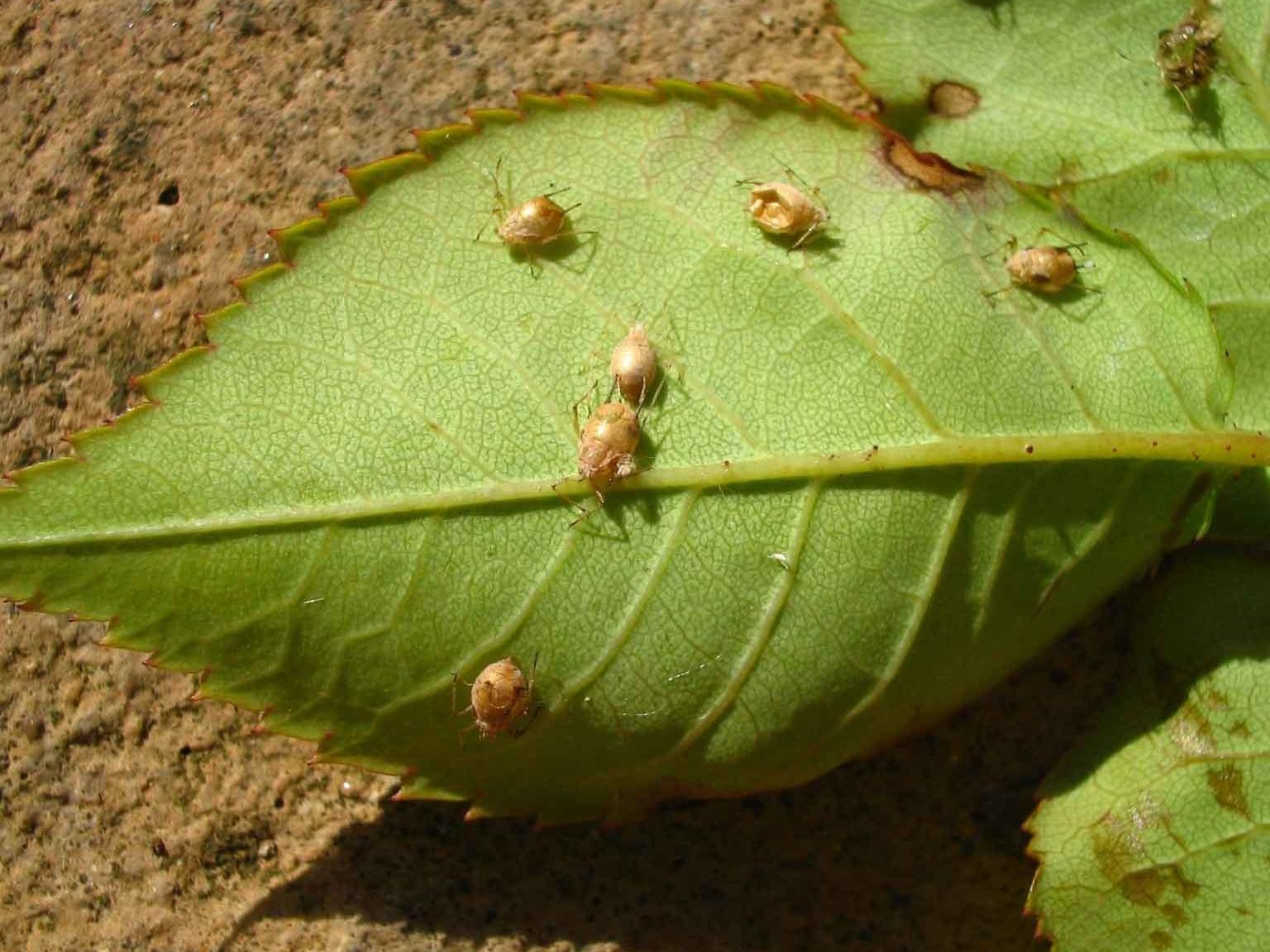
1. Citrus Aphid (Aphis gossypii)
Impact:
Citrus aphids are small insects that suck sap from the plant, causing wilting, yellowing, and deformed leaves. They also transmit several harmful viruses, such as the Citrus Tristeza Virus.
Symptoms:
- Yellowing of leaves and stunted growth.
- Sticky honeydew secretion, which attracts sooty mold.
- Distorted leaves and reduced fruit size.
Control Methods:
- Critical Control Period: From seedling stage through to harvest.
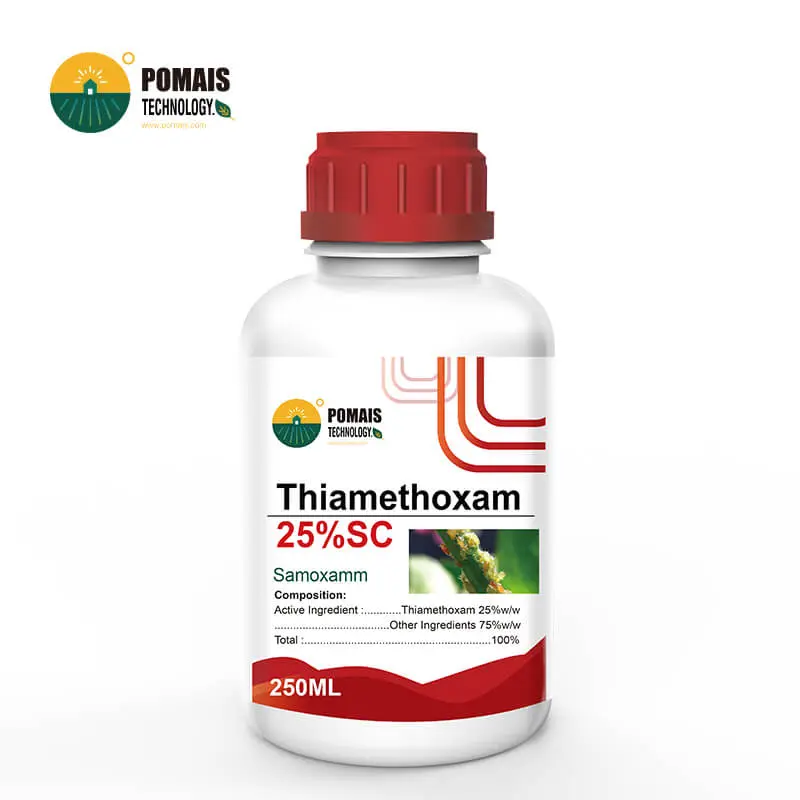
- Recommended Pesticides: Insecticides such as Imidacloprid and Thiamethoxam provide effective aphid control.
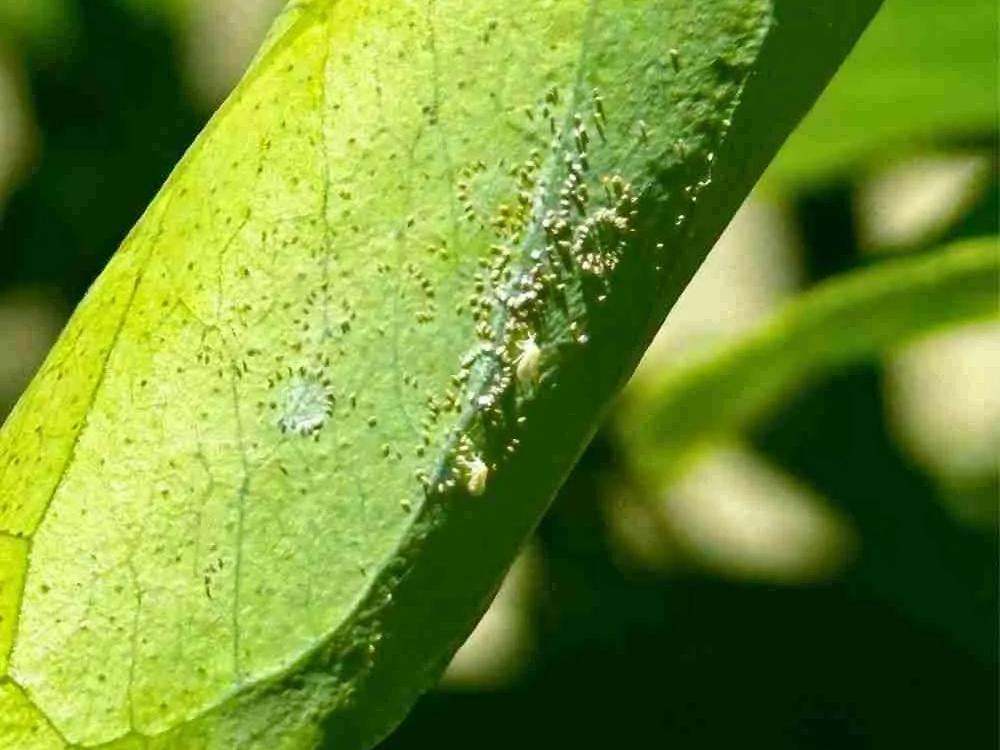
2. Citrus Whitefly (Dialeurodes citri)
Impact:
Citrus whiteflies are notorious pests that feed on the underside of leaves, causing leaf yellowing and wilting. They also transmit several viral diseases, which can cause severe crop damage.
Symptoms:
- Presence of white, powdery insects on the undersides of leaves.
- Yellowing of leaves and stunted growth.
- Sooty mold growth due to honeydew secretion.
Control Methods:
- Critical Control Period: From early growth stages to fruit maturation.
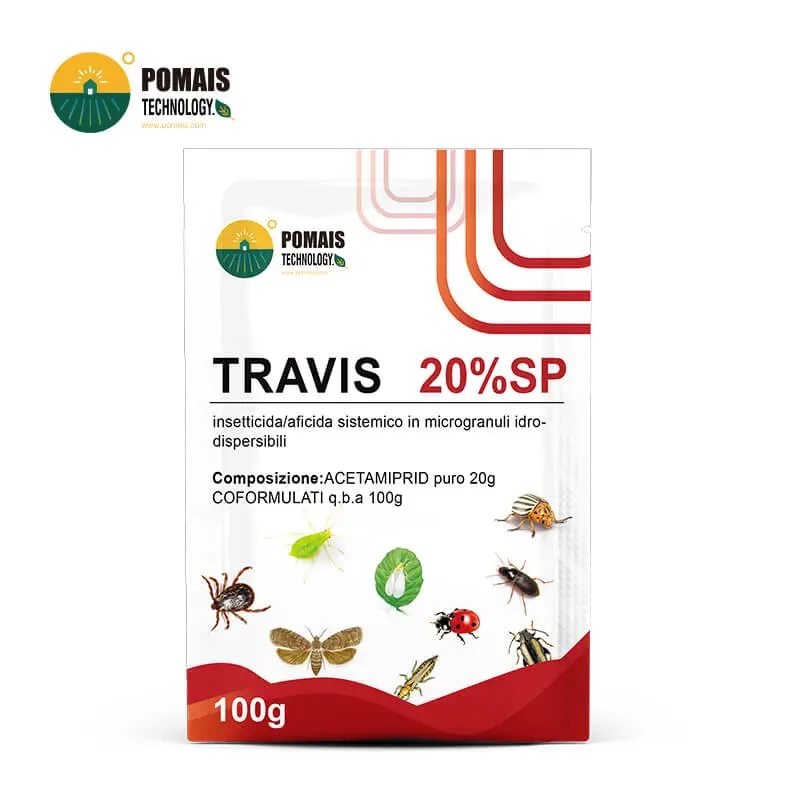
- Recommended Pesticides: Systemic insecticides like Acetamiprid and Imidacloprid are highly effective in controlling citrus whitefly populations.
Impact of Citrus Pests and Diseases
The presence of pests and diseases in citrus crops can have serious consequences:
- Yield Loss: Diseases like citrus canker and pests like aphids can cause fruit drop, reduce yield potential, and affect plant growth.
- Quality Degradation: Diseases such as greasy spot and pests like citrus aphids can affect the appearance and marketability of the fruit.
- Virus Transmission: Pests like citrus aphids and whiteflies act as vectors for viral diseases, which can lead to widespread crop damage.
- Crop Failure: If not controlled in time, pests and diseases can lead to complete crop loss, especially in severe infestations.
Citrus Pest and Disease Management Solutions
Control Indicators:
- Early Detection: Regular monitoring for pests and disease symptoms is crucial to early intervention.
- Preventive Treatments: Timely application of fungicides and insecticides can prevent the spread of disease and pests before they cause significant damage.
Critical Control Periods:
- Seedling to Early Vegetative Stages: This period requires control of pests like aphids and early fungal infections.
- Flowering to Fruit Maturation: Ensuring protection from diseases like citrus canker and pests such as whiteflies is essential during this period.
Recommended Pesticides:
- Fungicides: Copper-based products for bacterial diseases like citrus canker and Mancozeb for greasy spot.
- Insecticides: Systemic insecticides such as Imidacloprid and Thiamethoxam for aphids and whiteflies.