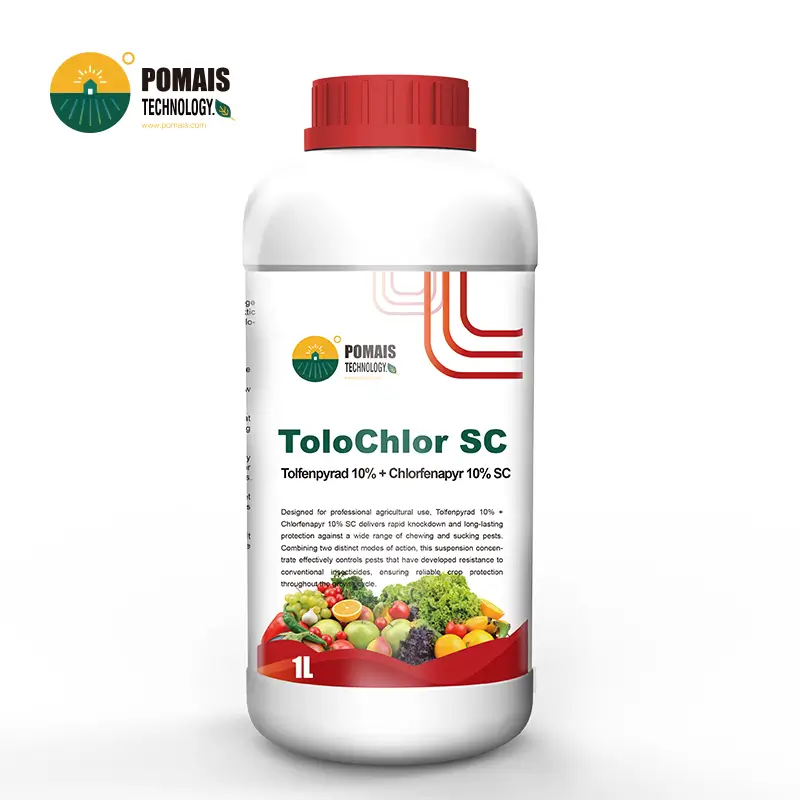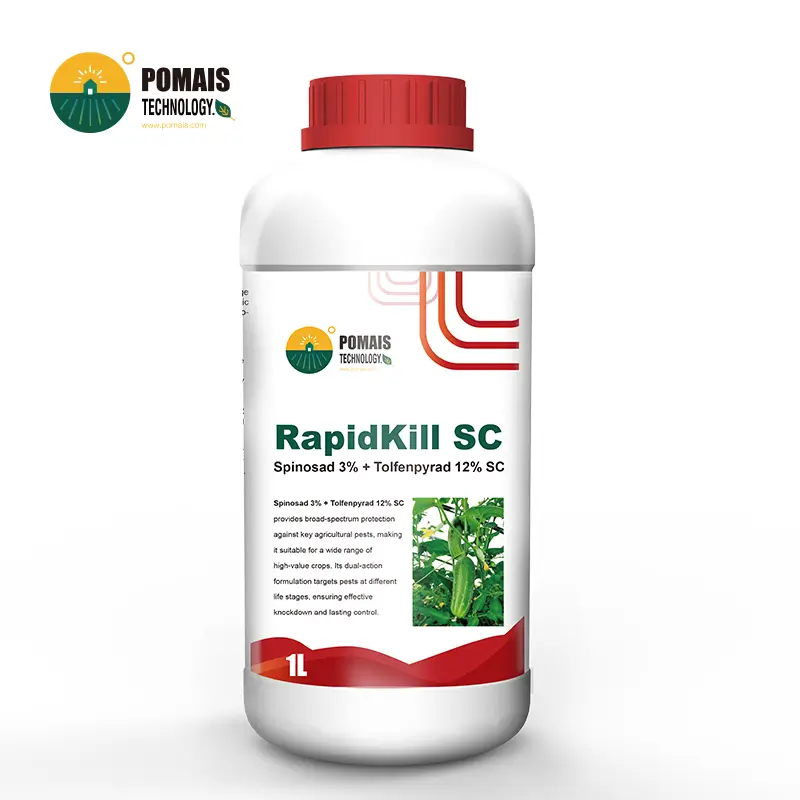


Bifenazaat insecticide en acaricide
Bifenazate is a selective acaricidal active ingredient primarily used to control certain phytophagous mites, particularly spider mites. Its mode of action is classified under IRAC Group 20D and involves the inhibition of electron transport in mitochondrial Complex III.
When evaluating Bifenazate products, pesticide importers, distributors, brand owners, and registration companies should focus on target mites, applicable crops, formulation specifications, product quality, and registration requirements in target markets. Products with different concentrations and formulations cannot share application parameters directly, nor should they be assumed to have the same control scope simply because they contain the same active ingredient.
POMAIS offers pesticide product supply partnerships to professional procurement clients. We recommend that buyers specify the target country, candidate crops, target mites, required concentrations, and formulation types before requesting a quote, in order to further confirm the actual available specifications, technical documentation, and market suitability.
- Ontworpen voor professionele kopers en bulkbestellingen
- Wij ondersteunen maatwerkverpakkingen, etikettering en formuleringen die voldoen aan uw marktbehoeften.
- Alleen exportaanvragen.
- Vermeld alstublieft het land van bestemming, het type bedrijf (importeur/distributeur/registrant) en het verwachte volume.
- Aanvragen van particuliere klanten worden niet verwerkt.

Over Bifenazate Insecticide & Acaricide
| Kenmerken | Productinformatie |
|---|---|
| Product | Bifenazaat-acaricide |
| Actief ingrediënt | Bifenazaat |
| product categorie | Acaricide / Miticide |
| IRAC-groep | 20D |
| Actie modus | Mitochondrial Complex III electron transport inhibitor |
| CAS-nummer | 149877-41-8 |
| Moleculaire Formule | C₁₇H₂₀N₂O₃ |
| moleculair gewicht | X |
| Formuleringen | 22.6% SC, 24% SC, 48% SC, 50% WP, 50% WDG; specific available formulations subject to confirmation |
| Belangrijkste doelwitplagen | Certain spider mites and other phytophagous mites supported by product data |
| Aanbevolen gewassen | Apples, grapes, citrus, berries, certain fruit and vegetable crops, and ornamental plants, among others; specific formulation registrations must be verified |
| Toepassingsmethode | Confirm according to the specific product label |
| Toepassings hoeveelheden | Subject to the approved label for the corresponding product |
| Verpakken | Dit wordt bevestigd op basis van de daadwerkelijk beschikbare specificaties en bestelvereisten. |
| Houdbaarheid | Onder voorbehoud van de informatie op het productetiket en de stabiliteitsgegevens. |
| Technische documenten | Controleer documenten zoals COA, SDS en TDS op basis van de daadwerkelijke leveringsomstandigheden. |
The above information is provided to illustrate the basic characteristics of the active ingredient and the product evaluation scope. The concentration, quality standards, packaging, and approved uses for different formulations must be verified separately; parameters for one Bifenazate formulation cannot be directly applied to other specifications.
What Is Bifenazate? What Is Bifenazate
Bifenazate is a selective acaricide active ingredient used for the management of phytophagous mites. Its technical application primarily targets certain leaf mites, including the two-spotted spider mite
(Two-Spotted Spider Mite, Tetranychus urticae), the European Red Mite (European Red Mite, Panonychus ulmi), and other mites supported by corresponding product data.
In the pest management of fruit trees, berry crops, certain fruit and vegetable crops, and ornamental plants, leaf mites can affect leaf function, plant growth, and market quality. For these crops, product selection should take into account the specific mite species, infestation severity, crop growth stage, and local registration status.
The commercial viability of bifenazate cannot be determined solely by the name of the active ingredient. Buyers should also verify:
- Whether applicable product registrations exist in the target market.
- Whether the actual concentration and formulation supplied meet procurement requirements.
- Whether the product label covers the crops and target mites intended for use.
- Whether the formulation quality, packaging, and technical documentation comply with local requirements.
These factors determine whether a product is suitable for entry into the target market, rather than simply whether the corresponding specifications exist in the product catalog.


Actie modus
Bifenazate belongs to IRAC Group 20D and is classified as a mitochondrial Complex III electron transport inhibitor.
The mitochondrial electron transport process is involved in cellular energy metabolism. Bifenazate’s mode of action involves interfering with electron transport in mitochondrial Complex III, thereby disrupting the normal physiological activities of susceptible mites.
IRAC Group 20D — Bifenazate
IRAC Group 20D is the specific classification of Bifenazate’s mode of action. When evaluating a portfolio of acaricides, purchasers should use the IRAC classification to identify the relationships between the modes of action of different active ingredients.
Different trade names, concentrations, or formulations do not necessarily imply different modes of action. Therefore, when developing resistance management strategies, attention should be focused on the IRAC Group corresponding to the active ingredient, rather than simply comparing product names.
Contact Activity and Spray Coverage
Bifenazate is typically used as a non-systemic foliar acaricide. For formulations that rely on contact activity, the quality of spray coverage is a critical factor affecting control efficacy.
Insufficient coverage of both sides of the leaves, overly dense plant canopies, or inadequate coverage of areas where target mites are hiding may all affect actual control efficacy. Specific application methods should follow the instructions on the product label and the requirements of the applicable application equipment.
Bifenazate should not be described as having unproven systemic translocation capabilities, nor should its non-systemic nature alone be used to infer that the risk of drift or off-target exposure is necessarily low.
Recommended Crops and Target Mites
Publicly available product labels and technical data for Bifenazate provide application guidance for certain fruit trees, berry crops, fruiting vegetables, and ornamental plants.
The table below is intended to assist importers and distributors in evaluating candidate crop markets. It is not a comprehensive list of all Bifenazate formulations listed in POMAIS. Specific crops, target mites, and application methods must be verified on a case-by-case basis based on the actual formulations available and the approved labels for the target markets.
Primaire gewasmogelijkheden
| Kandidaatgewassen | Candidate Target Mites | Belangrijkste punten voor productevaluatie |
|---|---|---|
| Appel | European Red Mite, Spider Mites | Verify fruit tree registrations and target mite species for specific formulations |
| Citrus | Citrus Red Mite, other Spider Mites supported by data | Verify citrus species, mite species, and local registrations |
| Grapes | Spintmijten | Verify the specific formulation’s use on grapes |
| Bessen | Spintmijten | Confirm based on specific berry crops and label |
| Tomaat | Two-Spotted Spider Mite and other applicable leaf mites | Verify scope of use (field or greenhouse) and crop safety |
| Other Fruiting Vegetables | Certain Spider Mites | Evaluate based on specific crops and approved labels |
| Sierplanten | Certain Spider Mites, Red Mites | Verify specific ornamental plants and applicable labels |
Target Mite Species and Life Stages
The scope of control for Bifenazate must be specified in terms of mite populations and life stages; it must not be generally promoted as capable of controlling all phytophagous mites.
Some publicly available product labels describe Bifenazate’s primary mode of action as targeting active mites and note that it exhibits ovicidal activity against the eggs of certain leaf mites in the genus Tetranychos.
However, this characteristic cannot be generalized to imply efficacy against all mite eggs, all developmental stages, or all mite species. For targets such as Broad Mites, Flat Mites, and Rust Mites, claims that they are effectively controlled by this product should be avoided in the absence of clear product-level evidence.
Hoe de geschiktheid van gewassen te bevestigen
Before formally recommending a crop, the following should be verified on a case-by-case basis:
- Gewasregistratie: Is het beoogde gewas opgenomen in het goedgekeurde toepassingsgebied van de specifieke formulering?
- Target Mite: Does the label explicitly list the corresponding mite species, or is there reliable product-level data to support this?
- Geschiktheid van de formulering: Are the current concentration and formulation suitable for the intended application method?
- Gewasveiligheid: Zijn er overeenkomstige gegevens over gewasveiligheid beschikbaar?
- Residuvereisten: Voldoet het product aan de maximale residulimieten (MRL's) en de wachttijden vóór de oogst die vereist zijn voor de beoogde markt?
To assess pest mite management needs on other crops, refer to POMAIS-oplossingen voor gewasplagenbestrijding.
Formulation Options and Quality Requirements
The actual performance of bifenazate products depends not only on the active ingredient but also on formulation design, granule characteristics, quality control, and storage conditions.
| formulering | product Form | Belangrijkste punten voor de beoordeling van inkoop |
|---|---|---|
| 22.6% SC | Suspensieconcentraat | Suspension Performance, Dispersibility, Storage Stability |
| 24% SC | Suspensieconcentraat | Active ingredient content, suspension performance, and batch consistency |
| 48% SC | Suspensieconcentraat | Actual content, formulation quality, and corresponding product documentation |
| 50% WP | In water oplosbaar poeder | Wettability, suspension properties, wet sieving performance, and packaging suitability |
| 50% WDG | In water dispergeerbare korrels | Disintegration, suspension properties, wet sieving performance, and storage stability |
Before formal release or quotation, please confirm the actual available specifications, corresponding technical specifications, and suitability for the target market.
SC-formulering
SC (Suspension Concentrate) consists of solid active ingredient particles dispersed in a liquid phase. Buyers should focus on indicators such as active ingredient content, suspension performance, wet sieving performance, sustained foaming, pourability, and storage stability.
Claims regarding faster knockdown speed, a fixed residual efficacy period in the field, or absolutely no settling should not be made based solely on the SC formulation name.
WP and WDG Formulations
WP (Wettable Powder) and WDG (Water-Dispersible Granule) differ in physical form, formulation process, and quality specifications.
For WP, verification should focus on wetting, suspension, and related quality specifications; for WDG, verification should focus on granule disintegration, dispersion, suspension, and wet sieving performance.
Quality requirements for different formulations must be based on the corresponding product specifications and applicable standards; test results for one formulation cannot be directly applied to another.
Richtlijnen voor toepassingen
The application rate, timing, and frequency of Bifenazate depend on the specific concentration, formulation, crop, target mites, and locally approved label.
Toepassingsparameters ter bevestiging
| Toepassingsparameters | Bevestigingsvereisten |
|---|---|
| Doelgewas | Raadpleeg het goedgekeurde etiket voor het betreffende product. |
| Target Mite | Raadpleeg de geregistreerde doelplagen. |
| Toepassings hoeveelheden | Confirm based on specific concentration, formulation, and label |
| Toepassingsmethode | Follow the application method specified on the approved label |
| Spuitdekking | Confirm based on product instructions and applicable equipment requirements |
| Toepassingsinterval | Raadpleeg het goedgekeurde etiket. |
| Maximale toepassingen | Volg de instructies op het etiket |
| Pre-oogstinterval (PHI) | Raadpleeg het goedgekeurde etiket voor de beoogde markt. |
| Herintredingsinterval (REI) | Raadpleeg het goedgekeurde etiket voor de beoogde markt. |
Spray Coverage and Timing
For specific formulations applied via foliar spraying, ensure coverage of both the upper and lower surfaces of leaves, account for the plant canopy structure, and monitor the occurrence of target mites in accordance with label requirements.
Some publicly available labels for bifenazate products recommend prompt and appropriate control measures upon detection of mites; however, the actual application timing, dosage, and application intervals must follow the approved label for the specific product.
Application parameters from other countries, different concentrations, or other formulations must not be directly applied to this product.
Resistentie Beheer
Bifenazate belongs to IRAC Group 20D. Long-term, repeated use of acaricides with the same mode of action may increase the selective pressure for target mites to develop resistance.
Kernprincipes voor het beheersen van weerstand
- Develop management strategies based on the target mites, local resistance status, and the approved label.
- Where appropriate, rotate the use of products with different modes of action that are effective against the target mites.
- Do not mistakenly assume that different trade names, concentrations, or formulations represent different modes of action.
- Do not assume that a mixed-formulation product offers independent resistance management advantages simply because it contains two active ingredients.
- Combine field monitoring, appropriate cultural practices, and other applicable mite management methods to reduce reliance on a single mode of action.
Bifenazate in Integrated Pest Management
Integrated Pest Management (IPM) requires a combination of mite monitoring, appropriate application strategies, cultural management, and assessment of risks to beneficial organisms.
Whether bifenazate is suitable for a particular IPM program should be determined based on the specific formulation, target mites, and conditions of use. It cannot be generally claimed to be safe for all predatory mites, parasitic wasps, and pollinating insects.
For greenhouse and orchard projects requiring coordination with biological control measures, it is recommended to first verify the specific product label and reliable data on non-target organisms before determining the application schedule.
Veiligheids- en milieuoverwegingen
The safe management of bifenazate products should be based on the specific formulation’s SDS, approved label, and regulations of the target market.
Non-Target Organisms
Data on some bifenazate formulations indicate that this active ingredient can be used for selective mite management under specific conditions and can be incorporated into appropriate IPM programs. However, this does not mean that all formulations are free of impact on all beneficial organisms.
When evaluating products, focus on the following:
- Label warnings regarding bees and other non-target organisms.
- Risks of spray drift and exposure in non-target areas.
- Effects on beneficial organisms, such as predatory mites.
- Specific application restrictions when used in conjunction with other plant protection measures.
One should not infer that spray drift is minimal or that non-target risks are necessarily low solely based on the non-systemic nature of bifenazate.
Veilige hantering en opslag
Purchasers should verify the actual product’s hazard classification, personal protective equipment (PPE), storage requirements, spill response procedures, and waste disposal requirements.
During operations, follow the environmental protection measures listed on the product label to prevent spray solution, washwater, or contaminated materials from entering rivers, ponds, drainage ditches, and other bodies of water.
Specific safety requirements should be based on the SDS and approved label of the actual supplied formulation; general information about the active ingredient cannot be directly used to draw comprehensive safety conclusions regarding the finished formulation.
Kwaliteitscontrole en technische documentatie
For Bifenazate products, procurement audits should focus on product identity, active ingredient content, formulation quality, and batch traceability.
Checklist voor kwaliteitsverificatie
| Controlepunten | Te controleren items |
|---|---|
| Productidentiteit | Consistency of active ingredient, content, and dosage form |
| Actieve ingrediënteninhoud | Nominaal gehalte en batchtestresultaten |
| Formuleringskwaliteit | Quality specifications for the corresponding dosage form |
| Opslag stabiliteit | Stabiliteitsgegevens die overeenkomen met het daadwerkelijke product. |
| Verpakkingsintegriteit | Verpakkingsintegriteit en geschiktheid van materialen |
| Traceerbaarheid van batches | Batchnummers en bijbehorende productiegegevens |
| Kwaliteitsnorm | Technische specificaties van het daadwerkelijk geleverde product. |
COA, SDS en TDS
Purchasers may verify the following documents based on order requirements and target market specifications:
- COA (Certificaat van Analyse): Testresultaten voor de betreffende batch.
- Veiligheidsinformatieblad (VIB): Information on product safety, storage, operational precautions, and emergency response.
- TDS (Technisch gegevensblad): Producttechnische parameters en relevante kwaliteitsspecificaties.
- Overige technische of registratiedocumenten: To be confirmed based on the target market and actual availability.
All documents must be consistent with the actual product’s concentration, formulation, and quality standards. General technical documents cannot substitute for local registration nor serve as proof that the product has been approved for use on all candidate crops.
B2B Supply and Procurement: Commercial Procurement and Supply Partnerships
POMAIS biedt gespecialiseerde samenwerkingsverbanden voor productlevering aan importeurs, distributeurs, merkeigenaren en registratiebedrijven van bestrijdingsmiddelen.
For Bifenazate products, we recommend specifying the target country, required concentration, formulation, candidate crops, target mites, and estimated purchase quantity before requesting a quote, in order to confirm the actual available specifications and corresponding technical documentation.
| Inkoopartikelen | Information to Be Confirmed |
|---|---|
| Vereist product | Bifenazate and required concentration, formulation |
| Land van bestemming | Doelland van import |
| Target Crops and Mites | Planned target crops and mites |
| Registratie Status | Current registration status or plans |
| Verpakkingsvereisten | Beschikbare verpakkingsspecificaties en etiketteringsvereisten |
| Technische documenten | Vereisten voor COA, SDS, TDS en andere documenten |
| Verwacht aankoopvolume | Geschatte aankoophoeveelheid |
| Leveringsvereisten | Estimated Delivery Arrangements and Terms of Trade |
Packaging specifications, MOQ, delivery times, and technical documents should be confirmed based on actual supply availability, order quantity, and destination requirements. For registration documentation or multilingual labeling requirements specific to certain markets, the scope of feasibility should be clarified in advance.
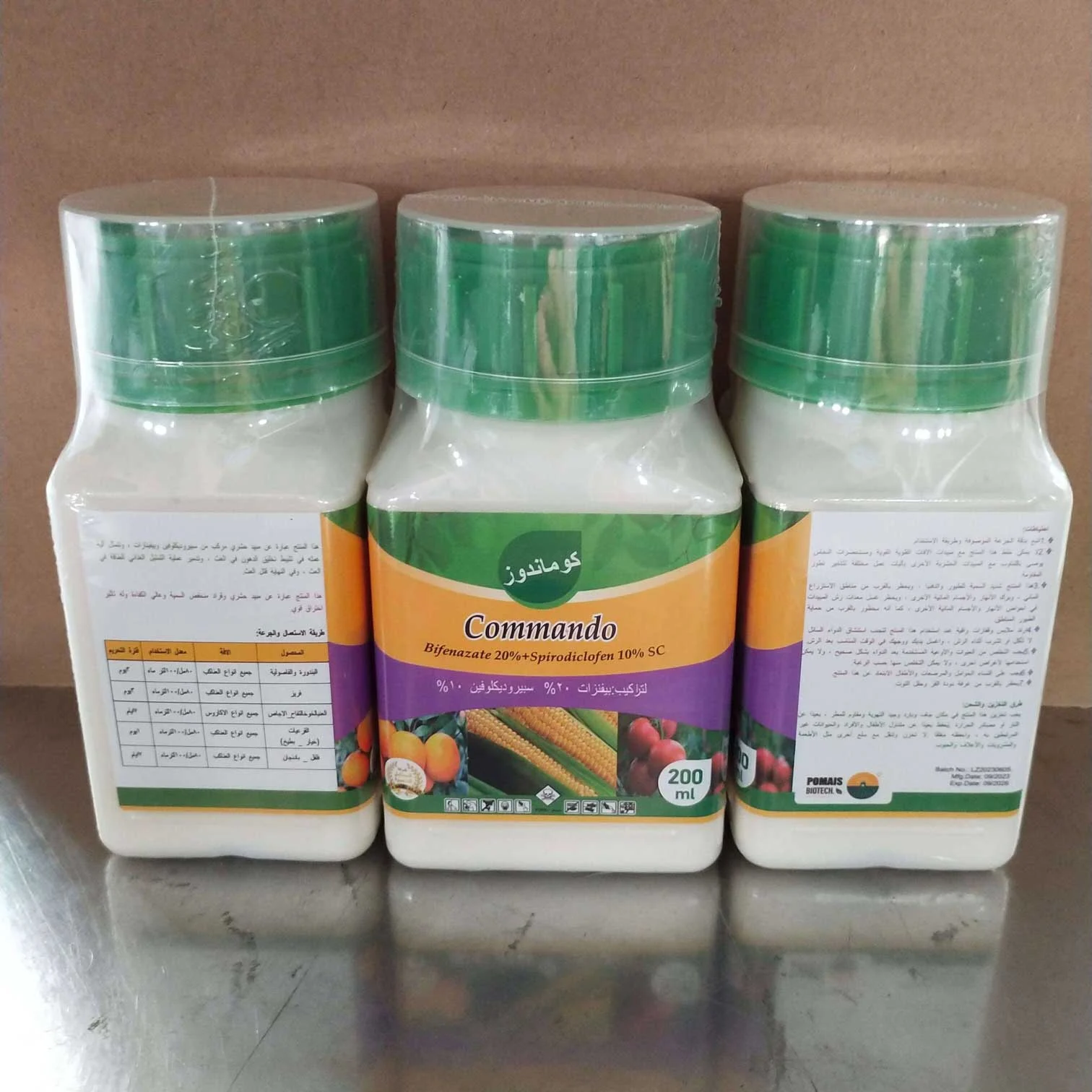
If a buyer needs to evaluate formulation options combining Bifenazate with other active ingredients, the actual formulation, product specifications, quality data, and corresponding registration basis must be confirmed separately; unverified mixture formulations must not be sold as formal formulated products.
Veelgestelde Vragen / FAQ
What Is Bifenazate?
Bifenazate is a selective acaricide active ingredient primarily used for the management of certain phytophagous mites. Specific target pests and applicable crops should be confirmed based on the label and technical data of the actual formulation.
What Is the IRAC Group of Bifenazate?
Bifenazate belongs to IRAC Group 20D and is classified as a mitochondrial Complex III electron transport chain inhibitor.
Which Crops Can Be Considered for Bifenazate?
Priority should be given to evaluating candidate crops such as apples, grapes, citrus, berries, certain fruit and vegetable crops, and ornamental plants. Specific uses should be verified based on the labels approved for the actual formulations supplied and the target markets.
Which Mites Should Be Evaluated?
Priority should be given to evaluating certain spider mites, including the two-spotted spider mite, the European red mite, and other leaf mites supported by specific product data. Not all mite species can be listed as confirmed targets for control.
Does Bifenazate Control All Mite Life Stages?
This cannot be generalized. Some formulations primarily target active mites and are active against the eggs of certain leaf mites in the Tetranychos genus. The actual range of life stages covered should be determined by the corresponding product label and technical data.
Is Bifenazate a Systemic Acaricide?
Bifenazate is typically used as a non-systemic foliar acaricide. For specific formulations that act by contact, the quality of application coverage is a critical factor. Actual application practices should follow the corresponding product label.
Wat is de aanbevolen dosering?
The application rate depends on the specific concentration, formulation, crop, target mites, and locally approved label.
Can Bifenazate Be Mixed with Other Pesticides?
Before mixing, verify the labels of both products, compatibility, crop safety, and usage restrictions. Physical compatibility testing does not replace verification of efficacy and crop safety, nor does it automatically prove that the mixture has value for resistance management.
Welke documenten kunnen kopers opvragen?
Kopers kunnen een analysecertificaat (COA), een veiligheidsinformatieblad (SDS), een technisch gegevensblad (TDS) en andere relevante technische documenten aanvragen, afhankelijk van het specifieke product en de eisen van de beoogde markt. De precieze omvang van de te verstrekken documenten dient te worden geverifieerd voordat een bestelling wordt geplaatst.
Hoe kunnen importeurs een offerte aanvragen?
Importers, distributors, brand owners, and registration companies may provide the target country, product concentration and formulation, candidate crops and target mites, registration status, estimated purchase quantity, and document requirements to confirm product supply terms.
Productspecificaties en offerte aanvragen – Informatie en inkoopconsultaties
If you are evaluating Bifenazate products, we recommend providing the following information:
- Land van bestemming: Doelland voor import.
- Vereiste specificatie: Vereiste concentratie en samenstelling.
- Target Crops and Mites: Crops and target mites for which the product is intended.
- Registratiestatus: Huidige registratiestatus of plannen.
- Verpakkingsvereisten: Verpakkingsspecificaties en etiketteringsvereisten.
- Verwacht aankoopvolume: Geschatte aankoophoeveelheid.
- Technische documenten: Vereiste COA, SDS, TDS en andere documentatie.
- Leveringsvereisten: Verwachte inkoop- en leveringsafspraken.
POMAIS zal het samenwerkingsplan voor de inkoop verder bevestigen op basis van de daadwerkelijke productspecificaties, technische documentatie, leveringsvoorwaarden en de eisen van de beoogde markt.
Neem contact met ons op!
We zullen u binnen 24 uur op werkdagen antwoorden!