
ការគ្រប់គ្រងជំងឺរលួយដំឡូងយឺត៖ របៀបជ្រើសរើសថ្នាំសម្លាប់ផ្សិតត្រឹមត្រូវ
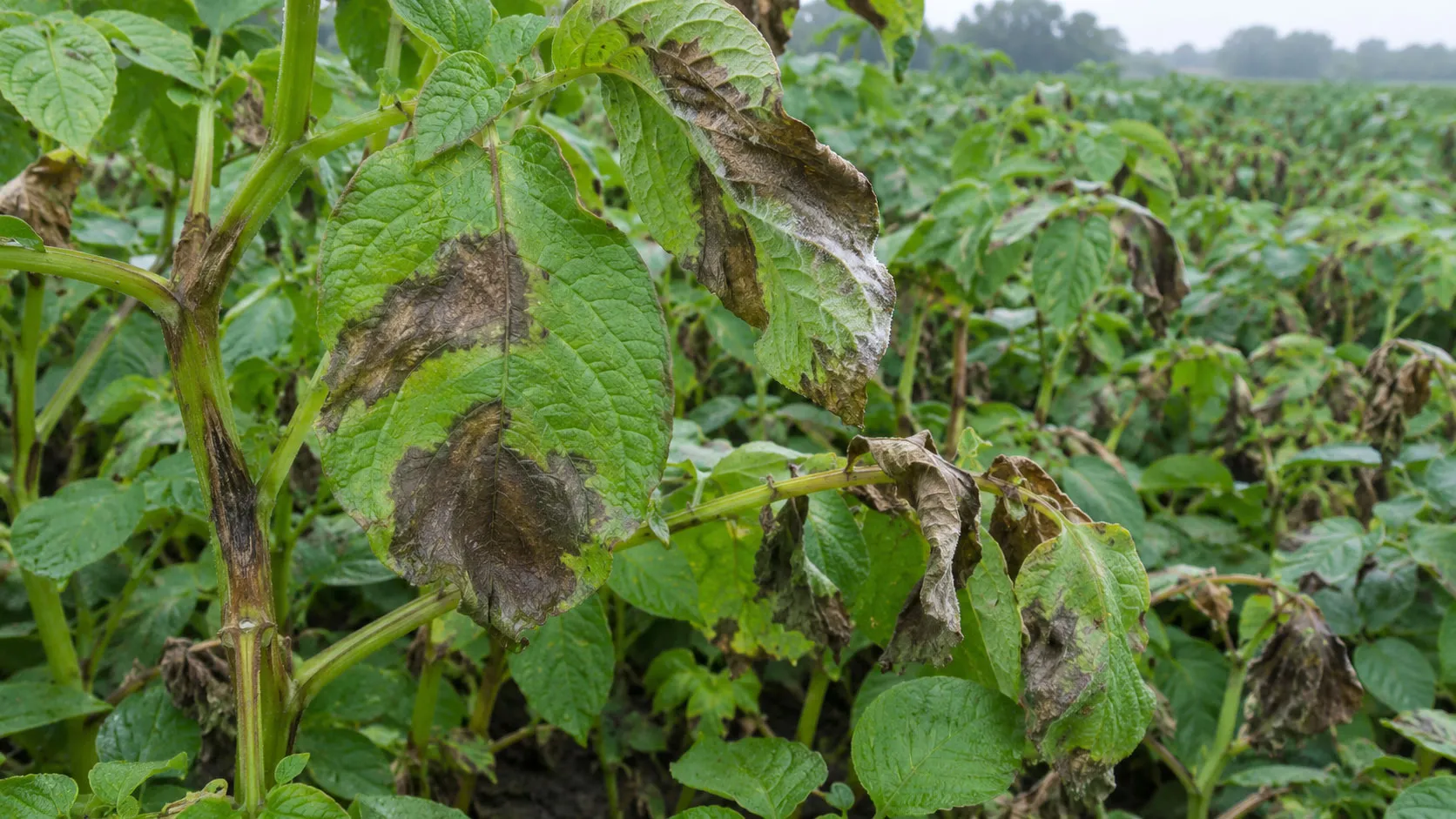
Potato late blight is one of the most economically damaging diseases in global potato production. Under favorable temperature and humidity conditions, this disease can spread rapidly, progressing from initial leaf lesions to stem infection, widespread plant dieback, and even affecting the underground tubers.
The challenge in controlling this disease lies in the fact that once a large number of infection sources form in the field, the pathogen can spread rapidly via wind, water, and infected plant tissue. By the time numerous visible lesions appear on the leaves, the optimal window for protection has often already passed.
Therefore, the control of potato late blight cannot rely solely on curative applications after symptoms appear.
Truly effective management requires integrating pathogen identification, weather risk assessments, potato growth stages, fungicide modes of action, and field resistance patterns to establish a continuous protection system.
Regarding fungicide selection, active ingredients such as Mancozeb, Cymoxanil, Metalaxyl, Mandipropamid, and Oxathiapiprolin have distinct technical roles. They exhibit significant differences in protection mechanisms, translocation within plant tissues, post-infection activity, and resistance risks, and cannot simply be substituted for one another.
For potato growers and managers, understanding these differences helps improve the accuracy of control decisions; for pesticide importers and distributors, understanding the modes of action of different active ingredients helps build a more competitive portfolio of potato fungicides.
What is potato late blight? How can disease symptoms be identified?
Potato late blight is caused by the oomycete Phytophthora infestan .
Although this pathogen is typically classified within the fungicide control system in agricultural production, it is not a fungus in the strict sense but rather an oomycete with fungus-like growth characteristics.
This distinction is crucial because different types of pathogens exhibit varying sensitivities to fungicides. Fungicides designed for common fungi may not effectively control late blight.
On which parts of the potato plant does late blight primarily occur?
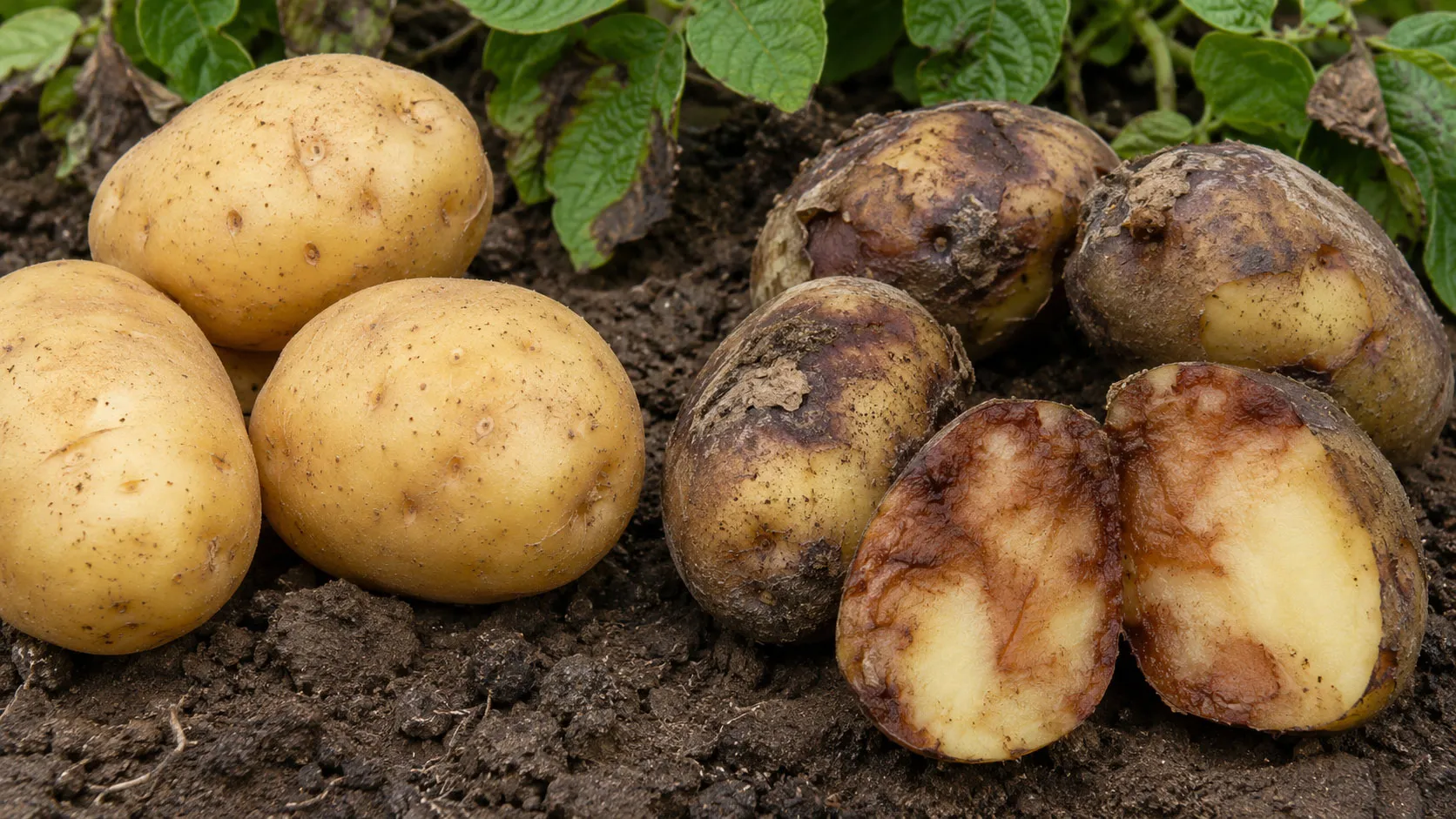
Late blight can infect potato leaves, petioles, stems, and tubers.
Symptoms vary depending on the affected part.
| Infected Parts | រោគសញ្ញាធម្មតា | Key Points for Field Identification |
|---|---|---|
| ស្លឹក | Irregular water-soaked spots that later develop into dark green, brown, or dark brown necrotic tissue | A pale halo may appear around the edges of the lesions |
| Underside of leaves | White mycelium appears under high humidity conditions | White sporangiophores and sporangia primarily appear at the edges of lesions |
| Petiole | Brown to black necrotic spots | Lesions may extend along the petiole |
| ដើម | Dark brown or black lesions | Severe infection may cause necrosis of stem tissue |
| មើម | Brown or purplish-brown lesions appear on the skin, with reddish-brown, relatively firm decayed tissue forming inside | Upon incision, irregular, granular necrotic tissue is visible |
A key characteristic of late blight is the rapid spread of lesions.
In high-humidity environments, a white fungal growth may appear along the edges of lesions on the underside of leaves; this is typically a key indicator for field identification.
However, a definitive diagnosis cannot be made based solely on the presence of white fungal growth; it must be combined with lesion morphology, environmental conditions, and necessary laboratory testing.
What is the difference between late blight and early blight?
Although late blight and early blight can both cause browning and necrosis of potato leaves, they are caused by different pathogens, and the logic for selecting pesticides differs.
| លក្ខណៈវិនិច្ឆ័យប្រៀបធៀប | Blight យឺត | ប៊្លុកមុន |
|---|---|---|
| ឈ្មោះអង់គ្លេស | Blight យឺត | ប៊្លុកមុន |
| ភ្នាក់ងារបង្ករោគបឋម | Phytophthora infestan | Alternaria Solani |
| ប្រភេទមេរោគ | អូមីស៊ីត | True Fungus |
| ដំបៅទូទៅ | Irregular, water-soaked lesions | Round to irregular brown lesions |
| លក្ខណៈធម្មតា | White mold appears along lesion margins under high humidity | Concentric rings often appear in more mature lesions |
| លក្ខខណ្ឌអំណោយផល | Cool, humid conditions with prolonged leaf wetness | Warm conditions, weakened plants, and persistent leaf damage |
| Key Considerations for Fungicide Selection | Fungicides specifically targeting oomycetes | Select fungicides based on Alternaria susceptibility |
These two diseases should not be conflated.
For example, products such as azoxystrobin and difenoconazole may be used in certain early blight management strategies, but this does not mean they are effective against late blight.
Before selecting a fungicide, it is essential to identify the actual pathogen type.
What Environmental Conditions Favor the Development of Potato Late Blight?
The occurrence of late blight depends not only on the presence of the pathogen in the field but also on whether temperature, relative humidity, rainfall, and leaf wetness duration are conducive to infection by the pathogen.
When the pathogen is already present, favorable environmental conditions can lead to rapid disease progression.
The Effects of Temperature and Relative Humidity
Late blight typically develops more readily in cool, humid environments.
UC IPM’s potato technical materials indicate that relative humidity above 90% and an average temperature range of approximately 10–26°C favor disease development.
However, this is not a universally applicable temperature range for infection worldwide. Different pathogen populations, host varieties, and microclimatic conditions can all influence the actual infection process.
Key factors to monitor in the field include:
- Prolonged periods of overcast and rainy weather.
- Heavy nighttime dew.
- High relative humidity in the early morning and evening.
- Poor air circulation within the canopy.
- Low-lying areas that remain damp for extended periods.
When these conditions occur simultaneously, the frequency of disease monitoring should be increased.
Why is leaf wetness duration important?
Leaf wetness is a key indicator in assessing the risk of late blight infection.
Once sporangia reach the leaves, they may germinate and invade plant tissue under suitable temperature and moisture conditions.
Therefore, even if two potato fields have similar daily average temperatures, the disease risk may differ significantly if one field dries quickly while the other remains damp for extended periods.
ស្ថានភាពខាងក្រោមនេះតម្រូវឱ្យមានការយកចិត្តទុកដាក់ជាពិសេស៖
- Prolonged nighttime dew.
- Slow drying of the canopy after rainfall.
- Dense planting leading to insufficient air circulation within the plant canopy.
- Inappropriate sprinkler irrigation methods prolonging the time leaves remain wet.
- Continuous rainfall compromising the protective layer on leaf surfaces.
Management practices such as appropriate planting density, improved field ventilation, and adjustments to irrigation methods can reduce unnecessary periods of moisture.
How can disease forecasting models be used to determine the optimal timing for control measures?
For large-scale commercial potato cultivation, visual inspection of lesions alone is insufficient.
Disease forecasting models can integrate data such as temperature, humidity, rainfall, and leaf wetness duration to help assess the risk of late blight infection.
Common regional models include:
| សារីុ | គោលបំណងបឋម |
|---|---|
| BLITECAST | Assesses the risk of late blight development by combining weather data |
| NEGFRY | Assists in determining the timing of late blight control based on meteorological and infection conditions |
| Smith Period | Identifies weather patterns conducive to late blight development based on specific temperature, humidity, and moisture conditions |
The applicable conditions and parameters for these models are not entirely the same; versions validated for local conditions should be used.
Key Principle: The timing of fungicide application should be determined based on disease risk and crop growth conditions, rather than mechanically following a fixed calendar throughout the year.
How to Select Different Types of Late Blight Fungicides Based on Control Objectives?
Late blight fungicides are not a uniform category.
Based on their mode of action and control strategy, they can be classified into protectant fungicides, fungicides with early post-infection activity, and fungicides with systemic or local translocation properties.
Protectant Fungicides
Protectant fungicides primarily act on the plant surface.
They must form a sufficient protective layer before the pathogen successfully penetrates plant tissue, thereby reducing the likelihood of spore germination and initial infection.
Representative active ingredients include:
| ធាតុផ្សំសកម្ម | ក្រុមហ៊ុន FRAC | លក្ខណៈសំខាន់ៗ |
|---|---|---|
| ម៉ាណូកូស | M03 | Multisite contact protectant |
| ក្លរូតាឡូលីន | M05 | Multisite contact protectant |
| សមាសធាតុស្ពាន់ | M01 | Copper-based multi-site protective agents |
| ហ្វ្លាហ្សីណាម | 29 | Protective phosphoxygenase uncoupler |
The advantage of protective fungicides is that they can serve as a foundational layer of protection in late blight management programs.
For example, Mancozeb belongs to the M03 multi-site action group and primarily provides protection on the plant surface.
អត្ថប្រយោជន៍របស់វារួមមាន:
- Providing foliar protection before infection.
- Reduces the likelihood of successful pathogen infection.
- Serves as an effective protective partner for some single-site fungicides.
- Plays a crucial role in resistance management programs.
However, protective fungicides also have clear limitations:
- It cannot restore already necrotic leaf tissue.
- Newly emerging leaves may not be adequately protected.
- Heavy rainfall may affect foliar residue levels.
- Inadequate spray coverage may leave the plant vulnerable to infection.
Therefore, coverage quality must be considered on both the upper and lower surfaces of leaves, as well as within the canopy.
របស់ POMAIS Mancozeb fungicide specifications include product formulations such as 80% WP and 75% WG, which can be used to further evaluate the protective fungicide portfolio in target markets.
Early Post-Infection Activity—Fungicides with Early Post-Infection Activity
Some fungicides still exert a certain degree of inhibitory effect when the pathogen has already begun infecting the plant but the infection is still in its early stages.
This type of activity is commonly referred to as Early Post-Infection Activity.
វាជាការសំខាន់ណាស់ក្នុងការសង្កត់ធ្ងន់ថា៖
Having early post-infection activity does not mean the fungicide can cure plants that are already severely diseased.
For example, Cymoxanil belongs to FRAC Group 27 and exhibits both local systemic and translaminar activity.
Under suitable conditions, it can inhibit the early infection process of susceptible oomycetes.
លក្ខណៈបច្ចេកទេសរបស់វារួមមាន៖
- It can penetrate plant tissues at the application site.
- It exhibits some early post-infection activity.
- In late blight management, it is typically used in combination with effective protective fungicides.
- Its residual efficacy is relatively limited, so it is not suitable as the sole protective measure for the entire growing season.
In some late blight management systems, Cymoxanil is used in combination with protective fungicides such as Mancozeb to provide a balanced approach to control.
អ្នកអាចមើលឯកសារ Cymoxanil fungicide product specifications for more information on its active ingredient, Group 27 classification, formulation, and potential for use in combination products.
Systemic and Locally Systemic Fungicides——Systemic and Locally Systemic Fungicides
Systemic and locally systemic are two distinct technical concepts.
Systemic fungicides can be absorbed by plant tissues and translocated within a certain range.
Locally systemic fungicides, on the other hand, primarily enter plant tissues near the application site, with a relatively limited range of translocation.
Neither term implies that the active ingredient can move unrestrictedly throughout the entire plant.
| ប្រភេទ | លក្ខណៈសំខាន់ៗ | Representative Active Ingredients |
|---|---|---|
| ទំនាក់ទំនង | Acts primarily on the plant surface | Mancozeb, Chlorothalonil |
| Locally Systemic | Enters plant tissue near the application site | Cymoxanil, Mandipropamid |
| អ្នកបកប្រែ | Can move through leaf tissue from one side to the other | Some Cymoxanil and Fluopicolide formulations |
| ជាប្រព័ន្ធ | Can enter plant tissues and be translocated to a certain extent | Metalaxyl, Propamocarb, Oxathiapiprolin |
Actual movement characteristics also depend on the active ingredient, formulation, plant tissue, and application method.
It is particularly important to note that “systemic” does not mean “curative” and does not imply that it can save tissue that has already undergone severe necrosis.
Which active ingredients are suitable for controlling late blight in potatoes?
Different active ingredients exhibit significant differences in their modes of action, resistance risks, and control strategies.
When selecting products, one should not merely compare the names and concentrations of active ingredients; it is also essential to verify the susceptibility of local pathogens, the scope of product registration, and the availability of suitable mixing partners.
Mancozeb—A Multi-Site Protective Fungicide
Mancozeb belongs to FRAC Group M03 and is an active ingredient worthy of attention in the potato late blight protection system.
It primarily interferes with the pathogen’s normal metabolic processes through multi-site action and provides protection on the plant surface.
លក្ខណៈសំខាន់ៗ៖
- Non-systemic.
- Multisite mode of action.
- Primarily used for preventive protection.
- Valuable for use in late blight combination treatment systems.
- Compared to single-site fungicides, the risk of pathogen resistance development is generally lower.
However, the effectiveness of Mancozeb is highly dependent on spray coverage and the timing of application.
If the disease has already spread extensively, using Mancozeb alone cannot control infections that have penetrated deep into plant tissues.
Metalaxyl—A Systemic Fungicide with a Risk of Resistance
Metalaxyl belongs to FRAC Group 4 and is a phenylamide-class fungicide.
It primarily interferes with ribosomal RNA synthesis in susceptible oomycete pathogens, thereby affecting the pathogen’s normal growth and reproduction.
លក្ខណៈបច្ចេកទេសរបស់វារួមមាន៖
- It can be absorbed by plant tissues.
- It is primarily effective against susceptible oomycete pathogens.
- It is systemic.
- Within the scope of its approved registration, it can be used as part of a late blight management strategy.
However, Metalaxyl has one very important limitation: Group 4 is classified as a group with a high risk of resistance development.
នៅតំបន់ខ្លះ។ Phytophthora infestan populations have already developed resistance to phenylamide fungicides.
ដូច្នេះ:
- Metalaxyl should not be used as a universal solution for late blight in all regions.
- It should not be used alone for extended periods.
- Metalaxyl and Metalaxyl-M should not be considered different modes of action for rotation purposes.
- In regions where Group 4 resistance already exists, other modes of action that remain effective should be prioritized.
When selecting Metalaxyl products, buyers must consider both the pathogen sensitivity in the target market and the product registration status.
Cymoxanil—Early Post-Infective Activity Combined with Protective Partners
Cymoxanil belongs to FRAC Group 27.
It is primarily used for the management of oomycete diseases and exhibits both local systemic activity and early post-infection activity.
Compared to Mancozeb, the two have distinctly different technical profiles:
| ធាតុប្រៀបធៀប | ម៉ាណូកូស | ស៊ីម៉ុកសានីល |
|---|---|---|
| ក្រុមហ៊ុន FRAC | M03 | 27 |
| របៀបបឋមនៃសកម្មភាព | Multisite protection | Single site of action |
| ការចល័តរុក្ខជាតិ | មិនមានលក្ខណៈជាប្រព័ន្ធ | Partially systemic |
| យុទ្ធសាស្រ្តត្រួតពិនិត្យ | Pre-infection protection | Protection and limited early post-infection activity |
| ហានិភ័យនៃការតស៊ូ | ទាប | Resistance management is required |
| ដែនកំណត់សំខាន់ៗ | Depends on foliar coverage | Limited residual activity; cannot replace continuous protection |
In late blight management, cymoxanil typically needs to be combined with effective partners that have different modes of action.
It should not be regarded as a panacea capable of treating infections at all stages.
Mandipropamid—CAA-Class Fungicide
Mandipropamid belongs to FRAC Group 40, namely the CAA (Carboxylic Acid Amides) class of fungicides.
Its primary mode of action is related to the cellulose synthesis process in oomycete cell walls.
លក្ខណៈបច្ចេកទេសរបស់វារួមមាន៖
- Primarily targets oomycete diseases.
- Possesses both local systemic and protective characteristics.
- Suitable for inclusion in preventive late blight management programs.
- Requires combination with effective partners having different modes of action.
- Special attention must be paid to cross-resistance within the CAA group.</ li>
There is a very important technical development for 2026.
Documents from the 2026 FRAC CAA Working Group meeting confirm that the pathogen causing potato late blight has developed resistance to CAA. In 2025 monitoring samples, resistance was detected in potato samples from Austria, Denmark, France, Germany, Poland, Portugal, Sweden, Switzerland, the Netherlands, and the United Kingdom.
In some regions where resistance had previously been detected, the resistance frequency has stabilized or declined; at the same time, the scope of detection has expanded in certain areas.
FRAC also noted that the relevant resistance mechanism involves a mutation at the G1105S site of the CesA3 gene.
This indicates that even though products such as mandipropamid still have significant application value, the resistance selection pressure resulting from long-term repeated use cannot be ignored.
Oxathiapiprolin—OSBPI-Class Fungicide
Oxathiapiprolin belongs to FRAC Group 49 and is an important fungicide against oomycetes.
It works by inhibiting the functions of the Oxysterol Binding Protein Homologue (OSBPI), thereby disrupting the pathogen’s lipid homeostasis and transport processes.
លក្ខណៈបច្ចេកទេសរបស់វារួមមាន៖
- Active against a wide range of Phytophthora and downy mildew oomycetes.
- Exhibits strong specificity.
- Primarily used for preventive disease management.
- Requires combination with partners that belong to different cross-resistance groups and are themselves effective.
- Strict resistance management is required.
FRAC classifies OSBPI as having a medium-to-high risk of resistance development.
In the 2025 monitoring data released in 2026, potato samples showed:
| Surveillance results | Regions surveyed in 2025 |
|---|---|
| High frequency of resistance | Belgium, Germany, the Netherlands, Colombia (Antioquia, Cundinamarca), Indonesia |
| Low to moderate frequency of resistance | France, Switzerland, Austria, Lam Dong, Vietnam, Poland, Sweden, Portugal, United Kingdom |
| Single resistant sample | ប្រទេសដាណឺម៉ាក |
| Tested samples remained susceptible | Brazil, China, India, Italy, Ireland, Latvia, Norway, Lithuania, Spain |
These are monitoring results from samples collected in specific regions and do not represent the actual resistance rates across all growing regions of a country.
This development warrants particular attention from the South American potato production market.
In some regions of Colombia, a high frequency of OSBPI resistance has already been detected in potato samples, while the results from this round of sampling in Brazil still show susceptibility.
Therefore, one should not assume that a new fungicide active ingredient can be used indefinitely simply because it is a new product.
How Should Late Blight Management Be Scheduled Across Different Growth Stages of the Potato?
Late blight management must span the entire potato production cycle.
Control objectives vary by stage: in the early stages, the primary goal is to reduce the risk of initial infection; in the middle stages, it is necessary to protect the rapidly expanding leaf canopy; and in the late stages, leaf disease, tuber infection, and harvest quality must all be considered simultaneously.
Pre-planting and Seed Potato Stages
The initial sources of potato late blight may include infected seed potatoes, piles of diseased potatoes, volunteer potatoes in the field, and surrounding host plants.
Therefore, the following measures should be prioritized before planting:
- Select healthy, certified seed potatoes.
- Avoid using seed potatoes with obvious signs of rot or infection.
- Remove diseased potato tubers left in the field.
- Treat historical piles of diseased tubers and volunteer potatoes.
- Apply necessary seed potato treatments according to local requirements.
It is important to note that seed potato treatment products must have explicit registration for late blight; general soil-borne disease seed coatings cannot be used directly as late blight control products.
Emergence and Vegetative Growth Stage
After emergence, plants begin to form leaves and a canopy.
Management during this stage focuses on the timely identification of nearby disease sources and weather conditions conducive to infection.
អនុសាសន៍:
- Regularly inspect leaves and stems.
- Monitor disease conditions in nearby potato and tomato fields.
- Assess protection needs based on disease forecast results.
- Implement preventive foliar protection under suitable conditions.
- Promptly remove plants that are clearly infected and suitable for removal.
In areas with a high risk of disease, do not wait until numerous lesions appear in the field before developing a fungicide strategy.
Rapid Canopy Growth and Row-Closure Stage
As the number of leaves on each plant increases, the potato canopy gradually becomes denser.
At this stage, spray coverage becomes a critical factor in late blight control.
ការពិចារណាសំខាន់ៗ៖
- Whether newly emerged leaves are protected.
- Whether there are areas of insufficient spray coverage within the canopy.
- Whether the undersides of leaves receive adequate contact with the spray.
- Whether continuous rainfall affects the protective layer.
- Whether early infections are present in the field.
Protective fungicides such as mancozeb can serve as the foundation of protection, while other fungicides specifically targeting oomycetes should be selected based on disease risk and FRAC rotation requirements.
Tuber Formation and Enlargement Stage
This is a critically important stage in late blight management.
In addition to leaf infection, the risk of pathogen transmission to underground tubers must also be considered.
Spore sacs on the leaves may enter the soil via rainwater and irrigation water, increasing the likelihood of tuber infection under favorable conditions.
Therefore, both the aboveground and underground parts must be managed simultaneously:
- Maintain an appropriate soil cover depth.
- Minimize tuber exposure.
- Avoid excessive soil cracking.
- Schedule irrigation appropriately.
- Maintain foliar protection.
- Avoid waiting until the disease has spread extensively before taking action.
If attention is focused solely on leaf lesions while neglecting soil coverage and tuber exposure, infected tubers may still be found at harvest.
Plant Maturity and Vine Killing Stage
Vine Killing is a critical consideration in the late-stage management of late blight.
When late blight is present in the field, and tubers are at risk of infection, a comprehensive vine-killing program should be implemented in accordance with local technical guidelines and product labels.
ចំណុចសំខាន់ៗរួមមាន:
- Ensure complete death of the vines and foliage.
- Avoid leaving large amounts of surviving infected tissue.
- Maintain adequate tuber coverage.
- Pay attention to soil cracks and residual pathogens on the soil surface.
- Schedule the post-control harvest interval according to local recommendations.
UC IPM’s regional recommendation is that, when late blight has already affected the foliage and the tubers are at risk of infection, harvesting should be conducted approximately 2–3 weeks after the foliage has completely died off.
This timeframe should be determined based on local climate, variety, soil conditions, and harvesting requirements; it is not a fixed, universal standard.
Harvesting and Storage Stages
Mechanical damage during harvesting, the mixing of diseased tubers, and improper storage conditions can all further affect tuber quality.
អនុសាសន៍:
- Avoid harvesting when the soil is excessively wet.
- Minimize tuber impact and mechanical damage.
- Promptly remove visibly infected tubers.
- Do not store diseased tubers together with healthy market-grade tubers.
- Maintain proper ventilation in storage facilities.
- Control temperature and humidity according to variety and intended use.
- Regularly inspect stored tubers for signs of rot.
Late blight infection in tubers may continue to cause losses during storage; therefore, post-harvest inspections must not be omitted.
| Potato Growth Stages | ហានិភ័យសំខាន់ៗ | អាទិភាពគ្រប់គ្រង | Fungicide Management Strategies |
|---|---|---|---|
| Seed Potatoes and Pre-Planting | Infected seed potatoes, initial sources of infection | Healthy seed potatoes, source control | Use only registered seed potato treatment products |
| Emergence Stage | Initial infection | Monitor disease sources and weather | Implement protective measures based on risk |
| Vegetative growth stage | Foliar infection | Timely surveys and preventive protection | M03 and other applicable fungicides |
| ការលូតលាស់យ៉ាងឆាប់រហ័សនៃដើមត្របែក | Insufficient protection of new leaves | Improve spray coverage | Rotate based on FRAC |
| ដំណាក់កាលនៃការបង្កើតមើម | Foliar and tuber infections | Protect the canopy; hill up the tubers | Appropriate oomycete fungicides |
| Tuber enlargement stage | High disease pressure and tuber contamination | Maintain disease control | Adjust based on disease risk |
| Stem and Leaf Eradication Period | Persistent Pathogen Presence | Complete Eradication of Stems and Leaves | Schedule late-season protection according to local protocols |
| ការប្រមូលផល និងការរក្សាទុក | Tuber rot, mechanical damage | Sorting, ventilation, and storage management | Focus on isolating diseased tubers and post-harvest management |
How to Manage Late Blight Resistance Through FRAC Mode-of-Action Rotation?
Resistance is an issue that cannot be overlooked in the long-term management of potato late blight.
Although different active ingredients have different trade names, they may belong to the same FRAC group.
If the same mode of action is used consecutively, susceptible pathogens are suppressed, while resistant strains may gradually become more prevalent, ultimately affecting overall control efficacy.
How Should Different FRAC Groups Be Understood?
The following are the modes of action that deserve special attention in the control of potato late blight:
| ក្រុមហ៊ុន FRAC | Representative Active Ingredients | Main Characteristics of Action | Key Points for Resistance Management |
|---|---|---|---|
| M03 | ម៉ាណូកូស | ការការពារទំនាក់ទំនងច្រើនកន្លែង | Used as a protective partner |
| M05 | ក្លរូតាឡូលីន | ការការពារទំនាក់ទំនងច្រើនកន្លែង | Check for registration in target markets |
| 4 | Metalaxyl, Metalaxyl-M | Phenylamide, inhibits RNA synthesis | High risk of resistance |
| 21 | Cyazofamid, Amisulbrom | QiI-class respiratory inhibitors | Avoid repeated selection pressure |
| 27 | ស៊ីម៉ុកសានីល | ស៊ីយ៉ាណូអាសេតាមីត-អុកស៊ីម | Note effective partners and application windows |
| 28 | ប្រូប៉ាម៉ូកាកាប | Carbamate class | Use according to applicable diseases and rotation requirements |
| 29 | ហ្វ្លាហ្សីណាម | ការបំបែកផូស្វ័រអុកស៊ីតកម្ម | Manage based on regional susceptibility |
| 40 | Mandipropamid, Dimethomorph | ក្រុមហ៊ុន CAA | Intra-class cross-resistance exists |
| 43 | Fluopicolide | Benzamide class | Rotate with other modes of action |
| 49 | Oxathiapiprolin | OSBPI | Moderate to high resistance risk; use strictly restricted |
Resistance risks vary across different groups.FRAC Groups 4, 40, and 49 warrant particular attention.
Why can’t products in Group 40 simply be rotated with one another?
CAA-class active ingredients include:
- Mandipropamid
- Dimethomorph
- Benthiavalicarb
- ថ្នាំ Iprovalicarb
- Valifenalate
- Flumorph
These products all belong to FRAC Group 40.
Cross-resistance exists among them.
Therefore, switching from mandipropamid to dimethomorph does not constitute a true change in mode of action.
The FRAC’s 2026 management recommendations emphasize:
- Prioritize preventive applications.
- Limit the number of CAA product applications to no more than 50% of the total late blight spray program.
- Do not use consecutively more than twice.
- Prioritize mixing with partner products that have different modes of action and are themselves effective against late blight.
- Rotate with fungicides that have different modes of action.
It is particularly important to note that monitoring in 2025 has confirmed the emergence of CAA resistance in late blight pathogens in some regions; therefore, long-term strategies cannot be formulated based solely on past susceptibility data.
Why does Group 49 require strict usage restrictions?
Both oxathiapiprolin and fluoxapiprolin belong to Group 49 and exhibit cross-resistance.
The FRAC 2026 recommendations for potato production are as follows:
- Do not use OSBPI-class fungicides consecutively.
- Apply OSBPI foliar sprays no more than 3 times per growing season.
- If the total late blight spray program consists of 6–10 applications, OSBPI may be used no more than 2 times.
- If the total late blight treatment plan does not exceed 5 applications, OSBPI should be used no more than once.
- In countries where OSBPI resistance has already emerged, use no more than twice per growing season.
- Preventive applications should be made, and the product should be mixed with effective partners from different cross-resistance groups.
In practice, stricter usage restrictions specified on individual product labels must also be followed.
How to Establish a Reasonable Rotation Plan for Late Blight Fungicides?
Rotation does not simply involve repeating applications in the order of Groups 4, 27, 40, and 49.
The correct approach is as follows:
- First, confirm that the target disease is indeed Phytophthora infestan.
- Assess the risk of infection based on weather conditions and field surveys.
- Determine whether the current product needs to provide protection, early post-infection activity, or other specific effects.
- Check the resistance status of the local pathogen.
- Select different FRAC modes of action that remain effective.
- Verify that the combination partners are truly effective.
- Record the number of applications throughout the growing season.
- Continue monitoring disease progression after application, rather than relying solely on product claims.
ចំណាំពិសេស:
Different FRAC groups do not automatically mean that two fungicides are suitable for mixing. It is essential to confirm that both provide actual control benefits against the target pathogens and comply with product labels and local resistance management recommendations.
For metalaxyl, special attention should also be paid to the resistance linkage between Group 4 and metalaxyl-M; simply switching between these two names should not be used as a substitute for genuine rotation of modes of action.
How to Reduce the Risk of Late Blight Infection in Potato Tubers?
Many potato growers focus exclusively on the aboveground foliage when controlling late blight.
However, for both table potato and processing potato production, tuber quality is equally important.
How Does the Pathogen Spread from Leaves to Tubers?
When late blight occurs on leaves and stems, the pathogen may produce large numbers of sporangia.
During rainfall or irrigation, these sporangia may be carried into the soil by water flow and come into contact with underground tubers.
If there are exposed areas on the tuber skin, soil cracks, or insufficient soil cover, the risk of infection may increase further.
Therefore, reducing the risk of late blight in tubers requires considering the following factors simultaneously:
- Control of above-ground disease.
- Soil cover conditions.
- Quality of ridging.
- Irrigation methods.
- Soil cracks.
- Timing of stem and leaf destruction.
- Soil moisture at harvest.
How to properly protect tubers before harvest?
When late blight is present in the field, it is crucial to determine before harvest whether the stems and leaves have completely died off and whether the tubers underground remain at risk of infection.
The following measures can be taken:
- Schedule a thorough desiccation of stems and leaves according to local guidelines.
- Avoid early harvest when there is still a significant amount of green, infected tissue.
- Maintain soil coverage over the tuber surfaces.
- Avoid mechanical harvesting under wet conditions whenever possible.
- Promptly remove infected tubers.
- Do not mix diseased potatoes with healthy commercial potatoes intended for long-term storage.
At the same time, harvesting and storage should be planned according to the potatoes’ intended use.
The quality requirements for fresh-market potatoes, processing potatoes, and seed potatoes are not entirely the same; therefore, a single set of postharvest handling standards cannot be applied to all.
The Most Common Mistakes in Potato Late Blight Control
| កំហុសទូទៅ | បញ្ហាសក្តានុពល | ការអនុវត្តការគ្រប់គ្រងសមស្របជាងមុន |
|---|---|---|
| Waiting until a large number of leaves show symptoms before applying fungicides | The pathogen has already spread widely | Establish protective measures in advance based on disease forecasts |
| Treating all fungicides as broadly effective | Selecting a fungicide that does not match the pathogen type | Confirm the Oomycete pathogen before selecting a fungicide |
| Using protective fungicides as curative treatments | Infected tissue cannot be effectively restored | Distinguish between protective activity and early post-infection activity |
| Overreliance on Metalaxyl | Increased risk of Group 4 resistance | Manage based on local susceptibility |
| Rotating Mandipropamid and Dimethomorph | No true rotation of modes of action | Manage according to FRAC Group 40 |
| Continuous use of Oxathiapiprolin | Increases selection pressure for Group 49 resistance | Adhere to FRAC restrictions |
| New leaves are overlooked | Unprotected areas appear after canopy expansion | Monitor new leaf growth and coverage |
| Protects only the foliage; tubers are not considered | Infected tubers may still be present after harvest | Manage both aboveground and underground parts simultaneously |
| Harvesting too early | Infected tissue may still be present | Schedule based on stem and leaf dieback and local harvest requirements |
| Infected potatoes mixed into storage lots | Increased storage losses | Sorting, isolation, and storage monitoring |
Frequently Asked Questions on Potato Late Blight Control
Which fungicide is best suited for controlling potato late blight?
No single fungicide is suitable for all regions and all stages of the disease.
Mancozeb is primarily used for preventive protection; Cymoxanil has limited activity after early infection; Metalaxyl is effective against susceptible pathogens, but Group 4 resistance must be carefully considered; Mandipropamid and Oxathiapiprolin must be managed according to their respective FRAC groups.
The final choice depends on disease risk, local susceptibility, crop stage, and product registration.
Can Mancozeb treat established late blight?
Mancozeb is a non-systemic, multi-site protective fungicide.
It primarily reduces spore germination and the likelihood of initial infection by forming a protective layer on the plant surface.
It cannot restore necrotic tissue, nor can it serve as a standalone remedial treatment following severe infection.
តើអ្វីជាភាពខុសគ្នារវាង Cymoxanil និង Metalaxyl?
Both can be used to manage certain oomycete diseases, but they have different modes of action.
Cymoxanil belongs to Group 27 and exhibits both local systemic activity and early post-infection activity; Metalaxyl belongs to Group 4, is systemic, and acts by interfering with RNA synthesis in susceptible pathogens.
The two should not be considered the same fungicide, and their respective resistance management requirements should not be overlooked.
Can Mandipropamid and Dimethomorph be rotated?
The two cannot be rotated as fungicides with different FRAC modes of action.
They both belong to Group 40 CAA fungicides and exhibit cross-resistance.
Changing the name of the active ingredient does not constitute a valid rotation of modes of action.
Can oxathiapiprolin be used continuously over the long term?
នេះមិនត្រូវបានណែនាំទេ។
Oxathiapiprolin belongs to Group 49 and is classified by FRAC as having a medium-to-high risk of resistance.
Adhere to the FRAC 2026 restrictions on potato use, avoid consecutive applications, and combine it with effective partners that have different modes of action.
Can late blight infect potato tubers?
បាទ។
Sporangia produced on the aboveground parts may enter the soil via rainwater or irrigation water, thereby increasing the risk of infection in underground tubers.
Therefore, late blight management must not focus solely on leaves and stems; it also requires proper ridging, tuber coverage, desiccation, and harvest management.
Why is desiccation necessary before potato harvest?
Desiccation helps terminate above-ground plant growth, promotes tuber maturation and skin formation, and reduces the chance that infected tissue will continue to serve as a source of infection.
When there is a risk of late blight and tuber infection, ensure that the stems and leaves are completely killed, and schedule the harvest time accordingly based on local technical recommendations.
How can you determine if resistance to late blight fungicides has developed?
If control efficacy remains consistently below expectations despite correct disease identification, application timing, dosage, coverage, and weather conditions, further investigation is necessary.
មូលហេតុដែលអាចកើតមានរួមមាន៖
- Decreased sensitivity of the pathogen to the active ingredient.
- The synergistic partner has lost its effectiveness.
- Insufficient spray coverage.
- Rain has compromised foliar protection.
- The disease had already spread extensively at the time of application.
Ultimately, a determination must be made based on a combination of local resistance monitoring, laboratory susceptibility testing, or molecular testing; resistance cannot be concluded based solely on a single failed application.
How to Establish a Reliable Fungicide Program for Potato Late Blight?
The core of potato late blight management is not to find a so-called “universal” fungicide, but to establish a continuous and rational protection system based on the pathogen, weather conditions, potato growth stage, and FRAC mode of action.
In actual production, priority should be given to identifying the disease type, followed by assessing infection risk based on weather forecasts and field surveys.
For preventive protection, multi-site protective fungicides such as Mancozeb can be evaluated; for strategies requiring activity against early-stage infections, active ingredients such as Cymoxanil can be evaluated; for products with specific modes of action—such as Metalaxyl, Mandipropamid, and Oxathiapiprolin—greater emphasis must be placed on resistance monitoring and FRAC rotation.
At the same time, potato growers must incorporate tuber infection control, stem and leaf control, harvesting, and storage into their overall management system.
For pesticide importers, distributors, registration companies, and brand clients, establishing a potato fungicide product portfolio should not focus solely on the number of active ingredients.
It is more important to verify:
- Whether the product targets the specific oomycete diseases of concern.
- Whether the active ingredients and FRAC Group are clearly defined.
- Whether there are genuine differences in modes of action among different products.
- Whether the co-formulation partners offer practical control value.
- Whether the product formulation meets the needs of the target market.
- Whether technical documentation, COA, SDS, and TDS are complete.
- Whether the target country has corresponding registered uses.
POMAIS provides pesticide importers, distributors, registration companies, and brand clients with a wide range of fungicide active ingredients and formulation specifications, supporting product procurement, technical documentation, packaging, and export supply.
If you are planning a fungicide product line for potato late blight, you can work with our team to evaluate suitable product directions based on the target country, major disease pressure, FRAC combinations, and required formulations.
Establishing a well-balanced portfolio of fungicides is more important than simply increasing the number of products.
 ការគ្រប់គ្រងសត្វរុយសកប្បាស៖ របៀបជ្រើសរើសថ្នាំសម្លាប់សត្វល្អិតដោយផ្អែកលើដំណាក់កាលជីវិតផ្សេងៗគ្នា
ផលិតផលក្តៅ
ដំណឹងក្តៅៗ
ព័ត៌មានដែលបានណែនាំ
សំណួរដែលត្រូវបានសួរជាញឹកញាប់