---
description: "Cymoxanil Product Technical Specifications\r\nCymoxanil belongs to the cyanoacetamide-oxime class of fungicides and is classified by FRAC as Group 27.\r\n\r\nThe specific biochemical target corresponding to this classification has not yet been fully identified; therefore, it should not be described as a fungicide proven to inhibit a specific enzyme.\r\n\r\nThe following are the basic technical parameters for the"
title: Cymoxanil Fungicide | Systemic Solutions for Crop Protection - POMAIS Agriculture
image: https://www.pomais.com/wp-content/uploads/2024/10/Cymoxanil50-WDG-1.webp
---
[Skip to content](#content)
16+ years professional one-stop agricultural plant protection solution provider
[](https://www.pomais.com/)
[Inquiry](#awb-oc__10593)
Cymoxanil Fungicide | Systemic Solutions for Crop Protection
[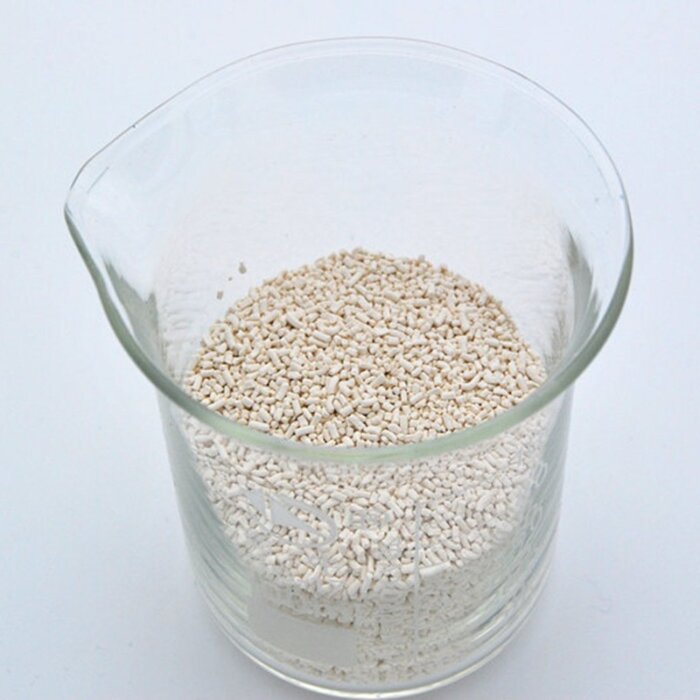](https://www.pomais.com/wp-content/uploads/2024/10/Cymoxanil50-WDG-1.webp) [Cymoxanil50% WDG](https://www.pomais.com/wp-content/uploads/2024/10/Cymoxanil50-WDG-1.webp)
[](https://www.pomais.com/wp-content/uploads/2024/10/Cymoxanil-WDG-2.webp) [Cymoxanil WDG](https://www.pomais.com/wp-content/uploads/2024/10/Cymoxanil-WDG-2.webp)
[](https://www.pomais.com/wp-content/uploads/2024/10/cymoxanil50WDG3.webp) [Cymoxanil50% WDG](https://www.pomais.com/wp-content/uploads/2024/10/cymoxanil50WDG3.webp)
[](https://www.pomais.com/wp-content/uploads/2024/10/cymoxanil50WDG2.webp) [Cymoxanil50% WDG](https://www.pomais.com/wp-content/uploads/2024/10/cymoxanil50WDG2.webp)
[](https://www.pomais.com/wp-content/uploads/2024/10/Cymoxanil-3.webp) [Cymoxanil](https://www.pomais.com/wp-content/uploads/2024/10/Cymoxanil-3.webp)
[](https://www.pomais.com/wp-content/uploads/2024/10/cymoxanil50WDG4.webp) [Cymoxanil50% WDG](https://www.pomais.com/wp-content/uploads/2024/10/cymoxanil50WDG4.webp)
[](https://www.pomais.com/wp-content/uploads/2024/10/Cymoxanil.webp) [Cymoxanil](https://www.pomais.com/wp-content/uploads/2024/10/Cymoxanil.webp)
[](https://www.pomais.com/wp-content/uploads/2024/10/Cymoxanil-2.webp) [Cymoxanil](https://www.pomais.com/wp-content/uploads/2024/10/Cymoxanil-2.webp)
[Fungicide](https://www.pomais.com/products/fungicide/)
# Cymoxanil Fungicide | Systemic Solutions for Crop Protection
**FRAC Group 27 | Locally systemic fungicide | Control of late blight and downy mildew | Available as single-ingredient and formulated products**
Cymoxanil is a fungicide primarily used to control oomycete diseases. It exhibits locally systemic activity and inhibits infection during its early stages. It is primarily used in control programs for late blight in potatoes and tomatoes, as well as downy mildew in grapes and certain vegetables; specific applications depend on local product registrations.
Unlike contact fungicides, which primarily provide protection on the plant surface, Cymoxanil can penetrate plant tissues at the application site and inhibit the early development of infection by susceptible pathogens. However, its mobility within the plant is limited, and it should not be considered a fully systemic fungicide capable of long-distance translocation.
In commercial crop protection products, Cymoxanil is available both as a single-active-ingredient formulation and in combination products with other active ingredients. Appropriate product selection requires consideration of disease type, application timing, FRAC mode of action, target market registrations, and actual formulation quality.
POMAIS provides pesticide importers, distributors, brand owners, and registration companies with support for the procurement of Cymoxanil formulations, the supply of formulated products, OEM/ODM packaging, and technical documentation.
- Designed for Professional Buyers & Bulk Orders
- We support custom packaging, labeling, and formulation to meet your market needs.
- Export wholesale inquiries only.
- Please include destination country, business type (importer/distributor/registrant), and expected volume.
- Retail requests will not be processed.

[Get a Quote](#awb-oc__10593)
## About Cymoxanil Fungicide | Systemic Solutions for Crop Protection
## Cymoxanil Product Technical Specifications
Cymoxanil belongs to the cyanoacetamide-oxime class of fungicides and is classified by FRAC as Group 27.
The specific biochemical target corresponding to this classification has not yet been fully identified; therefore, it should not be described as a fungicide proven to inhibit a specific enzyme.
The following are the basic technical parameters for the active ingredient Cymoxanil.
| Technical Parameters | Specifications |
| --- | --- |
| Product Name | Cymoxanil Fungicide |
| Chinese Generic Name | Cymoxanil |
| Active Ingredient | Cymoxanil |
| CAS Number | 57966-95-7 |
| Molecular Formula | C7H10N4O3 |
| Molecular Weight | 198.18 g/mol |
| Chemical Family | Cyanoacetamide-oxime |
| FRAC Group | 27 |
| Biochemical Target Site | Not yet determined |
| Fungicide Activity | Locally systemic, translaminar |
| Disease Control Direction | Oomycete Diseases |
| Main Disease Targets | Late Blight, Downy Mildew |
| Main Application Method | Foliar spraying and other treatments in accordance with the registered label |
| Formulation Options | SC, WDG, and related compound formulations |
| Technical Material | TC, as a separate procurement category |
| Supply Model | Bulk Supply, OEM/ODM, Private Label |
| Documentation | COA, SDS, TDS, and available registration support documents |
The parameters described above pertain to the basic properties of the active ingredient Cymoxanil and do not imply that all formulations have exactly the same application rates, registration scopes, or stability parameters.
Customers planning to pursue registration or bulk imports should further verify the specific product’s content determination, impurity control, formulation quality, and packaging requirements.
## Cymoxanil Formulations and Available Product Specifications
Procurement requirements for Cymoxanil vary across different markets.
Importers who already have locally registered products typically prioritize finding concentrations and formulations that match their existing registration certificates. Distributors or brand clients planning to develop new products may be more focused on formulation combinations, formulation stability, and the availability of technical documentation.
POMAIS’s current product database lists the following Cymoxanil specifications, which are available for preliminary procurement inquiries.
| Product Specification | Formulation | Product Type | Procurement Focus |
| --- | --- | --- | --- |
| Cymoxanil 20% SC | Suspension Concentrate | Suspension Concentrate | Procurement of Final Formulations and Registration Assessment |
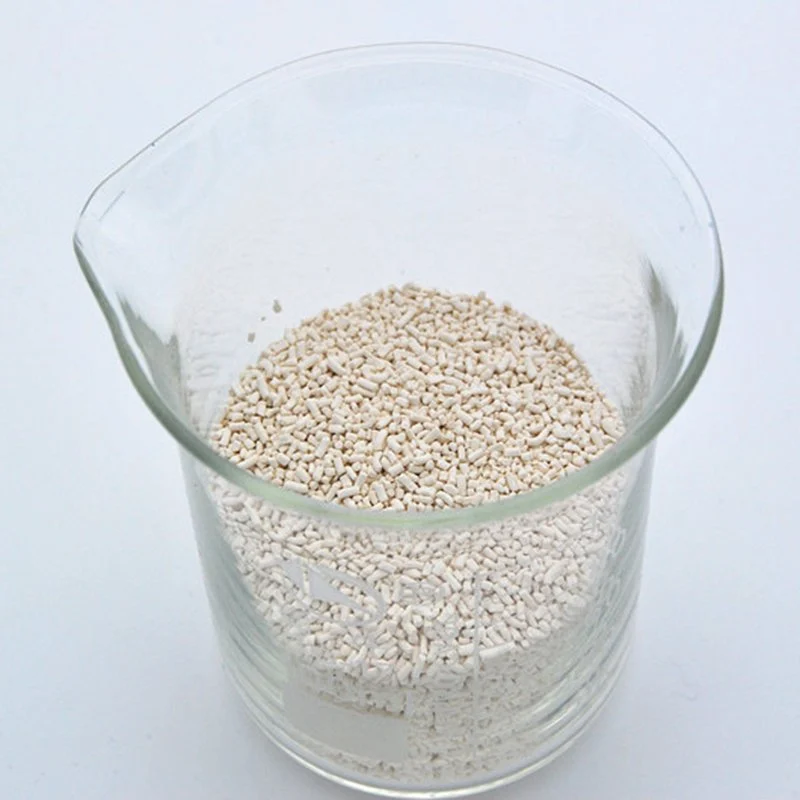
| Cymoxanil 50% WDG | Water-Dispersible Granules | Water-Dispersible Granules | Procurement of finished formulations and registration evaluation |
| Cymoxanil 80% WDG | Water-Dispersible Granules | Water-Dispersible Granules | Feasibility Assessment for High-Concentration Formulations |
| Cymoxanil 98% TC | Technical Material | Technical-Grade Material | Formulation Processing and Procurement of Specialized Active Ingredients |
**Specification Notes:** The above lists the scope of consultation based on existing product data; not all specifications have been confirmed for bulk supply, nor does this imply that these specifications have obtained registration in all target markets. Specific concentrations, formulation stability, supply status, and technical documentation must be confirmed based on actual product data.
### SC Suspension Concentrate
SC (Suspension Concentrate) is a formulation in which poorly soluble active ingredient particles are dispersed in a suitable liquid medium.
When procuring Cymoxanil SC, attention should be paid not only to the active ingredient content but also to the suspension rate, particle size distribution, redispersibility, pourability, and storage stability.
The stability of the formulation directly affects storage, transportation, and actual use. Even if two suppliers offer products with the same nominal active ingredient content, the quality of their formulations cannot be deemed identical based solely on this parameter.
### WDG Water-Dispersible Granules\
WDG (Water-Dispersible Granules) is a solid formulation that is dispersed in water according to the product label instructions when used.
It is typically suitable for packaging in bags, aluminum foil composite packaging, or other validated moisture-proof packaging materials.
When purchasing Cymoxanil WDG, special attention should be paid to the granules’ wettability, disintegration and dispersion properties, suspension rate, dust levels, and storage stability.
For high-concentration WDG products, the actual formulation process and performance must also be verified; a product’s suitability for stable commercial supply should not be judged solely based on the percentage of active ingredient.
### TC Technical Grade Material
Cymoxanil 98% TC is classified as a technical-grade raw material, primarily intended for customers with qualifications in formulation production, processing, or related fields.
TC cannot be directly recommended for use as a standard end-user field formulation. For such purchases, customers must verify the measured active ingredient content, impurity specifications, batch consistency, and applicable technical documentation.
## How does Cymoxanil work?
The most notable characteristic of Cymoxanil is its ability to rapidly penetrate plant tissues at the application site and inhibit the early stages of infection by certain oomycete pathogens.
This is why it is frequently included in product formulations for the control of late blight and downy mildew.
However, when discussing this active ingredient, three concepts must be clearly distinguished.
### Local Systemic Activity vs. Translaminar Activity
Cymoxanil exhibits local systemic activity and a certain degree of translaminar activity.
Simply put, after application, the active ingredient can penetrate the leaf tissue at the point of contact and exert its effect within a localized area.
This characteristic helps explain why its efficacy is not limited to contact protection on the plant surface.
However, local systemic activity does not equate to long-distance translocation. Cymoxanil cannot be described as a fungicide capable of being continuously translocated throughout the entire plant to protect all new leaves and untreated tissues.
Therefore, thorough spray coverage and proper timing of application remain critical.
### Protective and Early Post-Infection Activity
In certain registered and validated application schemes, cymoxanil exhibits some preventive and early post-infection activity.
“Early post-infection activity” refers to the ability of a pesticide to help suppress the further progression of a pathogen when infection is still in its early stages.
This is entirely different from curative treatments applied to fields where the disease has already become severe.
Once late blight or downy mildew has spread extensively in the field, relying solely on cymoxanil does not guarantee that the disease’s progression will be halted.
Therefore, cymoxanil is better suited to play a role in a comprehensive preventive disease management program rather than being marketed as a panacea for severe outbreaks.
### Technical Implications of FRAC Group 27
According to the FRAC classification, cymoxanil belongs to Group 27, with the chemical class Cyanoacetamide-oxime.
Although the mode of action of Cymoxanil has been extensively studied, its exact biochemical targets have not yet been fully identified.
For distributors, the primary value of FRAC grouping lies in helping to understand the product’s positioning within resistance management and to distinguish it appropriately from other fungicides based on their modes of action.
## What diseases does Cymoxanil primarily control?
Cymoxanil’s core market positioning is for diseases caused by specific oomycete pathogens, particularly late blight and downy mildew.
Oomycetes differ significantly from true fungi—which cause powdery mildew, rust, and black smut—in terms of biological classification and susceptibility to pesticides.
Therefore, one should not assume that because Cymoxanil is a fungicide, it can effectively control all common fungal diseases.
### Late Blight of Potatoes and Tomatoes
Late blight, caused by Phytophthora infestans, is a major disease in potato and tomato production.
Under favorable conditions, the disease can spread rapidly, damaging leaves, stems, and related tissues, thereby threatening yield and market quality.
Cymoxanil can serve as an active ingredient in registered late blight control programs and is particularly well-suited for use in combination with other protective fungicides effective against this disease as part of preventive disease management.
### Grape Downy Mildew
Grape downy mildew is primarily caused by Plasmopara viticola.
Under warm, humid conditions conducive to pathogen infection, downy mildew can affect grape leaves, inflorescences, and berries, increasing the burden of disease management in the production of table and wine grapes.
Cymoxanil has a history of commercial use against this pathogen.
However, reduced susceptibility of Plasmopara viticola to cymoxanil has been reported in various grape-growing regions. Therefore, simply increasing the application frequency is not a sufficient solution to address declining control efficacy.
### Downy Mildew on Cucurbits and Certain Vegetables
In countries and regions where it is registered, cymoxanil may also be used in downy mildew control programs for crops such as cucurbits, hops, and certain leafy vegetables.
For example, the primary pathogen causing downy mildew on cucumbers is Pseudoperonospora cubensis, which is not the same pathogen as that causing downy mildew on grapes.
Even though both diseases are referred to as “downy mildew,” their environmental conditions, epidemiological characteristics, and pesticide registration requirements are not necessarily the same.
Therefore, suppliers cannot directly extend the registered scope of use for a specific crop to all vegetable crops.
### Diseases for Which Cymoxanil Should Not Be Generically Recommended
To avoid misalignment in product positioning, the following distinctions must be clarified.
| Disease | Typical Pathogen Category | Cymoxanil Technical Positioning |
| --- | --- | --- |
| Potato Late Blight | Oomycete | Core Control Focus |
| Tomato Late Blight | Oomycete | Core Control Focus |
| Grape Downy Mildew | Oomycete | Core Control Target |
| Cucurbit Downy Mildew | Oomycete | Evaluated under relevant registration conditions |
| Powdery Mildew | True Fungi | Not recommended as a routine target for Cymoxanil as a single active ingredient |
| Rust Diseases | True Fungi | Not recommended as a routine target |
| Smut Diseases | True Fungi | Not recommended as a routine target |
| Tomato Leaf Mold | True Fungi | Not recommended as a routine target for Cymoxanil as a single-ingredient formulation |
| Early Blight | Primarily caused by Alternaria spp. | Not recommended as a routine target for Cymoxanil as a single active ingredient |
In formulated products, if a formulation controls other diseases listed in the table, it must be clearly stated which active ingredient or the registration and trial data for the formulation as a whole provides this control efficacy; it cannot be directly attributed to Cymoxanil.
Importers who need to develop product portfolios for multiple diseases can further explore our [Crop Disease Management Solutions](https://www.pomais.com/solution/disease-solutions/) to compare different disease categories and the corresponding fungicide approaches.
## Cymoxanil’s Application Positioning Across Different Crops
From a practical commercial perspective, Cymoxanil’s most representative application markets are concentrated in potatoes, tomatoes, grapes, and certain vegetable crops.
However, one point must be clarified in advance: **The fact that a particular active ingredient has a history of use on a certain crop category does not mean that any concentration or formulation can be legally used on that crop.**
| Crop | Main Disease | Technical Positioning of Cymoxanil | Procurement and Registration Considerations |
| --- | --- | --- | --- |
| Potato | Late Blight | A systemic active ingredient in late blight control strategies | Registered formulations, resistance management, and application timing |
| Tomato | Late Blight | Late blight prevention and early infection management | Application restrictions, PHI, and residue requirements |
| Grapes | Downy Mildew | Selection of specific modes of action for downy mildew management | Resistance status, number of applications per season, pre-harvest interval |
| Cucumber | Downy Mildew | Contributes to downy mildew management under approved uses | Production environment, crop safety, local registration |
| Other Vegetables | Registered Downy Mildews | Evaluated based on specific registered products | Target pathogens, formulations, and application restrictions |
### Potato Late Blight Market
For distributors of potato crop protection products, late blight is typically not a problem that can be solved with a single product.
Local climate, rainfall, leaf wetness duration, pathogen susceptibility, and cultural practices all influence disease risk.
Cymoxanil is best understood as a technical component within a potato late blight product portfolio. It offers specific value in suppressing early infections but must be combined with the correct preventive strategy.
If your business serves the potato growing market, you can use POMAIS’s [potato crop protection solutions](https://www.pomais.com/solution/potato/) to evaluate the need for combinations of late blight control products with other crop protection products.
### Tomato Late Blight Market
Tomato late blight can pose significant pressure in both open-field and some protected production systems.
Customers dealing in tomato crop protection products should pay particular attention to the distinction between cymoxanil and early blight fungicides.
Tomato late blight is caused by Phytophthora infestans, whereas early blight is typically associated with Alternaria fungi; the two diseases should not be treated with the same selection logic for fungicides simply because their names are similar.
In addition, tomato products should place special emphasis on the pre-harvest interval (PHI) and maximum residue limits (MRLs) for destination markets.
### Grape Downy Mildew Market
Control measures for downy mildew in vineyards typically need to be scheduled based on disease forecasts, plant growth stages, weather changes, and local resistance monitoring results.
Cymoxanil can be one option in a portfolio of relevant fungicides, but it should not be positioned as a product capable of continuous, high-frequency application or of independently resolving downy mildew issues throughout the entire growing season.
Importers planning to enter the grape market should first confirm the major local diseases, currently registered products, and susceptibility monitoring data before purchasing, and then determine whether Cymoxanil—either as a single-ingredient product or in a mixture—has commercial value.
## How are the application timing and dosage of Cymoxanil determined?
The actual application rate, spray interval, and number of applications per season for cymoxanil cannot be determined solely based on the name of the active ingredient.
The same active ingredient may have different usage regulations depending on its concentration, formulation, crop, and the country’s registration label.
### Why should preventive disease management be prioritized?
Cymoxanil has some ability to suppress early infection, but this does not mean that application should be delayed until a disease outbreak is clearly evident.
For late blight and downy mildew, preventive management typically requires a combination of meteorological conditions, field monitoring, and local disease early warning information.
Actual control strategies should be developed based on disease risk and the application guidelines for approved products.
### How to Determine the Correct Dosage?
| Information to Verify | Impact on Application Strategies |
| --- | --- |
| Active Ingredient Content | Determines the active ingredient content of the specific formulation |
| Formulation Type | Affects the application method and technical requirements |
| Registered Crop | Determines whether the product has a legal scope of use |
| Target Disease | Confirms whether the disease is a registered target |
| Disease Pressure | Influences the selection of control strategies |
| Application Timing | Determines the appropriate period for preventive or early-infection management |
| Spray Interval | Must be followed according to the specific registered label |
| Maximum Applications | Subject to local registration and resistance management requirements |
| PHI / REI | Relates to harvest, worker safety, and compliance requirements |
For example, the same application rate cannot be directly applied to both Cymoxanil 20% SC and Cymoxanil 50% WDG.
A single, general recommended dose cannot be applied to both Cymoxanil as a single-ingredient product and formulated products such as Cymoxanil + Mancozeb.
In the absence of verified local registration labels, POMAIS does not recommend using application rate data from one market as a general recommendation for other markets.
## Why is Cymoxanil frequently used in fungicide mixtures?
Cymoxanil exhibits local systemic activity and inhibits early stages of infection; however, its duration of action, protective scope, and resistance management requirements typically necessitate its evaluation as part of a comprehensive fungicide program.
This is why there are numerous cymoxanil-based combination products on the market.
For importers, understanding the technical relationships between different components in a formulation is more important than simply comparing which product contains more active ingredients.
### Cymoxanil + Mancozeb
Mancozeb belongs to FRAC Group M03 and is a multiplex contact and protective fungicide.
In registered combinations, the protective activity of Mancozeb complements the local systemic and early infection-inhibiting characteristics of Cymoxanil.
However, whether the combination of these two active ingredients offers specific protective advantages still requires evaluation based on actual formulations and trial data.
Some target markets may also have different registration or usage restrictions regarding Mancozeb; therefore, this combination cannot be considered a universal solution applicable to all countries.
### Cymoxanil + Famoxadone
Famoxadone belongs to FRAC Group 11 and is a QoI fungicide that primarily acts by inhibiting processes related to mitochondrial electron transport during pathogen respiration.
When combined with Cymoxanil, the two active ingredients can play different technical roles in the management of approved target diseases.
POMAIS’s existing **[Famoxadone 22.5% + Cymoxanil 30% WDG](https://www.pomais.com/product/famoxadone-22-5-cymoxanil-30-wdg-fungicide/)** is a clear example of such a formulated product.
This product combines FRAC Group 11 and Group 27 in a single water-dispersible granule formulation and is primarily intended for registered applications against late blight, downy mildew, and other diseases.
Customers requiring this type of product should further verify the specific quality standards, registered targets, and packaging requirements for the 52.5% WDG formulation.
### Cymoxanil + Dimethomorph
Dimethomorph belongs to FRAC Group 40 and is a CAA-class fungicide primarily used for managing oomycete diseases.
Cymoxanil and Dimethomorph belong to different FRAC groups and therefore theoretically offer value as a combination of different modes of action.However, whether they can be formulated as a commercial mixture for a specific market still requires confirmation of the specific formulation ratio, formulation stability, registration scope, and field efficacy data.Belonging to different FRAC groups does not automatically imply synergistic effects, nor does it guarantee that the product will have a longer residual efficacy.
### Cymoxanil + Metalaxyl
Metalaxyl belongs to FRAC Group 4 and is a phenylamide fungicide.Both ingredients are relevant to the control of certain oomycete diseases, but they differ in their modes of action, systemic properties, and resistance profiles.In markets where phenylamide resistance is a concern, it cannot be simply assumed that adding cymoxanil will restore sensitivity to the formulated product among all resistant pathogen populations.Commercial evaluations of such products should be based on local resistance data, registration requirements, and field efficacy trials.
## Other Cymoxanil Formulation Options
In addition to the above formulation combinations, Cymoxanil can also be combined with copper-based formulations that provide multi-site contact protection.For example, copper oxychloride belongs to FRAC Group M01 and has a different technical positioning than cymoxanil.In specific products, copper oxychloride may provide contact protection against registered target pests, while cymoxanil primarily plays a role in systemic absorption and early infection suppression in the management of oomycotic diseases.POMAIS currently offers **[Cymoxanil 42 g/kg + Copper Oxychloride 689.5 g/kg WP]()**product page, which is available for further review by importers requiring this combination.It is important to note that while copper formulations in certain products exhibit activity against bacterial diseases, this does not mean that Cymoxanil itself can be described as having the same efficacy against bacterial diseases.Specific formulated products should still be evaluated based on their own registered labels and trial data.
## Cymoxanil Resistance Management: How Should FRAC Group 27 Be Used?
Resistance management is a critical aspect that must be addressed in the positioning of Cymoxanil products.FRAC has classified Cymoxanil as Group 27 and emphasizes the importance of resistance management.In some grape-growing regions, reduced susceptibility of Plasmopara viticola to Cymoxanil has been reported.This means that in product marketing and technical promotion, it should not be described as a fungicide that can be used continuously and without restriction, without consideration of resistance.
### Combination with Other Effective Fungicidal Ingredients
FRAC’s specific recommendations for Cymoxanil emphasize that it should be used in combination with another fungicide effective against the target disease, with preventive disease management as the primary strategy.A distinction must be made here between commercial single-ingredient formulations and actual field application practices.Importers may procure single-ingredient cymoxanil products, but their field use must comply with specific registration labels and follow applicable resistance management requirements.The availability of single-ingredient commercial formulations should not be directly interpreted as a recommendation for sole application in all circumstances.
### Reasonably Limit the Number of Applications
Cymoxanil should not be relied upon as the sole active ingredient for disease control throughout the entire growing season.Different crops, markets, and registered products may impose restrictions on the number of applications, consecutive applications, and the proportion of applications used throughout the control season.FRAC’s technical recommendations can be used for product portfolio planning, but final implementation must still comply with the registered labels of the target country and local resistance management guidelines.
### Do Not Focus Solely on the Number of Ingredients in a Formulation
The combination of two active ingredients in a single formulation does not automatically mean the product offers reliable resistance management value.Distributors must verify:
- Whether the two ingredients belong to different FRAC groups.
- Whether each ingredient is effective against the target diseases.
- Whether relevant resistance or reduced susceptibility issues exist in local pathogen populations.
- Whether the actual application rate complies with registration requirements.
- Whether the product complies with local regulations regarding the number of applications and rotation.
Only by considering all these conditions together does the technical positioning of a formulated product hold practical significance.
## Quality Control and Procurement Inspection of Cymoxanil Formulations
For pesticide importers, verifying the active ingredient name is only the first step in procurement.Even if two suppliers offer Cymoxanil products with the same nominal concentration, the actual formulation performance, storage stability, and packaging compatibility may still differ.Therefore, when purchasing in bulk, clear quality acceptance criteria must be established based on the formulation type.
| Quality Parameter | SC | WDG | TC |
| --- | --- | --- | --- |
| Active Ingredient Content | Required | Required | Required |
| Relevant Impurities | As per specification | As per specification | Focus on |
| Suspensibility | Required | Required | Not applicable |
| Particle Size | Required | As per product standards | Not a general requirement |
| Wettability | Evaluated according to standards | Key Focus | Not Applicable |
| Dispersibility | Evaluated according to standards | Key focus | Not applicable |
| Storage Stability | Required | Required | Required |
| Packaging Compatibility | Required | Required | Based on packaging conditions |
| Batch COA | Required | Required | Required |
The actual test items and acceptance limits should be determined based on product specifications, applicable quality standards, and the purchase contract.
### Why is batch consistency important?
For importers who have been handling a particular brand for a long time, a single sample passing testing does not mean that all subsequent batches can be accepted directly without verification.During ongoing procurement, attention should be paid to the consistency of active ingredient assay results, key physicochemical parameters, and batch quality documentation.Particularly for WDG and SC products, dispersion performance after storage and potential physical changes during transportation are issues that warrant attention.POMAIS can assist in providing applicable quality documentation based on confirmed product specifications and procurement items, and discuss sample confirmation and batch acceptance requirements.
## OEM/ODM Packaging and Export Supply Services
POMAIS provides formulation procurement, custom packaging, and export partnership services to international pesticide importers, distributors, and brand clients.For Cymoxanil products, we can discuss appropriate packaging and labeling solutions based on available dosage forms, order quantities, and regulatory requirements of the destination country.
### Available Packaging Formats
| Product Type | Packaging Specifications | Procurement Considerations |
| --- | --- | --- |
| SC | Small-volume bottles, standard-volume bottles, and approved bulk packaging | Container compatibility, seal integrity, and shipping conditions |
| WDG | Sachets, composite pouches, and large-format bags | Moisture resistance, seal strength, storage stability |
| WP Premix | Appropriate powder packaging bags or composite pouches | Moisture resistance, leak resistance, and packaging integrity |
| TC | Validated specialized active ingredient packaging | Material stability, transport classification, and compliance documentation |
Specific packaging volumes can be further confirmed based on product specifications and customer requirements.
Different dosage forms cannot simply share a single set of packaging standards. For example, there are significant differences between the container compatibility requirements for liquid SC formulations and the moisture barrier requirements for WDG.
### Brand Customization and Labeling Support
For importers with their own pesticide brands, we can discuss services such as product label design, branded packaging, multilingual instructions, and outer carton labeling.
Relevant content should be determined based on the product name, active ingredient content, uses, safety information, and regulatory requirements already approved in the target country.
Customized product packaging does not imply that the technical content on the registered label can be altered at will.
### Technical Documentation and Registration Support
Depending on specific product and project requirements, we can discuss providing or coordinating the following materials:
- Certificate of Analysis (COA)
- Safety Data Sheet (SDS)
- Technical Data Sheet (TDS)
- Product Specification
- Packaging Information
- Registration support documentation within the scope of availability
- Relevant export and logistics documents
For new registration projects, the actual formulation, source of production, technical documentation, and local regulatory requirements must be confirmed in advance.
Any registration support services are based on the actual availability of documentation and the regulations of the target country; we cannot guarantee the outcome of the registration approval process.
## What should importers confirm before purchasing Cymoxanil?
We recommend that customers specify their actual procurement objectives when requesting a quote.
If a local registration certificate is already held, the focus of the procurement process is typically on matching existing registration specifications, confirming quality standards, and arranging a stable supply.
If a new fungicide product is being developed, it is necessary to discuss formulation feasibility, registration documentation, and competitive conditions in the target market at an earlier stage.
| Buyer Requirements | Recommended Information |
| --- | --- |
| Destination Country | Target Import Country |
| Business Type | Importer, Distributor, Brand Owner, or Registration Company |
| Required Formulation | SC, WDG, WP blend, or TC |
| Active Ingredient Content | Required active ingredient content and formulation ratios |
| Registration Status | Registered, under registration, or pending evaluation |
| Target Crop and Disease | Crops and diseases intended for local registration |
| Packaging Requirements | Packaging volume, format, and label language |
| Expected Order Quantity | Estimated purchase quantity and annual demand |
| Documentation | COA, SDS, TDS, and other specific documents |
| Delivery Requirements | Planned delivery schedule and logistics arrangements |
If you have not yet decided whether to use a single-ingredient or a formulated product, please first provide information on the target diseases, the main registered products in the local market, and the target sales markets.
Based on our actual product portfolio, we can assist in identifying the most suitable Cymoxanil product options for further evaluation.
## Frequently Asked Questions
### What type of fungicide is Cymoxanil?
Cymoxanil belongs to the cyanoacetamide-oxime class of fungicides and is classified as FRAC Group 27.
It is primarily used to control certain oomycete diseases and is characterized by local systemic activity and the ability to inhibit early stages of infection; common applications include late blight and downy mildew.
### Is Cymoxanil a fully systemic fungicide?
No.
Cymoxanil exhibits locally systemic activity and some translaminar activity, allowing it to penetrate plant tissues at the application site.
However, it cannot be considered a fully systemic fungicide capable of long-distance translocation throughout the entire plant and providing sustained protection to all newly formed tissues.
### Can Cymoxanil control potato late blight?
Cymoxanil is one of the active ingredients with a history of use in potato late blight control programs.
However, whether it can be used specifically depends on the registered products, application methods, and resistance management requirements of the target country.
It typically needs to be used in combination with other fungicides effective against late blight and should not be viewed as a standalone solution capable of resolving all disease issues after severe infection has set in.
### Is Cymoxanil effective against powdery mildew and rust?
Cymoxanil should not be recommended as a standalone product for the routine control of powdery mildew or rust.
Cymoxanil is primarily targeted at specific oomycete diseases, whereas powdery mildew and rust are mainly caused by true fungal pathogens.
If a Cymoxanil-containing mixture is registered for other diseases, it is essential to verify whether the corresponding control efficacy is provided by another active ingredient or the formulation as a whole.
### What is the difference between Cymoxanil and Metalaxyl?
Both may be used to manage certain oomycete diseases, but they belong to different chemical classes and FRAC groups.
Cymoxanil belongs to Group 27 and is characterized by local systemic activity and early infection inhibition; Metalaxyl belongs to Group 4 and is a phenylamide fungicide with different systemic translocation characteristics and resistance management requirements.
The specific choice should be based on the target pathogen, local resistance status, and registered products.
### Why is Cymoxanil + Mancozeb a common combination?
Cymoxanil exhibits local systemic activity and early infection suppression, while Mancozeb is a multipoint contact protective fungicide.
In registered products or application schemes, the two can play different roles in disease management.
However, not all countries have approved this combination; specific application rates, crops, and usage restrictions must be followed according to local registered labels.
### How should one choose between Cymoxanil SC and WDG?
The main differences between SC and WDG lie in formulation type and quality control requirements.
For SC formulations, attention must be paid to suspension rate, particle size, redispersibility, and compatibility with liquid packaging; for WDG formulations, focus should be on wetting ability, dispersibility, suspension rate, and moisture-proof packaging.
Importers should make their selection based on locally registered products, quality requirements, storage and transportation conditions, and procurement needs, rather than simply assuming that one formulation is necessarily more effective than the other.
### Does Cymoxanil have curative activity?
Cymoxanil exhibits inhibitory activity against early-stage infections in certain validated application schemes.
However, this does not mean it can eliminate severe disease that has already developed, nor can it replace a comprehensive preventive fungicide management program.
Actual application should be based on the registered label, disease forecasts, and local control recommendations.
### Is there a risk of resistance to Cymoxanil?
There is a risk of resistance that warrants attention.
FRAC has documented reduced susceptibility to cymoxanil in some populations of downy mildew pathogens affecting grapes.
Therefore, when promoting products, applicable mixing, rotation, and application frequency limits should be followed to avoid long-term reliance on a single mode of action.
### What products and services does POMAIS offer for Cymoxanil?
Subject to actual availability, POMAIS can assist customers in evaluating their needs for Cymoxanil as a single active ingredient, related formulated products, bulk purchases, and custom packaging.
We can also discuss matters such as COAs, SDSs, TDSs, sample confirmation, and export documentation.
Specific available specifications, MOQs, lead times, and the scope of documentation will be confirmed after understanding the target country and procurement project.
## Request Cymoxanil Fungicide Specifications and Quotation
If you are looking for a supplier of Cymoxanil fungicides for your local market or are preparing to develop new products for the control of late blight and downy mildew, we welcome you to provide your specific procurement requirements.
POMAIS primarily serves international pesticide importers, distributors, wholesalers, brand owners, and registration companies, supporting bulk purchases, OEM/ODM packaging, and long-term export partnerships.
Based on your required product specifications and market conditions, we can further confirm formulation availability, packaging solutions, technical documentation, and pricing information.
To expedite the evaluation of your project, please provide as much detail as possible regarding the target country, required active ingredient concentration, formulation, packaging requirements, estimated purchase volume, and registration status.
[**Contact POMAIS for Cymoxanil Fungicide Supply**](https://www.pomais.com/contact-us/)
We will confirm feasible cooperation options for you based on actual product supply capacity, quality standards, and target market requirements.
[Miticide (16)](https://www.pomais.com/tag/miticide/) [Nematicide (9)](https://www.pomais.com/tag/nematicide/) [Mosquito Fly Flea Control Insecticide (9)](https://www.pomais.com/tag/mosquito-fly-flea-control-insecticide/) [Ant Insecticide (4)](https://www.pomais.com/tag/ant-insecticide/) [Cockroach Control Insecticide (4)](https://www.pomais.com/tag/cockroach-control-insecticide/) [Compound Pesticides (4)](https://www.pomais.com/tag/compound-pesticides/) [Warehouse Pest Control Insecticide (2)](https://www.pomais.com/tag/warehouse-pest-control-insecticide/) [Full-Spectrum Insecticide (2)](https://www.pomais.com/tag/full-spectrum-insecticide/)
### Contact us!
We will reply to you within 24 hours on business days!
Please note that our products are not sold to individual users!
Purchase volume: L/KG
Please let us know your planned purchase volume so that we can provide an accurate quote!
You will receive a response from our market experts within 24 hours (workdays: Monday to Friday); please keep an eye on your email or WhatsApp!
×
Message failed! Contact me via WhatsApp or email!
×
Send Message
[More Fungicides](https://www.pomais.com/fungicide/)
[More Fungicides](https://www.pomais.com/fungicide/)
[](https://www.pomais.com/product/carbendazim-35-thiophanate-methyl-46-5-wp-fungicide/)
[Carbendazim 35% + Thiophanate-Methyl 46.5% WP Fungicide](https://www.pomais.com/product/carbendazim-35-thiophanate-methyl-46-5-wp-fungicide/)
[Carbendazim 35% + Thiophanate-Methyl 46.5% WP Fungicide](https://www.pomais.com/product/carbendazim-35-thiophanate-methyl-46-5-wp-fungicide/)
[](https://www.pomais.com/product/metalaxyl/)
[Metalaxyl Fungicide](https://www.pomais.com/product/metalaxyl/)
[Metalaxyl Fungicide](https://www.pomais.com/product/metalaxyl/)
[](https://www.pomais.com/product/cymoxanil/)
[Cymoxanil Fungicide | Systemic Solutions for Crop Protection](https://www.pomais.com/product/cymoxanil/)
[Cymoxanil Fungicide | Systemic Solutions for Crop Protection](https://www.pomais.com/product/cymoxanil/)
[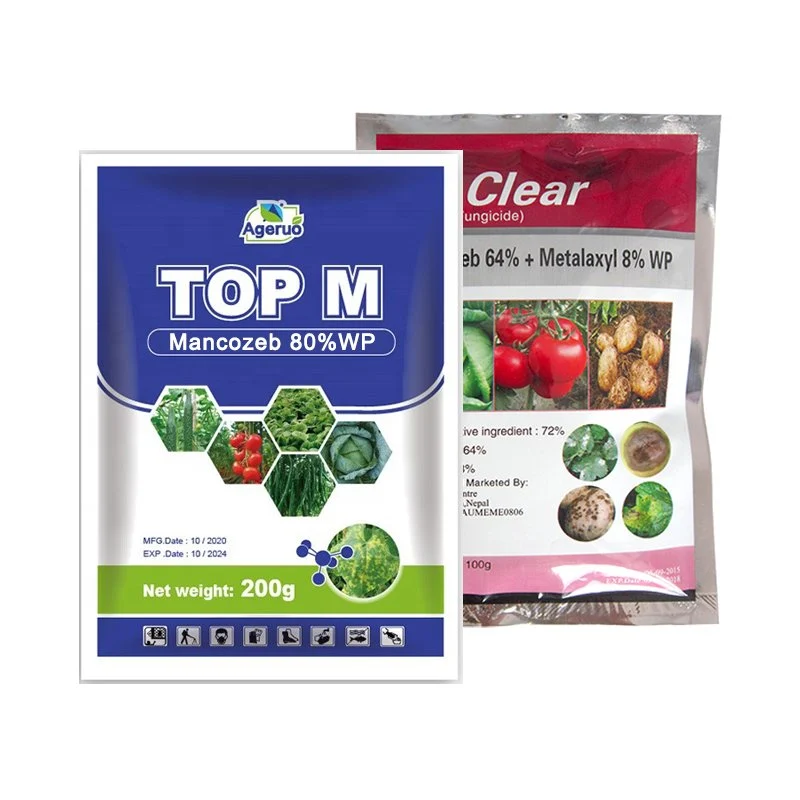](https://www.pomais.com/product/mancozeb/)
[Mancozeb Fungicide](https://www.pomais.com/product/mancozeb/)
[Mancozeb Fungicide](https://www.pomais.com/product/mancozeb/)
[](https://www.pomais.com/product/thiophanate-methyl/)
[Thiophanate-Methyl Fungicide](https://www.pomais.com/product/thiophanate-methyl/)
[Thiophanate-Methyl Fungicide](https://www.pomais.com/product/thiophanate-methyl/)
[](https://www.pomais.com/product/metalaxyl-m-124-g-l-azoxystrobin-322-g-l-se/)
[Metalaxyl-M 124 g/L + Azoxystrobin 322 g/L SE](https://www.pomais.com/product/metalaxyl-m-124-g-l-azoxystrobin-322-g-l-se/)
[Metalaxyl-M 124 g/L + Azoxystrobin 322 g/L SE](https://www.pomais.com/product/metalaxyl-m-124-g-l-azoxystrobin-322-g-l-se/)
[](https://www.pomais.com/product/ethylicin-30-41-80-ec-fungicide/)
[Ethylicin 30%, 41%, 80% EC Fungicide](https://www.pomais.com/product/ethylicin-30-41-80-ec-fungicide/)
[Ethylicin 30%, 41%, 80% EC Fungicide](https://www.pomais.com/product/ethylicin-30-41-80-ec-fungicide/)
[](https://www.pomais.com/product/metalaxyl-15-propamocarb-10-wp-fungicide/)
[Metalaxyl 15% + Propamocarb 10% WP Fungicide](https://www.pomais.com/product/metalaxyl-15-propamocarb-10-wp-fungicide/)
[Metalaxyl 15% + Propamocarb 10% WP Fungicide](https://www.pomais.com/product/metalaxyl-15-propamocarb-10-wp-fungicide/)
[](https://www.pomais.com/product/fluxapyroxad-300-g-l-sc-fungicide/)
[Fluxapyroxad 300 g/L SC Fungicide](https://www.pomais.com/product/fluxapyroxad-300-g-l-sc-fungicide/)
[Fluxapyroxad 300 g/L SC Fungicide](https://www.pomais.com/product/fluxapyroxad-300-g-l-sc-fungicide/)
[](https://www.pomais.com/product/fluopicolide-10-benzisothiazolinone-6-sc/)
[Fluopicolide 10% + Benzisothiazolinone 6% SC](https://www.pomais.com/product/fluopicolide-10-benzisothiazolinone-6-sc/)
[Fluopicolide 10% + Benzisothiazolinone 6% SC](https://www.pomais.com/product/fluopicolide-10-benzisothiazolinone-6-sc/)
[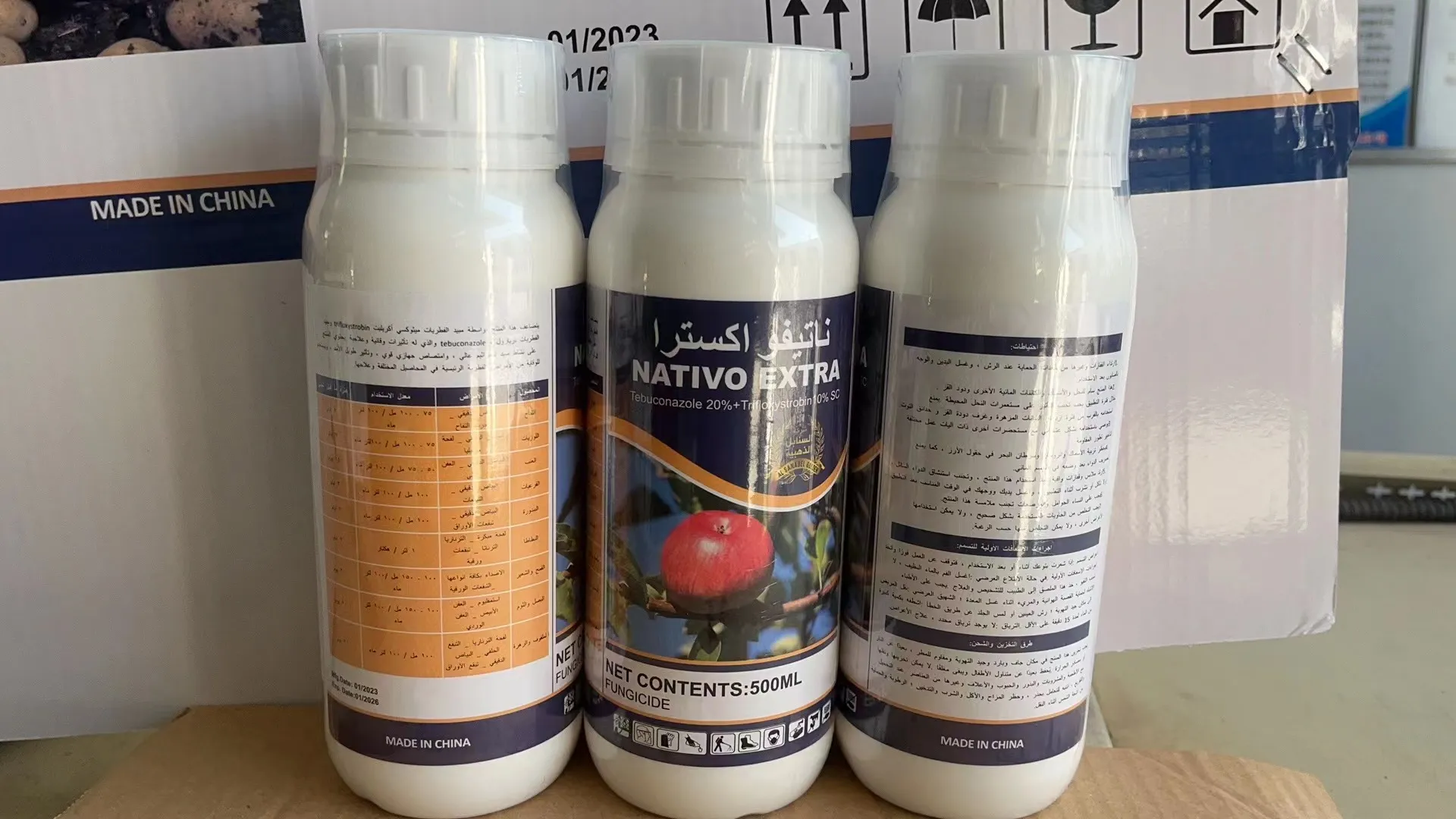](https://www.pomais.com/product/fluopyram-250-g-l-trifloxystrobin-250-g-l-sc-fungicide/)
[Fluopyram 250 g/L + Trifloxystrobin 250 g/L SC Fungicide](https://www.pomais.com/product/fluopyram-250-g-l-trifloxystrobin-250-g-l-sc-fungicide/)
[Fluopyram 250 g/L + Trifloxystrobin 250 g/L SC Fungicide](https://www.pomais.com/product/fluopyram-250-g-l-trifloxystrobin-250-g-l-sc-fungicide/)
[](https://www.pomais.com/product/fluopimomide-20-hexaconazole-20-sc-fungicide/)
[Fluopimomide 20% + Hexaconazole 20% SC Fungicide](https://www.pomais.com/product/fluopimomide-20-hexaconazole-20-sc-fungicide/)
[Fluopimomide 20% + Hexaconazole 20% SC Fungicide](https://www.pomais.com/product/fluopimomide-20-hexaconazole-20-sc-fungicide/)
- [Carbendazim 35% + Thiophanate-Methyl 46.5% WP Fungicide](https://www.pomais.com/product/carbendazim-35-thiophanate-methyl-46-5-wp-fungicide/)
- [Metalaxyl Fungicide](https://www.pomais.com/product/metalaxyl/)
- [Cymoxanil Fungicide | Systemic Solutions for Crop Protection](https://www.pomais.com/product/cymoxanil/)
- [Mancozeb Fungicide](https://www.pomais.com/product/mancozeb/)
- [Thiophanate-Methyl Fungicide](https://www.pomais.com/product/thiophanate-methyl/)
- [Metalaxyl-M 124 g/L + Azoxystrobin 322 g/L SE](https://www.pomais.com/product/metalaxyl-m-124-g-l-azoxystrobin-322-g-l-se/)
- [Ethylicin 30%, 41%, 80% EC Fungicide](https://www.pomais.com/product/ethylicin-30-41-80-ec-fungicide/)
- [Metalaxyl 15% + Propamocarb 10% WP Fungicide](https://www.pomais.com/product/metalaxyl-15-propamocarb-10-wp-fungicide/)
- [Fluxapyroxad 300 g/L SC Fungicide](https://www.pomais.com/product/fluxapyroxad-300-g-l-sc-fungicide/)
- [Fluopicolide 10% + Benzisothiazolinone 6% SC](https://www.pomais.com/product/fluopicolide-10-benzisothiazolinone-6-sc/)
- [Fluopyram 250 g/L + Trifloxystrobin 250 g/L SC Fungicide](https://www.pomais.com/product/fluopyram-250-g-l-trifloxystrobin-250-g-l-sc-fungicide/)
- [Fluopimomide 20% + Hexaconazole 20% SC Fungicide](https://www.pomais.com/product/fluopimomide-20-hexaconazole-20-sc-fungicide/)
[Latest News](https://www.pomais.com/news/)
- [Meet SunAgro at Growtech Antalya 2026 – Booth H6-A120](https://www.pomais.com/meet-sunagro-at-growtech-antalya-2026-booth-h6-a120/)September 3rd, 2026
- [What Is Technical Equivalence in Pesticide Registration? A Guide for Importers](https://www.pomais.com/technical-equivalence-pesticide-registration/)October 21st, 2026
- [What Happens When a Pesticide Batch Is Out of Specification?](https://www.pomais.com/pesticide-batch-out-of-specification/)October 19th, 2026
- [How to Audit a Pesticide Specification Against the COA Before Shipment](https://www.pomais.com/pesticide-specification-coa-audit-before-shipment/)October 17th, 2026
- [Pesticide Packaging Compatibility: Why the Container Is Part of Product Quality](https://www.pomais.com/pesticide-packaging-compatibility/)October 15th, 2026
- [Pesticide Storage Stability Data: What Importers Should Check Before Registration and Bulk Supply](https://www.pomais.com/pesticide-storage-stability-data-buyer-checklist/)October 12th, 2026
- [How to Build an Insecticide Portfolio for Your Market](https://www.pomais.com/how-to-build-an-insecticide-portfolio-for-your-market/)October 10th, 2026
- [How to Choose Pesticide Packaging for Your Market](https://www.pomais.com/how-to-choose-pesticide-packaging-for-your-market/)October 8th, 2026
- [What Is a Pesticide Registration Dossier?](https://www.pomais.com/what-is-a-pesticide-registration-dossier/)September 24th, 2026
- [Comparison of SC and SL Pesticide Formulations: How Should Buyers Choose?](https://www.pomais.com/comparison-of-sc-and-sl-pesticide-formulations/)September 20th, 2026
- [How Pesticide Quality Is Controlled Before Export](https://www.pomais.com/how-pesticide-quality-is-controlled-before-export/)September 17th, 2026
[FAQ](https://www.pomais.com/faq-items/)
- [Does Spinosad Kill Thrips?](https://www.pomais.com/faq-items/does-spinosad-kill-thrips/)July 25th, 2026
- [Does Spinosad Kill Mosquitoes?](https://www.pomais.com/faq-items/does-spinosad-kill-mosquitoes/)July 23rd, 2026
- [Does Spinosad Kill Fleas?](https://www.pomais.com/faq-items/does-spinosad-kill-fleas/)July 21st, 2026
- [Does Spinosad Kill Ants?](https://www.pomais.com/faq-items/does-spinosad-kill-ants/)February 24th, 2026
- [Does Spinosad Kill Fungus Gnats?](https://www.pomais.com/faq-items/does-spinosad-kill-fungus-gnats/)February 24th, 2026
- [Does Spinosad Kill Spider Mites?](https://www.pomais.com/faq-items/does-spinosad-kill-spider-mites/)February 24th, 2026
- [Will 2,4-D Kill Broom Sage?](https://www.pomais.com/faq-items/will-24-d-kill-broom-sage/)January 30th, 2026
- [Will 2,4-D Kill Cattails?](https://www.pomais.com/faq-items/will-24-d-kill-cattails/)January 28th, 2026
- [Will 2,4-D Kill Centipede Grass?](https://www.pomais.com/faq-items/will-24-d-kill-centipede-grass/)January 26th, 2026
- [Will 2,4-D Kill Johnsongrass?](https://www.pomais.com/faq-items/will-24-d-kill-johnsongrass/)January 22nd, 2026
- [Fipronil Rapidly Eliminates Fleas, Providing Swift Relief for Your Pet](https://www.pomais.com/faq-items/fipronil-rapidly-eliminates-fleas-providing-swift-relief-for-your-pet/)December 23rd, 2025
- [Does Spinosad Kill Lice Eggs?](https://www.pomais.com/faq-items/does-spinosad-kill-lice-eggs/)November 18th, 2025
## Tell Us About Your Agrochemical Project
Looking for products for local distribution, private labeling, registration, or portfolio expansion?
Send us your company, destination country, required product, formulation, expected quantity, packaging requirements, and registration status.
Our sales and technical teams will check your product requirements, destination market and documentation needs before recommending suitable formulations.
[Pomais product list.pdf](https://www.pomais.com/wp-content/uploads/2026/03/Pomais-product-list.pdf)
[ICAMA LIST.pdf](https://www.pomais.com/wp-content/uploads/2026/03/ICAMA-LIST.pdf)
Please note that our products are not sold to individual users!
Purchase volume: L/KG
Please let us know your planned purchase volume so that we can provide an accurate quote!
You will receive a response from our market experts within 24 hours (workdays: Monday to Friday); please keep an eye on your email or WhatsApp!
×
Message failed! Contact me via WhatsApp or email!
×
Send Message
[](https://www.pomais.com/)
16+ years professional one-stop agricultural plant protection solution provider
[Facebook](https://www.facebook.com/Pesticide2/) [X](https://x.com/Karen13468809) [Instagram](https://www.instagram.com/pomais_agrochemicals/) [LinkedIn](https://www.linkedin.com/company/pomais-agrochemicals/?viewAsMember=true) [YouTube](https://www.youtube.com/@Pomais-Agrochemicals)
Product
Services
Contact Us
[info@sunagros.com](mailto:info@sunagros.com)
[WhatsApp](https://wa.me/8619930546995)
**ADDRESS**
Room 1907, Baichuan Building-West, Chang’an District, Shijiazhuang City, Hebei Province, China
CopyRight © 2024 – 2026 Hebei SunAgro Agroscience Technology Co., Ltd. All Rights Reserved. Consent Preferences
Toggle Sliding Bar Area
Page load link
[Link to #awb-oc\_\_10593](#awb-oc__10593) [Link to mailto:info@sunagros.com](mailto:info@sunagros.com)
Chat with market experts!
Please note that our products are not sold to individual users!
Purchase volume: L/KG \*
You will receive a response from our market experts within 24 hours (workdays: Monday to Friday); please keep an eye on your email or WhatsApp!
×
Message failed! Contact me via WhatsApp or email!
×
Send Message
[](https://www.pomais.com/meet-sunagro-at-expo-agrofuturo-2026-in-bogota/)
Go to Top
```json
{"@context":"https://schema.org","@graph":[{"@type":"BreadcrumbList","@id":"https://www.pomais.com/product/cymoxanil/#breadcrumb","itemListElement":[{"@type":"ListItem","position":"1","item":{"@id":"https://www.pomais.com","name":"POMAIS"}},{"@type":"ListItem","position":"2","item":{"@id":"https://www.pomais.com/product/","name":"Product"}},{"@type":"ListItem","position":"3","item":{"@id":"https://www.pomais.com/products/fungicide/","name":"Fungicide"}},{"@type":"ListItem","position":"4","item":{"@id":"https://www.pomais.com/product/cymoxanil/","name":"Cymoxanil Fungicide | Systemic Solutions for Crop Protection"}}]}]}
{"@context":"https:\/\/schema.org","@type":"NewsArticle","headline":"How Pesticide Quality Is Controlled Before Export","datePublished":"2026-09-17T02:43:21+00:00"}
```